Industrial Revolution - The Urban Game


- Grades
- Grades 7–8, High School
- File type
- Multiple File Types
- Editable
- Yes


- Subject
- Social Studies, History: British
- Topic
- Industrial Revolution, Urbanization
- Resource types
- Games, Presentations
- Editable
- Yes
Product description
From the author
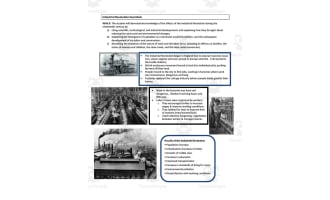
This resource is an Industrial Revolution - The Urban Game.
This is an engaging and interactive game for your students to play when they are reviewing or just being introduced to the Industrial Revolution.
Directions are included for set up and how to play.
Students will go round through round reading short paragraphs and then following the directions to emulate this time in history.
Related resources
More resources teachers may find useful
24 related resources were found using this product's title, contributor, categories and tags.


In the classroom
Teaching tips & learning objectives

Learning objectives
Explain the historical process of urbanization in Great Britain during the Industrial Revolution.
Describe the impact of industrialization-era inventions (the canal, the Water Frame, the steam engine, the puddling process, the railroad) on a community's land use and population.
Analyze the social costs of industrialization, including child labor, tenement housing, and pollution, alongside its economic benefits.

Teaching tips
Discuss the five suggested background topics — pre-industrial life, agricultural change, key inventions, requirements for industrialization, and why Britain industrialized first — before starting the simulation.
Display each round using the referenced PowerPoint alongside the text version so visual learners can follow the accompanying images (such as the Water Frame and Cort's Puddling Furnace) while drawing.
Use the completed before/after Change Over Time chart to structure the closing debate and comparison essay, since students will already have organized evidence in that format.

Skills covered
Historical simulation and mapping — students translate narrated historical events into concrete additions or removals on a hand-drawn village map.
Cause-and-effect historical reasoning — students connect specific inventions and laws (the Enclosure Acts, the steam engine, the puddling process) to visible changes in their simulated town.
Comparative analysis — students complete a before/after chart contrasting pre- and post-industrial work, transportation, and family life.
Good to know
Questions teachers ask about this resource
Why does the simulation instruct students not to add smoke to the very first factory but to add smoke to all factories from Round 11 onward?
The first factory (Round 4) runs on Arkwright's water-powered Water Frame, which produced no smoke, while Round 11 introduces Watt's steam engine, which burns fuel and pollutes, so the smoke instruction is a deliberate way to make the environmental shift from water power to steam power visible on the map itself.

No reviews yet
Downloaded this resource? Tell other teachers how it went.
Resource details
Concepts & topics
Core concepts
 Core concepts
Industrial Revolution
Urbanization
Enclosure Acts
Child labor
Economic history
 Topics
More to explore
You may also like