Looking Back: Victorian Factories - Age 8-12


About This Product
About This Product
Looking Back: Victorian Factories
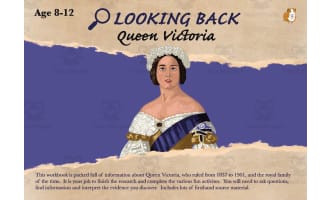
The “Looking Back: Victorian Factories” resource is an informative and interactive teaching tool for children aged 8-12. This pack is perfect for reinforcing key historical skills and helping children acquire important knowledge about working conditions in Victorian textile factories in Great Britain. It is most suited to grade 3, grade 4 or grade 5.
Content
This resource contains a total of 47 pages and covers the topics of: why factories were built; who worked in Victorian textile factories; child labour in the factories; working and living conditions of factory workers; factory reforms; and factory workers on strike.
In this pack, children will learn how to:
engage with the past and get excited about history. This pack is rich in detail. Historical facts are presented in a fun and engaging manner, surrounded by colourful illustrations, making the information easy to remember and recall. Children will be introduced to Samuel Courtauld, a successful silk mill owner in Halstead, Essex and will discover how he ran his mill by looking at job adverts, factory records, posters of the factory rules, and newspaper articles. They will also get to read a fascinating imaginary interview with a real person (the author’s own ancestor) who worked at Courtauld’s in the mid-nineteenth century. Lots of interesting firsthand source material has been used in the writing of this pack.
do research and find information. At the same time as learning about Courtauld’s silk mill, children will have to find out for themselves about life in the cotton factories. First, they will be asked to imagine that they own a cotton mill in an industrial town in the north of England and will have to create their own job adverts, factory rules and records etc. Then, they’ll have to imagine that they are a child factory worker and answer specific set questions about working conditions on the factory floor. They will also be asked to look up and find out about Robert Owen, a Scottish factory owner, and the London Matchgirls’ strike of 1888. In order to do this, they’ll need to investigate and retrieve the relevant information from books or on online websites. While doing this, children will learn how to ask their own questions and think about what they need to know.
explain, or interpret evidence and information. Many of the set questions and creative writing exercises will encourage children to thoughtfully consider the evidence before them. They will be asked to look for clues in texts and pictures, to describe, to explain, to reason, to draw conclusions, to think critically and form their own opinions.
communicate historical information in an exciting way. This pack includes lots of different sorts of activities: from writing adverts and interviews to designing posters and colouring pictures. These fun tasks will help children learn how to write their own narratives about each topic; how to to recall, select and organise relevant historical knowledge; how to empathise and imagine how people from the past might feel and act; and how to present their ideas in a manner that is memorable and appeals to the intended reader.
In Conclusion
This pack is designed to help support your children as they explore the Victorian era, deepen their understanding of this historical time period, and ignite their interest in history. However, many of the tasks would also make wonderful themed creative writing activities for english lessons.
This is a PDF and a digital download. Please be aware, there are no answers, but all the missing information is provided in bullet points at the end of the pack.
Resource Tags
0 Reviews
Check out these other great products