Keep Phrasal Verbs – English Practice Exercises
- Grades
- Grades 7–10
- Pages
- 11
- File type
- Answer key
- Included


- Subject
- ELA, ESL, Grammar
- Topic
- Phrasal verbs, Keep expressions
- Resource types
- Worksheets
- Answer key
- Included
- Standards
- L.8.5
Product description
From the author
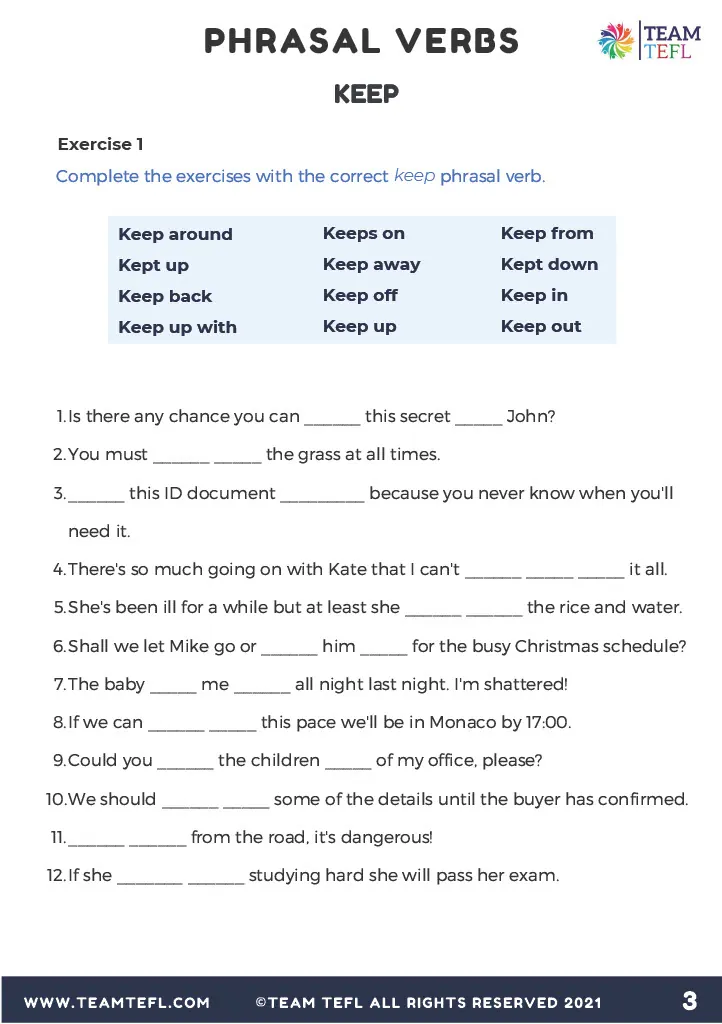
This resource is a set of exercises for the phrasal verb: keep.
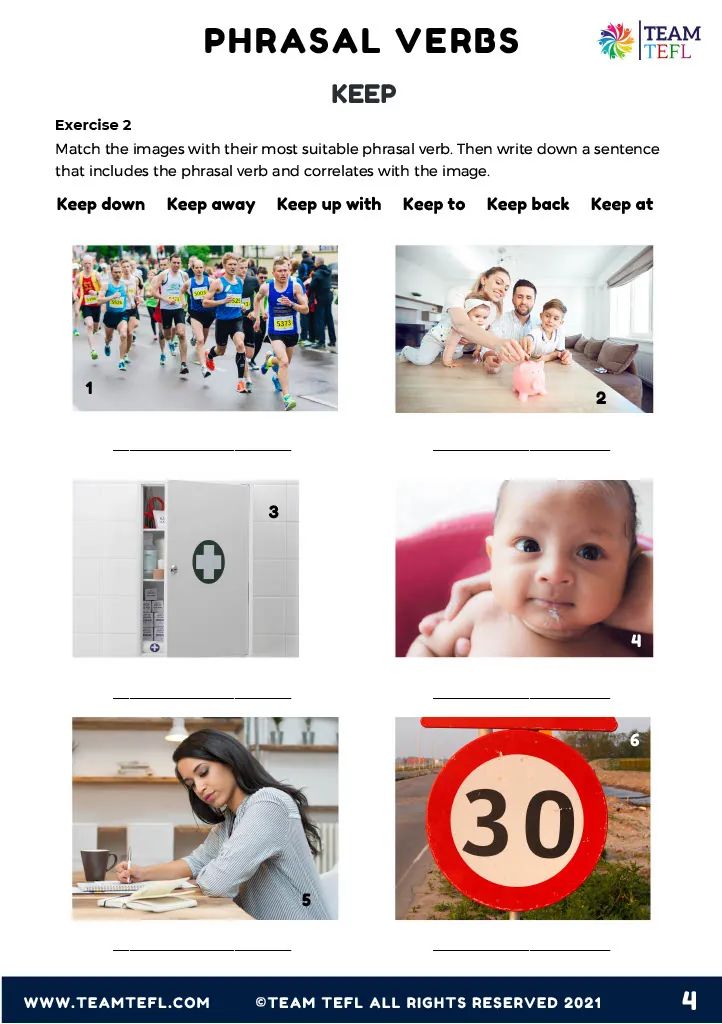
There are 4 exercises, from conversation topics to multiple-choice questions.
Answer key included.
This resource can be accessed through Google Apps.
Related resources
More resources teachers may find useful
24 related resources were found using this product's title, contributor, categories and tags.

In the classroom
Teaching tips & learning objectives

Learning objectives
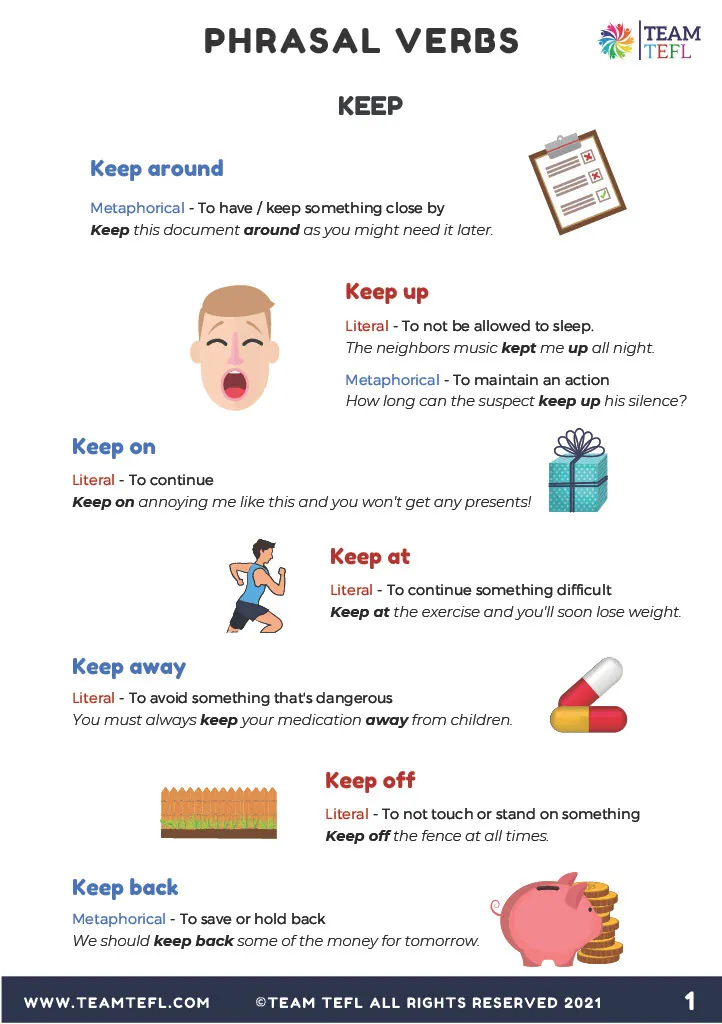
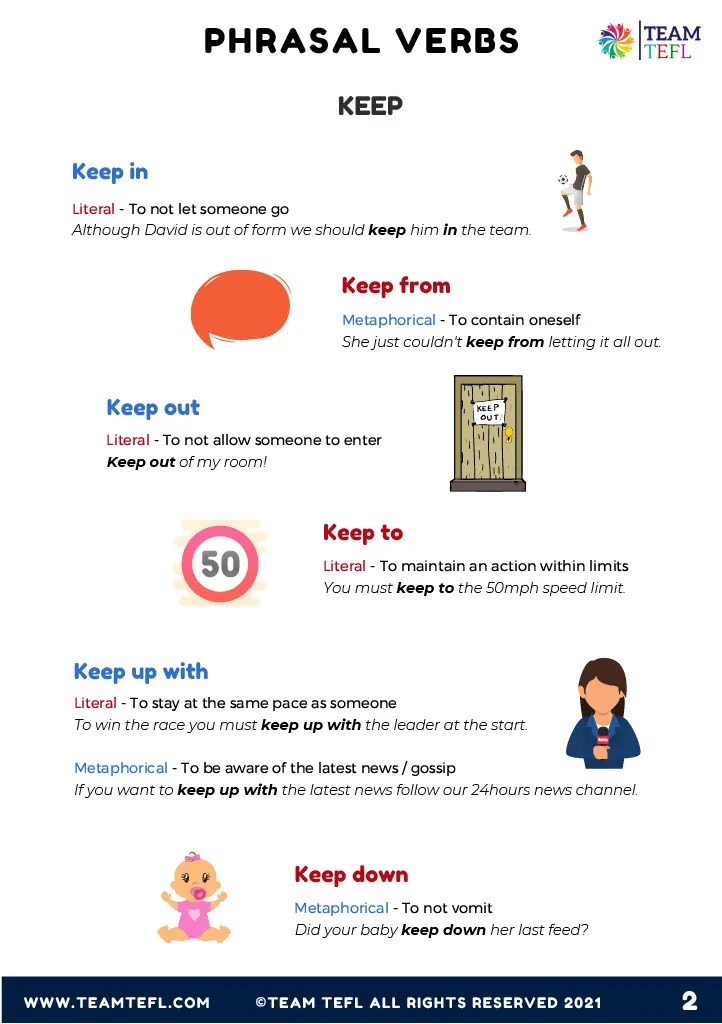
Recognize and define 13 phrasal verbs formed with 'keep,' distinguishing literal from metaphorical meanings.
Use the target phrasal verbs correctly in fill-in-the-blank sentences and original writing.
Classify phrasal verb sentences as transitive/intransitive and separable/inseparable.

Teaching tips
Review the definitions and example sentences page before Exercise 1, since several phrasal verbs (like 'keep up' and 'keep back') carry both a literal and a metaphorical meaning that students need to distinguish.
Exercise 2's image-matching task works well as a pair or small-group activity, since students must also compose an original sentence for each matched image.
Save Exercise 4's conversation questions for a speaking-focused class session, since they're open-ended and personal rather than answer-key based.

Skills covered
Phrasal verb vocabulary — students learn meanings of 13 phrasal verbs built on the base verb 'keep.'
Contextual fill-in-the-blank usage — students select and correctly form the right phrasal verb for each sentence.
Grammar pattern recognition — students classify sentences by transitive/intransitive and separable/inseparable phrasal verb structure.
Good to know
Questions teachers ask about this resource
Is there speaking practice as well as written work?
Yes. Nine open-ended conversation questions follow the vocabulary and grammar exercises.
Which exercises have an answer key?
The separate key supplies sentence-completion answers, image-to-phrase matches and grammar classifications for Exercises 1–3. Original sentences and the personal conversation responses remain open-ended.

No reviews yet
Downloaded this resource? Tell other teachers how it went.
Curriculum
Standards, concepts & topics
Standards
 Standards
- L.8.5
Core concepts
 Core concepts
Phrasal verbs with 'keep'
Transitive vs. intransitive phrasal verbs
Separable vs. inseparable phrasal verbs
Literal vs. metaphorical meaning
 Topics
Explore more
Categories this resource belongs to
Explore related searches
More to explore
You may also like