Linear Equation Word Problems – Notes + Homework


- Grades
- Grade 8, High School
- Pages
- 20
- File type
- Answer key
- Included


- Subject
- Math, Algebra
- Topic
- Linear word problems, Slope
- Answer key
- Included
- Standards
- HSF-LE.A.2
Product description
From the author
Linear Equation Word Problems Guided Notes and Homework
This math resource teaches students how to solve real-world linear equation word problems. Students walk through guided notes, learning concepts like identifying knowns and unknowns from word problems and setting up linear equations to find solutions. Example problems demonstrate finding an equation when given a slope and y-intercept, or when given two points. A supplemental homework assignment provides more linear equation word problems for students to solve independently. With scaffolded instruction and independent practice, this resource helps build skills for solving linear equations in multiple contexts. Answer keys are included for the guided notes and homework. This versatile resource can be used for whole-class instruction, small group practice, individual assignments, and homeschooling for grades 9-12.
Related resources
More resources teachers may find useful
24 related resources were found using this product's title, contributor, categories and tags.




In the classroom
Teaching tips & learning objectives

Learning objectives
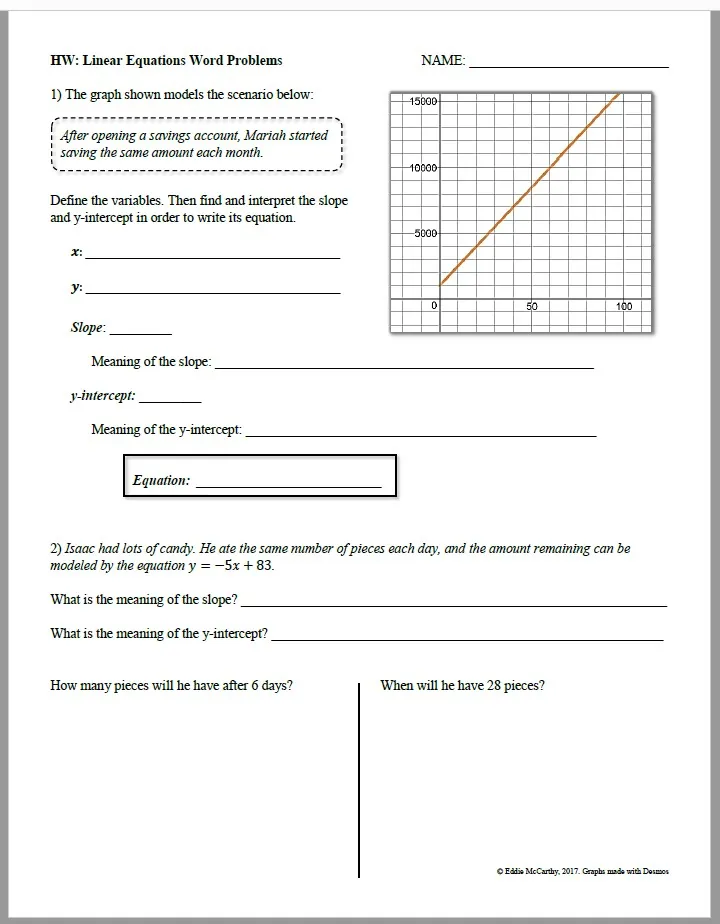
Students will define variables and identify the slope and y-intercept of a linear scenario from a graph.
Students will write a linear equation in slope-intercept form (y = mx + b) to model a word-problem scenario.
Students will use a linear equation to solve for an unknown cost, time, or starting value, including from two given data points instead of a graph.

Teaching tips
Begin with the graph-based kayak example, then compare its equation with the given-equation scenarios later in part one.
Model how to find a starting value from a rate and a point before assigning part two.
Ask students to define variables and units before writing each equation.

Skills covered
Slope and y-intercept identification — students extract m and b from a graph or from two data points, as in the kayak-rental and Twitter-follower scenarios.
Equation writing in y = mx + b form — students build a linear equation from a described scenario before solving it.
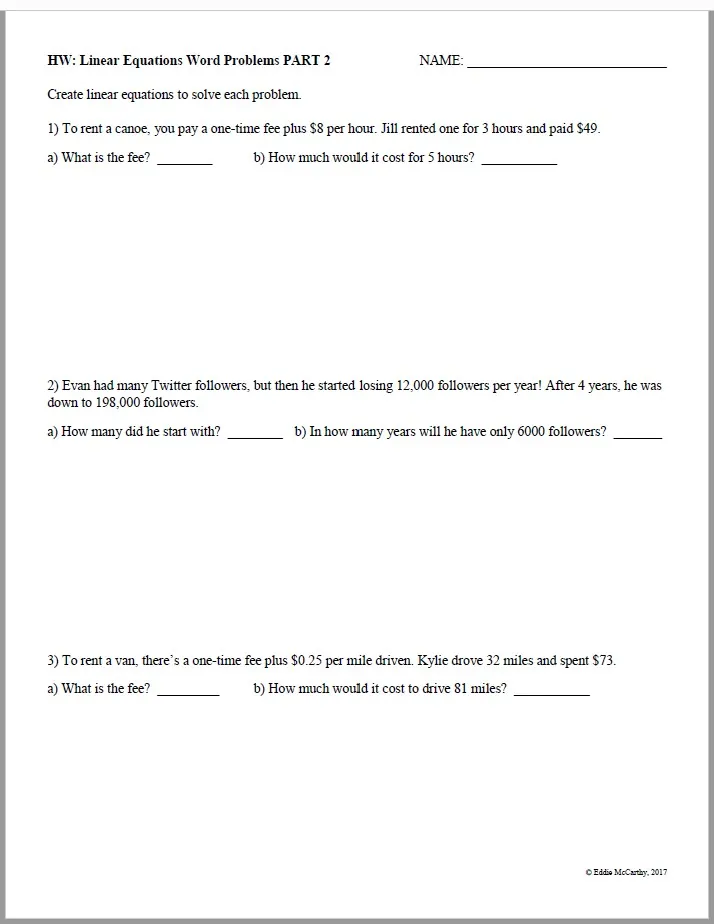
Multi-step problem solving — students substitute values into their equation to find a cost, elapsed time, or starting amount, as in the candy, savings-account, and kickboxing-lesson problems.
Good to know
Questions teachers ask about this resource
Does every problem have a graph?
No. The notes begin with graph-based examples, then include given equations and word problems. Other tasks ask students to derive a rate or starting value from information in the scenario.

No reviews yet
Downloaded this resource? Tell other teachers how it went.
Curriculum
Standards, concepts & topics
Standards
 Standards
- HSF-LE.A.2
Core concepts
 Core concepts
Slope-intercept form (y = mx + b)
Rate of change
Y-intercept as a fee or starting value
Linear equation word problems
 Topics
Explore more
Categories this resource belongs to
Explore related searches
More to explore
You may also like