Mars Climate Orbiter Unit Conversion STEM Case Study





About This Product
Investigate the most famous unit conversion error in space exploration history with this comprehensive, no-prep 6-page printable STEM Case Study Packet! Designed specifically for middle and high school classrooms, this multi-day unit provides an immersive, highly informative look at the tragic 1999 Mars Climate Orbiter Crash. By combining physical science measurements, orbital mechanics, space navigation telemetry troubleshooting, applied mathematics, and corporate-agency software ethics, this resource transforms a landmark spaceflight failure into a rich, interactive learning experience.
Throughout this unit, students explore critical secondary STEM concepts—including Imperial versus Metric unit mismatches (Pound-force seconds vs. Newton-seconds), software interface control documents (ICDs), angular momentum desaturation thruster physics, cumulative trajectory drift, atmospheric friction, and orbital periapsis decay—in an accessible, highly engaging format.
What’s Included in this 6-Page Deep-Dive Packet:
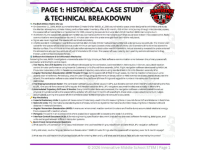
Page 1: Historical Case Study & Technical Breakdown
Features a detailed historical narrative of the September 23, 1999 loss of the $125 million Martian probe. Students examine the software mismatch between Lockheed Martin ground systems and NASA JPL trajectory processing code, small thruster force accumulation errors, and atmospheric entry friction at 57 km altitude before answering targeted comprehension check questions.
Page 2: Day in the Life Scenario Challenge
Students step into the shoes of a NASA JPL Flight Navigator during the final Mars Orbit Insertion (MOI) approach. In this realistic roleplay assignment, they analyze telemetry logs, identify AMD force file unit discrepancies, evaluate trajectory drift warning flags, and design emergency trim maneuver protocols.
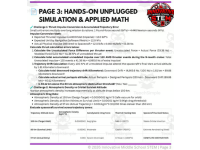
Page 3: Hands-On Unplugged Simulation & Applied Math
Brings real-world conversion and trajectory math into the classroom with clear, step-by-step calculations. Students convert Imperial impulse units (lbfs) to Metric SI units (Ns) using the 4.45 conversion factor, compute total accumulated trajectory error over 9 months of thruster firings, and calculate resulting orbital periapsis altitude drops.
Page 4: Engineering Ethics & Workplace Dilemma
Explores schedule pressure versus engineering accuracy. Students analyze why navigator emails raising trajectory concerns during cruise were dismissed, the lack of end-to-end software interface testing, corporate-agency communication barriers, and subsequent software quality assurance reforms.
Page 5: Redesign Brief & Innovation Lab
A creative blueprinting challenge where students act as systems engineers designing "Mars Navigation & Interface Control System V-2." Applying fail-safe software principles, they incorporate strongly-typed software data encoders, automated unit-checking compilers, independent dual-team trajectory verification, and real-time optical horizon sensors.
Page 6: Teacher Answer Key & Scoring Rubric
Includes complete, step-by-step solutions for all narrative comprehension questions and mathematical calculations, along with a clear 10-point grading rubric to streamline assessment for the design blueprint assignment.
Teacher Benefits:
100% Unplugged & Copy-Paste Friendly: Clean layout with zero dark background boxes or awkward formatting, ensuring seamless editing in Google Docs, Word, or Canva.
Multi-Day Classroom Value: Designed to cover 3 to 5 full class periods. Perfect for Physics, Physical Science, Computer Science, Applied Math, Aerospace Engineering, CTE electives, or emergency sub plans.
High-Interest Real-World Content: Combines unit conversion math, orbital mechanics calculations, flight navigation telemetry diagnostics, software ethics roleplay, and space mission engineering redesign into one high-impact unit.
Resource Tags
0 Reviews
Check out these other great products