Therac-25 Radiation Overdose STEM Case Study



About This Product
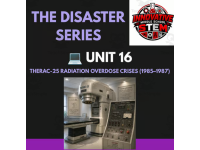
Investigate the most infamous software bug in medical history with this comprehensive, no-prep 6-page printable STEM Case Study Packet! Designed specifically for middle and high school classrooms, this multi-day unit provides an immersive, highly informative look at the tragic 1985–1987 Therac-25 Radiation Overdose Crises. By combining computer science logic, radiation physics, hospital diagnostic troubleshooting, applied mathematics, and medical ethics, this resource transforms a landmark biomedical disaster into a rich, interactive learning experience.
Throughout this unit, students explore critical secondary STEM concepts—including linear accelerator mechanics, software race conditions, removal of hardware interlocks, 1-byte integer overflow errors, human-computer interface design flaws, and biomedical device safety regulations—in an accessible, highly engaging format.
What’s Included in this 6-Page Deep-Dive Packet:
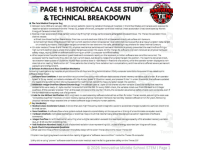
Page 1: Historical Case Study & Technical Breakdown
Features a detailed historical narrative of the 6 fatal radiation overdose accidents in the US and Canada. Students examine medical linear accelerator operation, the removal of backup mechanical safety relays, PDP-11 assembly code race conditions, and "Malfunction 54" screen alerts before answering targeted comprehension check questions.
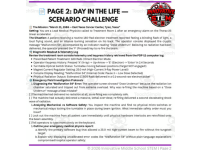
Page 2: Day in the Life Scenario Challenge
Students step into the shoes of a Hospital Medical Physicist in Tyler, Texas in March 1986. In this realistic roleplay assignment, they analyze operator fast-keying logs, evaluate turntable positioning timing windows, identify uncalibrated dose spikes, and execute device shutdown protocols.
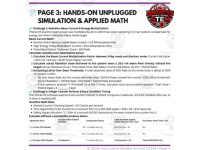
Page 3: Hands-On Unplugged Simulation & Applied Math
Brings computer logic and radiation math into the classroom with clear, step-by-step calculations. Students compute high-current raw electron beam power versus low-current X-ray target beam power, calculate radiation dose multiplication factors in Rads, and model 1-byte integer counter overflow timing windows with 0 to 255 rollover.
Page 4: Engineering Ethics & Workplace Dilemma
Explores software code reuse versus rigorous testing standards. Students analyze the manufacturer's initial denial of software flaws, blaming human operators for cryptically labeled errors, reusing Therac-6 assembly code without hardware interlock verification, and subsequent FDA recall authority reforms.
Page 5: Redesign Brief & Innovation Lab
A creative blueprinting challenge where students act as biomedical engineers designing "Therac-25 Medical Linac V-2." Applying fail-safe hardware principles, they incorporate independent hardware-limit interlocks, redundant optical turntable position switches, secondary watchdog microcontroller circuits, and fail-safe UI keypress delay buffers.
Page 6: Teacher Answer Key & Scoring Rubric
Includes complete, step-by-step solutions for all narrative comprehension questions and mathematical calculations, along with a clear 10-point grading rubric to streamline assessment for the design blueprint assignment.
Teacher Benefits:
100% Unplugged & Copy-Paste Friendly: Clean layout with zero dark background boxes or awkward formatting, ensuring seamless editing in Google Docs, Word, or Canva.
Multi-Day Classroom Value: Designed to cover 3 to 5 full class periods. Perfect for Computer Science, Physical Science, Biomedical Engineering, Health Science, CTE electives, or emergency sub plans.
High-Interest Real-World Content: Combines radiation dosage math, assembly code logic simulation, hospital diagnostic roleplay, software safety ethics, and medical device redesign into one high-impact unit.
Resource Tags
0 Reviews
Check out these other great products