Texas City Fertilizer Explosion STEM Case Study




About This Product
Investigate the deadliest industrial accident in American history with this comprehensive, no-prep 6-page printable STEM Case Study Packet! Designed specifically for middle and high school classrooms, this multi-day unit provides an immersive, highly informative look at the tragic 1947 Texas City Disaster. By combining chemical reaction kinetics, shockwave mechanics, hazardous material diagnostics, applied mathematics, and port safety ethics, this resource transforms a landmark industrial catastrophe into a rich, interactive learning experience.
Throughout this unit, students explore critical secondary STEM concepts—including ammonium nitrate thermal decomposition, detonation shockwave propagation, cargo hold confinement dynamics, hazardous material handling protocols, and maritime safety regulations—in an accessible, highly engaging format.
What’s Included in this 6-Page Deep-Dive Packet:
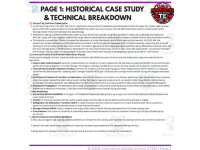
Page 1: Historical Case Study & Technical Breakdown
Features a detailed historical narrative of the April 16, 1947 disaster at the Port of Texas City. Students examine the SS Grandcamp cargo fire, ammonium nitrate prill coating chemistry, thermal decomposition kinetics, steam-hatch confinement pressure, and shockwave mechanics before answering targeted comprehension check questions.
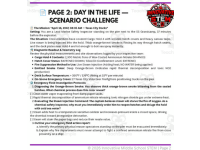
Page 2: Day in the Life Scenario Challenge
Students step into the shoes of a Port Marine Safety Inspector at 8:30 AM on the morning of the fire. In this realistic roleplay assignment, they analyze cargo hold temperature spikes, evaluate orange-brown nitrogen dioxide smoke indicators, identify hatch sealing errors, and coordinate emergency port evacuation protocols.
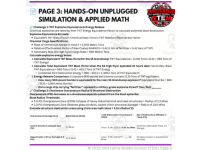
Page 3: Hands-On Unplugged Simulation & Applied Math
Brings chemical and physical explosion math into the classroom with clear, step-by-step calculations. Students compute thermal decomposition energy release in Joules, calculate explosive yield equivalence in TNT tonnage, and model shockwave overpressure radius formulas in PSI.
Page 4: Engineering Ethics & Workplace Dilemma
Explores corporate and regulatory safety standards versus operational speed. Students analyze the absence of warning labels on combustible waxed ammonium nitrate bags, unenforced smoking rules on wooden vessels, firefighter hazard awareness gaps, and subsequent maritime safety reforms.
Page 5: Redesign Brief & Innovation Lab
A creative blueprinting challenge where students act as chemical and industrial engineers designing "Port Hazardous Cargo Handling Terminal V-2." Applying inherently safer design principles, they incorporate inert mineral-coated fertilizer formulations, ventilated automated cargo holds, remote deluge fire suppression systems, and blast-resistant port bunkers.
Page 6: Teacher Answer Key & Scoring Rubric
Includes complete, step-by-step solutions for all narrative comprehension questions and mathematical calculations, along with a clear 10-point grading rubric to streamline assessment for the design blueprint assignment.
Teacher Benefits:
100% Unplugged & Copy-Paste Friendly: Clean layout with zero dark background boxes or awkward formatting, ensuring seamless editing in Google Docs, Word, or Canva.
Multi-Day Classroom Value: Designed to cover 3 to 5 full class periods. Perfect for Chemistry, Physical Science, Environmental Science, Chemical Engineering, US History electives, or emergency sub plans.
High-Interest Real-World Content: Combines chemical reaction math, shockwave physics, port control room telemetry, maritime ethics, and industrial safety redesign into one high-impact unit.
Resource Tags
0 Reviews
Check out these other great products