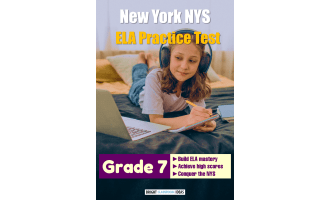
New York NYS ELA Practice Test for Grade 6


- Grades
- Grade 6
- Pages
- 29
- File type
- Answer key
- Included


- Subject
- ELA, Reading Comprehension
- Topic
- New York ELA, Grade 6 practice test
- Resource types
- Tests, Assessments
- Answer key
- Included
- Standards
- RL.6.1
Product description
From the author
Looking for a Grade 6 ELA practice test for reading and writing practice? This rigorous assessment builds student confidence while strengthening reading analysis, vocabulary, and evidence-based argument writing skills.
What’s Included
Full Grade 6 ELA Practice Test (3 sessions)
7 complex passages (fiction, poetry, informational texts, paired arguments)
40 numbered questions, including the extended writing task
Answer Key with detailed explanations and scoring breakdown
Teacher’s Guide with standards alignment, pacing, and intervention strategies
Built-in rubrics for short responses and argument writing
Printable PDF format
How It Works in the Classroom
This Grade 6 ELA test prep resource provides teacher-created reading, language and argument-writing practice:
Full-length test simulation (3 sessions)
Small group intervention and reteaching
Independent practice or homework
Test prep centers or review rotations
Selected sections for a prepared substitute lesson
Students analyze literary and informational texts, evaluate arguments, and complete a formal essay with thesis, evidence, and counterargument.
Standards & Learning Goals
The creator identifies connections to Grade 6 ELA Common Core / NYS Standards, including:
RL.6.2–RL.6.6 (theme, character, figurative language, author’s craft)
RI.6.2–RI.6.9 (central idea, structure, evaluating arguments, synthesis)
W.6.1 (argument writing with evidence and counterargument)
L.6.1–L.6.4 (grammar, academic vocabulary, language use)
Students will:
Analyze complex texts and rhetorical strategies
Evaluate evidence and identify strong vs. weak arguments
Use academic vocabulary in context
Strengthen grammar skills (semicolons, modifiers, parallel structure)
Write structured, multi-paragraph argumentative essays
Why Teachers Love It
✅ Middle school rigor built in (perfect for Grade 6 expectations)
✅ Focus on argument writing + critical thinking
✅ Time-saving with answer keys, rubrics, and teacher guidance
✅ Data-driven insights for targeted instruction
✅ Engaging, high-interest texts across genres
✅ Easy to print and implement
Make test prep meaningful and effective with this Grade 6 ELA practice test. Add it to your classroom today and help your students build confidence and succeed on state assessments!
Related resources
More resources teachers may find useful
24 related resources were found using this product's title, contributor, categories and tags.


In the classroom
Teaching tips & learning objectives

Learning objectives
Student can determine theme, character motivation, and figurative language in a literary passage.
Student can determine central claim, cause-and-effect, and vocabulary in context in an informational passage.
Student can write a full argument essay integrating evidence from two paired passages and addressing a counterargument.

Teaching tips
- Discuss how a response uses evidence before assigning a rubric score.

Skills covered
Literary inference and theme analysis — students identify a character's motivation, tone shift, and central theme across a short story and a poem.
Evidence-based argument writing — students draft a full essay taking a position on teen social media regulation, integrating evidence from two passages and rebutting a counterargument.
Grammar and usage in context — students identify correct semicolon use, dangling modifiers, subject-verb agreement with collective nouns, and formal academic register.

No reviews yet
Downloaded this resource? Tell other teachers how it went.
Curriculum
Standards, concepts & topics
Standards
 Standards
- RL.6.1
Core concepts
 Core concepts
Reading comprehension
Argument writing
Grammar and usage
Vocabulary in context
 Topics
More to explore
You may also like