New York NYS ELA Practice Test for Grade 7


- Grades
- Grade 7, Homeschool Resources, Middle School
- Pages
- 30
- File type
- Answer key
- Included


- Subject
- ELA, Reading Comprehension, Writing, Grammar
- Topic
- new york, nys
- Resource types
- Assessments, Teacher Tools, Tests, Quizzes and Tests, Worksheets & Printables
- Answer key
- Included
- Standards
- CCSS.RI.7.8 CCSS.L.7.1 +1
About this resource
What's inside this resource
Looking for a Grade 7 ELA practice test aligned to New York State standards? This rigorous resource builds student confidence while strengthening literary analysis, argument evaluation, and evidence-based writing skills.
What’s Included
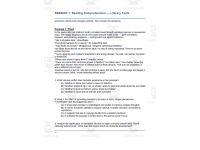
Full Grade 7 ELA Practice Test (3 sessions)
7 challenging passages (fiction, classic poetry, informational texts, paired arguments)
40 total questions + extended argument essay
Answer Key with detailed explanations and scoring guidance
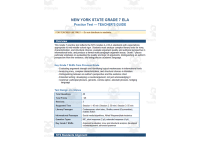
Teacher’s Guide with standards alignment, pacing, and intervention strategies
Built-in rubrics for short responses and extended writing
Printable, no-prep format
How It Works in the Classroom
This Grade 7 ELA test prep resource mirrors real NYS testing expectations and supports deeper middle school rigor:
Full-length test simulation (3 sessions)
Small group reteaching and intervention
Independent practice or homework
Test prep centers or review rotations
Sub plans with zero prep required
Students analyze complex texts, evaluate argument strength, and complete a multi-paragraph essay with counterargument and rebuttal.
Standards & Learning Goals
Aligned to Grade 7 ELA Common Core / NYS Standards, including:
RL.7.2–RL.7.6 (theme, characterization, irony, structure)
RI.7.2–RI.7.9 (central idea, author’s perspective, argument evaluation)
W.7.1 (argument writing with counterargument and rebuttal)
L.7.1–L.7.4 (grammar, academic vocabulary, language use)
Students will:
Analyze irony, tone, and complex characterization
Evaluate the strength of arguments and evidence
Distinguish author’s perspective from supporting evidence
Use precise academic vocabulary in context
Write structured, evidence-based argument essays
Why Teachers Love It
✅ Focus on argument evaluation + counterargument (high-priority skill)
✅ Engaging, rigorous passages including classic literature like Ozymandias
✅ Time-saving with answer key, rubrics, and teacher guidance
✅ Data-driven insights for targeted instruction
✅ Real test format builds stamina and confidence
✅ Easy to print and implement
Support your students with meaningful, standards-aligned test prep using this Grade 7 ELA practice test. Add it to your classroom today and help students build the critical thinking skills they need to succeed!
Related resources
More resources teachers may find useful
24 related resources were found using this product's title, contributor, categories and tags.


In the classroom
Teaching tips & learning objectives

Learning objectives
Analyze irony, characterization, and structural choices in literary texts including a poem and two short stories
Evaluate an author's point of view and the quality of evidence in informational passages
Distinguish restrictive from non-restrictive clauses, identify gerund/participial/absolute phrases, and correct comma splices

Teaching tips
Remove classroom vocabulary and grammar displays before administering the test, per the teacher's guide's security instructions
Use the passage-by-passage discussion prompts (e.g., verbal vs. situational vs. dramatic irony in 'Ozymandias') during pre-test instruction
Have students draft the strongest version of both sides of an argument before writing the extended response, mirroring the 'counterweight' strategy modeled in Passage 3

Skills covered
Literary irony analysis — students identify structural and situational irony in Shelley's 'Ozymandias' and explain its effect.
Argument evaluation — students judge whether a passage on algorithmic echo chambers presents a balanced or one-sided view, citing textual evidence.
Grammar and mechanics — students correct comma splices, identify gerund/participial/absolute phrases, and punctuate restrictive vs. non-restrictive clauses.
Good to know
Questions teachers ask about this resource
What strategy does Deja model in Passage 3, and how does the teacher's guide connect it to the extended writing task?
Deja calls it 'practicing her counterweight' — building the strongest version of the opposing argument in order to sharpen her own; the guide has students apply the same approach by drafting the strongest version of both sides of the mandatory-sports debate before choosing a position for the extended essay.
How do the two paired opinion passages on mandatory school sports differ in their use of evidence?
Passage 6A cites general research linking athletics to academic and social benefits without specific studies, while Passage 6B directly engages that evidence and notes the benefits apply mainly to students who succeed and belong — the rubric treats 6B's engagement with counter-evidence as the stronger argument.

No reviews yet
Downloaded this resource? Tell other teachers how it went.
Curriculum
Standards, concepts & topics
Standards
 Standards
- CCSS.RI.7.8 — Trace and evaluate the argument and specific claims in a text, assessing whether the reasoning is sound and the evidence is relevant and sufficient to support the claims.
- CCSS.L.7.1 — Demonstrate command of the conventions of standard English grammar and usage when writing or speaking. a. Explain the function of phrases and clauses in general and their function in specific sentences. b. Choose among simple, compound, complex, and compound-complex sentences to signal differing relationships among ideas. c. Place phrases and clauses within a sentence, recognizing and correcting misplaced and dangling modifier
- CCSS.W.7.9 — Draw evidence from literary or informational texts to support analysis, reflection, and research. a. Apply grade 7 Reading standards to literature (e.g., “Compare and contrast a fictional portrayal of a time, place, or character and a historical account of the same period as a means of understanding how authors of fiction use or alter history”). b. Apply grade 7 Reading standards to literary nonfiction (e.g. “Trace and evaluate the argument and specific claims in a text, assessing whether the reasoning is sound and the evidence is relevant and sufficient to support the claims”).
Core concepts
 Core concepts
irony
argument evaluation
textual evidence
grammar mechanics
essay writing
Topics
 Topics
More to explore
You may also like