Personal Hygiene & Self-Care – Complete 4-Lesson Health Education

P.E. & Health, Health, Special Resources, Life Skills, Social Emotional Learning (SEL), Social Skills, Special Education Needs (SEN)


About This Product
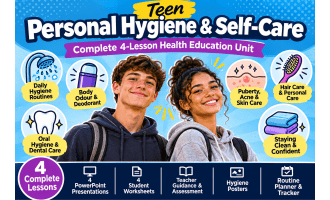
Personal Hygiene & Self-Care – Complete 4-Lesson Health Education Unit | PowerPoints, Worksheets, Posters & Teacher Guide
Introduction
Help children develop healthy hygiene habits, confidence and independence with this complete 4-lesson Personal Hygiene and Self-Care teaching unit from MrSportandPE.
Designed for elementary and primary school students, this ready-to-use resource introduces essential personal hygiene topics through engaging PowerPoint presentations, practical worksheets, classroom discussions and visual teaching resources.
Students explore why keeping clean matters, how germs spread, the importance of daily routines, looking after their teeth and maintaining good hygiene at school and after Physical Education.
The unit takes a positive, supportive approach to personal care, helping children understand why hygiene matters and how simple everyday habits can support their health and wellbeing.
Ideal for health education, personal development, life skills and classroom wellbeing lessons.
Learning Objectives
By the end of the unit, students will be able to:
Explain why personal hygiene is important.
Identify how germs can spread.
Recognise habits that help keep their bodies clean.
Develop simple morning and evening hygiene routines.
Understand why regular washing and clean clothing matter.
Explain how to care for their teeth.
Identify foods and drinks that can affect dental health.
Understand why sweating occurs during physical activity.
Recognise appropriate hygiene habits after PE and sport.
Identify useful items for a personal hygiene kit.
Reflect on their own routines and set achievable personal goals.
Complete 4-Lesson Unit Overview
Lesson 1 – Keeping Our Bodies Clean
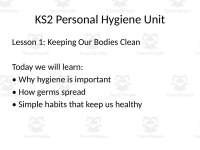
Students explore the importance of personal hygiene and how everyday habits help prevent germs from spreading.
Through discussions and sorting activities, children consider what it means to be clean and healthy.
Topics include:
Why personal hygiene matters.
What germs are.
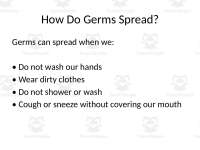
How germs spread.
Handwashing and body washing.
Wearing clean clothes.
Recognising healthy and unhealthy habits.
Students complete a worksheet identifying positive hygiene behaviours and reflecting on one habit they already practise.
Lesson 2 – Daily Hygiene Routines
Students discover how regular routines can make personal hygiene easier to remember and maintain.
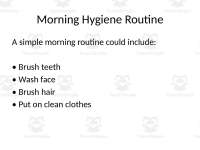
They explore morning and evening routines and consider why washing, changing clothes and caring for their bodies are important.
Topics include:
Morning hygiene routines.
Evening hygiene routines.
Washing and bathing.
Caring for hair and skin.
Wearing clean socks and underwear.
Changing clothes after exercise.
Students identify practical habits and consider one routine they would like to develop.
Lesson 3 – Looking After Our Teeth
Students learn why teeth are important and how everyday choices can support dental health.
The lesson introduces toothbrushing, tooth decay and the impact of sugary foods and drinks.
Topics include:
Why teeth matter.
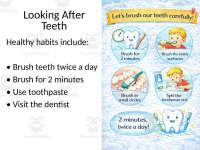
Brushing twice daily.
Brushing for two minutes.
Using toothpaste.
Visiting the dentist.
Understanding tooth decay.
Identifying tooth-friendly choices.
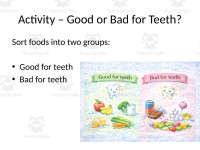
Students complete activities comparing different foods and drinks and reflect on how they can care for their teeth.
Lesson 4 – Hygiene at School and After PE
Students explore how exercise affects their bodies and why hygiene is important throughout the school day.
They learn about sweating, changing clothes after physical activity and simple ways to stay clean and comfortable.
Topics include:
Why we sweat.
Hygiene after Physical Education.
Changing into clean clothing.
Caring for sports equipment and clothing.
Washing hands before eating.
Using tissues appropriately.
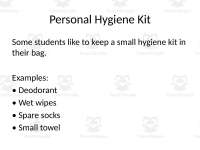
Creating a personal hygiene kit.
Students design their own hygiene kit and identify practical ways to look after themselves during the school day.
What's Included?
1. Four PowerPoint Presentations
Four ready-to-use presentations containing 37 slides in total.
Each presentation includes:
Clear learning objectives.
Introductory discussion questions.
Age-appropriate explanations.
Practical examples.
Interactive sorting and reflection activities.
Key learning points.
2. Four Student Worksheets
An accompanying worksheet for each lesson reinforces learning through:
Short written responses.
Healthy habit identification.
Sorting and classification.
Routine planning.
Personal reflection.
Practical self-care challenges.
The worksheets can be printed for classroom use or adapted to individual learning needs.
3. Teacher Guidance and Assessment
The teacher pack includes:
Unit overview.
Lesson learning objectives.
Guidance for discussing sensitive hygiene topics.
Supportive teaching approaches.
Assessment checklist.
Suggestions for reinforcing healthy routines.
4. Hygiene Posters and Supporting Resources
The pack also contains a separate hygiene posters document, with additional routine-planning and tracking materials referenced in the teacher pack.
These resources can support classroom displays, reminders and follow-up activities.
Recommended Grades and Ages
Suitable for:
Elementary school.
Primary school.
Approximately ages 7–11.
Grades 2–5, depending on student needs.
Health education.
Personal development and wellbeing.
Life skills education.
Small-group learning support.
Additional learning needs settings.
Activities can be adapted for younger or older learners who would benefit from support with personal hygiene and daily routines.
Implementation and Teaching Format
This unit can be delivered across four separate lessons or used flexibly within a wider health and wellbeing programme.
A suggested lesson structure includes:
Starter Discussion: Introduce the topic through questions and relatable examples.
Teacher Explanation: Use the PowerPoint to explore the key information.
Interactive Activity: Encourage discussion, sorting or problem-solving.
Student Worksheet: Reinforce understanding through independent or supported tasks.
Reflection: Identify a practical habit or goal to take forward.
Teachers can revisit key hygiene messages throughout the school year to reinforce positive routines.
Differentiation and Inclusive Teaching
Personal hygiene can be a sensitive topic, particularly for children who experience additional learning needs, sensory differences or challenges with daily routines.
This unit encourages a supportive, non-judgemental approach.
Teachers can adapt activities by:
Using visual prompts and simple explanations.
Allowing verbal or drawn responses.
Providing additional processing time.
Breaking routines into manageable steps.
Modelling tasks through fictional examples.
Encouraging achievable personal goals.
Avoiding public discussion of individual students' hygiene.
Students should never be embarrassed or singled out because of their personal circumstances.
Assessment Opportunities
Assessment is based on student understanding, participation and reflection.
Teachers can assess whether students can:
Explain why hygiene matters.
Recognise healthy personal care habits.
Identify appropriate daily routines.
Understand basic dental care.
Suggest hygiene strategies for school and after exercise.
The included teacher assessment checklist supports ongoing observation and progress monitoring.
Curriculum and Educational Standards
This resource supports learning outcomes commonly associated with:
Health education.
Personal hygiene and self-care.
Personal development.
Healthy lifestyles.
Life skills.
Independent living skills.
Physical wellbeing.
Responsible decision-making.
Personal responsibility and routines.
The lessons can be adapted to different national, state and school health education curricula.
File Types and Contents
The downloadable ZIP package contains 10 files:
4 PowerPoint presentations (PPTX) – 37 teaching slides.
4 student worksheets (DOCX) – One for each lesson.
1 teacher guidance and assessment pack (DOCX).
1 hygiene posters document (DOCX).
The editable PowerPoint and Word formats allow teachers to adapt the resources to their students and classroom requirements.
Why Choose This Resource?
Personal hygiene is an essential life skill, but it can sometimes be difficult to teach in an age-appropriate and sensitive way.
This four-lesson unit provides a clear, structured approach that helps children understand healthy habits without embarrassment or judgement.
With ready-to-use presentations, worksheets, teacher guidance and posters, educators can deliver meaningful lessons while reducing planning time.
Healthy Habits. Growing Independence. Lifelong Skills.
Created by MrSportandPE – practical teaching resources supporting Physical Education, health education, personal development and student wellbeing.
Suggested Tags: Personal Hygiene, Hygiene Lessons, Health Education, Self Care, Elementary Health, Primary School, Healthy Habits, Daily Routines, Dental Health, Teeth Brushing, Germs, Handwashing, Life Skills, Personal Development, Student Wellbeing, Hygiene Worksheets, Hygiene Posters, Health and Wellness, Physical Education, Hygiene After PE, Healthy Living, Classroom Activities, Teacher Resources. | PowerPoints, Worksheets, Posters & Teacher Guide
Introduction
Help children develop healthy hygiene habits, confidence and independence with this complete 4-lesson Personal Hygiene and Self-Care teaching unit from MrSportandPE.
Designed for elementary and primary school students, this ready-to-use resource introduces essential personal hygiene topics through engaging PowerPoint presentations, practical worksheets, classroom discussions and visual teaching resources.
Students explore why keeping clean matters, how germs spread, the importance of daily routines, looking after their teeth and maintaining good hygiene at school and after Physical Education.
The unit takes a positive, supportive approach to personal care, helping children understand why hygiene matters and how simple everyday habits can support their health and wellbeing.
Ideal for health education, personal development, life skills and classroom wellbeing lessons.
Learning Objectives
By the end of the unit, students will be able to:
Explain why personal hygiene is important.
Identify how germs can spread.
Recognise habits that help keep their bodies clean.
Develop simple morning and evening hygiene routines.
Understand why regular washing and clean clothing matter.
Explain how to care for their teeth.
Identify foods and drinks that can affect dental health.
Understand why sweating occurs during physical activity.
Recognise appropriate hygiene habits after PE and sport.
Identify useful items for a personal hygiene kit.
Reflect on their own routines and set achievable personal goals.
Complete 4-Lesson Unit Overview
Lesson 1 – Keeping Our Bodies Clean
Students explore the importance of personal hygiene and how everyday habits help prevent germs from spreading.
Through discussions and sorting activities, children consider what it means to be clean and healthy.
Topics include:
Why personal hygiene matters.
What germs are.
How germs spread.
Handwashing and body washing.
Wearing clean clothes.
Recognising healthy and unhealthy habits.
Students complete a worksheet identifying positive hygiene behaviours and reflecting on one habit they already practise.
Lesson 2 – Daily Hygiene Routines
Students discover how regular routines can make personal hygiene easier to remember and maintain.
They explore morning and evening routines and consider why washing, changing clothes and caring for their bodies are important.
Topics include:
Morning hygiene routines.
Evening hygiene routines.
Washing and bathing.
Caring for hair and skin.
Wearing clean socks and underwear.
Changing clothes after exercise.
Students identify practical habits and consider one routine they would like to develop.
Lesson 3 – Looking After Our Teeth
Students learn why teeth are important and how everyday choices can support dental health.
The lesson introduces toothbrushing, tooth decay and the impact of sugary foods and drinks.
Topics include:
Why teeth matter.
Brushing twice daily.
Brushing for two minutes.
Using toothpaste.
Visiting the dentist.
Understanding tooth decay.
Identifying tooth-friendly choices.
Students complete activities comparing different foods and drinks and reflect on how they can care for their teeth.
Lesson 4 – Hygiene at School and After PE
Students explore how exercise affects their bodies and why hygiene is important throughout the school day.
They learn about sweating, changing clothes after physical activity and simple ways to stay clean and comfortable.
Topics include:
Why we sweat.
Hygiene after Physical Education.
Changing into clean clothing.
Caring for sports equipment and clothing.
Washing hands before eating.
Using tissues appropriately.
Creating a personal hygiene kit.
Students design their own hygiene kit and identify practical ways to look after themselves during the school day.
What's Included?
1. Four PowerPoint Presentations
Four ready-to-use presentations containing 37 slides in total.
Each presentation includes:
Clear learning objectives.
Introductory discussion questions.
Age-appropriate explanations.
Practical examples.
Interactive sorting and reflection activities.
Key learning points.
2. Four Student Worksheets
An accompanying worksheet for each lesson reinforces learning through:
Short written responses.
Healthy habit identification.
Sorting and classification.
Routine planning.
Personal reflection.
Practical self-care challenges.
The worksheets can be printed for classroom use or adapted to individual learning needs.
3. Teacher Guidance and Assessment
The teacher pack includes:
Unit overview.
Lesson learning objectives.
Guidance for discussing sensitive hygiene topics.
Supportive teaching approaches.
Assessment checklist.
Suggestions for reinforcing healthy routines.
4. Hygiene Posters and Supporting Resources
The pack also contains a separate hygiene posters document, with additional routine-planning and tracking materials referenced in the teacher pack.
These resources can support classroom displays, reminders and follow-up activities.
Recommended Grades and Ages
Suitable for:
Elementary school.
Primary school.
Approximately ages 7–11.
Grades 2–5, depending on student needs.
Health education.
Personal development and wellbeing.
Life skills education.
Small-group learning support.
Additional learning needs settings.
Activities can be adapted for younger or older learners who would benefit from support with personal hygiene and daily routines.
Implementation and Teaching Format
This unit can be delivered across four separate lessons or used flexibly within a wider health and wellbeing programme.
A suggested lesson structure includes:
Starter Discussion: Introduce the topic through questions and relatable examples.
Teacher Explanation: Use the PowerPoint to explore the key information.
Interactive Activity: Encourage discussion, sorting or problem-solving.
Student Worksheet: Reinforce understanding through independent or supported tasks.
Reflection: Identify a practical habit or goal to take forward.
Teachers can revisit key hygiene messages throughout the school year to reinforce positive routines.
Differentiation and Inclusive Teaching
Personal hygiene can be a sensitive topic, particularly for children who experience additional learning needs, sensory differences or challenges with daily routines.
This unit encourages a supportive, non-judgemental approach.
Teachers can adapt activities by:
Using visual prompts and simple explanations.
Allowing verbal or drawn responses.
Providing additional processing time.
Breaking routines into manageable steps.
Modelling tasks through fictional examples.
Encouraging achievable personal goals.
Avoiding public discussion of individual students' hygiene.
Students should never be embarrassed or singled out because of their personal circumstances.
Assessment Opportunities
Assessment is based on student understanding, participation and reflection.
Teachers can assess whether students can:
Explain why hygiene matters.
Recognise healthy personal care habits.
Identify appropriate daily routines.
Understand basic dental care.
Suggest hygiene strategies for school and after exercise.
The included teacher assessment checklist supports ongoing observation and progress monitoring.
Curriculum and Educational Standards
This resource supports learning outcomes commonly associated with:
Health education.
Personal hygiene and self-care.
Personal development.
Healthy lifestyles.
Life skills.
Independent living skills.
Physical wellbeing.
Responsible decision-making.
Personal responsibility and routines.
The lessons can be adapted to different national, state and school health education curricula.
File Types and Contents
The downloadable ZIP package contains 10 files:
4 PowerPoint presentations (PPTX) – 37 teaching slides.
4 student worksheets (DOCX) – One for each lesson.
1 teacher guidance and assessment pack (DOCX).
1 hygiene posters document (DOCX).
The editable PowerPoint and Word formats allow teachers to adapt the resources to their students and classroom requirements.
Why Choose This Resource?
Personal hygiene is an essential life skill, but it can sometimes be difficult to teach in an age-appropriate and sensitive way.
This four-lesson unit provides a clear, structured approach that helps children understand healthy habits without embarrassment or judgement.
With ready-to-use presentations, worksheets, teacher guidance and posters, educators can deliver meaningful lessons while reducing planning time.
Healthy Habits. Growing Independence. Lifelong Skills.
Created by MrSportandPE – practical teaching resources supporting Physical Education, health education, personal development and student wellbeing.
Resource Tags
0 Reviews
Check out these other great products