COD et COI – French Pronouns Exercises Worksheet
- Grades
- Grades 7–10, Middle School, High School
- Pages
- 4
- File type
- Preparation
- Print ready


- Subject
- French, Foreign Languages
- Topic
- Pratiquez les COD et COI , cod and coi in french
- Resource types
- Worksheets & Printables, Worksheets
- Preparation
- Print ready
About this resource
What's inside this resource
📝 Pratiquez les COD et COI – French Direct and Indirect Object Pronouns Worksheet
🔹 Introduction
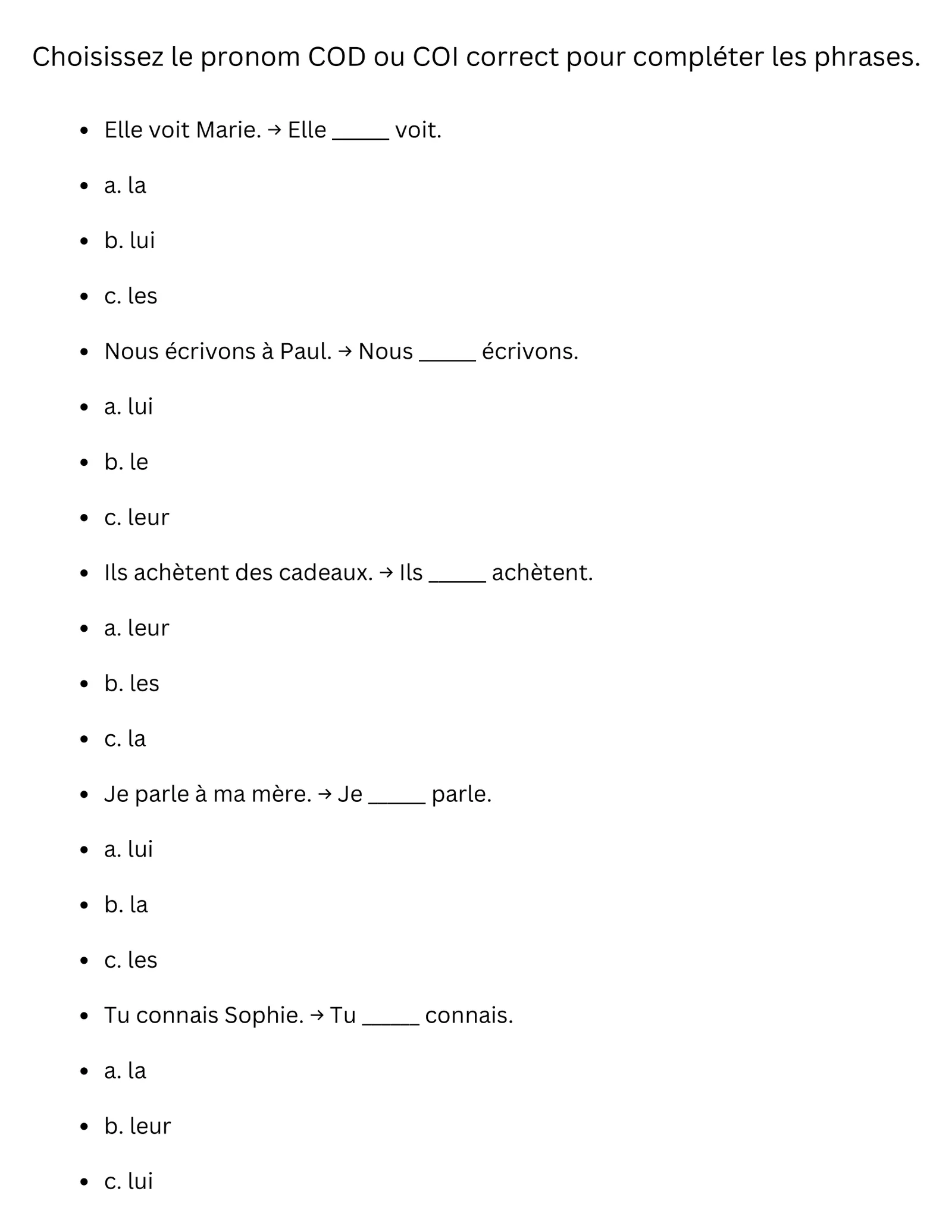
This worksheet focuses on helping students master French direct and indirect object pronouns (COD et COI) such as le, la, les, l’, lui, and leur.
🔹 Objective
Students will build fluency and confidence by practicing correctly replacing nouns with the appropriate object pronouns in French sentences.
🔹 Order, Outline, and Steps
Includes a clear progression of exercises:
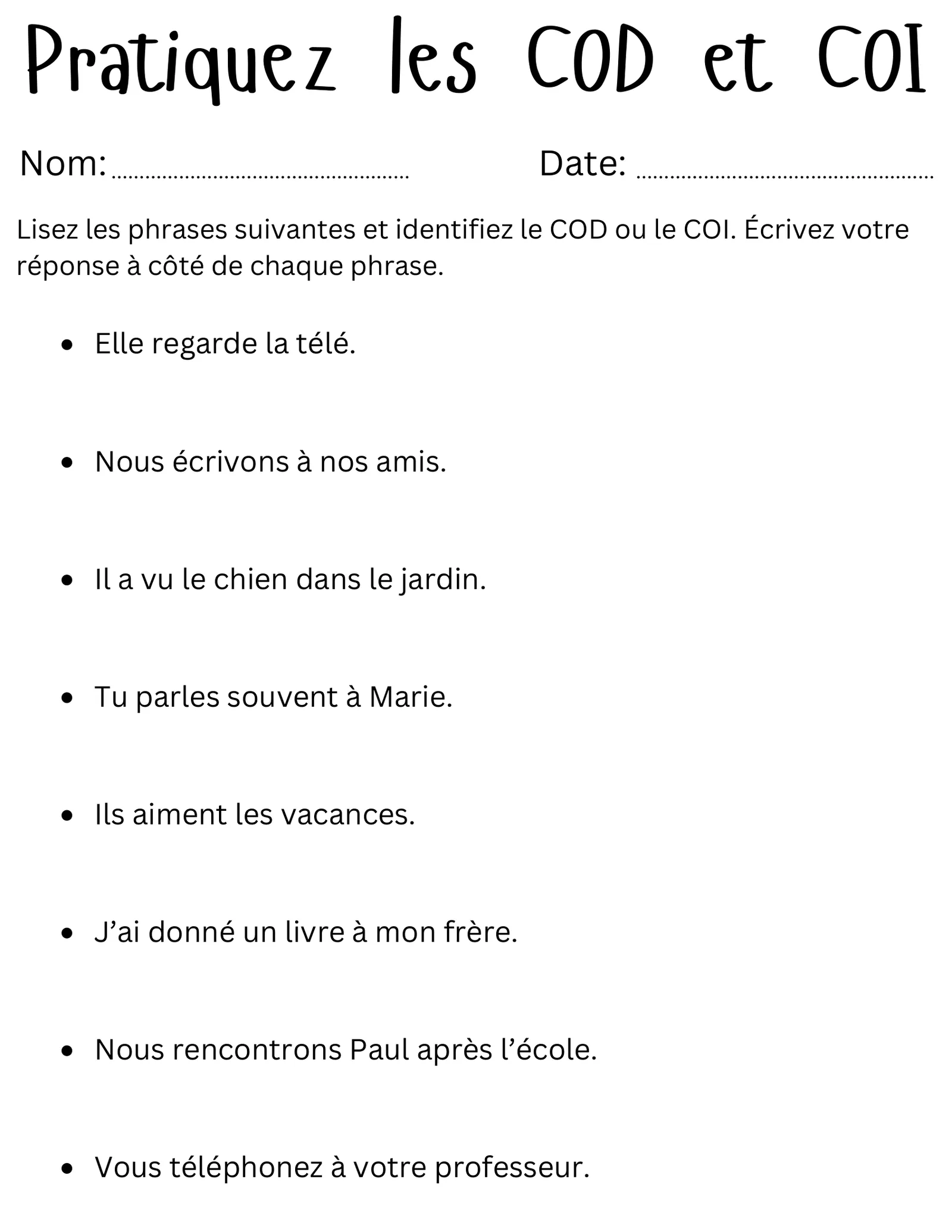
Identifying COD and COI
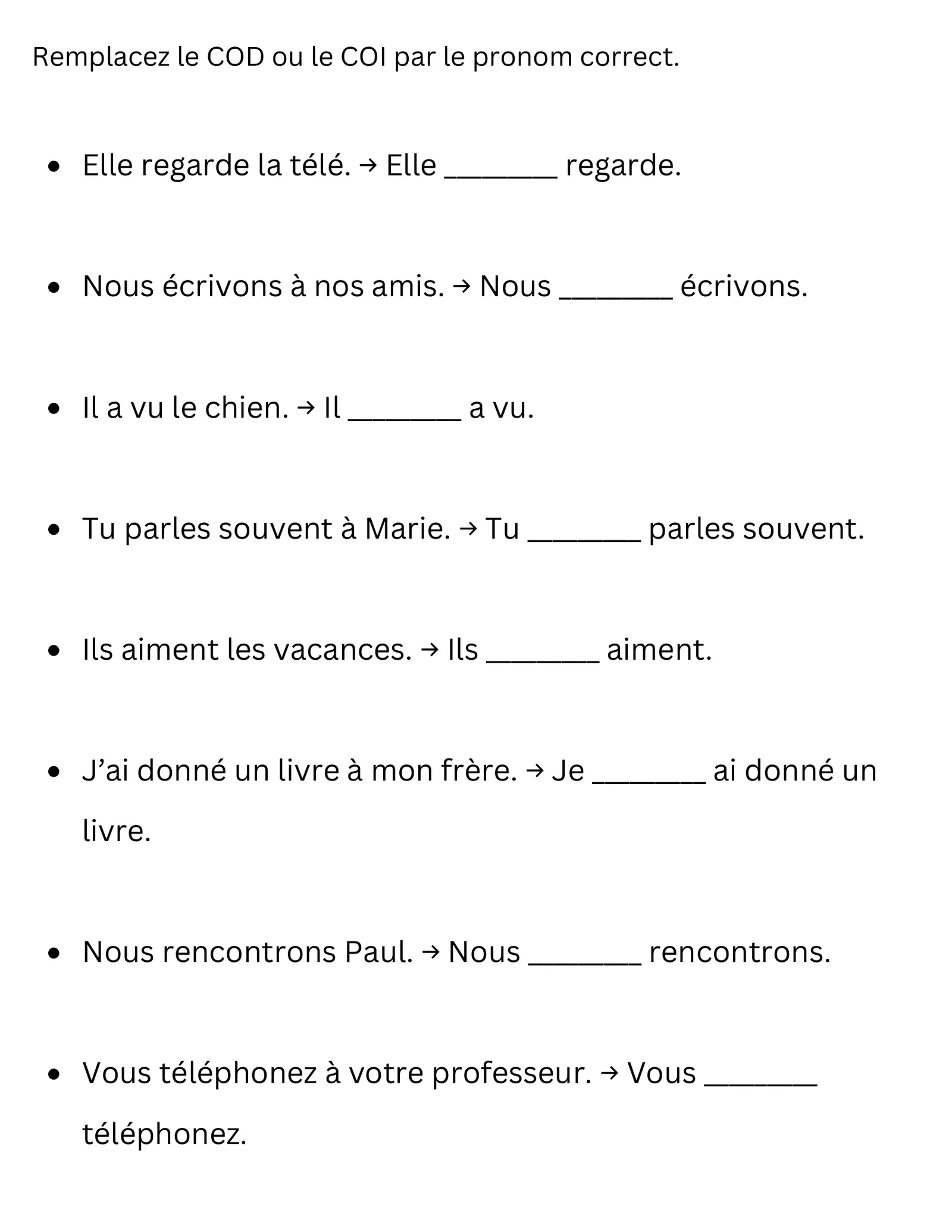
Rewriting sentences using the correct pronouns
Fill-in-the-blank activities
Sentence transformation for better understanding
🔹 Grades or Ages
Perfect for middle school to high school students (Grades 7–12), or anyone learning French at an A2–B1 CEFR level.
🔹 Implementation Format
Designed for print-only use, this resource is ideal for classwork, homework, practice sessions, or grammar review.
🔹 Answer Keys
🚫 No answer key included
🔹 Use Tags in Your Text
French grammar, object pronouns, COD and COI, le la les lui leur, French exercises, French worksheet, sentence practice, FLE, French language learning.
🔹 How to Use and Variations
Use this worksheet as independent work, bell-ringers, or in stations. It can also support oral practice or group discussions.
🔹 Standards
Supports French language learning goals aligned with most secondary curricula and CEFR language standards.
🔹 File Types
📄 PDF format – non-editable
🔹 Number of Pages
🖨️ 4 pages
Related resources
More resources teachers may find useful
24 related resources were found using this product's title, contributor, categories and tags.


In the classroom
Teaching tips & learning objectives

Learning objectives
Tell a direct object from an indirect object in a French sentence, using the preposition à as the marker of the indirect one
Replace a direct object with le, la, l' or les and an indirect object with lui or leur
Place the object pronoun correctly before the verb, including before the auxiliary in a compound tense as in "Il ______ a vu"

Teaching tips
Pages one and two use the same eight sentences, so run them in order: students label the object first, then come back and replace it, which separates the identification step from the pronoun choice
The sentence list is deliberately plain - regarder, écrire, voir, parler, aimer, donner, rencontrer, téléphoner - so the difficulty sits in the grammar rather than in unfamiliar vocabulary
Page two includes "Il a vu le chien" in the passé composé, which is the one item where pronoun placement before the auxiliary has to be taught rather than assumed. Keep this French direct- and indirect-object pronoun guide nearby during sentence practice.

Skills covered
Object identification - students label the COD or COI in eight sentences, distinguishing Elle regarde la télé from Nous écrivons à nos amis.
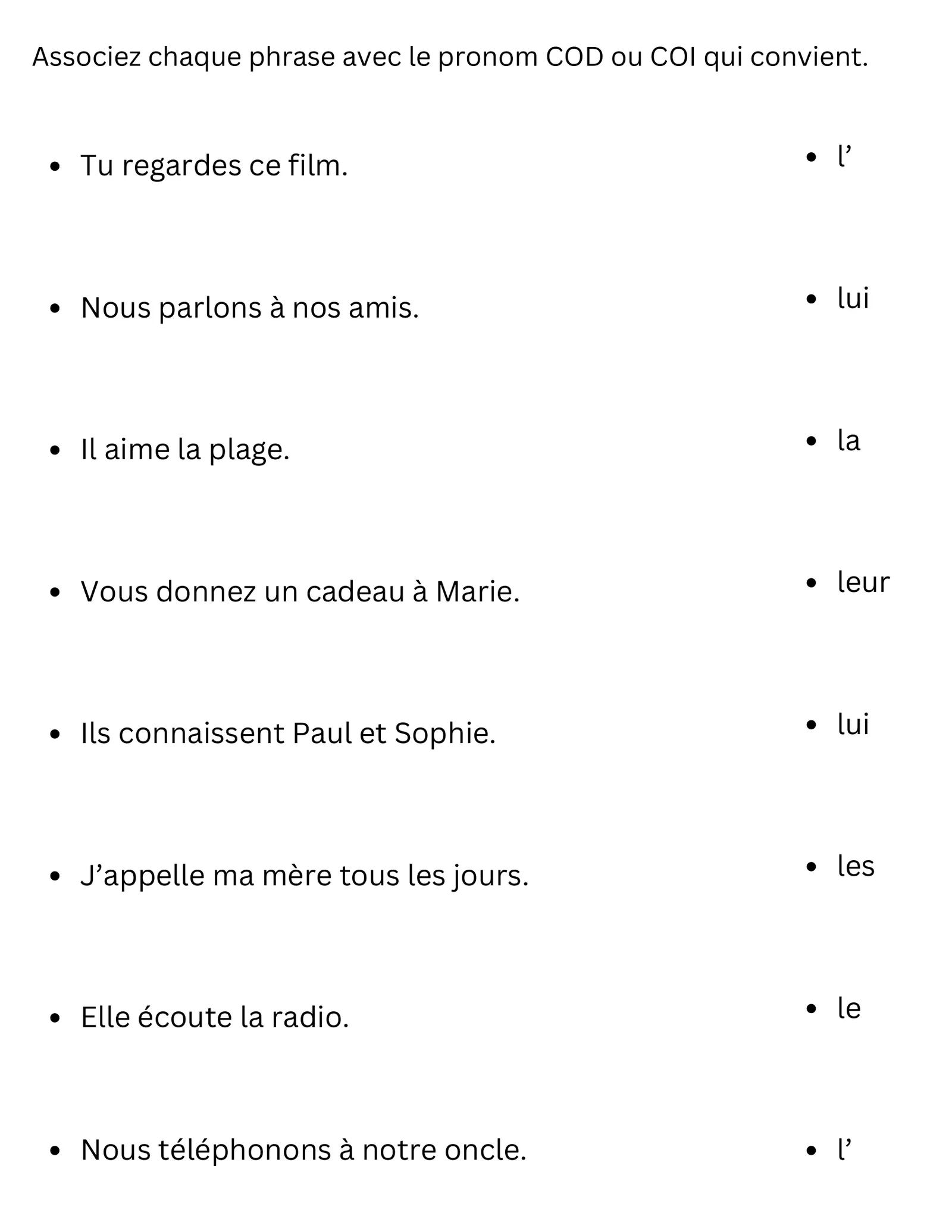
Direct object pronouns - le, la, l' and les replace the objects in sentences such as Ils aiment les vacances and Tu regardes ce film.
Indirect object pronouns - lui and leur replace à-phrases in Vous téléphonez à votre professeur and Nous parlons à nos amis.
Good to know
Questions teachers ask about this resource
What vocabulary do students need before starting?
Review the verbs and nouns your learners need, including regarder, écrire, parler, donner, téléphoner, la télé, le chien and les vacances, so they can focus on object identification and pronoun choice.

No reviews yet
Downloaded this resource? Tell other teachers how it went.
Resource details
Concepts & topics
Core concepts
 Core concepts
COD et COI
French object pronouns
French grammar
Pronoun placement
 Topics
Explore more
Categories this resource belongs to
Explore related searches
More to explore
You may also like