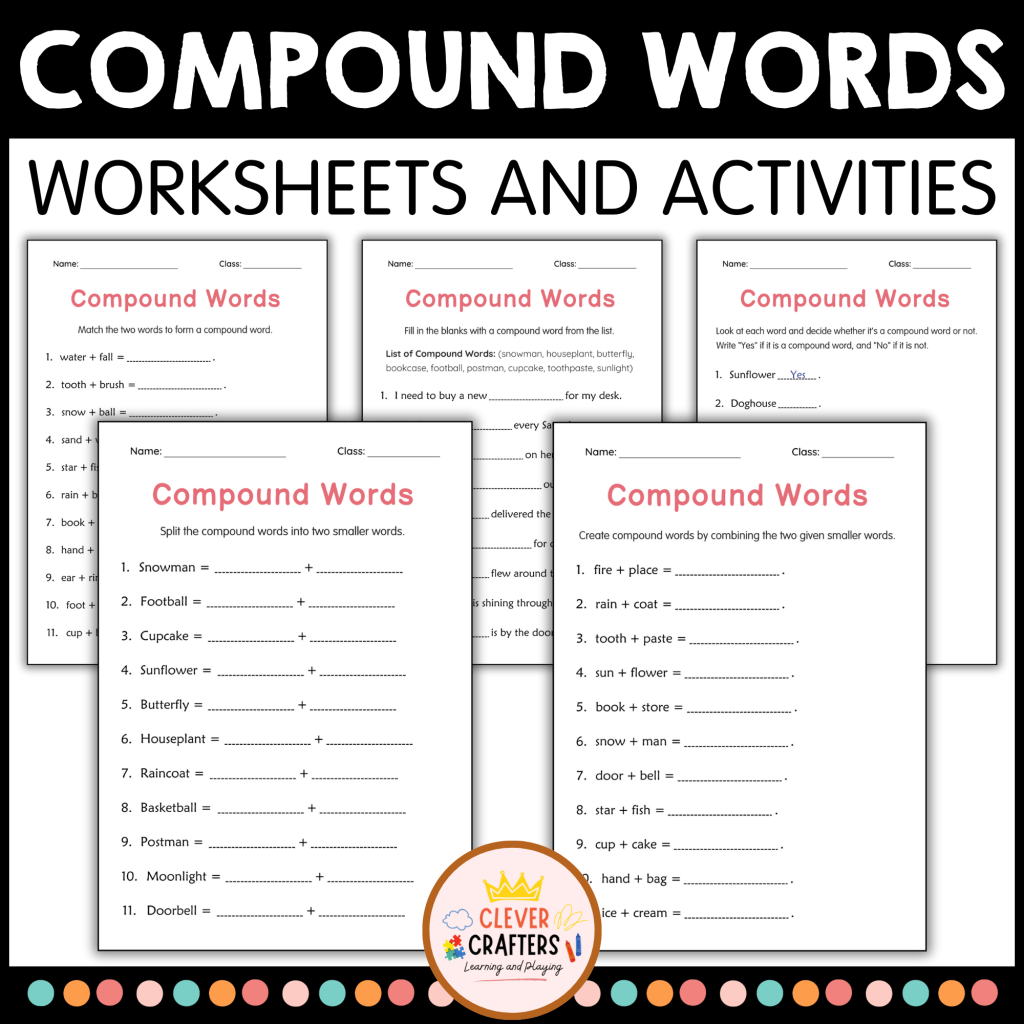
Printable Compound Words Grammar Worksheets and Activities for Grade 1
A set of grammar worksheets that teach compound words: identifying, creating, using, matching, splitting, and sorting them.




1,207 resources
Improve language skills with targeted grammar worksheets. Enhance writing proficiency.
Explore sub-categories
6 sub-categories · 1,207 resources
A set of grammar worksheets that teach compound words: identifying, creating, using, matching, splitting, and sorting them.
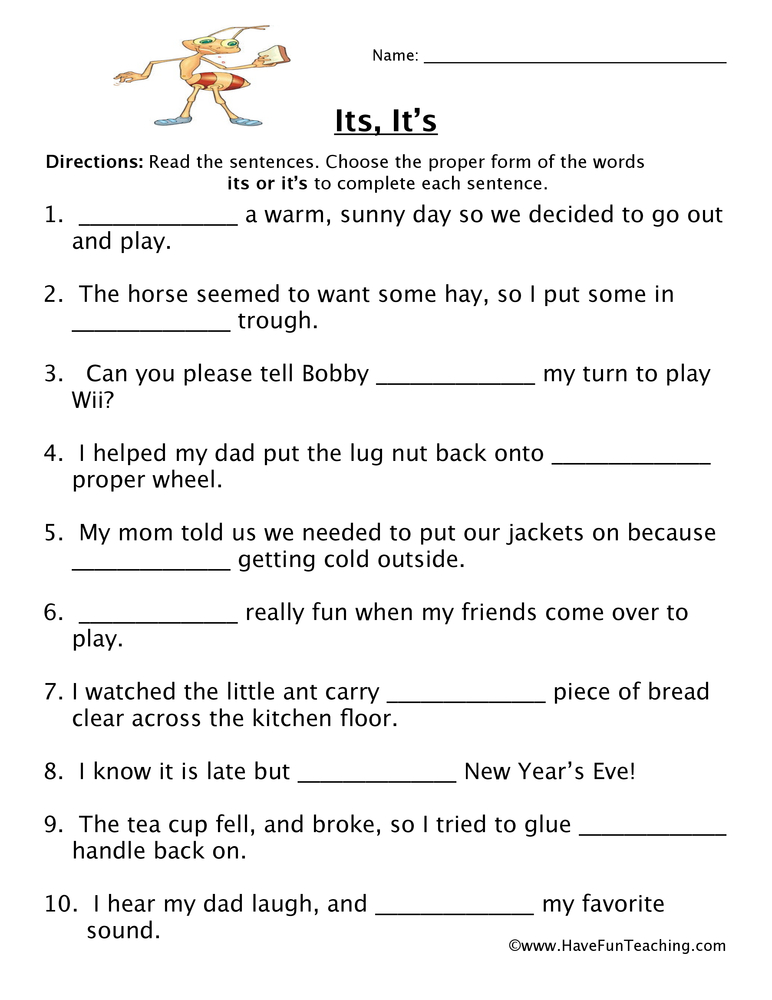
Give students practice choosing the correct homophone ('its' vs. "it's") to complete sentences.
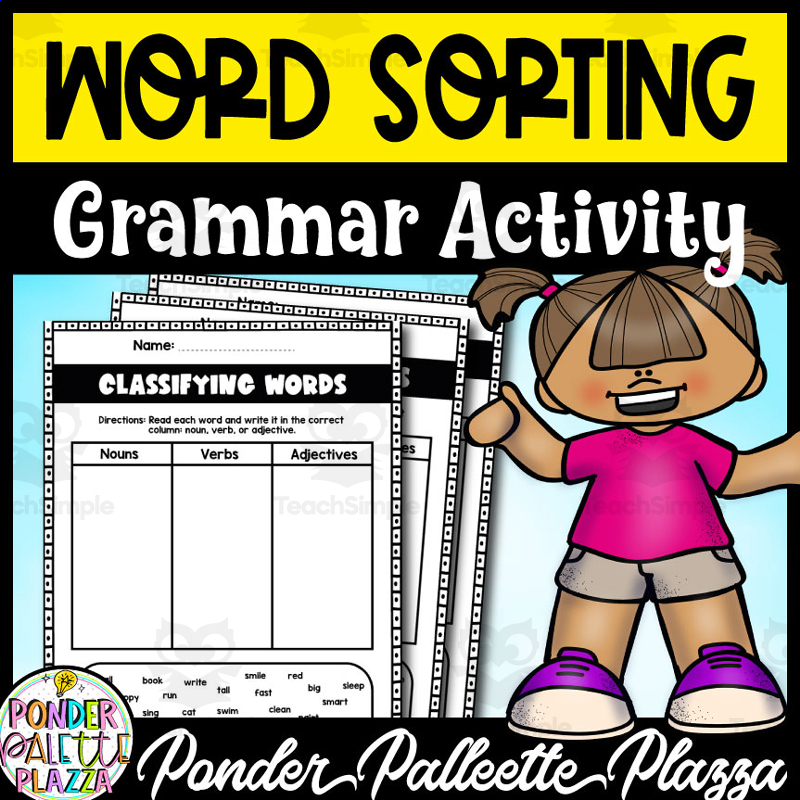
A grammar practice activity where students classify a mixed word bank into nouns, verbs, and adjectives to reinforce parts-of-speech identification.
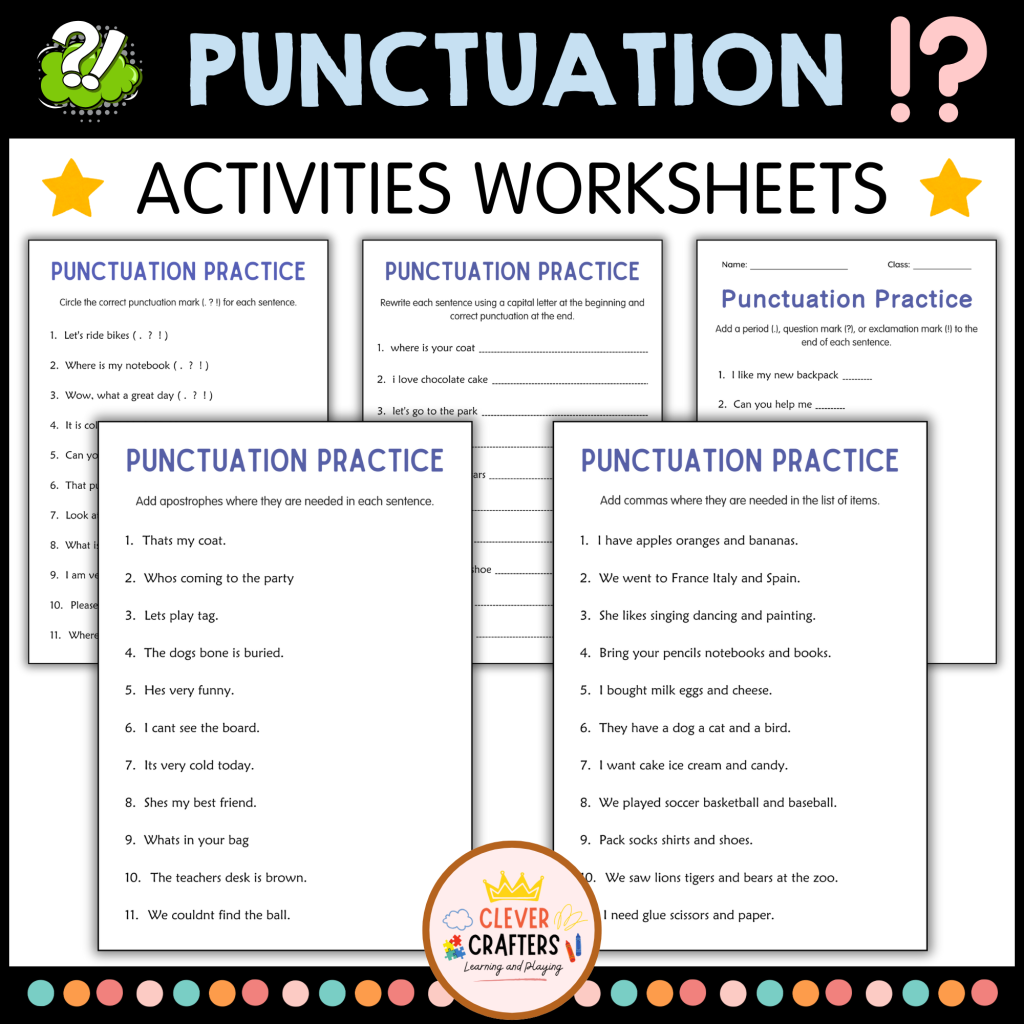
Practice end punctuation, capitalization, comma usage in lists, and apostrophe usage in everyday sentences.
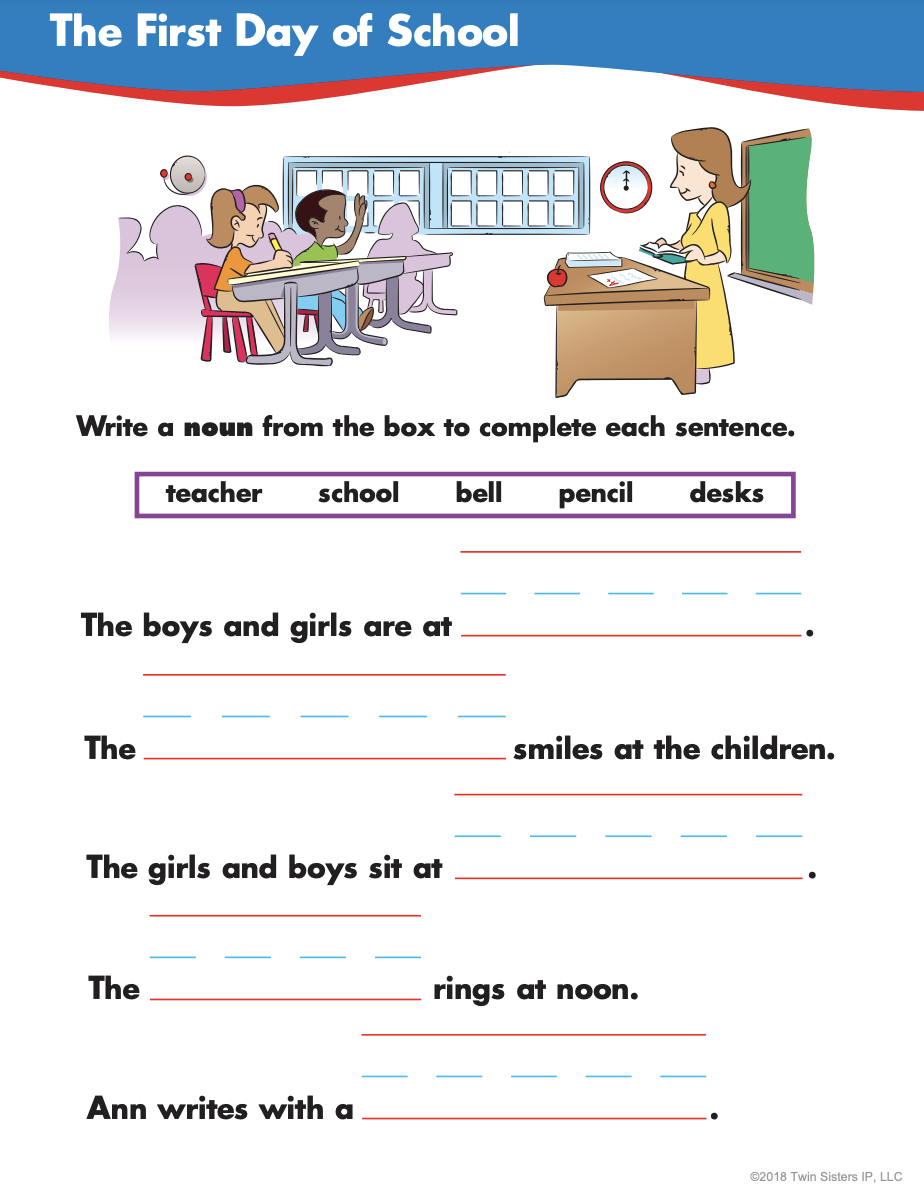
Introductory workbook on sentence structure and nouns: naming/action parts of a sentence (subject/predicate), identifying nouns, and forming simple regular plurals.

Fill-in-the-blank worksheet for practicing the homophones their, there, and they're, with an answer key.

A 13-activity compound word workbook (co-created with a speech/language clinician) teaching 24 compound words through puzzles, writing, drawing, and games, for grade 2 and ESL/speech-therapy learners.
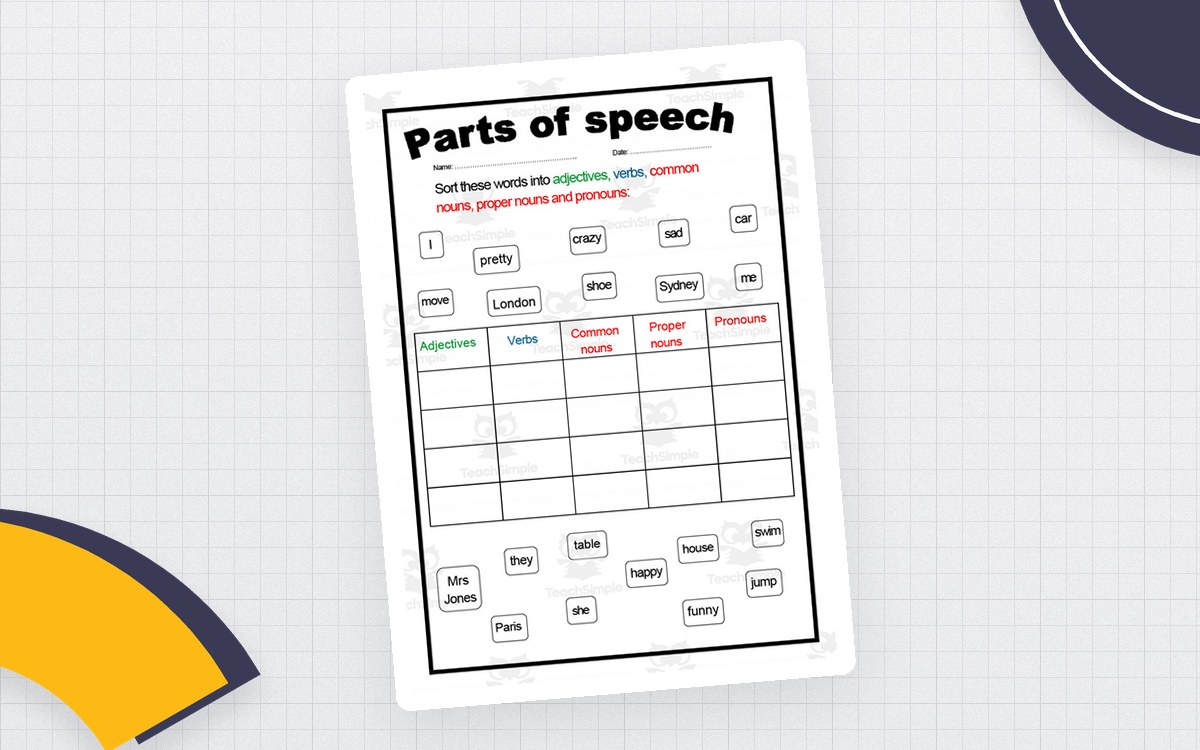
Give students practice sorting words into five grammar categories: adjectives, verbs, common nouns, proper nouns, and pronouns.
Practice subject–verb agreement through themed worksheets, quizzes and task cards that include more complex subjects. Reference sheets support decisions about compound subjects and indefinite expressions, while recording materials organize responses to the cards. Choose one format for guided discussion, then use another to ask students to apply the same agreement reasoning with less support.
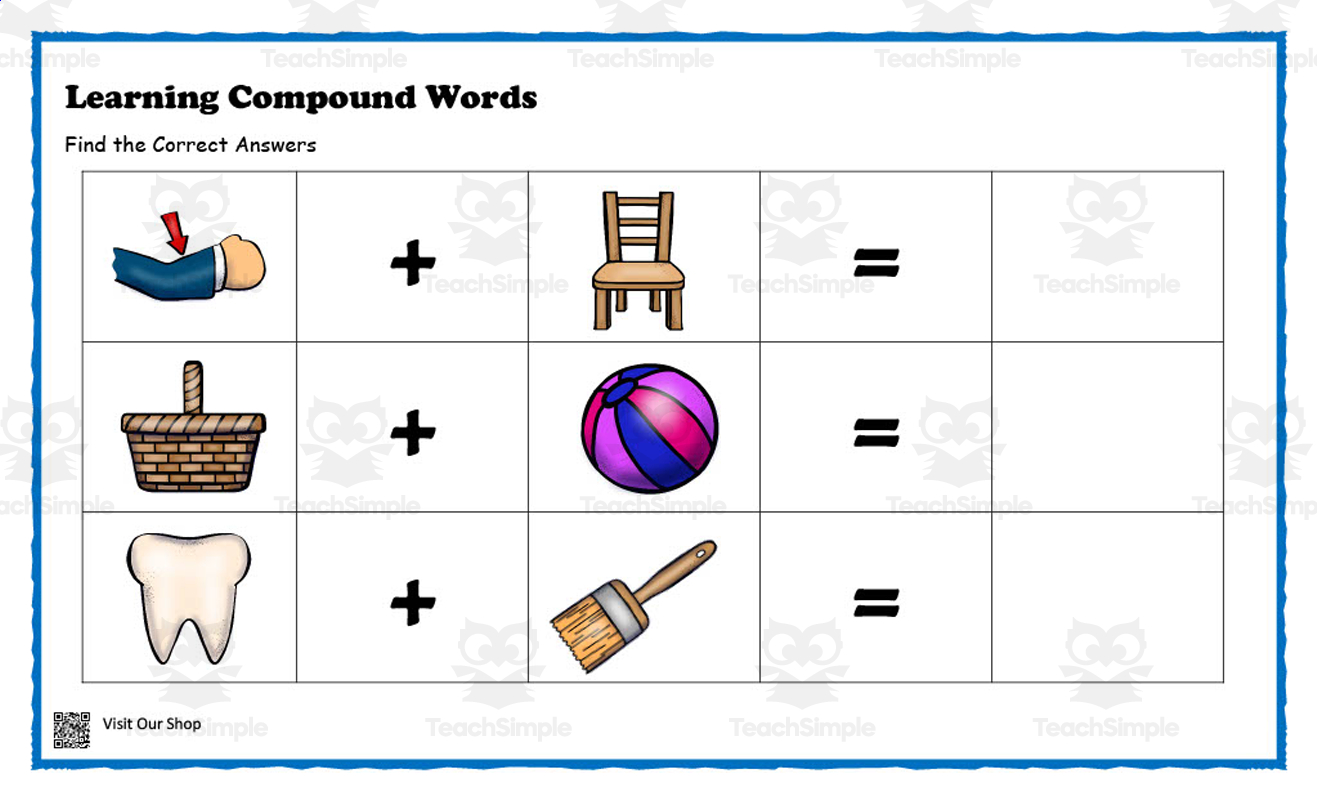
A compound-words worksheet for introducing or reviewing how two words combine to form a compound word.
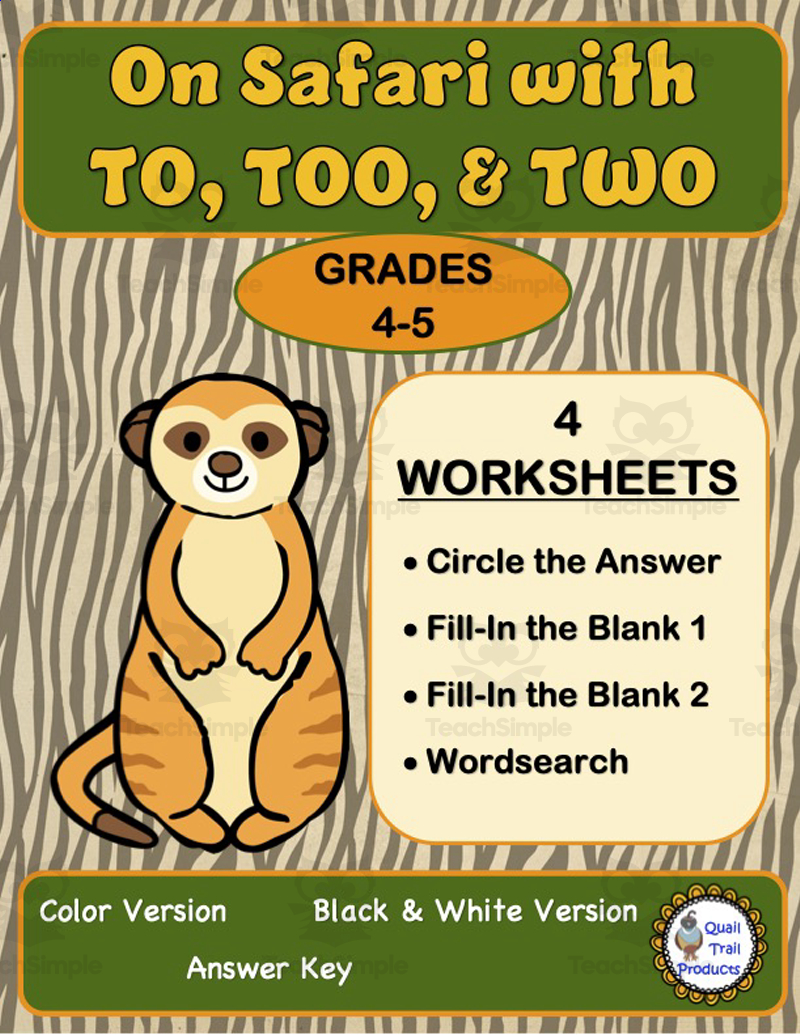
Practice distinguishing and correctly using the homophones to, too, and two through a set of graduated-difficulty safari-themed worksheets.
Give first/second-grade students practice sorting words into grammar categories (nouns/verbs, common/proper nouns, nouns/possessive nouns, nouns/pronouns).
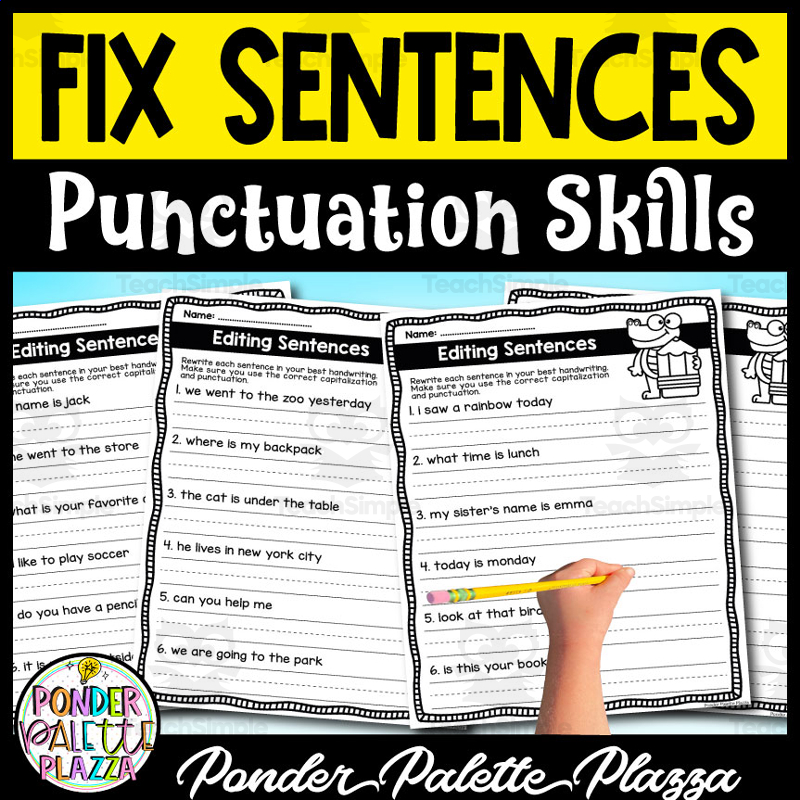
Handwriting/editing practice worksheets where students correct capitalization and punctuation in given sentences.

Worksheet giving students practice building compound words by matching two word parts together.
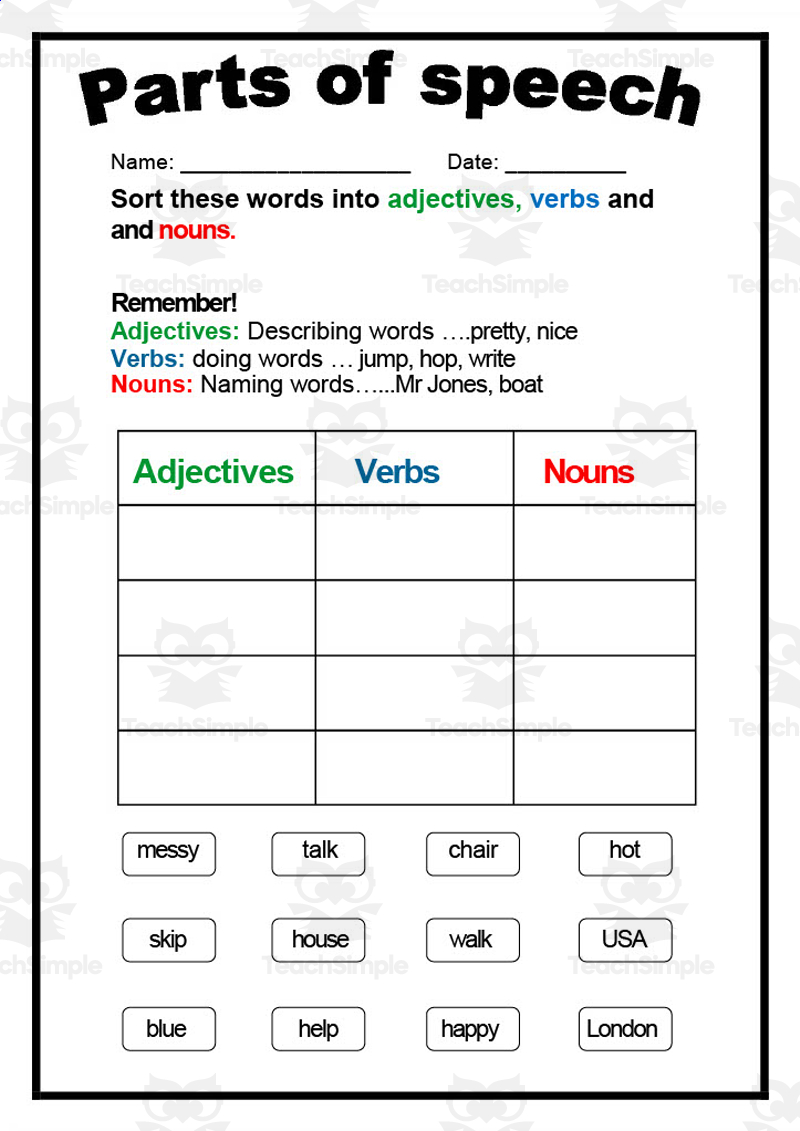
Give students practice sorting words into three grammar categories: adjectives, verbs, and nouns.
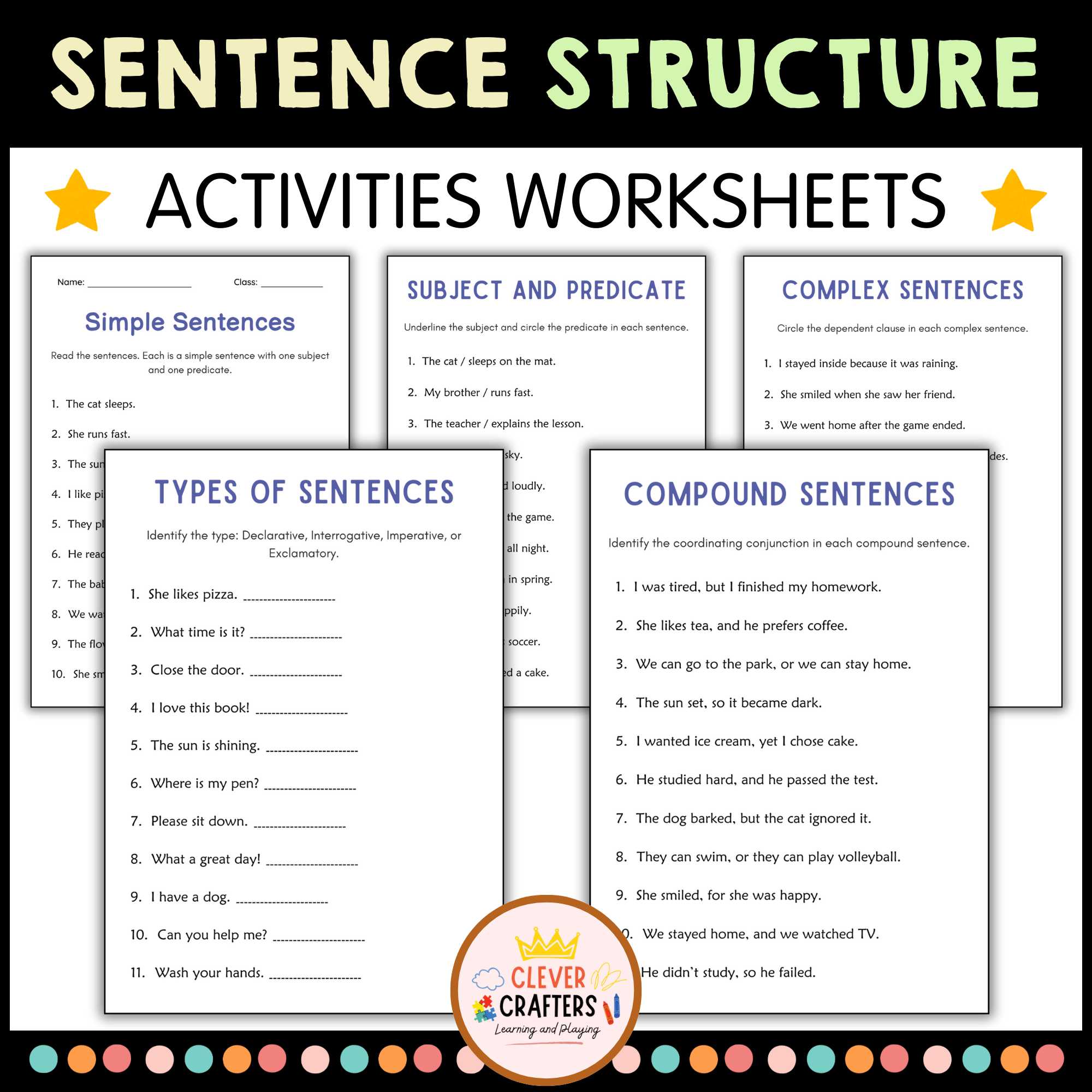
Introduction This set of 6 engaging worksheets is designed to help students understand and master sentence structure in English. Covering simple, compound, complex, and compound-complex sentences, as well as fragments, run-ons, and types of sentences, each worksheet provides a clear task with 11 practice examples. Perfect for classroom…
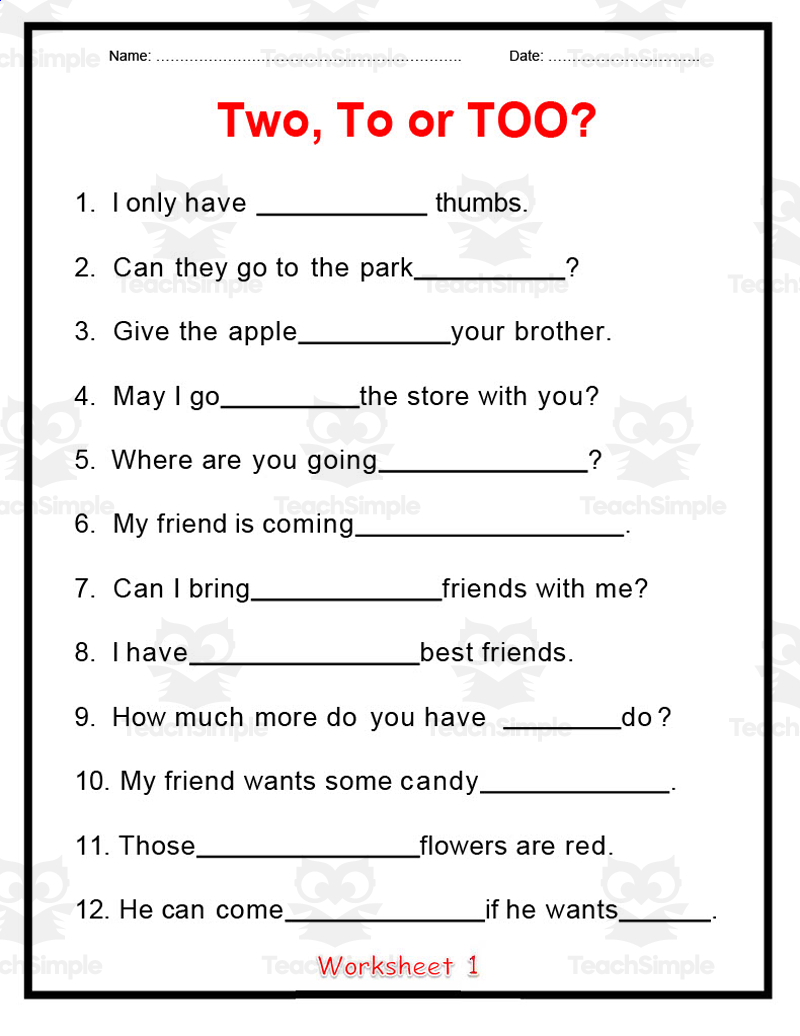
Grammar practice distinguishing the homophones 'to', 'too', and 'two'.
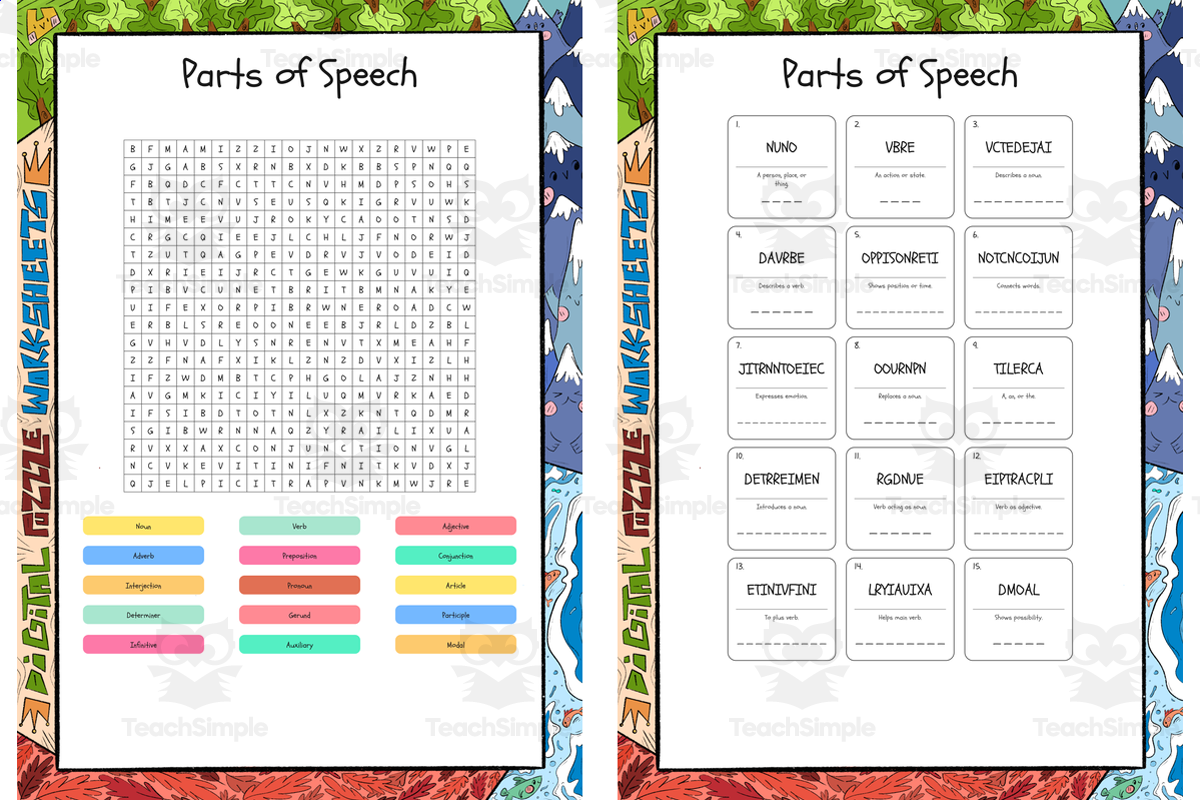
Practices identifying and defining parts-of-speech terminology (noun, verb, adjective, adverb, preposition, conjunction, interjection, pronoun, article, determiner, gerund, participle, infinitive, auxiliary, modal) through three puzzle formats.
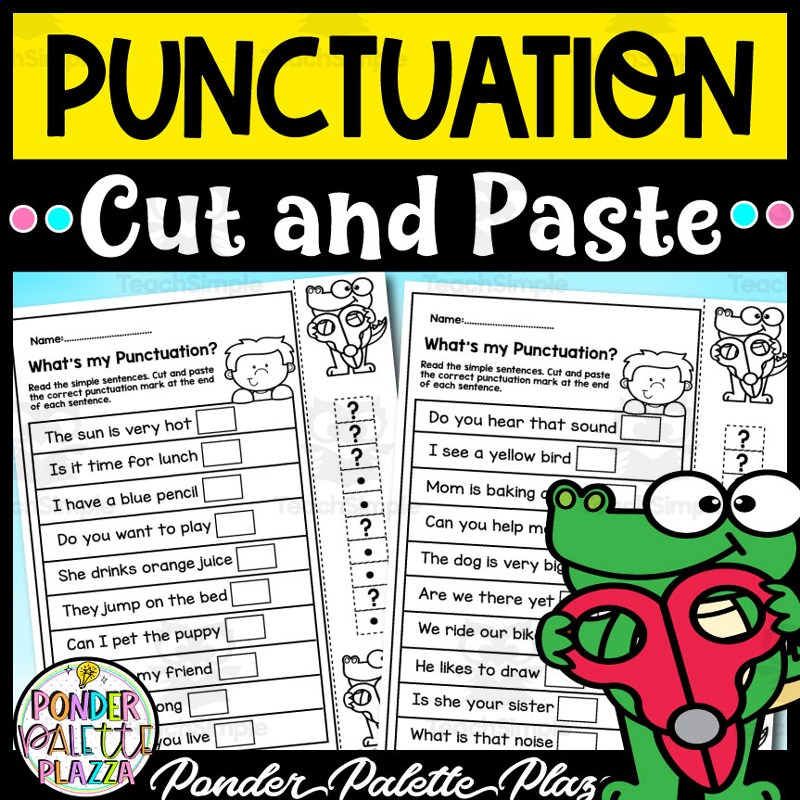
Practice identifying and applying end punctuation (period, question mark, exclamation mark) through a cut-and-paste matching activity.
A packet of subject-verb agreement grammar worksheets and quizzes for intermediate practice, using sports-themed sentences, to help students choose the correct verb form to match the subject.
Teaches how adjectives (including possessive adjectives) describe nouns, how to find adjectives that aren't right next to the noun they modify, and how changing adjectives changes a character's personality, mood, or occupation in writing, using picture-description, passage-finding, and fill-in-the-blank story exercises.
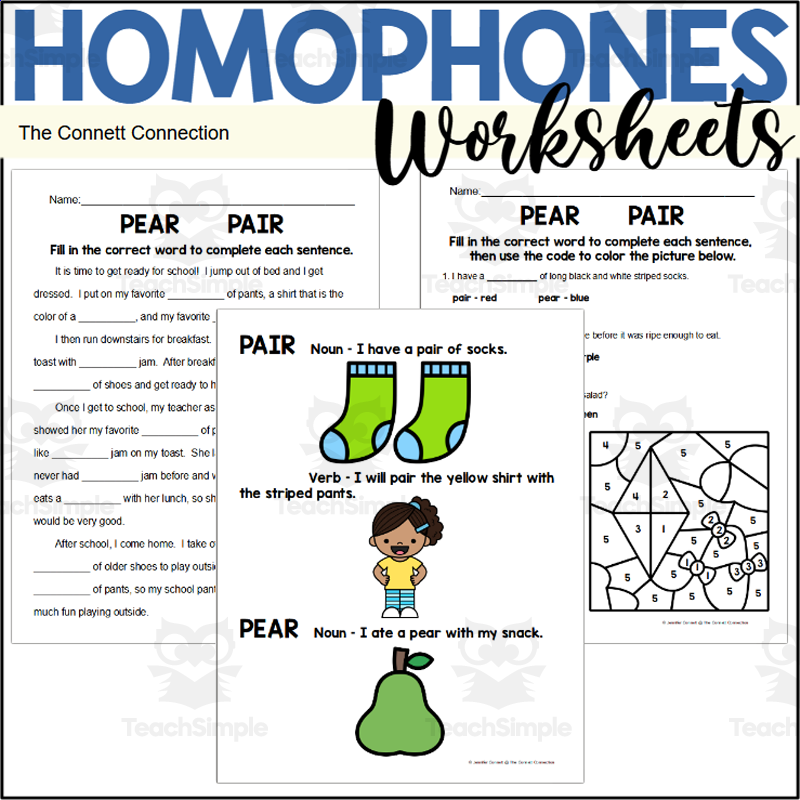
Students can practice using the correct spelling of homophone words with this worksheet packet. This packet focuses on the homophones: pear pair. What are homophones? Homophones are a pair of words that sound the same but are spelled differently. Words that are homophones can often be tricky for students to spell correctly since the…
Teaches the categories of nouns (concrete vs. abstract, common vs. proper, singular vs. plural including regular -s/-es rules, y-ending rules, and irregular plurals) and how to recognize nouns using noun-signal articles (a/an/the), through a narrative dialogue plus a passage-identification exercise.
Students choose verb forms that agree with sentence subjects across themed practice pages about sports, space, holidays and other topics. Color and blackline rule references support the choices, and paired answers make review straightforward. Use a small set at a time, discussing the full subject before selecting forms such as is/are or has/have, especially when extra words separate the subject from its verb.