Printable Simple Future Tense Verbs Grammar Worksheets for Grade 2, 3


- Grades
- Grades 2–3
- Pages
- 4
- File type
- Preparation
- Print ready


- Subject
- ELA, Grammar
- Topic
- Future tense verbs, Will
- Resource types
- Worksheets
- Preparation
- Print ready
- Standards
- L.3.1
Product description
From the author
Introduction
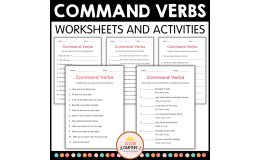
This set of Future Tense Verbs Worksheets helps learners understand how verbs are used to talk about actions that will happen in the future. Students practise forming future tense using “will,” “going to,” and future continuous forms, helping them build stronger grammar and sentence-writing skills.
What’s Included:
Completing sentences using “will” for future actions
Using “going to” with the correct verb form
Filling in blanks with the correct future tense verb
Practising future continuous tense
Sentence-building and grammar practice activities
Grades / Ages:
Ideal for Grades 2–5
Implementation Format:
Perfect for literacy centres, grammar lessons, morning work, homework, small-group practice, or independent learning.
Answer Key:
Not included
File Type:
PDF (Non-editable)
Number of Pages:
4 pages total
License:
Paid product for personal or single-classroom use only
Related resources
More resources teachers may find useful
24 related resources were found using this product's title, contributor, categories and tags.


In the classroom
Teaching tips & learning objectives

Learning objectives
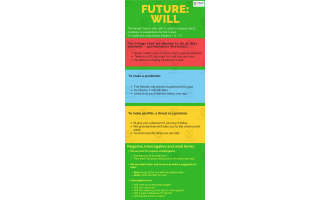
Form the simple future with will, adding the base verb unchanged - I will go, they will arrive, it will rain
Form the same future with be going to, matching the auxiliary to the subject - I am going to eat, we are going to have, he is going to watch
Choose a future form independently when the direction line names no particular one

Teaching tips
Work pages 1 and 2 as a matched pair: compare how each page forms the future, noting that the verbs and sentence contexts also differ
The "going to" page is the one where subject-verb agreement bites, since am, is and are all have to be chosen correctly before the verb is even reached
Save the future-continuous page for after the simple-future pages are secure; it is the only page requiring two changes at once, the auxiliary and the -ing ending

Skills covered
Forming the simple future with will - students supply will plus the unchanged base verb in ten sentences, including shopping and travel examples.
Forming the future with be going to - a whole page requires the auxiliary to be matched to the subject before the verb is added, as in "He ___ (watch) a movie tonight".
Choosing a future form unaided - the third page names no form, so students decide for themselves which construction fits the sentence.
Good to know
Questions teachers ask about this resource
Are negative forms practised alongside the positive ones?
On every page. Bracketed prompts such as (not attend), (not come), (not like) and (not enjoy) sit among the positive items, so students have to build "will not attend" or "is not going to come" rather than only the affirmative pattern.

No reviews yet
Downloaded this resource? Tell other teachers how it went.
Curriculum
Standards, concepts & topics
Standards
 Standards
- L.3.1
Core concepts
 Core concepts
Future tense
Will and going to
Future continuous
Verb forms
 Topics
Explore more
Categories this resource belongs to
Explore related searches
More to explore
You may also like