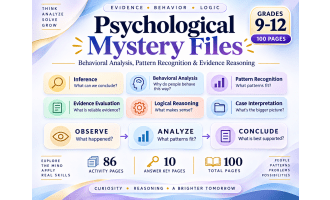
Psychological Mystery Files | Critical Reading |Grades 9–12 | 70 Pages



About This Product
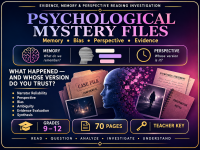
Psychological Mystery Files | Memory, Bias, Perspective & Critical Reading | Grades 9–12 | 70 Pages
Challenge students to question assumptions, examine conflicting accounts, and evaluate evidence with Psychological Mystery Files, a comprehensive 70-page reading investigation workbook designed for high school students in Grades 9–12.
Students explore the complexities of memory, cognitive bias, narrator reliability, perspective, and ambiguity through fictional psychological mystery cases.
By analyzing eyewitness statements, comparing accounts, interpreting behavioral data, and examining competing explanations, students develop essential critical reading, analytical reasoning, and evidence evaluation skills.
What's Included:
70-page printable educational workbook
59 student activity pages
8 psychological mystery case files
Core skills activities and reliable narrator checklist
4 bar graph data analysis activities
Memory and cognitive bias investigations
Evidence evaluation and perspective analysis
Final synthesis investigation
8-page teacher answer key with sample answers (pages 63–70)
Teacher notes, pacing, and differentiation guidance
8 Psychological Mystery Case Files:
The Reunion Story: Memory, corroboration, and retelling.
Incident at Platform 4: Witness conditions, confidence, and evidence evaluation.
Same Room, Different Expectations: Framing, experimental design, and claims.
The Plaza Event: Selective attention, motive, and factual evidence.
8:40–9:10 P.M.: Timeline analysis, documentation, and claim calibration.
The First Message: Rumor chains and post-event information.
The Decision Study: Framing, choice memory, and theory building.
Avery & Mika: Perspective, narrator reliability, and ambiguity.
Final Challenge — The Blue Door Incident:
Students synthesize information, evaluate competing accounts, and recognize the limitations of available evidence to develop a well-supported conclusion.
Skills Developed:
Critical reading and comprehension
Narrator reliability analysis
Memory and cognitive bias awareness
Perspective analysis
Evidence evaluation
Making inferences
Logical reasoning
Identifying ambiguity
Timeline analysis
Bar graph interpretation
Comparing competing explanations
Evidence-based conclusions
Analytical thinking and synthesis
Perfect For:
High school English Language Arts classrooms
Introductory psychology lessons
Critical reading instruction
Literary and narrator analysis
Critical thinking activities
Social studies enrichment
Independent learning
Discussion-based lessons
Homeschool education
Cross-curricular learning
Evidence-based reasoning activities
Encourage students to think beyond first impressions, question the reliability of information, and recognize how memory, bias, and perspective can influence interpretations of events.
Read. Question. Analyze. Investigate. Understand.
Educational Note: All scenarios are fictional. This resource focuses on critical reading and psychological reasoning rather than clinical diagnosis. Confidence, agreement, attention counts, and interview patterns do not independently establish dishonesty, intent, diagnosis, or causation.
Resource Tags
0 Reviews
Check out these other great products