



Sharing – Social Story for Young Learners

- Grades
- Preschool–2
- Pages
- 10
- File type
- Preparation
- Print ready


- Subject
- Social Emotional Learning (SEL), Social Skills, Special Education Needs (SEN)
- Topic
- Sharing social story, Turn taking
- Resource types
- Literacy Readers
- Preparation
- Print ready
Product description
From the author
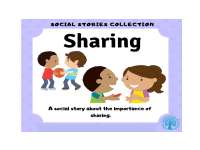
This social story is about the importance of sharing.
These books should be used over and over to reinforce the point so I would suggest either putting the pages into a display book or laminating and binding them.
Clipart images courtesy of Kari Bolt.
Related resources
More resources teachers may find useful
24 related resources were found using this product's title, contributor, categories and tags.


In the classroom
Teaching tips & learning objectives

Learning objectives
Recognize the feeling of wanting to use something someone else already has.
Use a polite scripted phrase ('Could I have a turn please?') instead of snatching an item.
Identify how sharing or not sharing affects a friend's feelings.

Teaching tips
Read the story aloud during a calm moment, not immediately after a real sharing conflict, so the scripted language is available before it's needed.
Revisit the story briefly right before a center-time or free-play period where sharing conflicts are likely to come up.
Read the last sentence as When my friends and I play nicely and share, we can all feel happy. The printed sentence uses me and my friends as its subject and states everyone will feel happy.

Skills covered
Social scripting — students learn and rehearse a polite request phrase to use instead of snatching an item.
Perspective-taking — students consider how snatching versus sharing makes a friend feel.
Turn-taking — students practice the reciprocal steps of both asking for and offering a turn.

No reviews yet
Downloaded this resource? Tell other teachers how it went.
Resource details
Concepts & topics
Core concepts
 Core concepts
Social story
Sharing
Turn-taking
 Topics
More to explore
You may also like


