Skyscraper Math Worksheet
- Grades
- Grades 2–3
- Pages
- 4
- File type
- Answer key
- Included


- Subject
- Math, Multiplication
- Topic
- Multiplication arrays, Skip counting
- Resource types
- Worksheets
- Answer key
- Included
- Standards
- 3.OA.A.1
Product description
From the author
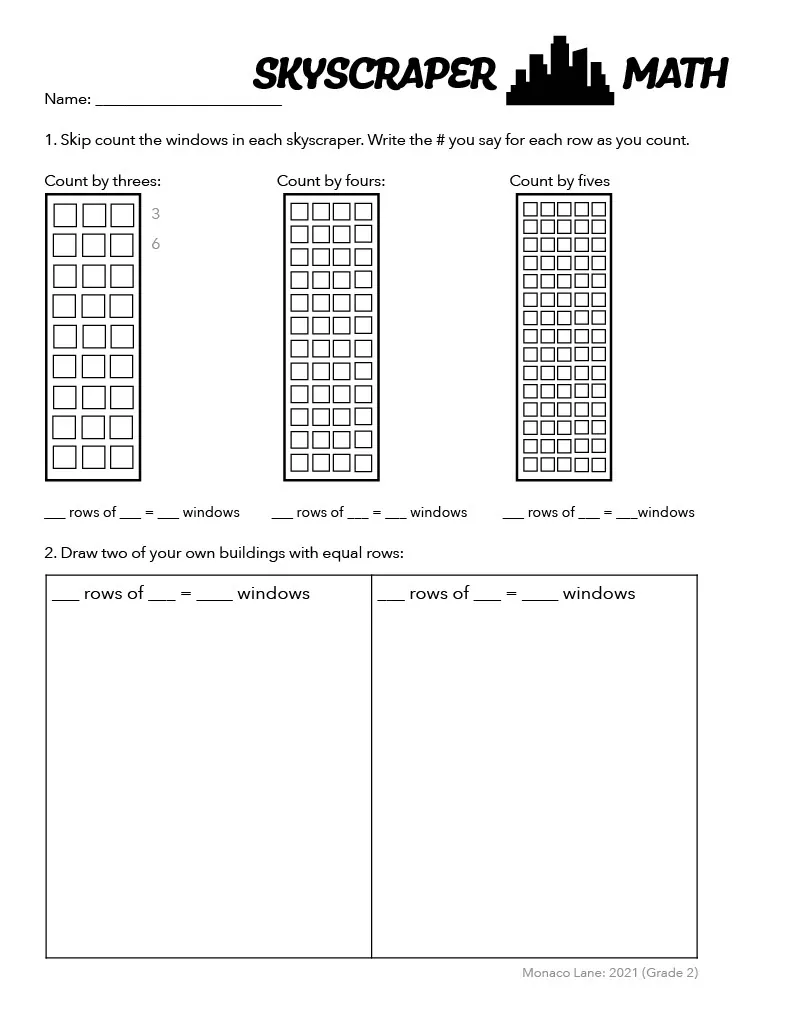
This resource is a Skyscraper Math Worksheet.
On the 1st worksheet:
- Students will skip count the windows in each skyscraper. Then they will write the # they say for each row as they count.
- Draw two of their own buildings with equal rows.
On the 2nd worksheet:
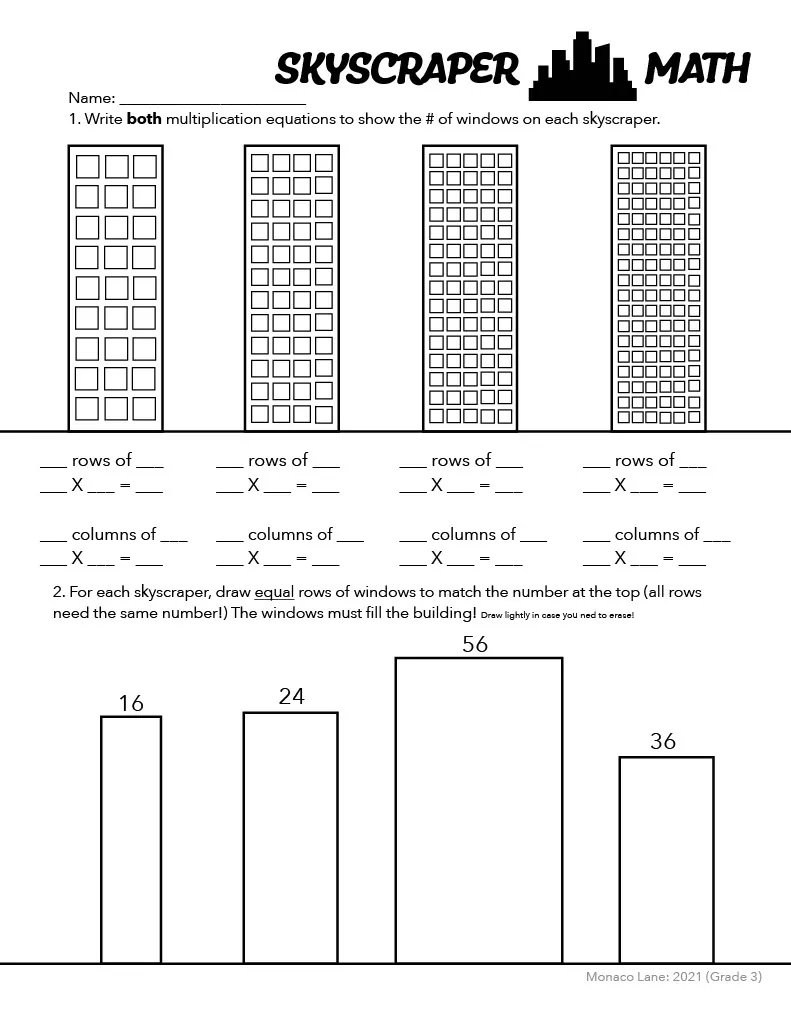
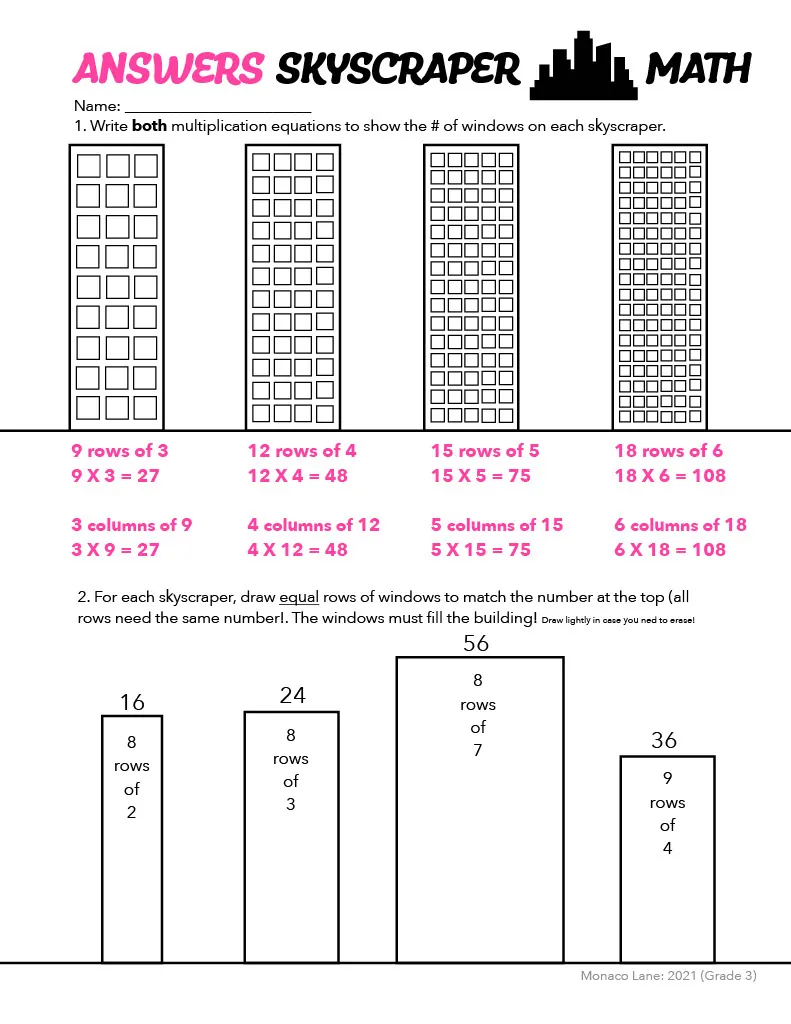
- Students will write both multiplication equations to show the # of windows on each skyscraper.
- For each skyscraper, draw equal rows of windows to match the number at the top (all rows need the same number!) The windows must fill the building!
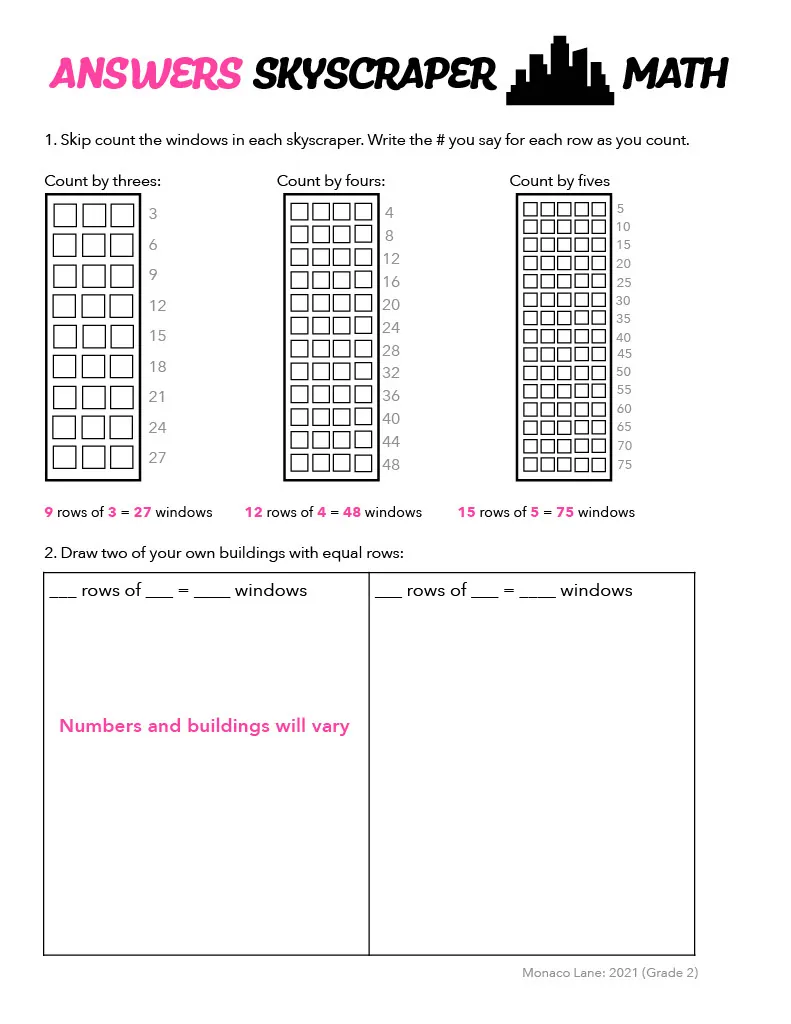
Answer key included.
Related resources
More resources teachers may find useful
24 related resources were found using this product's title, contributor, categories and tags.


In the classroom
Teaching tips & learning objectives

Learning objectives
Use skip counting to determine the total windows in a rectangular grid, then express that total as a 'rows of ___ = ___' equation
Write both a row-based and column-based multiplication equation for the same rectangular array of windows
Draw a rectangular array of equal rows to match a given product total

Teaching tips
Assign Worksheet 1 before Worksheet 2, since the vendor's own file labels them Grade 2 and Grade 3 and the second worksheet assumes students can already write a 'rows of ___ = ___' equation from the first
Have students count by the labeled skip-counting interval (threes, fours, fives) on Worksheet 1's windows before filling in the row-total equation, since the file sequences the skip count and the equation as separate steps
Use Worksheet 2's row-and-column format to show that 'rows of' and 'columns of' describe the same array from two directions, since both equations produce the identical product for each skyscraper

Skills covered
Skip counting as a bridge to multiplication — Worksheet 1 has students skip count by 3s, 4s, and 5s before converting the count into a 'rows of' equation.
Equal-groups multiplication — both worksheets interpret a rectangular window grid as rows (or columns) of an equal number, matching the array to a multiplication equation.
Array construction — Worksheet 2 has students draw their own equal rows of windows to reach a specified total.
Good to know
Questions teachers ask about this resource
What's the difference between the two worksheets?
The first has students skip count skyscraper windows by threes, fours, and fives and turn that count into a 'rows of' equation; the second moves to full multiplication notation, asking for both a row-based and column-based equation for each skyscraper.
What does the array-drawing task on Worksheet 2 ask students to do?
For four skyscrapers labeled with a target window count, such as 56 or 36, students draw equal rows of windows so every row has the same number and the building is completely filled, matching the labeled total.

No reviews yet
Downloaded this resource? Tell other teachers how it went.
Curriculum
Standards, concepts & topics
Standards
 Standards
- 3.OA.A.1
Core concepts
 Core concepts
Skip counting
Multiplication as equal groups
Arrays
Rows and columns
 Topics
Explore more
Categories this resource belongs to
Explore related searches
More to explore
You may also like