


Haber Conjugation Present Tense Worksheet with Puzzles
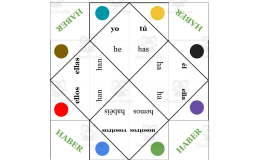
Spanish learners practice present-tense haber as a helping verb and as hay, then lock in he, has, ha, hemos, habéis and han with matching, a word search, a crossword and a pronoun sudoku.


- Grades
- Grades 9–12, High School
- Pages
- 6
- File type
- Answer key
- Included


- Subject
- Foreign Languages, Spanish
- Topic
- Spanish, conjugation worksheet
- Resource types
- Worksheets & Printables, Worksheets
- Answer key
- Included
About this resource
What's inside this resource
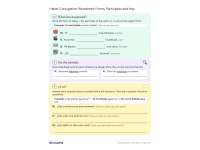
He, has, ha, hemos, habéis and han, the six present forms of haber, run through all four student pages of this worksheet. Page 1 opens with a chart in which students place five forms from a word bank, with vosotros habéis given, and decide whether haber or tener is the “have” in I have eaten. A rule strip for -ado and -ido participles, a box of irregulars with one extra word and three hay-or-ha sentences complete the page.
On page 2, students write four present perfect sentences from verb prompts with small pictures, correct habemos and escribido, and answer three ¿Has…? questions about themselves before asking a partner.
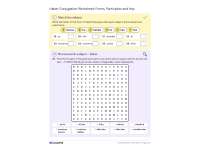
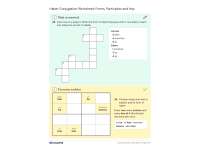
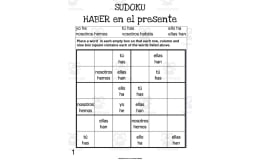
Pages 3 and 4 turn the forms into puzzles: a match-the-subject task with eight subjects and six lettered forms, a 14 x 14 word search hiding ten subject-and-verb pairs such as tú has, a mini crossword with six subject clues and a 4 x 4 pronoun sudoku. Two answer pages follow, one for tasks 1–18 with notes on common errors and a partner-talk tip, and one with the solved puzzles.
Related resources
More resources teachers may find useful
24 related resources were found using this product's title, contributor, categories and tags.


In the classroom
Teaching tips & learning objectives

Learning objectives
- Conjugate haber in the present tense for every subject, including vosotros.
- Match subject pronouns to he, has, ha, hemos, habéis and han.
- Form regular past participles with -ado and -ido and recall hecho, escrito and visto.

Teaching tips
- Use task 2 to stress that I have eaten uses haber, not tener; the key says not to accept tengo comido.
- Point out that visto, the unused word in the irregular box, comes back in task 11.
- Before the word search, show the example on the page: tú has is written TUHAS, with no space and no accent.

Skills covered
- Helping-verb forms — students complete he, has, ha, hemos and han in a chart and match eight subjects to their forms.
- Past participles — students add -ado or -ido and choose irregular forms such as hecho and escrito.
- Hay versus ha — students decide whether a sentence needs there is or has + participle.
Good to know
Questions teachers ask about this resource
Why does the worksheet compare haber and tener?
Both translate as have in English, but only haber forms the present perfect. Task 2 asks which verb means have in I have eaten, and the key notes that tengo comido is not accepted because tener means to own or hold something.
How are the haber forms written in the word search?
Each pair is one word with no space and no accent, so tú has appears as TUHAS and vosotros habéis as VOSOTROSHABEIS. The ten pairs run across, down or diagonally, never backwards, and each appears once in the grid.
What goes in the empty boxes of the pronoun sudoku?
A subject and its form of haber. The 4 x 4 grid uses yo he, tú has, nosotros hemos and ellos han, with six boxes given, and every row, column and box of four holds each pair once.
Which irregular participles are taught?
Hecho (hacer), escrito (escribir) and visto (ver). They sit in a small box in Part B with visto as the extra word, and students use visto again in Part D.

No reviews yet
Downloaded this resource? Tell other teachers how it went.
Resource details
Concepts & topics
Core concepts
 Core concepts
- Haber
- Present tense
- Present perfect
- Past participles
- Hay
 Topics
Explore more
Categories this resource belongs to
Explore related searches
More to explore
You may also like


