STEM Basics: How to Use a Stopwatch Lab (SB7)




About This Product
Bring digital stopwatch display decoding, hundredths-of-a-second precision, human reaction time lag physics, ruler-catch reaction audits, split-lap timing mechanics, and multi-trial decimal averaging to life with STEM Basics: How to Use a Stopwatch Precision Timing Lab (SB7)! Designed for Middle School Physical Science, General Science, Physics, Math, and STEM classes across Grades 6–8, this comprehensive 7-page print-ready lab skills packet transforms everyday student timing habits into industrial laboratory precision.
What Is Included in This 7-Page Packet?
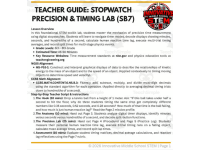
⏱️ Page 1: Teacher Guide & Lesson Overview
Provides foundational skill context, NGSS alignment (MS-PS3-1), CCSS math connections (multi-digit decimal averages), safety protocols, and a flexible pacing roadmap.
🎯 Page 2: Student Mission Profile (The Hook)
Engages students through a real-world chronometric data technician career scenario establishing strict laboratory accuracy parameters and multi-trial rules.
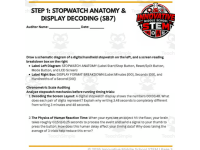
📐 Page 3: Stopwatch Anatomy & Display Decoding Sheet
Features pre-lab exercises where students diagram digital stopwatch controls, decode minute vs. second vs. hundredth-second displays, and analyze human reaction time physics.
📋 Page 4: Laboratory Operation & Step-by-Step Procedure Card
A dedicated instructional card providing step-by-step guidance on stopwatch mode navigation, ruler-catch reaction tests, 3-trial ball drop timing, and split-lap bounce timing runs.
📊 Page 5: Measurement Practice Log & Variance Matrix
A structured data log for tracking reaction lag catch measurements, logging 3-trial drop timing grids, computing decimal averages, and processing split-lap timing data.
💡 Page 6: Teacher Lab Metrology Cheat Sheet
Offers quick solutions for stopwatch mode navigation errors, ruler-catch conversion math, preventing minute vs. second recording mistakes, and managing lab group roles.
📝 Page 7: Chronometric Metrology Master Rubric
A 4-point assessment rubric evaluating time format data accuracy, reaction lag audits, multi-trial averaging, and technical science mastery.
Educational Value & Key Benefits:
Solves the #1 Physics Lab Timing Error: Teaches students to read displays accurately (e.g., recognizing 00:02.45 as 2.45 seconds rather than 2 minutes 45 seconds), preserving data integrity across all motion labs!
Includes the Ruler-Catch Reaction Test: Proves to students how human delay introduces experimental error, making the need for multi-trial averaging immediately clear.
Independent Classroom Flow: Separate procedural cards keep lab groups focused and self-directed.
Resource Tags
0 Reviews
Check out these other great products