Teaching Prefixes and Suffixes for Reading Longer Words


About This Product
Teaching Prefixes and Suffixes for Reading Longer Words
This practical teaching guide shows parents and tutors exactly how to help children decode multisyllabic words using prefixes and suffixes..
Learning to read longer words doesn't have to mean memorising a rulebook. In fact, the more rules you throw at a struggling reader, the more likely they are to freeze. What children need is a simple, reliable decoding strategy they can use every time they meet an unknown multisyllabic word.
That's exactly what Beginnings and Endings gives them.
This short, practical guide teaches children to chunk longer words by finding the vowel sounds and building chunks around them.
Pupils are taught to take each vowel sound and add the consonants next to it, before and/or after — keeping any blends or double letters that belong together. Example: important: we keep OR together → im–por–tant, or imp–or–tant, or im–port–ant. There’s no wrong answer here — the goal is the whole word, not a perfect split.
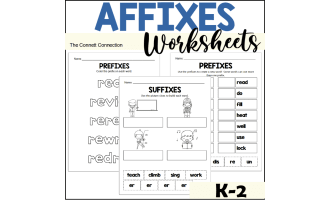
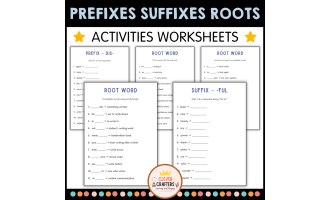
To help them with this process, we teach them common prefixes and suffixes: spotting familiar prefixes and suffixes and using them as stepping stones into the rest of the word.
No complicated syllable-splitting rules. No jargon. Just a clear phonics-based method that works — and that children can apply independently once they've seen it modelled a few times.
We call them beginnings and endings as the words 'prefix' and 'suffix' are meaningless at first to a child and can put an extra hurdle in the way of success.
The guide covers the most useful prefixes — be, de, re, pre and un — alongside a solid set of suffixes: -ful, -less, -ness, -ly, -er and -ment. Each section moves from two-syllable words up to longer ones, so you can start where your child is confident and build from there. There's also a step-by-step worked example showing exactly how to talk a child through the decoding process — because children need to see the thinking, not just be told to "break it into syllables" and left to figure out what that means.
This is the Reading Made Simple approach to decoding longer words, and I use it with struggling readers of all ages — from young children just moving beyond single-syllable words to older students who've been stuck for years. The moment a child realises they can tackle a word like reorganise by pulling it apart into manageable chunks is the moment longer words stop being a mystery.
Resource Tags
0 Reviews
Check out these other great products