The Dangers of Smoking Reading Comprehension Article

- Grades
- Grades 9–12, High School
- File type
- Multiple File Types


- Subject
- Science, Life Sciences, Human Body
- Topic
- smoking, arsenic
- Resource types
- Worksheets & Printables, Worksheets
About this resource
What's inside this resource
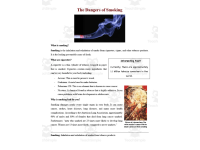
The Dangers of Smoking - A Grade 8 and Up Science Reading Article. This resource is suitable for high school students as well as strong middle-school students. Tackle literacy and science by having your students read and answer questions from a scientific article. Questions include knowledge (direct from the paper), thinking, connecting, application and open-ended varieties.
This resource covers the following topics:
- What is smoking?
- Why is smoking bad for you?
- What is secondhand smoke?
- What are the health effects of secondhand smoke?
- Lung cancer
- What makes smoking so addictive?
- E-Cigarettes and vaping?
Google Classroom and Distance Learning Ready
This resource is perfect for in-class or distance learning and integrates seamlessly with Google Classroom.
Automatically creates a copy of the reading and puts it directly into your Google Drive with a single click.
Purchase --> Open --> Click --> Assign to your students
The reading also includes a Microsoft Word and PDF version.
Having all three options allow you to assign the reading to your students without worrying about formatting issues as all the work has already been done for you. It also allows you, as well as your students, to access everything no matter where you are or what kind of equipment is being used.
The Problem You Face - Not having the time to properly teach scientific literacy (disciplinary literacy) or improve your students reading comprehension and analysis skills.
The Solution
This fully editable, NO PREP reading comprehension article is composed of relevant, applicable and engaging reading activities which can be used to:
• introduce your topic
• improve your students reading comprehension and scientific literacy skills
• improve your students' analysis skills
• provide an extension activity to students who move at a faster pace
• provide extra credit to students in need
• measure your students literacy skills
Please note that the preview file contains THREE complete readings. I’ve made them available so you can fully see how the resource is structured as well as the quality of its writing.
This resource will take your students between 50-75 minutes to complete and includes some open-ended questions. An answer key is also included for your reference.
You might also be interested in the following individual reading comprehension articles:
Health:
• The Common Cold
• The Flu
• Exercise and its Importance for Health
• Stem Cell Therapy: The Future of Medicine?
• Concussions
• Poliomyelitis - Polio
• Smallpox
• The Measles
• Genetics and Gene Therapy
• Heart Diseases
• Cancer
• The Effects of Caffeine
• Down syndrome
• HIV/AIDS - Informing the Public and Dispelling the Misconceptions
• The Effect of Stress on the Brain
• The Effect of Sugar on the Body
• Whooping Cough
• Asthma and Asthma Attacks
• The Immune System
• Farming: Organic vs. Conventional
• The Dangers of Smoking
• Parkinson’s Disease
• Protective Equipment - Keeping you safe
• Fats
• Tinnitus – Ringing in the Ears
• Cystic Fibrosis
• The Effects Of Binge Drinking On Teenagers
• Multiple Sclerosis
• Painkillers
• Diabetes
• Radioactivity
• Scarring
• Allergies
• Carbohydrates, Lipids, and Health
• The Placebo Effect
• The Nervous System
Earth and Space:
• The Northern and Southern Lights
• The Limitations of Space Travel
• Why is the Sky Blue? An application of light waves
• Stars - The Element Factories of the Universe
• Solar and Lunar Eclipses
• The Different Types of Clouds
• How Weather Works
• Natural Disasters
• Thunderstorms
• Fossils
• Geologic Time
• Watersheds
• Hurricanes
• Planets
• Phases of Water
Energy:
• Fossil Fuels
• Nuclear Energy: Fission and Fusion
• Hydroelectric Energy Production
• Solar Energy Production
• Wind Energy Production
• Renewable Energy Production
• Hydraulic Fracturing - Fracking
• Biofuels - Food or Fuel?
• Electric House
• Energy Use and Conservation
Physics:
• Magnets and Electromagnets
• Roller Coasters - History, Design, and Function
• How Do Boats Float?
• Optical Phenomena
• The Effects of Everyday Forces
• Hydraulics
• Hot-Air Balloons
• Simple Machines
• Automobile Safety
• Pneumatics
Chemistry:
• The Chemistry of Explosions
• Plastics: A Marvel Of Innovation
• The Chemistry of Paint
• Water Softeners and Hard Water
• Cleaning up Acid Spills
• The Accumulation of Plastic in the Ocean
• Chemistry of Cooking
• Chemistry of Cosmetics
• Blood Analysis and Forensics
• Radioactivity
• Desalination for Drinking Water
• Rust-Proofing
Biology:
• Fermentation and Food
• DNA Paternity Tests
• Laser Eye Surgery
• Physical Adaptations
• Muscle Growth
• Genetically Modified Organisms
• Mosquitoes And The Diseases They Spread
• Twins
• GERD and Acid Reflux - A Digestive System Disease
• Bats – Misconceptions, Importance, and Facts
• Superbugs - The Super Villains of Modern Medicine
• Heart Attack and Stroke
• Why Leaves Change Color In The Fall
Ecology and the Environment:
• Invasive Species
• Ecosystems
• Pesticides
• The Importance of Bees
• Coral Reef Ecosystems and their Future
• Climate Change
• Hydraulic Fracturing - Fracking
• Farming: Organic vs. Conventional
• Oil Spills and Their Consequences
• Bioaccumulation and Biomagnification
• RuBisCO - Earth's Most Important Protein
• Symbiotic relationships between plants and insects
• Smog - Its Causes and Dangers
• Ocean Acidification
• Pollution Control Devices
• Tap vs Bottled Water
• Predator Prey Relationships
• Greenhouse Effect
Natural Disasters:
• Volcanoes: The Benefits and Devastation
• Earthquakes Part 1
• Earthquakes Part 2
• Tsunamis
• How the Dinosaurs Died
Each summary is rich with age appropriate content (grades 8 and up) and is 2.5-3 pages long (13-font). Following each is a list of 8-13 questions along with the answer key, which will help guide your students understanding.
How this product will help your students:
- Improve their scientific and disciplinary literacy skills
- Improve their reading comprehension and scientific knowledge
- Give them insights into important scientific concepts
- Provide an extension activity for your faster moving/more gifted students
How this product will help you:
- Allow you to meet the NGSS, TEKS and Common Core Standards
- Provide you with a concise introduction to your topic
- Provide you with an engaging and easy to leave substitute plan which will keep your students engaged and on task
- Prove you a means of measuring your students' literacy skills
We don't spend enough time teaching scientific literacy to our students. This is either because we don't have the resources to do so effectively or we don't have the time. However, teaching our students to become scientifically literate is vital if we want them to succeed in life. We need them to know about the world they live in and about the issues they face. Even issues as simple as the common cold are misunderstood and can lead to the misuse of antibacterial drugs eventually rendering them ineffective.
It can be used as a tool in your teaching arsenal on a regular basis, an extension activity for your faster learners, left for a substitute in an emergency or planned absence or as an extra bit of information for a topic.
For free resources, useful teaching tips, and tools, please visit my blog - TeachScienceWithFergy.com
If you have any questions please feel free to send me an email - devon@teachwithfergy.com
Related resources
More resources teachers may find useful
24 related resources were found using this product's title, contributor, categories and tags.



In the classroom
Teaching tips & learning objectives

Learning objectives
Identify what smoking is and the harmful ingredients contained in cigarettes
Explain the health consequences of smoking and of secondhand smoke exposure for children and adults
Describe how nicotine's effect on dopamine creates addiction

Teaching tips
The five direct questions and three open extension tasks split cleanly into core work and fast-finisher extensions, as the vendor intends
The infographic task includes a step-by-step Canva walkthrough, so reserve device time if you assign it
The local-laws research task requires internet access and produces region-specific answers — good for class comparison discussion

Skills covered
Science reading comprehension — students answer five questions drawn directly from a cited article on smoking's health effects.
Scientific vocabulary — terms like concentration, dopamine, vaporize, and mutation are defined in footers as they appear.
Health reasoning — extension tasks require applying the science to persuade a friend to quit and to evaluate local smoking laws.
Good to know
Questions teachers ask about this resource
How current and sourced is the science in the article?
Claims are attributed inline — lung-cancer statistics are quoted from the American Lung Association — and a closing reference list cites the American Heart Association and American Lung Association materials the article draws on.
What do the extension tasks add beyond the reading?
Application and creation: students list five reasons a friend should quit, research the smoking laws in their own area with a search engine, and build an anti-smoking infographic — the last with an included step-by-step guide to Canva's infographic templates.
Does the resource cover vaping as well as cigarettes?
Yes — a dedicated section explains what e-cigarettes are, how vaporizing works, the nicotine content of e-liquid, and why claimed safety advantages still leave them highly addictive.

No reviews yet
Downloaded this resource? Tell other teachers how it went.
Resource details
Concepts & topics
Core concepts
 Core concepts
Smoking and health
Secondhand smoke
Nicotine addiction
Reading comprehension
Scientific literacy
Topics
 Topics
Explore more
Categories this resource belongs to
Explore related searches
More to explore
You may also like