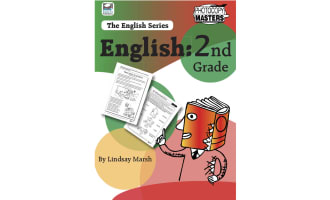
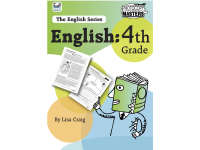
The English Series: 4th Grade English Workbook


- Grades
- Grade 4
- Pages
- 58
- File type
- Answer key
- Included


- Subject
- ELA
- Topic
- Fourth grade English, Text structure
- Resource types
- Workbooks, Worksheets
- Answer key
- Included
Product description
From the author
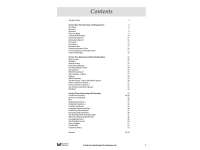
The English Series: 4th Grade English Workbook is a 58-page download. It covers a range of English skills for 4th grade students. There are 3 sections in this workbook: Text structure and organization, expressing and developing ideas, and interacting with literature. Within each section, there are texts for students to read. Then there are worksheets for students to complete to enhance their grammar skills.
Related resources
More resources teachers may find useful
24 related resources were found using this product's title, contributor, categories and tags.


In the classroom
Teaching tips & learning objectives

Learning objectives
Identify recount, procedure, persuasive, information report and narrative texts from short extracts and name what distinguishes each
Use time connectors and linking connectors accurately, and explain what each connector signals about the sentence that follows
Build and analyse noun groups, adverb groups and prepositional phrases, labelling pointers, counters, describers, classifiers and the head noun

Teaching tips
The three sections stand alone: text types, language features and literature can be taught in any order, though several sheets refer back to a text printed a page or two earlier
Several activities refer to earlier readings. Check each page reference and print the required text with its activities; a text may support several worksheets
The Answers section gives sample responses as well as fixed ones, which is useful on the open questions where more than one answer works

Skills covered
Text-type identification - students read five short extracts and sort them as recount, procedure, persuasive, information report or narrative.
Grammatical structure - students label the parts of a noun group across pointer, counter, describer, classifier and head noun, then work through adverb groups and prepositional phrases.
Poetry reading - three narrative poems are analysed after a vocabulary-gathering organiser on the Australian bush prepares the imagery.
Good to know
Questions teachers ask about this resource
Which country's English does the workbook use?
The edition uses American spellings such as color and favorite, while retaining Australian texts and some other spellings, including pyjamas. Australian animals, places, and bush poetry feature in the readings.
How do the reading texts and the activity sheets fit together?
Readings are followed by related activities, sometimes across several pages - the narrative "The Long Night" on page 9 with its analysis sheet on page 10, the persuasive text on page 15 with two sheets after it, and the three-page folk tale before its analysis and response activities. Several activity pages say directly which page to read first.
What is the folk tale in section three?
"The Thief", a Korean tale retold by the workbook's author, about a masterful thief who is finally caught and then, from the King's court, hands round a peach pit that only a person who has never lied, stolen, cheated or hurt anyone may plant. Eight activity pages follow the tale, addressing structure, plot, characters, conflict, moral, language, and creative responses.

No reviews yet
Downloaded this resource? Tell other teachers how it went.
Curriculum
Standards, concepts & topics
Standards
 Standards
- W.4.1
- RI.4.5
Core concepts
 Core concepts
Text types
Connectives
Noun groups
Prefixes and suffixes
Poetry analysis
 Topics
Explore more
Categories this resource belongs to
Explore related searches
More to explore
You may also like