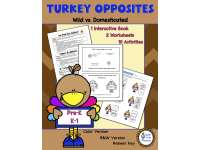
Turkey Opposites Book and Learning Activities

ELA, Math, Science, Language Development, Vocabulary, Life Sciences, Animals, Early Math, Counting, Reading
Kindergarten, Preschool, Grade 1


About This Product
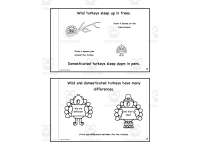
Do your learners know the differences between wild and domesticated turkeys? Make these feathered friends part of your teaching toolbox and add excitement to your science, ela, and math curriculums. Your learners in Pre-K, kindergarten, and grade 1 will have a great time strengthening their understanding of opposites, building vocabulary, and using hands-on learning activities to gain knowledge about turkeys. Begin the cross-curricular journey with an interactive book that your learners can personalize and use in the classroom or at home. Within the 15 pages of the book, Turkeys: An Interactive Book of Opposites, learners will identify what makes wild and domesticated turkeys similar and different. The focus of the information is on opposites including light/dark, up/down, short/long, fast/slow, more/less, and small/large. Additionally, learners will be introduced to new vocabulary, creating a strong foundation for reading and writing. Once the story has concluded, the fun doesn’t stop. Provide your learners with several hands-on activities that strengthen core skills in visual discrimination, fine motor and gross motor movements, sorting, counting, and sensory play. The two worksheets and 10 activities will reinforce concepts presented in the book and adds a whole-child approach to learning. The story and activities can be used throughout the year but are especially significant in November. Use them in the week leading up to holiday break when learners might be a bit antsy with anticipation of their upcoming time off. Better yet, if the weather permits, take the reading and activities outside to a different learning environment and experience. Most components for the activities are included, apart from a few math manipulatives that you might already have on hand as well as playdough for which a recipe is included. Browse the details below to learn more about this product that will put smiles on your learners faces and guide them towards a love of learning.
BOOK – Turkeys: An Interactive Book of Opposites (13 “1/2” pages)
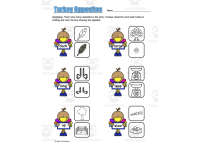
WORKSHEETS
1. Color the picture that shows the opposite of the word turkey is holding.
2. Color the turkey’s food (plants-green/insects-brown)
ACTIVITIES
1. SCIENCE, ELA, MATH, READING – Sort the picture cards (labeled with words) to match the characteristics of the wild and domesticated turkey.
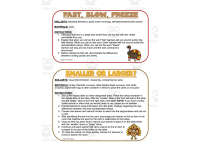
2. MOVEMENT/P.E. – Listen to directions from the adult and move like a wild or domesticated turkey.
3. MATH, SCIENCE, ELA – find items around the room that are larger or smaller than the turkeys.
4. ART, MATH – draw two turkeys (wild and domesticated) and showcase the differences in the length of their legs.
5. MATH – identify the number on the chosen card, count the corresponding number of unit cubes, build turkey legs, and compare the number of cubes used for both turkeys’ legs.
6. STEM – identify the number on the chosen card and create a playdough tree branch for the corresponding number of wild turkeys -or- and popsicle stick pen for the corresponding number of domesticated turkeys.
7. MATH – identify the number on the chosen card, count the number of corresponding turkey feathers and place them on both turkeys. Then compare which turkey has more/fewer feathers.
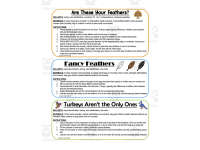
8. SENSORY/FINE MOTOR – using plastic sensory tweezers, sort black, brown, and white feathers and place them into the bags labeled with the wild and domesticated turkeys.
9. SENSORY/FINE MOTOR, SCIENCE, ELA – using plastic sensory tweezers, sort the colored feathers onto the corresponding card that shows a particular color of bird.
10. SCIENCE, ELA – create an interactive anchor chart to give visual representation of a wild and domesticated turkey. Learners will work with you to include pertinent vocabulary words and sort and attach feathers onto the corresponding turkey.
0 Reviews
Check out these other great products