World History II SOL Review
- Grades
- High School
- Pages
- 9
- File type
- Microsoft Word
- Editable
- Yes


- Subject
- Social Studies, History: World
- Topic
- World History II, SOL review
- Resource types
- Worksheets
- Editable
- Yes
Product description
From the author
This is a World History II SOL Review.
There are 43 numbered questions across eight question pages, plus a ninth page of later-topic headings.
Review the selected prompts and add missing later-topic material before use.
Related resources
More resources teachers may find useful
24 related resources were found using this product's title, contributor, categories and tags.


In the classroom
Teaching tips & learning objectives

Learning objectives
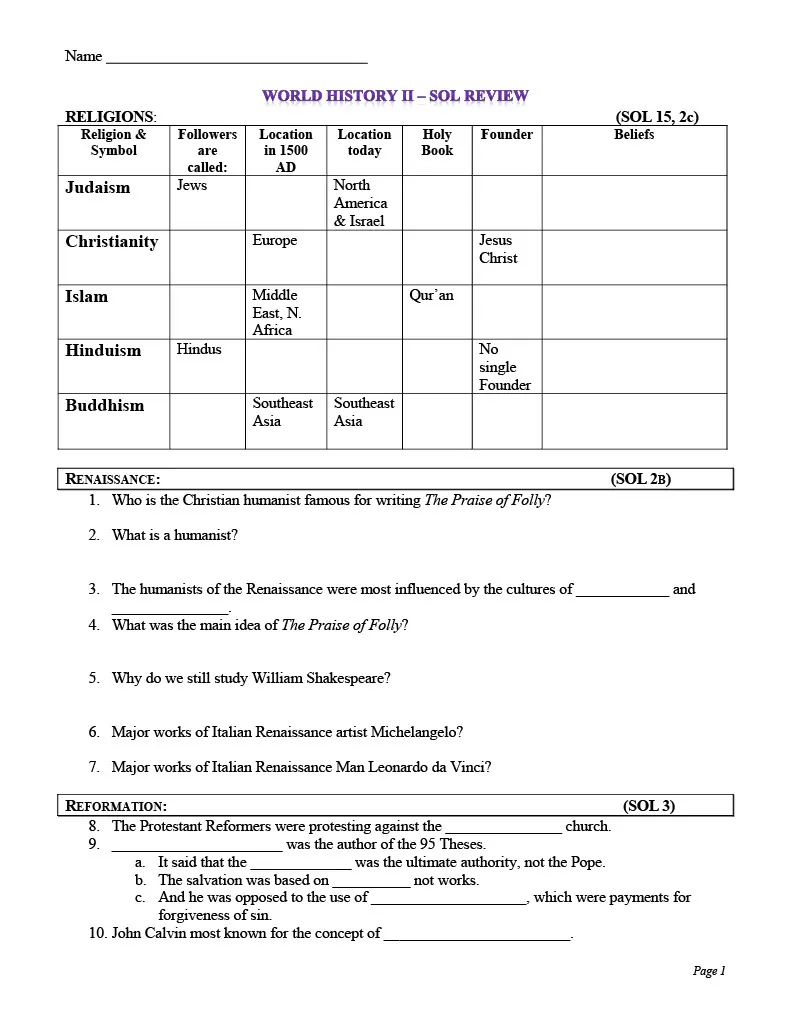
Compare major world religions (Judaism, Christianity, Islam, Hinduism, Buddhism) by founder, holy book, and region of origin.
Match Age-of-Exploration figures (e.g., Magellan, Cortez, Pizarro) to their historical accomplishments.
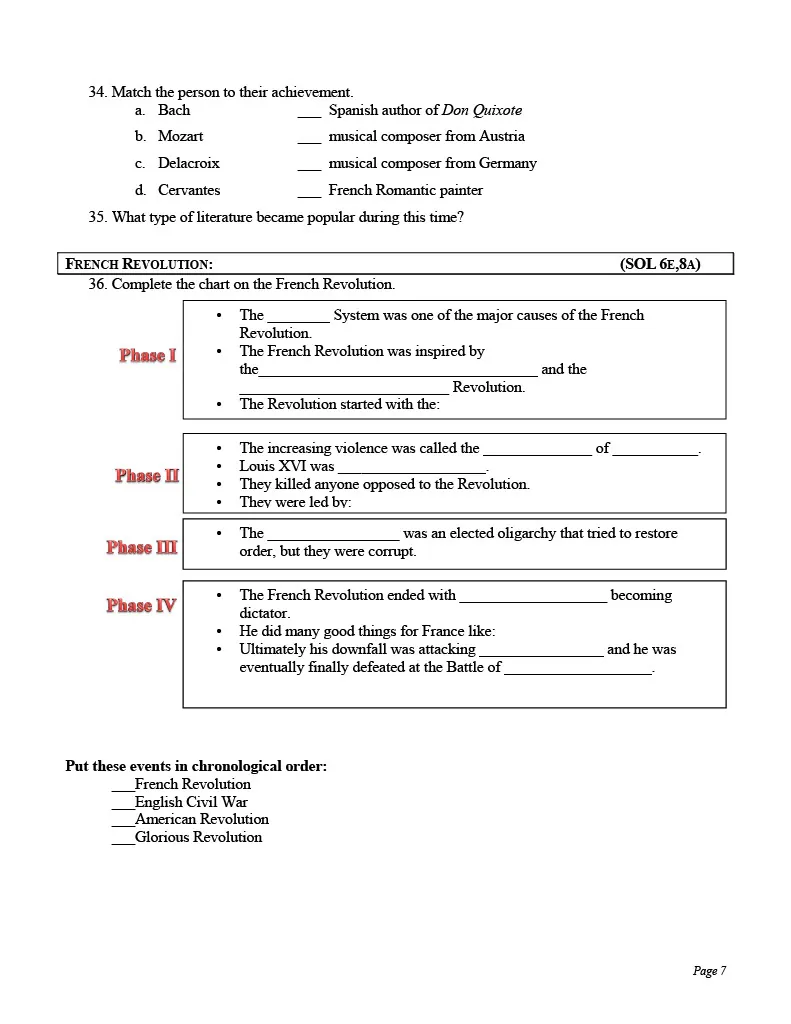
Trace the causes and effects of the French Revolution's four phases and the Latin American independence movements.

Teaching tips
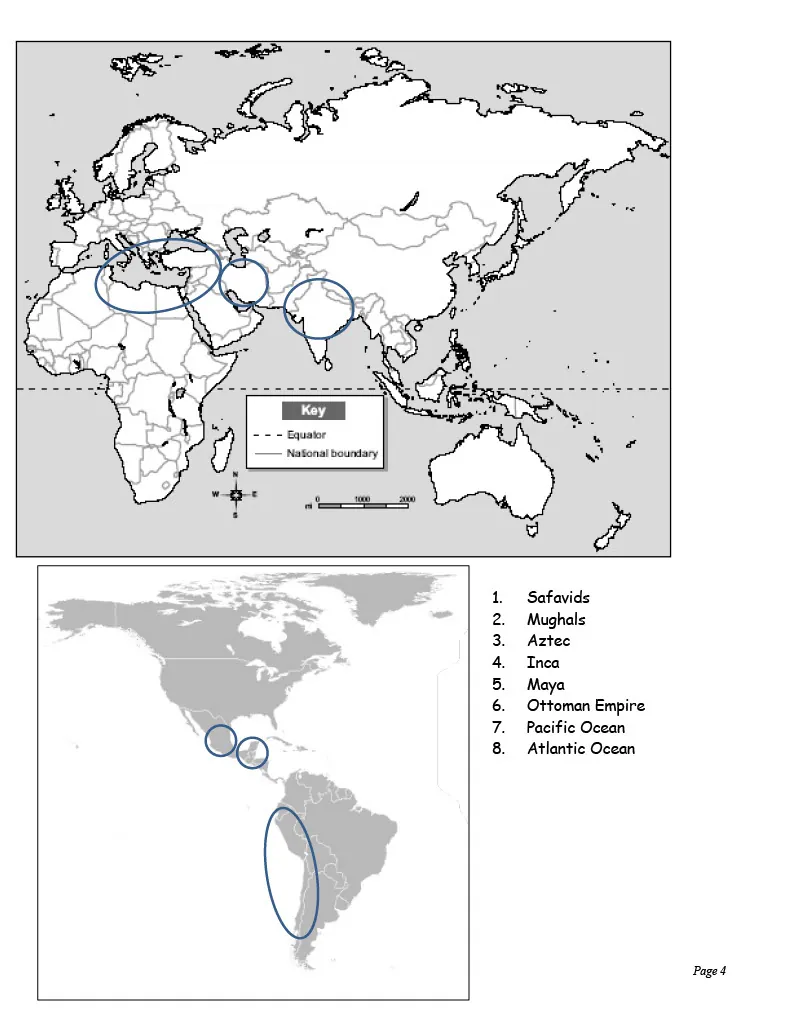
Use the eight-item civilizations-and-oceans list with the map task it follows; do not present it as a complete bank for blanks elsewhere.
Prepare additional review material for later topics. The final page lists WWI/Russian Revolution, WWII, Cold War, Nationalism and the Modern Era as headings.
Compare the printed SOL codes with your adopted framework before planning coverage; this file alone does not establish current alignment.

Skills covered
Comparative religion analysis — students complete a chart contrasting Judaism, Christianity, Islam, Hinduism, and Buddhism by founder, holy text, and region.
Historical figure matching — students pair Age-of-Exploration figures such as Magellan and Pizarro with their accomplishments.
Cause-and-effect reasoning — students trace the phases and outcomes of the French Revolution and the causes of Latin American independence movements.
Good to know
Questions teachers ask about this resource
What is the eight-item civilizations-and-oceans list for?
It follows the map-labeling task and supplies its named empires, civilizations and oceans. It is not a complete word bank for the other sections.
Does the review guide include content questions all the way through the Modern Era, or does its depth taper off?
Depth tapers off: the final five listed units (World War I and the Russian Revolution, World War II, the Cold War, Nationalism, and the Modern Era) appear only as headers with SOL codes and include no fill-in or short-answer questions.

No reviews yet
Downloaded this resource? Tell other teachers how it went.
Resource details
Concepts & topics
Core concepts
 Core concepts
Renaissance
Reformation
Age of Exploration
Enlightenment
French Revolution
 Topics
Explore related searches
More to explore
You may also like