World Religions Comparison Chart Reference
- Grades
- Grades 6–8
- File type
- Preparation
- Print ready


- Subject
- Social Studies, Religion
- Topic
- World religions, Religion comparison
- Resource types
- Charts, Worksheets
- Preparation
- Print ready
Product description
From the author
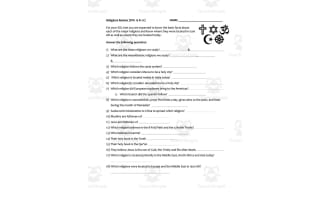
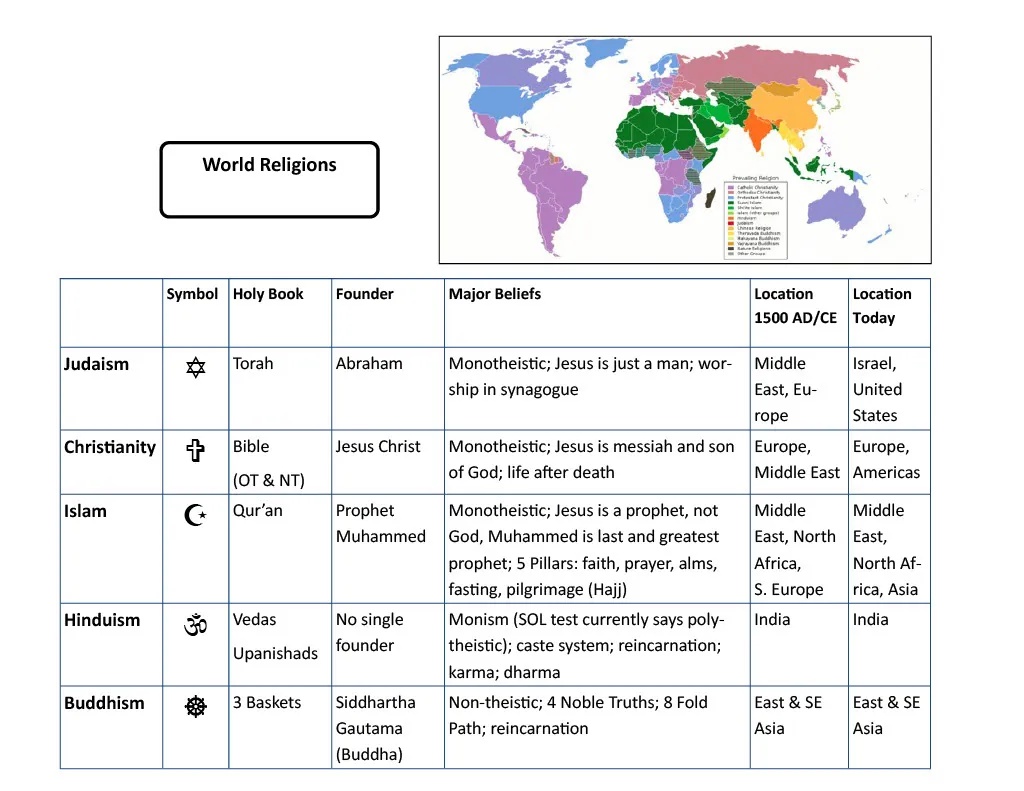
This is a World Religions Review Chart.
This is a 1-page printable for students to use before an assessment.
Related resources
More resources teachers may find useful
24 related resources were found using this product's title, contributor, categories and tags.


In the classroom
Teaching tips & learning objectives

Learning objectives
Identify the founder, holy book, and core beliefs of five major world religions.
Compare the geographic distribution of each religion in 1500 AD to its distribution today.
Recognize key religious concepts such as the Five Pillars of Islam and the Four Noble Truths of Buddhism.

Teaching tips
Use the chart as an introductory comparison and supplement it with examples of diversity within each tradition.
Treat listed locations as selected examples, not an exhaustive account of where people practice each religion today.
Check any printed SOL references against your current local curriculum before claiming alignment.

Skills covered
World religions comparison — students cross-reference five religions' founders, holy books, and beliefs using a single chart.
Historical geographic reasoning — students compare where each religion was concentrated in 1500 AD versus its distribution today.

No reviews yet
Downloaded this resource? Tell other teachers how it went.
Resource details
Concepts & topics
Core concepts
 Core concepts
World religions
Comparative religion
Judaism
Christianity
Islam
Hinduism
Buddhism
 Topics
Explore related searches
More to explore
You may also like