What We Do When We Read
Part 1 of a middle-school independent-reading unit that teaches students to metacognate about their own reading through a reading survey, personal reading history, and a poem-based reading-strategies lesson.
Classroom resources
Browse by lesson focus
Choose the topic or kind of practice you need.
Part 1 of a middle-school independent-reading unit that teaches students to metacognate about their own reading through a reading survey, personal reading history, and a poem-based reading-strategies lesson.
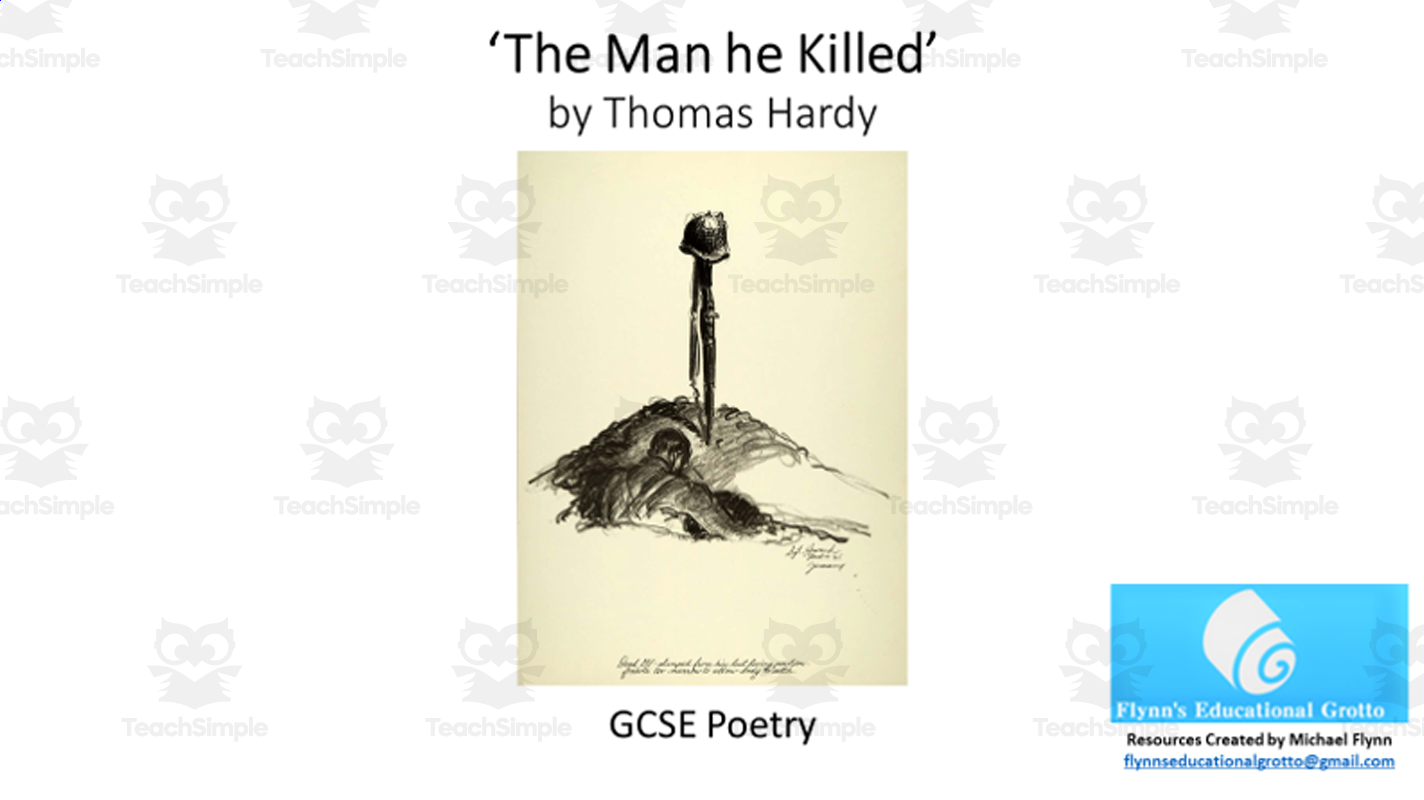
A GCSE English Literature poetry-analysis lesson presentation that guides students through close reading and critical analysis of 'The Man He Killed' by Thomas Hardy.
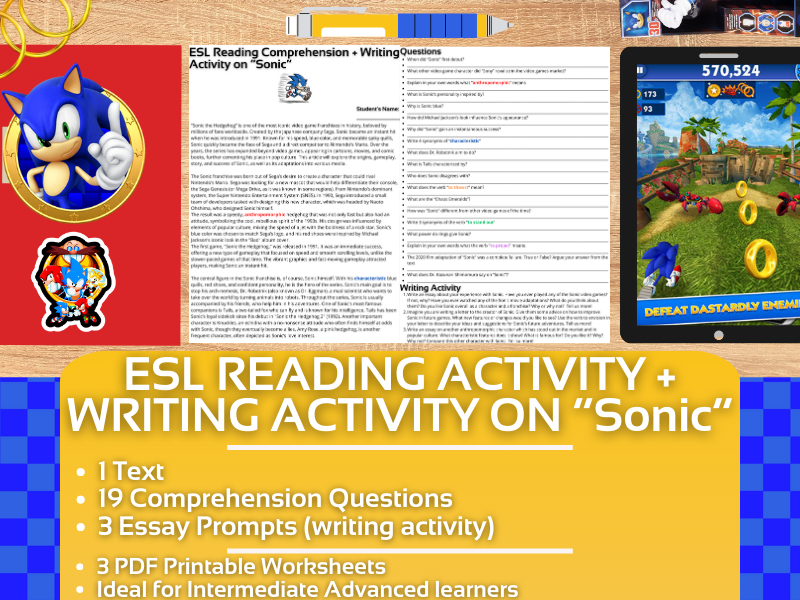
Students read a multi-paragraph nonfiction passage, answer open-response reading comprehension questions (including short-answer, vocabulary/synonym, and a true-or-false-with-textual-justification item), then write a personal-opinion or comparison essay responding to a set of guided writing prompts about the topic.
Read information sheets/text sections and answer embedded questions, complete graphic organizers on each topic, do crossword/flashcard/sudoku activities, complete a review sheet, and take a unit test.
Cut out and correctly order domino pieces to spell a term; solve a crossword and sum specific answer-numbers; find a missing term in a word search and convert its letters to number values using a supplied cipher key, then sum them; complete a worksheet and apply the same letter-to-number method; reduce each running total to a single…
Complete practice problems, puzzles, and mazes on each topic; complete four unit assessments; check answers against the answer key.
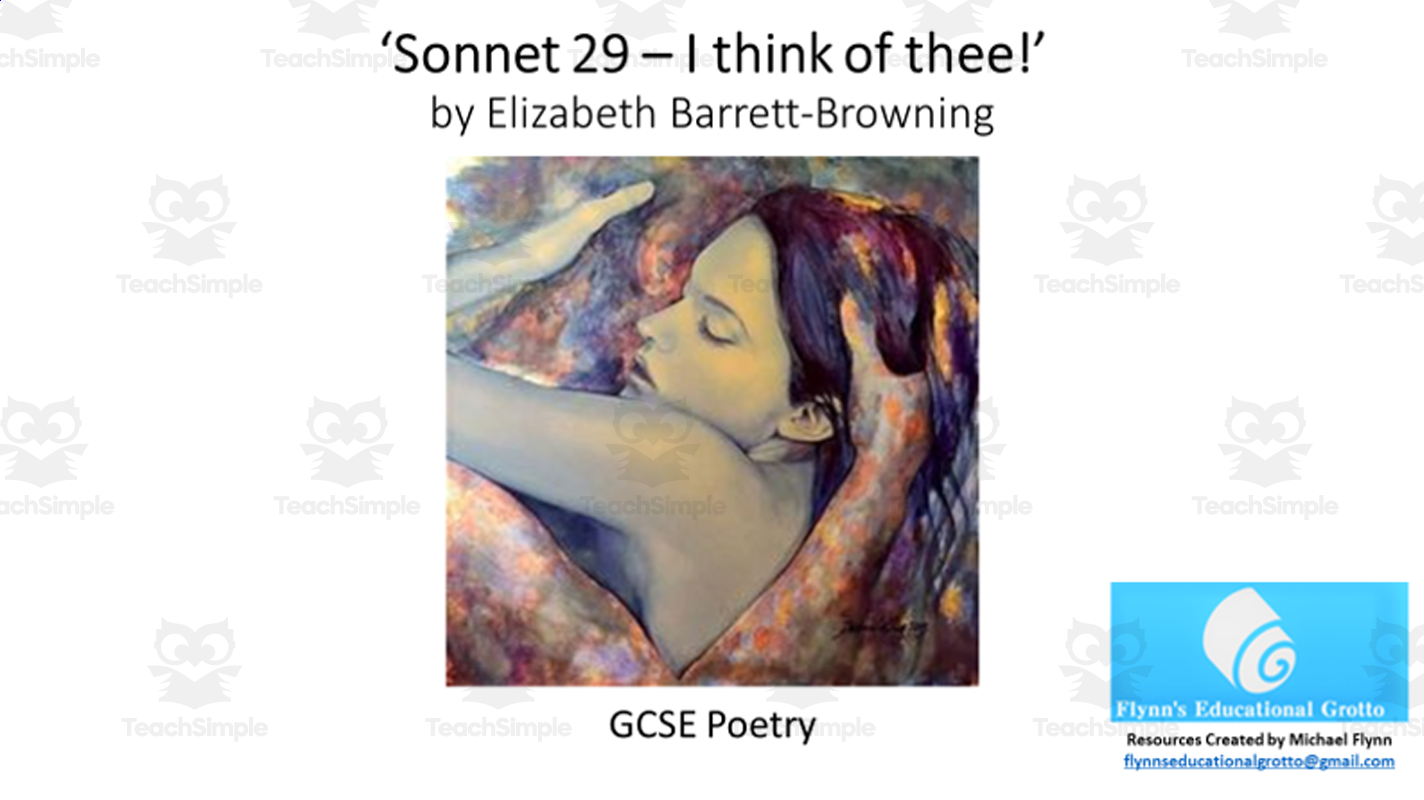
A GCSE English Literature poetry-analysis lesson presentation that guides students through close reading and critical analysis of 'Sonnet 29: I Think of Thee' by Elizabeth Barrett-Browning.
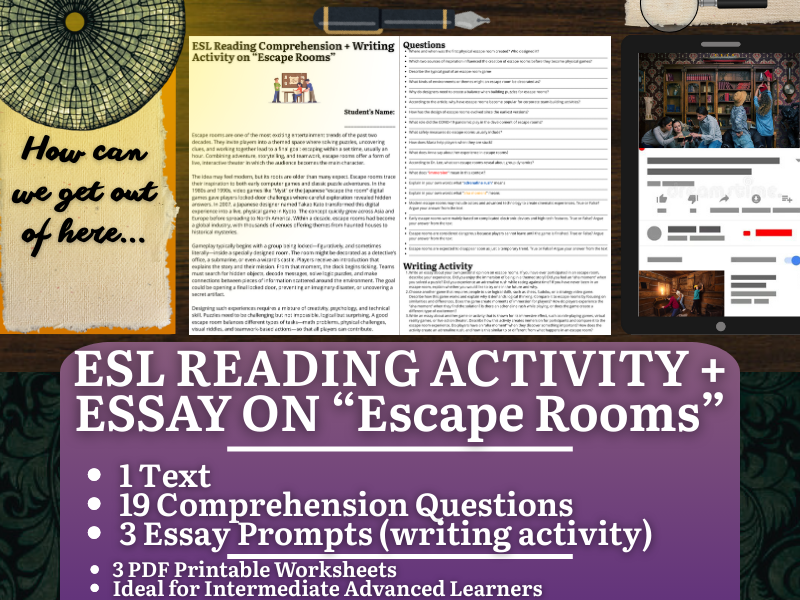
ESL/EFL reading comprehension and writing practice built around a nonfiction passage about the history, design, and psychology of escape rooms, paired with comprehension questions, vocabulary/definition work, true/false reasoning, and personal-opinion/comparison essay prompts.
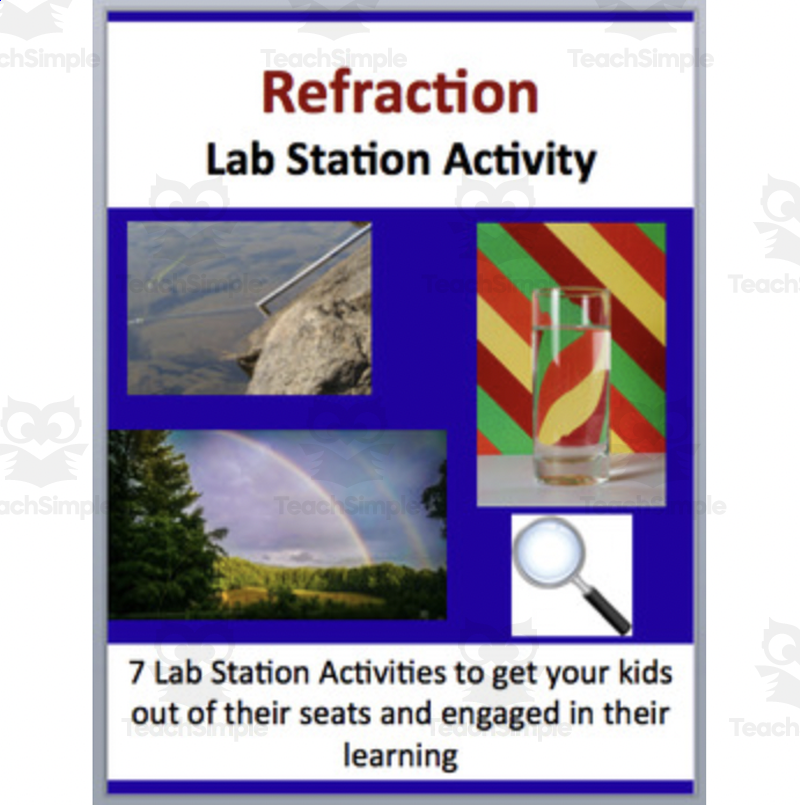
Rotate through 9 stations in small groups: observe/draw a prism refracting light, research a real-world refraction phenomenon (mirage), write an opinion paragraph, read an article on Snell's Law and answer questions, watch an expert video and answer questions, answer multiple-choice knowledge-check questions with…
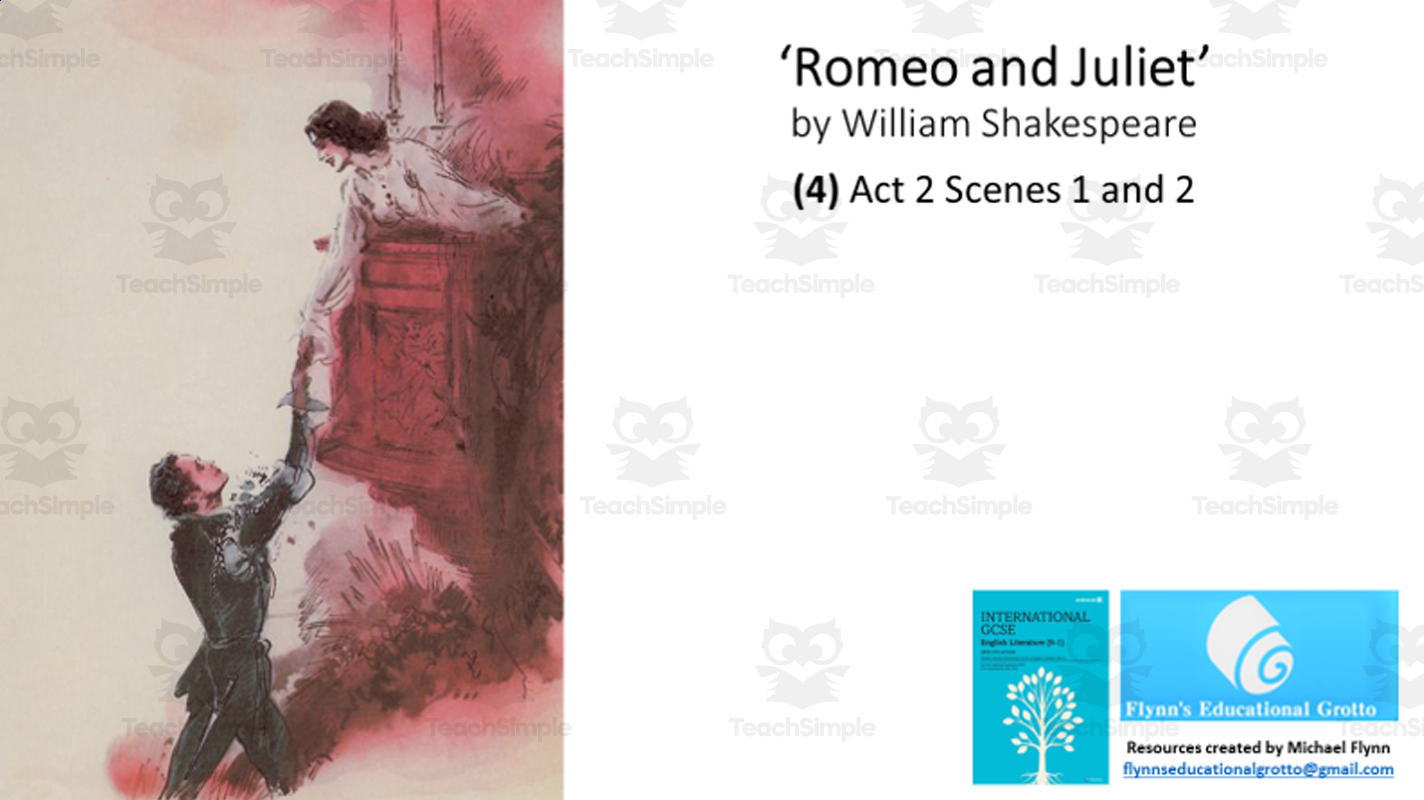
A GCSE English Literature PowerPoint lesson guiding students through a close reading and analysis of Romeo and Juliet Act 2, Scenes 1 and 2 (Romeo evading Mercutio and Benvolio to find Juliet, and the balcony scene), framed around the theme of marriage in the modern world versus 16th-century Europe.
Teach students about 25 careers within the Agriculture, Food & Natural Resources career cluster, using differentiated worksheet/activity formats generated by a toolbox program (DCAT).
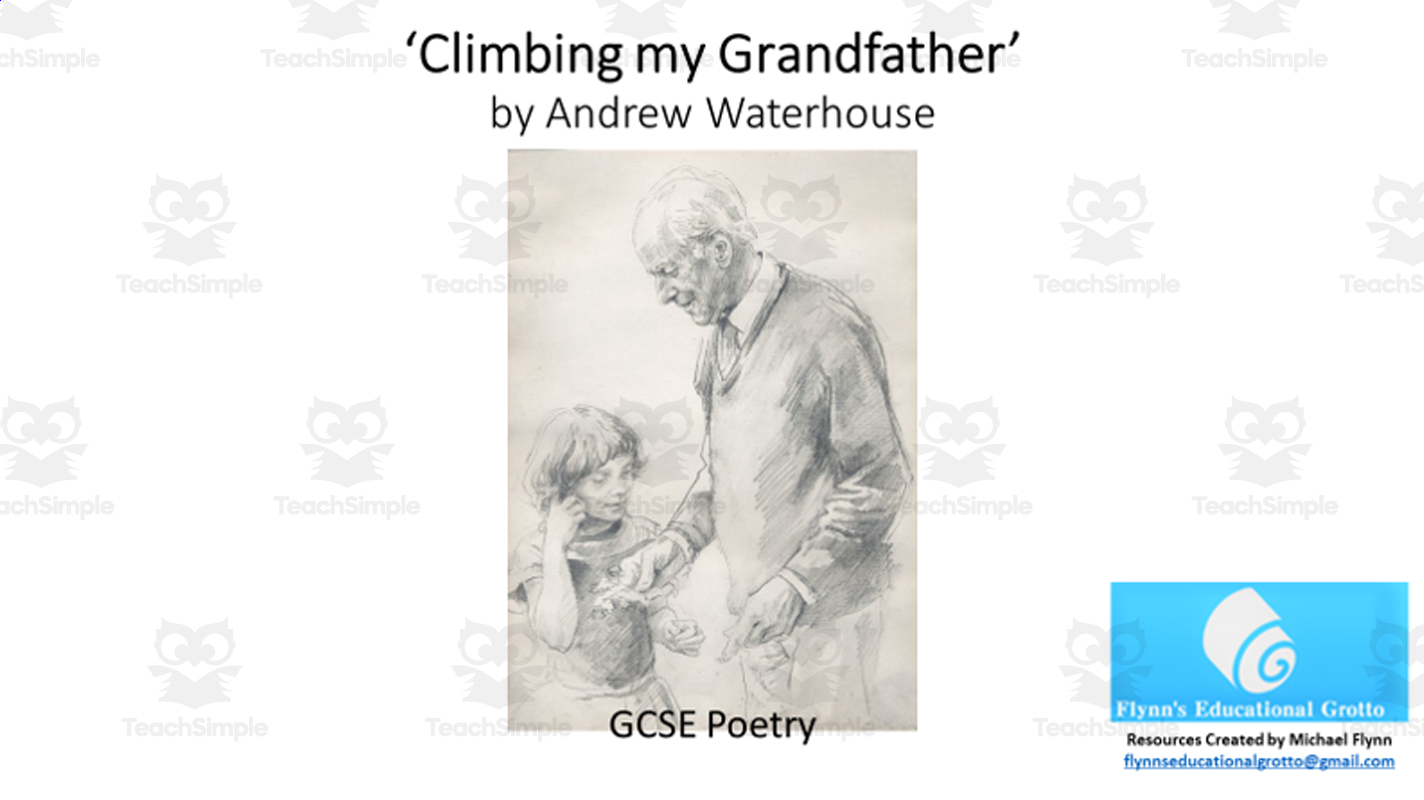
A poetry-analysis lesson deck exploring 'Climbing my Grandfather' by Andrew Waterhouse, covering meaning, language and structure, using an extended climbing metaphor for a grandfather-grandchild relationship.
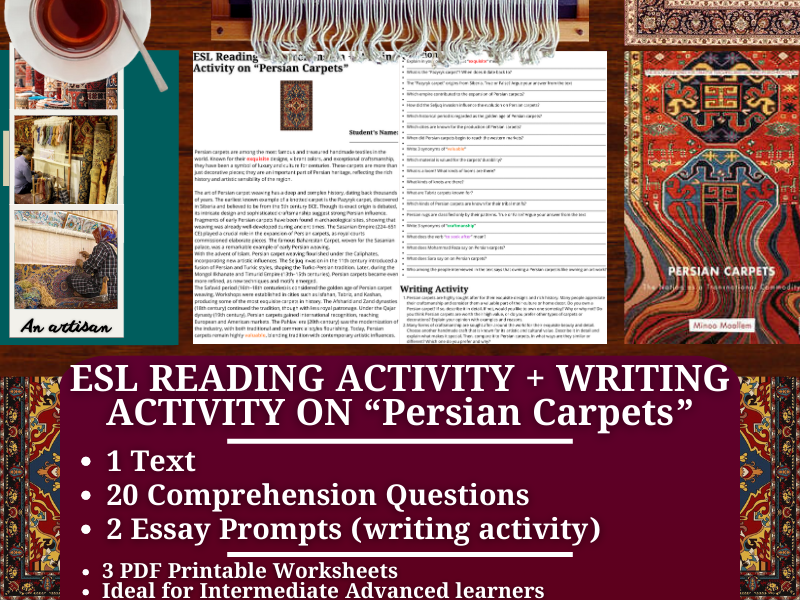
ESL reading-comprehension and writing practice built around an informational passage about the history and craftsmanship of Persian carpets.
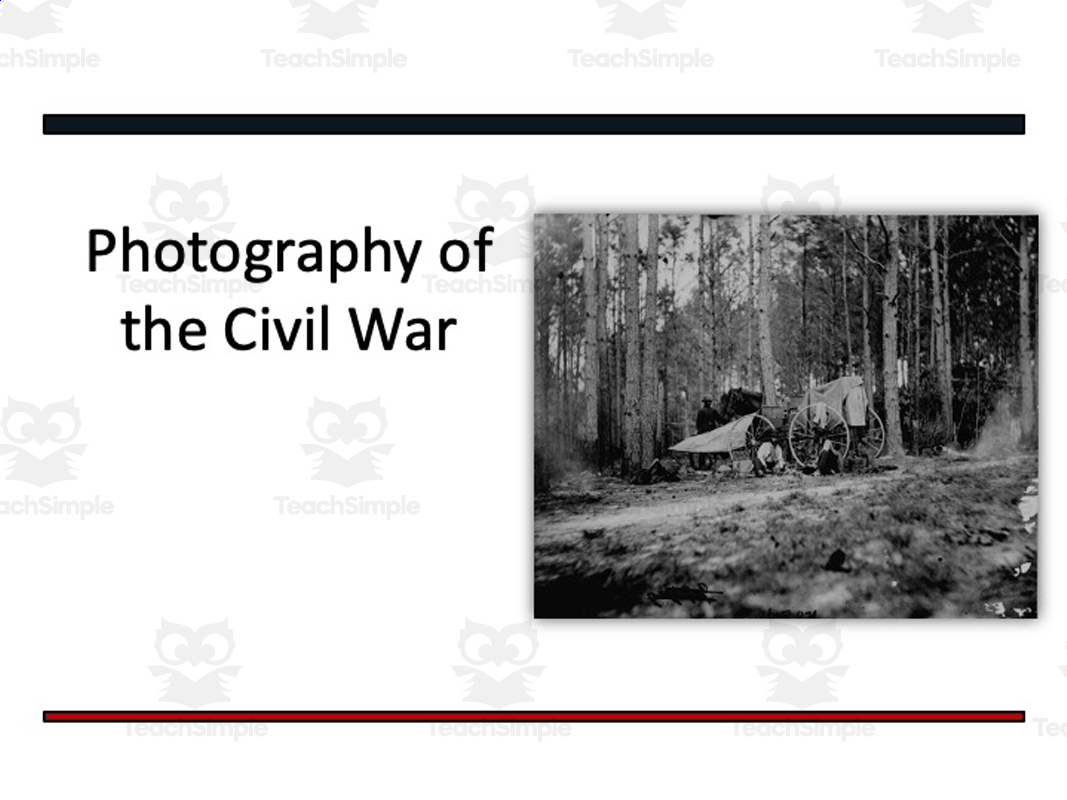
Depending on the component: read a unit guide, view PowerPoint lectures, complete paper or paperless activity packages, take online (ClassFlow/Google) or paper quizzes and a unit test, critique Civil War-related films (Glory, Harriet), complete a 'retweeting the Emancipation Proclamation' activity, complete a QR-code…
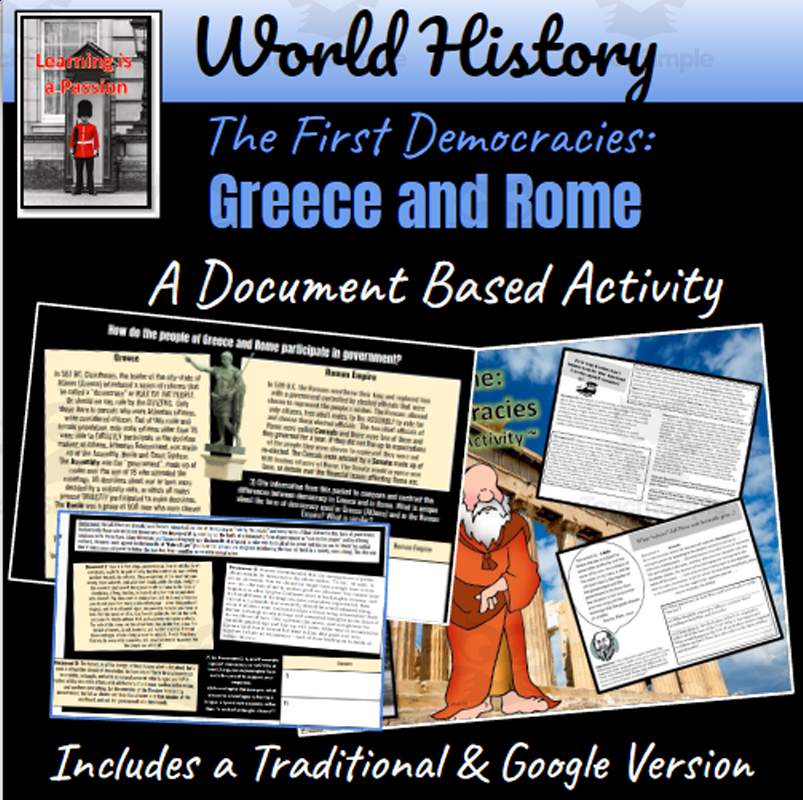
World History: Greece and Rome - The First Democracies | Document Based Activity This comprehensive product is a valuable teaching resource intended for both public school teachers and homeschoolers. This document-based activity delves into the democratic history of Athens (Greece) and Rome with 5 pages of enriching content. It…
Students discuss a starter question on sexism, read and annotate Act 3 Scenes 2 and 3 alongside a glossary of archaic terms, answer scene-by-scene summary-and-analysis questions referencing notable quotes, complete two PETAL paragraphs, a theme-tracking task, an extension task researching the crime of bigamy, and a homework…
An eighteen-slide GCSE poetry lesson on Vernon Scannell's 'Nettles' opens with author-context biography before two starter discussion slides on over-protective parenting prime students for a first reading of the full poem text. Students then annotate the poem in three line-groups, identifying tone and language devices such as the extended 'regiment of spite' and 'funeral pyre' metaphors, before answering dedicated content and structure questions about the poem's narrative and stanza form. A PETAL (Point, Evidence, Technique, Analysis, Link) framework, paired with a PROOFREAD self-assessment checklist, scaffolds a formal analytical paragraph, and the lesson closes with an extension task, a genre/form homework assignment, and plenary reflection questions. Teachers building a GCSE poetry scheme of work can pair this with the same PETAL-based approach applied to a different set text in the Half-Past Two poem analysis lesson .
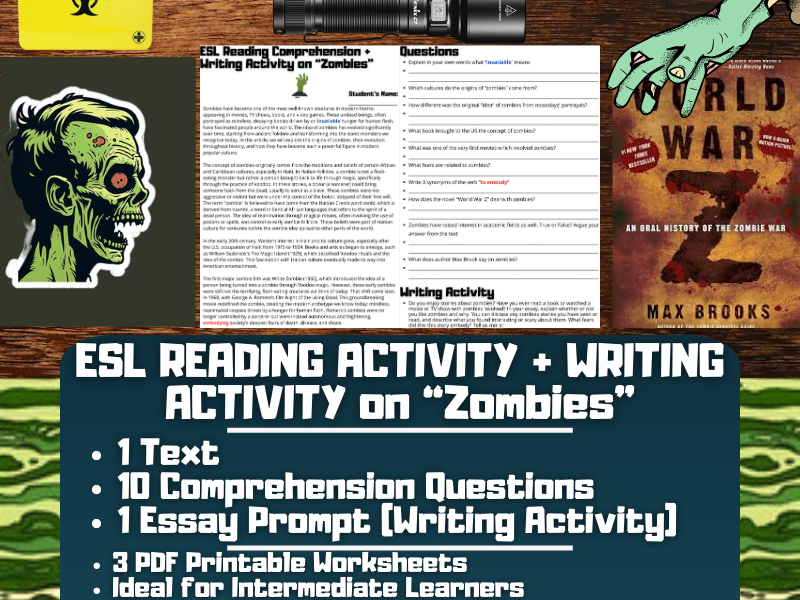
Gives ESL/EFL students a reading-comprehension and writing-practice worksheet built around a nonfiction article on the folklore origins (Haitian Voodoo tradition) and film/media evolution of the zombie figure.
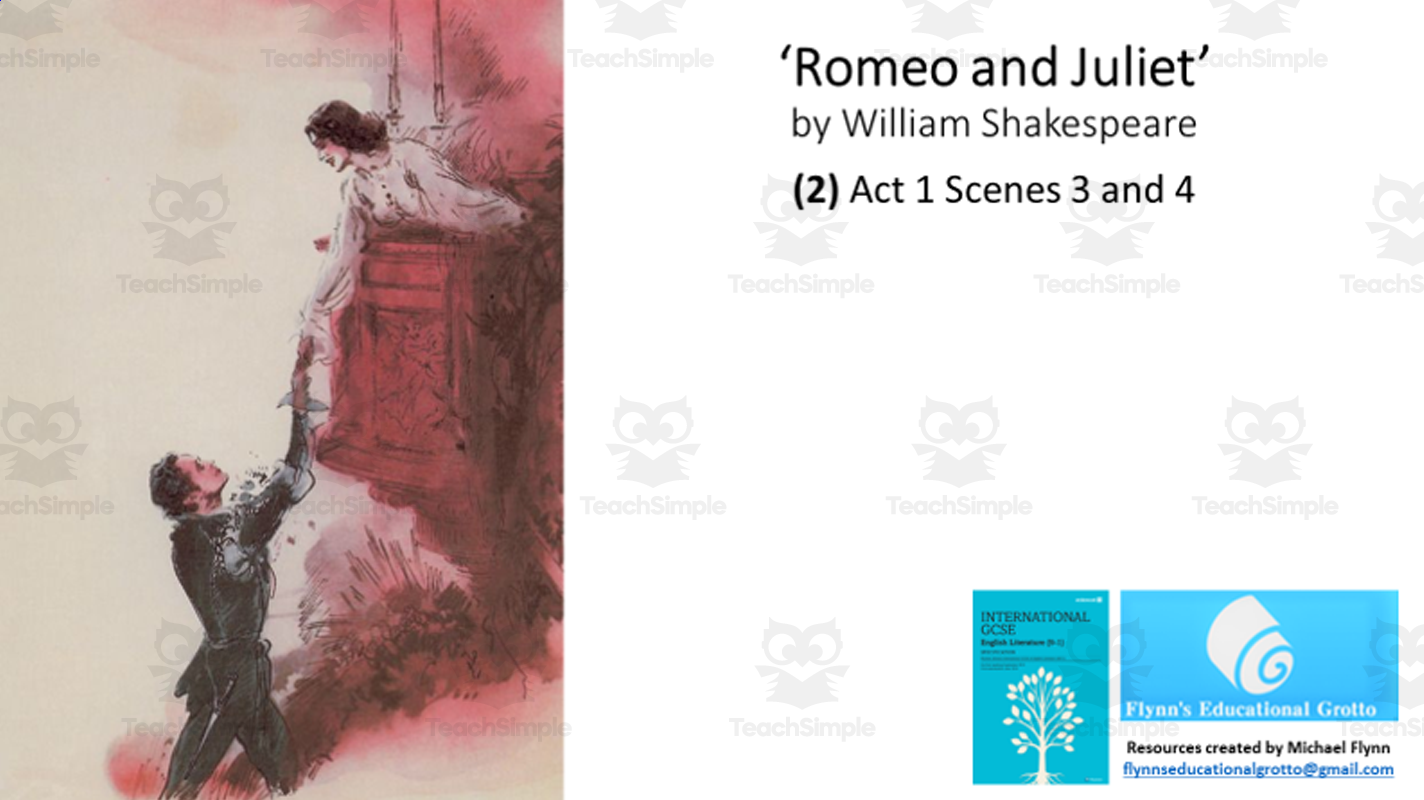
A GCSE English Literature PowerPoint lesson guiding students through a close reading and analysis of Romeo and Juliet Act 1, Scenes 3 and 4 (Lady Capulet raising marriage with Juliet, and Romeo/Mercutio/Benvolio en route to the Capulet feast), framed around the theme of innocence.
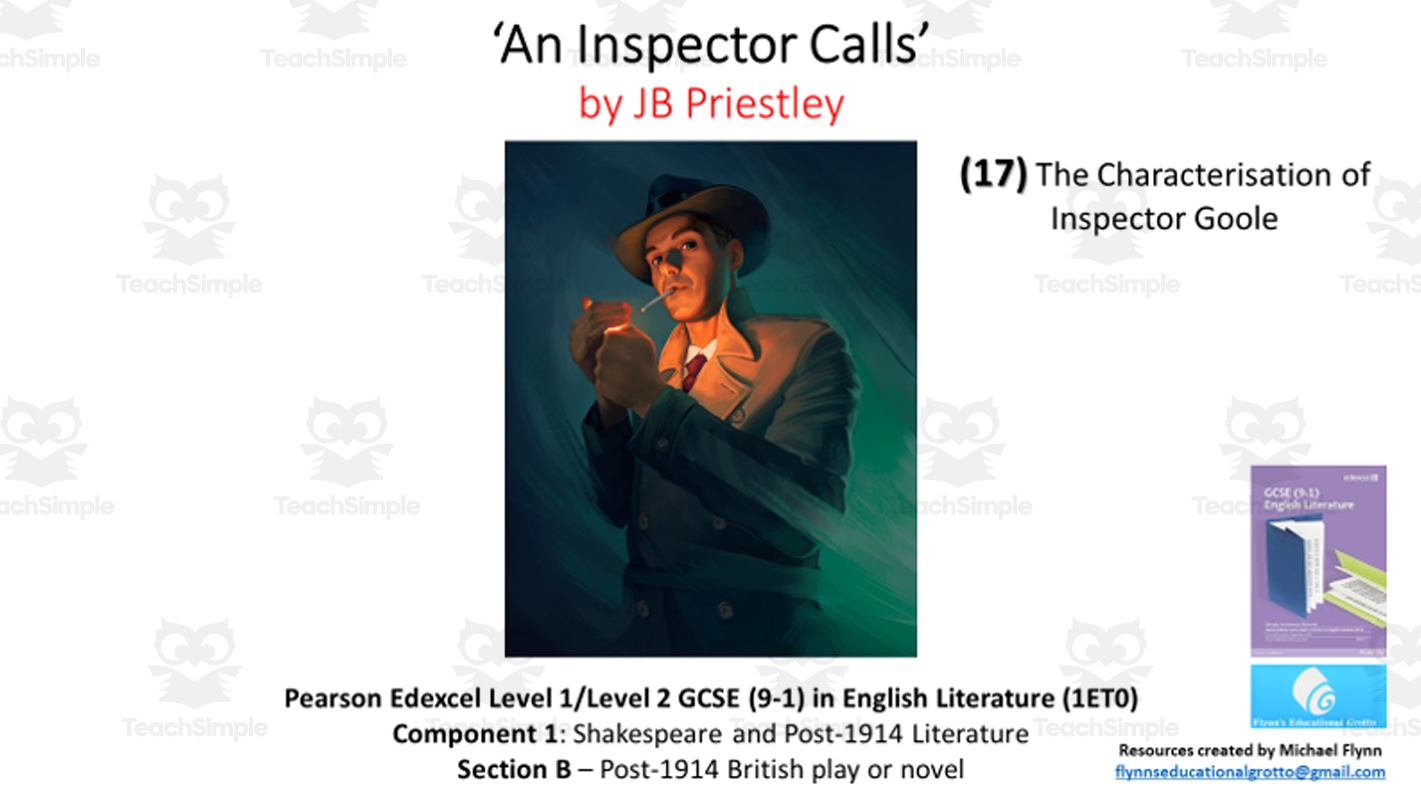
A GCSE English Literature PowerPoint lesson on the characterisation of Inspector Goole in 'An Inspector Calls', teaching direct vs indirect characterisation and applying it to his stage entrance, working-class-coded authority, and his role in challenging capitalism, class, arrogance of youth, sexual exploitation, lack of…
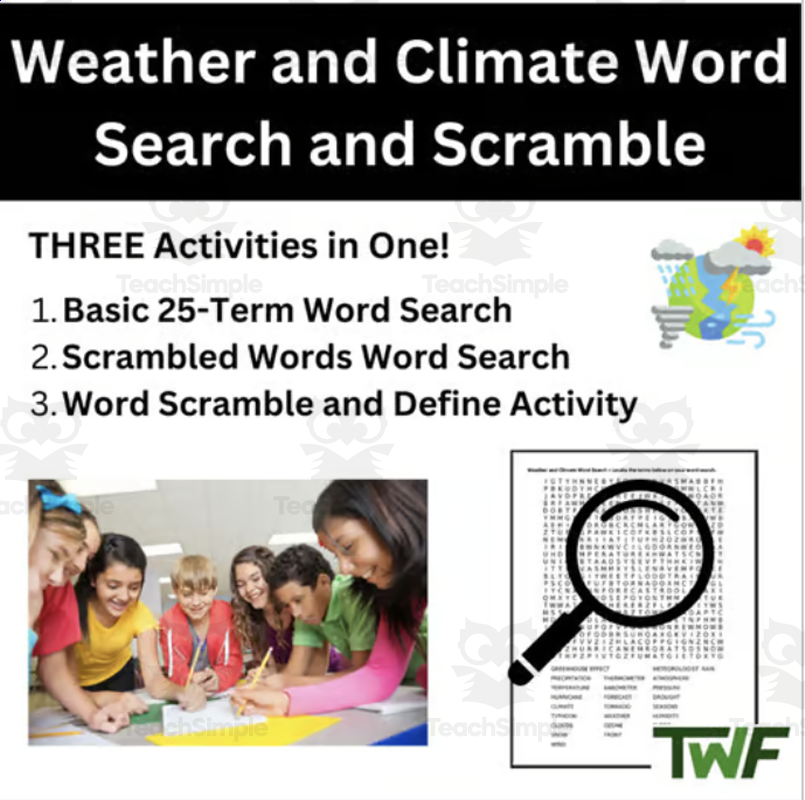
Locate 25 weather/climate vocabulary terms in a word search; find and unscramble the same terms from their scrambled letters; write the definition for each term.
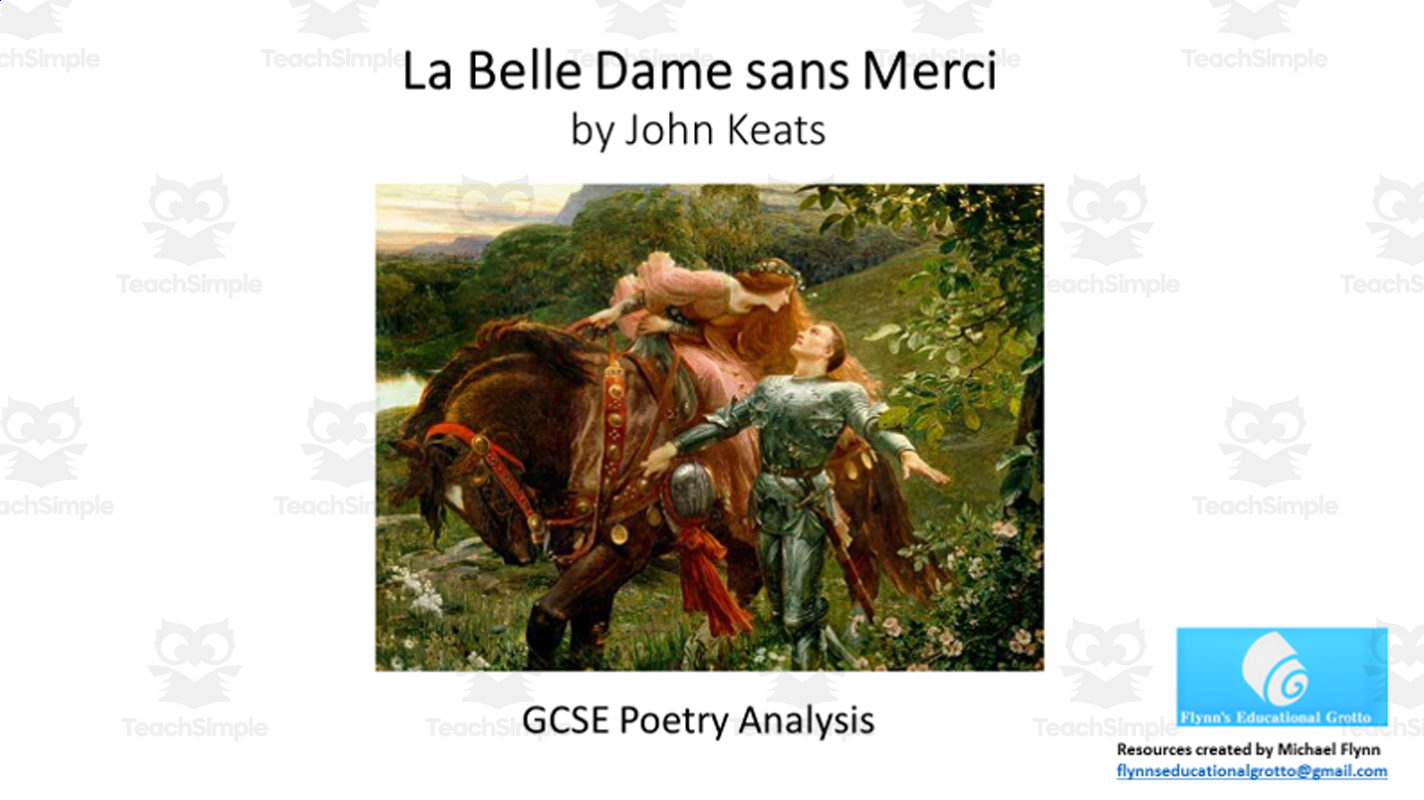
A GCSE English Literature poetry-analysis PowerPoint lesson guiding students through close reading of 'La Belle Dame sans Merci' by John Keats, covering author/poet context, first reading and annotation, tone and language analysis, structure questions, and an academic PETAL-paragraph writing task. The lesson frames the poem…
Students read a multi-paragraph nonfiction passage, answer open-response reading comprehension questions (including short-answer, vocabulary/synonym, and a true-or-false-with-textual-justification item), then write a personal-opinion or comparison essay responding to a set of guided writing prompts about the topic.
Follow a fill-in-the-blank student notes outline alongside a slideshow presentation covering physical weathering (thermal stress, pressure release, frost weathering, salt crystal growth, hydraulic action), chemical weathering (dissolution, oxidation, hydration), and erosion/deposition by five transport mechanisms…