



3,949 products added recently
Page 15 - Writing Activities
Encourage your students to express themselves with a variety of writing activities designed to enhance creativity and skill. This collection includes prompts, storytelling exercises, and collaborative writing projects. By incorporating these resources into your curriculum, you can help students develop their writing abilities and find joy in the process of creating written works.

 Show filters

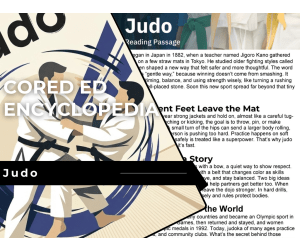
Judo Reading Comprehension Passage - Cored Ed Encyclopedia
ELA, Language Development, Resources for Teachers, Reading Comprehension, Reading, Pre-Reading, Writing, Strategies, Sports, P.E. & Health, Grade 2, 3, 4, 5, Worksheets & Printables, Worksheets, Teacher Tools, Centers, Activities, Writing Prompts, Assessments, Tests, Quizzes and Tests, Quizzes
This judo reading comprehension contains the following: Visualize on the Cover (Teacher Read Aloud Script) Start your lesson by taking a few moments to visualize the topic and share thoughts or feelings about it. Pre-Reading Trivia Students will write down one thing they already know about the subject and then read five more facts and discuss. These facts are fun, and the students will enjoy learning about the subject before reading more. Reading Passage The text is a high-interest reading passage with set paragraphs, roughly three to four paragraphs long. It contains a variety of themes about the topic, anywhere from history to technology. The passage is between 250 and 350 words in length. Mixed Questions The first question page contains four multiple-choice questions, each with a choice of four answers, and three written response questions that require a sentence or two from the student. Vocabulary Questions Practice seven key words from the text in this section across two activities. First section is scrambled words where students will unscramble three words given a clue for each. The second section is a word to meaning matching activity. Creative Writing In this question, the student will be required to write a five to eight sentence paragraph on a question related to the topic. Extension Activities This page is optional for fast finishers or to take home. There are several activities, each one requiring a different skill. Do some, do none, do all, completely optional - but you will feel reassured knowing every possibility is planned for. Answer Key There are answers for the multiple-choice questions, written response questions have sample answers, vocabulary answers and if there is a summary question then a sample summary will be provided as well. FULL CATALOG OF DOWNLOAD LINKS AND ENCYCLOPEDIA INDEX HERE Lesson Snapshot Title: Judo Genre: Nonfiction (Informational Text) Subject: Life Skills / PE & Health / Reading (Informational Text) Primary Topic: Judo’s origins, practices, values, and global sport Estimated Guided Reading Level (A–Z): P Learning Goals Explain how the book describes judo as the “gentle way,” using text details. Describe the main goals of a judo match and what actions are not the focus. Identify routines and behaviors in judo that show respect and help keep people safe. Describe how belts and the uniform connect to skill growth in judo. Summarize key milestones in judo’s history and spread around the world. Key Vocabulary From the Text jujutsu — older fighting styles Jigoro Kano studied. judogi — uniform worn in judo class. dojo — place where people train judo. pin — hold someone still on the mat. judoka — a person who practices judo. Cored Ed Encyclopedia Overview The Cored Ed Encyclopedia is a weekly series of lessons that you can pick up and use right away. These short readings fit into whatever time you have available. Each one includes a warm-up, a reading, and a set of questions, but it’s flexible — you can do just the reading, the full lesson, or skip the writing section if you need to. Each lesson focuses on a single topic so students don’t get lost. The writing is clear but never childish, making it perfect for grades two through five. Topics range from animals and science to history, inventions, and everyday things. No matter the level of the student, everyone should take away at least one new idea or fact from each lesson. The materials are easy to print, easy to explain, and require no setup. They work well for whole-class teaching, partner work, or independent study.
Author Cored Education
Rating
Tags Vocabulary, Spelling, Reading Comprehension, Reading Passages, Reading, Creative Writing, Reading Strategies, Writing Prompts, Judo, Sports
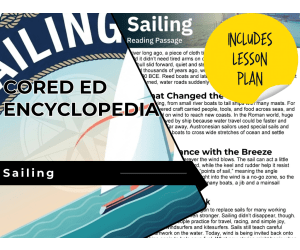
Sailing Reading Comprehension Passage - Cored Ed Encyclopedia
ELA, Language Development, Reading Comprehension, Reading, Pre-Reading, Science, Writing, Engineering, Technology, Physics, Grade 2, 3, 4, 5, Worksheets & Printables, Worksheets, Teacher Tools, Centers, Activities, Writing Prompts, Assessments, Quizzes and Tests, Quizzes, Lesson Plans
This sailing reading comprehension includes: Visualization (on the front cover) Start your lesson by taking a minute to think and share something about the topic. Read the script aloud (slowly), perhaps prepare some music or sound effects. Student close their eyes and let their imaginations wander. Students open their eyes, read the question aloud and give them a few minutes to complete. Ask a few students to share or keep answers until the end to compare with what they learn in the passage. Quick pause—thousands of Cored Education products are included with your TeachSimple membership. Download links and encyclopedia index available here. Pre-Reading Trivia Students will write down one thing they already know about the subject and then read five more facts and discuss. These facts are fun, and the students will enjoy learning about the subject before reading more. Give 1 minute for students to write what they already know (no pressure—best guess is fine). Read the five facts together. After each fact, do ask a student for their opinion, was it surprising? Set a purpose by asking students to highlight/underline one fact they want to learn more about during the reading. Reading Passage The text is a high-interest reading passage with set paragraphs, roughly three to four paragraphs long. It contains a variety of themes about the topic, anywhere from history to technology. The passage is between 250 and 350 words in length. First, ask students to look at the headings and see what they’ll learn about today. What do they know about the topic/heading? First read options: Teacher read-aloud (best for support). Partner reading (paragraph by paragraph). While reading, students underline important details, and vocabulary words they think may come up in the questions section. Mixed Questions The first question page contains four multiple-choice questions, each with a choice of four answers, and three written response questions that require a sentence or two from the student. Students complete the mcqs first independently, then review quickly as a class. For the 3 written responses, try to get students giving the answer with some form of evidence: “I think ___ because the text says ___.” If students get stuck, send them back to check the passage. Vocabulary Questions Practice seven key words from the text in this section across two activities. First section is scrambled words where students will unscramble three words given a clue for each. The second section is a word to meaning matching activity. Before starting, have some students read out words they underlined in the passage. Ask students to say the word and read aloud the sentence(s) around each word. Ask students to do scrambled words and the matching exercise in pairs then go through answers as a class. For the scrambled spelling task, get four pairs to come up to the board and write the words for extra practice with the other student reading out the clue. For the matching task, prompt students to give full sentences: “I matched ___ with ___ because ___.” Creative Writing In this question, the student will be required to write a five to eight sentence paragraph on a question related to the topic. Before starting, ask students write down 3 key ideas they are going to include in their piece. Ask students for ideas to share around the class to help those struggling. Pro writing expectations: 5–8 sentences At least 2 facts or details from the passage At least 2 vocabulary words from the previous page Students read their paragraphs while classmates listen for facts and vocabulary words. Extension Activities This page is optional for fast finishers or to take home. There are several activities, each one requiring a different skill. Do some, do none, do all, completely optional - but you will feel reassured knowing every possibility is planned for. Includes summary writting question. Answer Key There are answers for the multiple-choice questions, written response questions have sample answers, vocabulary answers and if there is a summary question then a sample summary will be provided as well. Lesson Plan Included Customized lesson plan for this lesson is included. Lesson Snapshot Title: Sailing Genre: Nonfiction (informational passage) Subject: Science (Forces & motion) / Social Studies (history of travel) Primary Topic: How wind powers boats and changed travel Estimated Guided Reading Level (A–Z): R What This Lesson Teaches Best How wind pushing on a sail can move a boat without rowing (sail as a “wind catcher” and cloth billowing). How sailing helped people travel farther and move supplies, from early boats to tall ships, including examples from Egypt, the Roman world, and Austronesian sailors. Key sailing concepts that affect movement and direction, including “points of sail,” the “no-go zone,” and zigzagging turns called tacks. How boat parts help sailing work: the sail pulling forward and the keel and rudder helping resist sliding sideways. How technology changed sailing’s role (steam engines replacing sails for many working ships) and how wind is being used again on some cargo ships to save fuel. Learning Goals Explain how wind pressing on a sail can move a boat forward. Describe how sailing grew from river boats to ships that carried people, tools, and food across seas. Identify why sailors use tacks and what the “no-go zone” means in the passage. Describe how the keel and rudder help a sailboat resist sliding sideways. Explain how sailing changed in the late 1800s and how wind is being used again today. Key Vocabulary From the Text hull — the main body of a boat. keel — a strong part that helps stop sliding sideways. rudder — a part that helps steer the boat. tacks — zigzag turns used to move into wind. cargo — goods carried on a ship. FULL CATALOG OF DOWNLOAD LINKS AND ENCYCLOPEDIA INDEX HERE
Author Cored Education
Rating
Tags Vocabulary, Reading Comprehension, Reading Passages, Reading, Creative Writing, Reading Strategies, Writing Prompts, Lesson Plans, Sailing, Engineering

Letter S Phonics and Writing Centers with Real Photographs
ELA, Writing, Handwriting, Language Development, Phonics, Kindergarten, Preschool, Centers, Activities
This letter S beginning sounds and handwriting activity includes real photographs to practice learning to recognize, write and identify the sound of the letter S. Each picture has bold colors and includes easily recognized pictures. Each activity can be used in a literacy center for students to practice letter recognition. What is Included: There is an instructional page with printing instructions. There are letter S posters with various letter S words. There are handwriting task cards that allow students to practice writing the letter S as well as words that begin with the letter S. There are beginning sound clip cards that allow students to practice clipping the images that begin with the letter S. There is a sorting activity where you sort pictures that begins with S from words that do not begin with S. The letter S sorting cards that can also be used to play memory, matching, or concentration games. These cards can also be used during a lesson in a pocket chart as well as for a center display. When to Use: All of the activities make great literacy centers, by placing each set of activities in the center and letting students complete activities alone or with a partner. These activities make great morning tub activities. Just place these activities in morning bins for students to complete as their classmates arrive to class. Skills Assessed: These activities assess letter recognition skills, beginning sounds, handwriting, and sorting skills. Each activity in this set is low prep. Each activity just needs to be printed out, cut apart, and laminated if desired. When you laminate the writing cards, you can create a writing center activity that is reusable is you add dry erase markers. The handwriting cards and beginning sound clip cards can be turned into task box activities.
Author The Connett Connection
Tags Phonics, Writing Centers, Real Photographs, Early Literacy, Letter S

Research Organizer & Essay Assignment: F. Scott Fitzgerald
ELA, Literature, Writing, Grade 9, 10, 11, 12, Activities, Projects, Worksheets & Printables, Worksheets
Research Organizer & Essay Assignment: F. Scott Fitzgerald Guide students to research the renowned author F. Scott Fitzgerald through this easy-to-implement resource. Students gather facts and sources about Fitzgerald's life using the background research and note-taking worksheet. Next, they outline their essay using the provided template, which structures their work into an informative five-paragraph format. Students then write a draft, utilize the peer review checklist, and submit a final version. Assess their work using the included rubric tied to Common Core ELA standards. Use the full resource for a complete research lesson or individual components as needed. This scaffolded and clearly organized resource makes researching and essay writing on Fitzgerald's life simple for students in grades 8-11. Editable files allow customization as desired.
Author The Language of Educational Art, LLC
Tags Essay, Rubric, Research, Notetaking, Outlining

How to Write a Paragraph: Brainstorming Topics - FLASH-MAC
ELA, Writing, Common Core, Grade 5, 6, 7, 8, Activities
How to Write a Paragraph: Brainstorming Topics - FLASH-MAC In the realm of education, clarity and organization remain key in fostering student's writing skills. The product "How to Write a Paragraph: Brainstorming Topics" serves as an engaging teaching resource to aid educators while they navigate this terrain. A Helpful Tool for Educators This interactive software engages students through a General-to-Specific Graphic Organizer . Essentially, it promotes critical thinking by guiding learners from broad ideas down to the specifics. Students are actively involved in the learning process as they organize words from a given list into their logical orders under matching topics. The tool is not just aligned with Common Core State Standards, but also tied to Bloom's Taxonomy. From this standpoint, educators can be confident of reinforcing student's comprehension and application of essential language arts ground rules effectively. Versatility and Ease-of-Use Designed for usability with Mac systems, this digital tool provides flexibility in how it can be deployed in learning environments for students spanning grades 5 through 8. You can use it for both whole group instruction or small group exercises according to your needs, No struggle when it comes to homework assignments; simply assign different brainstorming topics, Students can reflect on their understanding virtually at any place using their Mac gadgets. The resource comes packaged in one product file ensuring comfortable ease-of-use void of clutter. Fostering Future Thinkers and Writers Dive into modern ways of molding audacious thinkers and prolific writers with "How To Write A Paragraph: Brainstorming Topics." It offers you distinctiveness among peers by embracing innovation without compromising proven pedagogical approaches underscoring language arts teachings today.
Author Classroom Complete Press
Tags Software (Mac)
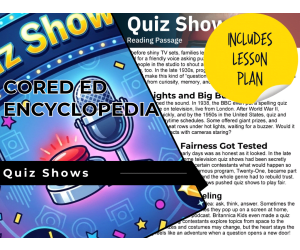
Quiz Shows Reading Comprehension Passage - Cored Ed Encyclopedia
ELA, Language Development, Reading Comprehension, Reading, Pre-Reading, Writing, Strategies, Vocabulary, History, Social Studies, Grade 2, 3, 4, 5, Worksheets & Printables, Worksheets, Teacher Tools, Centers, Activities, Writing Prompts, Assessments, Quizzes and Tests, Quizzes, Lesson Plans
This quiz shows reading comprehension includes: Visualization (on the front cover) Start your lesson by taking a minute to think and share something about the topic. Read the script aloud (slowly), perhaps prepare some music or sound effects. Student close their eyes and let their imaginations wander. Students open their eyes, read the question aloud and give them a few minutes to complete. Ask a few students to share or keep answers until the end to compare with what they learn in the passage. Quick pause—thousands of Cored Education products are included with your TeachSimple membership. Download links and encyclopedia index available here. Pre-Reading Trivia Students will write down one thing they already know about the subject and then read five more facts and discuss. These facts are fun, and the students will enjoy learning about the subject before reading more. Give 1 minute for students to write what they already know (no pressure—best guess is fine). Read the five facts together. After each fact, do ask a student for their opinion, was it surprising? Set a purpose by asking students to highlight/underline one fact they want to learn more about during the reading. Reading Passage The text is a high-interest reading passage with set paragraphs, roughly three to four paragraphs long. It contains a variety of themes about the topic, anywhere from history to technology. The passage is between 250 and 350 words in length. First, ask students to look at the headings and see what they’ll learn about today. What do they know about the topic/heading? First read options: Teacher read-aloud (best for support). Partner reading (paragraph by paragraph). While reading, students underline important details, and vocabulary words they think may come up in the questions section. Mixed Questions The first question page contains four multiple-choice questions, each with a choice of four answers, and three written response questions that require a sentence or two from the student. Students complete the mcqs first independently, then review quickly as a class. For the 3 written responses, try to get students giving the answer with some form of evidence: “I think ___ because the text says ___.” If students get stuck, send them back to check the passage. Vocabulary Questions Practice seven key words from the text in this section across two activities. First section is scrambled words where students will unscramble three words given a clue for each. The second section is a word to meaning matching activity. Before starting, have some students read out words they underlined in the passage. Ask students to say the word and read aloud the sentence(s) around each word. Ask students to do scrambled words and the matching exercise in pairs then go through answers as a class. For the scrambled spelling task, get four pairs to come up to the board and write the words for extra practice with the other student reading out the clue. For the matching task, prompt students to give full sentences: “I matched ___ with ___ because ___.” Creative Writing In this question, the student will be required to write a five to eight sentence paragraph on a question related to the topic. Before starting, ask students write down 3 key ideas they are going to include in their piece. Ask students for ideas to share around the class to help those struggling. Pro writing expectations: 5–8 sentences At least 2 facts or details from the passage At least 2 vocabulary words from the previous page Students read their paragraphs while classmates listen for facts and vocabulary words. Extension Activities This page is optional for fast finishers or to take home. There are several activities, each one requiring a different skill. Do some, do none, do all, completely optional - but you will feel reassured knowing every possibility is planned for. Includes summary writting question. Answer Key There are answers for the multiple-choice questions, written response questions have sample answers, vocabulary answers and if there is a summary question then a sample summary will be provided as well. Lesson Plan Included Customized lesson plan for this lesson is included. Lesson Snapshot Title: Quiz Shows Genre: Nonfiction (informational reading passage) Subject: Reading (Informational Text) / Social Studies (media history) Primary Topic: Quiz shows from radio to TV to podcasts Estimated Guided Reading Level (A–Z): R What This Lesson Teaches Best How quiz shows changed over time, from radio “question games” to television and modern podcasts. Key historical milestones and examples (late 1930s radio programs; 1938 BBC spelling quiz on TV; 1950s U.S. daytime quiz/game shows). Understanding fairness and trust in media (some shows were “rigged,” followed by investigations, hearings, and stronger rules). Text structure practice using section headings to track ideas (early radio → TV era → fairness tested → today). Strong built-in supports that match the passage (questions, vocabulary work, writing prompt, and extensions align to passage details). Learning Goals Students will describe how people participated in quiz shows before TVs were common, using details from the passage. Students will explain how television changed quiz shows, including what it was like for contestants under cameras and lights. Students will explain what “rigged” means in the passage and why quiz shows had to “rebuild trust.” Students will identify ways quiz shows appear today (board, screen at home, or podcast), based on the passage. Students will use the section headings to state the main idea of each section and support it with one detail. Key Vocabulary From the Text contestants — people who compete in a game rigged — secretly fixed so it is not fair producers — people who run and plan a show investigations — careful searches to find out what happened genre — a type or category of show FULL CATALOG OF DOWNLOAD LINKS AND ENCYCLOPEDIA INDEX HERE
Author Cored Education
Rating
Tags Vocabulary, Reading Comprehension, Reading Passages, Reading, Creative Writing, Reading Strategies, Writing Prompts, Lesson Plans, Quiz Shows, History
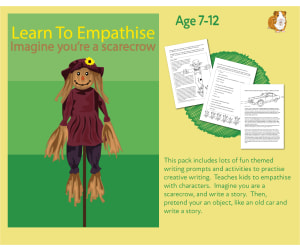
Imagine You Are A Scarecrow And Write Your Story (7-11 years)
ELA, Writing, Creative Writing, Grade 1, 2, 3, 4, Activities
Imagine You Are A Scarecrow. Write Your Story. In this pack, the child is asked to empathise with a character (in other words to imagine they are in the characters shoes). The child should read the scarecrows account of his life, answer the sentence prompts and then, write their own version of the story. Imagine You Are An Old Car. Write Your Story. The child is asked to pretend they are an on object, like an old car and to write a story, from the point of view of the car. The child should read the story and the sentence prompts given and then write their own version. They should remember to use a new paragraph for change of time, place or situation. This series of work packs provides prompts to encourage children to write. It provides starting points, to encourage even the most reluctant writers. Featuring a lively, 'magazine style' format to appeal to children of all abilities. The writer herself often dips into the lively collection of imaginative stories and non fiction articles, to teach her students in tutorials. The packs feature detailed prompts on how to plan and write stories and letters, as well as help with non fiction tasks - writing diaries, reports and persuasive leaflets. There is also plenty of practice in writing techniques - variation of sentences, connectives and grammar and punctuation tips. The work packs are ideal for home study and will reinforce the work done in school. They may be purchased in any order. There are a number of titles to choose from. By working through the packs, the student will grow in confidence and will learn to enjoy writing. The packs are also a useful resource for teachers and save hours of time when preparing lessons or homework tasks.
Author Guinea Pig Education
Tags Creative Writing, Story, Write, English, Story. Plan
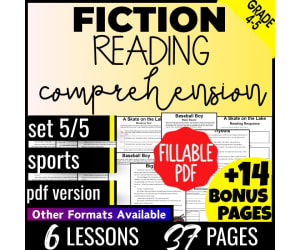
Reading Comprehension and Questions Fiction Set 5 - Sports (Fillable)
ELA, Reading, Reading Comprehension, Common Core, ESL, Language Development, Vocabulary, Spelling, Literature, Writing, Grade 4, 5, Worksheets & Printables, Worksheets, Writing Prompts, Assessments, Teacher Tools, Tests, Quizzes and Tests, Centers, Activities
Reading Comprehension Passages Fiction Set 5 Snapshot Title: Reading Comprehension: Fiction Grade 4–5 Sports Genre: Fiction collection (sports-themed stories) with one informational passage Subject: Reading (ELA) Primary Topic: Sports moments, practice, competition, and teamwork Estimated Guided Reading Level (A–Z): Q What This Teaches Best Inferring characters’ feelings and motivations from actions and dialogue (e.g., Lauren’s disappointment/excitement, Max’s nervousness, Kitty’s fear turning into confidence). Problem/solution and perseverance in sports situations (tryouts pressure, facing a “rival,” learning what matters in competition). Sequencing and retelling through clear event chains (planning, practicing, traveling to an event, and reflecting afterward). Figurative and sensory language for setting and mood (the frozen lake, “orange radiance,” sounds/smells of outdoor skating). Vocabulary and word-study practice tied to the passages (note: the Running decode activity includes “opponent,” while the passage uses “opponents”). Learning Goals Identify and retell key events from a sports story in the correct order. Describe how a character feels at different moments using text evidence. Explain how practice or preparation affects what happens in a story. Determine the meaning of unfamiliar words using context clues in the passage. Compare how different texts present sports as fun, competition, or personal goals. Passages Include 1.Olympics: Lauren and her class get excited when talking about the Olympics. 2.Tryouts: Max is getting himself ready for the basketball tryouts. 3.Big Brienne: Kitty has the game of her life against Big Brienne. 4.A Skate on the Lake: Aimee has a nice evening at the lake with her dad and friends. 5.Baseball Boy: Mitch goes to watch the Chicago Hitters. Read about his day. 6.Running: An informative, yet light piece about running. FILLABLE PDF VERSION Worksheet-style pages, but with type-in answer boxes so students can complete and save their work digitally. Other versions are available in the links list below or in the full catalog. FULL CATALOG OF DOWNLOAD LINKS HERE For similar downloads and other frees, do check out Cored Group on TeachSimple.
Author Cored Education
Rating
Tags Elementary, Reading, Comprehension, Vocabulary, Answers, Spelling, Writing, Passages, Reading Centers, Reading Comprehension Assessments
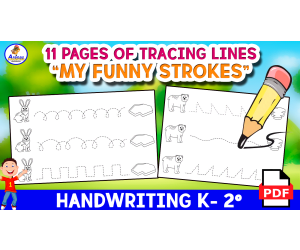
MY FUNNY STROKES - 11 Activity Page for Tracing Kids FREE
ELA, Writing, Handwriting, Kindergarten, Preschool, Grade 1, 2, Activities
1. Introduction As everyone knows, reviewing lines is a very beneficial activity for the development of our students' motor and cognitive skills. For this reason, today I have prepared this fascinating educational sheet that contains 11 beautiful pages for your students and/or children (in case you are a parent), to review these beautiful graphics, and at the same time entertain themselves, they They learn and improve their graphomotor skills. 2.Objective Some of the objectives of this fascinating worksheet are: - Develop fine motor skills: As you know, reviewing lines supports and helps children and/or students improve their hand-eye coordination and thus they will also strengthen the small muscles of their hands, which is very fundamental and essential for the development of their fine motor skills. Then, these types of skills are also an essential part so that they can later perform tasks such as writing, fastening buttons and even manipulating small objects in their daily life. - Improve coordination and control: As is known, the practice of reviewing lines contributes to the development of coordination between the non-dominant hand and the dominant hand, as well as the control of the pencil or crayon with which the child is writing. This set of skills is essential and crucial for the correct development of the writing process. -Encourage the improvement of concentration and attention: When your students and/or children follow the lines attentively, they improve their ability to pay attention and concentrate, which are essential skills for learning in the classroom as well as other daily activities in the classroom. daily life. - Stimulate the brain: When reviewing lines, different areas of the brain are being activated, including those related to motor coordination and visual perception. This will stimulate the connection between the brain and the hands, which will promote comprehensive brain development. - Preparation for writing: By reviewing lines, students are also preparing for formal writing. This will help students and/or children become familiar with the movement of the hand when holding a crayon or pencil, thus facilitating the transition to writing and then tracing letters and numbers. 3.Order, scheme and stages First, start with motivation, so that your students awaken their attention and interest in the programmed activity . Then enter the current token. 4.Grades or ages This sheet is aimed at children of 3, 4, 5, 6 and even 7 years old who are beginning their writing process and their first strokes. 5. Form of application This sheet can be applied individually and in groups. 6. Answer keys This game does not require answers. 7.Use text labels graphomotor skills, strokes, strokes and lines, lines, fine motor skills, stroke books, line books, first strokes, first lines, line and stroke activities. 8.Rules Specified above. 9.File types The archive is in PDF format. 10.Number of pages This document contains 11 pages.
Author EDITORIAL LAURA EDUCA
Tags Handwriting, Tracing, Strokes, Tracing Lines
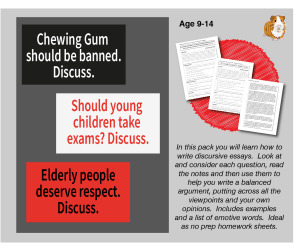
Lots Of Discursive Essays To Write: Pack 2 (9-14 years)
ELA, Writing, Grade 4, 5, 6, 7, 8, 9, Activities
Lots Of Discursive Essays To Write: Pack 2 (9-14 years) This is a comprehensive teaching tool aimed at developing strong literacy skills within students aged between 9 and 14 years. It acts as an ideal resource for educators, including both public school teachers and homeschoolers, to enhance students' English assignments and examination grades. Discursive Essay Writing Mainly focusing on teaching how to write a discursive essay, this resource guide teaches students how to: Structure their arguments comprehensively from start to finish. Create effective counterarguments. Promote critical thinking on various topics like healthy eating habits or contemporary social issues. Persuasive Literary Devices The guides also help learners understand various vital persuasive literary devices such as: Figuative language utilization, Application of emotive words, The use of repetition in writing, Note: Captivating models written by students themselves are provided together with useful tips for avoiding common mistakes made during essay composition. This valuable tool is available in an accessible PDF format which includes a total of 23 pages filled with engaging activities centered around discursive writing guidance. These activities are versatile enough to be applied across varying learning environments including whole group instruction, smaller focused groups or even given as homework assignments based on the discretion and objectives set by educators. In addition elements like spellling accuracy awareness along with punctuation applicability are emphasized upon throughout the pack thus providing learners with managable methods tp grasp core English language principles and improve their overall proficiency levels effectively. Conclusively,this resource caters suitably for grade levels between Grade 4 and Grade 9 within the Language Arts subject focus, specifically in the Writing sub-subject category. As such, it is a fundamental tool for educators in search of detailed and flexible literacy development tools.
Author Guinea Pig Education
Tags Discursive Writing, Literacy Development, Writing Prompts, Persuasive Techniques, Language Arts Skills, Discursive Clipart, Discursive Essays

FREE ANCHOR CHART OF READING | The Kind Little Mouse
ELA, Reading, Writing, Adult Education, Early Learning, High School, Elementary, Homeschool Resources, Middle School, Not Grade Specific, Activities, Worksheets & Printables
FREE ANCHOR CHART OF READING | The Kind Little Mouse INTRODUCTION: We are EDITORIAL ARENAS EDUCATIVAS, a publisher dedicated to designing educational resources for primary school children approximately between the ages of 3 and 12 who are learning mathematics, literacy, as well as worksheets for learning Spanish and some brain exercises. MAIN INFORMATION: 1. Why should teachers use educational material in the classroom? As is known, educational material helps students build their knowledge autonomously and, above all, in an unforgettable way. 2. What is the name of this document? This document is titled "Educational material for children" 3. What topic will be addressed in this resource? This document will address an educational topic that every child should learn in a basic way. 4. For what ages is it recommended? This set of educational sheets is recommended for children in general who are in the learning age and these sheets will be of great help to them. 5. Who is the author of this document? The author, who was in charge of producing and compiling this educational material, is EDITORIAL ARENAS EDUCATIVAS. SECONDARY AND COMPLEMENTARY INFORMATION: 6. Color or black/white: This educational product is designed in color because we believe that this will be much more attractive for your children. 7. Aimed at children of ages: This educational document is specifically aimed at children in primary education. 8. Area: This educational document may be used in some area of primary education for children. 9. Keywords: children, primary education, resources for children, free resources, primary resources, resources for primary education. 10. How do I print it? You can print this document in PDF format, A4 size. 11. How to apply it in class? You can apply this document individually or also in a group, it all depends on the criteria of the educator who is going to apply this sheet. 12. Will they need extra elements to use this sheet? Yes, perhaps the students when using this sheet will need pencils, colors, or perhaps scissors, eraser. It all depends on the point of view of the educator. 13. Standards: This educational document has not been prepared based on any specific standard. 14: Answer Key: This educational document does not contain an attached answer key.
Author EDITORIAL LAURA EDUCA
Tags FREE ANCHOR CHART OF READING, ANCHOR CHART, FREE, FREE RESOURCES, READING, COMPREHENSION

Letter Z Phonics and Writing Centers with Real Photographs
ELA, Language Development, Phonics, Writing, Handwriting, Kindergarten, Preschool, Centers, Activities
This letter Z beginning sounds and handwriting activity includes real photographs to practice learning to recognize, write and identify the sound of the letter Z. Each picture has bold colors and includes easily recognized pictures. Each activity can be used in a literacy center for students to practice letter recognition. What is Included: There is an instructional page with printing instructions. There are letter Z posters with various letter Z words. There are handwriting task cards that allow students to practice writing the letter Z as well as words that begin with the letter Z. There are beginning sound clip cards that allow students to practice clipping the images that begin with the letter Z. There is a sorting activity where you sort pictures that begins with Z from words that do not begin with Z. The letter Z sorting cards that can also be used to play memory, matching, or concentration games. These cards can also be used during a lesson in a pocket chart as well as for a center display. When to Use: All of the activities make great literacy centers, by placing each set of activities in the center and letting students complete activities alone or with a partner. These activities make great morning tub activities. Just place these activities in morning bins for students to complete as their classmates arrive to class. Skills Assessed: These activities assess letter recognition skills, beginning sounds, handwriting, and sorting skills. Each activity in this set is low prep. Each activity just needs to be printed out, cut apart, and laminated if desired. When you laminate the writing cards, you can create a writing center activity that is reusable is you add dry erase markers. The handwriting cards and beginning sound clip cards can be turned into task box activities.
Author The Connett Connection
Tags Phonics, Writing Centers, Real Photographs, Early Literacy, Letter Z
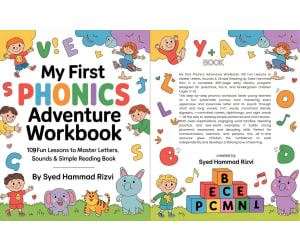
My First Phonics Adventure Workbook 109 Fun Lessons to Master Letters
ELA, Language Development, Literature, Reading, Writing, Phonics, Children’s Literature, Reading Comprehension, Strategies, Creative Writing, Kindergarten, Preschool, Grade 1, 2, 3, 4, 5, Projects, Activities, Teacher Tools, Assessments, Lesson Plans, Presentations, Workbooks, Worksheets & Printables, Literacy Readers, Graphic Organizers
Discover the ultimate preschool and kindergarten phonics workbook called the "My First Phonics Adventure Workbook: 109 fun lessons helping children to master letters, sounds and beginning reading!" This 369-page resource for early literacy education presents a sequentially organized curriculum of phonics skills (i.e., identification of uppercase/lowercase letters; pronunciation of short and long vowel sounds; recognition of CVC words; consonant blend sounds; recognition of diagraph sounds (e.g., "sh," "ch," "th," "wh"); pronunciation of r-controlled vowel sounds; recognition and pronunciation of diphthongs; identification of double consonant letters; recognition and use of sight words; simple sentence/story reading). Written in an easy-to-read and engaging style with many examples of the different types of words for blending activities and everyday application of reading skills, this learn to read workbook provides children with a strong phonemic awareness base and confidence in decoding words when reading. It is great for homeschoolers, teachers, or parents who want to use a comprehensive first-time reader program starting with A-Z letters, and ending with reading comprehension of a whole story; no prior knowledge required; ages 3-6. Improve child reading fluency from an all-inclusive phonics adventure that will support your preschool, Pre-K, or kindergarten child's growth towards success as a reader. Start today by downloading and becoming part of your child's journey toward unlocking the beauty of reading! Why Parents/Teachers Love: Systematic and Comprehensive Coverage — 109 accumulation chapters lead children from single letters to fluent reading of stories — no holes, no additional books needed. Creates True Confidence — Simple explanations with rules of word families and blending activities allow children to independently decode words they have not seen before, providing less frustration to children. Parent and Teacher Friendly — Ready-to-use lessons with examples; works well as a homeschooling, center, or daily practice resource. Proven Early Literacy Base — Phonics standard based and result driven methods that predict long-term success of reading. Affordable and All-in-One Resource – One download replaces more than one costly workbook and offers high quality profession instruction. Target Audience: This workbook is designed for children ages 3–7 in preschool (Pre-K) or early grade 1. Pre-k – Ideal for teaching children to recognize the letters of the alphabet, the sounds they make, and the beginning of their ability to read (Chapters 1-33). Kindergarten – This workbook provides a variety of activities that correlate to the core objectives found in the K-12 English language arts curriculum such as: recognizing and reading short/long vowel sounds, identifying consonant blends/digraphs, and writing simple sentences (Chapters 34-102). Early Grade 1 – This workbook can be used to reinforce and build on skills associated with r-controlled vowels, diphthongs, sight words, and text comprehension (Chapters 103-109). This workbook’s skills are foundational and will assist children who are developing as readers; however, the skills may be too easy for students in 2nd grade and above. Copyright Notice / Terms and Conditions: This Book is owned by Syed Hammad Rizvi. The Book is intended for personal use and only in one classroom. It may not be modified or sold by you, nor may it be distributed over the internet for others to download. If you would like to share the Book with your coworkers, please purchase more licenses for the Book on Teachsimple. Thank you for respecting these terms of use. Syed Hammad Rizvi is pleased to provide you with this product.
Author Creative Book Store
Rating
Tags Phonics, PhonicsFun, PhonicsForKids, PhonicsActivities, EarlyLiteracy, EarlyReading, LearnToRead, ReadingSkills, Literacy, ScienceOfReading
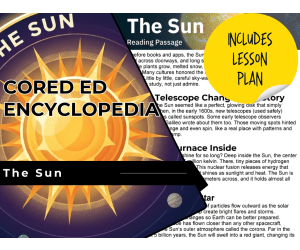
The Sun Reading Comprehension Passage - Cored Ed Encyclopedia
ELA, Language Development, Reading Comprehension, Reading, Pre-Reading, Writing, Science, Earth Sciences, Earth and Environmental Sciences, Space, Grade 2, 3, 4, 5, Worksheets & Printables, Worksheets, Teacher Tools, Centers, Activities, Writing Prompts, Assessments, Quizzes and Tests, Quizzes, Lesson Plans
This Sun reading comprehension includes: Visualization (on the front cover) Start your lesson by taking a minute to think and share something about the topic. Read the script aloud (slowly), perhaps prepare some music or sound effects. Student close their eyes and let their imaginations wander. Students open their eyes, read the question aloud and give them a few minutes to complete. Ask a few students to share or keep answers until the end to compare with what they learn in the passage. Quick pause—thousands of Cored Education products are included with your TeachSimple membership. Download links and encyclopedia index available here. Pre-Reading Trivia Students will write down one thing they already know about the subject and then read five more facts and discuss. These facts are fun, and the students will enjoy learning about the subject before reading more. Give 1 minute for students to write what they already know (no pressure—best guess is fine). Read the five facts together. After each fact, do ask a student for their opinion, was it surprising? Set a purpose by asking students to highlight/underline one fact they want to learn more about during the reading. Reading Passage The text is a high-interest reading passage with set paragraphs, roughly three to four paragraphs long. It contains a variety of themes about the topic, anywhere from history to technology. The passage is between 250 and 350 words in length. First, ask students to look at the headings and see what they’ll learn about today. What do they know about the topic/heading? First read options: Teacher read-aloud (best for support). Partner reading (paragraph by paragraph). While reading, students underline important details, and vocabulary words they think may come up in the questions section. Mixed Questions The first question page contains four multiple-choice questions, each with a choice of four answers, and three written response questions that require a sentence or two from the student. Students complete the mcqs first independently, then review quickly as a class. For the 3 written responses, try to get students giving the answer with some form of evidence: “I think ___ because the text says ___.” If students get stuck, send them back to check the passage. Vocabulary Questions Practice seven key words from the text in this section across two activities. First section is scrambled words where students will unscramble three words given a clue for each. The second section is a word to meaning matching activity. Before starting, have some students read out words they underlined in the passage. Ask students to say the word and read aloud the sentence(s) around each word. Ask students to do scrambled words and the matching exercise in pairs then go through answers as a class. For the scrambled spelling task, get four pairs to come up to the board and write the words for extra practice with the other student reading out the clue. For the matching task, prompt students to give full sentences: “I matched ___ with ___ because ___.” Creative Writing In this question, the student will be required to write a five to eight sentence paragraph on a question related to the topic. Before starting, ask students write down 3 key ideas they are going to include in their piece. Ask students for ideas to share around the class to help those struggling. Pro writing expectations: 5–8 sentences At least 2 facts or details from the passage At least 2 vocabulary words from the previous page Students read their paragraphs while classmates listen for facts and vocabulary words. Extension Activities This page is optional for fast finishers or to take home. There are several activities, each one requiring a different skill. Do some, do none, do all, completely optional - but you will feel reassured knowing every possibility is planned for. Includes summary writting question. Answer Key There are answers for the multiple-choice questions, written response questions have sample answers, vocabulary answers and if there is a summary question then a sample summary will be provided as well. Lesson Plan Included Customized lesson plan for this lesson is included. Lesson Snapshot Title: The Sun Genre: Nonfiction (informational text with support pages) Subject: Science (Space Science) Primary Topic: How the Sun affects Earth and works Estimated Guided Reading Level (A–Z): S What This Lesson Teaches Best How people used the Sun and changing shadows to notice time long before clocks, phones, and apps. How telescopes in the early 1600s revealed sunspots and helped people realize the Sun can change and even spin. How the Sun shines for so long because nuclear fusion joins hydrogen to make helium and releases energy as sunlight and heat. Key facts about the Sun’s size and importance in the solar system (about 1.39 million kilometres across; holds almost all the mass in the solar system). How the Sun can be active (solar wind, flares, storms) and how spacecraft like NASA’s Parker Solar Probe study the Sun’s outer atmosphere, the corona . Learning Goals Describe how changing shadows helped people notice time long ago. Explain what sunspots are and what they helped early observers realize about the Sun. Explain, using details from the text, how nuclear fusion makes energy inside the Sun. Identify what the corona is and why the Parker Solar Probe flew close to the Sun. Describe two ways the Sun is “not always calm,” based on the passage. Key Vocabulary From the Text telescopes — tools used to see faraway objects in the sky. sunspots — dark freckles seen on the Sun. hydrogen — a gas that joins together deep inside the Sun. helium — what hydrogen becomes when it joins together. corona — the Sun’s outer atmosphere. FULL CATALOG OF DOWNLOAD LINKS AND ENCYCLOPEDIA INDEX HERE
Author Cored Education
Rating
Tags Vocabulary, Reading Comprehension, Reading Passages, Lesson Plans, Ela Lesson Plans, Reading Comprehension Lesson Plans, Reading, Pre-reading, The Sun, Earth Science
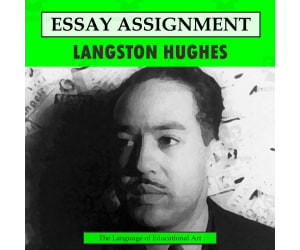
Research Organizer & Essay Assignment: Langston Hughes
ELA, Literature, Poetry, Writing, Grade 7, 8, 9, 10, 11, 12, Activities, Projects, Worksheets & Printables, Worksheets
There a few figures more important to the Harlem Renaissance than Langston Hughes. This resource provides your students with the opportunity to independently explore and write about the life of the famous poet with this engaging research planner and essay assignment. This carefully scaffolded and easy-to-assign-AND-assess resource has been designed to guide student learning from Langston Hughes fact-collection to the careful development of a five-paragraph research essay. Teaching this resource could not be easier! Start by handing out the background research and note-taking worksheet (you could also ONLY hand this out if you want a shorter lesson!). Once students have found their facts and sources, provide them with the essay outline activity, which guides them step-by-step through the requirements of a short research essay. From there, drafting their essay, using the provided peer review checklist, and submitting their final draft will be no problem at all. And then you can assess their work with the provided Common Core rubric! Use this entire resource as a complete research lesson or just part of it as a short research activity or sub plan! This TeachSimple download includes: - A Langston Hughes essay writing assignment with directions, requirements, research essay writing tips, a peer review checklist, and Common Core-tied grading rubric - An editable rubric, provided as a link, that lets you make adjustments to the grade values and guidelines. This link is provided as as Google Sheet specifically built for integration into Google Classroom, although you can also modify it for use in other Learning Management Systems (LMSs) - A Langston Hughes biography and note-taking worksheet that will guide your students through information gathering. This straightforward two-page handout includes instructions for background research, a fun drawing section, and an area to cite quality sources and organize conducted research - A research essay outlining worksheet, so students build on their Langston Hughes notes in a clear and simple manner as they build their work towards a draft and final paper - All 6-pages of this lesson are provided in full-color and B&W versions Although this resource can be fitted for any secondary Language Arts classroom, it has been carefully designed to work best in grades 8 through 11. The included rubric is subtly but specifically tied to Common Core ELA Standards for Language (3) and Writing (2 and 7). This resource is provided as a print-ready, bookmarked, and adjustable PDF file. The rubric is also included as an editable Google Sheet. This resource contains 6 pages and 1 Google Sheet.
Author The Language of Educational Art, LLC
Tags Essay, Research, Rubric, Notetaking, Outlining

Famous Artist Middle School Research Project 5th 6th 7th 8th Grade
Research, ELA, Writing, Formal Writing, Social Studies, Biographies, Creative Arts, Art History, Grade 5, 6, 7, 8, Worksheets & Printables, Worksheets, Writing Prompts, Drawing Templates & Outlines, Teacher Tools, Rubrics, Activities, Projects
Here is a ready-to-go middle school famous artist research project for your students in 5th, 6th, 7th, or 8th grade. Each student will choose a famous artist, complete focused research about their life and artistic style, and create an organized project with paragraphs and visuals to share their learning. How to Use: •Print pages 2-13 for each student. •Page 2 has instructions for the project including spots to write due dates and a checklist to keep students on track. You can assign a specific era for students to pick artists from or give them a list of artists. •Page 3 has seven different prompts for students to research. Each student needs to pick at least four prompts to include in their unique project. •Pages 4-6 are graphic organizers for your students to use as they take notes and record their research sources (page 6 is optional). •Pages 7-9 are templates for students to use to write at least four paragraphs about their artist (page 9 is optional). They could also type and print these paragraphs instead. •Page 10 is for students to use to draw a portrait of their artist. They could choose to use the artist’s style as inspiration. •Page 11 is for students to show samples of the artist’s paintings and style. They can print and glue on some samples and try to recreate some on their own as well. •Page 12 is a title page for the project booklet. •Page 13 is a rubric you can use to assess the project. Let students see it at the beginning of the project so they know what the expectations are. Over several weeks, your students can complete their research, write and proofread their paragraphs, and draw the visual components of their project. They can present their projects to each other, and you can use the rubric to assess them Grades to Use With: This project is designed for middle school students in 5th, 6th, 7th, or 8th grade who are learning about biography writing, famous artists, library research skills and expository writing- specifically expository paragraphs. It could also be used in high school special education classes where appropriate. What's Included: 13-Page PDF: Ready to Print and Use! Complete Teacher Instructions 2 Pages of Student Instructions & Writing Topics 6 Student Graphic Organizers for Note-Taking & Paragraph Writing 2 Student Templates for an Artist Portrait and Samples of Art Project Title Page Marking Rubric
Author Grace Under Pressure
Rating
Tags 5th Grade Project, Famous Artist, Famous Artist Research Project, Famous Artist Research, Artists, Middle School Research Project, 6th Grade Project, Art Project, Paragraph Writing
YouTube Video Project
ELA, Writing, Creative Writing, Grade 9, 10, 11, 12, Activities, Projects
This resource is a YouTube Video Project. Students will pretend that they are a famous YouTuber with thousands of subscribers. They are looking for an idea for a new video. Students will choose a video concept then they will write and film their script. Directions and a rubric are included.
Author Golden Promise
Tags YouTube, Video, Project, Documentary, ESL

Father's Day Narrative Writing Guide!
ELA, Writing, Creative Writing, Grade 6, 7, 8, 9, 10, 11, 12, Activities, Projects
Honor your father by transforming him into a superhero in your very own action-adventure tale! Our collection of narrative writing guides aims to facilitate the journey from "conceptualization to completion" by allowing students' creativity to ignite their writing, instead of the other way around. Unlike many traditional creative writing tasks, our Father's Day guide initiates the process by encouraging students to make straightforward and enjoyable decisions about the fundamental aspects of their narrative even before they begin to jot down their ideas or start typing! You'll be amazed at how simply your students will be able to craft their own Father's Day narrative. Beginning with straightforward directions, examples, and tips, students will then be able to plan out their story using multiple choice characterization options, short answer plotting devices, and map-drawing activity. An outlining guidance completes the narrative planning process. By then, students will be excited to start drafting their story. A clear peer edit activity is included with this resource, as well as a Common Core-tied rubric. Perfect as an instant sub plan (just print and leave on your desk!) or as a foundation for a week-long writing project, your download provides: A storyboard template guiding students in choosing their plot's setting, protagonist, character development, antagonist, and conflict (little to no writing needed!) A research table to help students flesh out their narrative details A narrative structuring exercise allowing students to use their storyboard's guidelines to commence drafting their narrative A Father's Day narrative writing task sheet featuring descriptions of well-known family tales, a calendar for setting due dates, general tips for narrative writing, a checklist for peer editing of fantasy writing, and a grading rubric aligned with FOUR Common Core standards This 4-page lesson is offered in both full color and black & white versions Although this resource can be fitted for any secondary Language Arts classroom, it has been carefully designed to work best in grades 7, 8, 9, and 10. The included rubric is subtly but specifically tied to Common Core ELA Standards for Language (1 and 2), Reading Literature (2), and Writing (3, 4, and 5). This resource is provided in print-ready, bookmarked, and adjustable PDF files and PowerPoint Show files. This resource contains 4 pages.
Author The Language of Educational Art, LLC
Tags Creative, Essay, Rubric, Narrative
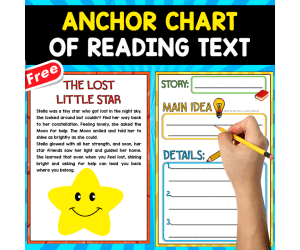
FREE ANCHOR CHART OF READING | The Lost Little Star
ELA, Reading, Writing, Adult Education, Early Learning, High School, Elementary, Homeschool Resources, Middle School, Not Grade Specific, Activities, Worksheets & Printables
FREE ANCHOR CHART OF READING | The Lost Little Star INTRODUCTION: We are EDITORIAL ARENAS EDUCATIVAS, a publisher dedicated to designing educational resources for primary school children approximately between the ages of 3 and 12 who are learning mathematics, literacy, as well as worksheets for learning Spanish and some brain exercises. MAIN INFORMATION: 1. Brief introduction: Hello, thank you very much for being interested in this educational document. This document will help you a lot both in the classroom if you are a teacher, as well as if you homeschool and want to stimulate your children from home. 2. Title of the educational resource: This document is titled "Teaching material for children" 3. Topic to work on: Thanks to this educational document, we are going to work on a basic topic that every child and/or student should master. 4. Area of knowledge where it should be applied: Thanks to this document, we will address a topic and at the same time an important area of learning. 5. Number of pages it contains: This educational document contains the following number of pages available and ready to be used by you, you just have to download and print the document to start using it in your classroom. 6. Is it available in color or black/white? This document and/or set of educational sheets is available in color and also in certain parts contains black and white, however it is generally suggested that the teaching material be designed in color so that it is much more attractive for your students, awakening their attention and interest. COMPLEMENTARY INFORMATION: 7. Should I apply it individually or as a group in my class? Also, according to your criteria, see if it is better for these sheets to be applied individually or as a group. 8. What size and format is this resource in? This set of teaching sheets has been published in A4 size, PDF format, so that it is much easier to use. 9. Do I need any extra elements to apply it? Yes, perhaps your students need pencils, colors, markers and even sometimes scissors and erasers. 10. Is it in color or black and white? This educational document has been designed mostly in color so that it is highly attractive to students. 11. Is this resource free or do you have to pay to use it? This document is available for free, so take advantage of the opportunity to download it now.
Author EDITORIAL LAURA EDUCA
Tags FREE ANCHOR CHART OF READING, FREE, FREE RESOURCES, ANCHOR, ANCHOR CHART, READING, COMPREHENSION

Letter O Vocabulary and Tracing Cards
ELA, Language Development, Phonics, Writing, Handwriting, Kindergarten, Preschool, Worksheets & Printables, Flashcards, Activities
Students can practice reading and writing letter O words with these vocabulary and tracing cards. These cards include bold, clear images of objects and ideas that begin with the initial sounds of the letter O. These vocabulary and tracing cards are suitable for preschoolers and kindergartners who are beginning to learn about words, letters and handwriting. The vocabulary cards provide a way for students to identify things that start with the letter O and the tracing cards provide students with a fun way to practice letter formation and writing words. These cards include both the long O sound and the short O sound. What is Included: * 12 Vocabulary cards * 12 Tracing cards * Words included - otter, octopus, octagon, office, ox, ostrich, omelet, olive, open, ocean, over, oval When to Use * Literacy Center * Writing Center * Wall display in writing or reading center * Small Group Activity * Pocket Chart Display * Word Wall Cards * Flash Card Activity The vocabulary cards can make a great wall display in a writing center or as part of a word wall. Students will be able to reference the cards when writing or labeling pictures. These cards can also be used as a pocket chart activity where the teacher can introduce different letter O words. Students can also utilize the pocket chart to sort the words by long or short vowel sounds of the initial O sound. Skills Assessed * Beginning Sounds * Tracing Skills * Letter Formation * Handwriting These cards are a low prep activity for teachers to create. The teacher simply needs to print the cards and cut them out. The cards can be laminated if desired. By laminating the tracing cards, the teacher can create a write and wipe activity that students can reuse over and over.
Author The Connett Connection
Tags Letter Of The Week, Writing Center, Tracing Activity, Word Wall Cards, Alphabet Activity, Tracing Words, Letter Formation, Handwriting Practice, Letter O, Letter O Activities

Letter C Phonics and Writing Centers with Real Photographs
ELA, Language Development, Phonics, Writing, Handwriting, Kindergarten, Preschool, Centers, Activities
This letter C beginning sounds and handwriting activity includes real photographs to practice learning to recognize, write and identify the sound of the letter C. Each picture has bold colors and includes easily recognized pictures. Each activity can be used in a literacy center for students to practice letter recognition. What is Included: There is an instructional page with printing instructions. There are letter C posters with various letter C words. There are handwriting task cards that allow students to practice writing the letter C as well as words that begin with the letter C. There are beginning sound clip cards that allow students to practice clipping the images that begin with the letter C There is a sorting activity where you sort pictures that begins with C from words that do not begin with C. The letter C sorting cards that can also be used to play memory, matching, or concentration games. These cards can also be used during a lesson in a pocket chart as well as for a center display. When to Use: All of the activities make great literacy centers, by placing each set of activities in the center and letting students complete activities alone or with a partner. These activities make great morning tub activities. Just place these activities in morning bins for students to complete as their classmates arrive to class. Skills Assessed: These activities assess letter recognition skills, beginning sounds, handwriting, and sorting skills. Each activity in this set is low prep. Each activity just needs to be printed out, cut apart, and laminated if desired. When you laminate the writing cards, you can create a writing center activity that is reusable is you add dry erase markers. The handwriting cards and beginning sound clip cards can be turned into task box activities.
Author The Connett Connection
Tags Phonics, Writing Centers, Real Photographs, Early Literacy, Letter C

Superhero Literacy and Math Activity Packet
ELA, Writing, Grade 1, 2, 3, 4, 5, Activities
Superhero Literacy and Math Activity Packet The Superhero Literacy and Math Activity Packet is an expansive teaching resource designed with learning at every level in mind. This packet features over 50 pages of no-prep worksheets, making it an ideal option for educators seeking extra assignments or substitute lesson plans. A perfect tool to augment any literacy or math unit, the complexity and range of activities also serve as valuable enrichment opportunities. This versatile resource caters for a wide student demographic ranging from grades 1 through 5. Occupying a broad spectrum of difficulty levels, these differentiated activities are suitable for students at varying levels of skill proficiency - from advanced learners to those facing more academic challenges. "Under the exciting banner of the superhero theme", the packet intertwines both literacy and mathematics objectives into engaging exercises that are sure to capture students' imaginations while promoting their critical thinking skills. The theme serves not only as a creative backdrop but also as a thought catalyst for pupils during tasks which include drawing superpowers or brainstorming superhero attire. Vibrant Array of Resources: The vibrant array of resources offered in this comprehensive packet consist but are not limited to: Reading Response exercises relating to being a Superhero, Secret code deciphering games, Word-based puzzles like Word Link and Word Search activities; An interactive task where students get to create their own Superheroes! Predicated on structured fun learning, addition & subtraction problems share space with composition prompts and symmetry exercises which challenge students intellectually while maintaining their interest through stimulating challenges. Ideal for uses across varying platforms - be it whole group discussions about specific superheroes or small group problem-solving around mathematical equations - this masterpiece accommodates different methods seamlessly making it truly versatile! Furthermore, "educators can offer certain components as homework assignments thus extending learning beyond classroom walls." In conclusion, Engross your class in innovative educational stimulation using the power-packed Superhero Literacy and Math Activity Packet- where numeracy marries literacy under the creative umbrella of superheroes!
Author KP Classroom
Tags Superheroes, Literacy, Math, Differentiated Activities, Critical Thinking
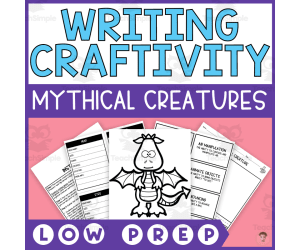
Mythical Creatures Writing Craftivity (Create Your Own Mythical Creature)
ELA, Writing, Grade 1, 2, 3, Activities
Mythical Creatures Writing Craftivity Resource This educational tool is versatile, offering educators the ability to adapt it for a range of settings including classroom instruction, small group work or even as homework assignments. Suitable for grades 1 through 3 - ideal for incorporating into magic-themed studies or Halloween-style learning units. Main Components Mythical creature booklets: These provide key details about physical traits (head, ears, eyes, mouth etc.), habitat and lifestyle habits alongside magical powers. Students create detailed descriptions of their own unique mythical creatures. Magic power cards: Each student gets two distinct powers which they integrate while describing their creatures using both text and illustrations in the provided booklet. Craftive Collaborative Process The process incorporate collaboration – students swap booklets and draw images based on descriptions offered by their counterparts. Post this process; partners exchange drawings to check replication accuracy — promoting communication skills alongside creativity. Few Reasons to Appreciate This Material: Showcases student creativity & enhances research abilities; Hones grammar skills through descriptive writing exercises; Presents concepts from ideation stage till drafting visual representations; All under an accessible, printer-friendly format that's reusable. Note: This education material is available only for personal or classroom use unless multiple licenses are purchased. +p>Please contact us for any queries regarding this product as returns/refunds are not offered.
Author Heather Huhman
Tags Mythical Creatures, Writing Craftivity, Fictional Characters, Creative Writing, Descriptive Writing
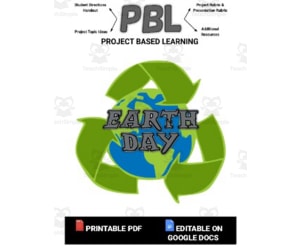
PBL: Earth Day (Editable in Google Docs)
ELA, Writing, Creative Writing, Grade 5, 6, 7, 8, 9, 10, Activities, Projects
PBL: Earth Day Teaching Resource This is a teaching tool designed for students in grades 5 to 10. This instruction promotes hands-on engagement through project-based learning and is editable via Google Docs. Research Element In the heart of this resource, students select topics associated with Earth Day like Animals, Pollution, Physical Geography, and Fuel to Support. These themes inspire them to craft their own questions and project proposals. Highlighting The Learning Process And Versatility The process is open-ended with both creativity limit and student ownership criteria. Includes templates serving as graphic organizers that guide all five project steps. The resource encompasses crucial factors such as time management and communication clarity. Evaluation Criteria in PBL: Earth Day Built-in evaluation criteria presented via rubrics for general assessment & presentation. Aims at measuring student comprehension ensuring learning objectives are met within language arts classes or creative writing exploration thereof. An Accessible Instructional Tool With Extensive Functionality For Educators Included guides on using Google Docs ,  "Slides" and creating a webpage makes PBL: Earth an easy-to-integrate educational tool. Ideal for public school teachers or homeschoolers adapting remote learning options. Suitable across multiple learning dynamics & settings including group classroom activities ,small group assignments ,individual projects rotation or homework cycles.
Author Roombop
Tags Environmental Conservation, Project-based Learning, Earth Day, Critical Thinking, Digital Resources