



3,934 products added recently
Page 63 - Activities By Subject
Simplify lesson planning by accessing activities organized by subject. Whether you're focusing on math, science, language arts, or social studies, these resources provide targeted support to enrich your teaching. Incorporate them to align with curriculum standards and engage students effectively.

 Show filters


Chemistry & Materials Science: Reading Comprehension Passages (PDF)
Science, ELA, Reading, Reading Comprehension, Strategies, Resources for Teachers, Chemistry, Grade 6, 7, 8, 9, Writing Prompts, Worksheets & Printables, Centers, Activities, Teacher Tools, Assessments, Quizzes and Tests, Quizzes, Tests
Chemistry and Materials Science: Reading Comprehension Passages (PDF) This very engaging collection of physical science reading passages about chemistry and material science is designed to bridge the gap between science and literacy through strengthening reading comprehension and sparking scientific curiosity in middle school students. Each passage blends English Language Arts skills with accurate science content that supports NGSS classroom practice. Ideal for interdisciplinary learning in ELA and Science. Suitable for Grade 9 review, too! What Is Included? There are - (3) - informational passages: Salt: Tiny Crystals, Big Effects The Hidden Science of Clothing Fingerprints: Patterns That Solve Crimes Student Tasks for Each Passage: 5 multiple-choice questions targeting main idea, key details, inference, vocabulary in context, and use of evidence 5 vocabulary matching items with clear, student-friendly definitions 5 text-based questions that require citing specific lines or facts 1 summary prompt that asks students to condense central ideas accurately Full answer key for every section Available Formats for this Resource Word Docs Google Docs FULL CATALOG OF DOWNLOADING LINKS HERE Other Science Reading Collections and Topics You May Find in the Store: 1. Astronomy & Space Science 2. Volcanoes, Rocks, & Mountains 3. Rock Cycle, Soil, & Sinkholes 4. Mars, Glaciers, & Antarctica 5. Water Cycle, Acid Rain, & Wastewater 6. Insects, Animals, & Ecosystems 7. Bioluminescence & Insects 8. Animal Skin, Cats, & T. Rex 9. Human Body and Senses 10. Health & Applied Bioscience 11. Waves, Light, & Imaging 12. Electricity & Energy 13. Motion & Materials 14. Chemistry and Materials Science 15. Electromagnetism 16. Acids and Bases 17. Gas Laws 18. Biotechnology 19. Periodic Trends 20. Protists and Fungi 21. Microevolution 22. Blood 23. Chemical Bonding 24. Magnets 25. Muscles 26. Nuclear Chemistry 27. Electromagnetic Devices 28. Epigenetics 29. The Law of Conservation of Mass 30. Atomic Models 31. Isotopes and Ions 32. Light 33. Human-Environment Interaction 34. Theory of Evolution 35. Photosynthesis 36. Origins of Life and Early Earth 37. Gene Expression and Regulation 38. Thermochemistry 39. Allergies 40. Coevolution 41. Birth to Adulthood 42. Cells 43. Entropy and Free Energy 44. The Human Brain 45. Mixtures and Solutions 46. Invertebrates 47. Zoo Animals 48. Biochemistry 49. Animal Behavior 50. Population Ecology ...and many more engaging science reading passages that cover intriguing and important topics designed to spark curiosity and support student learning. Product Details Length: 13 pages total Grades: 6–8, also suitable for Grade 9 review Use cases: close reading, stations, homework, intervention, test prep, and sub plans Standards support: reinforces informational-text skills and supports NGSS-style sense making through observation, modeling, and clear use of claim, evidence, and reasoning Why Teachers Choose This Set Authentic science content paired with rigorous literacy practice Consistent task structure across all passages for easier planning and smoother student routines Clear, age-appropriate writing that builds confidence without oversimplifying Use this set to reinforce ELA skills in science, to add literacy to your lessons, and to support independent work. The passages strengthen main idea, evidence use, vocabulary in context, inference, cause and effect, and summary writing. With ready-to-use assessments and complete answer keys, you can provide focused practice that is simple to run and fast to review.
Author Middle & High School - CORED Education
Rating
Tags Middle School, Reading Comprehension, Reading Strategies, ELA, Centers, Reading Passage, Assessments, Vocabulary, Physical Science, Chemistry
Data Analysis & Probability: Spinner Game for 3rd-5th - PC Software
Math, Graphing, Common Core, Grade 3, 4, 5, Activities, Games
Data Analysis & Probability Spinner Game An exceptional instructional resource specifically for 3rd to 5th-grade teachers, the Data Analysis & Probability Spinner Game is a PC software that will undoubtedly enrich your teaching tools. This mini spinner game incorporates ten questions revolving around the topics of data analysis and probability, thereby making complex topics fun and user-friendly. Aligned with Common Core State Standards and STEM initiatives, this game enhances analytical thinking among students. It also meets the National Council of Teachers of Mathematics (NCTM) standards, helping students keep pace with key competencies in math education. Main Features The interactive gameplay embedded into learning fosters greater student engagement. This approach augments traditional worksheet -based learning and creates an environment where students eagerly anticipate class sessions. This software features an easy-to-use interface bundled into a single zip file, allowing more time for educational delivery rather than setup. The subject matter includes graphing lessons, offering additional coverage while focusing on core Math subjects for swift yet effective skill development among pupils. If you're considering integrating this tool as part of whole group instruction or assigning it as homework, be assured: you're choosing an engaging platform that perfectly marries entertainment with education! To recapitulate; Lean towards modern-day educational technology by introducing concepts through new interactive methods such as this spinner game - making learning appealing to today's digital natives!
Author Classroom Complete Press
Tags Spinner Game, Data, Analysis, Probability, Math Games, Data Analysis And Probability, Probability Spinner, Probability Wheel
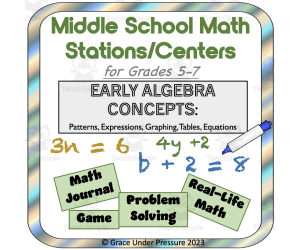
Middle School Math Stations or Centers: Early Algebra: Patterns, Expressions, Tables, Graphing, and Equations
Math, Patterns, Algebra, Graphing, Grade 5, 6, 7, 8, Centers, Activities
Math stations are a great way to get students engaged as they move about the room and work collaboratively with their peers. But they are a lot of work to prepare! This ready-to-go set of 5 stations will supplement a unit about early algebra concepts: patterns, expressions, tables, graphing & equations. Ways to Use: You can break your class into 5 groups and have them rotate one at a time through the centres, giving them 10-20 minutes at each one. Or, start students at certain centres and then allow them to move around at their own pace as long as no one centre gets too full. I find these are a great resource as you are finishing your unit and preparing for the unit test. Station 1: Word problems (Optional: set out white boards for students to use): These four word problems are about realistic situations involving money, memberships, and patterns. There is also a question that gets students thinking about how to solve equations using very simple numbers. Station 2: Partner game to practice evaluating expressions. Students play an "input/output machine" game with a partner. They will mentally evaluate simple expressions until their partner can guess which expression they are using from the chart. Then they switch roles. Station 3: Students create a growing pattern and write an expression to represent it. (Supplies needed: some kind of counters or cubes to make the pattern) I find my students often struggle to figure out the expression for a pattern in a table. One trick I use is to teach them to "Mind the Gap!" Look for the "gap" in the second column of the pattern. In this case it is increasing by 4. Always multiply that number by the variable, therefore 4n. Then see what you have to add or subtract to make it true for all of the inputs (in this case +2). Station 4: Practice solving one-step equations and graphing simple patterns. Students can use multiple methods to solve the one-step equations. Then they graph the growth of two plants and notice when one grows taller and why. Station 5: Students explain their thinking about equations in words in response to a journal prompt. Optional extension: online game to practice solving equations in a step-by-step manner. Grades to Use With: These stations could work with grades 5-8 or high school special education classes. Standards: CCSS5.OA.A.2 CCSS5.OA.B.3 CCSS6.EE.A.2 CCSS6.EE.B.5 CCSS6.EE.B.6 CCSS7.EE.B.4 If you like these stations, check out my other sets: Integer Stations Area, Perimeter, and Volume Stations Factors and Multiples Stations Decimals and Percent Stations
Author Grace Under Pressure
Tags Math Stations, Algebra, Math Games, Hands-on Math, Intermediate Math, Middle School Math, Patterns, Expressions, Graphing, Equations
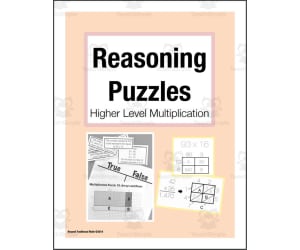
Reasoning Puzzles: 2 by 2 Digit Multiplication, Area Model, Partial Product Task
Math, Early Math, Grade 3, 4, 5, Activities
Reasoning Puzzles: 2 by 2 Digit Multiplication is a set of 10 true/false puzzles that help students develop a deeper understanding of two by one digit and two by two digit multiplication concepts. Students must evaluate statements about the provided visual models, including area models, arrays, partial products, and the standard algorithm. As students complete these reasoning-based activities individually or in small groups, they will engage in mathematical discourse to justify their thinking. This resource features customizable templates for true/false sorting and detailed teacher pages outlining alignment to standards, lesson plans, and sample responses. With a focus on developing critical thinking skills through visual models and collaborative discussion, Reasoning Puzzles allows educators to seamlessly integrate the Standards for Mathematical Practice into the curriculum .
Author Beyond Traditional Math
Tags Reasoning, Multiplication, Area Model, Array, Partial Product, Algorithm, Puzzles

Xylophones Reading Comprehension Passage - Cored Ed Encyclopedia
ELA, Language Development, Reading Comprehension, Reading, Science, Physics, History, Social Studies, Music, Creative Arts, Grade 2, 3, 4, 5, Worksheets & Printables, Worksheets, Teacher Tools, Centers, Activities, Writing Prompts, Assessments, Quizzes and Tests, Quizzes, Lesson Plans
This xylophones reading comprehension with lesson plan includes: Visualization (on the front cover) Start your lesson by taking a minute to think and share something about the topic. Read the script aloud (slowly), perhaps prepare some music or sound effects. Student close their eyes and let their imaginations wander. Students open their eyes, read the question aloud and give them a few minutes to complete. Ask a few students to share or keep answers until the end to compare with what they learn in the passage. Quick pause—thousands of Cored Education products are included with your TeachSimple membership. Download links and encyclopedia index available here. Pre-Reading Trivia Students will write down one thing they already know about the subject and then read five more facts and discuss. These facts are fun, and the students will enjoy learning about the subject before reading more. Give 1 minute for students to write what they already know (no pressure—best guess is fine). Read the five facts together. After each fact, do ask a student for their opinion, was it surprising? Set a purpose by asking students to highlight/underline one fact they want to learn more about during the reading. Reading Passage The text is a high-interest reading passage with set paragraphs, roughly three to four paragraphs long. It contains a variety of themes about the topic, anywhere from history to technology. The passage is between 250 and 350 words in length. First, ask students to look at the headings and see what they’ll learn about today. What do they know about the topic/heading? First read options: Teacher read-aloud (best for support). Partner reading (paragraph by paragraph). While reading, students underline important details, and vocabulary words they think may come up in the questions section. Mixed Questions The first question page contains four multiple-choice questions, each with a choice of four answers, and three written response questions that require a sentence or two from the student. Students complete the mcqs first independently, then review quickly as a class. For the 3 written responses, try to get students giving the answer with some form of evidence: “I think ___ because the text says ___.” If students get stuck, send them back to check the passage. Vocabulary Questions Practice seven key words from the text in this section across two activities. First section is scrambled words where students will unscramble three words given a clue for each. The second section is a word to meaning matching activity. Before starting, have some students read out words they underlined in the passage. Ask students to say the word and read aloud the sentence(s) around each word. Ask students to do scrambled words and the matching exercise in pairs then go through answers as a class. For the scrambled spelling task, get four pairs to come up to the board and write the words for extra practice with the other student reading out the clue. For the matching task, prompt students to give full sentences: “I matched ___ with ___ because ___.” Creative Writing In this question, the student will be required to write a five to eight sentence paragraph on a question related to the topic. Before starting, ask students write down 3 key ideas they are going to include in their piece. Ask students for ideas to share around the class to help those struggling. Pro writing expectations: 5–8 sentences At least 2 facts or details from the passage At least 2 vocabulary words from the previous page Students read their paragraphs while classmates listen for facts and vocabulary words. Extension Activities This page is optional for fast finishers or to take home. There are several activities, each one requiring a different skill. Do some, do none, do all, completely optional - but you will feel reassured knowing every possibility is planned for. Includes summary writting question. Answer Key There are answers for the multiple-choice questions, written response questions have sample answers, vocabulary answers and if there is a summary question then a sample summary will be provided as well. Lesson Plan Included Customized lesson plan for this lesson is included. Lesson Snapshot Title: Xylophones Genre: Nonfiction (informational text) Subject: Music / Science of Sound (Informational Reading) Primary Topic: How xylophones make sound and their history Estimated Guided Reading Level (A–Z): Q Support pages present: Visualization prompt, pre-reading trivia, mixed questions, vocabulary activities, creative writing, extension activities, and an answer key. What This Lesson Teaches Best Explains how a xylophone’s “keys” are wooden bars that make notes when tapped with a mallet . Teaches the relationship between bar length and pitch (long bars = low sounds; short bars = high sounds). Shows a core sound concept: the wood vibrates to create the note, and resonators underneath help the sound carry. Builds historical understanding of xylophone-like instruments across Africa and Asia, including early designs using logs, pits, and gourds to boost sound. Connects music history and school use: the xylophone spread into Europe, appears in orchestras (including Camille Saint-Saëns and Danse Macabre), and is used in classrooms to learn melody and rhythm (including Orff-Schulwerk). Learning Goals Students will describe how tapping a bar with a mallet makes a xylophone note. Students will explain how bar length changes pitch using details from the text. Students will identify what resonators do and where they are located on some xylophones. Students will summarize how xylophone-like instruments were made long ago and how sound was boosted. Students will sequence key points in the xylophone’s timeline (early instruments, later written descriptions, and later orchestra use). Key Vocabulary From the Text resonators — tubes/shapes under bars that help sound carry. vibrates — shakes back and forth to make sound. documented — recorded in writing. orchestra — a large group of musicians playing together. octave — a set of notes from one pitch to next. FULL CATALOG OF DOWNLOAD LINKS AND ENCYCLOPEDIA INDEX HERE
Author Cored Education
Rating
Tags Vocabulary, Reading Comprehension, Reading Passages, Lesson Plans, Ela Lesson Plans, Reading Comprehension Lesson Plans, Pre-reading, History Lesson Plans, Physics, Music Lesson Plans
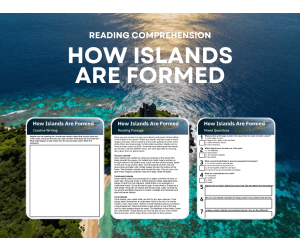
Islands Free Reading Comprehension Passage
ELA, Reading Comprehension, Reading, Language Development, ESL, Library, Science, Earth Sciences, Earth and Environmental Sciences, Strategies, Grade 2, 3, 4, 5, Worksheets & Printables, Worksheets, Teacher Tools, Centers, Activities, Writing Prompts, Assessments, Quizzes and Tests, Quizzes, Tests
Islands reading comprehension: Snapshot Title: How Islands Are Formed Genre: Nonfiction Subject: Earth Science Primary Topic: How different types of islands form Estimated Guided Reading Level (A–Z): S What This Lesson Teaches Best Explains that islands can form in several different ways. Compares volcanic islands, continental islands, and coral islands. Teaches sequence and process through volcano eruptions, lava layers, and island growth. Connects landforms to Earth processes such as magma, sea-level rise, and tectonic plates. Explains why low coral islands are vulnerable to rising oceans. Learning Goals Students will define islands using details from the passage. Students will explain how volcanic islands form over time. Students will describe how continental islands can separate from a mainland. Students will identify coral islands as atolls built by tiny sea creatures. Students will compare volcanic islands and continental islands using text evidence. Key Vocabulary From the Text Magma — hot melted rock beneath Earth. Crust — Earth’s outer rocky layer. Tectonic — related to moving plates of Earth. Atolls — ring-shaped coral islands. Polyps — tiny sea creatures that build coral. Did you know there are thousands of Cored Education products included with a TeachSimple membership? Click here for the free catalog. This product includes: Reading Passage The text is a high-interest reading passage with set paragraphs, roughly three to four paragraphs long. It contains a variety of themes about the topic, anywhere from history to technology. The passage is between 250 and 350 words in length. First, ask students to look at the headings and see what they’ll learn about today. What do they know about the topic/heading? First read options: Teacher read-aloud (best for support). Partner reading (paragraph by paragraph). While reading, students underline important details, and vocabulary words they think may come up in the questions section. Mixed Questions The first question page contains four multiple-choice questions, each with a choice of four answers, and three written response questions that require a sentence or two from the student. Students complete the mcqs first independently, then review quickly as a class. For the 3 written responses, try to get students giving the answer with some form of evidence: “I think ___ because the text says ___.” If students get stuck, send them back to check the passage. Creative Writing In this question, the student will be required to write a five to eight sentence paragraph on a question related to the topic. Before starting, ask students write down 3 key ideas they are going to include in their piece. Ask students for ideas to share around the class to help those struggling. Pro writing expectations: 5–8 sentences At least 2 facts or details from the passage At least 2 vocabulary words from the previous page Students read their paragraphs while classmates listen for facts and vocabulary words. Answer Key There are answers for the multiple-choice questions, written response questions have sample answers, vocabulary answers and if there is a summary question then a sample summary will be provided as well.
Author Cored Education
Rating
Tags Reading Comprehension, Reading Passages, Reading, Ela Mcqs, Creative Writing, Comprehension, Free, Free Reading, Science, Earth Science
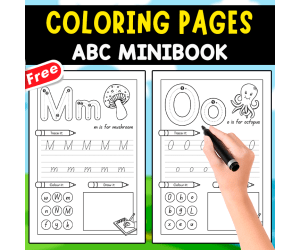
ABC MINIBOOK | TRACING THE ABC
ELA, Vocabulary, Language Development, Early Learning, Elementary, Homeschool Resources, Not Grade Specific, Pre-K, Activities, Worksheets & Printables
ABC MINIBOOK | TRACING THE ABC INTRODUCTION: Welcome to EDITORIAL ARENAS EDUCATIVAS! We specialize in producing diverse educational tools to support children's learning journeys. Be sure to browse our store for reading, writing, math, and Spanish resources designed to make learning fun and impactful. MAIN DESCRIPTION: 1) What types of activities or content does this document include? This type of document contains educational activities, all specially designed to be developed and understood in an easy and educational way. 2) How can this material support children's learning or development? This material will help our students learn in an educational way. It will support your students by guiding them in a much more playful way to achieve easy and rapid learning. 3) What specific skills are developed using this resource? Students will be able to develop their attention, concentration, creativity, and imagination skills. It will also allow students to develop their cognitive skills such as comprehension, analysis, and others. 4) Who is the ideal audience for this document? This document and/or teaching resource is primarily intended for young students, meaning those between the ages of 5 and 12, in other words, students in early childhood and/or primary education. However, it can also be used by the general public if required. SECONDARY AND COMPLEMENTARY INFORMATION: 1) What version does this document correspond to? This educational resource is designed in PDF format, which will make your download experience much simpler and easier to use. 2) Is the material designed in color or black and white? This document has been designed in color (if required) or is sometimes created in black and white to make your learning experience easier. 3) What age range is appropriate for this resource? Our publishing company is dedicated to creating resources for young children between the ages of 3 and 12, as well as for older students or anyone who needs them. 4) What keywords best describe this resource? We can tag this product with keywords such as: teaching resource, resources, materials, teaching materials, worksheets, educational worksheets, worksheets for children.
Author EDITORIAL LAURA EDUCA
Rating
Tags FREE, FREE RESOURCES, ABC, ABECEDARY, ALPHABET, TRACING, TRACING LETTERS, TRACING ABECEDARY

Reading Comprehension Nonfiction Set 4 Sample: Best Season (PPT)
ELA, Reading, Writing, Common Core, ESL, Language Development, Spelling, Reading Comprehension, Creative Writing, Resources for Teachers, Grade 4, 5, Presentations, Teacher Tools, Assessments, Tests, Quizzes and Tests, Activities
Reading Comprehension Passages Nonfiction Set 4 Sample Overview No prep reading comprehension lessons, with enjoyable articles and topics. Each lesson has a blend of post-reading activities. Mixed questions to check overall understanding. Vocabulary activities, plus a writing section. Lessons also contain a bonus extension exercise at the end. Some you may like, some you may not, either way they are there if you wish to use them. Full answer keys are provided. Passage Included 1.Best Season: Is winter the best season? What activities do we do? Read more in this article. PPT Version This is the PPT editable and fillable (when not in presentation mode) version. This download is available in GOOGLE Docs, GOOGLE Forms, GOOGLE Slides. PDF, PPT, WORD. FULL CATALOG OF DOWNLOAD LINKS HERE Grade 4/5 Links Fiction Set 1 - Animals Google Docs Google Forms Google Slides PDF PPT Word Guided Reading Materials Fiction Set 2 - Family Google Docs Google Forms Google Slides PDF PPT Word Guided Reading Materials Fiction Set 3 - Friends Google Docs Google Forms Google Slides PDF PPT Word Guided Reading Materials Fiction Set 4 - School Google Docs Google Forms Google Slides PDF PPT Word Guided Reading Materials Fiction Set 5 - Sports Google Docs Google Forms Google Slides PDF PPT Word Guided Reading Materials Nonfiction Set 1 - Birds Google Docs Google Forms Google Slides PDF PPT Word Guided Reading Materials Nonfiction Set 2 - Insects Google Docs Google Forms Google Slides PDF PPT Word Guided Reading Materials Nonfiction Set 3 - Mammals Google Docs Google Forms Google Slides PDF PPT Word Guided Reading Materials Nonfiction Set 4 - Nature Google Docs Google Forms Google Slides PDF PPT Word Guided Reading Materials Nonfiction Set 5 - Sea Animals Google Docs Google Forms Google Slides PDF PPT Word Guided Reading Materials Reading Passages Overview Each passage is especially written for Grade 4-5 students, including key vocabulary required for this age group. Topics are varied and are accompanied by colorful graphics. Topics are meant to educate, yet entertain the modern student. These passages are perfect for the modern classroom. Whereas textbooks can become outdated in no time, any changes to technology or the world will result in updates to this product. Mixed Questions The mixed questions section of each lesson includes a variation of five comprehension, vocabulary and math questions. In addition, key reading strategies are frequently covered including cause & effect, summarizing, compare & contrast and making conclusions. Two or three of the questions will be MCQs and other questions will require a written response of some kind. Full answers and example responses appear at the end of the lesson. Spelling & Vocab Each reading passage contains a variety of words and phrases designed for Grade 4-5 students. Spelling and vocab activities provide the opportunity to build fluency with these words. As it can become quite mundane doing the same activities over and over, each lesson in a set will contain a different spelling and vocab activity . Activities include: spelling games, sentence match-ups, mixed-up text and decoding words from the lesson. Writing Prompts Writing prompts are designed to continue the theme or lessons learned in the story. Students are persuaded to write in a variety of ways and each prompt includes several cues to help. As with the spelling/vocab section, writing prompts will vary. This includes research pieces, reading responses, poetry and creative writing prompts. Full Answer Keys Full answer keys and sample responses are provided so no matter how busy you are, you know you're covered! Mixed question answers provide evidence from the text, math questions contain the relevant workings. Answers are designed for use by the teacher, but also suitable as a handout to the student. Just for Fun Each lesson will have a bonus extension exercise. This is something fun to extend the lesson with. You can find these at the end of each lesson, titled Just for Fun. Just for Funs are optional. Some you may like, some you may not. Either way, they are there to do with as you wish. For similar downloads and other frees, do check out Cored Group on TeachSimple.
Author Cored Education
Tags Elementary, Reading, Comprehension, Vocabulary, Answers, Ccss, Common Core, Spelling, Writing, Passages
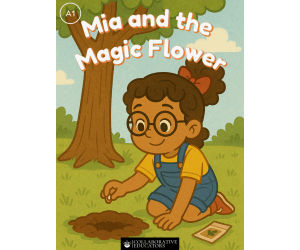
Mia and the Magic Flower - Graded Reader A1 Level
Library, Reading, ELA, Children’s Literature, Literature, Grade 1, 2, 3, 4, 5, Read Alouds, Activities, Literacy Readers, Teacher Tools
Mia and the Magic Flower is a touching picture book that honors kindness, determination, and the strength of community seen through the perspective of a young girl named Mia. When Mia sows a peculiar seed given to her by her grandmother, she discovers that patience, hope, and a loving spirit can grow into something remarkable. As the small sprout develops into a magnificent tree adorned with shimmering silver blossoms, it changes not only Mia’s existence—but the whole village. Kids will be enchanted by the vibrant, detailed illustrations that animate every happy and poignant moment. From joy and playful ribbing to victory and festivity, Mia’s path reflects the struggles encountered by every child—and reminds us that even the tiniest hands can have the greatest impact. Great for children aged 4 to 8, Mia and the Magic Flower is perfect for bedtime stories, classroom motivation, or as a present for young nature enthusiasts and dreamers. This wonderfully illustrated story promotes empathy, perseverance, and the happiness of contributing to your community. Allow Mia’s tale to spark a bit of enchantment in your heart.
Author Bright Classroom Ideas Marketplace
Rating
Tags READER, GRADED, A1 LEVEL, LITERACY, LITERATURE, READING

Work and Energy – Lab Station Activity
Science, Physics, Grade 8, 9, 10, 11, Labs, Experiments, Activities
Work and Energy - Lab Station Activity An engaging teaching resource designed for high school physics students that focuses primarily on work, energy, forces, and friction. Its main goal is to facilitate active learning through interactive tasks. Activity Overview This resource offers a lab activity comprising multiple stations. Each station presents different testing methods such as: Answering questions drawn from readings or videos. Sharing personal opinions on specific topical issues. Diagram creation activities. The aim is to introduce students to different approaches to understanding and applying key concepts related to work and energy. Included Activities: 'Research tasks': Utilizing devices or classroom computers for data gathering. 'Written expression': Elucidating thoughts on theoretical issues via written communication. 'Connect-the-Dot Readings': Merging theoretical concepts with practical real-life situations. 'Test Your Knowledge': A mixture of multiple-choice questions with requests for written explanations justifying the chosen answers. To maximize class time efficiency, bonus word search or word scramble tasks have also been included which could serve as an additional source of marks when properly utilized. The ultimate objective ensuring every student finds something beneficial during the lesson without idle moments. Ease of Preparation: The resources are ready-to-use – simply print the cards provided in the download pack, place them around the classroom strategically for task initiation. An answer key provided within this package facilitates easy assessment. Value Beyond the Lab: The station cards extend beyond just lab activities – they can also be used as study materials before tests or quizzes to stimulate students' interest and improve retention and overall performance. Summary In a nutshell, for educators seeking versatile resources that focus not only on content, but on delivery methods that cater to all types of learners, Work and Energy - Lab Station Activity is certainly a resource worth considering.
Author Teach With Fergy
Tags Work, Energy, Forces, Friction, Lab Activity, Work Power And Energy Lab

Ice Breakers: Games to Get them Going #1: Social Interaction Activities
, Grade 1, 2, Games, Activities
Ice Breakers: Games to Get Them Going #1: Social Interaction Activities Ice Breakers: Games to Get Them Going #1: Social Interaction Activities is a teaching tool specially formulated for enhancing communication skills, instilling respect, fostering tolerance, and promoting comprehension. It is particularly suitable for students of grade 1 and grade 2, making a valuable addition to any classroom or homeschooling curriculum . This product allows educators to assist students in exploring ways of interacting positively through lively activities. Containing ten straightforward, easy-to-arrange tasks that can get your learners enthusiastically moving around the room or engaging happily at their desks – this collection of ice breakers presents an invigorating method for stimulating social interaction among young learners. The Strength of The Game * The key strength lies in the games' capability to encourage cooperative learning while helping successful introductions and cooperation among peers. This eventually leads them toward accepting diversity and building friendships. The adaptability of this teaching material enhances its efficacy even further! It fits perfectly into the first few days of school when introductions are crucial but also seamlessly incorporated throughout the year whenever you anticipate increased energetic interaction or stronger bonding between your pupils. Versatility & Benefits A number of icebreakers within this set come with extension activities allowing easy integration into regular lessons. They may be used as refresher exercises during breaks or homework assignments involving parental engagement thus establishing continuous learning both inside and outside classrooms. This came in form single PDF file: Accessible across various devices without needing any specific software installations – offering simplicity yet efficiency for educators juggling multiple responsibilities. Finally, if dynamic classroom environments filled with keen participants and improved interpersonal communication are what you want, this comprehensive teaching resource might be just the tool you need. These specifically designed activities break down social awkwardness, allowing students to transition from solitary learners to being active contributors in their learning community.
Author Classroom Complete Press
Tags PDF

Beginner Music Theory: Ties - US Version
Creative Arts, Art, Music, Grade 1, Activities
Beginner Music Theory: Ties - US Version This is an interactive and comprehensive approach to teaching the music theory. The resource aligns readily with the ABRSM syllabus, making it a prime choice for grade 1 students. Resource Structure The resource is organized into seventeen sections showcasing key concepts. Each featuring engaging activities that include: Note values and bar-lines-time signatures Treble clef and bass clef notation Rests, ties, dotted notes and rests, accidentals Sixteenth notes and beaming. New terminologies are gradually introduced from simpler segments like 'introduction to half tones', towards more complex sectors such as major scales key signatures or degrees of the scale intervals. Multimedia Features & Content Retention The multimedia features promote self-paced learning while offering instant feedback. The last section concludes with a test that evaluates and reinforces information learnt. This ePub can act as an efficient homework assignment or class activity for optimal retention of content. Detailed Breakdown [Each section carries six files:] )(Bold+underline) Tutorial pdfs provide clear lessons Variety of questions in PDF formats to challenge learners' knowledge; 'Answers' PDF's designed carefully,& help students track their progress; A web module fosters online interaction; b3 A tablet module maximizing remote accessibility; & A computer module for desktop use including during lecture projections. Unique Design The standout aspect of Beginner Music Theory is its design that randomly updates slides every time you proceed. This ensures constant engagement without repeat content, boosting its usability beyond a single use! *Note:* While effective on both tablets & computers, the computer files require unzipping before they can be accessed and may not suitable for Mac users due to complications with this feature. In Conclusion... Commence systematically introducinteing the classical fundamentals of music theory with Beginner Music Theory: Ties - US Version and watch your students grow into assured musicians!
Author Hbmusicsolutions's Shop
Tags Music Theory, Beginner, Interactive Learning, Notation, Exercises

Candy Reading Comprehension Passages and Questions Google Slides
ELA, Language Development, Resources for Teachers, Vocabulary, Spelling, Reading Comprehension, Reading, Common Core, Grade 2, 3, 4, 5, Teacher Tools, Centers, Activities, Assessments, Tests, Quizzes and Tests, Presentations, Quizzes
Themed Reading Comprehension Passages Series - Candy This reading comprehension series is built for grades 2 to 5 and keeps things simple, clear, and easy to use. Every title follows a fun, kid-friendly theme and comes with two passage levels, one written for grades 2 to 3 and a more challenging version for grades 4 to 5. Students then work through a mix of follow-up pages that check understanding in different ways: multiple-choice questions, short written responses, scrambled words, a quick summary, and a theme-based word problem. Answer keys are included, so prep stays minimal. Each resource also comes in nine classroom-friendly formats, so you can choose what fits your setup: print or digital, editable or ready to go, and even self-grading options. Because the layout stays consistent, it is easy to plug into whole-class lessons, small groups, literacy centers, morning work, fast finisher tubs, sub plans, or home learning. It is a straightforward way to build comprehension, practice reading skills in context, and strengthen written responses without adding extra steps for you. Candy Lesson List Note: This product has titles different to those in the rest of the themed series. 1. Candy Types 2. Candy Flavors 3. Candy Shapes and Colors 4. Candy Ingredients 5. Candy Fun Facts GOOGLE SLIDES VERSION The same editable layout as PPT, but in the cloud for easy sharing, student access, and instant updates. Other versions are available in the links list below or in the full catalog. How to Use These Lessons Perfect for: Morning work or early-finisher bins Guided reading blocks or comprehension warmups Literacy centers or small-group rotations Holiday/seasonal review lessons Independent stations, sub plans, or take-home enrichment More Candy Themed Products CROSSWORDS WORDSEARCHES MAZES FULL CATALOG OF DOWNLOAD LINKS HERE Themed Reading Links Addition Animals Around the Home Birthday FORMATS: -FORMAL ASSESSMENT VERSION -PRESENTABLE PDF -PPT -SLIDES - PDF -FILLABLE PDF -WORD -FORMS -DOCS SUPPLEMENTARY MATERIALS (COMING SOON): -VISUAL READING PASSAGE VIDEO -GUIDED LEARNING VIDEO -LESSON PLANS Candy FORMATS: -FORMAL ASSESSMENT VERSION -PRESENTABLE PDF -PPT -SLIDES -PDF -FILLABLE PDF -WORD -FORMS -DOCS SUPPLEMENTARY MATERIALS (COMING SOON): -VISUAL READING PASSAGE VIDEO -GUIDED LEARNING VIDEO -LESSON PLANS Christmas Cinco de Mayo Clothes Colors Days and Months Division Earth Day Easter Easy Mazes Fall Father's Day Food Geography (Set 1) Geography (Set 2) Geography (Set 3) Graduation Health History (Set 1) History (Set 2) History (Set 3) Human Body Kindness Life Skills Mother's Day Multiplication Science (Set 1) Science (Set 2) Science (Set 3) Shapes Social Skills Spring Sports St. Patrick's Day Subtraction Summer Thanksgiving Transport Valentine's Day Winter Free One Lesson Themes Chinese New Year Lunar New Year Halloween Pink Shirt Day Independence Day Juneteenth President's Day Groundhog Day Readings in Depth Structure Each resource is built around a focused sub-theme within the broader topic. Students read two leveled passages (Grades 2–3 and Grades 4–5), then move through a short, consistent sequence of activities that checks understanding and keeps momentum: multiple-choice, brief written responses, a scrambled-words review, a compact summary task, and a light theme-linked word problem. The flow is predictable for students, but varied enough to feel fresh across topics. Each completed resource includes: Two differentiated reading passages (lower and upper level) A multiple-choice comprehension page Short written-response questions A scrambled-words or quick vocabulary check A brief summary activity A simple, theme-connected word problem Answer keys for fast marking and easy self-checking Nine classroom-friendly formats, including print, editable, digital, and self-grading options Themes Included These readings span a wide range of age-appropriate, high-interest topics, such as: Seasons and celebrations Real-world science and nature Community, character, and life skills Everyday high-frequency themes students already enjoy Each title connects to familiar experiences while strengthening comprehension, vocabulary in context, and clear written expression. Easy extensions (optional): Read twice: first for gist, second to highlight key details Write two “right there” questions and swap with a partner Create a 3-bullet fact list or mini mind map Turn the summary into a 3-sentence retell using sequence words Add one extra math question connected to the topic Compare the two levels: what details appear in both? Differentiation tips: Pre-teach 2–3 key words with quick examples Offer sentence starters for written responses Use partner reading: one reads aloud, one tracks evidence Allow highlighting or underlining before answering questions Provide a shorter chunking option for students who need breaks Encourage confident readers to justify answers with a quoted detail For similar downloads and other frees, do check out Cored Group on TeachSimple.
Author Cored Education
Rating
Tags Vocabulary, Spelling, Candy, Candy Activities, Writing Prompts, Word Problems, Reading Comprehension, Candy Reading, Candy Passages, Reading Passages
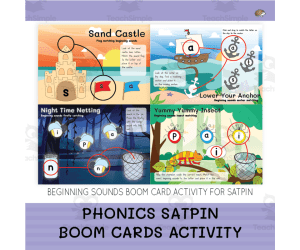
Phonics SATPIN Boom Card Activity
ELA, Language Development, Phonics, Preschool, Activities
Phonics SATPIN Boom Card Activity : A Unique Approach to Language Learning An innovative and interactive teaching resource designed specifically for digital learners of today's age. Primarily targeting Kindergarten students, this product focuses on enhancing Language Arts skills, particularly Phonics. Product Features: Packed with engaging activities aimed at teaching phonics, letter recognition, sound recognition, reading and listening skills. A blend of entertainment and education that enhances online learning experiences for children who are starting their journey into the world of letters and sounds. In-depth Look at the Sections The Phonics SATPIN Boom Card Activity encompasses 60 intriguing pages divided into six sections. Each section targets one specific sound – s (Sand Castle), a (Lower Your Anchor), t (Toy Store Teddy Bear), p (Penguin’s Igloo), i (Yummy Yummy Insect), n (Night Time Netting). Every section has ten unique pages offering an interactive learning environment for young learners. Versatile Usage This resource can be used in classrooms during lesson time as an interactive group activity or assigned as homework for reinforcement. Practising what is learnt after each lesson contributes to solidifying phonetic sounds while boosting confidence among students who then become proficient at recognising these sounds independently. Delivery Format: Upon purchase you receive a PDF download containing all necessary instructions along with relevant link(s) that facilitate easy inclusion of this entertaining activity into your classroom routine. Whether used within classrooms equipped with smart boards or among students on their mobile devices - student engagement levels will never be an issue! This tool offers unprecedented accessibility across multiple devices. Your Privacy Matters All activities comply with stringent privacy policies maintained by Boom Learning. Choose Phonics SATPIN Boom Card Activity and experience the joy of raising knowledge-rich, interested and confident learners!
Author Koodles Clubhouse
Tags Phonics, SATPIN, Boom Card Activity, Interactive Learning, Letter Recognition

Capitalization and Punctuation Sample - Grades 1-2 Grammar (Word)
ELA, Language Development, ESL, Grammar, Common Core, Resources for Teachers, Grade 1, 2, Worksheets & Printables, Worksheets, Assessments, Teacher Tools, Tests, Quizzes and Tests, Activities
Capitalization and Punctuation - 1 Lesson Sample ELA MCQS Overview: In this series of lessons, students will embark on an engaging exploration of the grammar skills that bring our language to life. These lessons are designed to help students identify, understand, and effectively use language arts skills in their writing and speech. Used with the free supplementary materials available for all topics, each lesson builds on the last, offering a mix of direct instruction, interactive group activities, and independent practice. Through fun and creative tasks, students will learn how to recognize grammar in sentences, understand their role in sentences and use them to enhance their own writing and speech. Capitalization and Punctuation Overview: Includes: Proper Nouns Opening/Closing Letters Uppercase/Lowercase Dates Punctuation Practice Word Version This is the Word editable and version. This download is available in GOOGLE Docs, GOOGLE Forms, GOOGLE Slides. PDF, PPT, WORD, check the links below for more details. FULL CATALOG OF DOWNLOAD LINKS HERE Grade 1/2 Links: Capitalization and Punctuation Google Docs Google Forms Google Slides PDF PPT Word Free Supplementary Materials Pack Adjectives Google Docs Google Forms Google Slides PDF PPT Word Free Supplementary Materials Pack Nouns Google Docs Google Forms Google Slides PDF PPT Word Free Supplementary Materials Pack Pronouns Google Docs Google Forms Google Slides PDF PPT Word Free Supplementary Materials Pack Verbs Google Docs Google Forms Google Slides PDF PPT Word Free Supplementary Materials Pack Prefixes & Suffixes Google Docs Google Forms Google Slides PDF PPT Word Free Supplementary Materials Pack Sentence Structure Google Docs Google Forms Google Slides PDF PPT Word Free Supplementary Materials Pack Subject-Verb Agreement Google Docs Google Forms Google Slides PDF PPT Word Free Supplementary Materials Pack ELA Review Questions Overview Questions have three answer choices. There are a handful of pictures on each test for aesthetic purposes, as well as a review sheet covering most of the topics covered in the product. Introduction or Example Sheet Each topic will include an introduction or example sheet to go through first with your students. Full Answer Keys Full answer keys and sample responses are provided so no matter how busy you are, you know you're covered! In the Supplementary Pack Interactive Ice Breakers: Fun, hands-on activities that get students thinking about adjectives right from the start. Guided Practice: Teacher-led exercises that reinforce the day’s lesson, ensuring students can confidently identify and use adjectives. Group and Partner Tasks: Collaborative activities that allow students to work together to solve problems, categorize adjectives, and create descriptive sentences. Independent Worksheets: Structured worksheets that provide individual practice and help solidify understanding of key concepts. Exit Tasks: Quick, reflective activities at the end of each lesson that assess understanding and encourage students to apply what they’ve learned. For similar downloads and other frees, do check out Cored Group on TeachSimple.
Author Cored Education
Tags Elementary, Answers, Ccss, Common Core, Test, Mcq, Test Prep, Language Arts, Ela, Grammar

Sight Word Flip Book: a
ELA, Reading, Preschool, Grade 1, Activities
The Sight Word Flip Book for "a" helps kids learn to recognize, spell, write, and read this common sight word through engaging activities. Students start by coloring a fun cover page however they wish. Next, they search for the letter "a" throughout the book, trace and write it, spell it using letter manipulatives, cut and paste it, read and illustrate sentences containing "a", read passages with "a", and write their own sentences with drawings. This versatile resource works for literacy centers, homework, independent practice, and even as a substitute activity . With differentiated pages that allow choice, this book acts as a springboard for sight word mastery. Since early reading skills pave the way for future literacy development, this multi-sensory book breaks down essential concepts for reading success.
Author The Connett Connection
Tags Sight Words, Sight Word Flip Book, Sight Word Recognition, Sight Word A

Roll & Draw a Snowman Design Dice Game | Drawing & Coloring Winter Art
Creative Arts, Art, Fine Arts, Preschool, Grade 1, 2, 3, 4, 5, Drawing Templates & Outlines, Worksheets & Printables, Games, Activities, Projects, Centers
Roll and Draw a Snowman Design Dice Games | Winter Art and Drawing Activity Have fun with this adorable snowman design no-prep and interactive drawing game. This resource can be used multiple times and there are starter drawing pages that will keep your learners engaged. This is a great drawing and coloring activity for seasoned or reluctant drawers. Incorporate during the winter season or Christmas unit lessons. Just grab a dice and some blank paper and engage your students with this self-directed drawing activity that can be used alone, with a partner, or with the whole class. What are the benefits of roll and draw games? Understanding visual perceptions Increase following direction skills Improving drawing skills Included in this download: 1 Roll and Draw Game Printables in Color 1 Roll and Draw Game Printables in B/W 1 Example Pages in Color 1 Example Pages in B/W 2 Drawing Pages 1 Instructions Page 1 Intro Page Additional creative ideas for teachers: Present completed drawings as thoughtful gifts from students Create a wall art gallery Place in students' portfolios Offer a writing activity that corresponds to drawing Perfect for: Winter or Christmas art lessons Classroom centers Early finishers Substitute plans Morning work Winter-themed creativity boosts Bring seasonal fun to your classroom with this easy, no-prep Winter art activity!
Author Doodle Thinks
Rating
Tags Roll And Draw, Dice Game, Art Activity, Drawing Activity, Coloring, Art Integration, Art Enrichment, Art Supplement, Design Art, Snowman

Friendship Dilemmas Game-Played like Apples To Apples
Special Resources, Social Emotional Learning (SEL), Special Education Needs (SEN), Social Skills, Grade 3, 4, 5, 6, Activities, Games
In this resource, you will teach students how to solve a variety of friendship dilemmas. This game is played like Apples to Apples. There are 18 examples (with pictures) of friendship dilemmas. There are 36 friendship strategy cards. Some of the examples for the dilemma cards are; your friend likes to copy you, your friend brags, your friend does not let you play with other friends, your friend cheats at games, your friend shared something private to someone else and other examples. For the strategy cards, some examples are; talk to your friend about how you feel, listen to their perspective, think about your part in the problem, talk to a parent, talk to an older sibling, distract yourself with something fun, and many other strategies. For the game, divide students into groups of about 4-5. All players get 5 strategy cards. The judge begins by drawing a friendship dilemma card and reads it and shows the group. Each player chooses one strategy from their 5 cards that could be a way to handle the friendship dilemma. Players place the strategy cards FACE DOWN so the judge does not know who placed which strategy card. The judge chooses which one they would most likely use in that situation. It helps to know what the judge might choose! Important: All strategies are valid, there is not one BEST strategy, only which one the judge might most likely choose. The next round, all players take another strategy card as they always need to have 5 strategy cards with each turn. The played strategy cards go back under the strategy pile. someone else is the judge and the game continues as time allows. There are 2 mindfulness coloring sheets to offer to the students after the game. This is an engaging game to play after a friendship skills lesson or conflict resolution skills lesson.
Author Jennifer Moyer Taylor
Tags Friendship Skills, Sel, Social Emotional Learning, Social Skills, School Counseling, Conflict Resolution, Problem Solving, Self-regulation, Relationship Skills

Perimeter of Complex Compound or Composite Shapes: Math Geometry Game
Math, Geometry, Measurements, Grade 3, 4, 5, 6, 7, Activities, Games
Here's a no-prep math geometry game that will get your students excited to measure the perimeter of compound shapes (also called complex shapes or composite shapes). It's a simple dice game that actually uses a fair bit of strategy- so your students can start to figure out ways to win as they play more than once. They will be calculating the perimeter of a variety of compound complex or composite shapes. Students can also learn more by calculating the area of the shapes they create throughout the game! A sample round of the game is included to teach it easily to your students! How to Use: 1) Player One picks a starting spot. They roll and draw a line the length of their roll. 2) Player Two begins their turn at the end of Player One’s line. They roll and draw a line the length of their roll. 3) Once the perimeter of the shape is over forty units, the first player to complete the shape wins the game! 4) If you can not close the shape with the rolls given, it will be a tie. 5) BONUS: Both players can calculate the area of the complex compound or composite shape. Grades to Use With: This game is designed for students in 3rd, 4th, 5th, 6th, or 7th grade who are learning about calculating perimeter using whole numbers on a variety of complex compound or composite shapes. It is also a great way to develop strategy skills and even talk about probability (what is the chance I will get the roll I need to complete this shape?). What's Included: 3-Page PDF If you enjoy this math game, check out some others in my store: Theoretical and Experimental Probability: Hands-on Math Task with Fractions and Percentages Grocery Game: Estimating, Multiplying, and Adding Decimals Pre-Algebra Expression Input/Output Game
Author Grace Under Pressure
Rating
Tags Perimeter, Area, Complex Shapes, Dice Game, Compound Shapes, Hands-on Math, Math Game, Composite Shapes, Perimeter Of Compound Shapes

Cottage Cheese: Social Studies Reading Comprehension Passage (PDF)
ELA, Reading, Reading Comprehension, Strategies, Resources for Teachers, Social Studies, Sociology, Grade 6, 7, 8, 9, Writing Prompts, Worksheets & Printables, Centers, Activities, Teacher Tools, Assessments, Quizzes and Tests, Quizzes, Tests
Cottage Cheese: Social Studies Reading Comprehension Passage (PDF) This resource introduces a unique Social Studies reading comprehension passage with questions about Homemade Cottage Cheese. The passage is carefully designed to bridge the gap between social studies and literacy through strengthening reading comprehension and sparking knowledge curiosity in middle school students. Each passage blends English Language Arts skills with accurate social studies content . Ideal for interdisciplinary learning in ELA and Social Studies. Suitable for Grade 9 review, too! Student Tasks throughout the passage: 5 multiple-choice questions targeting the following skills: main idea, key details, inference, vocabulary in context, and use of evidence 5 vocabulary matching items with clear, student-friendly definitions 5 text-based questions that require citing specific lines or facts 1 summary prompt that asks students to condense central ideas accurately Full answer key for every section Available Formats for this Resource: Fillable PDF Word Docs Google Docs FULL CATALOG OF DOWNLOADING LINKS HERE Social Studies Reading Comprehension Collection Links: 1. Ancient Civilizations PDF Fillable PDF Word Docs Google Docs 2. Early Empires and Trade Networks PDF Fillable PDF Word Docs Google Docs 3. The Founding of the United States PDF Fillable PDF Word Docs Google Docs 4. Language, Culture, and Meaning PDF Fillable PDF Word Docs Google Docs 5. Psychology and Society PDF Fillable PDF Word Docs Google Docs 6. Global Festivals and Traditions PDF Fillable PDF Word Docs Google Docs 7. Extreme Environments and People PDF Fillable PDF Word Docs Google Docs 8. Food, Culture, and Preservation PDF Fillable PDF Word Docs Google Docs 9. Global Food Customs PDF Fillable PDF Word Docs Google Docs 10. Media, Communication, and Popular Culture PDF Fillable PDF Word Docs Google Docs 11. Human Impact on the Environment PDF Fillable PDF Word Docs Google Docs 12. Civic Action and Social Change PDF Fillable PDF Word Docs Google Docs 13. Fashion, Society, and Power PDF Fillable PDF Word Docs Google Docs 14. People, Places, and Unusual Histories PDF Fillable PDF Word Docs Google Docs Product Details: Length: 4 pages Grades: 6–8, also suitable for Grade 9 review Use cases: close reading, stations, homework, intervention, test prep, and sub plans Why Teachers Choose This Passage: Authentic social studies content paired with rigorous literacy practice Consistent task structure for easier planning and smoother student routines Clear, age-appropriate writing that builds confidence without oversimplifying Use this passage to reinforce ELA skills in social studies, to add literacy to your lessons, and to support independent work. The passage strengthens main idea, evidence use, vocabulary in context, inference, cause and effect, and summary writing. With ready-to-use assessments and complete answer keys, you can provide focused practice that is simple to run and fast to review.
Author Middle & High School - CORED Education
Rating
Tags Middle School, Reading Comprehension, Reading Strategies, ELA, Centers, Reading Passage, Assessments, Vocabulary, Social Studies, Sociology

KG Morning Work | 180 Days of Spiral Review | Math & ELA | 2nd Quarter
ELA, Math, Kindergarten, Centers, Activities, Lesson Plans, Teacher Tools, Worksheets & Printables
Kindergarten Morning Work | 2nd Quarter Student Pages + Full-Year Teacher Resources Keep your kindergarten mornings calm, consistent, and purposeful with 45 days of Kindergarten morning work for Quarter 2 . This resource includes ALL teacher resources for the complete 180-day program , while the student practice pages in this pack are specifically for 2nd Quarter: Days 46–90 . What’s Included ⭐ FULL-YEAR TEACHER RESOURCES You receive the complete teacher toolkit for planning, organizing, differentiating, and tracking the entire 180-day Kindergarten morning work program : Teacher Guide 36-week planning support Skills Checklist Standards Alignment Fully Editable Morning Work Schedule Year-at-a-Glance Planner Complete Answer Key for Days 1–180 Student Progress Tracker Bonus morning routine resources Classroom organization and implementation guidance 📚 STUDENT PAGES INCLUDED: 2ND QUARTER The student portion of this product includes Days 46–90 , providing 45 days of ready-to-use Kindergarten morning work . Each daily page includes five short, developmentally appropriate activities : Early Literacy — letters, sounds, rhyming, phonics, or sight words Handwriting — letters, numbers, names, and words Math — counting, number sense, addition, shapes, or color-by-code Fine Motor — tracing, mazes, dot-to-dot, or drawing Thinking Skills — patterns, matching, visual discrimination, or “Which One Does Not Belong?” Important: The student practice pages included in this product are Days 46–90 only . The teacher resources and complete Answer Key cover all 180 days . How It Works in the Classroom Use this Kindergarten morning work as a daily morning routine, independent practice, early finisher activity, or beginning-of-day skill review. Each page is designed for approximately 10–15 minutes . Short directions, large print, and plenty of white space make the routine manageable for young learners. The routine follows a predictable weekly rotation: Monday: Letters, counting, tracing, and shapes Tuesday: Beginning sounds, number sense, and patterns Wednesday: Sight words, addition, and fine motor practice Thursday: Rhyming, shapes, and matching Friday: Weekly review, color-by-code, puzzle, and draw-and-write For the first few weeks, complete the pages together. As students learn the routine, they can complete more sections independently. Use the pages for: Morning work Bell ringers Independent practice Early finishers Literacy centers Math warm-ups Fine motor practice Spiral review Sub plans At-home practice The editable schedule also makes it easy to adjust the routine to your classroom schedule and small-group needs. Standards & Learning Goals This Kindergarten morning work resource provides daily practice across early literacy, handwriting, math, fine motor development, and thinking skills. Quarter 2 moves students from foundational skills toward CVC words, rhyming, number comparisons, blends, simple addition, and increasingly independent written work . 📖 Early Literacy & Writing Students practice: Letter recognition Beginning sounds Ending sounds CVC words Word families Rhyming Sight words Phonics Name writing Handwriting Word writing Early sentence development The monthly progression moves from CVC words and comparing numbers in November to blends, simple addition, and name writing in December , with the beginning of the next skill progression appearing as students approach January. 🔢 Math Students practice: Counting Number sense Number formation Comparing numbers More, less, and equal Number bonds Addition Shapes Color-by-code Patterns Visual math reasoning The standards alignment includes Kindergarten expectations for number writing, quantities, counting, comparing groups and numbers, addition and subtraction representations, teen numbers, measurement, and shapes. ✏️ Fine Motor & Thinking Skills Students also develop: Pencil control Tracing Visual discrimination Pattern recognition Matching Drawing Mazes Dot-to-dots “Which one does not belong?” reasoning These skills appear every day because they are important kindergarten readiness skills. Why Teachers Love It ✨ You get ALL the teacher resources for the entire year. The teacher materials support the complete 180-day program , not just Quarter 2. ✨ Students get exactly what they need for Quarter 2. Days 46–90 provide a complete 45-day student set. ✨ Designed specifically for kindergarten. Large print, short directions, and simple visual tasks help young learners understand what to do. ✨ Build independence gradually. Students begin with teacher support and gradually take ownership of the routine. ✨ Zero prep. Everything students need is already on the page. No extra manipulatives are required. ✨ A real developmental progression. Quarter 2 moves students into CVC words, rhyming, number comparisons, blends, simple addition, and more sight-word practice . ✨ Practice multiple skills every day. Literacy, handwriting, math, fine motor, and thinking skills are all built into the daily routine. ✨ Keep students engaged. Tracing, patterns, picture counting, color-by-code activities, puzzles, drawing, matching, and visual challenges provide variety. ✨ Track student growth. The Student Progress Tracker includes literacy, writing, number sense, counting, comparison, addition, shapes, patterns, fine motor, and thinking skills. ✨ Differentiate easily. Read directions aloud, model a section, reduce the number of tasks, or provide additional support as needed. ✨ Support small groups. Use individual sections as quick literacy, math, or fine motor warm-ups. ✨ Keep your classroom routine organized. The editable schedule includes spaces for daily times, focus skills, small-group notes, and a 36-week planner. ✨ Make mornings more engaging. The included bonus materials provide classroom tools such as visual schedule cards, calendar pieces, weather materials, alphabet resources, sight word supports, and early-finisher activities. Looking for Kindergarten morning work for Quarter 2 that saves prep time and builds essential early learning skills? This pack includes 45 days of student practice (Days 46–90) PLUS ALL teacher resources for the full 180-day program . Give your kindergarteners a predictable, engaging morning routine that strengthens literacy, handwriting, math, fine motor skills, and independence! Print it, prep it, and make your kindergarten mornings easier! 💛
Author Bright Classroom Ideas Marketplace
Rating
Tags Math, Ela, Morning Work, Back To School

Harry Potter and the Sorcerer's Stone Choice Board
ELA, Reading, Reading Comprehension, Writing, Creative Writing, Language Development, Vocabulary, Grade 3, 4, 5, Activities
Choice boards are a great way to reach many interests and abilities in diverse classrooms. Whether needing to differentiate higher or lower, the variety of assignment options allows for student choice at their appropriate response level, and allows teachers to see what students truly grasp from the texts they are reading. Harry Potter and the Sorcerer's Stone, written by J.K. Rowling, is a novel appropriate for 3rd through 5th grades. The choice board includes nine activities and multiple rubrics for teacher choice in grading. The tasks are as follows: creating a a fifth house at Hogwarts (categorizing) creating new spells (creative writing) building a board game of important events (plot) planning Harry's birthday (summarizing + plot) character posters (character analysis) textbook writing for new magical animals (science cross curricular, research) compare and contrasting (characters) poem writing paragraph writing Each activity included either has a direction sheet with specific instructions or an actual worksheet to guide them through the tasks they fill out. The expectation is set for students to complete three activities in a tic-tac-toe format, but can be utilized in different ways in each classroom. Rubrics are included that allow for open response (and more information included from students), as well as teacher choice in how to assess student knowledge. Tags: choice boards, reading, writing, social studies, map skills, differentiated learning, student choice, rubrics, cross curricular File Types: PDF Number of Pages: 24
Author Kel's Klass
Tags Choice Boards, Reading, Writing, Differentiated Learning, Student Choice, Rubrics, Cross Curricular
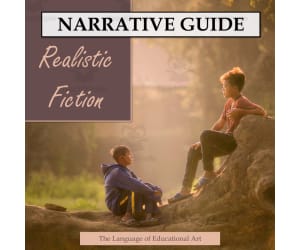
Realistic Fiction Narrative Writing Guide
ELA, Writing, Creative Writing, Grade 7, 8, 9, 10, Activities, Projects
Shepherd your students' next creative writing assignment with this realistic fiction narrative step-by-step writing guide. Unique from most creative writing units, this realistic fiction guide begins by asking students to make simple and fun decisions about the key elements of their story before having to lift a pen or open a word processor! You'll be amazed at how simply your students will be able to craft their own realistic fiction narrative. Beginning with straightforward directions, examples, and tips, students will then be able to plan out their story using multiple choice characterization options, short answer plotting devices, and map-drawing activity. An outlining guidance completes the narrative planning process. By then, students will be excited to start drafting their story. A clear peer edit activity is included with this resource, as well as a Common Core-tied rubric. - A “10-second sub plan” (print and drop on your desk!) or the basis of a week-long writing unit, your download includes: - A narrative map template that assists students on selecting their realistic fiction setting, protagonist, character arc, antagonist, and conflict (almost no writing required!) - A research chart so students can develop the details of their narrative - A narrative outline activity, where students can take their map’s visual guidelines and begin drafting their narrative - A realistic fiction narrative writing assignment sheet that includes descriptions of famous realistic fiction stories, a due date calendar , general narrative writing tips, a realistic fiction writing peer edit checklist, and standards-based grading rubric tied to FOUR Common Core standards - A link to an editable rubric that allows for grading customization and seamless integration into Google Classroom and many other Learning Management Systems (LMS's) - All 4-pages of this lesson are provided in full color and B&W Although this resource can be fitted for any secondary Language Arts classroom, it has been carefully designed to work best in grades 7, 8, 9, and 10. The included rubric is subtly but specifically tied to Common Core ELA Standards for Language (1 and 2), Reading Literature (2), and Writing (3, 4, and 5). This resource is provided in print-ready, bookmarked, and adjustable PDF files and PowerPoint Show files. This resource contains 4 pages.
Author The Language of Educational Art, LLC
Tags Creative, Narrative, Essay, Rubric, Realistic Fiction Writing, Writing Realistic Fiction

Meteors Reading Comprehension Passage - Cored Ed Encyclopedia
ELA, Language Development, Resources for Teachers, Reading Comprehension, Reading, Pre-Reading, Science, Earth Sciences, Earth and Environmental Sciences, Space, Grade 2, 3, 4, 5, Worksheets & Printables, Worksheets, Teacher Tools, Centers, Activities, Writing Prompts, Assessments, Tests, Quizzes and Tests, Quizzes
This meteors reading comprehension contains the following: Visualize on the Cover (Teacher Read Aloud Script) Start your lesson by taking a few moments to visualize the topic and share thoughts or feelings about it. Pre-Reading Trivia Students will write down one thing they already know about the subject and then read five more facts and discuss. These facts are fun, and the students will enjoy learning about the subject before reading more. Reading Passage The text is a high-interest reading passage with set paragraphs, roughly three to four paragraphs long. It contains a variety of themes about the topic, anywhere from history to technology. The passage is between 250 and 350 words in length. Mixed Questions The first question page contains four multiple-choice questions, each with a choice of four answers, and three written response questions that require a sentence or two from the student. Vocabulary Questions Practice seven key words from the text in this section across two activities. First section is scrambled words where students will unscramble three words given a clue for each. The second section is a word to meaning matching activity. Creative Writing In this question, the student will be required to write a five to eight sentence paragraph on a question related to the topic. Extension Activities This page is optional for fast finishers or to take home. There are several activities, each one requiring a different skill. Do some, do none, do all, completely optional - but you will feel reassured knowing every possibility is planned for. Includes summary writting question. Answer Key There are answers for the multiple-choice questions, written response questions have sample answers, vocabulary answers and if there is a summary question then a sample summary will be provided as well. FULL CATALOG OF DOWNLOAD LINKS AND ENCYCLOPEDIA INDEX HERE Lesson Snapshot Title: Meteors Genre: Nonfiction Subject: Science (Earth & Space Science) Primary Topic: Meteoroids, meteors, meteorites, and meteor showers Estimated Guided Reading Level (A–Z): N What This Lesson Teaches Best Clarifies what a “shooting star” is by explaining how a space rock glows in Earth’s air. Teaches the three related terms— meteoroid , meteor , and meteorite —based on where the space rock is found. Explains why most meteors don’t reach the ground and describes what a meteorite can look like after a “fiery trip.” Describes meteor showers and explains why many streaks can seem to point back to one spot in the sky. Builds science curiosity by explaining that some meteorites are extremely old and can act like “time capsules.” Learning Goals Explain why a meteor is sometimes called a “shooting star,” using details from the text. Identify and describe the difference between a meteoroid, a meteor, and a meteorite. Describe what makes the bright streak of a meteor in Earth’s air. Explain what a meteor shower is and what causes it, based on the passage. Describe why meteorite finds are rare and why museums and scientists collect them. Key Vocabulary From the Text Meteoroid — a space rock while it is still in space. Meteor — a bright streak made as a space rock burns in air. Meteorite — a space rock that lands on the ground. Atmosphere — the air around Earth. Constellation — a named pattern of stars. Cored Ed Encyclopedia Overview The Cored Ed Encyclopedia is a weekly series of lessons that you can pick up and use right away. These short readings fit into whatever time you have available. Each one includes a warm-up, a reading, and a set of questions, but it’s flexible — you can do just the reading, the full lesson, or skip the writing section if you need to. Each lesson focuses on a single topic so students don’t get lost. The writing is clear but never childish, making it perfect for grades two through five. Topics range from animals and science to history, inventions, and everyday things. No matter the level of the student, everyone should take away at least one new idea or fact from each lesson. The materials are easy to print, easy to explain, and require no setup. They work well for whole-class teaching, partner work, or independent study.
Author Cored Education
Rating
Tags Vocabulary, Spelling, Reading Comprehension, Reading Passages, Reading, Creative Writing, Reading Strategies, Writing Prompts, Meteors, Space