resources by type
resources by grade
resources by subject
other resources

3,942 products added recently

Page 2 - Experiments

Make science come alive with experiments that encourage exploration and discovery. This collection includes activities across various scientific disciplines, suitable for different age groups. By incorporating these experiments into your teaching, you can promote critical thinking and a love for science.

Relevant
alt down
Any Time
alt down
filter by
alt down
All File Types
alt down
filter nav Show filters
Sort by: Relevant
CLEAR
resources by type
Activities
up arrow
Centers
Crafts
Escape Room
Experiments
up arrow
Labs
Games
Projects
Read Alouds
Songs
Classroom Decor
down arrow
Teacher Tools
down arrow
Worksheets & Printables
down arrow
resources by grade
Early Learning
down arrow
Pre-K
down arrow
Elementary
down arrow
Middle School
down arrow
High School
down arrow
Adult Education
Not Grade Specific
resources by subject
Creative Arts
down arrow
ELA
down arrow
Holiday & Seasonal
down arrow
Life Studies
down arrow
Math
down arrow
P.E. & Health
down arrow
Social Studies
down arrow
Special Resources
down arrow
Science
down arrow
Foreign Languages
down arrow
Resources for Teachers
down arrow
other resources
Common Core
Homeschool Resources
down arrow
Montessori
Research
STEM
Cosmic Quest A Middle Schooler's Journey into Space Exploration, Alien

Cosmic Quest A Middle Schooler's Journey into Space Exploration, Alien
Life Skills, Special Resources, Social Emotional Learning (SEL), Science, Research, Space, Earth and Environmental Sciences, Environmental Science, Earth Sciences, Geology, Grade 6, 7, 8, 9, 10, 11, 12, Lesson Plans, Teacher Tools, Assessments, Experiments, Activities, Labs

Embark on an extraordinary travel through the cosmos with `` Cosmic Quest, '' the ultimate middle school guide to space geographic expedition, alien living search, and the universe 's deepest mysteries. Written specifically for class 6-9 ( ages 11-15 ), this thorough 338-page resource transforms composite astronomical concepts into engaging, accessible knowledge. Usually, from our solar system 's fiery planets to distant galaxies, from the Big Bang to the hunting for extraterrestrial life, `` Cosmic Quest '' covers everything a Young space enthusiast needs to know. Frankly, with 90 meticulously organized chapters, students will explore planetary science, astrobiology, NASA 's Artemis program, Mars rover discoveries, exoplanet research, and future space technologies. Perfect for classroom use, homeschool curricula, or independent study, this volume aligns with Next Generation skill Standards ( NGSS ) while sparking genuine curiosity about STEM fields. Now, here's where it gets good: each chapter includes clear explanations, stunning cosmic phenomena, and real-world connections to current infinite mission happening right now. Whether your student dreams of becoming an astronaut, astronomer, or simply gazes at the stars with wonder, `` Cosmic Quest '' provides the foundational noesis and inspiration for their scientific journey. The volume also includes essential career guidance for space-related professions, making it both educational and aspirational. Why Parents/Schools Love It: • detailed & Curriculum-Aligned: Covers 90 essential infinite science topics matching center schoolhouse standards, saving teachers planning time while ensuring complete coverage • Future-Focused & stream: Includes NASA missions ( Artemis, Mars exploration ), James Webb Telescope discoveries, and private space industry developments • Career-Inspiring: Dedicated chapters on space careers ( astronauts, engineers, scientists ) connect learning to real-world opportunities • Accessible Yet Rigorous: Makes complex concepts like dark matter, exoplanet detection, and exobiology understandable without `` dumbing down '' the science • Multi-Platform Ready: Perfect for classroom instruction, independent assess, homeschool curricula, and science fair project brainchild mark Audience Analysis: Primary Target: Grades 6-9 ( Ages 11-15 ) centre school science classrooms Homeschool students Gifted and talented programs for grades 5-7 Science club resources Library collections for young adults Secondary Target: Advanced elementary students ( grades 4-5 ) with strong reading skills High schoolhouse student ( grades 9-10 ) postulate foundational astronomy review Parents seeking educational enrichment materials instructor needing supplemental infinite skill resource Copyright/Terms of Use: This Book was copyrighted by Syed Hammad Rizvi. Often, this resource is for personal and single classroom use only. You may not alter, redistribute, or sell any part of this resource. In other words, you may not put it on, kind of, the Internet where it could be publicly found and downloaded. Also, if you want to share this resource with colleagues, please purchase additional licenses from Teachsimple. Thank you for respecting these terms of use. This product is happily brought to you by Syed Hammad Rizvi

Author Creative Book Store

Rating

Tags CosmicQuest, SpaceScienceBook, MiddleSchoolSTEM, AstronomyForKids, ScienceEducation, HomeschoolResources, NGSS, SpaceExploration, AlienLifeSearch, STEMBooks

Scientific Method Templates - Perfect for Basic Science Experiments

Scientific Method Templates - Perfect for Basic Science Experiments
Research, Science, Basic Science, Elementary, Homeschool Resources, Not Grade Specific, Pre-K, Experiments, Activities, Labs

This super basic Scientific Method Template is perfect for getting kids started with the scientific method and for teaching them about scientific research. There are two versions of the template, one with cute pictures and one without pictures. This template can and has been used for all ages up to high school and even adults for basic in-home and at school experiments. Not only could you use this template in the kitchen for food science and baking experiments, for example, comparing the different weights between baking flours, but you can use it for basic chemistry, physics, life science, and more. Kids can use it to jot their ideas down if they aren't sure what they want to do for their experiment or science research project. It is super easy to use and self-explanatory and would be a perfect brainstorming tool. pdf downloadable file, 2 usable pages with cover sheet. Minimal ink needed. Not age specific but may be especially useful for younger elementary and special education students. Also, for visual learners and kids who aren't reading yet (the template with the pictures tells the story without needing to read).

Author Homeschooling Dietitian Mom

Tags 1st Grade Science Experiments, 2nd Grade Science Experiments, 3rd Grade Science Experiments, Scientific Research Projects, Science Templates, Science Worksheets, Science Writing Prompts

Watersheds – Lab Station Activity

Watersheds – Lab Station Activity
Science, Earth and Environmental Sciences, Environmental Science, Grade 7, 8, 9, 10, Labs, Experiments, Activities

The Watersheds – Lab Station Activity The Watersheds – Lab Station Activity is a well-crafted educational resource dedicated to engaging middle school students (Grades 7-10) in hands-on learning focused on watershed topics. Shedding light on aspects such as watershed health, groundwater, the importance and protection of watersheds, and human influence. Features of Lab Stations: Eight unique stations providing varied exploration methods for content; Creative tasks at a hands-on station for demonstrating knowledge through illustrations; Promoting research skills by giving specific questions related to the subject matter; Fostering critical thinking by encouraging formulation of original questions. The lab kit also contains recording sheets or "passports", for tracking answers with response keys available for educators. Additionally, it includes various enriching bonus activities like word scrambles and academic word searches; complete with answer keys catering to varying class strengths. Hassle-Free Set-up & Flexible Usage: This activity offers ease of setup requiring minimal educator preparation. Furthermore, it can be used effectively across different formats - individual homework assignment, group work in class or small cooperative learning groups. Next Generation Science Standards (NGSS) Aligned: This lab-station activity aligns coherently with several middle school standards outlined in NGSS covering core competencies such as 5-ESS2-1 MS-ESS2-1 MS-ESS2-2 MS-ESS2-4 MS-ESS3-3 and MS-Ls2.5 thereby aiding in meeting necessary performance expectations. In conclusion: Fitting seamlessly into any ecosystem or environmental science lesson plan, the Watersheds – Lab Station Activity proves to be a valuable hands-on educational tool providing comprehensive study material on watersheds.

Author Teach With Fergy

Tags Watersheds, Lab Activity, Experiential Learning, NGSS Aligned, Environmental Science

3ER GRADE SCIENCE EXPERIMENTS | SUPER BOOK
Free Download

3ER GRADE SCIENCE EXPERIMENTS | SUPER BOOK
Science, Grade 3, Experiments, Activities, Labs

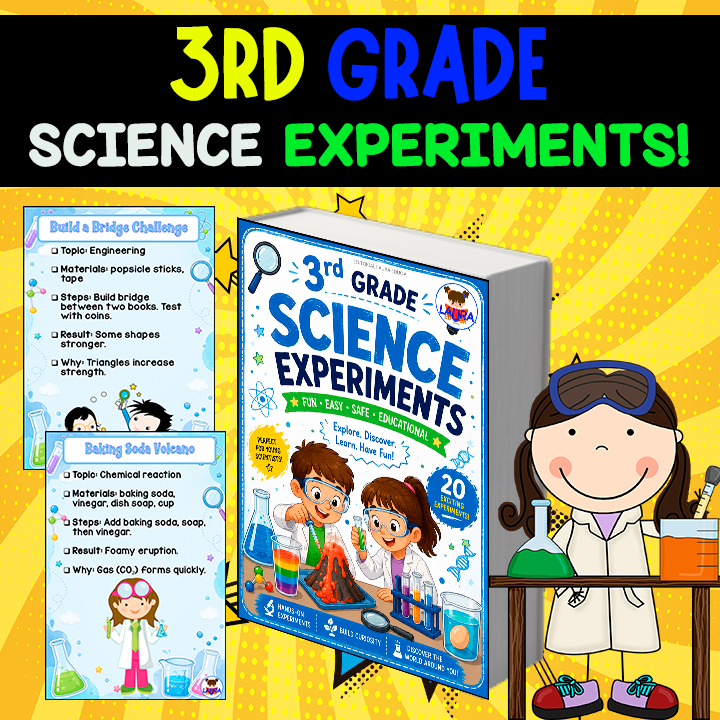
3ER GRADE SCIENCE EXPERIMENTS | SUPER BOOK SUMMARY OF THIS PRODUCT: Page Quantity: 60 Designed in the Following Format: PDF Color Option (Color / Black & White): COLOR ABOUT THE AUTHOR: At Laura Educa Publishing, we design and gather meaningful educational resources that support children’s learning journey. We aim to inspire kids to see learning as a fun and exciting experience. MAIN DESCRIPTION: -What is a short introduction to this product? Hello! Thank you so much for your interest in my products! I create them with a lot of love for all children. I sincerely hope this product will be a great help in the education of the children in your care. -What is the main objective of this resource? The main objective of this product is to support and reinforce children's learning, as well as to help children/students see that learning is fun. -What is the order, structure, or step-by-step process included? The order and structure of using this product will depend largely on the teacher's or facilitator's judgment. It all depends on your creativity. -What grade levels or ages is this designed for? This resource is designed specifically for young children/students, but there is no age restriction for using this type of material. EXTRA DESCRIPTION OF THIS RESOURCE: -Suggest SEO-friendly tags or keywords for this product. I could give you some keywords: resources, resources for children, educational resources, education, early childhood education. -Explain how educators can use this resource and possible adaptations. In the educational process, teachers have complete freedom to use this document in whatever way they see fit, so at this point I could say that educators can adapt this product as they see fit. -Mention any standards or curriculum alignment. It has not been developed based on any specific standards. -List all file formats included in the product. This product contains only one specific topic. -Indicate the total number of pages included. This document contains 60 pages.

Author EDITORIAL LAURA EDUCA

Rating

Tags FREE, FREE RESOURCES, SCIENCE, EXPERIMENTS, GRADE 3, ELEMENTARY, BOOK, LAB

Creative Science Activities for Active Learners

Creative Science Activities for Active Learners
, Grade 5, 6, 7, 8, Activities, Experiments

Creative Science Activities for Active Learners: An Engaging Teaching Tool The Creative Science Activities for Active Learners resource is a high-energy tool kits that enhances your students' scientific knowledge. This resource offers over 50 exciting activities, each of which can be completed within 15 minutes. Designed to be versatile and flexible, it serves as an engaging kickstart to classroom discussions, homework tasks, or extra credit assignments. These quick but meaningful engagements perfectly fill the short moments between class schedules and standard lessons. A Comprehensive Scientific Learning Resource This resource primarily aims at enhancing and reinforcing students' comprehension of key scientific concepts. It presents topics from Life Science, Environmental Science, Earth/Space Science all in a fun way that appeals to active learners in grades 5-8. Evasion Tasks with Extra Challenges and Problem Solving Components All activities come with Extra Challenges and problem-solving aspects appealing to young curious minds. Key issues covered include pollution management, understanding space fragments phenomena or how parasites operate within their hosts. Creative science activities employment can lead to innovative thinking among pupils as they explore science's many wonders at their own pace! Your Acquisition Includes: A downloadable PDF file comprising of 128 ready-to-print pages made up of scientifically enriching adventures focused on experiments - neatly divided into bite-sized tasks for easy absorption without overwhelming the young scholars. The Creative Science Activities for Active Learners teaching tool is essential whether you're catering to a entire class, addressing small group settings or even providing guided homeschooling. This interactive learning experience will pave the way towards creative scientific discoveries.

Author Classroom Complete Press

Tags Creative Science, Science Experiments, Science Activities, Space Science, Life Science

Respiratory System – Lab Station Activity

Respiratory System – Lab Station Activity
Science, Life Sciences, Human Body, Grade 8, 9, 10, Labs, Experiments, Activities

Respiratory System Lab Station Activity Bring the human respiratory system to life in your middle or high school science classroom. This engaging lab activity includes 8 interactive stations where students can draw , research, watch videos, answer questions, and more. Cover core concepts like respiratory system structures, gas exchange, and diseases. Streamline setup with station description cards and a recording sheet for students. Boost engagement with bonus vocabulary puzzles like a word scramble and word search. Suitable for whole class or small groups as a lab activity or test review. Fully customizable and editable files provided, with answer keys included. Spans a 50-minute class period with minimal prep required. Extendable to other body systems like circulatory, digestive, nervous, and more, sold separately in my store.

Author Teach With Fergy

Tags Respiratory, System, Diseases, Lab Station, Organ, Respiratory System Lab Activities, Respiratory System Activities, Respiratory System Review Games, Anatomy Of The Respiratory System Lab, Respiratory System Interactive Activities

Biomimicry Bots: Designing Eco-Friendly Robots Inspired by Nature

Biomimicry Bots: Designing Eco-Friendly Robots Inspired by Nature
Science, Earth and Environmental Sciences, Earth Sciences, Environmental Science, Geology, Life Sciences, Animals, Biology, Human Body, Insects, Grade 6, 7, 8, 9, 10, 11, 12, Activities, Experiments, Labs, Teacher Tools, Assessments, Diagrams, Lesson Plans, Rubrics, Workbooks, Worksheets & Printables

Biomimicry Bots: Designing Eco-Friendly Robots Inspired by Nature for a Sustainable Future 380-Page Comprehensive STEM Guide for Grades 8-12 | Robotics + Biomimicry + Environmental Science Curriculum Resource Unlock the future of green technology with this revolutionary 380-page educational tour de force! Authored by Syed Hammad Rizvi, Biomimicry Bots is the definitive interdisciplinary resource that empowers students to design sustainable, nature-inspired robots that address real-world environmental issues, ranging from ocean cleanup and reforestation to air quality sensing and biodiversity preservation. Ideal for advanced middle school and high school students (Grades 8-12, ages 13-18), robotics teams, STEM education, homeschoolers, and future engineers and environmental scientists. This book seamlessly integrates biology, engineering, programming fundamentals, sustainable materials, AI, swarm intelligence, soft robotics, and eco-design challenges to create a fun and interactive learning journey. With 100 expertly designed chapters, students will discover: Robotics basics (sensors, actuators, microcontrollers, programming) Nature’s brilliance (gecko adhesion, octopus arms, bird flight, insect colonies) Green materials (biodegradable plastics, self-healing materials, recycled composites) Practical applications (robotic fish, agricultural robots, disaster response drones) Eco-bot design activities with CAD and prototyping support Meets NGSS, IB, and AP Environmental Science curriculum standards. Perfect for robotics clubs (VEX, FIRST), science fairs, classroom instruction, or a full-semester course. Empower the next generation of eco-innovators now! Why Parents & Schools Adore It: Completely integrates with NGSS engineering design and Earth systems standards — administrators rave about it for its standards alignment. Teaches a true sustainability mindset, not just "build a robot" — parents are thrilled that their kids finally get why eco-design is important. 100 bite-sized chapters that are extremely teacher-friendly: assign 1-2 chapters a week or choose projects to avoid overwhelming kids. Very project-intensive with real-world applications (ocean cleanup robots, reforestation drones, and so on) — kids actually build portfolios that colleges care about. One of the only resources that combines cutting-edge robotics with environmental science — closes a huge gap in the curriculum. Target Audience (Based on Full Book Analysis) : Primary: Advanced STEM students in grades 8-12 (especially honors/AP level classes) Best Fit Classes/Courses: – Robotics/Engineering/Introduction to Engineering Design – Environmental Science/AP Environmental Science – Biology (ecology/biomimicry units) – Technology/Computer Science (Arduino, AI, programming fundamentals) – Gifted & Talented programs, Science Olympiad, FIRST Robotics, VEX teams – Homeschool co-ops emphasizing project-based learning Also great for teachers seeking a comprehensive year-long interdisciplinary curriculum (biology, physics, sustainability) Copyright/Terms of Use: This Book is copyrighted by Syed Hammad Rizvi. This resource is for personal and single classroom use only. You may not alter, redistribute, or sell any part of this resource. In other words, you may not put it on the Internet where it could be publicly found and downloaded. If you want to share this resource with colleagues, please purchase additional licenses from Teachsimple. Thank you for respecting these terms of use. This product is happily brought to you by Syed Hammad Rizvi

Author Creative Book Store

Rating

Tags BiomimicryBots, EcoFriendlyRobots, NatureInspiredRobotics, SustainableRobotics, BiomimicryEducation, STEMCurriculum, RoboticsForKids, HighSchoolSTEM, MiddleSchoolScience, EnvironmentalEngineering

Science Action Labs Environment: Explorations in Environmental Science

Science Action Labs Environment: Explorations in Environmental Science
Science, Earth and Environmental Sciences, Environmental Science, Grade 4, 5, 6, 7, 8, Labs, Experiments, Activities

Science Action Labs Environment: Explorations in Environmental Science This comprehensive teaching resource is designed to bring science to life for Grade 4 to 8 students. The toolkit offers an interesting adventure into environmental science, provoking students to engage deeply with various scientific problems. Main Features: The resource primarily focuses on different scientific mysteries which can be applied in a variety of classroom settings. It can be used as part of whole-group instruction, in small study groups or even assigned as homework, opening doors for differentiated learning. Gives both teachers and students the freedom to experiment with a wide array of scientific concepts without feeling overwhelmed. Provides ample opportunities for promoting active learning through hands-on experience. Molding Young Minds: Students are encouraged to use their thinking abilities and problem-solving skills vastly while navigating through these intriguing scientific puzzles. It triggers interest about environmental science subjects via engaging labs thereby fostering deeper understanding amongst the youngsters. Syllabus Compatibility and Approachability: The toolkit contains 64 ready-to-print PDF pages packed with practical content making it align perfectly with core Environmental Science syllabus common at primary schools. Additionally, the easy-to-comprehend language used throughout this resource accommodates varying reading abilities present within those grades. Educational Impact This tool truly simplifies intricate ideas and facilitates children approach them at their own pace under guided supervision from educators. By integrating this aid into lesson planning - educators could considerably boost classroom discussions around logical reasoning all while effectively sparking intellectual growth among budding learners over time.' Lasting Influence: Habitual usage of this dynamic resource not only amplifies student engagement but also succeeds to instill critical-thinking skills crucial in developmental years leading up towards higher education—making education substantial and nourishing at every step.

Author Classroom Complete Press

Tags Environmental, Science, Action Labs, Explorations, Science Activity

Let's Investigate! Hands-On Science -  Grades 1-2

Let's Investigate! Hands-On Science - Grades 1-2
, Grade 1, 2, Activities, Experiments, Teacher Tools, Lesson Plans

Let's Investigate! Hands-On Science - Grades 1-2 Let's Investigate! Hands-On Science - Grades 1-2 is a complete teaching aid packed with brain teasing activities aimed to introduce students to the mesmerizing world of science. Covering three main areas of science: physical, earth, and life sciences. A Comprehensive Teaching Toolbox This guide is designed as a comprehensive teaching toolbox filled with actionable activities geared towards fostering independent learning among students. Each activity encompasses an easy-to-follow set of instructions ensuring direct comprehension and engagement. These tasks are not merely focused on rote learning but also encourage observation skills and foster critical thinking development through guided questions. Beyond just Activities Rather than just presenting fun activities, this guide includes interesting facts throughout its contents adding another layer of enrichment to students' learning journey. Extension activities are also added providing more avenues for knowledge exploration beyond classroom discussions. List: Fascinating Science Facts Extension Activities An Activity Guide About the Activity Guide: The Activity Guide located towards the end offers useful background information along with tips that can be leveraged by educators to ensure an enjoyable yet valuable scientific exploration experience for their classes. Note:The Let's Investigate! Hands-On Science - Grades 1-2 package comes as a single PDF made up of 64 pages prepared in advance waiting to be printed whenever you need them – maximizing accessibility without sacrificing time-efficiency. Whether for whole-class instruction or small group teachings or even homework assignments – this highly adaptable tool Line by Teach Simple aims at empowering Grade 1 & Grade 2 learners in their curious journey into the realm of Science. Get started today, grab your digital copies and experience how physical sciences, earth sciences, or life science concepts can become incredibly tangible learning experiences for your students.

Author Classroom Complete Press

Tags Let's Investigate, Hands-on Science, Science Experiments, Fossil Fun, Underwater Test

Biodiversity and Invasive Species – Lab Station Activity

Biodiversity and Invasive Species – Lab Station Activity
Science, Life Sciences, Biology, Grade 7, 8, 9, 10, Labs, Experiments, Activities

Biodiversity and Invasive Species Lab Station Activity Students will be engaged with this editable lab station activity on biodiversity and invasive species. The hands-on stations allow students to test their knowledge through drawing, researching, explaining their viewpoint, reading applicability passages, answering questions, watching videos, and creating their own questions. Recording sheets are provided for students to document their learning. This activity covers topics like biodiversity and invasive species. Bonus activities like word scrambles and word searches are also included to reinforce learning and keep students productive. This lab station activity can be used alongside instruction on biodiversity and invasive species or as a review before assessments. With minimal prep work for teachers and engaging, student-driven activities, this resource offers a valuable learning experience for middle school life science classrooms.

Author Teach With Fergy

Tags Biology, Biodiversity, Invasive, Species, Lab Station, Invasive Species Activity

Science Action Labs Science Puzzlers: Solving Science Mysteries

Science Action Labs Science Puzzlers: Solving Science Mysteries
, Grade 4, 5, 6, 7, 8, Labs, Experiments, Activities

Discover the Excitement of Science with 'Science Action Labs Science Puzzlers: Solving Science Mysteries' This enthralling resource is perfect for students in grades 4 through 8. It transcends traditional teaching methods to introduce exciting, hands-on labs that stimulate curiosity and critical thinking. Mysteries Awaiting Resolution With a new puzzle on every page to solve, young minds are exposed to a variety of scientific themes, including magnetism, gravity, balance and prediction-making. This comprehensive package contains 64 quick-print PDF pages, filled with unique science scenarios. This allows educators to easily tailor their teaching approaches according to student capabilities and interests. An Engaging Fusion of Fun and Learning! This amazing resource draws parallels between unraveling mystery plotlines like a seasoned detective while learning complex science concepts. All activities make use of simple household or classroom materials—perfect for group instruction or small group collaborations. Fosters open discussions about hypotheses Encourages sharing insights A Perfectly Flexible Resource for Modern Education Demands A key benefit of these labs is they cater well for solo explorers too! The puzzles function as excellent tasks not just inside the classroom but also outside it as engaging homework assignments. Homeschool Friendly! Educators directing homeschooling programs will find this resource extremely valuable. It brings scientific principles from textbooks into practical applications within our daily world – making scientific learning much more accessible! Note:All exercises promote student-led investigation leading toward direct observations followed by credible inference making - establishing a concrete base of understanding one concept at a time! A flexible teaching tool that adapts to diverse learners without compromising on the practical essence pivotal for grasping complex science concepts. An Invigorating Learning Experience With this comprehensive teaching tool, educators can not only teach, but also instill a love of learning – and there is no greater thrill than solving mysteries while learning!

Author Classroom Complete Press

Tags Science Lab, Action Lab, Science Puzzlers, Solving Mysteries, Activity

Atomic Model, Structure and Notation – Lab Station Activity

Atomic Model, Structure and Notation – Lab Station Activity
Science, Chemistry, Grade 7, 8, 9, 10, Labs, Experiments, Activities

Atomic Model, Structure and Notation Lab Station Activity Engage students in learning atomic model, structure, and notation through this customizable lab station activity . Students move through various stations testing their knowledge about topics like atomic theory history, the Bohr-Rutherford atomic model, subatomic particles, calculating atomic mass/numbers, and more. Activities include drawing models, researching questions, writing explanations, watching videos, answering test questions, and even formulating their own questions. Recording sheets provided for students to document their work. Use this as an introductory or review lab activity in individual, small group, or whole class settings to bring interactive chemistry learning to life. Modifiable with answer keys. 7th-10th grade. Chemistry.

Author Teach With Fergy

Tags Atomic, Model, Structure, Notation, Lab Station, Simple Atomic Model

Biomes – Lab Station Activity

Biomes – Lab Station Activity
Science, Earth and Environmental Sciences, Environmental Science, Grade 6, 7, 8, 9, Labs, Experiments, Activities

Biomes Lab Station Activity Bring the diverse biomes of planet Earth into your middle or high school science classroom with this engaging lab station activity . Students will rotate through 9 stations to get hands-on experience with concepts like major biome types, adaptation, and more. Activities range from creative drawing prompts to knowledge checks and inquiry-based reading. An included recording sheet allows students to document their learning journey. This ready-to-implement resource covers terrestrial biomes like grasslands, forests, deserts and tundra as well as aquatic environments. Word scramble, word search and answer keys provide built-in differentiation. Modify the content or instructions as needed with the fully editable teacher version. Turn key lab stations make biome exploration interactive, memorable and fun.

Author Teach With Fergy

Tags Biomes, Freshwater, Marines, Environment, Science

Science Action Labs Earth Science

Science Action Labs Earth Science
Science, Earth and Environmental Sciences, Earth Sciences, Grade 1, 2, 3, Labs, Experiments, Activities

Science Action Labs Earth Science A practical teaching resource, Science Action Labs Earth Science, aims to stimulate the natural curiosity of young learners and expose them to the marvels of our planet. It emphasizes exploration and discovery through hands-on activities that deepen 1st to 3rd graders' understanding of Earth science concepts. About The Resource: The material encompasses 64 printable PDF pages. The pages are rich with diverse experiments and activities focusing on key subjects such as continents, earthquakes, Earth's air, water, soil as well as its motion and layers. The flexibility of these activities is extensive. You can either carry out whole group sessions or assign small group tasks each with distinct exercises that foster teamwork and creativity among students. Bonus Feature: The added review quizzes serve as effective tools for progress assessment letting educators evaluate student comprehension levels on newly learnt topics with ease. Versatile Application: This educational tool’s versatility makes it perfect for structured class lessons or homework assignments while also offering potential enhancements to an existing earth science curriculum. Its flexible usage fosters increased engagement levels leading to improved academic performance over time. Ease Of Access: You can readily access this resource kit in PDF format which offers convenient dissemination without compromising quality. In Summation... This pragmatic approach offered by our earth science exploration kit bridges knowledge acquisition with actual hands-on experiences delivering a holistic learning journey. This integrated learning experience could spark potential Geologists or Meteorologists within your class paving the way towards creating scientific explorers one lab activity at a time.

Author Classroom Complete Press

Tags Science Labs, Earth Sciences, Art Challenge, Flying Into Space, Moon Facts

Science Action Labs Plant Science

Science Action Labs Plant Science
Science, Life Sciences, Nature & Plants, Grade 4, 5, 6, 7, 8, Labs, Experiments, Activities

Science Action Labs Plant Science: Beyond Traditional Education The Science Action Labs Plant Science is a comprehensive and practical resource specifically designed to enhance teaching of botany to students from grades 4 to 8. As a meticulously curated catalog, it delivers hands-on activities which provides multi-faceted approach towards the study of plant science. Differentiated Learning with Hands-On Activities This product can be utilized for differentiated learning with varying levels of difficulty, addressing important scientific phenomena like photosynthesis and plant reproduction. These features make it an excellent educational foundation for young learners. An Extensive Resource: All Ready to Print! Sixty-four pages of ready-to-print worksheets are available at your disposal. Each page uncovers new opportunities for studious exploration. Tasks range from engaging experiments such as the seed corn Olympics, which instills knowledge about seed germination, to observational studies that let students delve into the fascinating world of pollen. With plants set in motion and experiments conducted using leaves, students gain first-hand exposure making science more tangible and interesting. Fostering Natural Curiosity in Children through Interactive Learning Kids are natural explorers; their inherent curiosity coupled with tangible showcases brought by these action labs will fuel their inquiry as well as understanding towards botanical science. It offers versatility whether delivered in full classrooms or small focussed groups or even assigned as homework tasks. Bridging Theory & Practice: Making Scientific Concepts Digestible This pack goes beyond providing all-encompassing knowledge about plant life at different growth stages but also cultivates an environment where students can learn at their own pace while handling real samples. By connecting theoretical knowledge with hands-on activities, scientific concepts become less abstract making it easier for students to comprehend. Revolutionizing Botany Education with Science Action Labs Plant Science In essence, the Science Action Labs Plant Science is an effective platform for teaching botany in a way that nurtures interest, sustains engagement, and breaks away from traditional models where rote memorization often overshadows actual comprehension. This resource is an invaluable addition to any curriculum aiming to foster budding scientists equipped not just with facts and figures, but also with the crucial skill of scientific inquiry.

Author Classroom Complete Press

Tags Plant Science, Crossword Puzzles, Science Writing, Dr. Newton, Seed Lab

Science Action Labs Animal Science: Active Science About Animals

Science Action Labs Animal Science: Active Science About Animals
Science, Life Sciences, Animals, Grade 4, 5, 6, 7, 8, Labs, Experiments, Activities

Science Action Labs Animal Science: Active Science About Animals This top-notch teaching aid is targeted towards Grades 4 to Grade 8. It focuses on subjects like science and zoology, with intriguing exploration at the core of its approach. The resource comprises a single PDF file featuring 64 ready-to-print pages for expedient preparation by educators. Each page aims to deepen students' understanding of various aspects of animal science making it an ideal part of any curriculum focusing on Zoology. The versatility of the material allows you to adapt it according to your teaching strategy - be it whole-group sessions or small group collaborations, ensuring seamless integration across different pedagogical methods. You can simulate animal habitats within your classrooms using hands-on explorations laid out in this versatile document. There's scope for learners' active engagement with interesting fish experiments that are sure to feed their curiosity and foster scientific temperaments. Create Their Own Creature! Your students can harness their creative power when asked to conceive their very own creature during lessons! Feel free to assign these as homework - individual assignments not only consolidate understanding but also enhance personal problem-solving skills amongst students, moulding them into budding scientists! A Comprehensive Learning Aid: This educational tool comes packed with comprehensive learning concepts, crisply explained across a myriad topics surrounding animals such as habitats, ecosystem balances or characteristics etc. This gives you an effective method for disseminating knowledge about animals' lives and the crucial roles they play in sustaining life on earth. In Conclusion: In essence, the Science Action Labs Animal Science: Active Science About Animals is more than just another academic worksheet set – it ignites learner engagement through Darwinian exploration! Such compelling features make these user-friendly yet rigorous academic worksheets an indispensable resource for any educator who values high-quality educational supplements.

Author Classroom Complete Press

Tags Animal Science, Action Labs, Super Animals, Animal Habitats, Earthworm Lab

Dear Mr. Henshaw STEM Experiment + STEM Project for Grades 3, 4, 5

Dear Mr. Henshaw STEM Experiment + STEM Project for Grades 3, 4, 5
Science, Technology, Engineering, STEM, Grade 3, 4, 5, Experiments, Activities, Projects, Diagrams, Teacher Tools, Graphic Organizers, Rubrics

Leigh Botts from Dear Mr. Henshaw needs your help! This STEM project encourages problem-solving as students plan and construct a device that will help protect Leigh's lunch from a sneaky thief. Perfect for blending literature with science, it allows students to explore engineering concepts using simple supplies while promoting teamwork and critical thinking. What’s Inside This Resource: Student Letter: A pleading letter from Leigh introduces the challenge, linking the story to a real-world engineering task. Design Loop Graphic: A visual students can attach to their science journals, serving as a step-by-step guide throughout the activity. Detailed Instructions: Choose to print the guide as a packet or have students record each stage in their journals for an interactive experience. Teacher Tips: Practical guidance for crafting a clear problem statement with time constraints, materials, and success criteria tailored to your classroom. Skills Your Students Will Build: ✔ Problem-Solving: Identify obstacles and create inventive solutions. ✔ Engineering Design: Navigate the design loop—plan, construct, test, and refine. This page can easily be enlarged for a classroom poster. ✔ Critical Thinking: Assess their prototype’s performance and pinpoint ways to enhance it. ✔ Teamwork: Collaborate effectively to accomplish shared goals. Versatile Classroom Application: Whether as guided instruction or part of an integrated literature and science unit, this STEM activity encourages students to think creatively, document their process, and meet science and engineering standards. The rubric included is based on engineering concepts, but can also be used as a nonfiction writing rubric for cross-curricular options. Why Educators Love This Resource: ⭐ “My students were fully engaged, combining their passion for reading with STEM!” ⭐ “Simple to set up and encourages creativity and teamwork.” ⭐ “A seamless connection between literature and science for cross-curricular learning!” Encourage your students to solve Leigh’s challenge and experience the excitement of engineering with this standards-aligned STEM adventure!

Author Kel's Klass

Tags 4th Grade Science Project, 4th Grade Science Experiment, 5th Grade Science Project, 5th Grade Science Experiment, Engineering Diagram, Science Graphic Organizer, Science Rubric, 3rd Grade Science Project, 3rd Grade Science Experiment, Dear Mr. Henshaw

Particle Theory and Matter Classification – Lab Station Activity

Particle Theory and Matter Classification – Lab Station Activity
Science, Chemistry, Grade 8, 9, 10, 11, Labs, Experiments, Activities

This fully editable Lab Station on The Particle Theory and the Classification of Matter is meant to get your students out of their seats and engaged in the content. Each station not only offers a unique opportunity to test your students' knowledge (offer an opinion, answer questions based on a video or reading, draw, etc.), but also provides a fantastic learning opportunity where your kids are learning through assessment. Each station comes with a description card while some also contain more detailed instructions, a reading, questions to answer, etc. Students are equipped with a recording sheet (passport) to write their answers. There is almost no prep for you. Simply print the cards, lay them out around the room and you're all set. An answer key is also provided where applicable. This lab activity covers: - The particle theory - Matter classification - Mixtures --> Homogeneous (solutions) --> Heterogeneous (mechanical mixtures) - Pure substances --> Elements --> Compounds How do the Lab Stations work? Each station is specially designed to be a unique complement to the material while at the same time, provide a valuable learning experience. Below is an overview of how each station works. In your activity , each will be tailored to the specific content. Station 1: Get Hands-On – using their creative skills, students are required to draw or build. Station 2: Research – using a classroom computer or their own device, students must research a specific question/issue surrounding the topic. Station 3: Explain yourself – students write down an opinion to a question in paragraph form. Station 4: Rest Station - students can use this time to catch up on work they didn't have time to complete at a previous station or prepare themselves for an upcoming one. Station 5 - Applicability reading – students read a short passage from an article, website, etc. which directly connects the classroom content to a real life application. Station 6: Test your knowledge – students answer 5 multiple choice questions then provide a written explanation for how/why they came to their conclusions. Station 7: Learn from the expert – using a classroom computer or their own device, students must watch a short video clip and answer the associated questions. They may stop, rewind and restart as often as they like during the time frame. Station 8 - Rest Station. Station 9: Become the question master – Students must create 2 multiple-choice questions, 2 true/false questions and 1 short answer question. Students must also supply the answers. ------------------------------- You might also be interested in my other lab station activities Physics: • Newton's Three Laws of Motion • Kinetic and Gravitational Potential Energy • Current Electricity and Circuit Diagrams • Static Electricity • Light Optics and the Production of Light • Sound, Sound Energy and Speed • One and Two-Dimensional Motion • Uniform Acceleration • How Planes Fly • Refraction • Friction • Energy and Its Forms • Density and Buoyancy • Electricity Production Coming Soon: - Calculating average speed, velocity, and displacement - Work = F x d - Renewable energy sources - Nonrenewable energy sources Space Science: • The Life and Death of Stars • The Moon and its Phases • Life In Space • Our Solar System • Solar and Lunar Eclipse • Earth's Seasons • Asteroids, Comets and Meteors Ecology and the Environment: • Ecosystems • The Classification of Living Things • Biodiversity and Invasive Species • The Carbon and Water Cycle • Climate Change • Photosynthesis • Cellular Respiration and Photosynthesis • Ecological Succession • Plant Sexual and Asexual Reproduction • Earth's Seasons • Interactions Within Ecosystems Biology: • Cell and the Cell Theory • The Human Digestive System • The Circulatory System • The Human Respiratory System • Mitosis and the Cell Cycle • Cellular Respiration and Photosynthesis • Photosynthesis • Cancer: Cell Division Gone Wrong - Volume I • Cancer: Cell Division Gone Wrong - Volume II • Cell Membrane and Transport • Hearing and the Human Ear • The Human Eye • Genetic Material: DNA and RNA • The Nervous System • Energy Flow In Ecosystems Coming Soon: - Excretory system - Endocrine system Chemistry: • Atomic Model, Notation and Atoms • Chemical Reactions and Balancing Equations • Molecular and Ionic Compounds • Physical and Chemical Properties & Changes • Acids, Bases, and Neutralization Reactions • The Periodic Table • Single and Double Displacement Reactions • Balancing Chemical Equations • Synthesis, Decomposition and Combustion Reactions • Atomic Theory, Atomic Structure and Isotopes • Types of Bonds and Intermolecular Forces • The Mole/Avogadro's Number • Density and Buoyancy • The Particle Theory and the Classification of Matter Coming Soon: - Counting atoms - Periodic table group properties These station cards are meant to be used as a lab activity but can also be utilized in a review task before a test or a quiz. Used either way, your students will love it! I know mine do and I'm telling you from first-hand experience as I've used this activity in my own class. Thank you for your interest in my products. If you have any questions, please send me an email - devon@teachwithfergy.com

Author Teach With Fergy

Tags Particles, Classification, Matter, Lab Station, Chemistry

Circulatory System – Lab Station Activity

Circulatory System – Lab Station Activity
Science, Life Sciences, Human Body, Grade 8, 9, 10, 11, Labs, Experiments, Activities

This fully editable Lab Station Activity on the Circulatory System is meant to get your kids out of their seats and engaged in the content. Each station not only offers a unique opportunity to test your students knowledge (offer an opinion, answer questions based on a video or reading, draw, etc.), but also provides a fantastic learning opportunity where your kids are learning through assessment. Each station comes with a description card while some also contain more detailed instructions, a reading, questions to answer, etc. Students are equipped with a recording sheet (passport) to write their answers. There is almost no prep for you. Simply print the cards, lay them out around the room and you're all set. An answer key is also provided where applicable. These station cards are meant to be used as a lab activity but can also be utilized in a review task before a test or a quiz. Used either way, your students will love it! I know mine do and I'm telling you from first-hand experience as I've used this activity in my own class, This lab activity covers: - Circulatory System - Circulatory System Disorders - Prevention of Cardiac Disorders ---------------------------------------------- Bonus Activities: To ensure your students don't have any downtime between stations, your lab also includes a 10-word word scramble and word search, both with an answer key. You can use them as part of their mark, as a bonus so it's not mandatory, etc. However you choose to use it, it will ensure that your students are always busy and never idle. Note: For stronger classes I give the word scramble and for weaker ones, the word search. ---------------------------------------------- How do the Lab Stations work? Each station is specially designed to be a unique complement to the material while at the same time, provide a valuable learning experience. Below is an overview of how each station works. In your activity , each will be tailored to the specific content. Station 1: Get Hands-On – using their creative skills, students are required to draw or build. Station 2: Research – using a classroom computer or their own device, students must research a specific question/issue surrounding the topic. Station 3: Explain yourself – students write down an opinion to a question in paragraph form. Station 4: Rest Station - students can use this time to catch up on work they didn't have time to complete at a previous station or prepare themselves for an upcoming one. Station 5 - Applicability reading – students read a short passage from an article, website, etc. which directly connects the classroom content to a real life application. Station 6: Test your knowledge – students answer 5 multiple choice questions then provide a written explanation for how/why they came to their conclusions. Station 7: Learn from the expert – using a classroom computer or their own device, students must watch a short video clip and answer the associated questions. They may stop, rewind and restart as often as they like during the time frame. Station 8 - Rest Station. Station 9: Become the question master – Students must create 2 multiple-choice questions, 2 true/false questions and 1 short answer question. Students must also supply the answers. ------------------------------- You might also be interested in my other lab station activities Physics: • Newton's Three Laws of Motion • Kinetic and Gravitational Potential Energy • Current Electricity and Circuit Diagrams • Static Electricity • Light Optics and the Production of Light • Sound, Sound Energy and Speed • One and Two-Dimensional Motion • Uniform Acceleration • How Planes Fly • Refraction • Friction • Energy and Its Forms • Density and Buoyancy • Electricity Production • Calculating Average Speed, Velocity, and Displacement • Mass, Volume, Density, & Buoyancy • Work and Energy • Renewable Energy • Plate Tectonics • The Rock Cycle • Natural Disasters • Pressure, Volume, and Temperature • Forces • Power • Liquids and Gases • Fossils and Geologic Time • Earthquakes and Volcanoes Coming Soon: - Work = F x d - Nonrenewable energy sources - Projectile Motion - Momentum, Conservation of Momentum and Impulse - The Doppler Effect and Supersonic Travel General Science: • The Scientific Method and Science Skills • The Different Types of Clouds • Meteorology Biology: • Cell and the Cell Theory • The Human Digestive System • The Circulatory System • The Human Respiratory System • Mitosis and the Cell Cycle • Cellular Respiration and Photosynthesis • Photosynthesis • Cancer: Cell Division Gone Wrong - Volume I • Cancer: Cell Division Gone Wrong - Volume II • Cell Membrane and Transport • Hearing and the Human Ear • The Human Eye • Genetic Material: DNA and RNA • The Nervous System • Energy Flow In Ecosystems • DNA Manipulation and GMOs • Transcription and Translation • Cellular Respiration • Thermoregulation • Proteins and Nucleic Acids • Mutations • Meiosis • DNA, Genes, Chromosomes, and Alleles • Genetic Disorders • Fats • Reproductive Technologies • Muscular and Skeletal System • Integumentary System Coming Soon: - Excretory system - Endocrine system - Carbohydrates and Lipids Chemistry: • Atomic Model, Notation and Atoms • Chemical Reactions and Balancing Equations • Molecular and Ionic Compounds • Physical and Chemical Properties & Changes • Acids, Bases, and Neutralization Reactions • The Periodic Table • Single and Double Displacement Reactions • Balancing Chemical Equations • Synthesis, Decomposition and Combustion Reactions • Atomic Theory, Atomic Structure and Isotopes • Types of Bonds and Intermolecular Forces • The Mole/Avogadro's Number • Density and Buoyancy • The Particle Theory and the Classification of Matter • Pure Substances and Mixtures • Solutions and Mechanical Mixtures Coming Soon: - Periodic table group properties Ecology and the Environment: • Ecosystems • The Classification of Living Things • Biodiversity and Invasive Species • The Carbon and Water Cycle • Climate Change • Photosynthesis • Cellular Respiration and Photosynthesis • Ecological Succession • Plant Sexual and Asexual Reproduction • Earth's Seasons • Interactions Within Ecosystems • Physical and Behavioral Adaptations Space Science: • The Life and Death of Stars • The Moon and its Phases • Life In Space • Our Solar System • Solar and Lunar Eclipse • Earth's Seasons • Asteroids, Comets and Meteors These station cards are meant to be used as a lab activity but can also be utilized in a review task before a test or a quiz. Used either way, your students will love it! I know mine do and I'm telling you from first-hand experience as I've used this activity in my own class. Thank you for your interest in my products. If you have any questions, please send me an email - devon@teachwithfergy.com

Author Teach With Fergy

Tags Circulatory, System, Body, Health, Lab Stations, Lab 11 The Circulatory System, Circulatory System Lesson Plans High School, Circulatory System Word Search Answer Key, Circulatory System Activities For Middle School

Fun with Chemistry: 20 Exciting Chemical Reaction Experiments For Kids

Fun with Chemistry: 20 Exciting Chemical Reaction Experiments For Kids
Chemistry, Science, Elementary, Experiments, Activities

Welcome, young scientists and teachers! This eBook is full of fun and colorful experiments that show how different substances can react to create amazing effects. You will see bubbles, color changes, fizzing eruptions, and even “rockets” that zoom up into the air. As you explore these experiments, remember that science is all about asking questions, observing closely, and having fun learning about the world around us. There are 20 exciting chemistry experiments included. They all involve simple chemical reactions that can be safely performed by kids. For each experiment, the materials are listed, and the step-by-step procedure. Finally, an explanation is given, so as to highlight the science behind the experiment. Last but not least: All experiments must be conducted under strict adult supervision. Always wear safety goggles (or ask an adult to help you wear them) and use the experiments in a safe area where spills can be easily cleaned up.

Author Bright Classroom Ideas Marketplace

Tags Chemistry, Experiment, Kids, Lab, Reaction

Physical and Chemical Properties – Lab Station Activity

Physical and Chemical Properties – Lab Station Activity
Science, Chemistry, Grade 7, 8, 9, 10, Labs, Experiments, Activities

Physical and Chemical Properties Lab Station Activity engages students as they rotate through 9 stations testing their knowledge of matter's physical and chemical properties. Students get hands-on drawing atoms, researching questions, watching videos, answering multiple choice questions and more. Covers key concepts like states of matter, qualitative vs quantitative properties, physical and chemical changes, and energy transformations. The activity comes with station description cards, detailed instructions, articles, video links, and recording sheets. Questions assess student learning and bonus scramble and word search activities ensure no downtime. This versatile resource works for whole group, small groups, or independent lab work. Easy to print and implement with no prep required. Applicable for middle and high school chemistry and physical science classrooms.

Author Teach With Fergy

Tags Physical, Chemical, Properties, States Of Matter, Lab Stations, Physical And Chemical Changes Lab High School, Lab Chemical And Physical Changes Worksheet, Physical And Chemical Changes Lab Middle School, Physical And Chemical Changes Activities For Middle School

Cellular Respiration and Photosynthesis – Lab Station Activity

Cellular Respiration and Photosynthesis – Lab Station Activity
Science, Life Sciences, Biology, Grade 7, 8, 9, 10, Labs, Experiments, Activities

This fully editable Lab Station Activity on Cellular Respiration and Photosynthesis is meant to get your students out of their seats and engaged in the content. Each station not only offers a unique opportunity to test your students' knowledge (offer an opinion, answer questions based on a video or reading, draw, etc.), but also provides a fantastic learning opportunity where your kids are learning through assessment. Each station comes with a description card while some also contain more detailed instructions, a reading, questions to answer, etc. Students are equipped with a recording sheet (passport) to write their answers. There is almost no prep for you. Simply print the cards, lay them out around the room and you're all set. An answer key is also provided where applicable. These station cards are meant to be used as a lab activity but can also be utilized in a review task before a test or a quiz. Used either way, your students will love it! I know mine do and I'm telling you from first-hand experience as I've used this activity in my own class, This lab activity covers: - Photosynthesis - Cellular Respiration ---------------------------------------------- Bonus Activities: To ensure your students don’t have any downtime between stations, your lab also includes a 10-word word scramble and word search, both with an answer key. You can use them as part of their mark, as a bonus so it’s not mandatory, etc. However you choose to use it, it will ensure that your students are always busy and never idle. Note: For stronger classes, I give the word scramble and for weaker ones, the word search. ----------------------------------------------- How do the Lab Stations work? Each station is specially designed to be a unique complement to the material while at the same time, providing a valuable learning experience. Below is an overview of how each station works. In your activity , each will be tailored to the specific content. Station 1: Get Hands-On – using their creative skills, students are required to draw or build. Station 2: Research - using a classroom computer or their own device, students must research a specific question/issue surrounding the topic. Station 3: Explain yourself – students write down an opinion to a question in paragraph form. Station 4: Rest Station - students can use this time to catch up on work they didn't have time to complete at a previous station or prepare themselves for an upcoming one. Station 5 - Applicability reading – students read a short passage from an article, website, etc. which directly connects the classroom content to a real-life application. Station 6: Test your knowledge – students answer 5 multiple choice questions then provide a written explanation for how/why they came to their conclusions. Station 7: Learn from the expert – using a classroom computer or their own device, students must watch a short video clip and answer the associated questions. They may stop, rewind and restart as often as they like during the time frame. Station 8 - Rest Station. Station 9: Become the question master – Students must create 2 multiple-choice questions, 2 true/false questions, and 1 short answer question. Students must also supply the answers. These station cards are meant to be used as a lab activity but can also be utilized in a review task before a test or a quiz. Used either way, your students will love it! I know mine do and I'm telling you from first-hand experience as I've used this activity in my own class. Thank you for your interest in my products. If you have any questions, please send me an email - devon@teachwithfergy.com

Author Teach With Fergy

Tags Cells, Plants, Photosynthesis, Respiration, Lab Activity, Photosynthesis And Cellular Respiration Lab, Photosynthesis And Respiration Lab Answer Key, Hands On Photosynthesis Activity, Photosynthesis Lab Middle School

Cancer – Lab Station Activity

Cancer – Lab Station Activity
Science, Life Sciences, Biology, Grade 8, 9, 10, 11, Labs, Experiments, Activities

Cancer – Lab Station Activity This is a dynamic and engaging resource designed to enhance student understanding around the scientific complexities of cancer. It's characterized by its flexibility, effectively catering to different learning styles through various interactive tasks and exercises. Primarily intended for Grades 8-11 biology education. The activity revolves around seven unique lab stations. Every station includes an instruction card; some provide detailed prompts or reading material. Students use a record sheet (passport) at each station for recording responses, encouraging active engagement with the content. Detailed Exploration of Cancer-related Topics This comprehensive product delivers more than just scientific facts about cancer. It elaborates on aspects ranging from metastasis and causes to prevention strategies and treatment options - stimulating critical thought about the broader context of cancer in healthcare. Versatile Classroom Application Apart from being a lab activity , these versatile cards can be used for review sessions before tests or quizzes as well. Rotating between stations helps keep boredom at bay while maintaining consistent learning outcomes. Bonus Activities Included A word scramble and word search puzzle are included as fun extras - no idle moments while waiting between rotating stations! Educator Discretion & Personalization List item The formatting is fully customizable according to individual class needs. Can cater to stronger students with word scrambles whilst supporting weaker ones with simpler word searches. Ensures minimal preparation time without any compromise on learning outcomes.

Author Teach With Fergy

Tags Cancer Education, Lab Activity, Interactive Learning, Critical Thinking, Healthcare, Cancer Lesson Plans High School

Magnetic Fields – Lab Station Activity

Magnetic Fields – Lab Station Activity
Science, Physics, Grade 10, 11, 12, Labs, Experiments, Activities

This fully editable Lab Station Activity on Magnetic Fields is meant to get your students out of their seats and engaged in the content. This activity was designed for high school physical science students. Each station not only offers a unique opportunity to test your students' knowledge (offer an opinion, answer questions based on a video or reading, draw, etc.) but also provides a fantastic learning opportunity where your kids are learning through assessment. Each station comes with a description card while some also contain more detailed instructions, a reading, questions to answer, etc. Students are equipped with a recording sheet (passport) to write their answers. There is almost no prep for you. Simply print the cards, lay them out around the room and you're all set. An answer key is also provided where applicable. No prep, no formatting, no issues. Simply download, print (or upload to your class site) and you're all set. This resource is fully editable for your convenience This resource covers the following topics: •Magnet Fields •Law of Magnetic Poles •Permanent vs. Temporary Magnets •Earth’s Magnetic Field •Oersted’s Principal •The Right-Hand Rule •Magnetism and Electricity •Solenoids •Electromagnetism and Electromagnetic Induction •Faraday’s and Lenz’s Laws •Conventional Current and Electron Flow How do the Lab Stations work? Each station is specially designed to be a unique complement to the material while at the same time, provide a valuable learning experience. Below is an overview of how each station works. In your activity , each will be tailored to the specific content. Station 1: Get Hands-On – using their creative skills, students are required to draw or build. Station 2: Research – using a classroom computer or their own device, students must research a specific question/issue surrounding the topic. Station 3: Explain yourself – students write down an opinion to a question in paragraph form. Station 4: Rest Station - students can use this time to catch up on work they didn't have time to complete at a previous station or prepare themselves for an upcoming one. Station 5 - Applicability reading – students read a short passage from an article, website, etc. which directly connects the classroom content to a real-life application. Station 6: Test your knowledge – students answer 5 multiple choice questions than provide a written explanation for how/why they came to their conclusions. Station 7: Learn from the expert – using a classroom computer or their own device, students must watch a short video clip and answer the associated questions. They may stop, rewind and restart as often as they like during the time frame. Station 8 - Rest Station. Station 9: Become the question master – Students must create 2 multiple-choice questions, 2 true/false questions and 1 short answer question. Students must also supply the answers. ------------------------------- You might also be interested in my other lab station activities Physics: • Newton's Three Laws of Motion • Kinetic and Gravitational Potential Energy • Current Electricity and Circuit Diagrams • Static Electricity • Light Optics and the Production of Light • Sound, Sound Energy and Speed • One and Two-Dimensional Motion • Uniform Acceleration • How Planes Fly • Refraction • Friction • Energy and Its Forms • Density and Buoyancy • Electricity Production • Calculating Average Speed, Velocity, and Displacement • Mass, Volume, Density, & Buoyancy • Work and Energy • Renewable Energy • Plate Tectonics • The Rock Cycle • Natural Disasters • Pressure, Volume, and Temperature • Forces • Power • Liquids and Gases • Fossils and Geologic Time • Earthquakes and Volcanoes • Watersheds • Momentum, Conservation of Momentum, and Impulse • Nonrenewable Energy Sources • Projectile Motion • Magnetic Fields Coming Soon: - Work = F x d - The Doppler Effect and Supersonic Travel Biology: • Cell and the Cell Theory • The Human Digestive System • The Circulatory System • The Human Respiratory System • Mitosis and the Cell Cycle • Cellular Respiration and Photosynthesis • Photosynthesis • Cancer: Cell Division Gone Wrong - Volume I • Cancer: Cell Division Gone Wrong - Volume II • Cell Membrane and Transport • Hearing and the Human Ear • The Human Eye • Genetic Material: DNA and RNA • The Nervous System • Energy Flow In Ecosystems • DNA Manipulation and GMOs • Transcription and Translation • Cellular Respiration • Thermoregulation • Proteins and Nucleic Acids • Mutations • Meiosis • DNA, Genes, Chromosomes, and Alleles • Genetic Disorders • Fats • Reproductive Technologies • Muscular and Skeletal System • Integumentary System • Carbohydrates and Lipids Coming Soon: - Excretory system - Endocrine system General Science: • The Scientific Method and Science Skills • The Different Types of Clouds • Meteorology Chemistry: • Atomic Model, Notation and Atoms • Chemical Reactions and Balancing Equations • Molecular and Ionic Compounds • Physical and Chemical Properties & Changes • Acids, Bases, and Neutralization Reactions • The Periodic Table • Single and Double Displacement Reactions • Balancing Chemical Equations • Synthesis, Decomposition and Combustion Reactions • Atomic Theory, Atomic Structure and Isotopes • Types of Bonds and Intermolecular Forces • The Mole/Avogadro's Number • Density and Buoyancy • The Particle Theory and the Classification of Matter • Pure Substances and Mixtures • Solutions and Mechanical Mixtures Coming Soon: - Periodic table group properties Ecology and the Environment: • Ecosystems • The Classification of Living Things • Biodiversity and Invasive Species • The Carbon and Water Cycle • Climate Change • Photosynthesis • Cellular Respiration and Photosynthesis • Ecological Succession • Plant Sexual and Asexual Reproduction • Earth's Seasons • Interactions Within Ecosystems • Physical and Behavioral Adaptations Space Science: • The Life and Death of Stars • The Moon and its Phases • Life In Space • Our Solar System • Solar and Lunar Eclipse • Earth's Seasons • Asteroids, Comets and Meteors These station cards are meant to be used as a lab activity but can also be utilized in a review task before a test or a quiz. Used either way, your students will love it! I know mine do and I'm telling you from first-hand experience as I've used this activity in my own class. ***************************** For free resources, useful teaching tips, and tools, please visit my blog - TeachScienceWithFergy.com If you have any questions please feel free to send me an email - devon@teachwithfergy.com

Author Teach With Fergy

Tags Magnetic, Field, Solenoids, Electron, Lab Station