



5,715 products added recently
Page 153 - Newest Teaching Resources

 Show filters

Self Love Worksheets for Kids Confidence, Affirmations & Emotional
Life Skills, Special Resources, Social Emotional Learning (SEL), Social Skills, Not Grade Specific, Worksheets & Printables
Self Love Worksheets for Kids: Confidence, Affirmations & Emotional Awareness ⭐ A lot of materials for teaching social-emotional skills to kids are either too childish, overly therapeutic, or excessively upbeat to the point of being insincere. Kids are smart; they can tell when something has been overly simplified. I created this pack with the intention of making worksheets that feel genuine, calm, and practical for use in both classrooms and at home during tough mornings. There are affirmation pages included, but they steer clear of being cringe-worthy. The prompts pose thoughtful questions such as, "What is something challenging you accomplished anyway?" and "How does your body feel when you experience pride?" This requires kids to engage their thoughts a bit, which is precisely the goal. ⭐ They are easy, a feeling wheel, a few open boxes, nothing overwhelming, and I use them with my own class at the beginning of the day, maybe four minutes. But when kids get to name what they are carrying before we ask them to focus, something shifts.The confidence journal pages are open-ended, there is no right or wrong answer, that is on purpose. It prints in black and white, no laminator required. I created it for ages 5 to 10, but a lot depends on the child, I have had second graders who did not need the picture prompts and kindergartners who needed me to read everything out loud, you will determine what works. ⭐ It works for counselors, classroom teachers, homeschool parents, or anyone who's ever heard a kid declare "I'm fine" when they clearly aren't. You can't communicate self-confidence to a child. They practice it gradually using the appropriate questions. This is where you should begin. Daily affirmation sheets are included. Feeling check-ins and emotion wheels Journals with open-ended confidence Growth mindset exercises Body awareness and relaxation techniques compatible with printers. White and black. No preparation is necessary.
Author life skills learning store
Rating
Tags Self Love, Life Skills, Social Emotional Learning, School Counseling Sessions, Mental Health, Positive Self-talk, Building Confidence
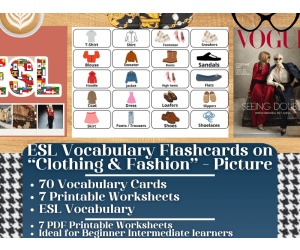
ESL Vocabulary Flashcards - Clothing & Fashion - Pictures
ELA, Language Development, ESL, Vocabulary, Not Grade Specific, Middle School, High School, Adult Education, Worksheets & Printables, Flashcards, Worksheets
ESL Vocabulary Flashcards - Clothing & Fashion - Pictures This high quality English language teaching resource is designed for students learning English as a second or foreign language . It includes 7 printable PDF pages featuring vocabulary flashcards and worksheets centered around the theme of "Clothing & Fashion" This ESL Vocabulary Flashcards on "Clothing & Fashion" Worksheets Activity can be ideal for Beginner level ESL - EFL - TESOL learners, including newcomers and English language learners of all ages. 🌟 What's Included? In this ESL Vocabulary Flashcards Activity on " Food & Cooking ", there are provided: ✅ 70 Printable Flashcards (7 Printable PDF worksheets) ✅ Essential vocabulary and phrases in English ✅ Engaging icons and emojis on select flashcards to support comprehension and vocabulary retention (not all flashcards) 🏫 Who Can Benefit from This Resource? 📌 Beginner ESL - EFL students looking to improve their English vocabulary 📌 Newcomers & English Language Learners (ESL - EFL - TESOL -TEFL) in schools, tutoring sessions, or self-study 📌 Teachers and tutors looking for fun and engaging vocabulary building activities 📌 Language centers, homeschool educators, and ESL programs 🎯 How Does this ESL Teaching Resource Help you and your Students? ✨ Strengthens essential English communication skills ✨ Provides English vocabulary (ESL - EFL - TESOL - TEFL) for better understanding ✨ Encourages engaging learning with printable flashcards that can be used in various ESL - EFL (English Second or Foreign Language) class activities Whether you're an ESL teacher or an English tutor these ESL Vocabulary Flashcards on " Clothing & Fashion " are a valuable and fun resource to improve basic conversation skills in English. Start learning today and make English introductions simple, engaging, and effective ! ESL with Alan is a Teaching Resources Store whose aim is to help English as a Second or foreign Language (ESL EFL TESOL) Teachers, Educators and Tutors around the world (be it online or offline) to achieve their teaching objectives while creating an enjoyable and stimulating learning environment. Learning is fun, So should English! Always If you want to browse more of my ESL, EFL, TESOL Teaching Resources, click here right ESL with Alan!
Author Learning with Alan
Rating
Tags ESL, English Second Language, English, Flashcards, Vocabulary, Fashion, Clothing, Worksheets, Activity, Printable
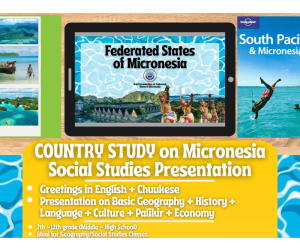
Country Study Presentation - Federated States of Micronesia - Oceania
Social Studies, Economics, Geography, History, Grade 7, 8, 9, 10, 11, 12, Presentations, Teacher Tools
Country Study Presentation - Federated States of Micronesia - Oceania - Geography + Social Studies Try this Teaching Resource on the Federated States of Micronesia (Introductory Presentation Lesson - PDF Printable), designed for Geography + Oceanian History (Oceania - Pacific Ocean) + Social Studies lessons. Suitable for Grades 7–12 (Middle school and High School students), this Introductory PDF Presentation offers a ready to use lesson that requires little to no preparation. Geography and Social Studies students will learn about the Federated States of Micronesia ’s geography, history, culture, language and economy — making it perfect for classroom instruction, homeschooling, or online learning. 📘 Teachers can find the following topics in this Social Studies and Geograhy Teaching resource ✅ Greetings in Chuukese + English ✅ Geography of the Federated States of Micronesia ( Oceania - Pacific Ocean ) – Key facts, borders, and an interactive Google Maps link to its location. ✅ Quick Facts – Population, capital city, currency and other essential details ( Oceania - Pacific Ocean ) ✅ Languages of the Federated States of Micronesia : English + Chuukese - introduction in the languages spoken + basic vocabuary ✅ History Overview – A concise summary of the most important events in the history of the Federated States of Micronesia ( Oceania - Pacific Ocean ) ✅ Geography & Environment – Details about the country’s land area, regions, and climate zones ( Oceania - Pacific Ocean ) ✅ Federated States of Micronesia's Economy – paragraph on the Federated States of Micronesia ’s industries, exports, currency and economic strengths ( Oceania - Pacific Ocean ) ✅ Palikir – Explore the capital city of the Federated States of Micronesia , its famous landmarks, and cultural highlights. ✅ Other Major Cities – A map showcasing additional important cities in the Federated States of Micronesia ( Oceania - Pacific Ocean ) ✅ Federated States of Micronesia's Culture & Traditions – A look at the customs and values that define the Federated States of Micronesia ( Oceania - Pacific Ocean ) ✅ Farewell in Chuukese + English 🎯 This Geography and Social Studies Teaching Resource can be perfect for: Geography classes Social Studies lessons World cultures units Country study projects Substitute teacher toolbox Digital learning In-class or online teaching 📂 Resource Details Format: PDF Digital Presentation Grade Levels: 7th–12th Grade (Middle School and High School students) Learning with Alan is an educational resource store created to help teachers, educators, and tutors reach their teaching goals while building a fun, engaging, and stimulating learning environment . Because learning should always be meaningful—and fun! 🎓✨ If you want to browse more of my Teaching Resources, click here Learning with Alan!!
Author Learning with Alan
Rating
Tags Country Study, Social Studies, Geography, History, Economy, Micronesia, Federated States Of Micronesia, Oceania, Pacific Ocean, Presenttion

Feelings Memory Matching Game | Printable Emotions Cards for SEL
Vocabulary, Language Development, ELA, Social Emotional Learning (SEL), Special Resources, Not Grade Specific, Flashcards, Worksheets & Printables, Games, Activities
Help kids explore emotions through play! This printable feelings memory matching game is a fun and engaging way for children to practice emotional recognition, memory skills, focus, and social interaction while playing a classic matching game. Children flip the cards, look for matching emotion pairs, and talk about different feelings as they play. The activity naturally encourages conversations about emotions and helps build social-emotional learning skills in a playful, low-pressure way. Perfect for preschool, kindergarten, early elementary classrooms, homeschool activities, therapy sessions, morning meetings, SEL centers, and small group learning. What’s Included Printable emotions memory game 10 different emotions 20 matching cards total Matching card backs Ready-to-print PDF format 6 printable pages Skills Kids Practice Emotional recognition Memory and concentration Turn-taking and social interaction Vocabulary development Focus and attention Great For Social Emotional Learning (SEL) Preschool & Kindergarten ESL / EFL learners Homeschool activities Counseling and therapy sessions Centers and quiet-time activities Classroom games Simple to Prepare Just download, print, cut out the cards, and play. You can print the cards on regular paper or cardstock and laminate them for longer use. This emotions matching game combines learning and play in a simple activity kids genuinely enjoy.
Author English with Rita
Rating
Tags SEL, Matching Game, Memory Game, Flashcards, Feelings, Emotions, Vocabulary Cards

The Ten Commandments Bible Story Lapbook Project Grade 3 4 5 ELA ELL
ELA, Literature, Reading, Grade 3, 4, 5, Centers, Activities, Worksheets & Printables, Worksheets, Writing Prompts, Projects, Coloring Pages
Give your young learners a purposeful learning experience with this The Ten Commandments Lapbook Project! Designed for Grade 4, 5 and 6 students, homeschoolers, and EFL / ESL learners, this special project will definitely be part of your reading classes and or Bible school lessons for many years to come! What’s Included in This Lapbook: 3 Differentiated/Leveled Reading Texts (Beginning, Developing, Advanced) 5 Reading Comprehension Exercises (recall, sequencing, matching, application, reflection) 3 Cover Page Options Inner Lapbook Overlap Personal Reflection Page Personal Prayer Page 10 Commandments Foldables (one for each commandment) This pack encourages development of reading comprehension and literary analysis through fun hands-on learning activities that help learners stay actively engaged in the lesson. It builds important skills such as sequencing, retelling, and critical thinking while reinforcing Christian values like kindness, mercy, and compassion. The differentiated activities make it perfect for mixed-ability classrooms as well as EFL/ESL learners, making sure that all students can participate meaningfully. It is also a perfect addition to Bible study units, Christian school classrooms, homeschool learning, and integrated ELA lessons.
Author It's Teacher L
Rating
Tags Reading, Mini Book, Sequencing, Writing, Reading Comprehension, ELA, ELL, Bible Stories, Sunday School

Types of Pronouns Google Slides & Practice Worksheets ESL EFL Grammar
ELA, ESL, Language Development, Grammar, Grade 1, 2, 3, 4, Worksheets, Worksheets & Printables, Centers, Activities, Lesson Plans, Teacher Tools
Types of Pronouns Google Slides & Practice Worksheets for 1st, 2nd, 3rd, and 4th Grades (ESL EFL Grammar Activities) Make grammar lessons more engaging and easier to understand with this interactive Types of Pronouns resource. I created this lesson to help students learn the seven types of pronouns through clear explanations, visual learning, example sentences, practice activities, and fun grammar exercises. The combination of teaching slides, worksheets, and comic-style learning helps students build confidence while improving grammar and sentence-writing skills. This resource is ideal for elementary classrooms , homeschool learning, ESL/EFL instruction, grammar review, and intervention support. It can be used across K-5 grades depending on student ability levels and learning needs . What’s inside? This grammar resource includes: * Teaching slides for the 7 types of pronouns * Simple and student-friendly definitions for all the pronoun types * Example sentences for each pronoun type are also included * A fun comic strip to make grammar more memorable and engaging * Pronouns practice worksheets are also in this presentation * Answer key is also included for easy grading Interactive and easy to follow slide presentation format The 7 types of pronouns covered in this set are: * Personal Pronouns * Possessive Pronouns * Reflexive Pronouns * Demonstrative Pronouns * Interrogative Pronouns * Relative Pronouns * Indefinite Pronouns Grade Levels This resource is best suited for: * Grades K-5 * 1st Grade, 2nd Grade, 3rd Grade, 4th Grade, and 5th Grade students * Homeschool learners * ESL and EFL students * Grammar intervention groups * English language support lessons ESL / EFL Levels This resource works well for: * A1 Beginner ESL/EFL learners * A2 Elementary English learners * Early B1 students needing grammar review and extra practice Resource features: * No prep resource - simply open the slides and teach * Paperless grammar activity * Kid-friendly and visually engaging format * Clear and easy to understand explanations * Helps students learn pronouns in a fun and interactive way * Great for both classroom teaching and online learning * Environment-friendly digital resource Ways to use this resource: This pronouns lesson can be used for: * Whole-class grammar instruction * Online teaching and virtual learning * Grammar centers * Independent practice * Small group ESL/EFL instruction * Homeschool language arts lessons * Morning work and grammar review * Intervention and reteaching support How will this resource help your students? Students will learn how to identify and use different types of pronouns correctly while strengthening grammar and sentence-writing skills. The practice activities encourage active participation and help students apply what they learn in meaningful ways. This resource also helps teachers and homeschool educators save planning time with a ready to use grammar lesson that includes instruction, examples, student practice, and answer keys all in one place. Common Core Standards * CCSS.ELA-LITERACY.L.1.1.D - Use personal, possessive, and indefinite pronouns * CCSS.ELA-LITERACY.L.3.1.F - Ensure subject-verb and pronoun-antecedent agreement * CCSS.ELA-LITERACY.L.4.1.A - Use relative pronouns (who, whose, whom, which, that) * CCSS.ELA-LITERACY.L.4.1.B - Form and use progressive verb tenses and correct sentence structures * CCSS.ELA-LITERACY.L.5.1 - Demonstrate command of standard English grammar and usage when writing or speaking types of pronouns, pronouns practice, pronouns worksheets, grammar slides, ESL grammar activities, EFL grammar practice, pronouns lesson, elementary grammar, grammar activities for kids, Google Slides grammar lesson, pronouns unit, language arts resource, homeschool grammar, pronouns activities, parts of speech practice After introducing the seven types, use this pronoun classification worksheet .
Author FlashKart
Rating
Tags Pronouns, Grammar, Presentation Slides, ESL, EFL, ELA, No Prep, Language Arts, Paperless Resource, Grammar Presentation
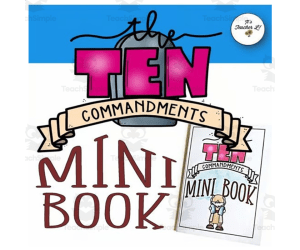
Ten Commandments Bible Story Foldable Mini Book Grade 1 2 3 ELA ELL
ELA, Literature, Reading, Grade 3, 4, 5, Centers, Activities, Worksheets & Printables, Worksheets, Writing Prompts
Create a fun and meaningful day at school with your learners through this Ten Commandments Foldable Mini Book Set! Designed for Grade 1, 2, 3 and 4 students, homeschoolers, and EFL / ESL learners, this enchanting story will surely captivate your budding readers. This Ten Commandments Mini Book set contains the following: 1. Ten Commandments Colored mini-book 2. Ten Commandments Black and white mini-book with story tracing activities 3. Ten Commandments Picture-fill mini-book for sequencing test or exercise 4. Ten Commandments Black and white mini-book for story re-tell and writing exercise 5. Ten Commandments Blank mini-book pages for story re-tell, writing and drawing exercises 6. Ten Commandments Mini Books Sample lesson plan Additionally, this resource is created in 3 paper sizes for you to choose for your classroom needs. The five different mini-books present more possibilities for learning and exploration that are perfect for your reading classes and reading centers. This activity can be used to supplement reading lessons, writing exercises, and a perfect assessment tool that can easily be a perfect addition to your students’ portfolio and open house events.
Author It's Teacher L
Rating
Tags Reading, Mini Book, Sequencing, Writing, Reading Comprehension, ELA, ELL, Bible Stories, Sunday School

40 Days Drawing Challenge Book
Creative Arts, Art, Graphic Arts, Grade 1, 2, 3, 4, 5, Drawing Templates & Outlines, Worksheets & Printables
Ignite your students’ imagination and build artistic confidence with this 40-Day Drawing Challenge Book! This is a complete, no-prep resource to transform the creative environment in your classroom and provide a daily “brain break” to build creativity, critical thinking and fine motor development. Use it as a morning bell-ringer, a special art center activity, or a high-interest packet for early finishers. This sketchbook offers 40 days of structured inspiration that students of all skill levels will love. What’s Inside This Art-venture? 40 Curated Drawing Prompts: A “treasure trove” of prompts ranging from whimsical characters and magical creatures to enchanting landscapes and everyday objects. Smart Layout: Two book pages on each printable sheet for easy printing and stapling into a compact half-page sketchbook. Growth Mindset Oriented: Each prompt is intentionally designed to push students from “I can’t draw that” to “How do I make this?” Skill-Building: Develops spatial awareness, problem-solving, and visual storytelling. Why Teachers Love This Challenge: Suitable for all levels: The open-ended nature of the prompts makes it good for Kindergarten through 5th Grade. Great for Art Sub Plans, holiday break packets or a "Calm Down Corner" activity for mindful drawing. Zero Prep- Print and go! The structure keeps students involved for weeks at a time.” Student Keepsake: At the end of the 40 days, students keep a complete portfolio of their artistic growth. Technical Details: Format: PDF file ready for printing (Standard Letter Size 8.5” x 11”) Layout: 2 prompts per page for extra savings of paper and to make a handy book size. How to Put Your Book Together: Print: Print the pages Double or single sided print. Cut & Staple: Cut the sheets in half and staple them together along the edge to make a 40-page mini-sketchbook. Challenge: One prompt a day or let students work at their own pace!
Author Teacher's Clipart
Rating
Tags Drawing Prompts, Creativity Boost, Graphic Arts, Teaching Resource, Art Appreciation

Crypto & Digital Money Literacy (Age-Appropriate Intro)
Math, Statistics, Money, Order Of Operations, Business, Life Studies, Career, Finance, Coaching, Home Economics, Homeschool Curriculum, Grade 7, 8, 9, 10, 11, 12, Worksheets & Printables, Workbooks, Worksheets, Word Searches, Teacher Tools, Assessments, Lesson Plans, Quizzes and Tests, Quizzes, Tests
This complete curriculum on the topic of Cryptocurrency and Digital Currency Literacy is a NO-PREP curriculum to prepare your students for the 21st Century's economy as it relates to Cryptocurrency and Digital Currency! This 40-page resource will transform your students from passive consumers to critical thinkers. This curriculum will guide students through the complex world of blockchain, Web3, and digital assets using an academically rigid and unbiased basis. Each student must understand the technology, economics, and history so that they can build a solid foundation on which to build their financial future. The curriculum is appropriate for high schools, and advanced middle schools to study Economics, Computer Science, Business, Financial Literacy, and Social Studies. By removing the speculative hype around these topics and focusing on first principles, this curriculum will provide students with the necessary tools and skills to understand, analyze and critique the "next generation" of the internet. WHAT'S IN THIS 40-PAGE RESOURCE: Part One: The Core Academic Framework (4 Chapters) Chapter One: The Evolution of Value; Barter and Rai Stones to Fiat Currency Chapter Two: The Architecture of Trust; Deconstructing Blockchain, Cryptography & Distributed Ledgers Chapter Three: Programmable Money; Smart Contracts and DeFi Chapter Four: Economics, Ethics & The Future; Volatility, CBDCs and Global Impact Part Two: Student Workbook (10 Worksheets) Over 90 Questions to Test Critical Thinking and Comprehension Historical Antecedents, Decentralized ledgers, Cryptography, Bitcoin & Scarcity, Smart contracts, Digital wallets & Custody, Tokenomics, Scams/Risk Mitigation, Regulation and the Future of Web3 Part Three: Teacher Resources & Visuals (3) High Quality Visuals; Presentations/Explaining Immutable Blockchains, Network Topologies, and the Public/Private Key Analogy Detailed Teacher Implementation Guide; 4 Week Suggested Lesson Plan, Recommendations for Pedagogy and Cross Curricular Instruction (Math, Civics, CS) Comprehensive Answer Key; 10 Page Answer Key with Full Detail and Answered Questions for each Workbook Question and each Chapter Reflection This Curriculum is a Great Resource to Help Students Develop a Strong Foundation of Future Proof Understanding of One of The Greatest Technological Shifts of Their Lifetime. Help Your Students Become Truly Digitally Literate! Keywords: The financial literacy curriculum around the world focuses on Cryptocurrency, Blockchain, Bitcoin, The Digital Currency Age, Web3, High School Economics, Computer Science, Low/no-prep resources to support education in Cryptocurrencies and Digital assets without the risk of speculation, DeFi/NFT technologies - Smart Contracts, 21st Century Skills for educators. Why Parents/Schools Love It: Fosters Critical Thinking Not Speculation: This curriculum teaches students the "How" (the technical side of they did this) and the "Why" (the economic principle behind it), not just teaching students risk to the financial markets through investment advice. Completely No-Prep & Turn-Key: This curriculum will save teachers time because all they have to do is print the lessons, engaging worksheets, high-quality visuals, etc., along with a complete answer key, and be ready to teach on a very complex topic. Builds Essential 21st Century Skills to Prepare Students for their Future: Students will learn more than just financial literacy because they will understand the digital economy and decentralized economy they will be inheriting so they are prepared to become good citizens and productive members of society in the future. True Neutral and Academically Rigorous Perspective: The materials are presented neutrally and educationally, and use real-world case studies and historical context in order to provide a neutral and sophisticated understanding of this polarizing topic. Integration of Many Subjects: This is not merely a technology curriculum; it incorporates lessons from History (Evolution of Money), Civics (CBDC vs. Private Currency), Economics (Scarcity, Inflation), and Computer Science (Cryptography, Logic), etc. Target Student Audience: According to the PDF document, this content is meant for grades 7-12; however, after considering the complexity of the material, a more detailed breakdown can be made as follows: - Primary Target: for students in grades 9-12 (high school). The material presented such as the Byzantine Generals Problem, Turing Completeness, Tokenomics, and Regulatory Arbitrage are all concepts that align with and can be understood by the cognitive level of high school students; thus this material fits perfectly within offerings of honors/ap economics, principles of computer science or as a course under the financial technology branch. - Secondary Target: for advanced/gifted students in 7-8 grades (middle school). The use of this material in the standard/mainstream classroom curriculum may not be appropriate for 7th grade students; however, it would be beneficial in some cases (i.e. gifted program, after school technology club) where there is evidence of interest and ability toward this subject. Copyright to this Book is with Syed Hammad Rizvi and is provided solely for personal use or in one class per teacher. No part of this Book can be changed, copied, shared, or sold. You may not post this Book on the internet for anyone else to find or download. If you wish to give a copy to fellow teachers, please purchase additional licenses from Teachsimple. Your cooperation and respect for these terms of use are greatly appreciated. Thank you for your contribution to this project by Syed Hammad Rizvi.
Author Creative Book Store
Rating
Tags FinancialLiteracy, Cryptocurrency, Blockchain, Bitcoin, Web3, DigitalCurrency, DigitalAssets, DeFi, SmartContracts, DecentralizedFinance
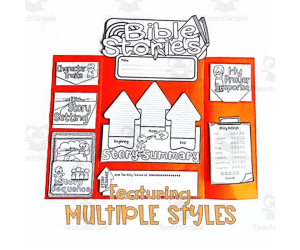
Peter's Travels Bible Story Lapbook Project Grade 3 4 5 ELA ELL
ELA, Literature, Reading, Grade 3, 4, 5, Centers, Activities, Worksheets & Printables, Worksheets, Writing Prompts, Projects, Coloring Pages
Explore the inspiring story of Peter on travels with this meaningful Peter’s Travels Lapbook Project! Made for Grade 4, 5 and 6 students, homeschoolers, and EFL / ESL learners, this special project is an amazing tool for your reading classes and Bible school lessons. What’s Inside: 3 Peter’s Travels Differentiated Reading Passages (Easy, Average, Hard) 3 Peter’s Travels Lapbook Covers to choose from 2 Peter’s Travels Name Pages (Individual & Group Options) 1 Peter’s Travels Inner Overlap Page 2 Peter’s Travels Story Summary Page Options 1 Peter’s Travels Story Message Page (Lesson & Moral Reflection) 1 Peter’s Travels Story Sequence Pocket 6 Peter’s Travels Story Sequence Photocards 3 Peter’s Travels Story Sequencing Activity Options (Easy / Average / Hard) – 6 sequence cards per level 6 Peter’s Travels Story Retell Cards 1 Peter’s Travels Character Traits Fold 1 Peter’s Travels Story Setting Fold 1 Peter’s Travels Story Rating Page 1 Peter’s Travels Prayer Response Fold (Faith-based reflection) This project is designed to foster reading comprehension and in-depth literary analysis through deliberate and hands-on learning activities that encourages learners stay actively engaged in the lesson. It builds important skills such as sequencing, retelling, and critical thinking while reinforcing Christian values like kindness, mercy, and compassion. The differentiated activities make it perfect for mixed-ability classrooms as well as EFL/ESL learners, making sure that all students can participate meaningfully. It is also a perfect addition to Bible study units, Christian school classrooms, homeschool learning, and integrated ELA lessons.
Author It's Teacher L
Rating
Tags Reading, Mini Book, Sequencing, Writing, Reading Comprehension, ELA, ELL, Bible Stories, Sunday School

Paul And Silas Bible Story Lapbook Project Grade 3 4 5 ELA ELL
ELA, Literature, Reading, Grade 3, 4, 5, Centers, Activities, Worksheets & Printables, Worksheets, Writing Prompts, Projects, Coloring Pages
Give your young learners a purposeful learning experience with the classic Bible story the adventures of Paul And Silas in this Paul And Silas Lapbook Project! Created for Grade 4, 5 and 6 students, homeschoolers, and EFL / ESL learners, this special project will definitely be part of your reading classes and or Bible school lessons for many years to come! What’s Included: 3 Paul And Silas Differentiated Reading Passages (Easy, Average, Hard) 3 Paul And Silas Lapbook Covers to choose from 2 Paul And Silas Name Pages (Individual & Group Options) 1 Paul And Silas Inner Overlap Page 2 Paul And Silas Story Summary Page Options 1 Paul And Silas Story Message Page (Lesson & Moral Reflection) 1 Paul And Silas Story Sequence Pocket 6 Paul And Silas Story Sequence Photocards 3 Paul And Silas Story Sequencing Activity Options (Easy / Average / Hard) – 6 sequence cards per level 6 Paul And Silas Story Retell Cards 1 Paul And Silas Character Traits Fold 1 Paul And Silas Story Setting Fold 1 Paul And Silas Story Rating Page 1 Paul And Silas Prayer Response Fold (Faith-based reflection) This set supports development of reading comprehension and literary analysis through fun hands-on learning activities that help learners stay actively engaged in the lesson. It builds important skills such as sequencing, retelling, and critical thinking while reinforcing Christian values like kindness, mercy, and compassion. The differentiated activities make it perfect for mixed-ability classrooms as well as EFL/ESL learners, making sure that all students can participate meaningfully. It is also a perfect addition to Bible study units, Christian school classrooms, homeschool learning, and integrated ELA lessons.
Author It's Teacher L
Rating
Tags Reading, Mini Book, Sequencing, Writing, Reading Comprehension, ELA, ELL, Bible Stories, Sunday School

3-in-1 Science Made Simple: Ready-to-Use Lesson, Worksheets & Posters
Science, Basic Science, Physics, Grade 1, 2, 3, 4, Worksheets & Printables, Lesson Plans, Teacher Tools, Presentations, Templates, Quizzes and Tests, Classroom Decor
🌿 Science Mega Bundle: Bacteria vs Viruses, Magnet & Sounds Make your science lessons easier and stress-free with this 3-in-1 Science Concepts Bundle! Designed for busy teachers and homeschool parents, this all-in-one resource helps you confidently teach key science concepts without spending hours planning. Each topic includes: ✔ Editable PowerPoint Lesson with Assessment ✔ Editable Lesson Plan ✔ Worksheets (no prep) with Answer Key ✔ Classroom Posters Best For: Grade 1–4, Homeschooling, Tutoring How to Use: Use as full lessons or small activities for classroom, online, or independent learning. Use slides for teaching, worksheets for practice, and posters for classroom display. Differentiate tasks based on learner ability. Perfect For: Grade 1–4, Homeschooling, Tutoring Aligned with early primary science learning on living things and environments. Format: PDF, PNG, Editable PowerPoint, and lesson plans. Number of Pages: 50+ resources total. Tags #ScienceBundle #PrimaryScience #Magnets #Sounds #Bacteria #Viruses 📥 Instant Download after purchase.
Author Pinay Digitals
Rating
Tags #PrimaryScience, #ScienceMegaBundle, #TeachingResources, #DigitalTeachingTools, #NoPrepResources, #ScienceWorksheets, #ElementaryScience, #TeacherCreatedResources, #HomeschoolScience

Zacchaeus Bible Story Lapbook Project Grade 3 4 5 ELA ELL
ELA, Literature, Reading, Grade 3, 4, 5, Centers, Activities, Worksheets & Printables, Worksheets, Writing Prompts, Projects, Coloring Pages
Inspire meaningful learning practice through this Zacchaeus Lapbook Project! Designed for Grade 4, 5 and 6 students, homeschoolers, and EFL / ESL learners, this special project is an amazing tool for your reading classes and Bible school lessons. What’s Inside: 3 Zacchaeus Differentiated Reading Passages (Easy, Average, Hard) 3 Zacchaeus Lapbook Covers to choose from 2 Zacchaeus Name Pages (Individual & Group Options) 1 Zacchaeus Inner Overlap Page 2 Zacchaeus Story Summary Page Options 1 Zacchaeus Story Message Page (Lesson & Moral Reflection) 1 Zacchaeus Story Sequence Pocket 6 Zacchaeus Story Sequence Photocards 3 Zacchaeus Story Sequencing Activity Options (Easy / Average / Hard) – 6 sequence cards per level 6 Zacchaeus Story Retell Cards 1 Zacchaeus Character Traits Fold 1 Zacchaeus Story Setting Fold 1 Zacchaeus Story Rating Page 1 Zacchaeus Prayer Response Fold (Faith-based reflection) This set is perfect for reading comprehension and in-depth literary analysis through deliberate and hands-on learning activities that encourages learners stay actively engaged in the lesson. It builds important skills such as sequencing, retelling, and critical thinking while reinforcing Christian values like kindness, mercy, and compassion. The differentiated activities make it perfect for mixed-ability classrooms as well as EFL/ESL learners, making sure that all students can participate meaningfully. It is also a perfect addition to Bible study units, Christian school classrooms, homeschool learning, and integrated ELA lessons.
Author It's Teacher L
Rating
Tags Reading, Mini Book, Sequencing, Writing, Reading Comprehension, ELA, ELL, Bible Stories, Sunday School

ESL Reading Comprehension + Writing Activity - Space Tourism
ELA, Language Development, ESL, Vocabulary, Writing, Formal Writing, Creative Writing, Reading Comprehension, Reading, Grade 7, 8, 9, 10, 11, 12, Worksheets & Printables, Worksheets, Writing Prompts
ESL Reading Comprehension + Writing Activity Worksheets - Space Tourism & Hotels This ESL - EFL Teaching Resource on "Space Tourism & Hotels" (3 PDF Worksheets Slides; Reading Comprehension + Writing Activity) can be ideal to improve Language skills in English. Ideal students for this ESL EFL TESOL Reading + Writing Activity are Foreign Students at middle and High School (7th - 12th Grade; teens) . Newcomers or any ESL Learner is also more than suitable for this ESL - EFL - TESOL - TEFL (English as a Second or Foreign Language) Activity on "Space Tourism & Hotels" (origins, background and precursors + suborbital flights and orbital flights + space hotels + future projects + challanges and concerns). This Teaching Educational Resource Product can also be ideal for ESL EFL TESOL Centers worldwide or any English second language tutor. Intermediate Advanced English as a Second or Foreign Language (ESL - EFL - TESOL - TEFL) learners are suitable for this ESL EFL TESOL Teaching Resource on "Space Tourism & Hotels" (Worksheet; 3 PDF Printable slides) In this English Second or Foreign Language (ESL - EFL - TESOL - TEFL) Reading Comprehension + Essay Writing Activity Worksheet on "Space Tourism & Hotels" (origins, background and precursors + suborbital flights and orbital flights + space hotels + future projects + challanges and concerns), the following ESL - EFL - TESOL - TEFL (English Second or Foreign Language) activities are included: 1 text on "Space Tourism & Hotels" (origins, background and precursors + suborbital flights and orbital flights + space hotels + future projects + challanges and concerns) 26 Comprehension Questions related to the previous text on "Space Tourism & Hotels" (with related space where students can answer to this text's comprehension questions) 2 essay prompts for a writing activity on "Space Tourism & Hotels" (writing an essay on your own personal opinion on the space tourism, its future and whether you would ever like to become a space tourist or not and why + writing an essay on whether you believe space tourism can spark interest in young students to engage in STEM disciplines or whether i can be environmentally problematic + pretending to be a space tourist and to write 3 pages of diary on your imagianry experience) This ESL - EFL - TESOL - TEFL (English Second or Foreign Language) Teaching Resource Reading + Writing Activity (essay prompts) on "Space Tourism & Hotels" (origins, background and precursors + suborbital flights and orbital flights + space hotels + future projects + challanges and concerns) is great for Intermediate Advanced English as a second or foreign language learners (ESL- EFL - TESOL - TEFL). This English Second Language Worksheet on "Space Tourism & Hotels" (origins, background and precursors + suborbital flights and orbital flights + space hotels + future projects + challanges and concerns) aims to train and Reading Comprehension + Writing Skills. "Learning with Alan" is a teaching resources store that aims to provide high quality teaching resources and educational materials for ESL EFL TESOL (English Second or Foreign Language) teachers, tutors and educators. It aims to support teachers, educators, and tutors in both online and offline environments, helping them achieve their teaching goals while creating a fun, stimulating atmosphere for learning English. Always remember: learning is fun, and so is English! If you want to find more ESL - EFL - TESOL - TEFL (English Second or Foreign Language) Teaching Resources and Educational Material click here Learning with Alan!
Author Learning with Alan
Rating
Tags ESL, English Second Language, English, Space, STEM, Tourism, Hotels, Activity, Workshseets, Printable
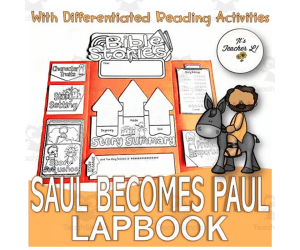
Saul Becomes Paul Bible Story Lapbook Project Grade 3 4 5 ELA ELL
ELA, Literature, Reading, Grade 3, 4, 5, Centers, Activities, Worksheets & Printables, Worksheets, Writing Prompts, Projects, Coloring Pages
Encourage devotion through a more meaningful experience in this Saul Becomes Paul Lapbook Project! Created for Grade 4, 5 and 6 students, homeschoolers, and EFL / ESL learners, this special project is a a perfect addition for your reading classes and Bible school lessons. What’s Inside: 3 Saul Becomes Paul Differentiated Reading Passages (Easy, Average, Hard) 3 Saul Becomes Paul Lapbook Covers to choose from 2 Saul Becomes Paul Name Pages (Individual & Group Options) 1 Saul Becomes Paul Inner Overlap Page 2 Saul Becomes Paul Story Summary Page Options 1 Saul Becomes Paul Story Message Page (Lesson & Moral Reflection) 1 Saul Becomes Paul Story Sequence Pocket 6 Saul Becomes Paul Story Sequence Photocards 3 Saul Becomes Paul Story Sequencing Activity Options (Easy / Average / Hard) – 6 sequence cards per level 6 Saul Becomes Paul Story Retell Cards 1 Saul Becomes Paul Character Traits Fold 1 Saul Becomes Paul Story Setting Fold 1 Saul Becomes Paul Story Rating Page 1 Saul Becomes Paul Prayer Response Fold (Faith-based reflection) This resource is perfect for reading comprehension and in-depth literary analysis through fun hands-on learning activities that encourages learners stay actively engaged in the lesson. It builds important skills such as sequencing, retelling, and critical thinking while reinforcing Christian values like kindness, mercy, and compassion. The differentiated activities make it perfect for mixed-ability classrooms as well as EFL/ESL learners, making sure that all students can participate meaningfully. It is also a perfect addition to Bible study units, Christian school classrooms, homeschool learning, and integrated ELA lessons.
Author It's Teacher L
Rating
Tags Reading, Mini Book, Sequencing, Writing, Reading Comprehension, ELA, ELL, Bible Stories, Sunday School

Social Studies SAMPLE Reading Passage: The Aztec Empire (Word)
ELA, Reading, Reading Comprehension, Strategies, Resources for Teachers, Social Studies, History: Ancient, History, Economics, Geography, Grade 6, 7, 8, 9, Writing Prompts, Worksheets & Printables, Centers, Activities, Teacher Tools, Assessments, Quizzes and Tests, Quizzes, Tests
This is a ONE PASSAGE SAMPLE. The following is the description of the FULL resource and the downloading links: Social Studies Reading Comprehension Passages: Early Empires and Trade Networks (Word) This very engaging collection of Social Studies reading passages about Early Empires and Trade Networks is designed to bridge the gap between social studies and literacy through strengthening reading comprehension and sparking knowledge curiosity in middle school students. Each passage blends English Language Arts skills with accurate social studies content. Ideal for interdisciplinary learning in ELA and Social Studies. Suitable for Grade 9 review, too! What Is Included? There are - (3) - informational passages: Digging Into Time: How Archaeology Explains Prehistory When Spices Ruled the World: Trade, Power, and Taste The Rise and Fall of the Aztec Empire Student Tasks for Each Passage: 5 multiple-choice questions targeting main idea, key details, inference, vocabulary in context, and use of evidence 5 vocabulary matching items with clear, student-friendly definitions 5 text-based questions that require citing specific lines or facts 1 summary prompt that asks students to condense central ideas accurately Full answer key for every section Available Formats for this Resource PDF Fillable PDF Google Docs Reading Passage Links: Ancient Civilizations PDF Fillable PDF Word Docs Google Docs Early Empires and Trade Networks PDF Fillable PDF Word Docs Google Docs The Founding of the United States PDF Fillable PDF Word Docs Google Docs Language, Culture, and Meaning PDF Fillable PDF Word Docs Google Docs Psychology and Society PDF Fillable PDF Word Docs Google Docs Global Festivals and Traditions PDF Fillable PDF Word Docs Google Docs Extreme Environments and People PDF Fillable PDF Word Docs Google Docs Food, Culture, and Preservation PDF Fillable PDF Word Docs Google Docs Global Food Customs PDF Fillable PDF Word Docs Google Docs Media, Communication, and Popular Culture PDF Fillable PDF Word Docs Google Docs Human Impact on the Environment PDF Fillable PDF Word Docs Google Docs Civic Action and Social Change PDF Fillable PDF Word Docs Google Docs Fashion, Society, and Power PDF Fillable PDF Word Docs Google Docs People, Places, and Unusual Histories PDF Fillable PDF Word Docs Google Docs Product Details Length: 15 pages total Grades: 6–8, also suitable for Grade 9 review Use cases: close reading, stations, homework, intervention, test prep, and sub plans Why Teachers Choose This Set Authentic social studies content paired with rigorous literacy practice Consistent task structure across all passages for easier planning and smoother student routines Clear, age-appropriate writing that builds confidence without oversimplifying Use this set to reinforce ELA skills in social studies, to add literacy to your lessons, and to support independent work. The passages strengthen main idea, evidence use, vocabulary in context, inference, cause and effect, and summary writing. With ready-to-use assessments and complete answer keys, you can provide focused practice that is simple to run and fast to review.
Author EduNation Creative Store
Rating 3
Tags Middle School, Reading Comprehension, Reading Strategies, ELA, Centers, Reading Passage, Assessments, Vocabulary, Social Studies, Ancient Civilization

Cats in Ancient Egypt: SAMPLE Social Studies Reading Passage (Word)
ELA, Reading, Reading Comprehension, Strategies, Resources for Teachers, Social Studies, History: Ancient, History, Grade 6, 7, 8, 9, Writing Prompts, Worksheets & Printables, Centers, Activities, Teacher Tools, Assessments, Quizzes and Tests, Quizzes, Tests
This is a ONE PASSAGE SAMPLE. The following is the description of the FULL resource and the downloading links: Ancient Civilizations: Social Studies Reading Passages (Word) This very engaging collection of Social Studies reading passages about Ancient Civilizations is designed to bridge the gap between social studies and literacy through strengthening reading comprehension and sparking knowledge curiosity in middle school students. Each passage blends English Language Arts skills with accurate social studies content. Ideal for interdisciplinary learning in ELA and Social Studies. Suitable for Grade 9 review, too! What Is Included? There are - (3) - informational passages: Sacred Whiskers: Cats in Ancient Egypt Mesopotamia: The First Urban World The Inca: Empire in the Clouds Student Tasks for Each Passage: 5 multiple-choice questions targeting main idea, key details, inference, vocabulary in context, and use of evidence 5 vocabulary matching items with clear, student-friendly definitions 5 text-based questions that require citing specific lines or facts 1 summary prompt that asks students to condense central ideas accurately Full answer key for every section Available Formats for this Resource PDF Fillable PDF Google Docs Reading Passage Links: Ancient Civilizations PDF Fillable PDF Word Docs Google Docs Early Empires and Trade Networks PDF Fillable PDF Word Docs Google Docs The Founding of the United States PDF Fillable PDF Word Docs Google Docs Language, Culture, and Meaning PDF Fillable PDF Word Docs Google Docs Psychology and Society PDF Fillable PDF Word Docs Google Docs Global Festivals and Traditions PDF Fillable PDF Word Docs Google Docs Extreme Environments and People PDF Fillable PDF Word Docs Google Docs Food, Culture, and Preservation PDF Fillable PDF Word Docs Google Docs Global Food Customs PDF Fillable PDF Word Docs Google Docs Media, Communication, and Popular Culture PDF Fillable PDF Word Docs Google Docs Human Impact on the Environment PDF Fillable PDF Word Docs Google Docs Civic Action and Social Change PDF Fillable PDF Word Docs Google Docs Fashion, Society, and Power PDF Fillable PDF Word Docs Google Docs People, Places, and Unusual Histories PDF Fillable PDF Word Docs Google Docs Product Details Length: 15 pages total Grades: 6–8, also suitable for Grade 9 review Use cases: close reading, stations, homework, intervention, test prep, and sub plans Why Teachers Choose This Set Authentic social studies content paired with rigorous literacy practice Consistent task structure across all passages for easier planning and smoother student routines Clear, age-appropriate writing that builds confidence without oversimplifying Use this set to reinforce ELA skills in social studies, to add literacy to your lessons, and to support independent work. The passages strengthen main idea, evidence use, vocabulary in context, inference, cause and effect, and summary writing. With ready-to-use assessments and complete answer keys, you can provide focused practice that is simple to run and fast to review.
Author EduNation Creative Store
Rating 5
Tags Middle School, Reading Comprehension, Reading Strategies, ELA, Centers, Reading Passage, Assessments, Vocabulary, Social Studies, Ancient Civilization

Social Studies SAMPLE Reading Passage: The Aztec Empire (Fillable PDF)
ELA, Reading, Reading Comprehension, Strategies, Resources for Teachers, Social Studies, History: Ancient, History, Economics, Geography, Grade 6, 7, 8, 9, Writing Prompts, Worksheets & Printables, Centers, Activities, Teacher Tools, Assessments, Quizzes and Tests, Quizzes, Tests
This is a ONE PASSAGE SAMPLE. The following is the description of the FULL resource and the downloading links: Social Studies Reading Comprehension Passages: Early Empires and Trade Networks (Fillable PDF) This very engaging collection of Social Studies reading passages about Early Empires and Trade Networks is designed to bridge the gap between social studies and literacy through strengthening reading comprehension and sparking knowledge curiosity in middle school students. Each passage blends English Language Arts skills with accurate social studies content. Ideal for interdisciplinary learning in ELA and Social Studies. Suitable for Grade 9 review, too! These worksheets are designed as fillable PDFs , which means students can type their answers directly into the document on any computer or tablet . Each page includes highlighted text fields that show them exactly where to type! What Is Included? There are - (3) - informational passages: Digging Into Time: How Archaeology Explains Prehistory When Spices Ruled the World: Trade, Power, and Taste The Rise and Fall of the Aztec Empire Student Tasks for Each Passage: 5 multiple-choice questions targeting main idea, key details, inference, vocabulary in context, and use of evidence 5 vocabulary matching items with clear, student-friendly definitions 5 text-based questions that require citing specific lines or facts 1 summary prompt that asks students to condense central ideas accurately Full answer key for every section Available Formats for this Resource PDF Word Docs Google Docs Reading Passage Links: Ancient Civilizations PDF Fillable PDF Word Docs Google Docs Early Empires and Trade Networks PDF Fillable PDF Word Docs Google Docs The Founding of the United States PDF Fillable PDF Word Docs Google Docs Language, Culture, and Meaning PDF Fillable PDF Word Docs Google Docs Psychology and Society PDF Fillable PDF Word Docs Google Docs Global Festivals and Traditions PDF Fillable PDF Word Docs Google Docs Extreme Environments and People PDF Fillable PDF Word Docs Google Docs Food, Culture, and Preservation PDF Fillable PDF Word Docs Google Docs Global Food Customs PDF Fillable PDF Word Docs Google Docs Media, Communication, and Popular Culture PDF Fillable PDF Word Docs Google Docs Human Impact on the Environment PDF Fillable PDF Word Docs Google Docs Civic Action and Social Change PDF Fillable PDF Word Docs Google Docs Fashion, Society, and Power PDF Fillable PDF Word Docs Google Docs People, Places, and Unusual Histories PDF Fillable PDF Word Docs Google Docs How to Use These PDFs Click on the highlighted area to start typing your answer. Move to the next question by clicking in the next highlighted box. When you are finished, close the document and select SAVE so your answers stay recorded. If you want to keep a blank copy for later, choose Save As and give your completed version a new name. Product Details Length: 15 pages total Grades: 6–8, also suitable for Grade 9 review Use cases: close reading, stations, homework, intervention, test prep, and sub plans Why Teachers Choose This Set Authentic social studies content paired with rigorous literacy practice Consistent task structure across all passages for easier planning and smoother student routines Clear, age-appropriate writing that builds confidence without oversimplifying Use this set to reinforce ELA skills in social studies, to add literacy to your lessons, and to support independent work. The passages strengthen main idea, evidence use, vocabulary in context, inference, cause and effect, and summary writing. With ready-to-use assessments and complete answer keys, you can provide focused practice that is simple to run and fast to review.
Author EduNation Creative Store
Rating
Tags Middle School, Reading Comprehension, Reading Strategies, ELA, Centers, Reading Passage, Assessments, Vocabulary, Social Studies, Ancient Civilization

Cats in Ancient Egypt: SAMPLE Social Studies Reading Passage (PDF)
ELA, Reading, Reading Comprehension, Strategies, Resources for Teachers, Social Studies, History: Ancient, History, Grade 6, 7, 8, 9, Writing Prompts, Worksheets & Printables, Centers, Activities, Teacher Tools, Assessments, Quizzes and Tests, Quizzes, Tests
This is a ONE PASSAGE SAMPLE. The following is the description of the FULL resource and the downloading links: Ancient Civilizations: Social Studies Reading Passages (PDF) This very engaging collection of Social Studies reading passages about Ancient Civilizations is designed to bridge the gap between social studies and literacy through strengthening reading comprehension and sparking knowledge curiosity in middle school students. Each passage blends English Language Arts skills with accurate social studies content. Ideal for interdisciplinary learning in ELA and Social Studies. Suitable for Grade 9 review, too! What Is Included? There are - (3) - informational passages: Sacred Whiskers: Cats in Ancient Egypt Mesopotamia: The First Urban World The Inca: Empire in the Clouds Student Tasks for Each Passage: 5 multiple-choice questions targeting main idea, key details, inference, vocabulary in context, and use of evidence 5 vocabulary matching items with clear, student-friendly definitions 5 text-based questions that require citing specific lines or facts 1 summary prompt that asks students to condense central ideas accurately Full answer key for every section Available Formats for this Resource Fillable PDF Word Docs Google Docs Reading Passage Links: Ancient Civilizations PDF Fillable PDF Word Docs Google Docs Early Empires and Trade Networks PDF Fillable PDF Word Docs Google Docs The Founding of the United States PDF Fillable PDF Word Docs Google Docs Language, Culture, and Meaning PDF Fillable PDF Word Docs Google Docs Psychology and Society PDF Fillable PDF Word Docs Google Docs Global Festivals and Traditions PDF Fillable PDF Word Docs Google Docs Extreme Environments and People PDF Fillable PDF Word Docs Google Docs Food, Culture, and Preservation PDF Fillable PDF Word Docs Google Docs Global Food Customs PDF Fillable PDF Word Docs Google Docs Media, Communication, and Popular Culture PDF Fillable PDF Word Docs Google Docs Human Impact on the Environment PDF Fillable PDF Word Docs Google Docs Civic Action and Social Change PDF Fillable PDF Word Docs Google Docs Fashion, Society, and Power PDF Fillable PDF Word Docs Google Docs People, Places, and Unusual Histories PDF Fillable PDF Word Docs Google Docs Product Details Length: 15 pages total Grades: 6–8, also suitable for Grade 9 review Use cases: close reading, stations, homework, intervention, test prep, and sub plans Why Teachers Choose This Set Authentic social studies content paired with rigorous literacy practice Consistent task structure across all passages for easier planning and smoother student routines Clear, age-appropriate writing that builds confidence without oversimplifying Use this set to reinforce ELA skills in social studies, to add literacy to your lessons, and to support independent work. The passages strengthen main idea, evidence use, vocabulary in context, inference, cause and effect, and summary writing. With ready-to-use assessments and complete answer keys, you can provide focused practice that is simple to run and fast to review.
Author EduNation Creative Store
Rating
Tags Middle School, Reading Comprehension, Reading Strategies, ELA, Centers, Reading Passage, Assessments, Vocabulary, Social Studies, Ancient Civilization

Social Studies SAMPLE Reading Passage: The Aztec Empire (PDF)
ELA, Reading, Reading Comprehension, Strategies, Resources for Teachers, Social Studies, History: Ancient, History, Economics, Geography, Grade 6, 7, 8, 9, Writing Prompts, Worksheets & Printables, Centers, Activities, Teacher Tools, Assessments, Quizzes and Tests, Quizzes, Tests
This is a ONE PASSAGE SAMPLE (The Aztec Empire). The following is the description of the FULL resource and the downloading links: Social Studies Reading Passages: Early Empires and Trade Networks (PDF) This very engaging collection of Social Studies reading passages about Early Empires and Trade Networks is designed to bridge the gap between social studies and literacy through strengthening reading comprehension and sparking knowledge curiosity in middle school students. Each passage blends English Language Arts skills with accurate social studies content. Ideal for interdisciplinary learning in ELA and Social Studies. Suitable for Grade 9 review, too! What Is Included? There are - (3) - informational passages: Digging Into Time: How Archaeology Explains Prehistory When Spices Ruled the World: Trade, Power, and Taste The Rise and Fall of the Aztec Empire Student Tasks for Each Passage: 5 multiple-choice questions targeting main idea, key details, inference, vocabulary in context, and use of evidence 5 vocabulary matching items with clear, student-friendly definitions 5 text-based questions that require citing specific lines or facts 1 summary prompt that asks students to condense central ideas accurately Full answer key for every section Available Formats for this Resource Fillable PDF Word Docs Google Docs Reading Passage Links: Ancient Civilizations PDF Fillable PDF Word Docs Google Docs Early Empires and Trade Networks PDF Fillable PDF Word Docs Google Docs The Founding of the United States PDF Fillable PDF Word Docs Google Docs Language, Culture, and Meaning PDF Fillable PDF Word Docs Google Docs Psychology and Society PDF Fillable PDF Word Docs Google Docs Global Festivals and Traditions PDF Fillable PDF Word Docs Google Docs Extreme Environments and People PDF Fillable PDF Word Docs Google Docs Food, Culture, and Preservation PDF Fillable PDF Word Docs Google Docs Global Food Customs PDF Fillable PDF Word Docs Google Docs Media, Communication, and Popular Culture PDF Fillable PDF Word Docs Google Docs Human Impact on the Environment PDF Fillable PDF Word Docs Google Docs Civic Action and Social Change PDF Fillable PDF Word Docs Google Docs Fashion, Society, and Power PDF Fillable PDF Word Docs Google Docs People, Places, and Unusual Histories PDF Fillable PDF Word Docs Google Docs Product Details Length: 15 pages total Grades: 6–8, also suitable for Grade 9 review Use cases: close reading, stations, homework, intervention, test prep, and sub plans Why Teachers Choose This Set Authentic social studies content paired with rigorous literacy practice Consistent task structure across all passages for easier planning and smoother student routines Clear, age-appropriate writing that builds confidence without oversimplifying Use this set to reinforce ELA skills in social studies, to add literacy to your lessons, and to support independent work. The passages strengthen main idea, evidence use, vocabulary in context, inference, cause and effect, and summary writing. With ready-to-use assessments and complete answer keys, you can provide focused practice that is simple to run and fast to review.
Author EduNation Creative Store
Rating
Tags Middle School, Reading Comprehension, Reading Strategies, ELA, Centers, Reading Passage, Assessments, Vocabulary, Social Studies, Ancient Civilization
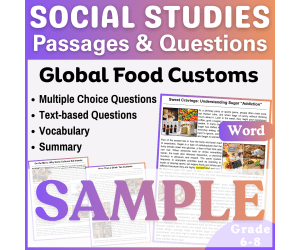
Reading Comprehension Passage: Sugar Addiction (Word SAMPLE)
ELA, Reading, Reading Comprehension, Strategies, Resources for Teachers, Social Studies, Sociology, Grade 6, 7, 8, 9, Writing Prompts, Worksheets & Printables, Centers, Activities, Teacher Tools, Assessments, Quizzes and Tests, Quizzes, Tests
This is a ONE PASSAGE SAMPLE. The following is the description of the FULL resource and the downloading links: Social Studies Reading Comprehension Passages and Questions: Global Food Customs (Word) This resource introduces a collection of Social Studies reading comprehension passages with questions about Global Food Customs. The passages are carefully designed to bridge the gap between social studies and literacy through strengthening reading comprehension and sparking knowledge curiosity in middle school students. Each passage blends English Language Arts skills with accurate social studies content . Ideal for interdisciplinary learning in ELA and Social Studies. Suitable for Grade 9 review, too! What Is Included in this Collection? There are three informational passages (with full answer keys): On the Menu: Why Some Cultures Eat Insects More Than a Drink: Tea Customs Sweet Cravings: Understanding Sugar “Addiction” For Each Passage, students will have multiple tasks to complete as follow: 5 multiple-choice questions targeting main idea, key details, inference, vocabulary in context, and use of evidence 5 vocabulary matching items with clear, student-friendly definitions 5 text-based questions that require citing specific lines or facts 1 summary prompt that asks students to condense central ideas accurately Available Formats for this Resource PDF Fillable PDF Google Docs For more Social Studies Reading Passages, check the following Links: Ancient Civilizations PDF Fillable PDF Word Docs Google Docs Early Empires and Trade Networks PDF Fillable PDF Word Docs Google Docs The Founding of the United States PDF Fillable PDF Word Docs Google Docs Language, Culture, and Meaning PDF Fillable PDF Word Docs Google Docs Psychology and Society PDF Fillable PDF Word Docs Google Docs Global Festivals and Traditions PDF Fillable PDF Word Docs Google Docs Extreme Environments and People PDF Fillable PDF Word Docs Google Docs Food, Culture, and Preservation PDF Fillable PDF Word Docs Google Docs Global Food Customs PDF Fillable PDF Word Docs Google Docs Media, Communication, and Popular Culture PDF Fillable PDF Word Docs Google Docs Human Impact on the Environment PDF Fillable PDF Word Docs Google Docs Civic Action and Social Change PDF Fillable PDF Word Docs Google Docs Fashion, Society, and Power PDF Fillable PDF Word Docs Google Docs People, Places, and Unusual Histories PDF Fillable PDF Word Docs Google Docs Product Details Length: 14 pages total Grades: 6–8, also suitable for Grade 9 review Use cases: close reading, stations, homework, intervention, test prep, and sub plans Why Teachers Choose This Set Authentic social studies content paired with rigorous literacy practice Consistent task structure across all passages for easier planning and smoother student routines Clear, age-appropriate writing that builds confidence without oversimplifying Use this set to reinforce ELA skills in social studies, to add literacy to your lessons, and to support independent work. The passages strengthen main idea, evidence use, vocabulary in context, inference, cause and effect, and summary writing. With ready-to-use assessments and complete answer keys, you can provide focused practice that is simple to run and fast to review.
Author EduNation Creative Store
Rating
Tags Middle School, Reading Comprehension, Reading Strategies, ELA, Centers, Reading Passage, Assessments, Vocabulary, Social Studies, Food And Culture

Reading Comprehension Passage: Sugar Addiction (PDF SAMPLE)
ELA, Reading, Reading Comprehension, Strategies, Resources for Teachers, Social Studies, Sociology, Grade 6, 7, 8, 9, Writing Prompts, Worksheets & Printables, Centers, Activities, Teacher Tools, Assessments, Quizzes and Tests, Quizzes, Tests
This is a ONE PASSAGE SAMPLE. The following is the description of the FULL resource and the downloading links: Social Studies Reading Comprehension Passages and Questions: Global Food Customs (PDF) This resource introduces a collection of Social Studies reading comprehension passages with questions about Global Food Customs. The passages are carefully designed to bridge the gap between social studies and literacy through strengthening reading comprehension and sparking knowledge curiosity in middle school students. Each passage blends English Language Arts skills with accurate social studies content . Ideal for interdisciplinary learning in ELA and Social Studies. Suitable for Grade 9 review, too! What Is Included in this Collection? There are three informational passages (with full answer keys): On the Menu: Why Some Cultures Eat Insects More Than a Drink: Tea Customs Sweet Cravings: Understanding Sugar “Addiction” For Each Passage, students will have multiple tasks to complete as follow: 5 multiple-choice questions targeting main idea, key details, inference, vocabulary in context, and use of evidence 5 vocabulary matching items with clear, student-friendly definitions 5 text-based questions that require citing specific lines or facts 1 summary prompt that asks students to condense central ideas accurately Available Formats for this Resource Fillable PDF Word Docs Google Docs For more Social Studies Reading Passages, check the following Links: Ancient Civilizations PDF Fillable PDF Word Docs Google Docs Early Empires and Trade Networks PDF Fillable PDF Word Docs Google Docs The Founding of the United States PDF Fillable PDF Word Docs Google Docs Language, Culture, and Meaning PDF Fillable PDF Word Docs Google Docs Psychology and Society PDF Fillable PDF Word Docs Google Docs Global Festivals and Traditions PDF Fillable PDF Word Docs Google Docs Extreme Environments and People PDF Fillable PDF Word Docs Google Docs Food, Culture, and Preservation PDF Fillable PDF Word Docs Google Docs Global Food Customs PDF Fillable PDF Word Docs Google Docs Media, Communication, and Popular Culture PDF Fillable PDF Word Docs Google Docs Human Impact on the Environment PDF Fillable PDF Word Docs Google Docs Civic Action and Social Change PDF Fillable PDF Word Docs Google Docs Fashion, Society, and Power PDF Fillable PDF Word Docs Google Docs People, Places, and Unusual Histories PDF Fillable PDF Word Docs Google Docs Product Details Length: 14 pages total Grades: 6–8, also suitable for Grade 9 review Use cases: close reading, stations, homework, intervention, test prep, and sub plans Why Teachers Choose This Set Authentic social studies content paired with rigorous literacy practice Consistent task structure across all passages for easier planning and smoother student routines Clear, age-appropriate writing that builds confidence without oversimplifying Use this set to reinforce ELA skills in social studies, to add literacy to your lessons, and to support independent work. The passages strengthen main idea, evidence use, vocabulary in context, inference, cause and effect, and summary writing. With ready-to-use assessments and complete answer keys, you can provide focused practice that is simple to run and fast to review.
Author EduNation Creative Store
Rating
Tags Middle School, Reading Comprehension, Reading Strategies, ELA, Centers, Reading Passage, Assessments, Vocabulary, Social Studies, Food And Culture

Cats in Ancient Egypt: SAMPLE Social Studies Passage (Fillable PDF)
ELA, Reading, Reading Comprehension, Strategies, Resources for Teachers, Social Studies, History: Ancient, History, Grade 6, 7, 8, 9, Writing Prompts, Worksheets & Printables, Centers, Activities, Teacher Tools, Assessments, Quizzes and Tests, Quizzes, Tests
This is a ONE PASSAGE SAMPLE. The following is the description of the FULL resource and the downloading links: Ancient Civilizations: Social Studies Reading Passages (Fillable PDF) This very engaging collection of Social Studies reading passages about Ancient Civilizations is designed to bridge the gap between social studies and literacy through strengthening reading comprehension and sparking knowledge curiosity in middle school students. Each passage blends English Language Arts skills with accurate social studies content. Ideal for interdisciplinary learning in ELA and Social Studies. Suitable for Grade 9 review, too! These worksheets are designed as fillable PDFs , which means students can type their answers directly into the document on any computer or tablet . Each page includes highlighted text fields that show them exactly where to type! What Is Included? There are - (3) - informational passages: Sacred Whiskers: Cats in Ancient Egypt Mesopotamia: The First Urban World The Inca: Empire in the Clouds Student Tasks for Each Passage: 5 multiple-choice questions targeting main idea, key details, inference, vocabulary in context, and use of evidence 5 vocabulary matching items with clear, student-friendly definitions 5 text-based questions that require citing specific lines or facts 1 summary prompt that asks students to condense central ideas accurately Full answer key for every section Available Formats for this Resource Fillable PDF Word Docs Google Docs Reading Passage Links: Ancient Civilizations PDF Fillable PDF Word Docs Google Docs Early Empires and Trade Networks PDF Fillable PDF Word Docs Google Docs The Founding of the United States PDF Fillable PDF Word Docs Google Docs Language, Culture, and Meaning PDF Fillable PDF Word Docs Google Docs Psychology and Society PDF Fillable PDF Word Docs Google Docs Global Festivals and Traditions PDF Fillable PDF Word Docs Google Docs Extreme Environments and People PDF Fillable PDF Word Docs Google Docs Food, Culture, and Preservation PDF Fillable PDF Word Docs Google Docs Global Food Customs PDF Fillable PDF Word Docs Google Docs Media, Communication, and Popular Culture PDF Fillable PDF Word Docs Google Docs Human Impact on the Environment PDF Fillable PDF Word Docs Google Docs Civic Action and Social Change PDF Fillable PDF Word Docs Google Docs Fashion, Society, and Power PDF Fillable PDF Word Docs Google Docs People, Places, and Unusual Histories PDF Fillable PDF Word Docs Google Docs How to Use These PDFs Click on the highlighted area to start typing your answer. Move to the next question by clicking in the next highlighted box. When you are finished, close the document and select SAVE so your answers stay recorded. If you want to keep a blank copy for later, choose Save As and give your completed version a new name. Product Details Length: 15 pages total Grades: 6–8, also suitable for Grade 9 review Use cases: close reading, stations, homework, intervention, test prep, and sub plans Why Teachers Choose This Set Authentic social studies content paired with rigorous literacy practice Consistent task structure across all passages for easier planning and smoother student routines Clear, age-appropriate writing that builds confidence without oversimplifying Use this set to reinforce ELA skills in social studies, to add literacy to your lessons, and to support independent work. The passages strengthen main idea, evidence use, vocabulary in context, inference, cause and effect, and summary writing. With ready-to-use assessments and complete answer keys, you can provide focused practice that is simple to run and fast to review.
Author EduNation Creative Store
Rating
Tags Middle School, Reading Comprehension, Reading Strategies, ELA, Centers, Reading Passage, Assessments, Vocabulary, Social Studies, Ancient Civilization

Ruth And Naomi Bible Story Lapbook Project Grade 3 4 5 ELA ELL
ELA, Literature, Reading, Grade 3, 4, 5, Centers, Activities, Worksheets & Printables, Worksheets, Writing Prompts, Projects, Coloring Pages
Turn your reading classes and Bible lessons in a more purposeful experience through this Ruth And Naomi Lapbook Project! This special project is a sure favorite for your reading classes and Bible school lessons made for Grade 4, 5 and 6 students, homeschoolers, and EFL / ESL learners What’s Included: 3 Ruth And Naomi Differentiated Reading Passages (Easy, Average, Hard) 3 Ruth And Naomi Lapbook Covers to choose from 2 Ruth And Naomi Name Pages (Individual & Group Options) 1 Ruth And Naomi Inner Overlap Page 2 Ruth And Naomi Story Summary Page Options 1 Ruth And Naomi Story Message Page (Lesson & Moral Reflection) 1 Ruth And Naomi Story Sequence Pocket 6 Ruth And Naomi Story Sequence Photocards 3 Ruth And Naomi Story Sequencing Activity Options (Easy / Average / Hard) – 6 sequence cards per level 6 Ruth And Naomi Story Retell Cards 1 Ruth And Naomi Character Traits Fold 1 Ruth And Naomi Story Setting Fold 1 Ruth And Naomi Story Rating Page 1 Ruth And Naomi Prayer Response Fold (Faith-based reflection) This pack is designed for reading comprehension and in-depth literary analysis through fun hands-on learning activities that encourages learners stay actively engaged in the lesson. It builds important skills such as sequencing, retelling, and critical thinking while reinforcing Christian values like kindness, mercy, and compassion. The differentiated activities make it perfect for mixed-ability classrooms as well as EFL/ESL learners, making sure that all students can participate meaningfully. It is also a perfect addition to Bible study units, Christian school classrooms, homeschool learning, and integrated ELA lessons.
Author It's Teacher L
Rating
Tags Reading, Mini Book, Sequencing, Writing, Reading Comprehension, ELA, ELL, Bible Stories, Sunday School