



5,781 products added recently
Page 158 - Newest Teaching Resources

 Show filters

Absolute Value and Comparing Integers Guided Notes & Practice
Math, Decimals, Algebra, Grade 5, 6, 7, Worksheets, Worksheets & Printables, Teacher Tools, Presentations
Give your students a true understanding of absolute value and comparing integers. These 6th Grade Guided Notes were created specifically to make learning about integers more understandable and easy. The students tend to be confused when dealing with negative numbers, following procedures, but not knowing why and what integers actually mean. With these guided notes, you will introduce them to distances, directions, and other aspects of working with integers via clear explanations, scaffolded examples, and plenty of practice opportunities. The resource includes a step-by-step explanation of how to evaluate the absolute value of an integer, compare integers using symbols, find distances between two integers on a number line, and write down inequalities based on reasoning. Instead of providing dense notes, the resource has an attractive visual design with lots of space for writing, which makes teaching integers more engaging for the students. All you need to do is print out this material to teach your students about integers, and you won’t have to worry about preparation and creation of resources anymore. Includes: • 2 pages of Guided Notes with explanations and worked examples • Guided Practice with 10 scaffolded problems • Independent Practice with 20 problems, ranging from basic skills to applying them to real-life scenarios • Complete answer key for quick grading and self-study • Teacher tips and reminders on common misconceptions with negative numbers and inequalities CCSS Standards Covered: • 6.NS.C.5 - Understand ordering and absolute value of rational numbers. • 6.NS.C.6 - Understand a rational number as a point on the number line. • 6.NS.C.7 - Understand ordering and absolute value of rational numbers. These guided notes cover: • Evaluating absolute value expressions • Comparing integers using symbols • Finding distance on a number line • Inequalities writing and interpretation • Real world application of integers • Reasoning about integers Useful For: • Whole class instruction • Interactive math notebooks • Individual practice • Homework • Intervention • Test and exam preparation • Sub plans This set of guided notes provides a great way to engage with the topic and get prepared for future challenges with integers. They include everything you need for easy teaching and learning experience. These notes may serve as an introduction to integers at the beginning of the school year or a reminder for the end of the year review. Start using them today and save yourself a lot of preparation time!
Author Matemaths
Rating
Tags Matemaths, Guided Notes, Worksheet, Integers, Absolute Value
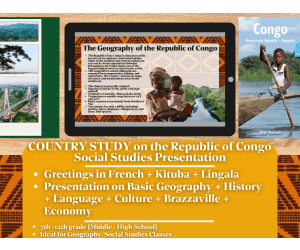
Country Study Presentation - Republic of Congo - Geography - Africa
Social Studies, Economics, Geography, History, History: African, Grade 7, 8, 9, 10, 11, 12, Teacher Tools, Presentations
Country Study Presentation - Republic of Congo - Geography + Social Studies - Central Africa Try this Teaching Resource on the Republic of Congo (Introductory Presentation Lesson - PDF Printable), designed for Geography + African History (Central Africa) + Social Studies lessons. Suitable for Grades 7–12 (Middle school and High School students), this Introductory PDF Presentation offers a ready to use lesson that requires little to no preparation. Geography and Social Studies students will learn about the Republic of Congo ’s geography, history, culture, language and economy — making it perfect for classroom instruction, homeschooling, or online learning. 📘 Teachers can find the following topics in this Social Studies and Geograhy Teaching resource ✅ Greetings in French + Lingala + Kituba ✅ Geography of the Republic of Congo ( Central Africa ) – Key facts, borders, and an interactive Google Maps link to its location. ✅ Quick Facts – Population, capital city, currency and other essential details ( Central Africa ) ✅ Languages of the Republic of Congo : French + Lingala + Kituba - introduction in the languages spoken + basic vocabuary ✅ History Overview – A concise summary of the most important events in the history of the Republic of Congo ( Central Africa ) ✅ Geography & Environment – Details about the country’s land area, regions, and climate zones ( Central Africa ) ✅ Republic of Congo's Economy – paragraph on the Republic of Congo ’s industries, exports, currency and economic strengths ( Central Africa ) ✅ Brazzaville – Explore the capital city of the Republic of Congo , its famous landmarks, and cultural highlights. ✅ Other Major Cities – A map showcasing additional important cities in the Republic of Congo ( Central Africa ) ✅ Republic of Congo's Culture & Traditions – A look at the customs and values that define the Republic of Congo ( Central Africa ) ✅ Farewell in French + Lingala + Kituba 🎯 This Geography and Social Studies Teaching Resource can be perfect for: Geography classes Social Studies lessons World cultures units Country study projects Substitute teacher toolbox Digital learning In-class or online teaching 📂 Resource Details Format: PDF Digital Presentation Grade Levels: 7th–12th Grade (Middle School and High School students) Learning with Alan is an educational resource store created to help teachers, educators, and tutors reach their teaching goals while building a fun, engaging, and stimulating learning environment . Because learning should always be meaningful—and fun! 🎓✨ If you want to browse more of my Teaching Resources, click here Learning with Alan!!
Author Learning with Alan
Rating
Tags Country Study, Social Studies, Presentation, Lesson, Republic Of Congo, Africa, Central Africa, Geography, History, Activity
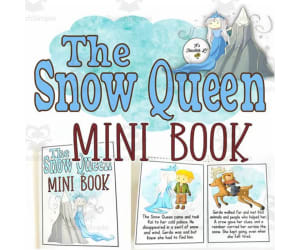
The Snow Queen Fairy Tale Foldable Mini Book Grade 1 2 3 ELA ELL
ELA, Literature, Reading, Grade 3, 4, 5, Centers, Activities, Worksheets & Printables
Explore the story of the Snow Queen but with deep meanings and intentions through this Snow Queen Foldable Mini Book Set! Designed for Grade 1, 2, 3 and 4 students, homeschoolers, and EFL / ESL learners, this resource is a sure winner to your reading class and reading centers. This set contains the following: 1. Snow Queen Colored mini-book 2. Snow Queen Black and white mini-book with story tracing activities 3. Snow Queen Picture-fill mini-book for sequencing test or exercise 4. Snow Queen Black and white mini-book for story re-tell and writing exercise 5. Snow Queen Blank mini-book pages for story re-tell, writing and drawing exercises 6. Snow Queen Mini Book Sample lesson plan The mini books are presented in 3 paper sizes to give more freedom to choose what suites your needs. With the five different mini-books to choose from, the possibilities for learning and exploration is endless! This activity can be used to supplement reading lessons, writing exercises, and a perfect assessment tool that can easily be a perfect addition to your students’ portfolio.
Author It's Teacher L
Rating
Tags Fairy Tale, Reading, The Snow Queen, Mini Book, Sequencing, Writing, Reading Comprehension, ELA, ELL

The Nightingale Fairy Tale Foldable Mini Book Grade 1 2 3 ELA ELL
Common Core, ELA, Literature, Reading, Writing, Grade 3, 4, 5, Centers, Activities, Worksheets & Printables, Worksheets, Projects
Encourage devotion through this purposeful learning tool The Nightingale Foldable Mini Book Set! Crafted for Grade 1, 2, 3 and 4 students, homeschoolers, and EFL / ESL learners, this resource is a sure winner to your reading class and reading centers. This pack contains the following: 1. The Nightingale Colored mini-book 2. The Nightingale Black and white mini-book with story tracing activities 3. The Nightingale Picture-fill mini-book for sequencing test or exercise 4. The Nightingale Black and white mini-book for story re-tell and writing exercise 5. The Nightingale Blank mini-book pages for story re-tell, writing and drawing exercises 6. The Nightingale Mini Books Sample lesson plan Each mini book is presented in 3 paper sizes to give more freedom to choose what suites your needs. With the five different mini-books to choose from, the possibilities for learning and exploration is endless! This activity can be used to supplement reading lessons, writing exercises, and a perfect assessment tool that can easily be a perfect addition to your students’ portfolio.
Author It's Teacher L
Rating
Tags Fairy Tale, Reading Comprehension, Sequencing, ELA, ELL, Reading Centers

The Sandman Fairy Tale Foldable Mini Book Grade 1 2 3 ELA ELL
Common Core, ELA, Literature, Reading, Writing, Grade 3, 4, 5, Activities, Centers, Worksheets & Printables, Worksheets
Make learning fun but more meaningful with this classic fairy tale story The Sandman in this The Sandman Foldable Mini Book Set! Created for Grade 1, 2, 3 and 4 students, homeschoolers, and EFL / ESL learners, this amazing story of The Sandman is a sure hit to your reading class and reading centers. This resource contains the following: 1. The Sandman Colored mini-book 2. The Sandman Black and white mini-book with story tracing activities 3. The Sandman Picture-fill mini-book for sequencing test or exercise 4. The Sandman Black and white mini-book for story re-tell and writing exercise 5. The Sandman Blank mini-book pages for story re-tell, writing and drawing exercises 6. The Sandman Mini Books Sample lesson plan This set is made in 3 paper sizes to give more freedom to choose what suites your needs. With five different mini-books to choose from, the possibilities for learning and exploration is endless! This activity can be used to supplement reading lessons, writing exercises, and a perfect assessment tool that can easily be a perfect addition to your students’ portfolio. Make learning about this fairy tale more memorable and creative with this The Sandman Foldable Mini Book Set!
Author It's Teacher L
Rating
Tags Fairy Tale, Reading Comprehension, Sequencing, Reading, ELL, ELA
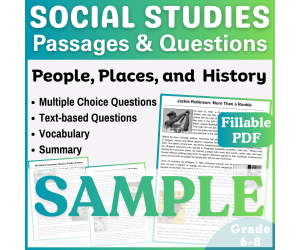
Reading Comprehension Passage: Jackie Robinson (Fillable PDF Sample)
ELA, Reading, Reading Comprehension, Strategies, Resources for Teachers, Social Studies, Geography, History: USA, History, Grade 6, 7, 8, 9, Writing Prompts, Worksheets & Printables, Centers, Activities, Teacher Tools, Assessments, Quizzes and Tests, Quizzes, Tests
This is a ONE PASSAGE SAMPLE. The following is the description of the FULL resource and the downloading links: Social Studies Reading Comprehension Passages and Questions: People, Places, and History (Fillable PDF) This resource introduces a collection of Social Studies reading comprehension passages with questions about People, Places, and History. The passages are carefully designed to bridge the gap between social studies and literacy through strengthening reading comprehension and sparking knowledge curiosity in middle school students. Each passage blends English Language Arts skills with accurate social studies content . Ideal for interdisciplinary learning in ELA and Social Studies. Suitable for Grade 9 review, too! These worksheets are designed as fillable PDFs , which means students can type their answers directly into the document on any computer or tablet . Each page includes highlighted text fields that show them exactly where to type! What Is Included in this Collection? There are three informational passages (with full answer keys): Jackie Robinson: More Than a Rookie Haewoojae: Korea’s Toilet Culture Museum The Giant’s Causeway: Nature’s Puzzle of Stone For Each Passage, students will have multiple tasks to complete as follow: 5 multiple-choice questions targeting main idea, key details, inference, vocabulary in context, and use of evidence 5 vocabulary matching items with clear, student-friendly definitions 5 text-based questions that require citing specific lines or facts 1 summary prompt that asks students to condense central ideas accurately Available Formats for this Resource PDF Word Docs Google Docs For more Social Studies Reading Passages, check the following Links: Ancient Civilizations PDF Fillable PDF Word Docs Google Docs Early Empires and Trade Networks PDF Fillable PDF Word Docs Google Docs The Founding of the United States PDF Fillable PDF Word Docs Google Docs Language, Culture, and Meaning PDF Fillable PDF Word Docs Google Docs Psychology and Society PDF Fillable PDF Word Docs Google Docs Global Festivals and Traditions PDF Fillable PDF Word Docs Google Docs Extreme Environments and People PDF Fillable PDF Word Docs Google Docs Food, Culture, and Preservation PDF Fillable PDF Word Docs Google Docs Global Food Customs PDF Fillable PDF Word Docs Google Docs Media, Communication, and Popular Culture PDF Fillable PDF Word Docs Google Docs Human Impact on the Environment PDF Fillable PDF Word Docs Google Docs Civic Action and Social Change PDF Fillable PDF Word Docs Google Docs Fashion, Society, and Power PDF Fillable PDF Word Docs Google Docs People, Places, and Unusual Histories PDF Fillable PDF Word Docs Google Docs How to Use These PDFs Click on the highlighted area to start typing your answer. Move to the next question by clicking in the next highlighted box. When you are finished, close the document and select SAVE so your answers stay recorded. If you want to keep a blank copy for later, choose Save As and give your completed version a new name. Product Details Length: 14 pages total Grades: 6–8, also suitable for Grade 9 review Use cases: close reading, stations, homework, intervention, test prep, and sub plans Why Teachers Choose This Set Authentic social studies content paired with rigorous literacy practice Consistent task structure across all passages for easier planning and smoother student routines Clear, age-appropriate writing that builds confidence without oversimplifying Use this set to reinforce ELA skills in social studies, to add literacy to your lessons, and to support independent work. The passages strengthen main idea, evidence use, vocabulary in context, inference, cause and effect, and summary writing. With ready-to-use assessments and complete answer keys, you can provide focused practice that is simple to run and fast to review.
Author EduNation Creative Store
Rating
Tags Middle School, Reading Comprehension, Reading Strategies, ELA, Centers, Reading Passage, Assessments, Vocabulary, Social Studies, People Place And History
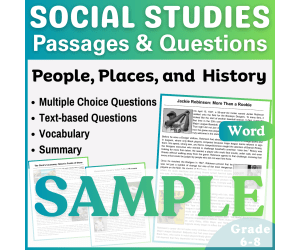
Reading Comprehension Passage: Jackie Robinson (Word Sample)
ELA, Reading, Reading Comprehension, Strategies, Resources for Teachers, Social Studies, Geography, History: USA, History, Grade 6, 7, 8, 9, Writing Prompts, Worksheets & Printables, Centers, Activities, Teacher Tools, Assessments, Quizzes and Tests, Quizzes, Tests
This is a ONE PASSAGE SAMPLE. The following is the description of the FULL resource and the downloading links: Social Studies Reading Comprehension Passages and Questions: People, Places, and History (Word) This resource introduces a collection of Social Studies reading comprehension passages with questions about People, Places, and History. The passages are carefully designed to bridge the gap between social studies and literacy through strengthening reading comprehension and sparking knowledge curiosity in middle school students. Each passage blends English Language Arts skills with accurate social studies content . Ideal for interdisciplinary learning in ELA and Social Studies. Suitable for Grade 9 review, too! What Is Included in this Collection? There are three informational passages (with full answer keys): Jackie Robinson: More Than a Rookie Haewoojae: Korea’s Toilet Culture Museum The Giant’s Causeway: Nature’s Puzzle of Stone For Each Passage, students will have multiple tasks to complete as follow: 5 multiple-choice questions targeting main idea, key details, inference, vocabulary in context, and use of evidence 5 vocabulary matching items with clear, student-friendly definitions 5 text-based questions that require citing specific lines or facts 1 summary prompt that asks students to condense central ideas accurately Available Formats for this Resource PDF Fillable PDF Google Docs For more Social Studies Reading Passages, check the following Links: Ancient Civilizations PDF Fillable PDF Word Docs Google Docs Early Empires and Trade Networks PDF Fillable PDF Word Docs Google Docs The Founding of the United States PDF Fillable PDF Word Docs Google Docs Language, Culture, and Meaning PDF Fillable PDF Word Docs Google Docs Psychology and Society PDF Fillable PDF Word Docs Google Docs Global Festivals and Traditions PDF Fillable PDF Word Docs Google Docs Extreme Environments and People PDF Fillable PDF Word Docs Google Docs Food, Culture, and Preservation PDF Fillable PDF Word Docs Google Docs Global Food Customs PDF Fillable PDF Word Docs Google Docs Media, Communication, and Popular Culture PDF Fillable PDF Word Docs Google Docs Human Impact on the Environment PDF Fillable PDF Word Docs Google Docs Civic Action and Social Change PDF Fillable PDF Word Docs Google Docs Fashion, Society, and Power PDF Fillable PDF Word Docs Google Docs People, Places, and Unusual Histories PDF Fillable PDF Word Docs Google Docs Product Details Length: 14 pages total Grades: 6–8, also suitable for Grade 9 review Use cases: close reading, stations, homework, intervention, test prep, and sub plans Why Teachers Choose This Set Authentic social studies content paired with rigorous literacy practice Consistent task structure across all passages for easier planning and smoother student routines Clear, age-appropriate writing that builds confidence without oversimplifying Use this set to reinforce ELA skills in social studies, to add literacy to your lessons, and to support independent work. The passages strengthen main idea, evidence use, vocabulary in context, inference, cause and effect, and summary writing. With ready-to-use assessments and complete answer keys, you can provide focused practice that is simple to run and fast to review.
Author EduNation Creative Store
Rating
Tags Middle School, Reading Comprehension, Reading Strategies, ELA, Centers, Reading Passage, Assessments, Vocabulary, Social Studies, People Place And History
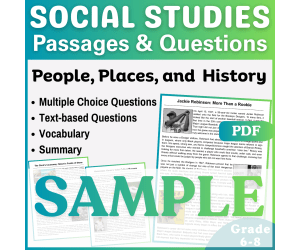
Reading Comprehension Passage: Jackie Robinson (PDF Sample)
ELA, Reading, Reading Comprehension, Strategies, Resources for Teachers, Social Studies, Geography, History: USA, History, Grade 6, 7, 8, 9, Writing Prompts, Worksheets & Printables, Centers, Activities, Teacher Tools, Assessments, Quizzes and Tests, Quizzes, Tests
This is a ONE PASSAGE SAMPLE. The following is the description of the FULL resource and the downloading links: Social Studies Reading Comprehension Passages and Questions: People, Places, and History (PDF) This resource introduces a collection of Social Studies reading comprehension passages with questions about People, Places, and History. The passages are carefully designed to bridge the gap between social studies and literacy through strengthening reading comprehension and sparking knowledge curiosity in middle school students. Each passage blends English Language Arts skills with accurate social studies content . Ideal for interdisciplinary learning in ELA and Social Studies. Suitable for Grade 9 review, too! What Is Included in this Collection? There are three informational passages (with full answer keys): Jackie Robinson: More Than a Rookie Haewoojae: Korea’s Toilet Culture Museum The Giant’s Causeway: Nature’s Puzzle of Stone For Each Passage, students will have multiple tasks to complete as follow: 5 multiple-choice questions targeting main idea, key details, inference, vocabulary in context, and use of evidence 5 vocabulary matching items with clear, student-friendly definitions 5 text-based questions that require citing specific lines or facts 1 summary prompt that asks students to condense central ideas accurately Available Formats for this Resource Fillable PDF Word Docs Google Docs For more Social Studies Reading Passages, check the following Links: Ancient Civilizations PDF Fillable PDF Word Docs Google Docs Early Empires and Trade Networks PDF Fillable PDF Word Docs Google Docs The Founding of the United States PDF Fillable PDF Word Docs Google Docs Language, Culture, and Meaning PDF Fillable PDF Word Docs Google Docs Psychology and Society PDF Fillable PDF Word Docs Google Docs Global Festivals and Traditions PDF Fillable PDF Word Docs Google Docs Extreme Environments and People PDF Fillable PDF Word Docs Google Docs Food, Culture, and Preservation PDF Fillable PDF Word Docs Google Docs Global Food Customs PDF Fillable PDF Word Docs Google Docs Media, Communication, and Popular Culture PDF Fillable PDF Word Docs Google Docs Human Impact on the Environment PDF Fillable PDF Word Docs Google Docs Civic Action and Social Change PDF Fillable PDF Word Docs Google Docs Fashion, Society, and Power PDF Fillable PDF Word Docs Google Docs People, Places, and Unusual Histories PDF Fillable PDF Word Docs Google Docs Product Details Length: 14 pages total Grades: 6–8, also suitable for Grade 9 review Use cases: close reading, stations, homework, intervention, test prep, and sub plans Why Teachers Choose This Set Authentic social studies content paired with rigorous literacy practice Consistent task structure across all passages for easier planning and smoother student routines Clear, age-appropriate writing that builds confidence without oversimplifying Use this set to reinforce ELA skills in social studies, to add literacy to your lessons, and to support independent work. The passages strengthen main idea, evidence use, vocabulary in context, inference, cause and effect, and summary writing. With ready-to-use assessments and complete answer keys, you can provide focused practice that is simple to run and fast to review.
Author EduNation Creative Store
Rating
Tags Middle School, Reading Comprehension, Reading Strategies, ELA, Centers, Reading Passage, Assessments, Vocabulary, Social Studies, People Place And History
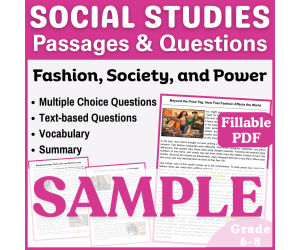
Reading Comprehension Passage: Fast Fashion (Fillable PDF Sample)
ELA, Reading, Reading Comprehension, Strategies, Resources for Teachers, Social Studies, Sociology, Grade 6, 7, 8, 9, Writing Prompts, Worksheets & Printables, Centers, Activities, Teacher Tools, Assessments, Quizzes and Tests, Quizzes, Tests
This is a ONE PASSAGE SAMPLE. The following is the description of the FULL resource and the downloading links: Social Studies Reading Comprehension Passages and Questions: Fashion, Society, and Power (Fillable PDF) This resource introduces a collection of Social Studies reading comprehension passages with questions about Fashion, Society, and Power. The passages are carefully designed to bridge the gap between social studies and literacy through strengthening reading comprehension and sparking knowledge curiosity in middle school students. Each passage blends English Language Arts skills with accurate social studies content . Ideal for interdisciplinary learning in ELA and Social Studies. Suitable for Grade 9 review, too! These worksheets are designed as fillable PDFs , which means students can type their answers directly into the document on any computer or tablet . Each page includes highlighted text fields that show them exactly where to type! What Is Included in this Collection? There are three informational passages (with full answer keys): Beyond the Price Tag: How Fast Fashion Affects the World The Fur Debate: Ethics, Fashion, and Survival Designing Change: Chanel, Dior, and Women’s Lives For Each Passage, students will have multiple tasks to complete as follow: 5 multiple-choice questions targeting main idea, key details, inference, vocabulary in context, and use of evidence 5 vocabulary matching items with clear, student-friendly definitions 5 text-based questions that require citing specific lines or facts 1 summary prompt that asks students to condense central ideas accurately Available Formats for this Resource PDF Word Docs Google Docs For more Social Studies Reading Passages, check the following Links: Ancient Civilizations PDF Fillable PDF Word Docs Google Docs Early Empires and Trade Networks PDF Fillable PDF Word Docs Google Docs The Founding of the United States PDF Fillable PDF Word Docs Google Docs Language, Culture, and Meaning PDF Fillable PDF Word Docs Google Docs Psychology and Society PDF Fillable PDF Word Docs Google Docs Global Festivals and Traditions PDF Fillable PDF Word Docs Google Docs Extreme Environments and People PDF Fillable PDF Word Docs Google Docs Food, Culture, and Preservation PDF Fillable PDF Word Docs Google Docs Global Food Customs PDF Fillable PDF Word Docs Google Docs Media, Communication, and Popular Culture PDF Fillable PDF Word Docs Google Docs Human Impact on the Environment PDF Fillable PDF Word Docs Google Docs Civic Action and Social Change PDF Fillable PDF Word Docs Google Docs Fashion, Society, and Power PDF Fillable PDF Word Docs Google Docs People, Places, and Unusual Histories PDF Fillable PDF Word Docs Google Docs How to Use These PDFs Click on the highlighted area to start typing your answer. Move to the next question by clicking in the next highlighted box. When you are finished, close the document and select SAVE so your answers stay recorded. If you want to keep a blank copy for later, choose Save As and give your completed version a new name. Product Details Length: 15 pages total Grades: 6–8, also suitable for Grade 9 review Use cases: close reading, stations, homework, intervention, test prep, and sub plans Why Teachers Choose This Set Authentic social studies content paired with rigorous literacy practice Consistent task structure across all passages for easier planning and smoother student routines Clear, age-appropriate writing that builds confidence without oversimplifying Use this set to reinforce ELA skills in social studies, to add literacy to your lessons, and to support independent work. The passages strengthen main idea, evidence use, vocabulary in context, inference, cause and effect, and summary writing. With ready-to-use assessments and complete answer keys, you can provide focused practice that is simple to run and fast to review.
Author EduNation Creative Store
Rating
Tags Middle School, Reading Comprehension, Reading Strategies, ELA, Centers, Reading Passage, Assessments, Vocabulary, Social Studies, Fashion

Reading Comprehension Passage: Fast Fashion (Word Sample)
ELA, Reading, Reading Comprehension, Strategies, Resources for Teachers, Social Studies, Sociology, Grade 6, 7, 8, 9, Writing Prompts, Worksheets & Printables, Centers, Activities, Teacher Tools, Assessments, Quizzes and Tests, Quizzes, Tests
This is a ONE PASSAGE SAMPLE. The following is the description of the FULL resource and the downloading links: Social Studies Reading Comprehension Passages and Questions: Fashion, Society, and Power (Word) This resource introduces a collection of Social Studies reading comprehension passages with questions about Fashion, Society, and Power. The passages are carefully designed to bridge the gap between social studies and literacy through strengthening reading comprehension and sparking knowledge curiosity in middle school students. Each passage blends English Language Arts skills with accurate social studies content . Ideal for interdisciplinary learning in ELA and Social Studies. Suitable for Grade 9 review, too! What Is Included in this Collection? There are three informational passages (with full answer keys): Beyond the Price Tag: How Fast Fashion Affects the World The Fur Debate: Ethics, Fashion, and Survival Designing Change: Chanel, Dior, and Women’s Lives For Each Passage, students will have multiple tasks to complete as follow: 5 multiple-choice questions targeting main idea, key details, inference, vocabulary in context, and use of evidence 5 vocabulary matching items with clear, student-friendly definitions 5 text-based questions that require citing specific lines or facts 1 summary prompt that asks students to condense central ideas accurately Available Formats for this Resource PDF Fillable PDF Google Docs For more Social Studies Reading Passages, check the following Links: Ancient Civilizations PDF Fillable PDF Word Docs Google Docs Early Empires and Trade Networks PDF Fillable PDF Word Docs Google Docs The Founding of the United States PDF Fillable PDF Word Docs Google Docs Language, Culture, and Meaning PDF Fillable PDF Word Docs Google Docs Psychology and Society PDF Fillable PDF Word Docs Google Docs Global Festivals and Traditions PDF Fillable PDF Word Docs Google Docs Extreme Environments and People PDF Fillable PDF Word Docs Google Docs Food, Culture, and Preservation PDF Fillable PDF Word Docs Google Docs Global Food Customs PDF Fillable PDF Word Docs Google Docs Media, Communication, and Popular Culture PDF Fillable PDF Word Docs Google Docs Human Impact on the Environment PDF Fillable PDF Word Docs Google Docs Civic Action and Social Change PDF Fillable PDF Word Docs Google Docs Fashion, Society, and Power PDF Fillable PDF Word Docs Google Docs People, Places, and Unusual Histories PDF Fillable PDF Word Docs Google Docs Product Details Length: 15 pages total Grades: 6–8, also suitable for Grade 9 review Use cases: close reading, stations, homework, intervention, test prep, and sub plans Why Teachers Choose This Set Authentic social studies content paired with rigorous literacy practice Consistent task structure across all passages for easier planning and smoother student routines Clear, age-appropriate writing that builds confidence without oversimplifying Use this set to reinforce ELA skills in social studies, to add literacy to your lessons, and to support independent work. The passages strengthen main idea, evidence use, vocabulary in context, inference, cause and effect, and summary writing. With ready-to-use assessments and complete answer keys, you can provide focused practice that is simple to run and fast to review.
Author EduNation Creative Store
Rating
Tags Middle School, Reading Comprehension, Reading Strategies, ELA, Centers, Reading Passage, Assessments, Vocabulary, Social Studies, Fashion

Reading Comprehension Passage: Fast Fashion (PDF Sample)
ELA, Reading, Reading Comprehension, Strategies, Resources for Teachers, Social Studies, Sociology, Grade 6, 7, 8, 9, Writing Prompts, Worksheets & Printables, Centers, Activities, Teacher Tools, Assessments, Quizzes and Tests, Quizzes, Tests
This is a ONE PASSAGE SAMPLE. The following is the description of the FULL resource and the downloading links: Social Studies Reading Comprehension Passages and Questions: Fashion, Society, and Power (PDF) This resource introduces a collection of Social Studies reading comprehension passages with questions about Fashion, Society, and Power. The passages are carefully designed to bridge the gap between social studies and literacy through strengthening reading comprehension and sparking knowledge curiosity in middle school students. Each passage blends English Language Arts skills with accurate social studies content . Ideal for interdisciplinary learning in ELA and Social Studies. Suitable for Grade 9 review, too! What Is Included in this Collection? There are three informational passages (with full answer keys): Beyond the Price Tag: How Fast Fashion Affects the World The Fur Debate: Ethics, Fashion, and Survival Designing Change: Chanel, Dior, and Women’s Lives For Each Passage, students will have multiple tasks to complete as follow: 5 multiple-choice questions targeting main idea, key details, inference, vocabulary in context, and use of evidence 5 vocabulary matching items with clear, student-friendly definitions 5 text-based questions that require citing specific lines or facts 1 summary prompt that asks students to condense central ideas accurately Available Formats for this Resource Fillable PDF Word Docs Google Docs For more Social Studies Reading Passages, check the following Links: Ancient Civilizations PDF Fillable PDF Word Docs Google Docs Early Empires and Trade Networks PDF Fillable PDF Word Docs Google Docs The Founding of the United States PDF Fillable PDF Word Docs Google Docs Language, Culture, and Meaning PDF Fillable PDF Word Docs Google Docs Psychology and Society PDF Fillable PDF Word Docs Google Docs Global Festivals and Traditions PDF Fillable PDF Word Docs Google Docs Extreme Environments and People PDF Fillable PDF Word Docs Google Docs Food, Culture, and Preservation PDF Fillable PDF Word Docs Google Docs Global Food Customs PDF Fillable PDF Word Docs Google Docs Media, Communication, and Popular Culture PDF Fillable PDF Word Docs Google Docs Human Impact on the Environment PDF Fillable PDF Word Docs Google Docs Civic Action and Social Change PDF Fillable PDF Word Docs Google Docs Fashion, Society, and Power PDF Fillable PDF Word Docs Google Docs People, Places, and Unusual Histories PDF Fillable PDF Word Docs Google Docs Product Details Length: 15 pages total Grades: 6–8, also suitable for Grade 9 review Use cases: close reading, stations, homework, intervention, test prep, and sub plans Why Teachers Choose This Set Authentic social studies content paired with rigorous literacy practice Consistent task structure across all passages for easier planning and smoother student routines Clear, age-appropriate writing that builds confidence without oversimplifying Use this set to reinforce ELA skills in social studies, to add literacy to your lessons, and to support independent work. The passages strengthen main idea, evidence use, vocabulary in context, inference, cause and effect, and summary writing. With ready-to-use assessments and complete answer keys, you can provide focused practice that is simple to run and fast to review.
Author EduNation Creative Store
Rating
Tags Middle School, Reading Comprehension, Reading Strategies, ELA, Centers, Reading Passage, Assessments, Vocabulary, Social Studies, Fashion
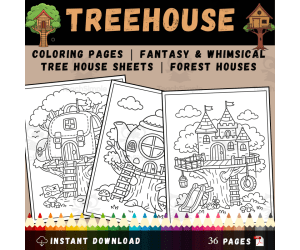
Treehouse Coloring Pages | Fantasy & Whimsical Tree House Sheets
Graphic Arts, Creative Arts, Toddler, Infant, Grade 1, 2, 3, 4, 5, Activities, Centers, Worksheets & Printables, Flashcards, Worksheets, Workbooks, Coloring Pages
Whimsical Treehouses Will Spark the Imagination of Your Students! Are you searching for an exciting way to make your lesson plans more engaging and interactive? With its wide range of imaginative treehouses, this Treehouse Coloring Book is sure to inspire your students' creativity while developing their motor skills. With whimsical images like castles on top of trees and sweet candy branches, the possibilities are endless! What’s Included? This packet includes an assortment of line art drawings in black and white, such as: Tree Castles & Fantasy: Tree houses that resemble medieval castles and old-fashioned cabins amid the treetops. Creative Homes in Objects: Original ideas that include a "Backpack House," a "Boot/Shoe House," and a "Teapot Treehouse"! Theme Ideas: Tree houses based on the themes "Cupcake" and "Candy" to add a sprinkle of enchantment! Explore Outside: Scenes with telescopes, tire swings, slides, and adorable woodland creatures! Test Colors Sheet: An exclusive page where students can test out their markers, crayons, or colored pencils before embarking on their masterpiece. Perfect For: Early Finishers: Keep students engaged and quiet after completing assignments. Art Centers: A great addition to any elementary art curriculum. Fine Motor Practice: Helps younger students develop hand-eye coordination and pencil control. Mindfulness & Relaxation: Use as a calming activity during transition times or "Brain Breaks." Storytelling Prompts: Encourage students to write a story about who lives in these magical homes! Teacher Tips: Print & Go: These are standard letter-sized pages (8.5" x 11") for easy printing. Coloring Portfolio: Have students color the entire set over a month to create their own "Adventure Book."
Author Source Class
Rating
Tags Treehouse Coloring Pages, Treehouse , Coloring Pages, Coloring Sheets, Tree House Sheets, Forest Houses

Spring Garden Coloring Pages | Nature & Plant Life Cycle Activity
Creative Arts, Graphic Arts, Infant, Toddler, Grade 1, 2, Activities, Centers, Worksheets & Printables, Worksheets, Coloring Pages
Bring the outside into the classroom with these fun Garden Coloring Sheets! Great for fast finishers, morning work, or as an activity to enhance your studies of life cycle plants in science class. With 27 different images, this pack highlights the excitement of gardening and the wonder of nature. What’s Included in this Resource? Diverse Gardening Scenarios: Depictions of children and adults engaged in gardening activities like planting, watering, and harvesting vegetables. Botanical and Flower Designs: Intricate designs depicting sunflowers, tulips, lavender flowers, and lovely backyard gardens. Gardening Tools and Accessories: Exciting designs displaying watering cans, wheelbarrows, sun hats, and garden boots to assist students in recognizing gardening tools. Fun Add-ons: Fascinating garden gnomes and fairies to capture students' imagination s. This Resource is Perfect For: Science Centers: Use alongside lessons on how plants grow and where food comes from. Spring & Summer Activities: Ideal for seasonal classroom decor or end-of-year celebrations. Fine Motor Skills Practice: Engaging designs that help younger students develop hand-eye coordination. Earth Day: A great way to discuss caring for the environment and growing our own food. Teacher Tips: These should be printed and bound into a “Garden Journal” that students will use throughout the spring. The following pages can be used to introduce vocabulary during a “How-To” writing unit about gardening. Please note that this material is intended for single-classroom use only.
Author Source Class
Rating
Tags Spring Garden Coloring Pages | Nature & Plant Life Cycle Activity | Summer Fun, Summer Fun, Spring Garden Coloring Pages , Spring Garden, Garden Coloring Pages, Nature & Plant Life Cycle Activity
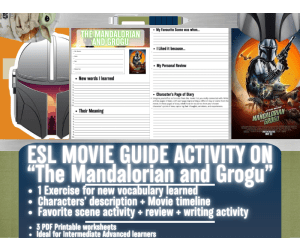
ESL Movie Guide Worksheets on "The Mandalorian and Grogu"
ELA, Language Development, ESL, Vocabulary, Writing, Creative Writing, Formal Writing, Grade 7, 8, 9, 10, 11, 12, Worksheets & Printables, Worksheets, Writing Prompts
ESL Movie Guide Worksheets on "The Mandalorian and Grogu" This English Second or Foreign Language (ESL - EFL - TESOL) teaching resource is a 3 page printable PDF movie guide for "The Mandalorian and Grogu" (2026 Star Wars film) is designed to help English as a Second Language (ESL - EFL - TESOL) learners. This teaching resource can be ideal for post movie activities and is ideal for Middle School and High School students , from 7th to 12th grade . This ESL - EFL - TESOL (English Second or Foreign Language) Movie Guide Activity can be great for newcomers and any English language learners, making it an amazing teaching toolbox to use in ESL - EFL classrooms, language centers, or by tutors around the World. Within this ESL EFL Movie Guide on "The Mandalorian and Grogu" (2026 Star Wars film) ESL EFL TESOL teachers can find the following English Second or Foreign Language (ESL - EFL - TESOL - TEFL) film activities: General Information – Students fill in key details about the film, including the director, genre, release year etc. Vocabulary Builder – An activity dedicated to new words and phrases , to improve ESL EFL students’ English vocabulary Character Analysis – Students describe the main characters, helping them practice descriptive language and comprehension . Movie Timeline Activity – Students arrange scenes in chronological order to enhance their understanding of the storyline . Favorite Scene Reflection – A writing activity where students describe and explain their favorite moments from the film . Movie Review Writing – Learners express their opinions in a structured review, improving their evaluative writing skills . Creative Writing Activity – Students imagine themselves as one of the characters and write three diary entries from that character’s perspective, deepening their connection with the storyline. This "The Mandalorian and Grogu" (2026 Star Wars film) movie guide is designed to create an enjoyable and stimulating learning experience for intermediate advanced ESL students. ESL with Alan is an amazing Teaching Resources Store which aims to support English as a Second or foreign Language (ESL - EFL - TESOL -TEFOL) Teachers, Educators and Tutors around the globe (be it online or offline) to achieve their students' learning objectives while creating an enjoyable and stimulating learning environment. Never Forget! Learning is fun, So should English! Always
Author Learning with Alan
Rating
Tags ESL, English Second Language, English, Movie Guide, Films, The Mandalorian, Star Wars, Activity, Writing Activity, Vocabulary

Functional Communication Flash Cards for Autism, SPED
ELA, Common Core, Special Resources, Pre-K, Elementary, Early Learning, Activities, Worksheets & Printables
Support your students in communicating clearly and confidently with this comprehensive set of 80+ Editable Functional Communication Flash Cards ! This resource is thoughtfully designed for Autism, Special Education (SPED), Pre-K, ABA therapy, and nonverbal learners , providing essential visual supports that promote everyday communication, reduce frustration, and build independence across both classroom and home environments. Using PECS-style visuals , these flashcards help students express their needs, understand routines, and engage more effectively with others. Each card features clean, simple icons that are easy to recognize, making them ideal for visual learners and students with diverse communication needs. One of the key features of this resource is its flexibility—every card is fully editable and printable , allowing teachers, therapists, and caregivers to customize vocabulary based on individual student goals and communication levels. What’s Included: ✔ 80+ Functional Communication Flash Cards (Editable & Printable) A wide variety of visuals to support daily communication ✔ Core Needs Cards (e.g., eat, drink, help, stop, more) ✔ Actions & Daily Routines Cards (e.g., go, sit, open, close, brush teeth, do homework, go to bed) ✔ Emotion Cards Supports emotional recognition and expression ✔ Food & Drinks Cards Helps students request and identify items ✔ School Items Icons Supports classroom communication ✔ Places Cards Helps students understand and express locations ✔ Clear, SPED-Friendly Visual Icons Simple, uncluttered, and easy to understand Perfect For Autism & SPED Classrooms Nonverbal & Limited-Verbal Students ABA Therapy Pre-K & Kindergarten Behavior & Communication IEP Goals Choice boards, morning routines, task schedules --- Why Teachers Love This Resource Builds independence and reduces behavior frustration Helps students express needs quickly Ideal for centers, stations, and structured environments Easy to print, laminate, and use immediately
Author Smart Minds
Rating
Tags Special Education Cards, Flashcards, Taskcards, Autism Visuals, Speech Therapy Activities, Functional Communication Cards, Activities, Language, Nonverbal
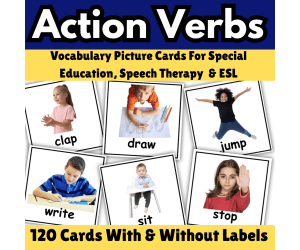
Action Verbs Pictures Vocabulary ESL Activity cards
ELA, Special Resources, Pre-K, Elementary, Early Learning, Activities, Worksheets & Printables
Enhance strengthen vocabulary skills with these engaging Action Verbs Vocabulary Flashcards with real pictures ! This thoughtfully designed resource is perfect for Speech Therapy, Special Education, ESL learners, nonverbal students, and autism classrooms . It supports visual learners by providing clear, real-life images paired with simple, student-friendly text to make learning action verbs easier and more meaningful. Whether you are working in small groups, one-on-one sessions, or whole-class instruction, these flashcards offer a flexible and effective way to build communication skills and reinforce everyday vocabulary. What’s Included: ✔ 60 Action Verbs Flashcards with Labels Each card includes a clear image and the matching verb to support word recognition ✔ 60 Action Verbs Flashcards without Labels Perfect for receptive language practice, matching activities, and assessments ✔ One Word Per Card Simple and uncluttered format designed for student success ✔ Real Picture Visuals Helps students connect vocabulary to real-life actions ✔ Printable No-Prep Resource Just print, cut, and use—ideal for busy teachers Why Teachers Love This Resource: ✔ Clean and simple design (no distractions) ✔ Supports both visual and language learners ✔ Easy to print and use ✔ Flexible for different teaching styles and settings Perfect For: • Speech therapy verb practice • Special education visual supports • ESL vocabulary development • Autism and SPED classrooms
Author Smart Minds
Rating
Tags Action Verbs, Vocabulary , Reading , Speech Therapy Activities , Special Education Worksheets, Autism Esl, Activity Cards, Flashcards, Task Cards, Real Picture Cards And Icons

End of Year How Well Do You Know Your Teacher
ELA, Special Resources, Elementary, Early Learning, Activities, Worksheets & Printables
Build strong classroom connections and boost student engagement with this fun and interactive “How Well Do You Know Your Teacher?” activity! This resource helps students learn more about their teacher through a simple, visual, and engaging Yes or No question format , making it perfect for all learners. What’s Included: ✔ 40 Visual Question Cards Engaging and student-friendly questions about the teacher ✔ Yes or No Answer Format Clear and structured for easy understanding ✔ Real Picture Supports Supports comprehension and keeps students engaged ✔ Student Response Sheets Helps track answers and participation ✔ Print & Play Format No prep needed — just print and start! Skills Students Practice: • Listening and comprehension • Understanding Yes/No questions • Social interaction • Predicting and making guesses • Classroom participation Why Teachers Love This Resource: ✔ Builds strong student-teacher relationships ✔ Easy to differentiate for all learners ✔ Perfect for SPED and autism classrooms ✔ Visual and structured format ✔ No prep – ready to use anytime Perfect For: • Back to school activities • Icebreakers • Morning meetings • Special education classrooms • Autism support settings • Elementary students
Author Smart Minds
Rating
Tags How Well Do You Know Your Teacher Game, End Of Year, Ela, Yes And No Visual Choices, Interactive Activity
Taxes & Paychecks – Real-World Simulation Sheets
Social Skills, Special Resources, Life Skills, Social Emotional Learning (SEL), Social Studies, Economics, Math, Money, Measurements, STEM, Grade 6, 7, 8, 9, 10, 11, 12, Workbooks, Worksheets & Printables, Worksheets, Teacher Tools, Quizzes and Tests, Quizzes, Tests, Literacy Readers, Lesson Plans, Word Searches
Get Ready To Unlock Real Life Know How In Finance By Teaching Students About Taxes Made Simple, Paychecks, And Managerial.Learn and Use Your Skills In The Real World Without Hosting A Class In Your Community With This All-Encompassing Feature Rich Tax And Paycheck Unit. Do you ever just wish to bring in Real Life Math, teach students valuable life long skills, make it relatable, and teach students about the relationship between abstract developement of numbers versus actual application of numbers in the real world? If you do; THIS IS the complete all-inclusive, no prep repititive unit that you needed to discover to teach your middle schoolers all about taxes, paychecks; found out that you CAN earn money with this comprehensive written unit. How can we make something that seems overwhelming and complicated, easier, and more enjoyable? By using an engaging and student centered material to inform and educate your students about understanding their actual earnings (Net Pay) before they get their first paycheck. This will help your middle school students view their paychecks as an indication of successful involvement within the work force against societal standards of financial obligation by then being empowered after having deliuered when they felt more discouraged previously. This is the ultimate teaching plan; a tried and true, 5-day-lesson plan that is intended to sufficiently prepare your students for their future by creating an opportunity for them to be able to view themselves as successful in the world of finance and less anxious about obtaining those same values. This product will benefit students in grades 6-9 who are studying math (especially for applying percentages/real-world scenarios), financial literacy, life skills and/or career exploration, civics and economics (to comprehend how tax money works within society), and in cooperative homeschool environments. Including the 34-page (pdf only) detailed phase one: core content and theory guide which explains the differences and similarities between gross and net, overtime, FICA, federal and state taxes and voluntary deductions. You’ll want to use this as part of teacher preparation materials or to supplement any students who are classified as advanced readers. Phase 2: Workbook for Students (10 Workbooks) Workbooks from 1 to 10 will provide instructions and examples for answering the following: 1. Understanding the structure of a paycheck (Worksheet #1). 2. Finding gross pay for various given situations (Worksheet #2). 3. All about FICA (the intergenerational contractual agreement) (Worksheet #3). 4. What to expect on your federal and state income tax return (Worksheet #4). 5. What the deduction from your paycheck is, to whom you can give it, and the effect of giving (Worksheet #5). 6. Bringing everything together to calculate the net pay for the paycheck (Worksheet #6). 7. What effect sales tax has on the consumer (Worksheet #7). 8. The basics of how property taxes impact local communities (Worksheet #8). 9. Understanding Form W-4 and Form W-2 (Worksheet #9). 10. Understanding the basics of the consumer and their role in the economy (Worksheet 10). Phase 3: Teaching Resources & Visuals High contrast visuals in black and white that can be printed and used are; diagrams of the paycheck pipeline, the anatomy of a paycheck, and where the taxes are sent. Also, a complete answer key will give the teacher all of the answers and how to create them from the 10 workbooks. Lastly, there will be a full guide for implementation by the teacher that includes the pacing guide (5 days), daily lesson objectives, daily lesson activities, weekly lesson discussion prompts, and how to differentiate lessons for children needing scaffolding or extensions. Allow your students to have the knowledge necessary to make a successful transition into their adult lives at home and in the community. Download this print and go unit today to help your students become knowledgeable, confident participants in the economy! Why Schools/Parents Especially Like It : Building Real-Life Skills - This program teaches students a real-world, practical skill that they will use starting the day they receive their first paycheck, laying the groundwork for a lifetime of future financial success. Connecting Civics & Math - This project successfully connects important math concepts (percentages) with key civics lessons that teach students how taxes are used to support the communities they live in, making learning much more effective and relevant to students. Comprehensive & No Preparation - This program is a complete unit that is ready to use; including the lesson plan, student worksheets, visuals, answer keys and 5-day lesson plans teachers will have more time to plan for other subjects. Empowering & Reducing Students’ Anxiety - The confusion caused by the amount of information presented on pay stubs and issues related to deductions is replaced by clarity and control over their finances with an understanding of what many of those deductions mean, allowing them to view themselves as part of and contributing to our economy. Promoting Critical Thinking - Students will build critical thinking skills through discussions about capstone simulations and ethics (i.e., considering progressive taxation), as well as developing the ability to analyze and evaluate many complex financial situations beyond basic computation. Mainly: - Middle School Math: Excellent resource for %'s and decimals; includes real-life problems. - Pre-Algebra or Consumer Math in HS (9th grade): Great introduction or summary. - Financial Literacy in HS or MS: Core unit of any financial literacy curriculum. - Life Skills/Career Readiness: Essential info for every student getting ready to work. - Civics/Economics: Excellent connection between personal finance and how government/public services are funded. Terms of Service/Copyright: Copyright is with Syed Hammad Rizvi. All rights reserved. If used in the classroom, this resource can only be used once per teacher. There is no sharing, alteration, distribution or selling of any portion of this resource. For example, you may not post this resource on the internet for others to view and download. If you wish to share this resource with colleagues, please order additional licenses at Teachsimple. Thank you for adhering to the above terms of use. This product is proudly created by Syed Hammad Rizvi.
Author Creative Book Store
Rating
Tags FinancialLiteracy, RealWorldMath, LifeSkills, UnderstandingTaxes, Paycheck, ConsumerMath, PersonalFinance, Economics, MathLesson, Civics

ESL Vocabulary Flashcards - Daily Routines - Pictures
ELA, Language Development, ESL, Vocabulary, Not Grade Specific, Middle School, High School, Adult Education, Worksheets & Printables, Worksheets, Flashcards
ESL Vocabulary Flashcards - Daily Routine - Pictures This high quality English language teaching resource is designed for students learning English as a second or foreign language . It includes 4 printable PDF pages featuring vocabulary flashcards and worksheets centered around the theme of "Daily Routine" This ESL Vocabulary Flashcards on "Daily Routine" Worksheets Activity can be ideal for Beginner level ESL - EFL - TESOL learners, including newcomers and English language learners of all ages. 🌟 What's Included? In this ESL Vocabulary Flashcards Activity on " Daily Routine ", there are provided: ✅ 39 Printable Flashcards (4 Printable PDF worksheets) ✅ Essential vocabulary and phrases in English ✅ Engaging icons and emojis on select flashcards to support comprehension and vocabulary retention (not all flashcards) 🏫 Who Can Benefit from This Resource? 📌 Beginner ESL - EFL students looking to improve their English vocabulary 📌 Newcomers & English Language Learners (ESL - EFL - TESOL -TEFL) in schools, tutoring sessions, or self-study 📌 Teachers and tutors looking for fun and engaging vocabulary building activities 📌 Language centers, homeschool educators, and ESL programs 🎯 How Does this ESL Teaching Resource Help you and your Students? ✨ Strengthens essential English communication skills ✨ Provides English vocabulary (ESL - EFL - TESOL - TEFL) for better understanding ✨ Encourages engaging learning with printable flashcards that can be used in various ESL - EFL (English Second or Foreign Language) class activities Whether you're an ESL teacher or an English tutor these ESL Vocabulary Flashcards on " Daily Routine " are a valuable and fun resource to improve basic conversation skills in English. Start learning today and make English introductions simple, engaging, and effective ! ESL with Alan is a Teaching Resources Store whose aim is to help English as a Second or foreign Language (ESL EFL TESOL) Teachers, Educators and Tutors around the world (be it online or offline) to achieve their teaching objectives while creating an enjoyable and stimulating learning environment. Learning is fun, So should English! Always If you want to browse more of my ESL, EFL, TESOL Teaching Resources, click here right ESL with Alan!
Author Learning with Alan
Rating
Tags ESL, English Second Language, English, Flashcards, Daily Routine, Vocabulary, Worksheets, Printable, Activity, Routine
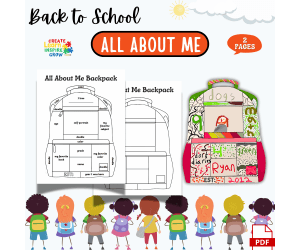
All About Me Backpack Worksheet First Week Back to school activity Wri
Creative Writing, Writing, ELA, Social Emotional Learning (SEL), Special Resources, Preschool, Kindergarten, Grade 1, 2, Door Decor, Classroom Decor, Crafts, Activities, Projects, Writing Prompts, Worksheets & Printables
Engaging and Fun! Welcome students back to school with this creative All About Me Backpack activity designed to help students introduce themselves and build classroom connections. Perfect for the beginning of the school year, this resource encourages self-expression while helping students feel more comfortable and confident in a new learning environment. This resource includes two printable worksheets. One worksheet features a backpack template with sections for students to share information about themselves, including their name, age, favorite color, favorite subject, favorite book, hobbies, and more. It also includes space for doodles and a self-portrait. The second worksheet provides a blank backpack template that students can decorate freely using their own creativity. This activity is perfect for icebreakers, back-to-school lessons, morning work, classroom displays, bulletin boards, independent work, and homeschool learning. The completed backpacks can also be used for a fun classroom gallery walk that encourages students to learn more about one another. File type: PDF
Author Sadigitalart
Rating
Tags Writing Craft, Back To School Activity, First Week
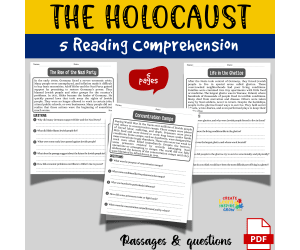
Holocaust Reading Comprehension Passages & Questions | WWII History wo
Reading Comprehension, Reading, ELA, Social Studies, Grade 4, 5, Centers, Activities, Assessments, Teacher Tools
Engaging and Educational! Help students build historical understanding with this reading comprehension resource focused on the Holocaust. Designed for upper elementary and middle school learners, this activity introduces important historical events through age-appropriate informational passages that support reading comprehension, critical thinking, and discussion skills. Through five informational reading passages, students will explore key topics related to the Holocaust, including the rise of Nazi Germany, life under discrimination and persecution, Jewish resistance and survival, concentration camps, and the importance of remembrance and human rights. Each passage includes comprehension questions that encourage close reading, vocabulary development, and thoughtful analysis of historical events. The resource features a clear and student-friendly format that supports both independent learning and classroom instruction. It is ideal for social studies lessons, history units, literacy centers, homework assignments, substitute plans, small-group instruction, and homeschool learning. Perfect for Grades 5–9, ESL and ELL learners, intervention groups, and world history enrichment activities. File type: PDF
Author Sadigitalart
Rating
Tags Holocaust Reading, WWII History , Passages & Questions, WWII History Worksheet
Reading Passage: The Butterfly Effect (Fillable PDF Sample)
ELA, Reading, Reading Comprehension, Strategies, Resources for Teachers, Social Studies, Sociology, Grade 6, 7, 8, 9, Writing Prompts, Worksheets & Printables, Centers, Activities, Teacher Tools, Assessments, Quizzes and Tests, Quizzes, Tests
This is a ONE PASSAGE SAMPLE. The following is the description of the FULL resource and the downloading links: Social Studies Reading Comprehension Passages and Questions: Civic Action and Social Change (Fillable PDF) This resource introduces a collection of Social Studies reading comprehension passages with questions about Civic Action and Social Change. The passages are carefully designed to bridge the gap between social studies and literacy through strengthening reading comprehension and sparking knowledge curiosity in middle school students. Each passage blends English Language Arts skills with accurate social studies content . Ideal for interdisciplinary learning in ELA and Social Studies. Suitable for Grade 9 review, too! These worksheets are designed as fillable PDFs , which means students can type their answers directly into the document on any computer or tablet . Each page includes highlighted text fields that show them exactly where to type! What Is Included in this Collection? There are three informational passages (with full answer keys): The Butterfly Effect: Small Moments, Big Consequences From Piggy Bank to Profit: How Banks Make Money Work Flipping the Switch: A Student Campaign for Change For Each Passage, students will have multiple tasks to complete as follow: 5 multiple-choice questions targeting main idea, key details, inference, vocabulary in context, and use of evidence 5 vocabulary matching items with clear, student-friendly definitions 5 text-based questions that require citing specific lines or facts 1 summary prompt that asks students to condense central ideas accurately Available Formats for this Resource PDF Word Docs Google Docs For more Social Studies Reading Passages, check the following Links: Ancient Civilizations PDF Fillable PDF Word Docs Google Docs Early Empires and Trade Networks PDF Fillable PDF Word Docs Google Docs The Founding of the United States PDF Fillable PDF Word Docs Google Docs Language, Culture, and Meaning PDF Fillable PDF Word Docs Google Docs Psychology and Society PDF Fillable PDF Word Docs Google Docs Global Festivals and Traditions PDF Fillable PDF Word Docs Google Docs Extreme Environments and People PDF Fillable PDF Word Docs Google Docs Food, Culture, and Preservation PDF Fillable PDF Word Docs Google Docs Global Food Customs PDF Fillable PDF Word Docs Google Docs Media, Communication, and Popular Culture PDF Fillable PDF Word Docs Google Docs Human Impact on the Environment PDF Fillable PDF Word Docs Google Docs Civic Action and Social Change PDF Fillable PDF Word Docs Google Docs Fashion, Society, and Power PDF Fillable PDF Word Docs Google Docs People, Places, and Unusual Histories PDF Fillable PDF Word Docs Google Docs How to Use These PDFs Click on the highlighted area to start typing your answer. Move to the next question by clicking in the next highlighted box. When you are finished, close the document and select SAVE so your answers stay recorded. If you want to keep a blank copy for later, choose Save As and give your completed version a new name. Product Details Length: 15 pages total Grades: 6–8, also suitable for Grade 9 review Use cases: close reading, stations, homework, intervention, test prep, and sub plans Why Teachers Choose This Set Authentic social studies content paired with rigorous literacy practice Consistent task structure across all passages for easier planning and smoother student routines Clear, age-appropriate writing that builds confidence without oversimplifying Use this set to reinforce ELA skills in social studies, to add literacy to your lessons, and to support independent work. The passages strengthen main idea, evidence use, vocabulary in context, inference, cause and effect, and summary writing. With ready-to-use assessments and complete answer keys, you can provide focused practice that is simple to run and fast to review.
Author EduNation Creative Store
Rating
Tags Middle School, Reading Comprehension, Reading Strategies, ELA, Centers, Reading Passage, Assessments, Vocabulary, Social Studies, Civic Action And Social Change
Reading Comprehension Passage: The Butterfly Effect (Word Sample)
ELA, Reading, Reading Comprehension, Strategies, Resources for Teachers, Social Studies, Sociology, Grade 6, 7, 8, 9, Writing Prompts, Worksheets & Printables, Centers, Activities, Teacher Tools, Assessments, Quizzes and Tests, Quizzes, Tests
This is a ONE PASSAGE SAMPLE. The following is the description of the FULL resource and the downloading links: Social Studies Reading Comprehension Passages and Questions: Civic Action and Social Change (Word) This resource introduces a collection of Social Studies reading comprehension passages with questions about Civic Action and Social Change. The passages are carefully designed to bridge the gap between social studies and literacy through strengthening reading comprehension and sparking knowledge curiosity in middle school students. Each passage blends English Language Arts skills with accurate social studies content . Ideal for interdisciplinary learning in ELA and Social Studies. Suitable for Grade 9 review, too! What Is Included in this Collection? There are three informational passages (with full answer keys): The Butterfly Effect: Small Moments, Big Consequences From Piggy Bank to Profit: How Banks Make Money Work Flipping the Switch: A Student Campaign for Change For Each Passage, students will have multiple tasks to complete as follow: 5 multiple-choice questions targeting main idea, key details, inference, vocabulary in context, and use of evidence 5 vocabulary matching items with clear, student-friendly definitions 5 text-based questions that require citing specific lines or facts 1 summary prompt that asks students to condense central ideas accurately Available Formats for this Resource PDF Fillable PDF Google Docs For more Social Studies Reading Passages, check the following Links: Ancient Civilizations PDF Fillable PDF Word Docs Google Docs Early Empires and Trade Networks PDF Fillable PDF Word Docs Google Docs The Founding of the United States PDF Fillable PDF Word Docs Google Docs Language, Culture, and Meaning PDF Fillable PDF Word Docs Google Docs Psychology and Society PDF Fillable PDF Word Docs Google Docs Global Festivals and Traditions PDF Fillable PDF Word Docs Google Docs Extreme Environments and People PDF Fillable PDF Word Docs Google Docs Food, Culture, and Preservation PDF Fillable PDF Word Docs Google Docs Global Food Customs PDF Fillable PDF Word Docs Google Docs Media, Communication, and Popular Culture PDF Fillable PDF Word Docs Google Docs Human Impact on the Environment PDF Fillable PDF Word Docs Google Docs Civic Action and Social Change PDF Fillable PDF Word Docs Google Docs Fashion, Society, and Power PDF Fillable PDF Word Docs Google Docs People, Places, and Unusual Histories PDF Fillable PDF Word Docs Google Docs Product Details Length: 15 pages total Grades: 6–8, also suitable for Grade 9 review Use cases: close reading, stations, homework, intervention, test prep, and sub plans Why Teachers Choose This Set Authentic social studies content paired with rigorous literacy practice Consistent task structure across all passages for easier planning and smoother student routines Clear, age-appropriate writing that builds confidence without oversimplifying Use this set to reinforce ELA skills in social studies, to add literacy to your lessons, and to support independent work. The passages strengthen main idea, evidence use, vocabulary in context, inference, cause and effect, and summary writing. With ready-to-use assessments and complete answer keys, you can provide focused practice that is simple to run and fast to review.
Author EduNation Creative Store
Rating
Tags Middle School, Reading Comprehension, Reading Strategies, ELA, Centers, Reading Passage, Assessments, Vocabulary, Social Studies, Civic Action And Social Change
Reading Comprehension Passage: The Butterfly Effect (PDF Sample)
ELA, Reading, Reading Comprehension, Strategies, Resources for Teachers, Social Studies, Sociology, Grade 6, 7, 8, 9, Writing Prompts, Worksheets & Printables, Centers, Activities, Teacher Tools, Assessments, Quizzes and Tests, Quizzes, Tests
This is a ONE PASSAGE SAMPLE. The following is the description of the FULL resource and the downloading links: Social Studies Reading Comprehension Passages and Questions: Civic Action and Social Change (PDF) This resource introduces a collection of Social Studies reading comprehension passages with questions about Civic Action and Social Change. The passages are carefully designed to bridge the gap between social studies and literacy through strengthening reading comprehension and sparking knowledge curiosity in middle school students. Each passage blends English Language Arts skills with accurate social studies content . Ideal for interdisciplinary learning in ELA and Social Studies. Suitable for Grade 9 review, too! What Is Included in this Collection? There are three informational passages (with full answer keys): The Butterfly Effect: Small Moments, Big Consequences From Piggy Bank to Profit: How Banks Make Money Work Flipping the Switch: A Student Campaign for Change For Each Passage, students will have multiple tasks to complete as follow: 5 multiple-choice questions targeting main idea, key details, inference, vocabulary in context, and use of evidence 5 vocabulary matching items with clear, student-friendly definitions 5 text-based questions that require citing specific lines or facts 1 summary prompt that asks students to condense central ideas accurately Available Formats for this Resource Fillable PDF Word Docs Google Docs For more Social Studies Reading Passages, check the following Links: Ancient Civilizations PDF Fillable PDF Word Docs Google Docs Early Empires and Trade Networks PDF Fillable PDF Word Docs Google Docs The Founding of the United States PDF Fillable PDF Word Docs Google Docs Language, Culture, and Meaning PDF Fillable PDF Word Docs Google Docs Psychology and Society PDF Fillable PDF Word Docs Google Docs Global Festivals and Traditions PDF Fillable PDF Word Docs Google Docs Extreme Environments and People PDF Fillable PDF Word Docs Google Docs Food, Culture, and Preservation PDF Fillable PDF Word Docs Google Docs Global Food Customs PDF Fillable PDF Word Docs Google Docs Media, Communication, and Popular Culture PDF Fillable PDF Word Docs Google Docs Human Impact on the Environment PDF Fillable PDF Word Docs Google Docs Civic Action and Social Change PDF Fillable PDF Word Docs Google Docs Fashion, Society, and Power PDF Fillable PDF Word Docs Google Docs People, Places, and Unusual Histories PDF Fillable PDF Word Docs Google Docs Product Details Length: 15 pages total Grades: 6–8, also suitable for Grade 9 review Use cases: close reading, stations, homework, intervention, test prep, and sub plans Why Teachers Choose This Set Authentic social studies content paired with rigorous literacy practice Consistent task structure across all passages for easier planning and smoother student routines Clear, age-appropriate writing that builds confidence without oversimplifying Use this set to reinforce ELA skills in social studies, to add literacy to your lessons, and to support independent work. The passages strengthen main idea, evidence use, vocabulary in context, inference, cause and effect, and summary writing. With ready-to-use assessments and complete answer keys, you can provide focused practice that is simple to run and fast to review.
Author EduNation Creative Store
Rating
Tags Middle School, Reading Comprehension, Reading Strategies, ELA, Centers, Reading Passage, Assessments, Vocabulary, Social Studies, Civic Action And Social Change