



5,119 products added recently
Page 82 - Newest Teaching Resources

 Show filters

Special Education Lanyard Visuals Special Education Visuals Cue Cards
Special Education Needs (SEN), Special Resources, Speech Therapy, Kindergarten, Preschool, Grade 1, Teacher Tools
Special Education Lanyard Visuals Special Education Visuals Cue Cards for Autism and Special Education Students, Visual cue card for lanyards: these cue cards are meant to be placed on a ring and carried with all adults who are working with autistic children. That way, the team can provide consistency, and predictability with the visual cues they are using. Visual supports are an officially proven, evidence-based practice for autistic children. When verbal instructions become overwhelming, these visual cue cards act as a powerful communication bridge, enhancing both receptive and expressive skills. Designed to be placed on a ring and worn on a lanyard, these cards ensure that every adult working with the child delivers the exact same message every single time. Included Visual Cues (58 Cards Categorized for Quick Access): To provide complete predictability, this set includes over 50 essential visual cues divided into 5 core categories: 1. Classroom Routines & Transitions Line up / Carpet / Table / Desk / Classroom Clean up / Group / Library / Cafeteria / Office Bus / Car / Playground 2. Actions & Physical Prompts Sit / Sit on floor / Walk / Walk with teacher Stop / Go / Wait / Raise hand / Watch teacher 3. Behavioral Support & Boundaries Safe hands / Hands in lap / Hands to self / Calm body Quiet / No / Yes / Not available No hit / No bite / No kick / No spit / No pinch / No pull hair 4. Self-Regulation, Feelings & Needs Break / All done / Help / More Breathe / 3 deep breaths Bathroom / Drink / Wash hands / Sanitizer / Mask on Happy / Sad / Mad / Sorry 5. Therapy & Special Classes Speech therapy / OT (Occupational Therapy) / PT (Physical Therapy) PE/gym / Art class / Music class Please if you like it, leave your feedback and rate it ♥
Author Bambolina55
Rating
Tags Lanyard Visual, Visual Cue Cards, Special Education, Speech Therapy, Autism, Autistic Children, Special Education Visuals

Adaptive Sensory-Friendly Fitness Routines
Science, Life Sciences, Human Body, P.E. & Health, Health, Physical Education, Sports, Yoga, Mental Health, Mindfulness, Homeschool Curriculum, Homeschool Templates, Grade 9, 10, 11, 12, Teacher Tools, Quizzes and Tests, Quizzes, Tests, Worksheets & Printables, Assessments, Workbooks, Worksheets, Word Searches, Lesson Plans
Transform your approach to fitness and somatic care for adults with profound physical and neurological barriers. This comprehensive, 40-page digital curriculum, "Adaptive Sensory-Friendly Fitness Routines," is a groundbreaking resource designed for special education teachers, transition specialists, occupational therapists (OT), physical therapists (PT), and direct support professionals. Frustrated with traditional fitness models that are inaccessible or dysregulating? This evidence-based program is built on the Low-Arousal Adaptive Somatic Framework (LAASF) , which shifts the focus from impossible standards to dignity, comfort, and neurological safety. It redefines "fitness" for individuals with conditions such as severe cerebral palsy, traumatic brain injury (TBI), advanced multiple sclerosis, cortical visual impairment (CVI), and profound neurodevelopmental differences. This is more than just a set of exercises; it's a complete pedagogical system. WHAT'S INCLUDED: Part 1: In-Depth Clinical Guide (Pages 1-12): A professional deep dive into the neurobiology of sensory-friendly movement. Understand the science behind sensory gating, proprioceptive deficits, CVI adaptations, and low-stimulation design. Features two detailed case studies. Part 2: The Data-Driven Workbook (Pages 13-28): Ten meticulously designed, printable worksheets to guide your practice and document progress. These logs are the core of the program and include: Environmental Sensory Baseline (Pre-Workout Assessment) Somatic Readiness & Pain Scale Range of Motion (ROM) Micro-Movements Log Breath Control and Pacing Tracker Isometric Engagement & Release Log Assisted Mobility & Proprioceptive Input Logs Post-Exertion Decompression & Transition Protocols Weekly Neurological Fatigue Mapping Part 3: Visuals & Teacher Resources (Pages 29-40): Everything you need for successful implementation. Clear visual diagrams explaining the sensory ecosystem. A "Neurological Barrier Adaptation Matrix" for specific student profiles. A comprehensive Answer Key and Assessment for facilitator training. A sample "Exemplar Key" showing how to fill out the logs for a hypothetical case. A step-by-step Teacher Implementation Guide. This curriculum champions an age-appropriate, non-infantilizing approach, using high-contrast, minimalist visuals to reduce cognitive load and promote autonomy. Empower your students and clients to engage with their bodies in a safe, consensual, and meaningful way. Perfect for: Special Education Transition Programs (18+) Occupational Therapy & Physical Therapy Sessions Adult Day Programs & Supported Living Facilities Adapted Physical Education (APE) Caregiver and Paraprofessional Training Download today and unlock a world of intentional, accessible movement for the individuals you support. Keywords: Adaptive PE, Special Education, Life Skills, Adult Day Program, Transition Program, Occupational Therapy, Physical Therapy, Cerebral Palsy, TBI, CVI, Non-Verbal, Sensory-Friendly, Low Stimulation, Visual Supports, Workout Log, Data Tracking, IEP Goals, Somatic, Neurodiversity. Why Parents/Schools Love It: Dignity-Centered & Age-Appropriate: It rejects the infantilizing cartoons and primary colors common in special education, treating adults with the respect they deserve through mature, minimalist design. Inclusively Designed for the Most Profound Needs: This isn't a one-size-fits-all program. It's one of the few resources specifically engineered for individuals with the most significant physical, neurological, and sensory barriers, providing a path to engagement where none existed before. Data-Driven and Goal-Oriented: The 10-part workbook provides a clear, professional way to track subtle but critical progress—from breathing patterns to neurological fatigue. This is invaluable for IEPs, therapy goals, and demonstrating program efficacy. Empowers Staff & Ensures Safety: The comprehensive guide and implementation keys act as a powerful training tool, equipping staff with the knowledge to create a neurologically safe environment, prevent sensory overload, and facilitate movement consensually and effectively. Target Audience : This PDF is highly specialized. target the professionals and caregivers who will be implementing the program, not the end-users themselves. Primary Target Audience: Special Education Teachers (specifically those working in high school transition programs, ages 18-22). Occupational Therapists (OTs) and Physical Therapists (PTs) who work with adults with severe disabilities. Adapted Physical Education (APE) Teachers . Directors and Lead Staff at adult day programs, group homes, and supported living facilities. Case Managers and Transition Specialists for adults with disabilities. Parents and Guardians who are actively involved in directing the care of their adult children with profound needs. The content is written at a very high clinical level, so it reflect that professionalism. This is a tool for trained professionals to enhance their practice. Copyright/Terms of Use: This Book was copyrighted by Syed Hammad Rizvi. This resource is for personal and single classroom use only. You may not alter, redistribute, or sell any part of this resource. In other words, you may not put it on the Internet where it could be publicly found and downloaded. If you want to share this resource with colleagues, please purchase additional licenses from Teachsimple. Thank you for respecting these terms of use. This product is happily brought to you by Syed Hammad Rizvi
Author Creative Book Store
Rating
Tags AdaptiveFitness, SensoryFriendly, LowStimulation, SomaticCare, VisualSupports, SensoryRegulation, ProprioceptiveInput, AdaptedWorkout, SomaticAwareness, NeurologicalSupport
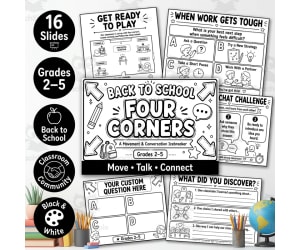
Back to School Four Corners Icebreaker Game | First Week of School
Social Emotional Learning (SEL), Special Resources, Grade 2, 3, 4, 5, Activities, Worksheets & Printables, Teacher Tools, Classroom Decor
Get students moving, talking, and connecting from the very first days of school with this engaging Back to School Four Corners Icebreaker Game ! This interactive Google Slides-style activity gives students a fun, low-pressure way to share their preferences, discover common interests, practice respectful listening, and begin building a positive classroom community. Each round presents four clear choices. Students move to the corner that matches their answer, briefly connect with classmates who made the same choice, and return ready for the next question. The carefully sequenced prompts begin with simple preferences and gradually move toward classroom goals, learning habits, and community-building reflections. What's Included Premium cover slide Quick teacher setup guide Student directions and movement expectations 10 original Four Corners question slides Conversation challenge slide Classroom community reflection slide Create-your-own prompt template Teacher facilitation tips Thank You slide Skills Developed Speaking and listening Classroom communication Social interaction Respectful discussion Decision-making Self-expression Relationship building Classroom community awareness Perfect For First day of school First week of school activities Morning meeting Back to school icebreakers Class community building Brain breaks with purpose Upper elementary classrooms Why Teachers Love It This activity is easy to project, simple to explain, and encourages every student to participate through movement and conversation. The prompts are age-appropriate for grades 2–5, visually clear, and designed to support meaningful interaction without requiring students to prepare materials in advance. Open the slides, assign the four classroom corners, and let the conversations begin! This Back to School Four Corners Icebreaker Game is a lively and meaningful first week of school activity for building classroom community through movement, speaking, and listening.
Author TeachTrend Studio
Rating
Tags Activities, Games, Internet Activities, Classroom Community, Social Emotional Learning, Back To School

ESL Reading Comprehension + Writing Activity - Librarians - Jobs
Language Development, ELA, ESL, Vocabulary, Reading Comprehension, Reading, Formal Writing, Writing, Creative Writing, Not Grade Specific, Middle School, High School, Worksheets & Printables, Worksheets, Writing Prompts
ESL Reading Comprehension + Writing Activity Worksheets on Librarians - Jobs This ESL - EFL Teaching Resource on " Librarians - Jobs " (3 PDF Worksheets Slides - Reading Comprehension + Writing Activity) can be ideal to improve Language skills in English. Ideal students for this ESL EFL TESOL Reading + Writing Activity are Foreign Students at middle and High School ( 7th - 12th Grade; teens ) . Newcomers or any ESL Learner is also more than suitable for this ESL - EFL - TESOL - TEFL (English as a Second or Foreign Language) Activity on " Librarians - Jobs " ( Introduction + origins and history of this profession + experience and education needed + various types of this job + what it consists of + interviews ). This Teaching Educational Resource Product can also be ideal for ESL EFL TESOL Centers worldwide or any English second language tutor. Intermediate Advanced English as a Second or Foreign Language ( ESL - EFL - TESOL - TEFL ) learners are suitable for this ESL - EFL - TESOL - TEFL Teaching Resource on " Librarians - Jobs " (Worksheet; 3 PDF Printable slides) In this English Second or Foreign Language ( ESL - EFL - TESOL - TEFL ) Reading Comprehension + Essay Writing Activity Worksheet on " Librarians - Jobs " ( Introduction + origins and history of this profession + experience and education needed + various types of this job + what it consists of + interviews ), the following ESL - EFL - TESOL - TEFL ( English Second or Foreign Language ) activities are included: 1 text on " Librarians - Jobs " ( Introduction + origins and history of this profession + experience and education needed + various types of this job + what it consists of + interviews ) 22 Comprehension Questions related to the previous text on " Librarians - Jobs " ( with related space where students can answer to this text's comprehension questions ) 1 essay prompt for a writing activity on " Librarians - Jobs " ( writing an essay on your own personal opinion on this job and whether you would ever like to become a Librarian or not and why ) This ESL - EFL - TESOL - TEFL ( English Second or Foreign Language ) Teaching Resource Reading + Writing Activity ( essay prompts ) on " Librarians - Jobs " ( Introduction + origins and history of this profession + experience and education needed + various types of this job + what it consists of + interviews ) is great for Intermediate Advanced English as a second or foreign language learners ( ESL- EFL - TESOL - TEFL ). This English Second Language Worksheet on " Librarians - Jobs " ( Introduction + origins and history of this profession + experience and education needed + various types of this job + what it consists of + interviews ) aims to train and Reading Comprehension + Writing Skills. "Learning with Alan" is a teaching resources store that aims to provide high quality teaching resources and educational materials for ESL - EFL - TESOL ( English Second or Foreign Language ) teachers, tutors and educators. It aims to support teachers, educators, and tutors in both online and offline environments, helping them achieve their teaching goals while creating a fun, stimulating atmosphere for learning English. Always remember: learning is fun, and so is English! If you want to find more ESL - EFL - TESOL - TEFL ( English Second or Foreign Language ) Teaching Resources and Educational Material click here Learning with Alan!
Author Learning with Alan
Rating
Tags ESL, English Second Language, English, Reading Comprehension, Writing Activity, Library, Librarians, Jobs, Activity, Printable

Back to School Icebreaker Game | Classroom Community Pass & Connect
Community Building, Resources for Teachers, Social Emotional Learning (SEL), Special Resources, Grade 3, 4, 5, Activities, Worksheets & Printables, Classroom Decor, Teacher Tools
Start the school year with meaningful conversation, laughter, and new classroom connections! Pass & Connect is an engaging back-to-school icebreaker game designed to help upper elementary students learn about one another while practicing respectful speaking, active listening, and positive classroom interaction. Students participate in a movement-friendly passing game using a classroom pencil or other safe object. Each round features an original Pass Challenge and Connect Prompt , encouraging students to notice similarities, celebrate differences, and share at a comfortable level. A printable response tracker and reflection activities extend the experience beyond the game and help students think about what makes a strong classroom community. WHAT'S INCLUDED Full-color premium cover Teacher quick-start guide Game setup and facilitation directions 4 printable Pass & Connect prompt pages 2 choice-based challenge pages Student listening and connection tracker Classroom community reflection page My New Connections writing page Class promise planning page Teacher wrap-up and thank-you page SKILLS DEVELOPED Speaking and listening Active listening Turn-taking Respectful communication Peer connection Self-expression Classroom community awareness Reflection and goal setting PERFECT FOR First day of school First week of school Morning meetings Back-to-school activities Classroom community building Advisory or homeroom Social-emotional learning Upper elementary icebreakers WHY TEACHERS LOVE IT This low-prep activity is easy to introduce and flexible enough for whole-group use. Students can share, pass, listen, and reflect without needing lengthy written responses. The black-and-white student pages are printer-friendly, while the colorful cover creates a polished presentation inside the purchased resource. Simply print the pages you need, choose a safe object to pass, and start building connections! Bring students together, spark genuine conversation, and create a welcoming classroom community from the very beginning with this engaging Back to School Icebreaker Game .
Author TeachTrend Studio
Rating
Tags Activities, Games, Hands-on Activities, Printables, Back To School, Social Skills
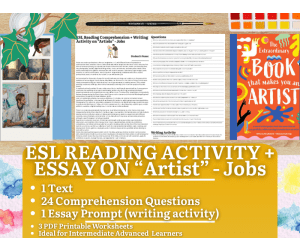
ESL Reading Comprehension + Writing Activity Worksheets - Artist - Job
ELA, Language Development, ESL, Vocabulary, Reading, Reading Comprehension, Writing, Creative Writing, Formal Writing, Not Grade Specific, Middle School, High School, Adult Education, Worksheets & Printables, Worksheets, Writing Prompts
ESL Reading Comprehension + Writing Activity Worksheets - Artist - Jobs This ESL - EFL Teaching Resource on " Artist - Jobs " (3 PDF Worksheets Slides - Reading Comprehension + Writing Activity) can be ideal to improve Language skills in English. Ideal students for this ESL EFL TESOL Reading + Writing Activity are Foreign Students at middle and High School ( 7th - 12th Grade; teens ) . Newcomers or any ESL Learner is also more than suitable for this ESL - EFL - TESOL - TEFL (English as a Second or Foreign Language) Activity on " Artist - Jobs " ( Introduction + origins and history of this profession + experience and education needed + various types of this job + what it consists of + interviews ). This Teaching Educational Resource Product can also be ideal for ESL EFL TESOL Centers worldwide or any English second language tutor. Intermediate Advanced English as a Second or Foreign Language ( ESL - EFL - TESOL - TEFL ) learners are suitable for this ESL - EFL - TESOL - TEFL Teaching Resource on " Artist - Jobs " (Worksheet; 3 PDF Printable slides) In this English Second or Foreign Language ( ESL - EFL - TESOL - TEFL ) Reading Comprehension + Essay Writing Activity Worksheet on " Artist - Jobs " ( Introduction + origins and history of this profession + experience and education needed + various types of this job + what it consists of + interviews ), the following ESL - EFL - TESOL - TEFL ( English Second or Foreign Language ) activities are included: 1 text on " Artist - Jobs " ( Introduction + origins and history of this profession + experience and education needed + various types of this job + what it consists of + interviews ) 24 Comprehension Questions related to the previous text on " Artist - Jobs " ( with related space where students can answer to this text's comprehension questions ) 1 essay prompt for a writing activity on " Artist - Jobs " ( writing an essay on your own personal opinion on this job and whether you would ever like to become a Artist or not and why ) This ESL - EFL - TESOL - TEFL ( English Second or Foreign Language ) Teaching Resource Reading + Writing Activity ( essay prompts ) on " Artist - Jobs " ( Introduction + origins and history of this profession + experience and education needed + various types of this job + what it consists of + interviews ) is great for Intermediate Advanced English as a second or foreign language learners ( ESL- EFL - TESOL - TEFL ). This English Second Language Worksheet on " Artist - Jobs " ( Introduction + origins and history of this profession + experience and education needed + various types of this job + what it consists of + interviews ) aims to train and Reading Comprehension + Writing Skills. "Learning with Alan" is a teaching resources store that aims to provide high quality teaching resources and educational materials for ESL - EFL - TESOL ( English Second or Foreign Language ) teachers, tutors and educators. It aims to support teachers, educators, and tutors in both online and offline environments, helping them achieve their teaching goals while creating a fun, stimulating atmosphere for learning English. Always remember: learning is fun, and so is English! If you want to find more ESL - EFL - TESOL - TEFL ( English Second or Foreign Language ) Teaching Resources and Educational Material click here Learning with Alan!
Author Learning with Alan
Rating
Tags ESL, English Second Language, English, Reading Comprehension, Writing Activity, Art, Artist, Worksheets, Printable, Activity

ESL Grammar Activity Worksheets - Infinitive
Language Development, ELA, ESL, Grammar, Not Grade Specific, Middle School, High School, Worksheets & Printables, Worksheets
ESL Grammar Activity Worksheets - Infinitive Make learning English grammar simple and engaging with this English Second or Foreign Language Teaching Resource focused on the essential Infinitive . This printable ESL Grammar Activity includes easy to follow explanations, grammar exercises, and an answer key, making it an excellent resource for beginner English learners. Designed for Beginner ESL - EFL - TESOL - TEFL students , this teaching resource is ideal for newcomers, English language learners, and students who are beginning to build their English grammar foundations. The activities provide learners with an opportunity to understand and practise the Infinitive in a clear and accessible way. This ESL Infinitive Grammar Activity can be used in a variety of educational settings. It is suitable for ESL classrooms, English language learning centers, tutoring sessions, homeschool lessons, and individual study . Teachers and ESL tutors can use the worksheets as part of a grammar lesson, for independent practice, revision, homework, or additional classroom activities. The printable PDF format makes this resource convenient and ready to use. Simply print the worksheets and provide your students with focused grammar practice without the need for extensive preparation. What Is Included? This ESL Infinitive Grammar Activity Worksheets includes: 1 Introduction to the topic 1 Clear Grammar Explanation Grammar Exercises for student practice Answer Key for easy correction and assessment Whether you are teaching English as a Second Language ( ESL ) or English as a Foreign Language ( EFL ) , this resource is a practical way to help beginner students develop confidence with Infinitive Give your students structured, accessible, and printable English grammar practice with this Infinitive ESL Worksheet Activity ! ESL with Alan is a Teaching Resources Store whose aim is to help English as a Second or foreign Language ( ESL - EFL - TESOL - TEFL ) Teachers, Educators and Tutors around the world ( be it online or offline ) to achieve their teaching objectives while creating an enjoyable and stimulating learning environment. Learning is fun, So should English! Always If you want to browse more of my ESL, EFL, TESOL Teaching Resources, click here right ESL with Alan!
Author Learning with Alan
Rating
Tags ESL, English Second Language, English, Grammar, Activity, Printable, Worksheets, Verbs, Infinitive, Exercises

ESL Grammar Activity Worksheets - Gerunds
Language Development, ELA, ESL, Grammar, Middle School, Not Grade Specific, High School, Worksheets & Printables, Worksheets
ESL Grammar Activity Worksheets - Gerunds Make learning English grammar simple and engaging with this English Second or Foreign Language Teaching Resource focused on the essential Gerunds . This printable ESL Grammar Activity includes easy to follow explanations, grammar exercises, and an answer key, making it an excellent resource for beginner English learners. Designed for Beginner ESL - EFL - TESOL - TEFL students , this teaching resource is ideal for newcomers, English language learners, and students who are beginning to build their English grammar foundations. The activities provide learners with an opportunity to understand and practise the Gerunds in a clear and accessible way. This ESL Gerunds Grammar Activity can be used in a variety of educational settings. It is suitable for ESL classrooms, English language learning centers, tutoring sessions, homeschool lessons, and individual study . Teachers and ESL tutors can use the worksheets as part of a grammar lesson, for independent practice, revision, homework, or additional classroom activities. The printable PDF format makes this resource convenient and ready to use. Simply print the worksheets and provide your students with focused grammar practice without the need for extensive preparation. What Is Included? This ESL Gerunds Grammar Activity Worksheets includes: 1 Introduction to the topic 1 Clear Grammar Explanation Grammar Exercises for student practice Answer Key for easy correction and assessment Whether you are teaching English as a Second Language ( ESL ) or English as a Foreign Language ( EFL ) , this resource is a practical way to help beginner students develop confidence with Gerunds Give your students structured, accessible, and printable English grammar practice with this Gerunds ESL Worksheet Activity ! ESL with Alan is a Teaching Resources Store whose aim is to help English as a Second or foreign Language ( ESL - EFL - TESOL - TEFL ) Teachers, Educators and Tutors around the world ( be it online or offline ) to achieve their teaching objectives while creating an enjoyable and stimulating learning environment. Learning is fun, So should English! Always If you want to browse more of my ESL, EFL, TESOL Teaching Resources, click here right ESL with Alan!
Author Learning with Alan
Rating
Tags ESL, English Second Language, English, Gerunds, Verbs, Grammar, Activity, Exercises, Printable, Worksheets

US State Presentation on Florida
Social Studies, Geography, History: USA, History, Not Grade Specific, Middle School, High School, Teacher Tools, Lesson Plans, Presentations
US State Presentation on Florida Bring the United States to life in your classroom with this engaging US State Presentation on Florida , a ready-to-use digital resource designed for Geography, Social Studies, and US History classes from 7th grade through 12th grade . This presentation provides students with a clear, structured introduction to one US state while combining essential geographical, historical, economic, and cultural information in an accessible format. This US State Presentation on Florida , includes: The resource begins with a general introduction to the state , helping students understand its location, identity, and importance within the United States. Students then explore the state's borders and neighboring states , making it easier to place it within the broader geography of the country. A general data section introduces key facts such as population, area, population density, capital city, and other essential statistics , providing a useful foundation for further study. A paragraph that explores the history of this US state , highlighting important events, periods, people, and developments that have shaped its identity. This section is particularly useful for US History lessons because it allows students to connect state-level history with major events and themes in American history. A Geography section examines the state's physical characteristics, including its territory, landscapes, natural features, environment, and climate. Students can discover how mountains, rivers, plains, forests, coastlines, deserts, or other geographical characteristics have influenced settlement and human activity. A presentation also introduces the state's economy , explaining its major economic sectors, industries, natural resources, agricultural activities, and other economic strengths. This provides an excellent opportunity to connect geography with economics and understand why particular industries have developed in different parts of the United States. A dedicated section focuses on the capital city , introducing its importance as a political and administrative center. Students can also learn about other important cities , discovering major urban centers and their roles in business, transportation, education, culture, tourism, or industry. A paragraoh that explores culture , giving students an opportunity to learn about traditions, food, music, celebrations, landmarks, historical heritage, and other characteristics that contribute to the state's unique identity. This digital US State Presentation on Florida is ideal for classroom instruction, student research, geography units, US History lessons, Social Studies activities, state studies, homework, review activities, and independent learning. Its organized structure makes it suitable for middle school and high school students , while its broad range of topics encourages students to view a state from multiple perspectives. Whether you are teaching a unit on the United States, American Geography, US History, state studies, or regional culture , this resource offers a convenient and engaging way to help students explore the diversity and complexity of the United States. Perfect for: Geography Classes, Social Studies Classes, US History Classes, Middle School, High School, Grades 7–12, State Studies, American Studies, Homeschooling, Student Research, and Digital Learning. Learning with Alan is an educational resource store created to help teachers, educators, and tutors reach their teaching goals while building a fun, engaging, and stimulating learning environment . Because learning should always be meaningful—and fun! 🎓✨ If you want to browse more of my Teaching Resources, click here Learning with Alan!!
Author Learning with Alan
Rating
Tags Social Studies, Geography, History, US History, USA, United States Of America, Florida, Lesson, Introduction, Presentation
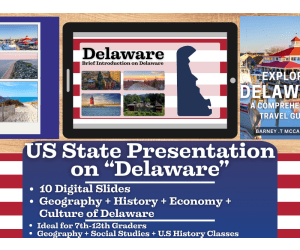
US State Presentation on Delaware
Social Studies, Geography, First Peoples (Native), History: USA, History, Middle School, Not Grade Specific, High School, Teacher Tools, Lesson Plans, Presentations
US State Presentation on Delaware Bring the United States to life in your classroom with this engaging US State Presentation on Delaware , a ready-to-use digital resource designed for Geography, Social Studies, and US History classes from 7th grade through 12th grade . This presentation provides students with a clear, structured introduction to one US state while combining essential geographical, historical, economic, and cultural information in an accessible format. This US State Presentation on Delaware , includes: The resource begins with a general introduction to the state , helping students understand its location, identity, and importance within the United States. Students then explore the state's borders and neighboring states , making it easier to place it within the broader geography of the country. A general data section introduces key facts such as population, area, population density, capital city, and other essential statistics , providing a useful foundation for further study. A paragraph that explores the history of this US state , highlighting important events, periods, people, and developments that have shaped its identity. This section is particularly useful for US History lessons because it allows students to connect state-level history with major events and themes in American history. A Geography section examines the state's physical characteristics, including its territory, landscapes, natural features, environment, and climate. Students can discover how mountains, rivers, plains, forests, coastlines, deserts, or other geographical characteristics have influenced settlement and human activity. A presentation also introduces the state's economy , explaining its major economic sectors, industries, natural resources, agricultural activities, and other economic strengths. This provides an excellent opportunity to connect geography with economics and understand why particular industries have developed in different parts of the United States. A dedicated section focuses on the capital city , introducing its importance as a political and administrative center. Students can also learn about other important cities , discovering major urban centers and their roles in business, transportation, education, culture, tourism, or industry. A paragraoh that explores culture , giving students an opportunity to learn about traditions, food, music, celebrations, landmarks, historical heritage, and other characteristics that contribute to the state's unique identity. This digital US State Presentation on Delaware is ideal for classroom instruction, student research, geography units, US History lessons, Social Studies activities, state studies, homework, review activities, and independent learning. Its organized structure makes it suitable for middle school and high school students , while its broad range of topics encourages students to view a state from multiple perspectives. Whether you are teaching a unit on the United States, American Geography, US History, state studies, or regional culture , this resource offers a convenient and engaging way to help students explore the diversity and complexity of the United States. Perfect for: Geography Classes, Social Studies Classes, US History Classes, Middle School, High School, Grades 7–12, State Studies, American Studies, Homeschooling, Student Research, and Digital Learning. Learning with Alan is an educational resource store created to help teachers, educators, and tutors reach their teaching goals while building a fun, engaging, and stimulating learning environment . Because learning should always be meaningful—and fun! 🎓✨ If you want to browse more of my Teaching Resources, click here Learning with Alan!!
Author Learning with Alan
Rating
Tags Social Studies, Geography, USA, US History, Delaware, United States Of America, Lesson, Presentation, Introduction, History
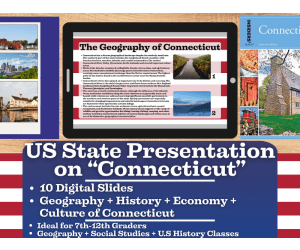
US State Presentation on Connecticut
Social Studies, Economics, Geography, History: USA, History, Not Grade Specific, Middle School, High School, Teacher Tools, Presentations, Lesson Plans
US State Presentation on Connecticut Bring the United States to life in your classroom with this engaging US State Presentation on Connecticut , a ready-to-use digital resource designed for Geography, Social Studies, and US History classes from 7th grade through 12th grade . This presentation provides students with a clear, structured introduction to one US state while combining essential geographical, historical, economic, and cultural information in an accessible format. This US State Presentation on Connecticut , includes: The resource begins with a general introduction to the state , helping students understand its location, identity, and importance within the United States. Students then explore the state's borders and neighboring states , making it easier to place it within the broader geography of the country. A general data section introduces key facts such as population, area, population density, capital city, and other essential statistics , providing a useful foundation for further study. A paragraph that explores the history of this US state , highlighting important events, periods, people, and developments that have shaped its identity. This section is particularly useful for US History lessons because it allows students to connect state-level history with major events and themes in American history. A Geography section examines the state's physical characteristics, including its territory, landscapes, natural features, environment, and climate. Students can discover how mountains, rivers, plains, forests, coastlines, deserts, or other geographical characteristics have influenced settlement and human activity. A presentation also introduces the state's economy , explaining its major economic sectors, industries, natural resources, agricultural activities, and other economic strengths. This provides an excellent opportunity to connect geography with economics and understand why particular industries have developed in different parts of the United States. A dedicated section focuses on the capital city , introducing its importance as a political and administrative center. Students can also learn about other important cities , discovering major urban centers and their roles in business, transportation, education, culture, tourism, or industry. A paragraoh that explores culture , giving students an opportunity to learn about traditions, food, music, celebrations, landmarks, historical heritage, and other characteristics that contribute to the state's unique identity. This digital US State Presentation on Connecticut is ideal for classroom instruction, student research, geography units, US History lessons, Social Studies activities, state studies, homework, review activities, and independent learning. Its organized structure makes it suitable for middle school and high school students , while its broad range of topics encourages students to view a state from multiple perspectives. Whether you are teaching a unit on the United States, American Geography, US History, state studies, or regional culture , this resource offers a convenient and engaging way to help students explore the diversity and complexity of the United States. Perfect for: Geography Classes, Social Studies Classes, US History Classes, Middle School, High School, Grades 7–12, State Studies, American Studies, Homeschooling, Student Research, and Digital Learning. Learning with Alan is an educational resource store created to help teachers, educators, and tutors reach their teaching goals while building a fun, engaging, and stimulating learning environment . Because learning should always be meaningful—and fun! 🎓✨ If you want to browse more of my Teaching Resources, click here Learning with Alan!!
Author Learning with Alan
Rating
Tags Social Studies, Geography, USA, United States Of America, Connecticut, Lesson, Presentation, Introduction, New England, US History

Reading Food Labels for Endocrine Disruptors
Science, Chemistry, Basic Science, Inventors, Theories, Life Sciences, Biology, Human Body, P.E. & Health, Health, Grade 6, 7, 8, 9, 10, 11, 12, Workbooks, Worksheets & Printables, Worksheets, Word Searches, Teacher Tools, Lesson Plans, Quizzes and Tests, Quizzes, Tests, Assessments
Are your students truly aware of what's hiding in their snacks? Transform your classroom or home into a real-world science lab with this comprehensive, no-prep curriculum that teaches students to become "Pantry Detectives!" This engaging, project-based unit empowers students to investigate their own food, decode confusing labels, and understand the science behind endocrine-disrupting chemicals (EDCs) , artificial food dyes , and microplastics . Moving beyond abstract concepts, this resource makes health and biology tangible, relevant, and incredibly important to their daily lives. Students will embark on a "scavenger hunt" through their own pantries, applying a three-tiered investigative methodology to uncover hidden chemicals in everyday foods like mac & cheese, fruit snacks, and sports drinks. They will learn to think like toxicologists and act as educated consumer advocates for their own health. This All-in-One Digital PDF Unit Includes: Part 1: The Informational Text (11 pages): A detailed, student-friendly "textbook" covering: The Endocrine System and its function. How EDCs like artificial dyes (Red 40, Yellow 5) and microplastics (BPA, Phthalates) interfere with hormones. Real-world case studies analyzing popular food products. Part 2: The Student Workbook (20 pages): Ten hands-on, investigative worksheets that guide students through their scavenger hunt. Activities include: The Pantry Reconnaissance Mission The Colorful Culprits (Artificial Dyes) The Packaging Problem (Microplastics) The "Natural" Deception (Marketing vs. Reality) The EDC-Free Action Plan (A final synthesis project) Part 3: Teacher Resources & Visuals (10 pages): Everything you need for seamless instruction: 3 High-Resolution Visual Diagrams/Anchor Charts: Perfect for presentations or classroom posters (EDC Pathway, Scavenger Hunt Matrix, Label Decoding Chart). Comprehensive Answer Key: A complete, easy-to-use answer key for all 10 worksheets. Skills & Subjects Covered: Science/Biology: Endocrine system, hormones, cellular receptors, toxicology. Health & Nutrition: Reading food labels, processed foods, making healthy choices. Critical Thinking: Analyzing marketing claims, data synthesis, problem-solving. ELA: Reading comprehension of technical text, vocabulary building. Perfect for middle school science, health class, a homeschool co-op, or a project-based learning (PBL) unit, this resource is ready to print and go. Empower your students to take control of their health by understanding the chemical landscape of their own pantry. Download today! Keywords: Middle School Science, Health, Nutrition, Endocrine System, Food Labels, Scavenger Hunt, Project-Based Learning, PBL, Artificial Dyes, Food Coloring, Microplastics, BPA, Reading Labels, Critical Thinking, Hands-On Activity, Digital, Printable, Worksheet, Homeschool, No Prep, Biology, Consumer Science. Why Parents/Schools Love It: Real-World Relevance: It brilliantly connects abstract biology and chemistry concepts directly to the food students eat every day, making learning tangible and unforgettable. Empowers Students: This isn't just a worksheet; it's a life skill. It teaches students to become critical thinkers and proactive guardians of their own long-term health. Engaging & Hands-On: The "scavenger hunt" format is fun and investigative, promoting active learning over passive memorization. Students are doing science, not just reading about it. Comprehensive & No-Prep: This is a complete, ready-to-use unit. It includes the informational text, all student activities, high-quality visuals, and a full answer key, saving teachers valuable preparation time. Target Student Audience : Based on the explicit mention on page 1 ("For a Grade 7 student") and the complexity of the topics (e.g., Bisphenol-A, petroleum-based dyes, cellular disruption), target audience is: Primary Target: Middle School students (Grades 6, 7, and 8) in Science, Health, or Life Science classes. Secondary Target: Early High School students (Grade 9) in introductory Biology, Health, or Environmental Science courses. It's also an excellent resource for Homeschooling families looking for a relevant, hands-on science curriculum. Copyright/Terms of Use: This Book was copyrighted by Syed Hammad Rizvi. This resource is for personal and single classroom use only. You may not alter, redistribute, or sell any part of this resource. In other words, you may not put it on the Internet where it could be publicly found and downloaded. If you want to share this resource with colleagues, please purchase additional licenses from Teachsimple. Thank you for respecting these terms of use. This product is happily brought to you by Syed Hammad Rizvi
Author Creative Book Store
Rating
Tags ScienceScavengerHunt, FoodLabels, ReadingLabels, EndocrineDisruptors, ProjectBasedLearning, PBL, ArtificialDyes, Microplastics, ChemicalsInFood, ConsumerScience

ESL Grammar Activity Worksheets - Superlative
Language Development, ELA, ESL, Grammar, Middle School, Not Grade Specific, High School, Adult Education, Worksheets & Printables, Worksheets
ESL Grammar Activity Worksheets - Superlative Make learning English grammar simple and engaging with this English Second or Foreign Language Teaching Resource focused on the essential Superlative . This printable ESL Grammar Activity includes easy to follow explanations, grammar exercises, and an answer key, making it an excellent resource for beginner English learners. Designed for Beginner ESL - EFL - TESOL - TEFL students , this teaching resource is ideal for newcomers, English language learners, and students who are beginning to build their English grammar foundations. The activities provide learners with an opportunity to understand and practise the Superlative in a clear and accessible way. This ESL Superlative Grammar Activity can be used in a variety of educational settings. It is suitable for ESL classrooms, English language learning centers, tutoring sessions, homeschool lessons, and individual study . Teachers and ESL tutors can use the worksheets as part of a grammar lesson, for independent practice, revision, homework, or additional classroom activities. The printable PDF format makes this resource convenient and ready to use. Simply print the worksheets and provide your students with focused grammar practice without the need for extensive preparation. What Is Included? This ESL Superlative Grammar Activity Worksheets includes: 1 Introduction to the topic 1 Clear Grammar Explanation Grammar Exercises for student practice Answer Key for easy correction and assessment Whether you are teaching English as a Second Language ( ESL ) or English as a Foreign Language ( EFL ) , this resource is a practical way to help beginner students develop confidence with Superlative Give your students structured, accessible, and printable English grammar practice with this Superlative ESL Worksheet Activity ! ESL with Alan is a Teaching Resources Store whose aim is to help English as a Second or foreign Language ( ESL - EFL - TESOL - TEFL ) Teachers, Educators and Tutors around the world ( be it online or offline ) to achieve their teaching objectives while creating an enjoyable and stimulating learning environment. Learning is fun, So should English! Always If you want to browse more of my ESL, EFL, TESOL Teaching Resources, click here right ESL with Alan!
Author Learning with Alan
Rating
Tags ESL, English Second Language, English, Grammar, Adjectives, Superlative, Worksheets, Printable, Exercises, Activity

ESL Grammar Activity Worksheets - Comperative
Language Development, ELA, ESL, Grammar, Not Grade Specific, Middle School, High School, Adult Education, Worksheets & Printables, Worksheets
ESL Grammar Activity Worksheets - Comperative Make learning English grammar simple and engaging with this English Second or Foreign Language Teaching Resource focused on the essential Comperative . This printable ESL Grammar Activity includes easy to follow explanations, grammar exercises, and an answer key, making it an excellent resource for beginner English learners. Designed for Beginner ESL - EFL - TESOL - TEFL students , this teaching resource is ideal for newcomers, English language learners, and students who are beginning to build their English grammar foundations. The activities provide learners with an opportunity to understand and practise the Comperative in a clear and accessible way. This ESL Comperative Grammar Activity can be used in a variety of educational settings. It is suitable for ESL classrooms, English language learning centers, tutoring sessions, homeschool lessons, and individual study . Teachers and ESL tutors can use the worksheets as part of a grammar lesson, for independent practice, revision, homework, or additional classroom activities. The printable PDF format makes this resource convenient and ready to use. Simply print the worksheets and provide your students with focused grammar practice without the need for extensive preparation. What Is Included? This ESL Comperative Grammar Activity Worksheets includes: 1 Introduction to the topic 1 Clear Grammar Explanation Grammar Exercises for student practice Answer Key for easy correction and assessment Whether you are teaching English as a Second Language ( ESL ) or English as a Foreign Language ( EFL ) , this resource is a practical way to help beginner students develop confidence with Comperative Give your students structured, accessible, and printable English grammar practice with this Comperative ESL Worksheet Activity ! ESL with Alan is a Teaching Resources Store whose aim is to help English as a Second or foreign Language ( ESL - EFL - TESOL - TEFL ) Teachers, Educators and Tutors around the world ( be it online or offline ) to achieve their teaching objectives while creating an enjoyable and stimulating learning environment. Learning is fun, So should English! Always If you want to browse more of my ESL, EFL, TESOL Teaching Resources, click here right ESL with Alan!
Author Learning with Alan
Rating
Tags ESL, English Second Language, English, Grammar, Comperative, Adjectives, Activity, Worksheets, Printable, Exercises

Cellular Hydration & Electrolyte Balances
Math, Money, Measurements, Science, Physics, Life Sciences, Biology, Human Body, Statistics, Percentages, Grade 6, 7, 8, 9, 10, 11, 12, Worksheets & Printables, Workbooks, Worksheets, Word Searches, Teacher Tools, Quizzes and Tests, Quizzes, Tests, Assessments, Lesson Plans
Transform your math and science classroom into a high-stakes sports science lab! Ever have students ask, "When will I ever use this in real life?" This comprehensive, cross-curricular unit is the definitive answer, bridging the gap between abstract mathematical concepts and the tangible, high-interest world of athletic performance. This no-prep resource, "The Mathematics of Athletic Recovery," challenges students to step into the role of a sports scientist. They will learn the critical biology behind hydration and electrolyte balance and then apply mathematical skills to solve real-world problems for student-athletes. This isn't just another worksheet; it's a deep dive into the practical application of math and science. WHAT'S INCLUDED (45 Pages): Phase 1: The Foundational Text (11 pages): An engaging, textbook-style introduction to the science of sweat, electrolytes (Sodium, Potassium, Magnesium), and the dangers of improper hydration. It introduces the core formulas and the "Golden Ratio" of recovery. Phase 2: Student Workbook (21 pages): Ten progressively challenging math worksheets that guide students from basic conversions to complex, multi-step word problems. Students will calculate sweat rates, electrolyte deficits, replenishment ratios, and formulate custom recovery plans for various athletes and scenarios. Phase 3: Visuals & Teacher Resources (13 pages): High-Quality Visual Aids: Three professional SVG diagrams perfect for projection or as anchor charts, illustrating electrolyte depletion, the 40:8:1 recovery ratio, and the Sodium-Potassium pump. Comprehensive Answer Key: Complete solutions for all 10 worksheets. Full Teacher Implementation Guide: Includes core objectives, a suggested 3-day pacing guide, discussion points, differentiation strategies (for scaffolding and rigor), and guidance on addressing common student misconceptions. KEY MATH & SCIENCE CONCEPTS COVERED: Mathematics: Ratios, Proportions, Unit Conversions (Metric & Customary), Percentages, Multi-step Word Problems, Basic Algebra, Data Analysis. Health & Science: Cellular Hydration, Homeostasis, Osmosis, Key Electrolytes (Na+, K+, Mg2+), Muscular Function, and the science of athletic recovery. PERFECT FOR: Middle School Math Classes (Grades 7-9) High School Health, Biology, or Physical Education Classes Applied Mathematics Courses Homeschooling Curriculum Engaging Project for Student-Athletes Emergency Sub Plans Empower your students to see math and science in action! This unit not only builds critical thinking and calculation skills but also teaches valuable lessons about health and physiology. Download now and show your students how math powers champions! Why Parents/Schools Love It: Real-World Application: It directly answers the age-old student question, "Why do we need to learn this?" by connecting math to the high-interest topic of sports, making learning relevant and memorable. Promotes Critical Thinking: Instead of simple plug-and-chug problems, this unit requires students to analyze complex scenarios, select the correct formulas, and execute multi-step calculations, just like a real scientist. Truly Cross-Curricular: It seamlessly integrates core Math standards with essential Health and Life Science concepts (biology, physiology), reinforcing learning across multiple subjects. Comprehensive and Teacher-Friendly: This is a complete, "no-prep" unit. With a detailed lesson, 10 worksheets, professional visuals, an answer key, and a full implementation guide, it saves teachers valuable planning time. Engages All Learners: The theme of athletic performance is highly motivating for student-athletes and sports fans, providing a powerful hook to capture the interest of students who might otherwise be disengaged from math. Target Student Classes : Based on the content and the explicit mention in the Teacher's Guide, target: Primary Target: Middle School (Grades 7, 8, and 9) . The mathematical concepts (ratios, percentages, multi-step problems) are a perfect fit for the 8th-grade curriculum and are excellent for enrichment in 7th grade or review in 9th grade. Secondary Target: High School (Grades 9-11) . This resource is exceptionally well-suited for: General or Applied Math courses. Biology classes studying homeostasis and cellular transport. Health and Physical Education (PE) classes. Introductory Sports Medicine or Kinesiology electives. Copyright/Terms of Use: This Book was copyrighted by Syed Hammad Rizvi. This resource is for personal and single classroom use only. You may not alter, redistribute, or sell any part of this resource. In other words, you may not put it on the Internet where it could be publicly found and downloaded. If you want to share this resource with colleagues, please purchase additional licenses from Teachsimple. Thank you for respecting these terms of use. This product is happily brought to you by Syed Hammad Rizvi
Author Creative Book Store
Rating
Tags Math, Science, Health, Biology, STEM, STEAM, PhysicalEducation, RealWorldMath, AppliedMath, SportsScience
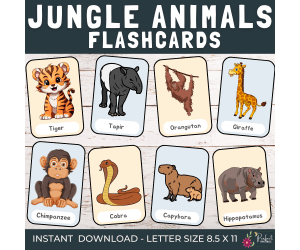
Jungle Animals Flashcards | Wildlife and Nature Vocabulary For Kids
Montessori, Animals, Life Sciences, Science, Biology, Kindergarten, Preschool, Grade 1, 2, 3, 4, 5, Flashcards, Worksheets & Printables, Task Cards
Help young learners explore jungle animals with these engaging Jungle Animals Flashcards! Students can learn to recognize different jungle animals while building wildlife vocabulary, observation skills, and early science knowledge. I like using these flashcards during jungle and rainforest animal units, wildlife studies, nature lessons, animal science activities, classroom centers, and homeschool learning. They provide a simple and visual way for children to learn, identify, and review animal vocabulary. What You Will Get This printable Jungle Animals Flashcards resource gives children a fun and visual way to learn about jungle wildlife and nature vocabulary. What's Included in this Resource? • Jungle animal picture flashcards • Wildlife vocabulary cards • Animal identification practice • Nature and animal vocabulary • Visual recognition activities • Student-friendly printable cards • Great for independent or small-group learning This resource is perfect for: • Jungle animal units • Rainforest and wildlife studies • Nature lessons • Animal science activities • Early science learning • Classroom centers • Vocabulary practice • Homeschool learning Why you will love this? • Easy to print and use • Builds animal and nature vocabulary • Helps children recognize different jungle animals • Encourages observation and visual recognition • Introduces young learners to wildlife and natural environments • Great for classroom centers and animal-themed learning These Jungle Animals Flashcards are a fun and simple way for kids to explore wildlife, learn animal vocabulary, and develop early science and observation skills through visual learning activities.
Author Perfect_Printables
Rating
Tags 3 Part Cards, Montessori Cards, Jungle Animals, Jungle Flashcards, Wildlife Vocabulary, Nature Vocabulary, Animal Flashcards, Jungle Animal Cards, Animal Identification, Rainforest Animals
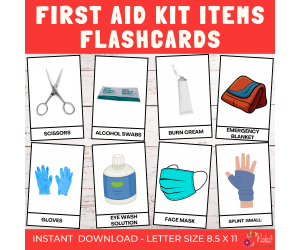
First Aid Kit Items Flashcards | Emergency Safety Supplies Recognition
Montessori, Health, P.E. & Health, Life Skills, Special Resources, Kindergarten, Preschool, Grade 1, 2, 3, 4, 5, Flashcards, Worksheets & Printables, Task Cards
Help students learn to recognise common first aid kit items and emergency safety supplies with these engaging flashcards! Students can explore everyday first aid tools and supplies while building safety vocabulary, visual recognition, and practical life skills. I like using these flashcards during health and safety lessons, first aid units, life skills instruction, emergency preparedness activities, classroom centres, and homeschool learning. They provide a simple and visual way for students to identify common items found in a first aid kit. What You Will Get This printable First Aid Kit Items Flashcards resource gives students a visual way to learn and review emergency safety and first aid vocabulary. What's Included in this Resource? • First aid kit item flashcards • Emergency safety supply recognition cards • First aid vocabulary • Visual identification practice • Safety and health vocabulary • Student-friendly printable cards • Great for independent or small-group learning This resource is perfect for: • First aid lessons • Health and safety activities • Emergency preparedness lessons • Life skills instruction • Safety vocabulary practice • Classroom centres • Health education • Homeschool learning Why you will love this? • Easy to print and use • Builds practical safety vocabulary • Helps students recognise common first aid supplies • Supports visual learning and vocabulary development • Encourages discussion about emergency preparedness • Great for classroom centres and small-group activities These First Aid Kit Items Flashcards are a simple and engaging way for students to learn about common first aid supplies, build emergency safety vocabulary, and strengthen practical life skills through visual recognition activities.
Author Perfect_Printables
Rating
Tags 3 Part Cards, Montessori Cards, First Aid, First Aid Kit, Health Safety, First Aid Kit Flashcards, First Aid Kit Activities, Safety Flashcards, Emergency Supplies, First Aid Vocabulary
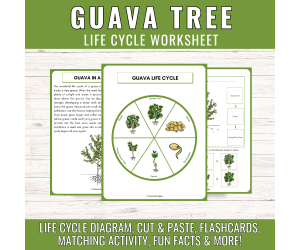
Guava Fruit Life Cycle Tropical Plant Science Unit Study Cut & Paste
Life Sciences, Science, Biology, Nature & Plants, Kindergarten, Preschool, Grade 1, 2, 3, Coloring Pages, Worksheets, Worksheets & Printables, Parts of and Anatomy of, Flashcards, Diagrams, Teacher Tools, Lesson Plans
Help students explore the fascinating life cycle of a guava plant with this engaging tropical plant science activity! Students will learn about the different stages of guava plant growth while practicing sequencing, cutting, pasting, and science vocabulary. I like using this resource during plant life cycle units, tropical plant studies, fruit and plant lessons, science centers, and homeschool learning. It's a hands-on way for students to explore how a guava plant grows and develops from seed to a mature plant that produces flowers and fruit. What You Will Get This printable guava fruit life cycle activity gives students an easy and engaging way to learn about tropical plant growth and development. What's Included in this Resource? • Guava plant life cycle activity • Life cycle sequencing practice • Cut-and-paste activities • Plant growth stages • Guava fruit and plant science vocabulary • Student-friendly printable pages • Hands-on science learning activity This resource is perfect for: • Plant life cycle units • Tropical plant studies • Fruit and plant science • Life science lessons • Science centers • Cut-and-paste activities • Preschool and elementary science • Homeschool learning Why you will love this? • Easy to print and use • Builds sequencing and observation skills • Introduces students to the life cycle of a tropical fruit plant • Provides hands-on cutting and pasting practice • Reinforces plant science vocabulary • Makes science learning interactive and engaging This Guava Fruit Life Cycle Activity is a fun way for students to explore the growth stages of a tropical fruit plant while strengthening sequencing, fine motor, and early science skills through hands-on cut-and-paste learning.
Author Perfect_Printables
Rating
Tags Life Cycle, Plant Life Cycle, Tropical Plants, Plant Science Activity, Plants Worksheet, Fruits Life Cycle, Fruit Plant, Life Cycle Activity, Guava Plant, Guava Plant Body Parts

Rainforest Habitat animals flashlight cards hidden picture activity
Animals, Life Sciences, Science, Environmental Science, Earth and Environmental Sciences, Kindergarten, Preschool, Toddler, Grade 1, 2, Flashcards, Worksheets & Printables, Centers, Activities, Games
Make learning about rainforest habitats and animals fun and interactive with these Rainforest Habitat Animals Flashlight Cards! Students will use a flashlight to reveal hidden rainforest animal pictures while practicing animal recognition and building science vocabulary through an exciting hands-on activity. I like using these flashlight cards during rainforest habitat units, tropical animal studies, animal science lessons, wildlife activities, preschool and kindergarten science centers, and homeschool learning. It's an engaging, low-prep activity that adds a fun element of discovery to habitat and animal learning. What You Will Get This printable Rainforest Habitat Animals Flashlight Cards resource gives students an exciting way to discover hidden rainforest animals and review animal and habitat vocabulary. What's Included in this Resource? • Printable rainforest animal flashlight cards • Hidden picture reveal activity • Rainforest animal and habitat vocabulary • Hands-on flashlight discovery activity • Student-friendly science center format • Easy-to-use printable cards • Great for independent or small-group learning This resource is perfect for: • Rainforest habitat science units • Rainforest animal studies • Tropical habitat lessons • Animal science activities • Preschool and kindergarten science centers • Life science learning • Small-group activities • Homeschool learning Why you will love this? • Easy to prepare and use • Creates an exciting hands-on learning experience • Builds observation and visual recognition skills • Reinforces rainforest animal vocabulary • Encourages curiosity and independent discovery • Great for science centers and habitat-themed units These Rainforest Habitat Animals Flashlight Cards are a fun way for young learners to discover hidden rainforest animals, practice animal recognition, and build observation skills through an interactive habitat science activity.
Author Perfect_Printables
Rating
Tags Animal Science, Science Center Activities, Hidden Picture Activities, Flashlight Cards, Wildlife Activities, Animal Adaptation, Animal Habitat Activity, Rainforest Animals, Amazon Rainforest, Rainforest Animals Activity

Woodland Birds Flashcards Birds Identifying card Set for Early Learner
Montessori, Earth Sciences, Earth and Environmental Sciences, Science, Animals, Life Sciences, Kindergarten, Preschool, Grade 1, 2, 3, 4, 5, Flashcards, Worksheets & Printables, Task Cards
Help young learners discover common woodland birds with these engaging bird identification flashcards! Students can learn to recognize different birds while building nature vocabulary, observation skills, and early science knowledge. I like using these flashcards during woodland animal units, bird studies, nature lessons, science centers, outdoor learning, preschool activities, and homeschool learning. They provide a simple and visual way for children to explore birds found in woodland and forest environments. What You Will Get This printable Woodland Birds Flashcards resource gives early learners a fun and visual way to identify and learn about woodland birds. What's Included in this Resource? • Woodland bird identification flashcards • Bird picture cards • Bird name vocabulary • Visual bird recognition practice • Nature and animal vocabulary • Student-friendly printable cards • Great for independent or small-group learning This resource is perfect for: • Woodland bird studies • Forest habitat units • Bird identification activities • Nature studies • Early science lessons • Science centers • Outdoor learning • Homeschool learning Why you will love this? • Easy to print and use • Builds bird and nature vocabulary • Helps children recognize different woodland birds • Encourages observation and visual recognition • Introduces young learners to birds and their natural habitats • Great for classroom centers and nature-themed learning These Woodland Birds Flashcards are a fun and simple way for early learners to explore woodland birds, build nature vocabulary, and practice bird identification through visual learning activities.
Author Perfect_Printables
Rating
Tags 3 Part Cards, Montessori Cards, Woodland Birds, Bird Flashcards, Bird Identification, Nature Activities, Bird Vocabulary, Forest Birds, Animal Flashcards, Bird Identifying Cards
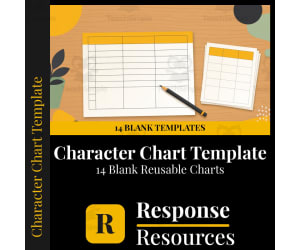
Character Chart Template
Reading Comprehension, Reading, ELA, Grade 3, 4, 5, 6, 7, 8, 9, Charts, Teacher Tools, Templates
Every reading teacher ends up drawing the same boxes on the board. This character chart template set is those boxes, already ruled, with the heading left to you. There are fourteen structures here and not one of them carries a printed question. The character tables come in three, four and five columns, the widest of them holding twelve rows so it can serve as a running record for a whole cast across a long novel rather than as a single lesson. There is a comparison sheet whose left-hand column is blank, so the questions two characters get measured against are the ones that matter in your text this week. There is a plain two-column sheet, the one that ends up doing half the work in any reading classroom, and three-band and four-band sheets for when students need to write sentences rather than words. Grids come in three arrangements, two by two, three by two and two by three, because the number of cells and the width of each one change what a student can put in them. Two webs radiate four and six branches from a centre you name. Two timelines run four and five stages down the page, joined by arrows, for tracking anything that changes in order. Each heading band is a white strip with a rule across it, wide enough to write on with a pen and tall enough to read once written. That is the whole design idea: label a sheet once, photocopy it for the class, and the same ruling serves a different purpose next month. Hand them out unlabelled instead and the choice of categories becomes the thinking, which is often the harder and better task. Pages print black on white with no filled backgrounds, so a class set is cheap, and each carries a line for the name, the date and the title of the text. The charts are named for characters because that is what teachers reach for them most often, not because they stop working elsewhere - the same grids and timelines serve a science process, a history sequence or a vocabulary sort without any change at all. A character chart template only stops being one when you write a different word on it.
Author Response Resources
Rating
Tags Character Chart Template, Character Chart, Blank Graphic Organizers, Editable Character Chart, Character Analysis, Reading Comprehension, Any Text, Printable Charts, Novel Study, Reading Templates
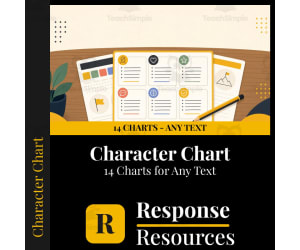
Character Chart
Reading Comprehension, Reading, ELA, Grade 3, 4, 5, 6, 7, 8, 9, Charts, Teacher Tools, Graphic Organizers
This character chart set gives a reading teacher fourteen ready charts and asks nothing of the text in return. Whatever your class is reading this month - a class novel, a short story in an anthology, a play, a picture book, a documentary - the same fourteen pages fit it, because none of them names a title, an author or a character. What separates these from a stack of blank boxes is that the headings do the teaching. One page asks students to sort words into traits and feelings, and to justify the sort from the text rather than from the word itself, because deciding whether stubborn and angry belong in the same category is where careful character reading actually begins. Another page holds two questions apart that are almost always run together: whether a character changes across a story, and whether a character is simple or complex. Those are independent, a character can be complex and unchanging, and students who have never been shown that will happily write that a round character must therefore be dynamic. A third page walks the five signals of indirect characterization one at a time and then asks what the five add up to, so the letters end as a judgement rather than as a collection. The comparison page prints its own questions down the left-hand side. Two characters then get measured against the same six things instead of producing two unrelated lists that never meet, which is what an unlabelled two-column sheet tends to produce. The final page is a planner: a claim in one sentence, two pieces of evidence, and an explanation of how the second proves the first, with a plain instruction to change the claim if the evidence will not support it. Pages are one chart each, ruled generously enough to write sentences rather than single words, and printed in black on white so a class set costs almost nothing. A line at the top of every page records the title of the text, so a folder of finished charts is still readable at report time. There is no key, because the evidence lives in whatever the student is reading.
Author Response Resources
Rating
Tags Character Chart, Character Analysis, Character Traits, Graphic Organizer, Text Evidence, Characterization, Reading Comprehension, Any Novel Or Story, Novel Study, Middle School Ela
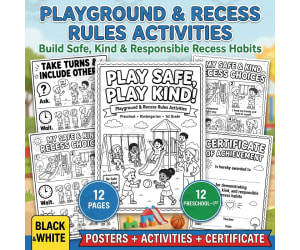
Playground Rules Activities | Recess Safety Book, Posters & Certificat
Social Emotional Learning (SEL), Special Resources, Physics, Science, Kindergarten, Preschool, Grade 1, Activities, Classroom Decor, Worksheets & Printables, Teacher Tools
Make playground expectations clear, positive, and easy for young learners to remember! This Playground Rules Activities resource gives Preschool, Kindergarten, and 1st grade students simple visual supports for learning how to play safely, treat others kindly, and make responsible choices during recess. The resource includes an original class discussion book, focused playground rules posters, a student practice page, scenario-based decision making, and certificates to celebrate successful learning. The short, age-appropriate language and clear black-and-white visuals make it easy to introduce expectations at the beginning of the school year or revisit routines whenever your class needs a reset. What's Included 1 premium resource cover 1 teacher introduction and discussion guide 1 class read-aloud: My Safe & Kind Recess Choices 4 individual playground and recess rules posters 1 playground choices sorting activity 1 “What Should I Do?” scenario page 1 student recess promise page 1 student certificate page 1 thank-you page Skills Developed Students practice: playground and recess safety awareness following shared rules and routines self-management responsible decision-making social skills and cooperation taking turns and respecting personal space asking an adult for help when needed Perfect For This resource is ideal for back-to-school routines, beginning-of-year SEL lessons, classroom community building, recess expectation reviews, behavior refreshers, preschool and elementary counseling lessons, and positive classroom management. Why Teachers Love It The consistent visual language helps young children connect each rule with a clear action. Pages are intentionally uncluttered, easy to explain, and designed for quick whole-group teaching followed by meaningful student practice. Simply print, teach, discuss, and display the rules that best support your school's playground expectations. This Preschool, Kindergarten, and 1st grade recess resource provides practical social emotional learning support for creating a safer, kinder, and more successful playground experience.
Author TeachTrend Studio
Rating
Tags Activities; Posters; Printables; Awards And Certificates; Classroom Management; Social Skills

Whole Body Listening Activities | SEL Posters & Listening Skills K-2
Health, P.E. & Health, Social Emotional Learning (SEL), Special Resources, Kindergarten, Preschool, Grade 1, Worksheets & Printables, Activities
Help young learners understand that listening is an active skill with this engaging Whole Body Listening resource! Designed for Kindergarten through 2nd grade, this visual SEL and speaking-and-listening pack gives students clear, age-appropriate reminders and meaningful practice for using their eyes, ears, hands, feet, voice, and thinking during learning and conversations. With easy-to-understand visuals, interactive sorting, scenario practice, reflection, and a simple personal listening plan, students move beyond memorizing expectations and begin applying positive listening behaviors in real classroom situations. What's Included: • 1 colorful cover page • 1 Whole Body Listening overview poster • 6 body-part listening cue posters • 1 Listening Detective sorting activity • 1 classroom scenario practice page • 1 My Whole Body Listening Plan reflection page • 1 thank-you page Skills Developed: • Active listening • Speaking and listening skills • Self-awareness • Self-management • Respectful communication • Social skills • Recognizing helpful and unhelpful listening choices Perfect For: • Morning meetings • Back-to-school SEL lessons • Classroom expectation reviews • Whole-group discussions • Small-group social skills instruction • Counseling support • Listening lessons and behavior reminders Why Teachers Love It: The consistent visual language makes listening expectations easy for young students to understand, discuss, and practice. The black-and-white interior pages are printer-friendly and give teachers flexible options for display, independent work, partner discussion, and classroom review. Use these Whole Body Listening activities and posters to build stronger active listening habits, respectful conversations, and a more focused classroom community. A practical SEL and speaking-and-listening resource for Kindergarten, 1st grade, and 2nd grade classrooms!
Author TeachTrend Studio
Rating
Tags Posters; Activities; Printables; Social Skills; Classroom Management; Visual Supports