



3,912 products added recently
Page 3 - Social Studies Graphic Organizers
Support your social studies curriculum with graphic organizers designed to help students process historical events, cultural practices, and societal structures. These resources facilitate critical thinking and make connections clearer. Use them to enrich discussions and deepen comprehension in your social studies classes.

 Show filters


U.S. Government: Gallery Walk of Executive Branch and President's Role
Social Studies, History, History: USA, Government, Grade 8, 9, 10, 11, 12, Teacher Tools, Graphic Organizers, Activities
In this lesson on the US Government: Executive Branch (both Google and Traditional versions are provided), your students will partake in a Gallery Walk activity exploring the multiple "hats" (roles) the US president assumes in the course of his/her duties. The roles explored in this U.S. Government: Gallery Walk of Executive Branch and President's Role include: Commander in Chief, Chief Diplomat, Chief of State, Chief of Party, Chief Citizen, Chief Executive, Chief Legislator, and Chief Administrator. A Gallery Walk activity involves students examining various exhibits akin to a museum, which you place around the classroom. This activity is a dynamic way to present information and encourages physical movement in a structured manner – a refreshing change from conventional lectures! This product includes all necessary Museum Exhibits and corresponding student sheets! **Includes a GOOGLE and Traditional version for your use! About: Learning is a Passion Store - I have taught 6th-12th grade during my 20 year teaching career. I prefer to use lessons in my teaching practice that allow my students to become facilitators and active participants in their own learning rather than merely an audience of "my show". I love to create hands- on, interactive activities that really engage my students in the learning process.
Author Learning is a Passion
Tags Gallery Walk, Government, Executive Branch, President's Roles

Great Depression Causes – Flowchart Study Guide
Social Studies, History, History: World, Grade 7, 8, 9, 10, Teacher Tools, Graphic Organizers
This Great Depression Causes Flowchart details important information about this piece of history in an organized way. The flowchart is broken down into 3 sections: - Unequal distribution of wealth - Overproduction of goods - Buying stock on margin This serves as a great study guide for students.
Author Cogjogger
Rating
Tags Great Depression, History, Flowchart, Study Guide, Assessment, Flowchart Graphic Organizer
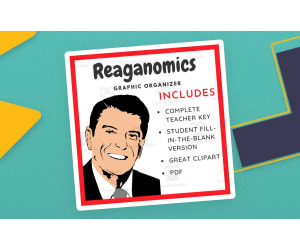
Reaganomics: Graphic Organizer
Social Studies, History, History: USA, Grade 8, 9, 10, 11, Teacher Tools, Graphic Organizers
Reaganomics: Graphic Organizer A valuable teaching resource, this comprehensive tool simplifies the complex subject of Reagan's economic policies. It is designed for students from grades 8 to 11. Particularly, educators working with subjects in Social Studies, specifically within the subdomain of USA History. Key Principles This graphic organizer focuses on 'Reaganomics', the economic approach used by President Ronald Reagan during his tenure from 1981-1989. The strategies covered include: Supply-side economics Monetarism Deregulation The graphics depict how these mechanisms were implemented to stimulate economic growth and boost job creation through decreases in taxes, reductions in government expenditure, and relaxing regulations across industries. Policy Changes Under Reagan's Administration Notably, important policy changes such as Tax Reform Act of 1986 aimed at simplifying tax code while promoting fairness and efficiency are discussed. The reasoning behind reducing government spending within social welfare programs is also explored – an attempt to downsize federal involvement while increasing individual contributions. Critical Perspectives on Reaganomics Included within it is an examination of arguments both praising and critiquing "Reaganomics". This promises exposure to critical thinking exercises around pertinent ongoing debates. An Excellent Classroom Tool This effective method stimulates classroom discussion or debate among peers during group study sessions or even when given as homework assignments. The Package Includes: A detailed teacher version with answers which can serve as a 'key'. A student template for filling in the blanks to confirm an understanding of Reaganomics. Available in a PDF format, this classroom-ready resource can plunge educators and students into the depths of a significant era in American economic history.
Author EduPal Learning
Tags Reaganomics, Economic Policies, Supply-side Economics, Monetarism, Deregulation, What Is Reaganomics, Were Reaganomics Good For The United States

Popcorn Concept Map Graphic Organizer Worksheet
ELA, Social Studies, Writing, Reading, Grade 3, 4, 5, Teacher Tools, Graphic Organizers, Worksheets & Printables, Worksheets
they are learning about in class. This is a great way for them to organize their thoughts and see the connections between different concepts. This Popcorn Concept Map Graphic Organizer Worksheet is a great way for your students to organize their thoughts and see the connections between different concepts. Filling in the concept map with the topics and related concepts they are learning about in class will help them better understand the material.
Author Have Fun Teaching
Tags Note Taking, Concept Map Graphic Organizer, A Concept Map Is A Graphic Organizer., Graphic Organizer Concept Map, Skill Worksheet Concept Mapping

Bering Land Bridge – Graphic Organizer & Mapping
Social Studies, History, History: USA, History: World, Grade 6, 7, 8, 9, Teacher Tools, Graphic Organizers
The Bering Land Bridge - Graphic Organizer & Mapping Activity This is a robust teaching resource crafted for grades 6 through 9 USA History and World History classes. It uniquely blends key concepts with strategies for note-taking, fostering an environment ripe for educational growth. Main Features: Specially made to help students grasp the major events surrounding the crossing of the Bering Land Bridge by hunter-gatherers. Features student-centric and instructor-focused notes, encouraging active content engagement while supporting teachers during instruction. Acts as a bridge between theory and practice, complementing classroom readings with additional ideas to stimulate insightful discussions. The built-in reading activity about the Bering Land Bridge, is an interactive exercise allowing students to understand about human migration patterns globally easily. The package also includes a mapping activity along with probing questions to further enhance comprehension levels across all learning stages. No extra purchases required; everything needed is included in this product bundle! The Power of Visual Aids: To promote knowledge retention effectively, this instructional resource incorporates relevant illustrations from Teachers Resource Force & Prince Padania. All these resources offer flexibility for adaptation - be they whole class activities, small group assignments or individual homework projects. In conclusion, any educator aiming to instill their students with thorough understanding of this global historical event will find 'The Bering Land Bridge - Graphic Organizer & Mapping Activity' incredibly useful!
Author EduPal Learning
Rating
Tags Bering Land Bridge, Hunter-gatherers, Migration Patterns, Geographical Implications, Mapping Activity
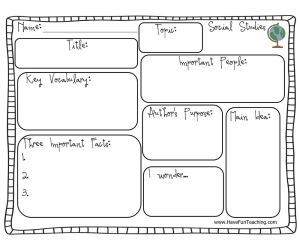
Social Studies Graphic Organizer Worksheet
Social Studies, ELA, Reading, Grade 3, 4, Teacher Tools, Graphic Organizers, Worksheets & Printables, Worksheets
Social Studies Graphic Organizer Worksheet
Author Have Fun Teaching
Tags Text Features
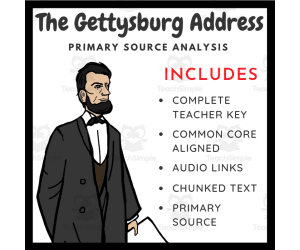
The Gettysburg Address: Primary Source Analysis
Social Studies, History, History: USA, Grade 7, 8, 9, 10, 11, Teacher Tools, Graphic Organizers
In November of 1863, a ceremony was held to dedicate a cemetery in Gettysburg to honor the great battle. The first speaker was Edward Everett, who gave an impassioned two-hour speech. After Everett, Abraham Lincoln rose and spoke for little more than two minutes. Lincoln’s Gettysburg Address was, in many ways, a summation of why the war was being fought and the meaning of the sacrifices made by the men who fought in the battle. At the end of Lincoln’s speech, Edward Everett, the man who had spoken prior to Lincoln, said, “I wish I could flatter myself that I had come as near to the central idea of the occasion in two hours as you did in two minutes." This product will help bring the speech alive to your students. This product is aligned to excerpts read directly from the speech. Excellent for struggling readers and audio learners. This product breaks down the speech into chunked text for students. After each section, students are asked some simple processing questions that will help them comprehend what they have read. I have also include time stamps so that students can listen to the speech while they follow along. Clipart and Product Clipart Credit: by Dandy Doodles
Author EduPal Learning
Tags Gettysburg Address, Lincoln, CIvil War, Primary Source , Common Core, Gettysburg Address Analysis, Analyze The Gettysburg Address, Primary Source Battle Of Gettysburg, Gettysburg Address Worksheet Pdf, Gettysburg Primary Source, The Gettysburg Address Analysis, Analyze Gettysburg Address, Analysis Of Gettysburg Address, Central Idea Of The Gettysburg Address, Gettysburg Address Worksheet, Analysis Of The Gettysburg Address

The Scientific Revolution: Graphic Organizer
Social Studies, History, History: World, Grade 7, 8, 9, 10, 11, Teacher Tools, Graphic Organizers
The Scientific Revolution refers to a period of profound scientific advancements and changes in the way people viewed and understood the natural world. It took place roughly between the 16th and 18th centuries, starting with the Copernican Revolution and ending with the Enlightenment. During this period, several significant scientific discoveries and advancements were made, leading to a fundamental shift in scientific thinking. Some key figures associated with the Scientific Revolution include Nicolaus Copernicus, Galileo Galilei, Johannes Kepler, Isaac Newton, and Francis Bacon. One of the central developments of the Scientific Revolution was the heliocentric model of the solar system proposed by Copernicus. He argued that the Earth revolves around the Sun, challenging the prevailing geocentric model that placed the Earth at the center of the universe. Galileo's observations with his improved telescope supported Copernicus' heliocentric model and further contributed to the understanding of planetary motion. Galileo also conducted experiments on motion, discovering the principle of inertia and making significant contributions to the field of mechanics. Johannes Kepler formulated three laws of planetary motion, providing mathematical descriptions of how planets move in elliptical orbits around the Sun. His laws helped establish a more accurate understanding of celestial mechanics. Perhaps the most influential figure of the Scientific Revolution was Sir Isaac Newton. His groundbreaking work in physics, laid out in his book "Mathematical Principles of Natural Philosophy" (often referred to as "Principia"), presented the laws of motion and the law of universal gravitation. Newton's laws provided a unified framework for understanding the motion of celestial bodies and objects on Earth. The Scientific Revolution also saw advancements in other fields, including anatomy, biology, chemistry, and optics. It led to the development of new experimental methods and the establishment of scientific institutions, such as the Royal Society in England. The impact of the Scientific Revolution extended beyond the scientific realm. It challenged long-held beliefs and traditional authorities, particularly those of the Catholic Church. The new scientific knowledge and methods encouraged critical thinking and the pursuit of empirical evidence, laying the groundwork for the Enlightenment—an intellectual and philosophical movement that emphasized reason, individualism, and progress. Overall, the Scientific Revolution marked a significant turning point in human history, ushering in a new era of scientific inquiry, experimentation, and a more systematic approach to understanding the natural world. It paved the way for subsequent scientific advancements and continues to shape our understanding of the universe today. Teacher-prepared notes show students what is important and how ideas relate, and offer a model for how students should take notes themselves (Marzano et al., 2001). These notes come with a completed teacher version and a student fill-in-the-blank version. Ready to print and ready to use! Works great with the interactive notebook! Thumbnail Clipart Credit: By PrincePadania
Author EduPal Learning
Tags Scientific Revolution, Graphic Organizer , Galileo, Newton, Copernicus

LBJ's Great Society: Graphic Organizer
Social Studies, History, History: USA, Grade 7, 8, 9, 10, 11, Teacher Tools, Graphic Organizers
The Great Society program was a set of domestic policies and initiatives introduced by President Lyndon B. Johnson in the 1960s. It aimed to address various social issues and create a more equitable society in the United States. The Great Society encompassed a wide range of programs and legislation focused on areas such as civil rights, poverty alleviation, education, healthcare, and urban renewal. The Great Society program had a significant impact on American society, particularly in terms of civil rights, poverty reduction, and access to education and healthcare. However, its implementation faced challenges, and its long-term effects have been the subject of ongoing debate and evaluation. Teacher-prepared notes show students what is important and how ideas relate, and offer a model for how students should take notes themselves (Marzano et al., 2001). These notes begin by giving students an overview into the events that led to LBJ's presidency. The notes then broadly categorize the two major goals of The Great Society and provide four legislative achievements for each one. This graphic organizer will work great as an introduction to the Great Society! Comes with a student fill-in-the-blanks sheet. Ready to use! Thumbnail clipart credit: By PrincePadania
Author EduPal Learning
Tags LBJ, Great Society, 1960s, APUSH, US History, Graphic Organizer, Scaffolded Learning
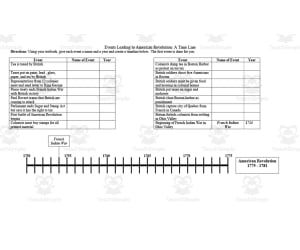
Road to American Revolution Timeline Exercise
Social Studies, History, History: World, Grade 9, 10, 11, 12, Teacher Tools, Graphic Organizers
This is a Road to American Revolution Timeline Exercise. Students can use their textbook to give each event a name and a year to create a timeline.
Author Cogjogger
Tags British, American Revolution, Timelines, Sugar And Stamp Act, French Indian War, The Road To Revolution Timeline, French Revolution Timeline Activity
D-Day Invasion: Graphic Organizer
Social Studies, History, History: USA, History: World, Grade 7, 8, 9, 10, 11, Teacher Tools, Graphic Organizers
The D-Day Invasion: Graphic Organizer Functioning as a beneficial teaching tool for educators, the D-Day Invasion: Graphic Organizer focuses on one of World War II's pivotal events. This introduction to the largest seaborne invasion in history marks the definitive turning point against Nazi Germany. Targeted towards grades 7 to 11, this graphic organizer offers an inclusive understanding of both US and world history. The package elucidates complex concepts, planning, and execution strategies associated with the operation. This understanding leads students to comprehend how Allies established their presence inland despite staunch resistance. Key historical aspects emphasized involve courage, determination, sacrifice and unity exhibited by thousands of troops from countries like: America Britain Canada Hundreds of aircraft and naval vessels were also instrumental in shaping these events. Included within this package: Teacher-prepared notes: Insights offering guidance on valuable points alongside reliable study material for learners. Dual edition versions: Student version catering initial comprehension needs along with filled-in teacher version providing reference guide. Optimal utility in classrooms or home studies remotely. Possible medium utilizations are whole group instructions or smaller groups promoting interactive brainstorming sessions or engaging homework assignments fostering critical thinking among peers. The value addition comes from: The visually engaging illustrations by Teachers Resource Force alongside Prince Padania’s maps for better geographical interpretation. This visual teaching aid significantly encourages learning retention better than conventional text-based methods alone. The PDF file type ensures ease-of-use across multiple digital platforms. With The D-Day Invasion: Graphic Organizer , experience new teaching possibilities meticulously created by teachers, for teachers!
Author EduPal Learning
Tags D-Day Invasion, World War II, Allied Forces, Seaborne Invasion, Turning Point

New Deal Alphabet Agencies – Graphic Organizer
Social Studies, History, History: USA, Grade 7, 8, 9, 10, 11, Graphic Organizers
The New Deal was a series of economic programs and reforms implemented in the United States during the 1930s by President Franklin D. Roosevelt (FDR). It was a response to the severe economic crisis of the Great Depression, which began with the stock market crash in 1929. The New Deal aimed to address the widespread unemployment, poverty, and economic instability that plagued the country. Its primary goals were relief for the unemployed and those in need, economic recovery, and reform to prevent future economic crises. The New Deal consisted of three main components, often referred to as the "Three Rs": Relief, Recovery, and Reform. Overall, FDR's New Deal represented a significant expansion of the federal government's role in the economy and social welfare, aiming to provide relief to those in need, stimulate economic recovery, and establish long-term reforms to prevent future economic crises. Teacher-prepared notes show students what is important and how ideas relate, and offer a model for how students should take notes themselves (Marzano et al., 2001). This fill-in-the-blank graphic organizer is perfect for your student's interactive notebook. It looks at the 3 R's of the New Deal (Relief, Recovery, and Reform), and provides examples of agencies that aimed to fulfill those goals. Ready to use - no prep.
Author EduPal Learning
Tags New Deal, FDR, US History, Great Depression, Franklin Roosevelt, Graphic Organizer, Alphabet Agencies New Deal, What Were The Alphabet Agencies, Chart

The Great Awakening – Reading & Graphic Organizer
Social Studies, History, History: USA, Grade 7, 8, 9, 10, Teacher Tools, Graphic Organizers
The First Great Awakening was a religious revival movement that occurred in the American colonies in the 18th century, particularly between the 1730s and 1740s. It marked a significant shift in the religious landscape of the time and had a profound impact on American society, culture, and politics. The First Great Awakening emerged as a response to the growing secularism, complacency, and spiritual apathy that had developed within the established Protestant churches. It sought to reignite religious fervor and bring individuals to a more personal and heartfelt relationship with God. The First Great Awakening had several significant consequences. It led to the growth and diversification of Protestant denominations, as new churches and sects emerged, challenging the authority of established churches. The revival also fostered a greater emphasis on individualism, as people were encouraged to seek their own personal relationship with God, rather than relying solely on religious institutions. Furthermore, the First Great Awakening played a role in shaping American identity and promoting the ideals of religious freedom and personal liberty. It inspired a sense of unity among diverse groups of colonists, as people from different social and economic backgrounds came together in religious gatherings. This shared experience helped lay the groundwork for a common American identity and contributed to the development of democratic ideals in the colonies. Students begin by reading about the causes and effects of the Great Awakening. The students are introduced to the two major preachers: Jonathan Edwards and George Whitfield. Then, the students complete a graphic overview of the Great Awakening (included). Lastly, students answer two "Big Questions." Ready to print and use! Works great with the interactive notebook!
Author EduPal Learning
Rating
Tags Great Awakening, US History, Colonial America

Roman Republic vs. U.S. Government – Comparison Set
Social Studies, History, History: World, Grade 9, 10, 11, 12, Teacher Tools, Graphic Organizers
This is a Roman Republic vs. U.S. Government Graphic Organizer . Students will use the chart to compare the 3 branches of government, the legal code, and citizenships between Ancient Rome and today's United States government. A completed chart is included.
Author Cogjogger
Rating
Tags Graphic Organizers, Rome, Roman Republic, U.S. Government, Study Guide, Roman Branches Of Government, Roman Republic Worksheet, Comparing Ancient Rome And America Today Worksheet, 3 Branches Of Roman Government

How a Bill Becomes a Law – Graphic Organizer
Social Studies, Government, Grade 9, 10, 11, 12, Teacher Tools, Graphic Organizers
This is a How a Bill Becomes a Law Graphic Organizer . Students will be able to go step by step for the process of the VA General Assembly. This can be printed or completed digitally.
Author History with DeLong
Rating
Tags General Assembly, Graphic Organizer, Government, Amendments, How A Bill Becomes A Law Graphic
Marbury v. Madison (1803) – Case Brief
Social Studies, History, History: USA, Government, Grade 9, 10, 11, 12, Teacher Tools, Graphic Organizers
Marbury v. Madison was a landmark case in United States Supreme Court history, decided in 1803. It established the principle of judicial review, which is the power of the federal courts to declare a law or government action unconstitutional. The case arose when William Marbury, a Federalist, sued Secretary of State James Madison for not delivering his commission as a justice of the peace. Marbury argued that the Judiciary Act of 1789 gave the Supreme Court the power to issue writs of mandamus compelling executive officials to perform their duties, and that he was entitled to such a writ. However, Chief Justice John Marshall ruled that the Judiciary Act of 1789 was unconstitutional, because it attempted to give the Supreme Court powers that were not granted to it by the Constitution. Marshall reasoned that the Constitution established a system of checks and balances between the three branches of government, and that the power of judicial review was inherent in the Constitution. Marshall's ruling established the principle of judicial review, which has since become a fundamental principle of American constitutional law. The ruling also strengthened the power of the federal judiciary relative to the other branches of government, and established the Supreme Court as the final arbiter of the Constitution. Teacher-prepared notes show students what is important and how ideas relate, and offer a model for how students should take notes themselves (Marzano et al., 2001). These teacher-created notes will help your students grasp the major impact of the Marbury v. Madison 1803 case. These notes come with a student version and a completed teacher version. These notes work well as a supplement to class readings! Product clipart credit: byPrince Padania
Author EduPal Learning
Rating
Tags James Madison, Marbury, 1803, US History, Case Brief, Judicial Review, History, Marbury V Madison Case Brief, Facts About Marbury V.madison Case, Marbury V. Madison (1803) Case Brief, Marbury Vs Madison Case Facts, Marbury Vs Madison Brief, Marbury V. Madison Brief, Case Brief For Marbury V Madison, Marbury Vs. Madison Case Brief, Marbury Vs. Madison History Video, The Supreme Court Case Of Marbury V. Madison (1803) Established The Principle Of, Madison Vs Marbury Short Summary

History Horizontal Timeline of Events Graphic Organizer
Social Studies, History, History: World, Not Grade Specific, Graphic Organizers, Teacher Tools
This History Horizontal Timeline of Events Graphic Organizer is a great way for students to practice sequencing skills. By recording nine events, they will be able to better understand how historical events are connected.
Author Have Fun Teaching
Tags History

Compare and Contrast Chronology of Events Graphic Organizer Worksheet
ELA, Social Studies, Reading, Kindergarten, Grade 4, 5, 6, Teacher Tools, Graphic Organizers, Worksheets & Printables, Worksheets
This graphic organizer can help your students compare and contrast different events. It is a great way to help them sequence events.
Author Have Fun Teaching
Tags Compare And Contrast, Sequencing

Sequence of Events Graphic Organizer Worksheet
ELA, Social Studies, Reading, Grade 1, 2, 3, Teacher Tools, Graphic Organizers, Worksheets & Printables, Worksheets
This graphic organizer worksheet will help your students write the title of the book they have been assigned or have chosen. It's a great way to help them keep track of the sequence of events in the story.
Author Have Fun Teaching
Tags Sequencing, Sequence Of Events Worksheet
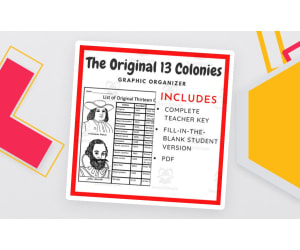
The Original Thirteen Colonies: Graphic Organizer
Social Studies, History, History: USA, Grade 6, 7, 8, 9, Teacher Tools, Graphic Organizers
The 13 Colonies were the first British settlements in North America. They were established during the 17th and 18th centuries and played a crucial role in the history of the United States. The 13 Colonies were the first British settlements in North America. They were established during the 17th and 18th centuries and played a crucial role in the history of the United States. Over time, these 13 Colonies grew and prospered. They played a vital role in the American Revolution and eventually became the foundation of the United States of America. This product helps the students understand the colonial region of each colony. The year founded as well as the major settlements in the colony are outlined for the students. Teacher-prepared notes show students what is important and how ideas relate, and offer a model for how students should take notes themselves (Marzano et al., 2001). This product lists all the original 13 colonies by date founded. This product also includes the name of the founder and the first settlement. This product comes with a student fill-in-the-blank version. Excellent for the interactive notebook. Ready to use - no prep. Download it now! Product clipart By TeachesThirdinGeorgia Teacher version Student version
Author EduPal Learning
Tags Colonial America, 13 Colonies, Original Thirteen Colonies, US History, Graphic Organizer

Shays' Rebellion – Cause and Effect Organizer
Social Studies, History, History: USA, Grade 7, 8, 9, 10, Teacher Tools, Graphic Organizers
Shays' Rebellion was primarily caused by a combination of economic and political factors that created discontent and frustration among farmers and debtors in Massachusetts. These factors combined to create a sense of frustration, economic hardship, and perceived injustice among the farmers and debtors in Massachusetts. Shays' Rebellion was their response to these challenges and their attempt to address their grievances against the state government and the economic system. Overall, Shays' Rebellion had far-reaching effects on the United States. It played a pivotal role in shaping the movement towards a stronger federal government, the ratification of the Constitution, and the protection of individual rights. It also brought attention to economic grievances and contributed to discussions on economic policies. Teacher-prepared notes show students what is important and how ideas relate, and offer a model for how students should take notes themselves (Marzano et al., 2001). These teacher-created notes will help your students grasp the major causes and effects of Shays' Rebellion in 1786. The notes come with a student version and a completed teacher version. These notes work well as a supplement to class readings! Thumbnail clipart credit: By Prince Padania (highly recommended). For similar resources and other engaging ones, visit my store here!
Author EduPal Learning
Rating
Tags Shays' Rebellion, US History, U.S. History, American History, Graphic Organizer , Shays Rebellion Effects, Result Of Shays Rebellion, What Were The Causes Of Shays Rebellion, Shays Rebellion Cause, What Caused Shays' Rebellion, What Caused The Shays Rebellion, What Was The Result Of Shays Rebellion, Shays Rebellion Causes
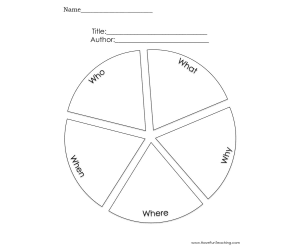
Who What When Where Why Graphic Organizer Worksheet
ELA, Social Studies, Reading, Grade 2, 3, 4, Teacher Tools, Graphic Organizers
If you want to give students extra practice with organizing information in reading, I have just the resource for you. The great part of this worksheet is that it can be used at any time with just about any text. This means the practice and exposure to this skill is endless for your students. This Who What When Where Why Graphic Organizer Worksheet is a great way for your students to organize important information in their own words. The pie-shaped graphic organizer is easy to use and understand, making it a valuable tool for any teacher. What You Get: A 1-page printable PDF featuring a single graphic organizer. How to Implement This Graphic Organizer: This activity is perfect for students who are struggling with organizing information when they are reading a text, short story, or reading passage. This will help them practice and improve their skills. Here are a few ways you may choose to implement this Who What When Where Why Graphic Organizer Worksheet: -- You can print off this worksheet as a whole class set for each student to complete. If you are reading a story as a whole group, use that as an opportunity to complete the graphic organizer as a whole group. Guide students through each section of the pie as you think out loud about what details you need to include in that section. You will also use the text to help you find the answers you are looking for. By modeling how to complete the Who What When Where Why Graphic Organizer Worksheet, students will feel more equipped to complete it independently for other texts. -- You can print off copies of the worksheet and laminate them, so that students can use them over and over again with dry erase markers. This makes a great reading and writing center activity. -- This Who What When Where Why Graphic Organizer Worksheet can also be used as homework or an early finisher activity. Encourage students to see if they can find these important details for books they are reading in the classroom or have checked out from the library. Take A Look at My Best Sellers: Land and Water Worksheet Solving Subtraction Word Problems Worksheet Fact Families Worksheet Personal Pronouns Worksheet Animal Beginning Digraph Sounds Worksheet Writing with Technology Activity You can find more resources at my storefront here: Have Fun Teaching
Author Have Fun Teaching
Tags Note Taking, Story Elements, Graphic Organizer Worksheet, Reading Graphic Organizer, Reading Comprehension, Writing Center, Short Story, Story Grammar Graphic Organizer, Who What When Where How Why, 5 W Graphic Organizer
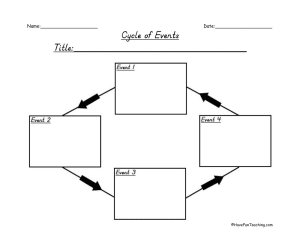
Sequence of Events – Cycle Graphic Organizer
Social Studies, History, History: World, Not Grade Specific, Graphic Organizers, Teacher Tools
This Sequence of Events Cycle Graphic Organizer is a great way for students to describe the major events that occur in the beginning, middle, and end while reading. It's a helpful tool for teachers who want to help their students improve their reading comprehension skills.
Author Have Fun Teaching
Rating
Tags Sequencing, History, Kindergarten Sequence Of Events, Chain Of Events Graphic Organizers, Teaching Sequence Of Events
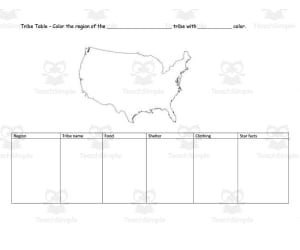
Native American Tribe Table
Social Studies, First Peoples (Native), Grade 3, 4, 5, 6, Teacher Tools, Graphic Organizers
This resource is a Native American Tribes table. This graphic organizer pairs well with your studies of the Native American tribes. For each tribe, students will name the tribe and then describe the: -region -food -shelter -clothing -star facts related to that tribe.
Author Anyone Can Learn
Tags Graphic Organizer, History, Social Studies, Natives, Tribes