



3,930 products added recently
Page 21 - Popular Lesson Plans
Explore a curated selection of popular lesson plans that have proven successful in classrooms. Covering various subjects and topics, these resources provide innovative ideas and activities. Use them to refresh your curriculum and engage your students with tried-and-true methods.

 Show filters

Measurement: Temperature & Time - Practice the Skill 1 - FLASH-MAC
Math, Measurements, Grade 3, 4, 5, Teacher Tools, Lesson Plans
Measurement: Temperature & Time - Practice the Skill 1 - FLASH-MAC An educational software suitable for Grade 3, Grade 4 and Grade 5 students designed to help them understand temperature and time- two fundamental aspects of measurement within Math studies. Key Features: Engaging drills designed to improve mastery of these measurement skills. Incorporation of visual representations such as thermometers for comprehensive concept understanding. Inclusiveness for both English-speaking and Spanish-speaking learners with accurate voice-overs in both languages along with matching text options. The software aligns with the Mathematics curriculum in both public schools and homeschooling programs, adhering to standards such as Common Core, STEM-related initiatives, and conforms specifically to NCTM guidelines. This multilingual capability ensures that language is not a barrier when using this resource prominently or supplementary in classrooms worldwide. Versatility: The tool is highly adaptable can be used for whole-class instruction or focus on smaller groups requiring extra reinforcement. Equally fruitful as homework assignments or practice sessions during homeschooling lessons; use it according to each learner's pace. Add Measurement: Temperature & Time - Practice the Skill 1 - FLASH-MAC into your list of resources today!</b
Author Classroom Complete Press
Tags Software (Mac)

Camping: A Complete Theme Unit Including Learning Centers
, Preschool, Grade 1, 2, Lesson Plans, Teacher Tools
The Camping: A Complete Theme Unit Including Learning Centers This versatile teaching resource brings nature into the classroom, fostering curiosity about the outdoors and strengthening connections to it. Delivered in an easy-to-download PDF format, this comprehensive digital educational toolkit will positively transform your teaching approach. What's Inside? A set of 34 rigorously planned pages packed with engaging activities. Adaptable framework for kindergarten through second-grade students, adjustable for different grade levels. An ensemble of educative games, puzzles and craft projects centered around the camping theme. Differentiated Learning Approach The Camping: A Complete Theme Unit Including Learning Centers goes behind just honing foundational subjects like reading or numeracy skills among learners. It aims at broadening their mental horizons by intensifying their critical thinking aptitudes through: Craft challenges that enhance creativity Mind-stimulating puzzles that boost problem-solving abilities Real-life application-based learning experiences that nurture logical reasoning. Fostering Teamwork: An Accessible Teaching Methodology This resource can seamlessly be integrated into whole group instruction or small group collaborations during center time. It encourages team-building skills among learners while providing opportunities for them to learn how to logically categorize items or decode ciphered messages – a classic element in outdoor adventures! A Unique Opportunity For Homework Tasks Increase student engagement with homework tasks based on this resource unit's activities. This allows them to connect lessons learned in class with real-world applications- a unique opportunity to further explore intriguing topics! Make Learning Fun with The Camping: A Complete Theme Unit Including Learning Centers! This comprehensive curriculum enrichment pack will bring about a welcome change in your classroom, ensuring that learning continues to be a joyous adventure packed journey for your learners! It is the perfect mix of fun-filled ideas, and academically sound content- definitely an investment that will pay off well in the educational journey of every student!
Author Classroom Complete Press
Tags Camping, Learning Center, Math, Manipulatives, Art Center
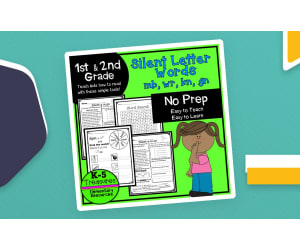
Silent Letters Phonics – MB, WR, KN, GN Set
ELA, Phonics, Language Development, Vocabulary, Grammar, Grade 1, 2, Worksheets & Printables, Literacy Readers, Teacher Tools, Lesson Plans
With this Phonics / Silent Letters for 1st and 2nd Grade: MB, WR, KN, and GN your students will be able to identify the silent letter words and become better readers as they practice each sound and learn the words that are associated with these sounds. Each worksheet as many activities for the following silent letters: WR, GN, MB, and KN silent letter sounds. This unit is perfect for whole group, individual work, centers, or homework to complete on their own. These fun and engaging activities will help your student match, read, write, and identify the silent sounds in words. With so much practice, students will be able to master these sounds and become better readers. Also included are short reading passages where they will then answer comprehension questions on what they read. All tools helpful to young readers and engaging at the same time. For each sound in this unit, students will: Start with reading a short and easy passage and identify the silent letter words and highlight or color those words. They will also identify at least five words from the reading passage with the silent letter sound. Included are comprehension questions about the passage that each student will answer. Students will also fill in the missing word in a sentence from a word bank that highlights the silent letter sound. On another worksheet, students will complete a cut, sort, and matching activity with the silent letter words and glue them to the correct picture. With a paperclip, students will spin the silent letter word and match it to the correct picture. Lastly, they will complete a word search for the silent letter sounds. It is 27 pages of fun, engaging activities that your students are sure to enjoy! For more phonics and grammar activities, click on the following links below:
Author K-5 Treasures
Rating
Tags Phonics, Silent Letters, 1st Grade Resources, 2nd Grade Resources, Gn Words, Mb Words, Kn Words, Wr Words, Reading Resources, Phonics Worksheets

Guided Reading Level M - The Sport of Fencing (with Lesson Plan)
ELA, Resources for Teachers, Reading Comprehension, Reading, Science, Engineering, Technology, Sports, P.E. & Health, Physical Education, Grade 2, 3, 4, Worksheets & Printables, Worksheets, Teacher Tools, Centers, Activities, Literacy Readers, Quizzes, Quizzes and Tests, Assessments, Lesson Plans
This Guided Reading Book - The Sport of Fencing (Level M) with lesson plan includes: Guided Reading Color Label (front cover x1) This is a quick way to match the book’s demands to what students can generally handle.. The overall goal is to use the level/color to pick books for several smaller groups. To qualify for a certain level, a student is expected to read a book from that level with about 90–94% accuracy. If a student is consistently accurate and understands, move up a level. If the student is struggling at that level, drop down and add more support. Each student will improve at completely different rates, but it is generally one of the best ways to check progress across the class. DOWNLOAD THE CATALOG TO VIEW ALL GUIDED READING BOOKS AVAILABLE (SORTED LEVELS A-Z) Pre-Reading Question (x1) Teacher asks the prompt aloud, can be while showing the cover or first page. Students share what they already know, or make educated guesses from the cover. Prompt them to use the target vocabulary. Write some of their responses on the board to look back at during the reading. Vocabulary Words (x5) Introduce the five words, best doing it one at a time. Start by saying it, while students repeat and then see if anyone knows what it means before reading further. Read through the meaning and try to briefly connect each word to a picture or gesture so it’s meaningful. Ask students to flip through the book pages and point to where they see each of the vocabulary words. While reading the book pause upon coming across one of the vocab words or read the sentence twice to make sure students understand the word has appeared. Optional: Ask students to raise hands whenever they see/hear one of the new words. Guided Reading Pages (x10) Check the book snapshot (below) for: primary topic - do you need to prep extra reading or intro materials on this? what is taught best - decide on 1-2 bullets to focus on, use the prompt or words provided here for best results. learning goals - what you are checking for students to be able to do after the session, elicit answers using prompts or words provided. key vocabulary (see section above). questions overview - so you know what is coming up and if you need to prep extra materials to assist understanding. Run the lesson You may have already looked at a few of the pages together, but you can show them some of the pictures again first to set meaning. Depending on how much time you have and how familiar your students are with guided reading class, you may want to read the book aloud first with the group first. Students whisper or partner read, while you listen in. If time, do it as a group, one student reading a page each. Use the guided page’s prompts to coach: “Check the picture / does it make sense?” “Point under the words / try the first sound” “Reread the sentence smoothly”. Try to focus more on one student per session (rotating every time), so you can work out if they are ready to move up or need to move down a level. Comprehension Questions (back cover x3) This is your way to check that students didn’t just say the words, but actually understood the text. First, let students answer by pointing to the page/picture and saying a short sentence. After any answer, follow with: “Show me where you found that in the text.” In bigger groups, have partners answer first (10–20 seconds), then call on 2–3 students to share. Differentiation tips: Emerging speakers/struggling readers: oral + pointing On-level: oral in a full sentence Higher: one written sentence or draw + label Book Snapshot Title: The Sport of Fencing Genre: Nonfiction (informational) Subject: Physical Education / Reading (Informational Text) Primary Topic: Fencing gear, swords, and how matches work Estimated Guided Reading Level (A–Z): M What This Book Teaches Best Basic overview of fencing as a sport, including where it takes place (a long, narrow mat called a “strip”). Safety equipment and how it protects fencers (mask, jacket, glove, cuff). Differences among the three fencing swords and how points are scored with each (foil, épée, sabre). Key fencing moves and positions used in a match (“En Garde” stance, lunge). How modern fencing tracks points and how respect is shown before and after matches. Learning Goals Students will describe what fencing looks like and where it takes place using details from the text. Students will explain how fencing safety gear protects a fencer during a match. Students will compare foil, épée, and sabre by describing how targets and scoring work. Students will identify and describe the “En Garde” stance and why it helps movement. Students will explain how a lunge helps a fencer reach an opponent to score a point. Students will describe how fencing shows respect before and after a match. Key Vocabulary From the Text strip — the long, narrow mat where fencers move. foil — a light, flexible sword used in fencing. épée — the heaviest fencing sword with the whole body as target. sabre — a fast sword that can score with tip or edge. lunge — a move stepping forward to reach an opponent. Discussion Prompts Pre-reading question: What safety gear do you think someone would need to fence safely? Comprehension questions: Why do fencers wear a fencing mask? In a foil match, what part of the opponent is the target for scoring points? What do fencers do before and after a match to show respect? Printing Tips 1. Best Printing Method (Recommended) “Booklet” Printing (Best if Available) If your printer or PDF viewer supports Booklet Printing , use this. Settings to use: Print mode: Booklet Paper size: Letter or A4 (either works) Orientation: Landscape Print on both sides: Yes Flip on: Short edge Scaling: Fit to printable area Booklet subset: First test: Front sides only Then: Back sides only This will automatically: Pair pages correctly Put the cover on the outside Align everything for folding After printing, fold in half and staple along the spine . 2. If “Booklet” Printing Is NOT Available You can still print this correctly with manual duplex printing . Step-by-step: Open the PDF. Choose Print . Set: Orientation: Landscape Pages per sheet: 1 Print on both sides: Yes Flip on: Short edge Print all pages . Because each PDF page already contains two facing book pages, the result will still fold cleanly into a book. Thousands of Cored Education products are included with your TeachSimple membership. Download links and encyclopedia index available here.
Author Cored Education
Rating
Tags Reading Comprehension, Reading Passages, Reading, Guided Reading, Guided Reading Lesson Plan, Guided Reading Activity, Pre-reading, Health Lesson Plans, P.e., Sports

Data Analysis & Probability: Bar Graphs - Learn the Skill - MAC Software
Math, Graphing, Common Core, Kindergarten, Preschool, Grade 1, 2, Teacher Tools, Lesson Plans
Data Analysis & Probability: Bar Graphs - Learn the Skill - MAC Software This teaching resource is designed for educators aiming to deepen students' understanding of data analysis and probability via the use of bar graphs. It particularly targets preschool, kindergarten, and primary grade children (Grade 1 and 2), simplifying mathematical concepts in a user-friendly manner. Main Features: The content adheres to common core state standards and NCTM principles. Language accessibility with voice-over options in English and Spanish along with supportive text. Incorporates math tools that increase student engagement while improving their math proficiency. Promotes active learning through practical problems that foster critical thinking allowing learners to apply knowledge gained concurrently. An aspect making this software exceptional is its versatility, helping it find a place across diverse learning setups from group lectures/classroom settings to small study sessions or homework assignments providing maximum flexibility to educators. The Software: This product comes as a single MAC-compatible software zip file making it simple right from download till navigation. All activities are neatly packed within one unit saving time lost on searching – thus enhancing time available for teaching & learning! Tailored For: Ideal for teachers focused on strengthening their student's grasp of data analysis using bar graphs and probability estimation, offering pedagogically sound instructional materials specifically from an education professional’s perspective. If you are an educator aiming at delivering effective mathematics instruction consistent with STEM initiatives while keeping lessons engaging – the Data Analysis & Probability: Bar Graphs - Learn The Skill - MAC Software is your go-to resource!.
Author Classroom Complete Press
Tags Bar Graphs, Digital Graphs, Digital Math, Math Skills, Data

All About The Colosseum | Geographical Wonders Video Lesson
Social Studies, Geography, Not Grade Specific, Lesson Plans, Teacher Tools
All About The Colosseum | Geographical Wonders Video Lesson This valuable tool is perfect for educators teaching Social Studies, specifically focusing on Geography. Not grade-specific, this animated video lesson offers in-depth knowledge about one of the world's greatest geographical wonders—The Colosseum. This informative video of just 9 minutes proves education can be concise and engaging. Ideal for public school teachers managing multiple subjects or homeschoolers crafting detailed units, it requires no extensive planning or preparation. Engaging animation and detailed insights about The Colosseum Perfect as an introduction or a review material after detailed discussions Adaptable to different ability levels and age groups The resource targets various aspects of teaching routines: In whole group instruction: Include during collective viewings to promote shared insights; sparking curiosity among learners. In personalized attention periods: Leverage during small group interactions or one-on-one sessions to enhance variety while addressing individual needs. As homework assignments: In conclusion,
Author Educational Voice
Tags Colosseum, Geography Lesson, Historical Landmark, Video Resource, Interactive Learning
How to Write An Essay: What Is an Informative Essay? - FLASH-MAC
ELA, Writing, Common Core, Grade 5, 6, 7, 8, Teacher Tools, Lesson Plans
Teaching Resource Overview: "How to Write An Essay: What Is an Informative Essay? - FLASH-MAC" This teaching resource is aimed at aiding educators in their mission of imparting crucial essay-writing skills, with a focus on informative essays which are significant parts of Language Arts. Content and Features The courseware includes a chapter mini that provides curriculum -based content. It offers: Reading passages 'Before you read' and 'after you read' questions that foster critical thinking Numerous supporting documents for further reinforcement: Vocabulary flashcards: Excellent recapitulation resources inducing vocabulary retention among learners. Interactive activities:Aimed at solidifying learned concepts through practice while also bringing fun into learning. Puffprintables: These facilitate convenience by allowing printing only when necessary. A well-structured graphic organizer: Helps understand how arguments flow seamlessly from introduction through body paragraphs to conclusion. Suitability for various learning scenarios including: - Whole group sessions for collaborative learning - Small group activities according individual learner attention - Homework assignment providing individual practice opportunity. Synchronisation with Common Core State Standards ensuring alignment with recognised educational objectives across various states and regions. Posting this will assist any instructor who aims to enhance writing skills within their students, specifically in Grade 5, Grade 6, or upper middle school grades like Grade 7 and Grade 8. The focus of this F.L.A.S.H-MAC tool is on informative essays. Please ensure that your device is suitable for a MAC compatible product file before fully accessing its features and benefits!
Author Classroom Complete Press
Tags Software (Mac)

Data Analysis & Probability - Digital Lesson Plan Gr. PK-2 | MAC Software
Math, Patterns, Kindergarten, Preschool, Grade 1, 2, Teacher Tools, Lesson Plans
Product Description This product is an all-round educational resource for educators teaching data analysis and probability in grades PK-2. Containing over 150 activities across more than 80 interactive screens, it successfully combines task-based activities and drills to cater to various classroom settings. Standards Compliance Aligned with NCTM standards and individual State Curriculum Math Strand of Data Analysis & Probability, this software is specifically cast for math proficiency. Main Features An array of pre- assessment activities for bespoke learning plans. Real-world problem solving exercises aimed at applied skill development. Dual functionality in imperial and metric measurements - useful in diverse geographical contexts. Bilingual text-to-speech ability (English/Spanish), supporting non-native speakers or bilingual classrooms effectively. Aptly balanced drill problems (90+) ensuring practice on accuracy and speediness. Printables available for traditional paper tasks/tests. Incorporated learning games like memory match game, board game & spinner game offering fun ways to learn concepts at a suitable pace. Actionable Evaluations The product comes fitted with assessment quizzes after each chapter acting as key knowledge-check markers providing both, the student performance feedback & teacher evaluations on their mathematical understanding level. Loading Details: - SKU: le-dap02m - Manufacturer: Lakeshore - Format: Downloadable Lessons / .ZIP files - Operating System Compatibility: Macos This state-of-the-art digital lesson plan encourages curiosity while filling knowledge gaps in areas of Data Analysis & Probability for pre-kindergarten to grade 2 students, inclusive, be it at home or school settings.
Author Classroom Complete Press
Tags Data, Analysis, Probability Lesson Plan, Digital Math, Patterns Lesson
Number & Operations: Fractions - Addition & Subtraction - FLASH-PC
Math, Fractions, Grade 3, 4, 5, Teacher Tools, Lesson Plans
The Number & Operations: Fractions - Addition & Subtraction - FLASH-PC A comprehensive teaching resource specifically tailored for Grade 3 to Grade 5 students. It focuses prominently on understanding and operating fractions, particularly their addition and subtraction under the Number and Operations mathematical umbrella. This tool aims to make learning both fun and efficient. Key Features: Curriculum-based content: Crisp coverage of key topics promoting extensive student interaction. Pre- assessment tool: Available for instructors to gauge comprehension levels before diving into lessons. The chapter mini: An outlined lesson plan that saves teachers valuable prep time while ensuring material coherence. Note: Real-world word problems are included Timed drill exercises: For reinforcement activities or homework assignments, allowing application practice . Apart from the above features, several exciting games such as memory match game or a board game are also included. These exploit playful competition to instill core math principles. A unique spinner game puts an innovative spin on quiz formats in classrooms. An integral component of this product is its SMART Response assessment capability, providing insights into individual student progress or trends across classroom population. Specially Tailored Tools & Resources - Included files consist of: Critical Maths Tools essential for conceptual clarification during instruction Brief Printables providing quick access to study material at desks . Learner Inclusivity- The product has been created keeping in mind the Spanish-speaking learners too with alternate Spanish voice over as well as text options. The Number & Operations: Fractions - Addition & Subtraction - FLASH-PC is an excellent tool for teachers navigating fraction addition and subtraction effectively and creatively be it in public or home-school settings.
Author Classroom Complete Press
Tags Software (PC)
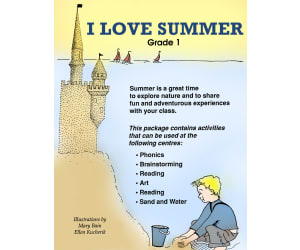
I LOVE SUMMER Gr. 1
ELA, Reading, Grade 1, Teacher Tools, Lesson Plans
I LOVE SUMMER Gr. 1 Discover the I Love Summer Gr.1 teaching resource, thoughtfully crafted for Grade 1 educators on their quest to make learning engaging and enjoyable during the summer season. It's packed with 60 printable pages of rich content, designed to encourage continued learning during the warm summer months. Inspire Curiosity Through Activity Based Learning This comprehensive package includes an expansive suite of activities that caters to not only Language Arts education but also extends its reach to involve brainstorming, reading and art exercises. It beautifully bridges the gap between formal education and hands-on real-life experiences. Nature exploration encourages imagination & adventure skills Phonics activities improve students’ skills in both reading & spelling Cognitive thinking is sharpened through exciting brainstorming tasks strategically designed at emphasizing details while nurturing creativity amongst young learners. Versatile To Fit Your Teaching Style The flexibility of this resource allows effortless incorporation of sand and water elements into lessons—fitting perfectly both for whole class instruction or small groups settings comfortably. Its diverse layout gives teachers latitude in usage—it can serve as a core classroom activity or allocated as homework assignments—your call! 'I LOVE SUMMER Gr. 1'-a collaborative product made by teachers for teachers- fosters a love for learning amidst play—a balanced blend between workbooks graded education level instructions offering personalized touch creating optimal learning atmosphere even during leisurely summertime when usually educational momentum could subside. Note: This product requires PDF reader software installed on your device since material format comes as ‘PDF file type’.
Author Classroom Complete Press
Tags Rhyming, Language Arts, Matching, Reading Passage, Painting
Video Games Reading Comprehension Passage - Cored Ed Encyclopedia
ELA, Language Development, Reading Comprehension, Reading, Pre-Reading, Science, Technology, Engineering, History, Social Studies, Grade 2, 3, 4, 5, Worksheets & Printables, Worksheets, Teacher Tools, Centers, Activities, Writing Prompts, Assessments, Quizzes and Tests, Quizzes, Lesson Plans
This video games reading comprehension with lesson plan includes: Visualization (on the front cover) Start your lesson by taking a minute to think and share something about the topic. Read the script aloud (slowly), perhaps prepare some music or sound effects. Student close their eyes and let their imaginations wander. Students open their eyes, read the question aloud and give them a few minutes to complete. Ask a few students to share or keep answers until the end to compare with what they learn in the passage. Quick pause—thousands of Cored Education products are included with your TeachSimple membership. Download links and encyclopedia index available here. Pre-Reading Trivia Students will write down one thing they already know about the subject and then read five more facts and discuss. These facts are fun, and the students will enjoy learning about the subject before reading more. Give 1 minute for students to write what they already know (no pressure—best guess is fine). Read the five facts together. After each fact, do ask a student for their opinion, was it surprising? Set a purpose by asking students to highlight/underline one fact they want to learn more about during the reading. Reading Passage The text is a high-interest reading passage with set paragraphs, roughly three to four paragraphs long. It contains a variety of themes about the topic, anywhere from history to technology. The passage is between 250 and 350 words in length. First, ask students to look at the headings and see what they’ll learn about today. What do they know about the topic/heading? First read options: Teacher read-aloud (best for support). Partner reading (paragraph by paragraph). While reading, students underline important details, and vocabulary words they think may come up in the questions section. Mixed Questions The first question page contains four multiple-choice questions, each with a choice of four answers, and three written response questions that require a sentence or two from the student. Students complete the mcqs first independently, then review quickly as a class. For the 3 written responses, try to get students giving the answer with some form of evidence: “I think ___ because the text says ___.” If students get stuck, send them back to check the passage. Vocabulary Questions Practice seven key words from the text in this section across two activities. First section is scrambled words where students will unscramble three words given a clue for each. The second section is a word to meaning matching activity. Before starting, have some students read out words they underlined in the passage. Ask students to say the word and read aloud the sentence(s) around each word. Ask students to do scrambled words and the matching exercise in pairs then go through answers as a class. For the scrambled spelling task, get four pairs to come up to the board and write the words for extra practice with the other student reading out the clue. For the matching task, prompt students to give full sentences: “I matched ___ with ___ because ___.” Creative Writing In this question, the student will be required to write a five to eight sentence paragraph on a question related to the topic. Before starting, ask students write down 3 key ideas they are going to include in their piece. Ask students for ideas to share around the class to help those struggling. Pro writing expectations: 5–8 sentences At least 2 facts or details from the passage At least 2 vocabulary words from the previous page Students read their paragraphs while classmates listen for facts and vocabulary words. Extension Activities This page is optional for fast finishers or to take home. There are several activities, each one requiring a different skill. Do some, do none, do all, completely optional - but you will feel reassured knowing every possibility is planned for. Includes summary writting question. Answer Key There are answers for the multiple-choice questions, written response questions have sample answers, vocabulary answers and if there is a summary question then a sample summary will be provided as well. Lesson Plan Included Customized lesson plan for this lesson is included. Lesson Snapshot Title: Video Games Genre: Nonfiction (Informational text) Subject: Science & Technology / Media Literacy Primary Topic: How video games changed from dots to VR Estimated Guided Reading Level (A–Z): P Story text location: Reading Passage on page 3. Support pages included: Visualization prompt (p.1), Pre-Reading Trivia (p.2), Mixed Questions (p.4), Vocabulary (p.5), Creative Writing (p.6), Extension Activities (p.7), Answers (p.8). Support-page QA check: The questions, vocabulary tasks, and answer key match the passage’s details (dates, examples, and key terms). What This Lesson Teaches Best Early video games grew from science tools and big computers: Describes room-sized computers and a “game screen” idea using an oscilloscope. Timeline of key early games and places: Connects Tennis for Two (1958), Spacewar! at MIT (1962), Computer Space (1971), and Atari’s Pong (1972). How cartridges changed home gaming: Explains that swapping cartridges let one system play many different games, and names early cartridge consoles (Fairchild system, Atari 2600). Technology improvements changed how games look, sound, and where they are played: Notes smoother movement, clearer pictures, richer sound, and games moving to handheld screens, computers, consoles, and phones. Games became many types of experiences: Lists examples like puzzles, team sports, building sets, long stories with choices, and virtual reality. Learning Goals Students will describe how Tennis for Two worked and what device showed the moving dot. Students will identify major milestones in early video game history by placing key examples in order. Students will explain how cartridges helped video games spread at home. Students will summarize how video games changed as computers became smaller and stronger. Students will give examples of different kinds of games mentioned in the passage. Key Vocabulary From the Text oscilloscope — a screen tool that can show moving signals. physicist — a scientist who studies matter and energy. arcades — public places where people play games. cartridges — plastic game boxes you swap into a system. virtual — computer-made, not physically real. FULL CATALOG OF DOWNLOAD LINKS AND ENCYCLOPEDIA INDEX HERE
Author Cored Education
Rating
Tags Vocabulary, Reading Comprehension, Reading Passages, Lesson Plans, Ela Lesson Plans, Reading Comprehension Lesson Plans, Pre-reading, Science Lesson Plans, Technology, History Lesson Plans
Discover! Ecology
Science, Earth and Environmental Sciences, Environmental Science, Grade 4, 5, 6, Teacher Tools, Lesson Plans
Discover! Ecology: An Accessible Study of Ecology for Grades 4, 5, and 6 Discover! Ecology is an educational resource delivering a comprehensive study specifically catering to students in grades 4, 5 and 6. Ideal both for traditional classrooms or homeschooling environments, teachers will find this guide an indispensable addition to their science and environmental instruction toolbox. An Emphasis on Basic Ecological Concepts This study guide simplifies complex notions such as the water cycle , reliance on solar energy, processes of photosynthesis, food chains/webs and different varieties of biomes into easily digestible information perfect for young learners. Discover! Ecology, with its user-friendly design offers background details to solidify teachers’ understanding before introducing interactive student activities. The objective is dynamic learning experiences either within the classroom setting or beyond. Aiding Interactive Learning Experiences The resource can be utilized during collective sessions or focus group discussions within school settings. It can also serve as enriching homework material allowing students to explore its contents voluntarily at their own pace. Inclusive Engaging Educational Activities Covers informational content Suggests practical methods educators might carry out engaging activities Prompts thoughtful discussion among learners using tailored questions suitable for reflection post-learning Provides real-life context that fosters deep understanding of crucial environmental issues. Saving Teachers' Precious Time! This PDF-file resource includes answers readily available alongside corresponding questions enabling concise explanation when needed without flipping back-and-forth between various other sources simultaneously – another timesaver! We promise an eased introduction into seemingly overwhelming complex scientific concepts through our carefully designed lesson plans. With Discover! Ecology, you can foster a rich learning environment suitable even for budding Scientists eager to explore fascinating aspects of Science.
Author Classroom Complete Press
Tags PDF

Data Analysis & Probability: Probability - Practice the Skill 1 - MAC Software
Math, Patterns, Kindergarten, Preschool, Grade 1, 2, Teacher Tools, Lesson Plans
Data Analysis & Probability: Probability - Practice the Skill 1 - MAC Software This educational resource is a valuable tool for educators seeking to strengthen understanding of probability within data analysis. It's designed specifically for use on MAC systems and is particularly suitable for early education environments such as preschool, kindergarten and elementary grades 1 and 2. Main Features: An interactive mini-chapter composed of timed drill activities suitable for young math learners' practice. Aidful built-in math tools that facilitate smooth navigation and enhance learning experience. Multilingual function offering both English default voiceover and text alongside Spanish voice over options. Note: This bilingual feature makes it consequently user-friendly even in bilingual classrooms or where English may be a second language. The software rigorously adheres to CCSS, STEM initiatives, and NCTM guidelines thus aligning students’ learning with key mathematical competencies such as data analysis and probability patterns. This tool can effectively integrate into teacher-led instruction session or serve as homework assignments. It offers practical insight on mathematical concepts while also allowing teachers to monitor progress effectively. Included Materials: A single zip file containing all necessary software materials ensuring hassle-free download with minimal set up required on any MAC operating system used by either teachers or homeschoolers alike.
Author Classroom Complete Press
Tags Probability Lesson Plan, Math Skills, Digital Math, Data, Analysis
Waste: At the Source: Post-Consumer Waste Gr. 5-8
Science, Earth and Environmental Sciences, Environmental Science, Common Core, Grade 5, 6, 7, 8, Teacher Tools, Lesson Plans
Waste: At the Source: Post-Consumer Waste Gr. 5-8 An educational resource designed to provide students in grade 5 through 8 with a comprehensive understanding of ambient waste and its origins. This teaching resource is focused on the "Post-Consumer Waste," chapter from the "Waste: At The Source" lesson plan. Key Elements: A focus on environmental matters, aimed at stimulating student inquisitiveness. Detailed study into pre-consumer waste, raw materials, natural resources, and post-consumer waste. Insight into product packaging's impact, consumable products versus durable goods. Practical comprehension of landfill management for solid and toxic wastes. Main Attributes: Broadens learner's knowledge by explaining how pollution affects people, wildlife, ecosystems across lands and oceans. Use of simplified language for easy understanding by children at that age level. Ideal for whole group classroom experiences or small group sessions for personalized attention or flipped-learning homework assignments that continue education beyond school hours. Incorporation into Curriculum This content serves as a beneficial tool for both environmental science educators or homeschoolers trying to incorporate details-oriented material into their curriculum design process. Included Learning Tools: An engaging range of student activities along with colorful mini posters facilitate engagement while simultaneously enhancing visual cognition within learners. . Crossword puzzles and word searches aimed at reinforcing subject-related vocabulary in an interactive manner are included along with standard comprehension quizzes designed to assess content retention progressively.. (In particular, a preparatory test module aligned with specific State Standards incorporating Bloom's Taxonomy approaches is included for ensuring not only local relevance but also systematic learning pathway development in learners’ academic journey.) In Short: Engage your students in comprehensively deciphering waste origins while indirectly imbibing them nuanced awareness about never-discussed-before aspects like post-consumer waste using these thoroughly designed contents suiting grade levels 5 to 8.
Author Classroom Complete Press
Tags PDF

Worry Wizards: Small/Whole Group Curriculum | Anxiety Lesson Plans
Special Resources, Life Skills, Preschool, Grade 1, 2, Lesson Plans, Teacher Tools
Worry Wizards: Small/Whole Group Curriculum | Anxiety Lesson Plans is a 100-page resource that will prepare you with all the tools you need to support your students with their anxiety. This curriculum can be conducted with small groups or whole groups. You will receive: - 10 lesson plans - Parent letters - Activity resources - Self-assessments - Digital resources This curriculum is designed for a small group called “Worry Wizards” that aims to empower students to understand anxiety and learn strategies to support anxious thoughts. It could be used with a whole group but would be better in small groups. This group is ideal for students who may be struggling with anxiety. A suggested timeline would be meeting once a week for 30 minutes for approximately 10 weeks (although could range from 8-14 depending on your students and time allotted). Ideally groups will be limited to 4-6 students. While each lesson has a suggested Coping Strategy and 2 Minute Game, facilitators can easily exchange these with other activities provided to best fit the needs of their group.
Author Kindergarten Cafe
Tags Whole Group Curriculum, Small Group Curriculum, Anxiety Lesson Plan, Anxiety Work Curriculum, Class Structure

Science Mega Bundle: 3 Topics-in-1 Complete Teaching Kit for Grade 1-4
Science, Basic Science, Earth and Environmental Sciences, Grade 1, 2, 3, 4, Worksheets & Printables, Lesson Plans, Teacher Tools, Presentations, Templates, Quizzes and Tests, Classroom Decor
🌿 Science Mega Bundle: Plants, Animals & Habitats Make science teaching simple and engaging with this MEGA bundle covering three key topics: Parts of the Plant, Animal Adaptations, and Exploring Habitats. It helps students learn how living things grow, survive, and interact with their environment. Each topic includes: ✔ Editable PowerPoint Lesson with Assessment ✔ Editable Lesson Plan ✔ Worksheets (no prep) with Answer Key ✔ Classroom Posters Best For: Grade 1–4, Homeschooling, Tutoring How to Use: Use as full lessons or small activities for classroom, online, or independent learning. Use slides for teaching, worksheets for practice, and posters for classroom display. Differentiate tasks based on learner ability. Perfect For: Grade 1–4, Homeschooling, Tutoring Aligned with early primary science learning on living things and environments. Format: PDF, PNG, Editable PowerPoint, and lesson plans. Number of Pages: 50+ resources total. Tags #ScienceBundle #PrimaryScience #PlantsandAnimals #Habitats #NoPrepLessons 📥 Instant Download after purchase.
Author Pinay Digitals
Rating
Tags #PrimaryScience, #ScienceMegaBundle, #TeachingResources, #DigitalTeachingTools, #NoPrepResources, #ScienceWorksheets, #ElementaryScience, #TeacherCreatedResources, #HomeschoolScience

The Quantum Leap:Unlocking the Mysteries of Quantum Computing for Teen
Career, Life Studies, Research, Technology, Science, Computer Science, Life Skills, Special Resources, Social Skills, Special Education Needs (SEN), Grade 6, 7, 8, 9, 10, 11, 12, Lesson Plans, Teacher Tools, Worksheets & Printables, Workbooks, Parts of and Anatomy of, Presentations, Outlines, Centers, Activities
Explore the quantum revolution with The Quantum Leap: Unlocking the Mysteries of Quantum Computing for Teens, written by Syed Hammad Rizvi – a comprehensive resource for upfront and center students interested in innovative and advanced applications in computer science and related physics and technological domains. A thorough and correct resource on understanding complex ideas such as a bit compared to a qubit, quantum superpositions and entanglements, quantum gate and quantum circuit designs, Shor's algorithm and Grover's algorithm, and further applications in drug development simulation, economic modeling simulation, climate simulation modeling, and quantum cryptography beyond post-quantum cryptography. This 351-page book serves a thorough introduction to computer and physics students who are interested in understanding advanced computer applications and related physics. The Quantum Leap serves a detailed platform for students to learn about quantum paralleling, quantum correction, and quantum internet connectivity. Perfectly effective and aptly SEO-ed for educators on quantum mechanics resources and applications. A necessary read for students and professionals interested in quantum physics and computer applications. Why Parents/Schools Love It: Sparks STEM Passion: Makes the concept of quantum computing easy to understand for teens by comparing it to things they know and love, sparking their interest in the technological applications of the future such as artificial intelligence and cryptography. Teaches Future-Proof Skills: The course deals with applications, ethics, and future career options, providing students with knowledge required for in-demand jobs in quantum technology. Accessible and Engaging: Step-by-step analyses and context knowledge provided help make difficult subjects more accessible, overcoming intimidation factors and encouraging critical thinking. Comprehensive Curriculum Fit: It is compatible with the computer science and physics curriculum of high schools and is very suitable for being incorporated in the classroom or homeschooling settings. Encourages Ethical Awareness: It deals with the effects, limitations, and initiatives taken around the world, thus instilling ethical innovation in the minds. Target Student Classes: Having considered the entire contents and structure of this book and its intended audience from various perspectives such as its front cover and introduction chapters, it is intended for high school students from Grades 10 to 12 and aged 15 to 18 years. It commences from a level of basic discussion on classical and quantum fundamentals such as superpositions and entanglement concepts and then proceeds to more complex aspects of quantum studies such as algorithms and error correction strategies based on assumed foundational knowledge and interests but without rigorous prerequisite knowledge. Hence it is intended for high school seniors enrolled in introductory computer science studies at college or more in-depth math and physics studies at school levels above Grades 9; it may also serve Grade 9 students who take more challenging subjects at school and college-level new students at introductory stages as add-on reading contents, while its mainstream audience would be Grades 10 to 12 students in line with its teen-level comparison aids and refraining from more mature themes of mathematics chapters. Copyright/Terms of Use : This Book was copyrighted by Syed Hammad Rizvi. You may use this resource for personal and single class use. You are not authorized to modify, redistribute, and sell this resource or its part. That means you are not authorized to upload this resource to the Internet so people can freely access and download it. If you wish to share these resources with others in your workplace or with classmates at school, then go ahead and buy additional licenses from Teachsimple. "This product is happily brought to you by Syed Hammad Rizvi"
Author Creative Book Store
Rating
Tags QuantumComputingForTeens, QuantumLeapBook, UnlockQuantumMysteries, QubitsForBeginners, SuperpositionExplained, EntanglementForKids, QuantumAlgorithmsTeens, ShorsAlgorithmGuide, GroversSearchTeen, QuantumComputing2026

B and D Reversal — A Structured Daily Intervention Programme
Common Core, Phonics, Language Development, ELA, Spelling, Special Education Needs (SEN), Special Resources, Kindergarten, Grade 1, 2, 3, 4, Charts, Teacher Tools, Lesson Plans
B and D Reversal — A Structured Daily Intervention programme to tackle a real problem: Dyslexic Logic Font used with permission. B and D reversal is one of the most persistent problems in early literacy. The Problem Children who confuse these two letters are not being careless, nor are they failing to try, as some suppose. They know that Bee says 'b' and Dee says 'd' — they have moved beyond learning beginning sounds. The problem is not knowledge — it is retrieval. When a child is writing at speed, the brain cannot always pull up the right letter shape quickly enough. The child starts to write, and the wrong shape is already on the page. They do not have time to sit there working out which way round a b or a d goes. They guess. And nine times out of ten , they get it wrong. The teacher points out the errors. The child feels dumb. Parents and teachers scour the web for a solution. They try one thing after another with the same fruitless results. The usual approaches — the bed trick, the b hand, repeated correction — all share the same flaw. They ask the child to retrieve the correct answer from memory under pressure. The b hand fails because the child cannot remember which hand is which. That is precisely what they cannot do reliably. A strategy that depends on the thing that is broken will not fix the thing that is broken. The Solution Remove the need to retrieve the correct shape and formation from memory entirely. This pack gives the child a simple visual reference — a card with a picture embedded in each letter shape, fixed permanently to the desk, with a clear starting point for letter formation marked on each letter. One glance before writing, and the right letter is there. No memory required. No cognitive load. Just the correct letter, every time. The Dyslexic Logic Font — used with permission — is used throughout. This helps pupils establish the correct letter shape more easily. What is included Table cards for the desk, bookmarks for reading books and folders, and smaller cards for use wherever your child writes. Every format ensures the cue is always within reach — because a cue that is not there cannot help. Five weeks of pre-written daily word lists — carefully sequenced from single b words through to mixed b and d in longer words. Nothing to prepare. Just open and use. Weekly record sheets — a simple daily checklist tracking whether your child chose the correct letter, checked the card independently, and formed the letter correctly. Includes a progress chart the child completes themselves and a readiness check so you know exactly when to move to the next stage. A full step-by-step guide for parents and teachers. This is the part most similar resources leave out. A visual cue only works if the child has been properly trained to use it — consistently, every time, before they write rather than after. The guide explains exactly how to do that, how to handle resistance, and what to expect over time. A video guide showing the full programme in action — because seeing it is easier than reading about it. There are no quick fixes here. The habit of checking takes weeks to establish and months to become fully automatic. But with consistent use, it works — and this pack gives you everything you need to make that happen. Suitable for use at home or in the classroom with any child who has a persistent b and d reversal problem, regardless of which reading programme they are following.
Author Lilibette's Resources
Rating
Tags B/d Reversal, Letter Confusion, B/d Confusion, Speling Problems, Dyslexia, Special Needs

Fairy Tales Gr. 1-2
ELA, Reading, Grade 1, 2, Teacher Tools, Lesson Plans
Fairy Tales Gr. 1-2 Fairy Tales Gr. 1-2 is a dynamic resource designed to deliver comprehensive teaching solutions that make use of the charm and fascination of traditional fairy tales. Crafted for Grade 1 and Grade 2 pupils, this unit aims to enhance reading abilities while promoting innovative learning within the broader subject area of Language Arts. Diverging From Ordinary Teaching Methods This resource transcends typical storytime with an engaging blend of classic stories and interactive activities encapsulated in twenty open-ended task cards adorned with captivating illustrations. What's Included? Four visually rich stories modelled around favourite fairy tales, offering students a fresh experience with familiar narratives. A Fairy Tale Trivia Game designed to test students' recall proficiency using pertinent question cards. An amalgamation of secondary subjects including understanding ordinals and alphabetical sequences, fostering classification skills, focusing on dialogue in texts, applying mathematical concepts creatively, among others in addition to literacy-focused units. Additional Features: Each student receives a custom record sheet forming part their personalized learning center workbook—a tool that keeps track of their progress throughout the course—providing additional incentive for active involvement. All components are compiled into one comprehensive PDF file type lesson plan document under license for single use per purchase which also accommodates blank activity /task cards allowing individualized instruction or additional practice problems where needed. Versatile Use Across Teaching Settings This resource is adaptable across various teaching formats—from full-class lectures building collective knowledge to smaller focused groups facilitating collaborative yet independent learning—the decision lies solely upon educators based on their teaching approach and learners' needs. The Fairy Tales Gr. 1-2 unit bridges the gap between interactive, fun-filled learning and academic excellence—bringing traditional fairy tales to life in an experiential way. Every educationist deserves this essential tool as they strive toward cultivating ardent learners for the future.
Author Classroom Complete Press
Tags PDF, Fairy Tales Learning Center, Simple Fairytales

Grade 4 Yearlong Reading Comprehension Curriculum | 180 Worksheets
ELA, Grade 4, Lesson Plans, Teacher Tools, Worksheets & Printables
Grade 4 Yearlong Reading Comprehension Curriculum | 180 No-Prep Worksheets Help your students become stronger, more confident readers with this Grade 4 Reading Comprehension Curriculum! This comprehensive year-long resource includes 180 daily reading passages, vocabulary activities, comprehension questions, writing prompts, and answer keys designed to build critical reading skills, text evidence analysis, vocabulary development, and written responses through consistent daily practice. What's Included ✅ 180 daily reading comprehension passages ✅ 36 weeks of literacy instruction ✅ 5 passages per week ✅ Fiction and nonfiction reading selections ✅ Vocabulary matching activities for every passage ✅ 3 comprehension questions per passage ✅ Writing prompt with each reading assignment ✅ Student Worksheet Book ✅ Comprehensive Teacher Guide ✅ Complete Answer Key ✅ Year-long pacing guide ✅ Differentiation strategies for diverse learners ✅ Assessment support and grading rubric ✅ Print-and-go format for easy implementation How It Works in the Classroom This Grade 4 Reading Comprehension Curriculum follows a structured daily routine that helps students develop independence while practicing essential literacy skills. Daily Routine: Read and analyze the passage Complete vocabulary practice Answer comprehension questions using text evidence Respond to a writing prompt Perfect for: • Whole-group instruction • Small-group reading lessons • Literacy centers • Independent practice • Homework • Intervention support • Morning work • Homeschool learning • Sub plans Each lesson is designed to take approximately 35 minutes and encourages students to cite details and examples directly from the text to support their thinking. Standards & Learning Goals Students will strengthen skills in: ⭐ Key Details ⭐ Story Characters ⭐ Setting ⭐ Retelling & Sequencing ⭐ Main Topic ⭐ Main Idea ⭐ Cause & Effect ⭐ Compare & Contrast ⭐ Drawing Conclusions ⭐ Making Predictions ⭐ Author's Purpose ⭐ Ask & Answer Questions ⭐ Connecting Texts ⭐ Fact & Opinion ⭐ Problem & Solution ⭐ Story Elements ⭐ Vocabulary Development ⭐ Text Evidence ⭐ Reading Response Writing ⭐ Fiction and Nonfiction Comprehension Comprehension skills are spiraled throughout all 36 weeks to provide repeated exposure, practice, and mastery opportunities. The curriculum places strong emphasis on supporting answers with details and evidence from the text. Why Teachers Love It ❤️ Provides a complete year of reading comprehension instruction ❤️ No-prep, print-and-go format ❤️ Includes student workbook, teacher guide, and answer key ❤️ Balanced mix of fiction and nonfiction texts ❤️ Builds strong text evidence and critical thinking skills ❤️ Supports vocabulary, comprehension, and writing in one resource ❤️ Includes differentiation suggestions for struggling and advanced readers ❤️ Easy-to-follow pacing guide saves planning time ❤️ Consistent structure builds student confidence and independence ❤️ Perfect for classroom instruction, intervention, tutoring, and homeschool use Students are exposed to approximately 540 vocabulary words throughout the year while working through a wide variety of reading genres, themes, and comprehension skills. The curriculum provides a near-even balance of fiction and nonfiction texts to support well-rounded literacy development. If you're looking for a Grade 4 Reading Comprehension Curriculum that provides daily reading practice, spiraled skill review, vocabulary development, text evidence instruction, and meaningful writing opportunities, this year-long resource is ready to support your literacy instruction all year long!
Author Bright Classroom Ideas Marketplace
Rating
Tags Reading, Comprehension, Ela, Writing, Worksheet, Yearlong, Full Year, Curriculum

The History of the Olympics Gr. 4-6
ELA, Reading, Grade 4, 5, Teacher Tools, Lesson Plans
The History of the Olympics Gr. 4-6 An engaging teaching resource suitable for educators looking to combine language arts lessons with historical and cultural studies. This resource provides a unique insight into the thrilling world of the Olympics, making learning both interactive and enjoyable. Target Audience This 49-page PDF primarily targets grade 4 to 6 students, focusing on enhancing language arts skills while imparting knowledge about global historical events. Presentation Method The material is presented in a newspaper column-like structure. It includes various reading materials, captivating charts , intriguing research activities, and immersive writing assignments concerning Olympic history. Regular classroom instruction time Small group activities Individual assignments Consider assigning relevant sections as homework tasks during an entire school week focusing on the included topics. Flexible Lesson Plans The provided lesson plans are both flexible and comprehensive - meaning educators can adapt them based on their specific class schedules or teaching strategies without missing important outcomes. A major project is included allowing students to demonstrate their creativity. A Relief From Routine Textbook-Based Learning This resource offers relief from routine textbook-based learning while still imparting enriching insights about worldwide athletic competitions known as the Olympics Games which date back millennia ago! Such dimensional insight can spark valuable discussions about global camaraderie via sportsmanship. Additional Features The bundle comes with handy features like crossword puzzles and word search grids designed to enhance recall and retention. Additionally, it includes answer keys to make the educator's job seamlessly efficient. Summary The History of The Olympics Gr. 4-6 embraces fundamental aspects needed for comprehensive learning - engagement, versatility, thoroughness - making history alive and relatable to young learners.
Author Classroom Complete Press
Tags Literacy, Olympics, History, Reading Passages, Crossword Puzzles

Waste: At the Source: Waste and the Ocean Gr. 5-8
Science, Earth and Environmental Sciences, Environmental Science, Grade 5, 6, 7, 8, Teacher Tools, Lesson Plans
Waste and the Ocean: An Education Resource for Grades 5-8 Waste and the Ocean is a premium educational resource created minutely to simplify complex theories about waste management for a younger audience. As an extension of the comprehensive lesson plan titled "Waste: At the Source," it addresses multiple crucial subjects concerning waste production and its relationship with Earth's water bodies. Product Use: Teachers can adapt this digital resource for collective instruction, divide it into portions for group activities, or give individual tasks. It adeptly handles topics such as pre-consumer waste, raw materials, natural resources, differentiating between consumable products and durable goods in post-consumer waste circumstances. Furthermore, there is an in-depth analysis of product packaging. Critical Thinking & Interactive Learning: Incorporates interactive reading passages accompanied by engaging student activities. Includes mini posters, crossword puzzles, word searches among many others. Presents quizzes and test prep materials that align with State Standards based on Bloom's Taxonomy guidelines. Solid & Toxic Waste Management: Learners are given insights into landfill operations while educating them to manage solid and toxic wastes posing danger to humans and wildlife – promoting environmental responsibility amongst them. Convenient planning lessons are made readily available within this digital file; suitable not just in traditional classrooms but also beneficial for homeschoolers. Ease-of-use: The product comes as a single PDF file format; geared towards educators who prefer intuitive learning experiences within Environmental Science curriculum targeted at middle school students (Grade 5 – Grade 8). The module navigates through critical understanding of principles associated with today’s global environment concerns centered on unsustainable practices without any complications.
Author Classroom Complete Press
Tags PDF

Native Plant Vs. Invasive Species Sorting Maps
Science, Life Sciences, Nature & Plants, Earth and Environmental Sciences, Earth Sciences, Environmental Science, Geology, Basic Science, Inventors, Theories, Homeschool Curriculum, Grade 3, 4, 5, 6, 7, 8, Worksheets & Printables, Workbooks, Worksheets, Word Searches, Teacher Tools, Lesson Plans, Quizzes and Tests, Quizzes, Tests
Transform your students from passive observers into active ecological detectives! This comprehensive, no-prep ecology unit on Native Plants vs. Invasive Species is designed to make complex environmental science concepts accessible, engaging, and unforgettable for elementary and middle school students. Say goodbye to "green-wall" blindness! This resource moves beyond simple plant identification and dives deep into the why —why native plants are ecosystem heroes and how invasive species disrupt the delicate balance of nature. Through a compelling blend of theory, real-world case studies (like Monarchs & Milkweed, Kudzu, and Garlic Mustard), and hands-on visual sorting activities, students will build a foundational understanding of their local ecosystems. This isn't just a set of worksheets; it's a complete pedagogical toolkit designed to foster critical thinking, scientific observation, and a sense of environmental stewardship. Perfect for your Earth Day unit, life science curriculum, or any time you want to connect students with the natural world in their own backyards. WHAT'S INCLUDED (34 Pages): Part 1: In-Depth Educator's Guide (Chapters 1-4) Foundations of Ecology: Clear explanations of Co-evolution, Native, Non-Native, and Invasive Species. Compelling Case Studies: Flora that Helps (Oak, Milkweed) and Flora that Harms (Garlic Mustard, Kudzu). Classroom Implementation Guide: Step-by-step instructions for a seamless teaching experience, from abstract concepts to concrete outdoor activities. Key Vocabulary & Glossary: A perfect student reference sheet or spelling list. Part 2: Engaging Student Workbook (10 Worksheets) 10 scaffolded, fill-in-the-blank worksheets covering key topics like: The Foundation of Local Ecology Pollinator Pathways & Food Webs The Root of the Matter – Soil Security Woodland, Wetland, and Backyard Ecosystems Mechanisms of Invasion & Restoration Strategies A final "Design a Native Oasis" capstone project! Part 3: Visuals & Teacher Resources Printable Classroom Posters/Anchor Charts: Flora Classification Mind Map, Ecosystem Impact Comparison Chart (Helps vs. Harms), and a Field Identification Flowchart. Comprehensive Answer Key: Detailed answers for worksheet. Teacher Implementation Guide: Includes a pedagogical framework, suggested lesson sequencing (4-Day plan), and differentiation strategies for both emerging and advanced learners. Keywords: Native Plants, Invasive Species, Ecology, Ecosystem, Biodiversity, Food Web, Lesson Plan, Worksheet, Activity, 4th Grade Science, 5th Grade Science, 3rd Grade, 6th Grade, NGSS, STEM, Environmental Science, Earth Day, Printable, Digital, Homeschool, Life Science, Plant Unit. Why Parents/Schools Love It: Turns Abstract Science into Concrete Action: It masterfully bridges the gap between textbook theory and the real world, equipping students to identify plants and ecological issues in their own schoolyards and parks. Fosters Critical Thinking, Not Rote Memorization: Instead of just learning plant names, students analyze relationships, cause-and-effect, and ecosystem functions, developing true scientific literacy. Comprehensive & Teacher-Friendly: This is a complete, "plug-and-play" unit with a teacher's guide, lesson plans, differentiation strategies, student worksheets, visuals, and a full answer key, saving educators dozens of hours of prep time. Engaging for Multiple Learning Styles: The curriculum appeals to visual learners (charts, maps), kinesthetic learners (sorting activities), and narrative learners (compelling case studies), ensuring the entire class stays engaged. Promotes Real Environmental Stewardship: The ultimate goal of this unit is to empower a new generation of informed environmentalists who understand and value their local biodiversity, making it a lesson with a lasting impact. Target Student Audience : Based on the content's language, concepts, and structure, primary target audience is: Sweet Spot: 4th and 5th Grade Students. The document explicitly mentions "fourth-grade student" and the cognitive development of nine-to-ten-year-olds. The concepts (e.g., allelopathy, keystone species) are challenging but presented in a scaffolded way that is perfect for this age group. Expanded Range: 3rd to 6th Grade. The material can be easily adapted. For 3rd graders, you can focus more on the visual sorting and the core "helper vs. harmer" concepts. For 6th graders, you can use the "For Advanced Learners" suggestions and expand on the research and restoration project ideas. Other Markets: This is also an excellent resource for homeschooling co-ops , environmental clubs , nature centers , and after-school STEM programs . Copyright/Terms of Use: This Book was copyrighted by Syed Hammad Rizvi. This resource is for personal and single classroom use only. You may not alter, redistribute, or sell any part of this resource. In other words, you may not put it on the Internet where it could be publicly found and downloaded. If you want to share this resource with colleagues, please purchase additional licenses from Teachsimple. Thank you for respecting these terms of use. This product is happily brought to you by Syed Hammad Rizvi
Author Creative Book Store
Rating
Tags LifeScience, ScienceLesson, STEM, STEAMEducation, ScienceForKids, FoodWeb, EnvironmentalEducation, ScienceActivities, EnvironmentalScience, Ecosystem

Visit to the Hair Dressers | English Conversations Video Lesson
ELA, Language Development, ESL, Not Grade Specific, Lesson Plans, Teacher Tools
This animated video lesson is all about English conversations. Students will love this engaging and interactive video as they learn more about a visit to the hairdressers. This video serves as a great introduction or review video for your learners. This is a 5-minute video lesson.
Author Educational Voice
Tags Conversation, English, Language Arts, Video Lesson, Communication