Hands-On - Earth & Space Science: Air and Water Gr. 1-5
A chapter-slice reproducible science resource on air and water for grades 1-5, part of the 'Hands-On Earth & Space Science' series aligned to STEAM and Next Generation Science Standards.
Classroom resources
Browse by lesson focus
Choose the topic or kind of practice you need.
A chapter-slice reproducible science resource on air and water for grades 1-5, part of the 'Hands-On Earth & Space Science' series aligned to STEAM and Next Generation Science Standards.
A chapter-slice reproducible science resource on seasons for grades 1-5, part of the 'Hands-On Earth & Space Science' series aligned to STEAM and Next Generation Science Standards.
A single-topic 'chapter slice' teaching resource on the relationship between force and mass, for grades 5-8 science, published by Classroom Complete Press (author George Graybill, Ph.D.).
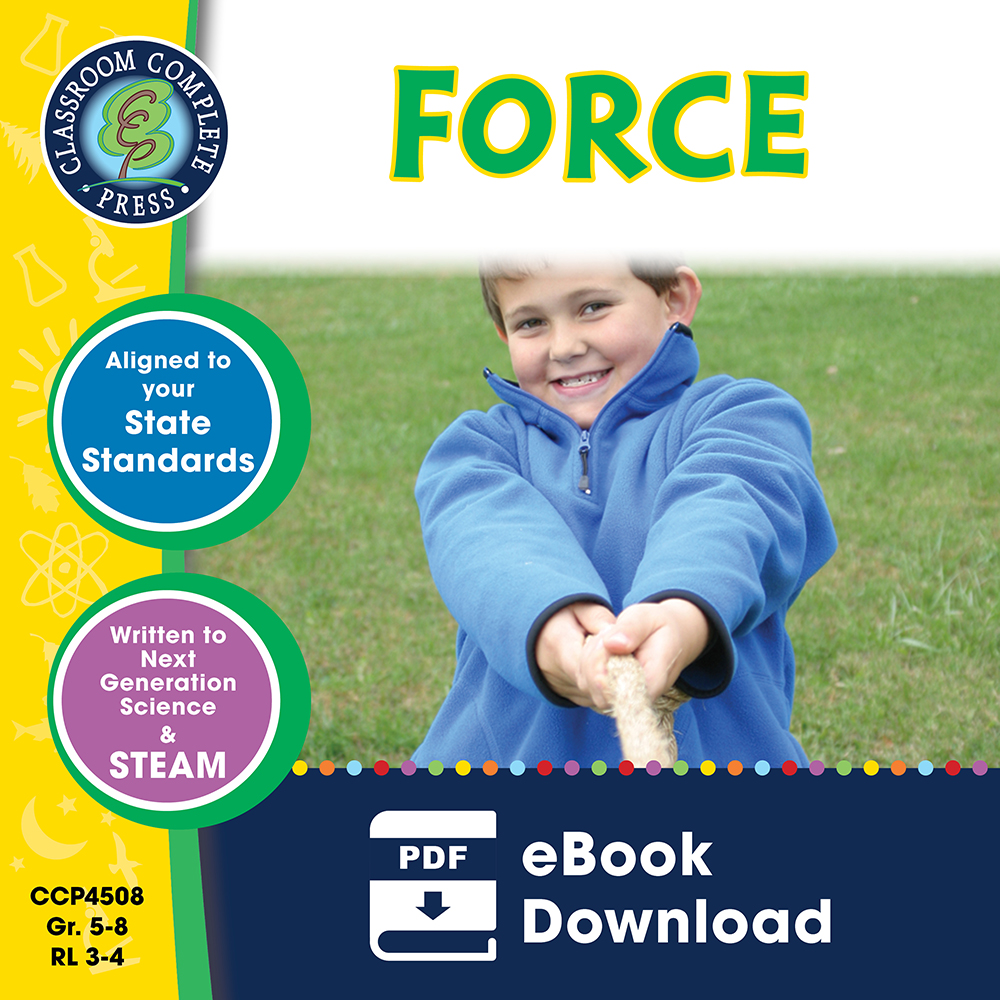
A single-topic 'chapter slice' teaching resource on the concept of force, covering what force is, for grades 5-8 science, published by Classroom Complete Press (author George Graybill, Ph.D.).
A single-topic 'chapter slice' teaching resource on kinds of force, for grades 5-8 science, published by Classroom Complete Press (author George Graybill, Ph.D.).
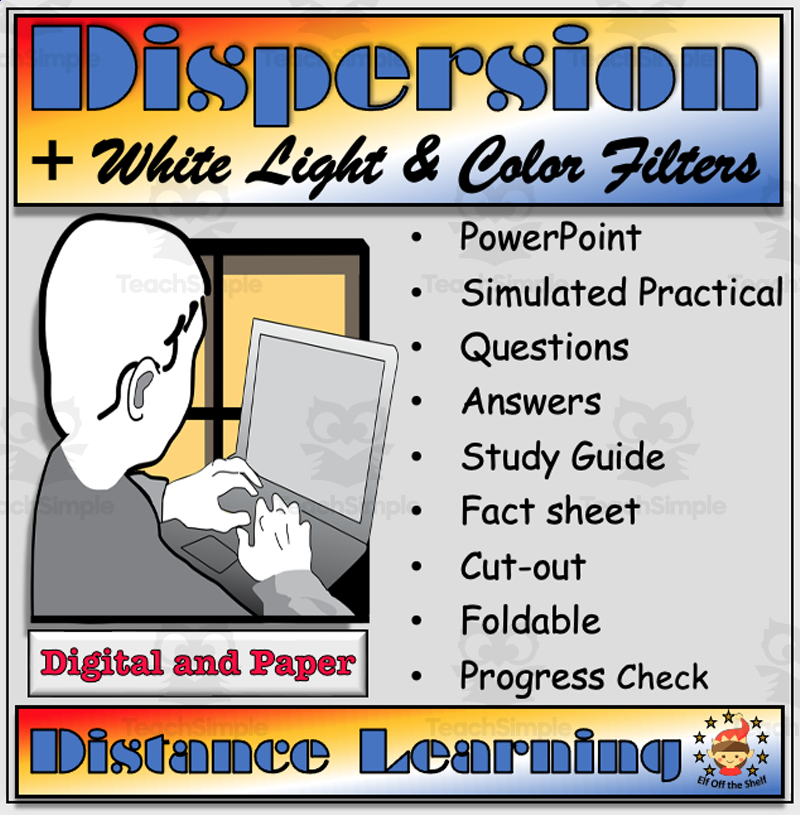
A distance-learning/homeschool science resource teaching middle school students about white light, dispersion, and color filters, including how colored objects interact with light.
A full grades 5-8 science teaching resource covering force, comprising all seven reading-comprehension topics (What Is Force, Kinds of Force, More Than One Force, Balanced & Unbalanced Forces, Force & Mass, Gravity, Other Forces That Act Without Touching), published by Classroom Complete Press (author George Graybill, Ph.D.).
A full 36-week, 10-unit NGSS-aligned Grade 4 science curriculum built on the 5E instructional model (Engage, Explore, Explain, Elaborate, Evaluate), covering energy, waves, Earth's processes, fossils, plant/animal structures, weathering and erosion, engineering, electricity, and a capstone.
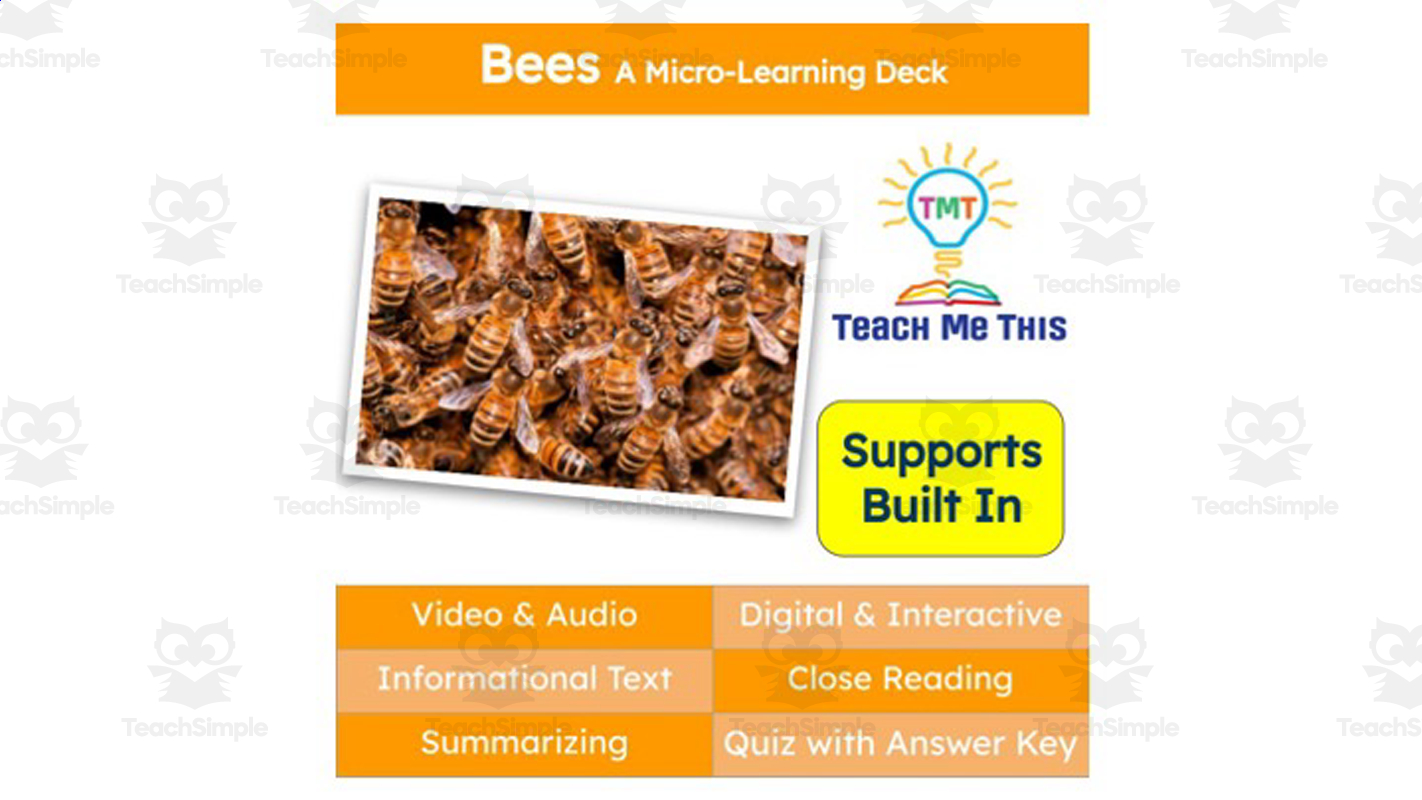
A digital, interactive micro-learning slide deck teaching middle-school science students about honey bees - physiology, hive roles, pollination, and how bees make honey.
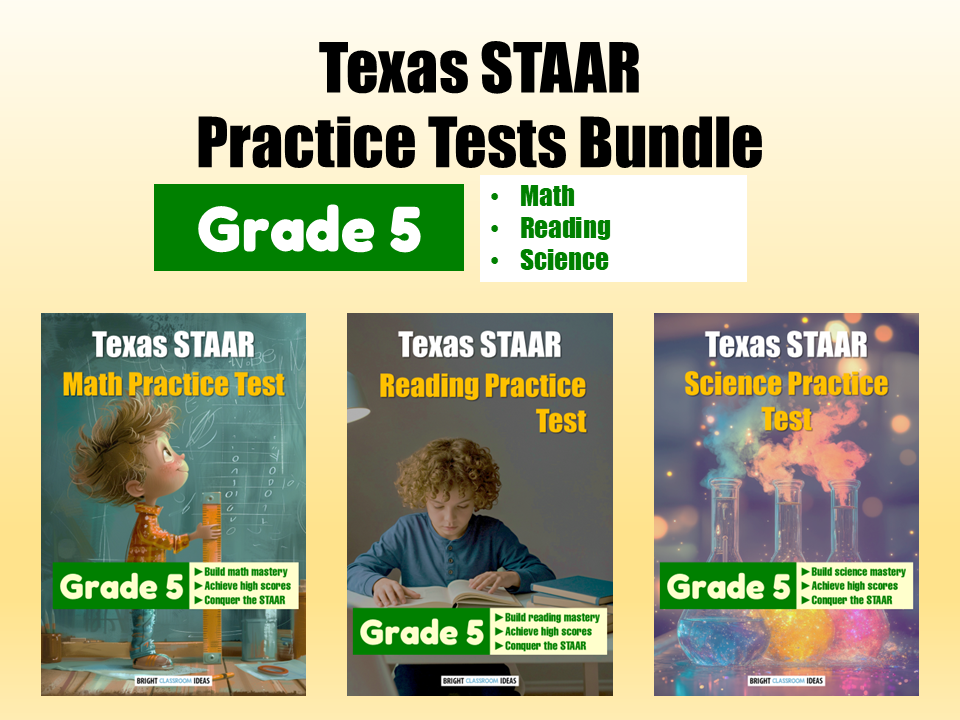
A bundle of full-length STAAR-style practice tests (with teacher's guides and answer keys) covering ELA/Reading, Math, Science for Grade 5, used to prepare students across multiple tested subjects before the real Texas STAAR exam.
A single-topic 'chapter slice' teaching resource on forces that act without touching (e.g. magnetic, electrostatic, gravitational forces), for grades 5-8 science, published by Classroom Complete Press (author George Graybill, Ph.D.).
A Grade 5 Virginia SOL practice-test bundle covering Reading, Math, History & Social Science, Science (4 subject areas), each with its own practice test, answer key, and teacher's guide, used to prepare students across all tested subjects.
Academic workbook teaching elementary physics concepts of force, motion, and energy transfer, including push/pull, speed, friction, and forms of energy in everyday electricity generation.
A Grade 8 Virginia SOL practice-test bundle covering Reading, Math, Science, History & Social Science (4 subject areas), each with its own practice test, answer key, and teacher's guide, used to prepare students across all tested subjects.
A two-part electricity unit: Part I is direct-instruction notes and 7-9 worksheets/assignments on electricity fundamentals; Part II is a role-play class project where students debate which type of power plant a fictional town should build.
Teaches how light reflects off plane mirrors (transparent/translucent/opaque materials, luminous/non-luminous objects, angle of incidence equals angle of reflection, periscopes) as a self-directed distance-learning physics pack.
Teaches how shadows form (umbra/penumbra) and how lunar and solar eclipses (total, partial, penumbral, annular) occur, as a self-directed distance-learning middle-school physics pack.
Teach basic science classification skills and measurement/observation concepts: sorting living/nonliving things and animals by rule, using dichotomous keys, reading bar graphs, identifying physical properties of materials, using the five senses to make observations, and using tools to measure.
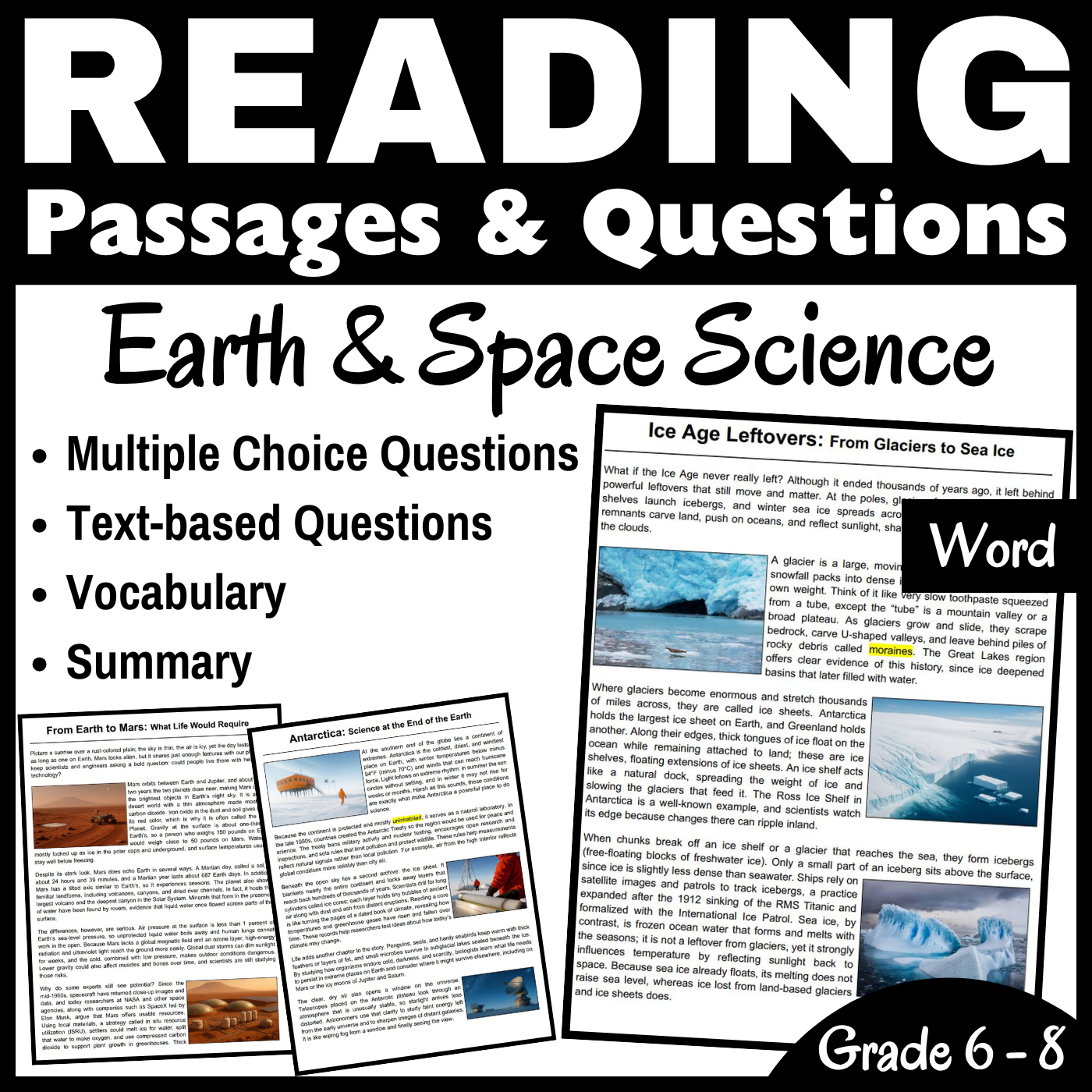
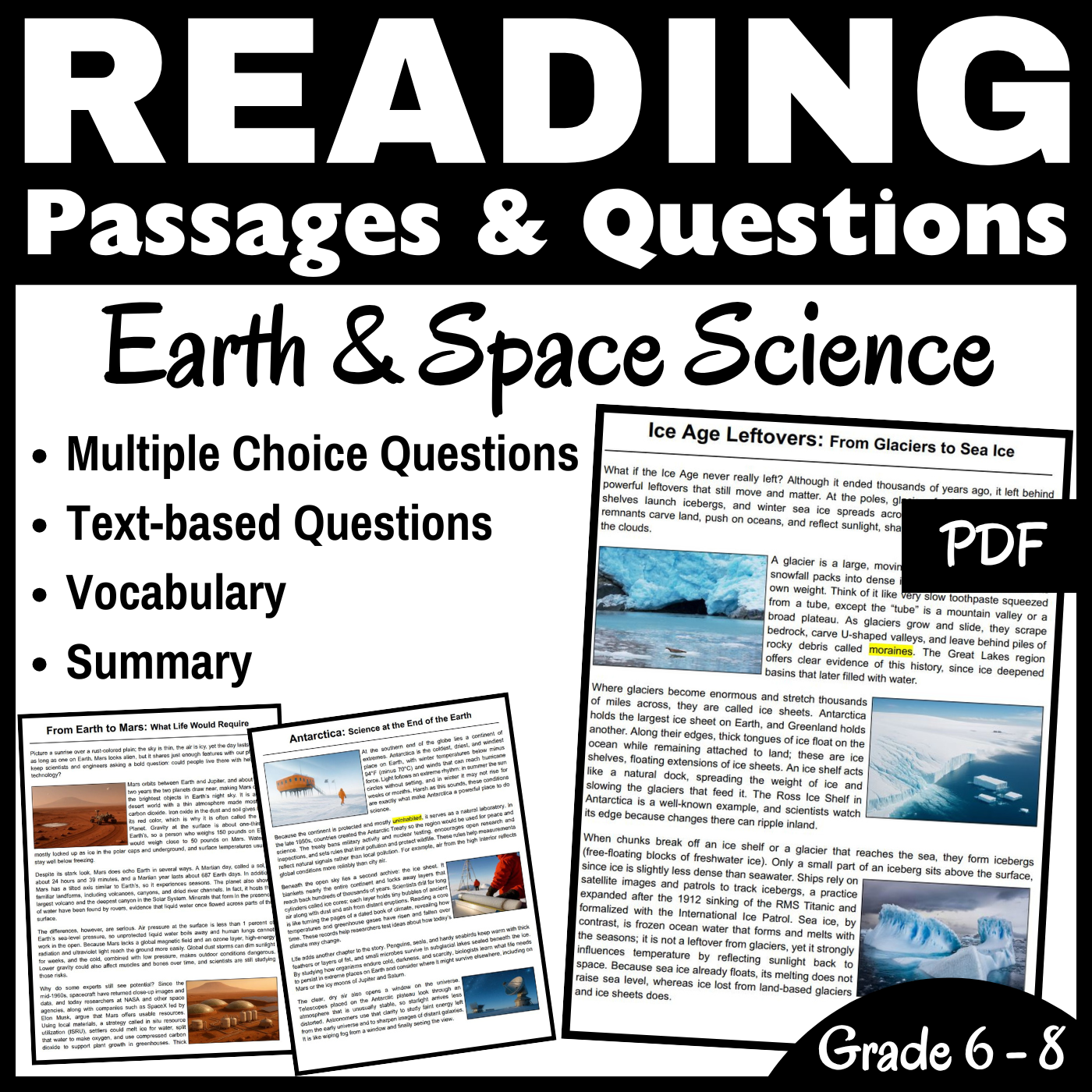
A set of three interdisciplinary science reading comprehension passages (Mars habitability, glaciers and sea ice, and Antarctica) in editable Word format, building reading comprehension and vocabulary skills alongside earth/space science content.
A set of three interdisciplinary science reading comprehension passages (Mars habitability, glaciers and sea ice, and Antarctica) that build reading comprehension and vocabulary skills alongside earth/space science content.
Deliver a complete, no-prep micro-lesson on energy (what it is, potential vs. kinetic energy, how it changes form) via a self-contained digital slide deck combining video, reading passage, vocabulary, comprehension, and writing activities.
A full step-by-step science unit teaching elementary students about birds' physical features and how those features help birds survive in their habitats.
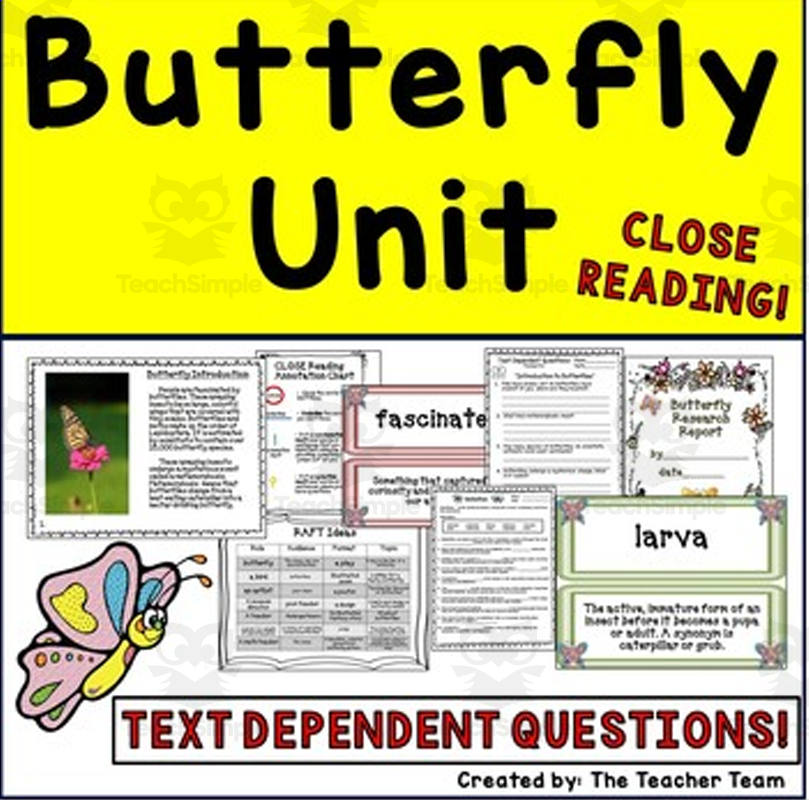
A multi-part butterfly/insect unit combining nonfiction close-reading passages, vocabulary work, a research report, and graphic organizers to build reading comprehension and content knowledge about butterfly biology and life cycle.
A large science packet teaching the butterfly life cycle (egg, caterpillar, chrysalis/pupa, butterfly), butterfly anatomy, and butterfly vs. moth differences, through posters, an interactive handbook, and a wide variety of printable practice activities.