



3,946 products added recently
Page 380 - Teacher Tools
Equip yourself with tools that streamline your teaching process and enrich your classroom experience. This collection includes organizational planners, assessment templates, and classroom management strategies. By integrating these resources, you can focus on delivering impactful instruction and fostering student success.

 Show filters

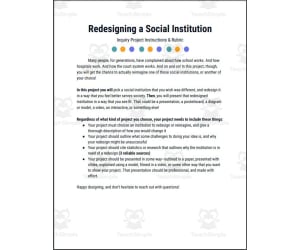
Redesigning a Social Institution (A Student Inquiry Project w/ Class Slides)
Social Studies, History, Sociology, Grade 7, 8, 9, 10, 11, 12, Presentations, Teacher Tools
Redesigning a Social Institution is an inquiry-based project that challenges students to reimagine and redesign a major social institution. This zip file resource includes a visually engaging slideshow that defines social institutions, explains their purpose and development, and provides common examples. Also included are student notes, detailed project instructions, and a scoring rubric. Students are guided through an inquiry process where they identify flaws in an institution, research alternatives, ideate solutions, and propose a redesign. This thought-provoking project empowers students to apply critical thinking skills as they evaluate and reconstruct vital structures of society. Applicable across middle and high school grade levels, it can be implemented as an individual, small group, or whole class activity.
Author Ed Dynamic
Tags Inquiry-based, Project-based, Critical Thinking, Social Institutions, Redesign
I WONDER - Did Viking Children Do Sports | Animated Video Lesson
History: Ancient, History, Social Studies, History: British, History: Canada, History: Europe, History: USA, History: World, Sports, P.E. & Health, Grade 2, 3, 4, 5, 6, 7, 8, Lesson Plans, Teacher Tools
Video Introduction An amazing video designed for the students to learn more about history. I WONDER - Did Viking Children Do Sports | Animated Video Lesson Do you like history? Which topic do you really enjoy about history? Have you ever read an interesting fact about the Vikings? If yes, can you mention them? What do you like most about the Victorian era? Can you name all the Tudors? Have you ever wondered how people used to live in ancient Japan and ancient China? Do you know any interesting facts about ancient Egyptians and the Pharaohs? Have you ever visited South America? What do you know about Incas and Aztecs? Celtic culture was really one of a kind, can you name any of the places that Celts used to live in? Imagine yourself living during the ancient Roman empire, how your life will look like? Ancient Greece was an amazing place to live in. What do you know about ancient Greek life? I WONDER - Did Viking Children Do Sports | Animated Video Lesson The video is perfect for encouraging the researching skills for the students, while learning more about history. I WONDER - Did Viking Children Do Sports | Animated Video Lesson This friendly designed video is suitable for students at school, homeschooling, and as a group activity. Format Available in MP4 format.
Author Educational Voice
Tags Did Viking Children Do Sports, Did Viking Children Do Sports Video, Viking Children, Viking Children Facts, Viking Children Facts For Kids, Viking Children Video, Viking Children Video For Kids, Vikings
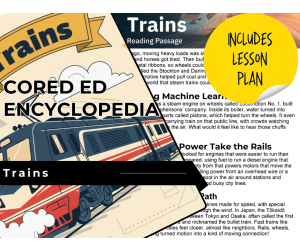
Trains Reading Comprehension Passage - Cored Ed Encyclopedia
ELA, Language Development, Reading Comprehension, Reading, Science, Technology, Engineering, History, Social Studies, Physics, Grade 2, 3, 4, 5, Worksheets & Printables, Worksheets, Teacher Tools, Centers, Activities, Writing Prompts, Assessments, Quizzes and Tests, Quizzes, Lesson Plans
This trains reading comprehension with lesson plan includes: Visualization (on the front cover) Start your lesson by taking a minute to think and share something about the topic. Read the script aloud (slowly), perhaps prepare some music or sound effects. Student close their eyes and let their imaginations wander. Students open their eyes, read the question aloud and give them a few minutes to complete. Ask a few students to share or keep answers until the end to compare with what they learn in the passage. Quick pause—thousands of Cored Education products are included with your TeachSimple membership. Download links and encyclopedia index available here. Pre-Reading Trivia Students will write down one thing they already know about the subject and then read five more facts and discuss. These facts are fun, and the students will enjoy learning about the subject before reading more. Give 1 minute for students to write what they already know (no pressure—best guess is fine). Read the five facts together. After each fact, do ask a student for their opinion, was it surprising? Set a purpose by asking students to highlight/underline one fact they want to learn more about during the reading. Reading Passage The text is a high-interest reading passage with set paragraphs, roughly three to four paragraphs long. It contains a variety of themes about the topic, anywhere from history to technology. The passage is between 250 and 350 words in length. First, ask students to look at the headings and see what they’ll learn about today. What do they know about the topic/heading? First read options: Teacher read-aloud (best for support). Partner reading (paragraph by paragraph). While reading, students underline important details, and vocabulary words they think may come up in the questions section. Mixed Questions The first question page contains four multiple-choice questions, each with a choice of four answers, and three written response questions that require a sentence or two from the student. Students complete the mcqs first independently, then review quickly as a class. For the 3 written responses, try to get students giving the answer with some form of evidence: “I think ___ because the text says ___.” If students get stuck, send them back to check the passage. Vocabulary Questions Practice seven key words from the text in this section across two activities. First section is scrambled words where students will unscramble three words given a clue for each. The second section is a word to meaning matching activity. Before starting, have some students read out words they underlined in the passage. Ask students to say the word and read aloud the sentence(s) around each word. Ask students to do scrambled words and the matching exercise in pairs then go through answers as a class. For the scrambled spelling task, get four pairs to come up to the board and write the words for extra practice with the other student reading out the clue. For the matching task, prompt students to give full sentences: “I matched ___ with ___ because ___.” Creative Writing In this question, the student will be required to write a five to eight sentence paragraph on a question related to the topic. Before starting, ask students write down 3 key ideas they are going to include in their piece. Ask students for ideas to share around the class to help those struggling. Pro writing expectations: 5–8 sentences At least 2 facts or details from the passage At least 2 vocabulary words from the previous page Students read their paragraphs while classmates listen for facts and vocabulary words. Extension Activities This page is optional for fast finishers or to take home. There are several activities, each one requiring a different skill. Do some, do none, do all, completely optional - but you will feel reassured knowing every possibility is planned for. Includes summary writting question. Answer Key There are answers for the multiple-choice questions, written response questions have sample answers, vocabulary answers and if there is a summary question then a sample summary will be provided as well. Lesson Plan Included Customized lesson plan for this lesson is included. Lesson Snapshot Title: Trains Genre: Nonfiction (informational text) Subject: Science (Technology & Engineering) Primary Topic: How rails and train power changed over time Estimated Guided Reading Level (A–Z): R What This Lesson Teaches Best Explains how smooth rails reduce “rubbing,” helping heavy loads move more easily than wagons on muddy roads. Uses a real historical example (the Stockton and Darlington Railway opening in 1825) to show steam trains carrying coal and people. Describes how a steam locomotive works (water becomes steam, steam pushes pistons, pistons help turn wheels). Compares train power types—steam, diesel (engine spins a generator), and electric (overhead wire or third rail). Shows how high-speed rail was designed for speed (special tracks, trains shaped to slice through wind), including Japan’s Tōkaidō Shinkansen (1964) “bullet train.” QA check (support pages vs. passage): The pre-reading trivia uses the word “friction,” but the main passage describes the idea as “rubbing.” Other questions and vocabulary (boiler, pistons, diesel, generator, third rail, high-speed rail) match the passage. Learning Goals Students will explain why smooth rails helped heavy loads move with less rubbing. Students will identify what happened in 1825 with the Stockton and Darlington Railway. Students will describe how steam in a boiler can help power wheel movement using pistons. Students will compare steam, diesel, and electric explanations of how trains get power in the text. Students will describe how train design and tracks can increase speed, using details about high-speed rail. Key Vocabulary From the Text locomotive — the front engine that pulls the train cars. boiler — the part where water is heated to make steam. pistons — parts steam pushes to help turn the wheels. generator — a machine that makes electricity for the train. soot — black dirty particles in the air from smoke. FULL CATALOG OF DOWNLOAD LINKS AND ENCYCLOPEDIA INDEX HERE
Author Cored Education
Rating
Tags Vocabulary, Reading Comprehension, Reading Passages, Lesson Plans, Ela Lesson Plans, Reading Comprehension Lesson Plans, Pre-reading, History, History Lesson Plans, Physics

U.S. Representative Michael McCaul (TX - 10th) BIO PPT
Social Studies, History, History: USA, Government, Not Grade Specific, Teacher Tools, Presentations
Introducing a 40-page biography PowerPoint about Michael McCaul, the current U.S. Representative from Texas' 10th congressional district since 2005. This informative resource traces McCaul's background, including his birthdate and early education, as well as his career path and political accomplishments. Educators can engage students with details on McCaul's election to public office, his time serving as Texas Deputy Attorney General from 1999-2002, and his ongoing role representing District 10 in the U.S. House of Representatives. Presented chronologically, this PowerPoint contains relevant facts and details from Michael McCaul's personal life and professional achievements. Teachers and homeschooling parents can easily incorporate this resource to enrich lessons for secondary social studies or government courses.
Author Mr. Matthews Teacher Store
Tags Biography, Government, Representative, Congress, Accomplishments

Future-Ready Navigator: Guided Career & Skill Pathway Planner
Special Resources, Life Skills, Social Emotional Learning (SEL), Social Skills, Special Education Needs (SEN), Speech Therapy, STEM, Life Studies, Career, Coaching, Homeschool Curriculum, Grade 5, 9, 10, 11, 12, Projects, Activities, Teacher Tools, Assessments, Lesson Plans, Presentations, Outlines, Worksheets & Printables, Parts of and Anatomy of, Workbooks
The Future Ready Navigator has been designed to develop the careers of High School Students (Grades 9-12) as they transition into the workplace. This comprehensive GIANAWORK workbook includes a combination of both theoretical concepts of career guidance as well as interactive worksheets that help with the development of an individualized, resilient career path, through research that incorporates both technological and job market trends. Together, these pieces of information will help ensure that high school students and all lifelong learners have access to career planning tools to build a strong foundation for a successful transition into the ever-changing job market. The workbook consists of 27 pages containing various types of content, such as the Adaptive Trajectory Framework (ATF), which provides information on how to identify your true abilities, assess your current skill set, and develop a dynamic plan to achieve your goals. It will also teach you how to create effective AI prompts that can be used for identifying trends and researching jobs and developing future skills. The workbook includes several real-world case studies, guidelines around the ethical use of AI, and a number of educator resources, such as SVG diagrams (flowcharts, mind maps, Venn diagrams) to use as reference tools. This printable career planning workbook will also prepare users for jobs that will be created as a result of the technological disruption reforming our world, for those looking to move to the gig economy, to develop premium future skills, such as critical thinking, emotional intelligence, and digital literacy. There are many uses for this career planning workbook, including use by students taking classes, and as a resource for teachers providing career development coaching to their students. It can also be used as another way for people who want to develop professionally to use this career development workbook to develop the skills needed for the job market. Download now to create engaging, relevant education-ready for counselors, parents, or any educators looking for high school career counseling resources, or workers developing skill sets with integration of the AI process, or resources/strategies that encourage lifelong learning. Keywords: AI-based career planning tools, High School Career Counseling, Future Skills Workbook, Career Development for Teens, Educational PDF Printable, & Student Self Assessment Worksheets. Parents and schools appreciate it for a variety of reasons: It Prepares Students for Real-World Success: It incorporates both self-discovery activities and AI-based insights to help teenagers identify new career opportunities and align them with their own values and strengths as well as the demands of the market (e.g., Precision Agriculture Technician, AI Ethics Advisor), which is especially important in an economy disrupted by technology. Interactive and Engaging Tools: Printable worksheets that guide students through prompt engineering, skill-gap analyses, and career exploration are not only engaging and educational, but there are also high-quality SVG graphics (flowcharts, mind maps, Venn diagrams) to help students understand complex concepts easily and enjoyably in both traditional classroom and home school environments. Responsible Use of AI with Practical Tips: Helps students learn how to use AI responsibly and how to address issues related to bias, data privacy, and the interaction between people and AIs, and provides specific ways for students to upskill through certification programs, internship opportunities, and side projects, allowing them to take the initiative to continue learning throughout their lives. Versatility for Various Learners: Available for students in grades 9-12+ and includes case studies of real-life transitions (e.g., from Clinical Research to Bioethics), making it great for individualized educational plans, group settings, or for parents who want to do educational activities with their children, complete with teacher answer keys for each unit. Fostering Future Skills: By focusing on "future skills," such as critical thinking, adaptability, and digital fluency, and using data from reputable sources (e.g., World Economic Forum) to assist parents and schools in preparing their students to thrive in a gig-work world and during periods of rapid technological advancement. Student/Target Class: The target audience of this 27-page PDF analysis is specified as grades 9-12+. This content consists of theoretical content of AI-enhanced career planning, student worksheets for self-reflection and prompt creation, real-life examples of how high school-aged learners and adult learners are changing careers through AI as well as resources for teachers (with images) about these items. It was determined that the primary target audience for the content and example case studies of students and adults was high school students ages 14-18 in grades 9-12. Case studies utilized for reference were from students in their 10th and 11th grade year, included high school scenarios such as expected academic performance (i.e., transcripts) to identify which extra curricular activities students would participate in, such as: extracurricular activities (e.g., debate club, robotics); and student worksheets will have students reflect on their interests (e.g., interest in space exploration or environmental projects) and what path they would pursue through a community college or university. This resource is perfect for career education classes, guidance counseling sessions, or homeschooling activities related to getting ready for the job market after high school and the impact on their jobs in an unstable economy. The secondary audience of the content and the example case studies was all post-high school students ages 12+ including: young adults transitioning to a 4-year college, first-year college freshmen, and working adults looking to upskill/re-skill. Additionally; case studies of older adults (past PhD graduates and adults in their late 20s seeking to transition from administrative positions to logistics in the bio-tech industry) demonstrate that the resource promotes lifelong learning, investigation, and adapting to shifting technologies (e.g., AI and quantum computing).Some target classes could be the introductory college career development course; vocational training program; and adult learning/education workshops about Artificial Intelligence Ethics and skill bridging. With an emphasis on marketing to high school career preparation classes, but also demonstrate the versatility of the program to appeal to transitional learners in larger markets. Copyright / Terms of Use : Copyrighted by Syed Hammad Rizvi This resource is intended for your own personal use and/or one classroom use only. You are not permitted to modify, redistribute or sell any part of this resource, nor may you place this resource on the internet publicly for download. (In other words, you may not post this resource publicly on the internet where it may be available to download). If you are interested in sharing this resource with your colleagues, please purchase an additional license for each colleague on Teachsimple. Thank you for following our terms of use! This product is provided courtesy of Syed Hammad Rizvi
Author Creative Book Store
Rating
Tags AICareerPlanner, FutureReadyNavigator, AIGuidedCareer, SkillPathwayPlanner, HighSchoolCareerGuidance, TeenCareerDevelopment, FutureSkillsWorkbook, CareerPlanningPDF, AIinEducation, StudentSelfAssessment
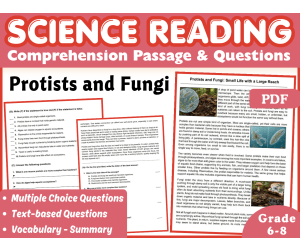
Life Science Reading Comprehension Passage: Protists and Fungi (PDF)
Science, ELA, Reading, Reading Comprehension, Strategies, Resources for Teachers, Life Sciences, Biology, Grade 6, 7, 8, 9, 10, Writing Prompts, Worksheets & Printables, Centers, Activities, Teacher Tools, Assessments, Quizzes and Tests, Quizzes, Tests
Life Science Reading Comprehension Passage and Questions: Protists and Fungi (PDF) This very engaging science reading passage is about protists and fungi , two groups of small but highly important organisms that affect ecosystems in major ways. It explains how protists can live in water, soil, or hosts; how some protists, such as algae, make food through photosynthesis and support aquatic food chains; and how others, such as Plasmodium , can cause disease. It also explains how fungi absorb nutrients, break down dead material, recycle nutrients, form helpful partnerships with plant roots, and contribute to foods and medicines such as bread and penicillin. This passage is designed to bridge the gap between science and literacy by strengthening reading comprehension while sparking scientific curiosity in middle school students. It blends English Language Arts skills with accurate science content, helping students build background knowledge, understand key concepts, use evidence from the text, and explain scientific ideas clearly. This resource supports science classroom practice while also reinforcing important literacy skills such as main idea, vocabulary, comprehension, and summarizing. Ideal for interdisciplinary learning in ELA and Science. Suitable for Grade 9 review, too! Student Tasks for The Passage: 10 multiple-choice questions targeting main idea, key details, science concepts, comparison, and real-world applications 10 True/False statements to check understanding and address common misconceptions 5 text-based short-answer questions that require students to explain important ideas from the passage 5 vocabulary matching items with clear, student-friendly definitions 1 summary prompt that asks students to condense the central ideas accurately Full answer key for every section Available Formats for this Resource Fillable PDF Word Docs Google Docs FULL CATALOG OF DOWNLOADING LINKS HERE Product Details Length: 7 pages total Grades: 6–8, also suitable for Grade 9 review Use cases: close reading, stations, homework, intervention, test prep, and sub plans Standards support: Reinforces informational-text skills and supports NGSS-style sense-making by helping students read scientific explanations, connect evidence to key concepts, interpret real-world examples, and explain cause-and-effect relationships in science. Why Teachers Choose This Set Authentic science content paired with rigorous literacy practice Consistent task structure across all passages for easier planning and smoother student routines Clear, age-appropriate writing that builds confidence without oversimplifying Other Science Reading Collections and Topics You May Find in the Store: 1. Astronomy & Space Science 2. Volcanoes, Rocks, & Mountains 3. Rock Cycle, Soil, & Sinkholes 4. Mars, Glaciers, & Antarctica 5. Water Cycle, Acid Rain, & Wastewater 6. Insects, Animals, & Ecosystems 7. Bioluminescence & Insects 8. Animal Skin, Cats, & T. Rex 9. Human Body and Senses 10. Health & Applied Bioscience 11. Waves, Light, & Imaging 12. Electricity & Energy 13. Motion & Materials 14. Chemistry and Materials Science 15. Electromagnetism 16. Acids and Bases 17. Gas Laws 18. Biotechnology 19. Periodic Trends 20. Protists and Fungi 21. Microevolution 22. Blood 23. Chemical Bonding 24. Magnets 25. Muscles 26. Nuclear Chemistry 27. Electromagnetic Devices 28. Epigenetics 29. The Law of Conservation of Mass 30. Atomic Models 31. Isotopes and Ions 32. Light 33. Human-Environment Interaction 34. Theory of Evolution 35. Photosynthesis 36. Origins of Life and Early Earth 37. Gene Expression and Regulation 38. Thermochemistry 39. Allergies 40. Coevolution 41. Birth to Adulthood 42. Cells 43. Entropy and Free Energy 44. The Human Brain 45. Mixtures and Solutions 46. Invertebrates 47. Zoo Animals 48. Biochemistry 49. Animal Behavior 50. Population Ecology ...and many more engaging science reading passages that cover intriguing and important topics designed to spark curiosity and support student learning. Use this passage to reinforce ELA skills in science, to add literacy to your lessons, and to support independent work. The passages strengthen main idea, evidence use, vocabulary in context, inference, cause and effect, and summary writing. With ready-to-use assessments and complete answer keys, you can provide focused practice that is simple to run and fast to review.
Author Middle & High School - CORED Education
Rating
Tags Middle School, Reading Comprehension, Reading Strategies, ELA, Centers, Reading Passage, Assessments, Vocabulary, Biology, Life Science
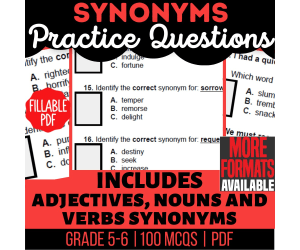
Synonyms Practice Questions - Vocabulary Grade 5-6 Fillable
ELA, Language Development, ESL, Common Core, Resources for Teachers, Vocabulary, Grade 5, 6, 7, Worksheets & Printables, Worksheets, Quizzes and Tests, Teacher Tools, Tests, Assessments
Synonyms Grammar Practice MCQS Synonyms Snapshot Title: Synonyms Grammar . Genre: Instructional workbook / practice worksheets . Subject: Reading / Language Arts . Primary Topic: recognizing synonyms and near-synonyms accurately . What This Grammar Pack Teaches Best Teaches synonym knowledge directly by defining synonyms as words with the same or nearly the same meanings. Builds semantic precision through items that ask for correct synonyms, incorrect synonyms, and near-synonyms in context. Helps students notice shades of meaning across academic vocabulary such as melancholy , validate , momentous , and diminutive . Supports review, centers, and independent practice with four worksheets and answer keys. Learning Goals Students will identify words with similar meanings. Students will recognize when an answer choice is not a synonym. Students will use sentence context to select the closest synonym. Students will compare related words to understand shades of meaning. Students will justify vocabulary choices using meaning evidence from the item. Key Vocabulary (Teach before starting the tests) synonyms — words with the same or nearly same meaning. fatigue — extreme tiredness. remuneration — payment for work. melancholy — sad and thoughtful feeling. diminutive — very small. Common Core Alignment CCSS.ELA-LITERACY.L.4.5c / L.5.5c — relating words to others with similar but not identical meanings matches the packet’s direct synonym practice. CCSS.ELA-LITERACY.L.6.5b-c / L.7.5b-c — using relationships between words and distinguishing connotations also aligns with the packet’s focus on near-synonyms and nuance. Synonyms Overview: Nouns Synonyms Verbs Synonyms Adjectives Synonyms Synonyms in a Sentence FILLABLE PDF VERSION Worksheet-style pages, but with type-in answer boxes so students can complete and save their work digitally. Other versions are available in the links list below or in the full catalog. FULL CATALOG OF DOWNLOAD LINKS HERE For More Like This For similar downloads and other frees, do check out Cored Group on TeachSimple.
Author Cored Education
Rating
Tags Elementary, Answers, Ccss, Common Core, Tests, Test Prep, Assessment, Grade 5, Grade 6, Vocabulary

Frames of Reference and Relativity - Senior Physics Lesson
Science, Physics, Grade 10, 11, 12, Teacher Tools, Lesson Plans
Frames of Reference and Relativity - Senior Physics Lesson Your lesson covers chemical reactions and balancing. In order, the lesson teaches about; Newtonian Physics, Problems with Classical Physics, Modern Physics & Einstein’s Special Theory of Relativity, Michelson and Morley, Postulates of Special Relativity, Time Dilation, and Length Contraction. Your lesson includes the teacher and student version of the presentation, an auto-graded exit ticket, TWO EMBEDDED videos and a student lesson handout so the students can record the notes on a more condensed medium. This lesson is designed to be your go-to resource, whether you're in a traditional classroom or a virtual one. With both a teacher version and a student version, it seamlessly fits into your lesson plans, making learning engaging and adaptable. Assessment made easy We've included an auto-graded Exit Ticket and a quiz with an answer key because I know you don't have an excess of time. I know you don't, because I don't and I know I'll do whatever I can to reduce my grading time. Whether you use PowerPoint or Google Slides, prefer Word or Google Docs, this lesson has you covered. This lesson comes in both Office and Google formats for your convenience. The student version of the presentation has strategically placed blanks for them to fill in as you're teaching. It keeps them active and engaged, encourages discussion, and leaves more time for those "aha" moments.
Author Teach With Fergy
Tags Chemistry Lesson, Newtonian Physics, Classical Physics, Modern Physics, Einstein Special Theory Of Relativity, Relativity, Special Relativity, Time Dilation, Length Contraction

Current U.S. Senators from Nebraska (Biography PPT Bundle)
Social Studies, History, History: USA, Government, Grade 7, 8, 9, 10, 11, 12, Teacher Tools, Presentations
This informative PowerPoint bundle profiles both of Nebraska's current U.S. Senators - Deb Fischer and Pete Ricketts. The slideshows give an in-depth look at each senator's background, including details on their education, early careers, political experience, elected offices held, accomplishments in office, and family life. Created for social studies classes, these 105-page Senator biography presentations can facilitate lessons and discussions on Nebraska state politics, U.S. civics, and more. With timelines, photos, and key facts, educators can use these PPTs to help students understand Senator Fischer and Senator Ricketts' paths to Capitol Hill and their legislative records representing the Cornhusker State.
Author Mr. Matthews Teacher Store
Tags Nebraska Senators, Senator Biographies, Senate Ppts, Fischer Ricketts, Nebraska Politics

Joseph John Thomson – The Discovery of the Electron
Life Sciences, Science, STEM, Social Studies, Biographies, Inventors, Basic Science, Physics, Chemistry, Technology, Grade 6, 7, 8, 9, 10, 11, Worksheets, Worksheets & Printables, Quizzes, Quizzes and Tests, Teacher Tools, Projects, Activities
Joseph John Thomson – The Discovery of the Electron Comprehension Activities A ready-to-use science resource for grades 7–10 (PDF + H5P) ⚛️📘 A printable and digital resource for grades 7–10 science and cross-curricular teaching 🧪🧠 This classroom resource introduces students to Joseph John Thomson, the physicist who discovered the electron and helped shape our modern understanding of atomic structure. His work not only earned him a Nobel Prize, but also laid the groundwork for the atomic models students learn about in middle and high school. The material is designed to be easy to use – even if you’re short on prep time. The reading text is short and accessible, followed by a structured worksheet and quiz questions. It’s suitable for science lessons focused on atomic theory or the history of chemistry, but it also works well in substitute teaching settings since students can work through it independently. Included in this resource: A short informational text on J.J. Thomson A profile worksheet to help students summarize key points Quiz questions (with solution key) Two extension activities: – Students write their own questions based on the reading – Exchange and answer a partner’s questions File formats: – PDF (for printing or digital use) – DOCX (editable, text only) – H5P version (interactive, for learning platforms) How I use it in class: I like using materials like this at the start of a unit on atomic structure or when we discuss the development of scientific models. It gives students a chance to see how our current understanding has evolved – and reminds them that science is built on the ideas of real people. The H5P version allows for digital delivery and self-checking, making it great for homework or blended learning. It also gives students the chance to reflect, work at their own pace, or collaborate in pairs. Quick to prepare, easy to adapt – and a great way to connect abstract content to the scientists who helped shape it. Have fun exploring the world of science with your students! Warmly, Lernfitness Did You Know? I teach with a certified therapy dog, and together we focus on creating a positive and inspiring learning environment.
Author Lernfitness
Rating
Tags Science, Famous Scientists Lesson, H5P, Interactive Science Exercises, STEM, Scientists, Chemistry, Joseph John Thomson, Electron, Atomic Structure

I WONDER - How Was Polonium Named | Animated Video Lesson
Biographies, Social Studies, Inventors, Basic Science, Science, Chemistry, Grade 4, 5, 6, 7, 8, 9, 10, Lesson Plans, Teacher Tools
Video Introduction An amazing video designed for the students to learn more about famous people in different countries. I WONDER - How Was Polonium Named | Animated Video Lesson Do you know this person? How much do you know about him/her? Who is your idol? Why did you choose this person? Tell us more about him/her? Who is your favorite athlete? Or what is your favorite team? Have you recently heard a story about a famous person? Who was this person? Can you tell us more about him/her. Who is your favorite president, king, or queen? Why you chose that person? In your country, who are the most famous people? What did they do? Can you tell us more about them. What is your favorite invention? Who invented it? Who is your favorite artist? What is the most famous thing he/she have done? What is the most enjoyable you have read before? Who wrote it? I WONDER - How Was Polonium Named | Animated Video Lesson The video is perfect for encouraging the researching skills for the students, while learning more about this fantastic place. I WONDER - How Was Polonium Named | Animated Video Lesson This friendly designed video is suitable for students at school, homeschooling, and as a group activity. Format Available in MP4 format.
Author Educational Voice
Rating
Tags How Was Polonium Named, How Was Polonium Named Video, Polonium, Polonium Facts, Polonium Video, Polonium Video For Kids, Polonium Facts For Kids, Marie Curie, Marie Curie Video
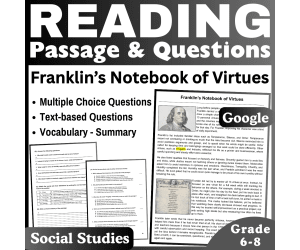
Benjamin Franklin's Notebook of Virtues: Social Studies Passage (Docs)
ELA, Reading, Reading Comprehension, Strategies, Resources for Teachers, Social Studies, History, History: USA, Grade 6, 7, 8, 9, Writing Prompts, Worksheets & Printables, Centers, Activities, Teacher Tools, Assessments, Quizzes and Tests, Quizzes, Tests
Benjamin Franklin's Notebook of Virtues: Social Studies Reading Comprehension Passage (Docs) This resource introduces a unique Social Studies reading comprehension passage with questions about Benjamin Franklin's Notebook of Virtues. The passage is carefully designed to bridge the gap between social studies and literacy through strengthening reading comprehension and sparking knowledge curiosity in middle school students. Each passage blends English Language Arts skills with accurate social studies content . Ideal for interdisciplinary learning in ELA and Social Studies. Suitable for Grade 9 review, too! Student Tasks throughout the passage: 5 multiple-choice questions targeting the following skills: main idea, key details, inference, vocabulary in context, and use of evidence 5 vocabulary matching items with clear, student-friendly definitions 5 text-based questions that require citing specific lines or facts 1 summary prompt that asks students to condense central ideas accurately Full answer key for every section Available Formats for this Resource: PDF Fillable PDF Word Docs FULL CATALOG OF DOWNLOADING LINKS HERE Social Studies Reading Comprehension Collection Links: 1. Ancient Civilizations PDF Fillable PDF Word Docs Google Docs 2. Early Empires and Trade Networks PDF Fillable PDF Word Docs Google Docs 3. The Founding of the United States PDF Fillable PDF Word Docs Google Docs 4. Language, Culture, and Meaning PDF Fillable PDF Word Docs Google Docs 5. Psychology and Society PDF Fillable PDF Word Docs Google Docs 6. Global Festivals and Traditions PDF Fillable PDF Word Docs Google Docs 7. Extreme Environments and People PDF Fillable PDF Word Docs Google Docs 8. Food, Culture, and Preservation PDF Fillable PDF Word Docs Google Docs 9. Global Food Customs PDF Fillable PDF Word Docs Google Docs 10. Media, Communication, and Popular Culture PDF Fillable PDF Word Docs Google Docs 11. Human Impact on the Environment PDF Fillable PDF Word Docs Google Docs 12. Civic Action and Social Change PDF Fillable PDF Word Docs Google Docs 13. Fashion, Society, and Power PDF Fillable PDF Word Docs Google Docs 14. People, Places, and Unusual Histories PDF Fillable PDF Word Docs Google Docs Product Details: Length: 4 pages Grades: 6–8, also suitable for Grade 9 review Use cases: close reading, stations, homework, intervention, test prep, and sub plans Why Teachers Choose This Passage: Authentic social studies content paired with rigorous literacy practice Consistent task structure for easier planning and smoother student routines Clear, age-appropriate writing that builds confidence without oversimplifying Use this passage to reinforce ELA skills in social studies, to add literacy to your lessons, and to support independent work. The passage strengthens main idea, evidence use, vocabulary in context, inference, cause and effect, and summary writing. With ready-to-use assessments and complete answer keys, you can provide focused practice that is simple to run and fast to review.
Author Middle & High School - CORED Education
Rating
Tags Middle School, Reading Comprehension, Reading Strategies, ELA, Centers, Reading Passage, Assessments, Vocabulary, Social Studies, US HISTORY
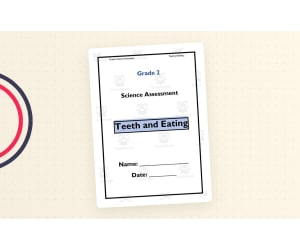
Grade 2 Teeth and Eating Science Assessment
Science, Life Sciences, Animals, Grade 2, Teacher Tools, Assessments
This is a Grade 2 Teeth and Eating Science Assessment that was designed for your 2nd grade students who have learned about animal eating habits. What You Get: You will receive 2 different PDFs in this zip file. 1. Teeth and Eating Science Assessment 2. Teeth and Eating Science Assessment Answer Key How To Implement the Grade 2 Teeth and Eating Science Assessment: This assessment works best after a science unit or lesson that focused on the different types of eaters than animals can be. Students will learn about carnivores and omnivores. Learning the various animal diets will pair with learning about what type of teeth they have to support their particular diet. At the end of your lesson or unit, you can utilize this assessment with your 2nd grade students to determine their mastery. Print a copy for each student. Allow students time to complete the 2-page assessment. The first page is the labeling of the teeth. The second page is a fill-in-the-blank that is accompanied by a word bank. I hope you enjoy! Here are more of my resources for you to enjoy: Adaptation Fill in the Blank Worksheet Inverse Operations Worksheet Verbs and Adverbs Worksheet Predict and Clarify Worksheet Food Chains Worksheet Factors Worksheet for Beginners You can find more resources at my storefront here: Elementary Resources 4 U
Author Elementary Resources 4 U
Tags Science Assessment, Science Test, Labeling Worksheet, Carnivores, Herbivores, Animal Diets, Independent Work, Science Labeling
Mapping Skills with Google Earth: Map Your Country
Social Studies, Geography, Common Core, Grade 3, 4, 5, Teacher Tools, Lesson Plans
Mapping Skills with Google Earth: Map Your Country - A Comprehensive Teaching Resource An exciting teaching resource that introduces students to map reading and geographical concepts. Designed for third to fifth-grade learners, it incorporates Google Earth™ as a key feature for interactive learning. Features: Map Elements Coverage: Offers exercises on essential components of maps including latitude, longitude lines, and global time zones exploration. Cultural Aspects: Introduces various geographical and cultural aspects through topographic and choropleth maps. North America's Geopolitical Divisions: Presents clear understanding of North America's divisions with emphasis on recognition of states and provinces. Aided by interactive features like map exercises, quizzes, puzzles, at the same time it provides curriculum -based knowledge dispersion making learning cohesive yet fun-filled. Truly,"A blending pot of theory & practice". Pedagogical Inclusion & Usage: Mapped towards meeting Common Core State Standards diligently based on Bloom's Taxonomy norms assures you with an effective delivery mechanism for intended learning outcomes. It serves varied purposes – group lessons, team activities or homework assignments. Note:The user-friendly PDF format makes this product compatible across different tech-platforms optimizing its distribution inside classrooms or home surroundings alike! Final Word - Immerse your learners into the adventurous journey through continents,cities,& oceans with the gem called "Mapping Skills with Google Earth: Map Your Country". .
Author Classroom Complete Press
Tags PDF
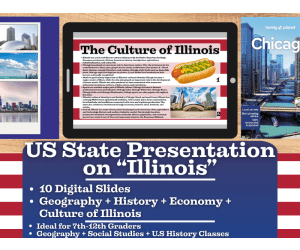
US State Presentation on Illinois
Social Studies, Economics, First Peoples (Native), Geography, History, History: USA, Not Grade Specific, Middle School, High School, Teacher Tools, Lesson Plans, Presentations
US State Presentation on Illinois Bring the United States to life in your classroom with this engaging US State Presentation on Illinois , a ready-to-use digital resource designed for Geography, Social Studies, and US History classes from 7th grade through 12th grade . This presentation provides students with a clear, structured introduction to one US state while combining essential geographical, historical, economic, and cultural information in an accessible format. This US State Presentation on Illinois , includes: The resource begins with a general introduction to the state , helping students understand its location, identity, and importance within the United States. Students then explore the state's borders and neighboring states , making it easier to place it within the broader geography of the country. A general data section introduces key facts such as population, area, population density, capital city, and other essential statistics , providing a useful foundation for further study. A paragraph that explores the history of this US state , highlighting important events, periods, people, and developments that have shaped its identity. This section is particularly useful for US History lessons because it allows students to connect state-level history with major events and themes in American history. A Geography section examines the state's physical characteristics, including its territory, landscapes, natural features, environment, and climate. Students can discover how mountains, rivers, plains, forests, coastlines, deserts, or other geographical characteristics have influenced settlement and human activity. A presentation also introduces the state's economy , explaining its major economic sectors, industries, natural resources, agricultural activities, and other economic strengths. This provides an excellent opportunity to connect geography with economics and understand why particular industries have developed in different parts of the United States. A dedicated section focuses on the capital city , introducing its importance as a political and administrative center. Students can also learn about other important cities , discovering major urban centers and their roles in business, transportation, education, culture, tourism, or industry. A paragraoh that explores culture , giving students an opportunity to learn about traditions, food, music, celebrations, landmarks, historical heritage, and other characteristics that contribute to the state's unique identity. This digital US State Presentation on Illinois is ideal for classroom instruction, student research, geography units, US History lessons, Social Studies activities, state studies, homework, review activities, and independent learning. Its organized structure makes it suitable for middle school and high school students , while its broad range of topics encourages students to view a state from multiple perspectives. Whether you are teaching a unit on the United States, American Geography, US History, state studies, or regional culture , this resource offers a convenient and engaging way to help students explore the diversity and complexity of the United States. Perfect for: Geography Classes, Social Studies Classes, US History Classes, Middle School, High School, Grades 7–12, State Studies, American Studies, Homeschooling, Student Research, and Digital Learning. Learning with Alan is an educational resource store created to help teachers, educators, and tutors reach their teaching goals while building a fun, engaging, and stimulating learning environment . Because learning should always be meaningful—and fun! 🎓✨ If you want to browse more of my Teaching Resources, click here Learning with Alan!!
Author Learning with Alan
Rating
Tags US State, USA, Illinois, United States Of America, Chicago, Presentation, Introduction, Activity, Geography, Social Studies

K.CC.6 Kindergarten Common Core Lesson
Algebra, Math, Numbers, Common Core, Preschool, Teacher Tools
This product can help teachers by providing them with a reliable resource for teaching their students how to count and compare numbers using baseballs. This product is great for kindergarteners because it uses a familiar object, baseballs, to help them understand the concept.
Author Have Fun Teaching
Tags Statistics

Reading Comprehension Passages Fiction Set 1 (Google Forms)
ELA, Reading, Reading Comprehension, Language Development, Vocabulary, Common Core, Resources for Teachers, Grade 6, 7, Assessments, Teacher Tools, Tests, Quizzes and Tests, Activities
Reading Comprehension Passages Fiction Set 1 Overview Six reading comprehension lessons, especially written for Grade 6-7, providing the chance to read interesting and engaging passages. Each lesson has a mix of questions to check understanding, a vocabulary or spelling activity to help remember key language introduced, and a writing exercise. Full answer keys are provided. Passages Include 1.Champion: Martyn and a field day competition. 2.Basketball: Evie shows her newfound basketball skills. 3.The Coaster: Angelica is afraid of the new roller coaster. 4.Sister Sister: Dora and Kathie can't stop arguing with each other. 5.New Surroundings: Lisa is upset about the move to a new city. 6.In the Pool: The story behind a 13 year love of swimming. Google Forms Version This is the Google Forms editable and fillable/self grading version. This download is available in GOOGLE Docs, GOOGLE Forms, GOOGLE Slides. PDF, PPT, WORD. FULL CATALOG OF DOWNLOAD LINKS HERE Grade 6/7 Links Fiction Set 1 Google Docs Google Forms Google Slides PDF PPT Word Guided Reading Materials Fiction Set 2 Google Docs Google Forms Google Slides PDF PPT Word Guided Reading Materials Nonfiction Set 1 Google Docs Google Forms Google Slides PDF PPT Word Guided Reading Materials Nonfiction Set 2 Google Docs Google Forms Google Slides PDF PPT Word Guided Reading Materials Reading Passages Overview Each passage is especially written for Grade 6/7 students, including key vocabulary required for this age group. Topics are varied and are accompanied by colorful graphics. Topics are meant to educate, yet entertain the modern student. The majority of these short stories contain an important message - a way of developing these young learners further. Mixed Questions The mixed questions section of each lesson includes a variation of five to six comprehension, vocabulary and Math questions. In addition, key reading strategies are frequently covered including cause & effect, summarizing, compare & contrast and making conclusions. Mixed questions require a written response (no MCQ's), full answers and example responses appear at the end of the lesson. Spelling & Vocab Each reading passage contains a variety of words and phrases designed for Grade 6/7 students. Spelling and vocab activities provide the opportunity to build fluency with these words. Activities provide clues to help assist students. Vocabulary activities include extra questions where students must write a synonym, an antonym or a sentence using a certain word. Writing Prompts Writing prompts are designed to continue the theme or lessons learned in the story. Students are persuaded to write in a variety of ways and each prompt includes several cues to help. The main focus in this product, is the student. Prompts will require the student to relate to past experiences and encourage them to discuss feelings and ways to improve. Full Answer Keys Full answer keys and sample responses are provided so no matter how busy you are, you know you're covered! Mixed question answers provide evidence from the text, Math questions contain the relevant workings. Answers are designed for use by the teacher, but also suitable as a handout to the student. For similar downloads and other frees, do check out Cored Group on TeachSimple.
Author Cored Education
Rating
Tags Elementary, Reading, Comprehension, Vocabulary, Answers, Common Core, Spelling, Writing, Passages, Self Assessment

I WONDER - What Is A Concave Pentagon | Animated Video Lesson
STEM, Geometry, Math, Grade 4, 5, 6, 7, 8, 9, 10, Lesson Plans, Teacher Tools
Video Introduction An amazing video designed for the students to learn more about STEM. I WONDER - What Is A Concave Pentagon | Animated Video Lesson Do you like STEM subjects? what is your favorite one? Have you ever tried to plant a seed? If yes, tell us more about it. Or have you ever tried to invent something? If yes, tell us more about it. And how do you think it will help us? Have you ever seen a microorganism under a microscope? What was it? And how it looked like? Mathematics is a marvelous subject. Let' sharpen our brains and solve some equations. Do you like timetable tricks? What is your favorite one? Do you know how to code? Have you ever created an app or a game before? If yes, how was it like? I WONDER - What Is A Concave Pentagon | Animated Video Lesson The video is perfect for encouraging the researching skills for the students, while learning more about this fantastic topic. I WONDER - What Is A Concave Pentagon | Animated Video Lesson This friendly designed video is suitable for students at school, homeschooling, and as a group activity. Format Available in MP4 format.
Author Educational Voice
Tags What Is A Concave Pentagon, What Is A Concave Pentagon Video, Concave Pentagon, Concave Pentagon Facts, Concave Pentagon Facts For Kids, Concave Pentagon Video, Concave Pentagon Video For Kids

I WONDER - What Did Neil Armstrong Eat On His Journey To The Moon
Inventors, Basic Science, Science, Space, Earth and Environmental Sciences, Grade 4, 5, 6, 7, 8, 9, 10, Lesson Plans, Teacher Tools
Video Introduction An amazing video designed for the students to learn more about space facts. I WONDER - What Did Neil Armstrong Eat On His Journey To The Moon | Animated Video Lesson Do you like reading about space? If yes, what is your favorite topic? What do you know about our solar system? What is the smallest planet in our solar system? What is the biggest planet in our solar system? What is the hottest planet in our solar system? And what is the coldest one? Do you think there are aliens? If yes, what do you think they look like? What do they eat and how they speak to each other? Where do they live? What is a galaxy? And what is a milky way? Have you recently saw a shooting star? If yes, tell us more about it, like when did it happen and where? What is a blackhole? Can a blackhole gets bigger by time? Do you like counting the stars? What do you think a star is made of? I WONDER - What Did Neil Armstrong Eat On His Journey To The Moon | Animated Video Lesson The video is perfect for encouraging the researching skills for the students, while learning more about the fantastic space. I WONDER - What Did Neil Armstrong Eat On His Journey To The Moon | Animated Video Lesson This friendly designed video is suitable for students at school, homeschooling, and as a group activity. Format Available in MP4 format.
Author Educational Voice
Tags What Did Neil Armstrong Eat On His Journey To The Moon, What Did Neil Armstrong Eat On His Journey To The Moon Video, Neil Armstrong, Neil Armstrong Facts, Neil Armstrong Video, Moon, Moon Video
AP Psychology: Personality Lecture Slides.
Social Studies, History, Psychology, Grade 10, 11, 12, Presentations, Teacher Tools
This resource is a set of AP Psychology: Personality Lecture Slides . This is a 18-slide presentation that gives an introduction or overview of personality. Students will learn about 4 main personality theories and so much more as they work through this lecture.
Author Skinner's Box
Tags Introduction, Psychology, Advanced Placement, Personality, Lecture Slides, Ap Psychology Personality
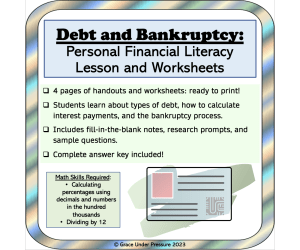
Debt and Bankruptcy: Personal Financial Literacy Lesson
Life Studies, Special Resources, Finance, Home Economics, Math, Decimals, Percentages, Life Skills, Grade 8, 9, 10, 11, 12, Lesson Plans, Teacher Tools
Here's a ready to go lesson about debt and bankruptcy for your high school students. It can be used in math class when learning about percentages and interest rates, in career and personal planning class when talking about budgeting and paying for university, or in a high school life skills class. How to Use: Print either the second page handout OR the third page handout (with fill in the blanks) along with pages 4, 5, and 6. Use the handout to teach your students a definition of debt, a way to classify it, and seven types of debt from mortgages to payday loans. Students classify debt as good or bad debt and then research 5 different lenders and their current interest rates. Next, use the sample question to teach students how to calculate interest payments on a debt using the interest rate. Students complete four real-world sample questions. Lastly, use the handout about bankruptcy to teach students the basic information and have them research answers for two questions about the bankruptcy process. Complete answer key included! Math Skills Required: •Calculating percentages using decimals and numbers in the hundred thousands •Dividing by 12 Grades to Use With: This lesson is designed for high school students in grades 8-12, adult education classes, or high school special education classes. What's Included: 7 Page PDF: Teacher instructions 2 Versions of the Student handout (complete or fill in the blanks) 2 Page student worksheet about debt 1 Page student worksheet about bankruptcy Complete Answer Key If you want to continue this learning check out these products: Interest Rates : has more information about why interest rates vary and more practice calculating interest payments. Credit Score Board Game : teaches students about credit scores and they practice calculating them while playing a game. Debit vs Credit Cards : a one-page handout to explain the differences between these two financial tools.
Author Grace Under Pressure
Tags Personal Finance, Debt, Bankruptcy, Percent, Budget, Financial Literacy, Real World Math, Life Skills, Credit Card, Student Loan
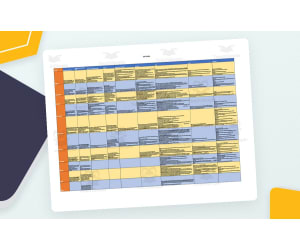
Curriculum Map for 1st Grade - Florida
, Grade 1, Lesson Plans, Teacher Tools
Curriculum Map for 1st Grade - Florida This unparalleled educational resource is ideal for educators in public schools, private education sectors or homeschooling settings. It provides a comprehensive overview of what your first graders need to know according to the state standards. Main Features: Overview of primary subjects like math, language arts, social studies and science Clear indication of focus areas throughout the academic year Useful for group sessions and individidual breakouts This curriculum map comes in an editable Excel format supporting customization based on individual classroom needs. This allows flexibility regarding unit focus while still adhering to important academic benchmarks. The tool can also be used as a reference guide during exam preparations or even surprise quizzes! Now you have a clear map of Florida's first-grade syllabus! Additionally beneficial for: Homeschoolers needing updated annual benchmarks, New homeschool parents in search guidance on lesson planning, Substitute teachers trying simulate main teachers' strategies. Educational navigation has never been easier with Teach Simple’s curriculum mapping! Simply upload it onto any compatible device and let our Curriculum Map steer your successful educational journey!
Author DK's Creations
Tags Curriculum, Mapping, Florida Standards, Subject Benchmarks, Teaching Resource
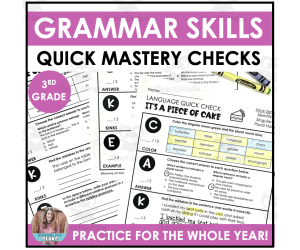
3rd Grade Language Quick Mastery Checks
ELA, Grammar, Grade 3, Teacher Tools, Assessments
Here are a set of 3rd Grade Language Mastery Quick Checks that your students will love! They are all-inclusive, thorough, and fun to complete! You can expect differentiation and scaffolded pages to meet your needs. What You Get: You will receive a 90-page PDF full of quick checks that cover 30 grammar skills for your 3rd grade students. A table of contents is included at the start to make it easier for you to find the skills you are searching for. Some of the skills included are abstract nouns, verb tenses, compound predicates, coordinating conjunctions, and dialogue rules. You can expect each skill to follow the same pattern. This will allow yourself and your students to become familiar with these quick checks. The first page of a particular skill will not have a scoring guide in each box. The second page of that same skill will have a scoring guide. The first and second page of each skill are the same problems – the only difference is the inclusion of a place to score each box. The third page of that skill will be the answer key. When you choose to use the page with a scoring guide, this will make it easier for students to see how many errors they need to correct. How To Use the Quick Checks: This packet of 3rd Grade Language Mastery Quick Checks can be implemented in many different ways. Some suggested uses are as quick mastery checks, homework, small group practice, graded assignments, and partner practice. I hope you enjoy!
Author Blooming with Blake
Tags 3rd Grade Language Skills, Grammar Skills, Language Quick Checks, Writing Prompts, Partner Practice, Small Group Work, Possessive Pronouns

I WONDER - Who Was The First Queen Of England | Animated Video Lesson
History: Europe, History, Social Studies, History: British, Grade 2, 3, 4, 5, 6, 7, 8, Lesson Plans, Teacher Tools
Video Introduction An amazing video designed for the students to learn more about history. I WONDER - Who Was The First Queen Of England | Animated Video Lesson Let's use our time machine and trave though time till we get to the ancient world where life began! Have you ever thought about how did ancient Greeks, Romans, Egyptians and even the Viking and Celts use to shower? And how did these amazing civilizations build iconic buildings and invented things that we still use till today like toothpaste? Do you know who was the first king and queen in the world? Which countries they ruled? Who is the most fascinating person lived on Earth? Tell us more about him/her. I WONDER - Who Was The First Queen Of England | Animated Video Lesson The video is perfect for encouraging the researching skills for the students, while learning more about history. I WONDER - Who Was The First Queen Of England | Animated Video Lesson This friendly designed video is suitable for students at school, homeschooling, and as a group activity. Format Available in MP4 format.
Author Educational Voice
Rating
Tags Who Was The First Queen Of England, First Queen Of England, First Queen Of England Facts, First Queen Of England Video, First Queen Of England Video For Kids, First Queen Of England Facts For Kids