3,931 products added recently
Page 64 - Teacher Tools
Equip yourself with tools that streamline your teaching process and enrich your classroom experience. This collection includes organizational planners, assessment templates, and classroom management strategies. By integrating these resources, you can focus on delivering impactful instruction and fostering student success.
20 Plant Life Cycle Writing Prompts & 20 Note-Taking Sheets
ELA, Writing, Research, Resources for Teachers, Science, Life Sciences, Nature & Plants, Grade 8, 9, 10, 11, 12, Worksheets & Printables, Writing Prompts, Teacher Tools, Assessments
Ignite your students' scientific curiosity and watch their writing skills flourish with these Plant Cycle Writing Prompts and Note-Taking Sheets! I have poured our passion for science education into creating this resource that beautifully blends creative writing with botanical science. Upper middle and high school students/homeschoolers will dive deep into plant biology through engaging prompts that spark genuine interest. I have seen firsthand how these thought-provoking questions help students forge meaningful connections with plant life cycle concepts while sharpening their critical thinking as I have used this resource with my daughter in our homeschool. The carefully designed note-taking sheets give students just the right structure to organize their thoughts, supporting both my visual learners and those who prefer written expression. INCLUDED IN THIS RESOURCE: 20 engaging writing prompts about plant life cycles suitable for grades 6-12 10 professionally designed note-taking sheets in both print and digital formats Comprehensive answer key with expected concepts for each prompt TOPICS COVERED: Plant reproduction and development stages Comparison of different plant life cycles (angiosperms, gymnosperms, etc.) Environmental factors affecting plant growth Photosynthesis and energy cycles Pollination and seed dispersal methods Plant adaptations and evolutionary strategies Human impacts on plant life cycles Plant conservation and sustainability Let's move beyond dry memorization of plant terminology and kindle real curiosity about the natural world! Whether you're juggling 30 students in a classroom, sitting at the kitchen table with your homeschoolers, or running a summer science program, these prompts and note-taking sheets will transform how your students engage with botanical concepts. I have watched my daughter who previously showed little interest in plants become fascinated by life cycles when given the right creative framework. As your students/homeschoolers develop deeper scientific understanding and strengthen their writing skills, you will witness that wonderful moment when their scientific thinking truly begins to bloom! If you and your students/homeschoolers enjoyed this resource, please leave a review. Thank you for your support! Tina - Big Easy Homeschooling Mom
Author Homeschool with Big Easy Homeschooling Mom
Rating
Tags Plant Life Cycle Writing Prompts, Middle & High School Science, Homeschool Science, Botanical Education Materials, Science Writing Prompts, Plant Biology Note-taking Sheets, Photosynthesis Teaching Resources, Plant Reproduction Lesson Plans, Cross-curricular Science Writing, Plant Life Cycle
I WONDER - Were The Vikings Dirty | Animated Video Lesson
History: British, History, Social Studies, History: Ancient, History: Europe, Grade 3, 4, 5, 6, 7, 8, 9, Lesson Plans, Teacher Tools
Video Introduction An amazing video designed for the students to learn more about history. I WONDER - Were The Vikings Dirty | Animated Video Lesson Let's use our time machine and trave though time till we get to the ancient world where life began! Have you ever thought about how did ancient Greeks, Romans, Egyptians and even the Viking and Celts use to shower? And how did these amazing civilizations build iconic buildings and invented things that we still use till today like toothpaste? Do you know who was the first king and queen in the world? Which countries they ruled? Who is the most fascinating person lived on Earth? Tell us more about him/her. I WONDER - Were The Vikings Dirty | Animated Video Lesson The video is perfect for encouraging the researching skills for the students, while learning more about history. I WONDER - Were The Vikings Dirty | Animated Video Lesson This friendly designed video is suitable for students at school, homeschooling, and as a group activity. Format Available in MP4 format.
Author Educational Voice
Rating
Tags Were The Vikings Dirty, Vikings, Vikings Facts, Vikings Video, Vikings Facts For Kids, Vikings Video For Kids, Viking Combs, Viking Combs Facts, Viking Combs Video, The Vikings Grooming Tools
Human Body and Golden Ratio PowerPoint and Study Guide
Math, Grade 4, 5, 6, 7, 8, Projects, Activities, Presentations, Teacher Tools, Quizzes and Tests, Rubrics, Workbooks, Worksheets & Printables
Introduction to the Golden Ratio and the Human Body PowerPoint and Study Guide Lesson The Golden Ratio, or Phi, and the Human Body is a unique math PowerPoint exploration of the human body and Leonardo da Vinci's famous Vitruvian Man drawing. Academic connections are made with math, art and history. Another famous name for the Golden Ratio is the divine proportion, a proportion of beauty found throughout nature, science, art, and architecture. This lesson can be completed in one or two classes depending on how long teachers want to spend on projects. Learners will become enthralled by the idea of how math can be beautiful and learn to treat it like a treasure hunt by looking for the golden ration everywhere around them in art, nature and even their own bodies! Go down as many learning rabbit holes with NatureGlo's MathArt Library Golden Ratio and Human Body page. On this page you'll get videos, project ideas and curated website links. Enjoy the exploration! Student Objectives Students will: Complete the PowerPoint lesson Complete the study guide for the lesson. Watch the curated educational videos from the MathArt Virtual Library Website. Complete the journal in the study guide including a drawing with written descriptions. Complete the quiz. Choose and do a chosen project. Order, Outline and Steps Read the Quick Start guide that comes with the curriculum. Go through the PowerPoint lesson with the students. Students complete the study guide during or after the PowerPoint lesson. Students select and complete a chosen projects about the topic. Grades & Ages Grades 4 - 8 Ages 10 - 14 Implementation Format PowerPoint Study guide Use of Internet Activities Projects Answer Key - INCLUDED Number of Pages - 33 File Types - PowerPoint and PDF files Length of Lesson - At least one lesson, or, optionally two or more lessons
Author NatureGlo's eScience
Rating
Tags Golden Ratio, Human Body, Divine Proportion, Math Activities, Math Projects, Leonardo Da Vinci
Mixed Conditionals ESL TEFL Upper Intermediate Lesson Plan Worksheet
ELA, Language Development, ESL, Grammar, Vocabulary, Reading, Writing, Resources for Teachers, Adult Education, High School, Middle School, Homeschool Resources, Teacher Tools, Lesson Plans, Worksheets & Printables
This Upper Intermediate ESL TEFL teaching lesson plan on Mixed Conditionals, is tailored to augment grammar skills comprehension and application among upper intermediate level students. Developed by seasoned educators, this plan caters to especially complex areas of language proficiency - mixed conditionals. Inclusion of 30 ready-to-print pages organised into three comprehensive PDFs. Well-structured exercises covering different aspects of mixed conditionals. Flexibly adaptable in various teaching settings - brick-and-mortar classrooms or virtual learning due to easy printability and digital access via Google Apps respectively. Suitable for diverse learners irrespective of grade level requirements – perfect for individual English language study tutoring or direct whole class lessons on mixed conditionals complexities. The ESL lesson plan includes flashcards , a warmer, grammar rules, exercises, role-play, conversation, writing drill, activity, answers and an extra study that would be good to set as homework. There are 30+ pages and there are teachers notes to guide the teacher.
Author TEAM TEFL
Tags Mixed Conditionals, Upper Intermediate, Grammar Skills, Language Arts, Lesson Plan
Guided Reading Level N - China (with Lesson Plan)
ELA, Resources for Teachers, Reading Comprehension, Reading, Science, Earth and Environmental Sciences, Social Studies, Geography, Language Development, History, Grade 2, 3, 4, Worksheets & Printables, Worksheets, Teacher Tools, Centers, Activities, Literacy Readers, Quizzes, Quizzes and Tests, Assessments, Lesson Plans
This Guided Reading Book - China (Level N) with lesson plan includes: Guided Reading Color Label (front cover x1) This is a quick way to match the book’s demands to what students can generally handle.. The overall goal is to use the level/color to pick books for several smaller groups. To qualify for a certain level, a student is expected to read a book from that level with about 90–94% accuracy. If a student is consistently accurate and understands, move up a level. If the student is struggling at that level, drop down and add more support. Each student will improve at completely different rates, but it is generally one of the best ways to check progress across the class. DOWNLOAD THE CATALOG TO VIEW ALL GUIDED READING BOOKS AVAILABLE (SORTED LEVELS A-Z) Pre-Reading Question (x1) Teacher asks the prompt aloud, can be while showing the cover or first page. Students share what they already know, or make educated guesses from the cover. Prompt them to use the target vocabulary. Write some of their responses on the board to look back at during the reading. Vocabulary Words (x5) Introduce the five words, best doing it one at a time. Start by saying it, while students repeat and then see if anyone knows what it means before reading further. Read through the meaning and try to briefly connect each word to a picture or gesture so it’s meaningful. Ask students to flip through the book pages and point to where they see each of the vocabulary words. While reading the book pause upon coming across one of the vocab words or read the sentence twice to make sure students understand the word has appeared. Optional: Ask students to raise hands whenever they see/hear one of the new words. Guided Reading Pages (x10) Check the book snapshot (below) for: primary topic - do you need to prep extra reading or intro materials on this? what is taught best - decide on 1-2 bullets to focus on, use the prompt or words provided here for best results. learning goals - what you are checking for students to be able to do after the session, elicit answers using prompts or words provided. key vocabulary (see section above). questions overview - so you know what is coming up and if you need to prep extra materials to assist understanding. Run the lesson You may have already looked at a few of the pages together, but you can show them some of the pictures again first to set meaning. Depending on how much time you have and how familiar your students are with guided reading class, you may want to read the book aloud first with the group first. Students whisper or partner read, while you listen in. If time, do it as a group, one student reading a page each. Use the guided page’s prompts to coach: “Check the picture / does it make sense?” “Point under the words / try the first sound” “Reread the sentence smoothly”. Try to focus more on one student per session (rotating every time), so you can work out if they are ready to move up or need to move down a level. Comprehension Questions (back cover x3) This is your way to check that students didn’t just say the words, but actually understood the text. First, let students answer by pointing to the page/picture and saying a short sentence. After any answer, follow with: “Show me where you found that in the text.” In bigger groups, have partners answer first (10–20 seconds), then call on 2–3 students to share. Differentiation tips: Emerging speakers/struggling readers: oral + pointing On-level: oral in a full sentence Higher: one written sentence or draw + label Book Snapshot Title: Look At the World: China Genre: Nonfiction (informational text) Subject: Social Studies (Geography/History/Culture) Primary Topic: China’s land, history, culture, and change Estimated Guided Reading Level (A–Z): N What This Book Teaches Best How China’s geography includes very different landforms and regions (mountains, deserts, rice fields, coastlines). How rivers shaped early settlement and farming, including the Huang He (Yellow River) valley and the Yangtze River. How ideas and goods traveled through dynasties and trade routes (writing, inventions, the Silk Road). How important places and structures reflect history (the Great Wall, Beijing, the Forbidden City). How China continues to change today while balancing growth, traditions, and environmental concerns. Learning Goals Students will describe the variety of landscapes and regions found in China using text details. Students will explain why people settled near the Huang He (Yellow River) long ago. Students will identify examples of how ideas and inventions spread beyond China’s borders. Students will describe how the Great Wall and the Silk Road are connected to protection and trade. Students will summarize key changes over time described in the text (dynasties, later government changes, modern growth). Students will explain how language, festivals, and conservation are part of life in China today. Key Vocabulary From the Text dynasties — ruling families that lead for long times. civilization — a large, organized society with shared culture. merchants — people who buy and sell goods. dialects — different ways people speak the same language. conservation — protecting plants and animals so they can survive. Discussion Prompts Pre-reading question: What have you heard or learned about China before today? Comprehension questions: What kinds of land and places does the text say China has across East Asia? Comprehension questions: Why do historians call the Huang He (Yellow River) valley important in the text? Comprehension questions: What does the text say merchants and travelers traded on the Silk Road? Printing Tips 1. Best Printing Method (Recommended) “Booklet” Printing (Best if Available) If your printer or PDF viewer supports Booklet Printing , use this. Settings to use: Print mode: Booklet Paper size: Letter or A4 (either works) Orientation: Landscape Print on both sides: Yes Flip on: Short edge Scaling: Fit to printable area Booklet subset: First test: Front sides only Then: Back sides only This will automatically: Pair pages correctly Put the cover on the outside Align everything for folding After printing, fold in half and staple along the spine . 2. If “Booklet” Printing Is NOT Available You can still print this correctly with manual duplex printing . Step-by-step: Open the PDF. Choose Print . Set: Orientation: Landscape Pages per sheet: 1 Print on both sides: Yes Flip on: Short edge Print all pages . Because each PDF page already contains two facing book pages, the result will still fold cleanly into a book. Thousands of Cored Education products are included with your TeachSimple membership. Download links and encyclopedia index available here.
Author Cored Education
Rating
Tags Reading Comprehension, Reading Passages, Reading, Guided Reading, Guided Reading Lesson Plan, Guided Reading Activity, Pre-reading, Social Studies Lesson Plans, Geography, History
Side Hustle Profit & Loss Basics
Math, Money, Multiplication and Division, Statistics, Order Of Operations, Fractions, Measurements, Time, Number Lines, Addition and Subtraction, Grade 6, 7, 8, 9, 10, 11, 12, Worksheets & Printables, Workbooks, Worksheets, Word Searches, Teacher Tools, Assessments, Lesson Plans, Quizzes and Tests, Quizzes, Tests
Transform your students' understanding of math with this engaging, real-world project on the mathematics of e-commerce! "Side Hustle Profit & Loss Basics" is a comprehensive, no-prep curriculum designed to teach teens the essential financial literacy skills needed to run a profitable online business. Gone are the days of abstract math problems. This resource bridges the gap between classroom learning and practical entrepreneurship, using relatable examples like flipping vintage sneakers ("Sneakerhead Sam") and selling handmade goods ("Jewelry Jenna"). Students will move from being passive digital consumers to analytical business operators. This project-based learning package is perfect for Math, Business, Career and Technical Education (CTE), Financial Literacy, and Homeschool settings. It systematically deconstructs the anatomy of an online sale, from calculating the cost of goods sold (COGS) to navigating complex platform fees and understanding the devastating impact of shipping miscalculations. What's Included in this 45-Page Resource: Part 1: In-Depth Lesson Guide (13 pages): A detailed teacher/student guide explaining core concepts like Revenue vs. Profit, COGS, Platform & Payment Fees (Etsy, eBay, Shopify), Logistics, Dimensional Weight, Net Profit, and ROI. Part 2: Student Workbook (18 pages): Features 10 scaffolded worksheets with over 100 questions, applying the concepts through real-world scenarios and fill-in-the-blank exercises. Worksheet 10: The Ultimate P&L Capstone Project: A final project where students synthesize all learned skills to construct a complete Profit & Loss statement for a hypothetical sneaker-flipping business. Part 3: Comprehensive Answer Key (6 pages): A full answer key for all 10 student worksheets, including the final capstone project. Part 4: Teacher-Led Visual Aids (8 pages): Includes high-quality flowcharts and diagrams perfect for classroom projection (The E-Commerce Profit Equation, Fee Matrix, Shipping Cost Matrix) and a master teacher answer key with deep-dive rationales and common student error alerts. Equip your students with the critical math and business skills they need to succeed in the modern digital economy. This isn't just a math lesson; it's a blueprint for their future financial success. Why Parents/Schools Love It: Connects Math to the Real World: It makes abstract concepts like percentages and formulas tangible by applying them to something teens are passionate about: making money online. Teaches Essential Financial Literacy: It goes beyond basic math to teach critical life skills like budgeting, cost analysis, and understanding profitability—skills not always covered in traditional curricula. Fosters an Entrepreneurial Mindset: This resource empowers students to think like producers, not just consumers, by teaching them to identify costs, manage risks, and create value. Comprehensive & No-Prep: It's a complete, ready-to-use package. The detailed lessons, student worksheets, visual aids, and in-depth answer keys save teachers and parents valuable preparation time. Target Student Audience : Based on the content and mathematical complexity, target: Primary Audience: 7th to 10th Grade students. This is the sweet spot mentioned in the PDF, and the level of math (percentages, formulas, multi-step arithmetic) is perfectly aligned with this curriculum. Secondary Audience: Advanced 6th Graders in a gifted or enrichment program. 11th and 12th Grade students in introductory Business, Economics, or Career/Life Skills classes as a practical, foundational unit. Homeschool Co-ops looking for practical, project-based learning modules for middle and high school students. Copyright/Terms of Use: This Book was copyrighted by Syed Hammad Rizvi. This resource is for personal and single classroom use only. You may not alter, redistribute, or sell any part of this resource. In other words, you may not put it on the Internet where it could be publicly found and downloaded. If you want to share this resource with colleagues, please purchase additional licenses from Teachsimple. Thank you for respecting these terms of use. This product is happily brought to you by Syed Hammad Rizvi
Author Creative Book Store
Rating
Tags Financialliteracy, Businessmath, Realworldmath, Projectbasedlearning, Entrepreneurship, Sidehustle, Ecommerce, Ppliedmath, Financialeducation, Profitandloss
High-Frequency Heart Word Tracing
Science, Basic Science, Inventors, Theories, Life Sciences, Human Body, Resources for Teachers, Classroom Management, Community Building, STEM, Kindergarten, Preschool, Grade 1, 2, 3, 4, 5, Worksheets & Printables, Workbooks, Worksheets, Word Searches, Teacher Tools, Assessments, Lesson Plans, Quizzes and Tests, Quizzes, Tests
Transform Your Literacy Instruction with Science of Reading Heart Word Worksheets! Are you struggling to teach tricky, high-frequency words like said , was , and they ? Do your early readers get frustrated when phonics rules don't apply? Say goodbye to rote memorization and hello to a method that works! This comprehensive resource, grounded in the Science of Reading , leverages the power of Orthographic Mapping to help students master irregular high-frequency words. Our "Heart Word" tracing method is a game-changer for Pre-K, Kindergarten, and 1st Grade classrooms. Instead of asking students to memorize the whole word, we teach them to identify the decodable parts they already know and focus their memory on only the irregular "heart part"—the part they must learn by heart. This isn't just another set of worksheets; it's a complete instructional toolkit designed to reduce cognitive load, build reading confidence, and create lasting neural pathways for fluent reading. WHAT'S INCLUDED: Part 1: In-Depth Teacher's Guide (10 pages): A professional guide explaining the methodology, the cognitive science behind orthographic mapping, and case studies showing proven results. Part 2: Student Workbook (10 Differentiated Worksheets): Engaging, multi-sensory worksheets that guide students through mapping and tracing common high-frequency words. The activities isolate the irregular graphemes for targeted practice. Part 3: Teacher Resources & Visuals (14 pages): Visual Frameworks: Clear diagrams explaining the "Heart Word" mapping process and the 5-step kinesthetic learning cycle. Developmental Scaffolding Matrix: A guide to using the worksheets across Pre-K, K, and 1st Grade. Step-by-Step Implementation Protocol: An "I Do, We Do, You Do" lesson plan to ensure effective instruction. Assessment Tools: Formative and summative assessment rubrics and logs to track student progress. Comprehensive Answer Keys: Master mapping keys for all words and answers to knowledge checks. WHO IS THIS FOR? Pre-K, Kindergarten, and 1st Grade Teachers Homeschooling Parents Reading Interventionists and Specialists (RTI / Tier 2) Literacy Coaches Tutors working with students who struggle with sight words Stop the guessing game and empower your students with a logical, brain-friendly system for decoding the most common words in the English language. Download now to build confident, fluent readers! Keywords: Science of Reading, SoR, Heart Words, High-Frequency Words, Sight Words, Orthographic Mapping, Tracing Worksheets, Phonics, Irregular Words, Decoding, Pre-K, Kindergarten, First Grade, Homeschool, Reading Intervention, Multi-Sensory Learning, Digital Download. Why Parents/Schools Love It: Grounded in Science: It’s not just busywork. This curriculum is built on the proven, brain-based principles of the Science of Reading and orthographic mapping. Reduces Student Frustration: It transforms "tricky words" from a source of confusion into a solvable puzzle, boosting confidence and reducing anxiety for young learners. Multi-Sensory & Engaging: By combining visual (seeing), auditory (saying the sound), and kinesthetic (tracing) learning, it cements words into long-term memory far more effectively than flashcards. Builds Stronger Decoders: Instead of encouraging guessing, it teaches students to analyze words, strengthening their overall phonics and decoding skills for all reading. Comprehensive & All-in-One: It's more than just worksheets. It's a complete, ready-to-use toolkit with a teacher's guide, implementation protocols, and assessment tools, saving educators valuable planning time. Target Student Classes : Based on the explicit text and the "Developmental Scaffolding Matrix" on page 25, target: Pre-K (Ages 4-5) Kindergarten (Ages 5-6) 1st Grade (Ages 6-7) Additionally, this resource is perfectly suited for: Reading Intervention Groups (RTI, Tier 2 & 3 Support): The explicit, multi-sensory approach is ideal for students who need extra support. Special Education: Students with dyslexia or other learning differences will benefit greatly from the systematic and brain-based methodology that avoids the pitfalls of whole-word memorization. Copyright/Terms of Use: This Book was copyrighted by Syed Hammad Rizvi. This resource is for personal and single classroom use only. You may not alter, redistribute, or sell any part of this resource. In other words, you may not put it on the Internet where it could be publicly found and downloaded. If you want to share this resource with colleagues, please purchase additional licenses from Teachsimple. Thank you for respecting these terms of use. This product is happily brought to you by Syed Hammad Rizvi
Author Creative Book Store
Rating
Tags ScienceOfReading, HeartWords, OrthographicMapping, SoR, IrregularWords, HighFrequencyWords, HeartWordMethod, ReadingScience, BrainBasedLearning, TrickyWords
Number & Operations: Decimals - Addition & Subtraction - Learn the Skill - PC Software
Math, Decimals, Common Core, Grade 3, 4, 5, Teacher Tools, Lesson Plans
Number & Operations: Decimals - Addition & Subtraction - Learn the Skill - PC Software A comprehensive and detailed teaching resource specifically designed to aid educators in imparting knowledge about adding and subtracting decimals. This useful resource can serve as a vital tool for teachers in public schools, homeschoolers, or any education-oriented setting looking to enrich their mathematics curriculum. Product Focus This significant software focuses on enhancing students' understanding of Number and Operations for grades 3-5 with an emphasis on decimals, addition, and subtraction. It provides an intelligible layout of curriculum-based content representing real-world word problems to stimulate students' decision-making skills. Tools and Features The notable aspect of this product lies in its simplicity while fostering a deep understanding of the subject matter. Features math tools that facilitate thorough engagement with mathematical concepts at this level. Ideal tool that could be used during whole group instruction due to its extensive coverage or even small group instruction facilitating more targeted learning. Multilingual Features The software incorporates English voice over alongside text while also including Spanish voice over plus text options. This accommodates diverse learners by encouraging multilingual exposure and culture-sensitive pedagogy which broadens their scope in terms of language fluency. Educational Standards Alignment The content fully adheres to Common Core State Standards whilst supporting STEM initiatives. Additionally, aligns perfectly with NCTM standards rendering it invaluable for any up-to-date educator striving for excellence in instruction delivery by adhering strictly to set educational guidelines. - Downloadable Zip File: Enclosed within one zip file that is easily downloadable onto your PC makes accessibility straightforward. - Lesson Plans Integration: Educators can conveniently introduce this into lesson plans thereby making learning engaging, interactive yet meaningful for learners whether it serves as homework assignments or as a featured topic during classwork sessions contributing towards creating well-rounded thinkers prepared for tasks outside theoretical setups; hence fostering academic growth and progress substantively. Integrating Number & Operations: Decimals - Addition & Subtraction - Learn the Skill - PC Software into your teaching repertoire indeed promises to be an insightful choice that brings life to decimal addition and subtraction while reinforcing number operation skills.
Author Classroom Complete Press
Tags Math Skills, Math Lesson Plan, Decimals, Subtracting Decimals, Operations
Francis Preston Blair Jr. (Former MO Congressman & Senator) Biography PowerPoint
Social Studies, History, History: USA, Government, Not Grade Specific, Teacher Tools, Presentations
Discover the life of Francis Preston Blair Jr., a key political figure who served as both U.S. Congressman and Senator from Missouri. This informative 50-page PowerPoint traces Blair Jr.'s journey from his early days through his participation in the Mexican-American and Civil Wars to his later governmental roles. Learn about his education, family life with wife Appoline and their children, elected political positions, and more. Teachers can use this well-researched presentation to enrich history and government curriculum. With details on Blair Jr.'s birth, accomplishments in battle, failed vice presidential run, and more, this PowerPoint brings his story to life. Presented chronologically and designed for flexible use, this useful resource will engage students' interest in this influential 19th century leader.
Author Mr. Matthews Teacher Store
Tags Missouri Leader, American Civil War, Mexican War, Senate, House
CANADIAN MOSAIC Gr. 3-7
Creative Arts, Art, Music, Grade 3, 4, Teacher Tools, Lesson Plans
The Canadian Mosaic Gr. 3-7 The Canadian Mosaic Gr. 3-7 is a comprehensive and accessible multifaceted teaching tool meticulously curated to navigate students through various aspects of Canadian culture, geography, literature, arts, and more. This educational resource caters to grades 3 through 7 while providing an immersive avenue for gaining knowledge on Canada. Focused areas Music: Improve musicality using Canadian songs while embedding cultural understanding. Mapping: Navigate the geography of Canada. Research: Learn about notable Canadians from different fields. Crafting: Explore creative expression with themes centered around Canada. Inventing:Nurture ideas on diverse topics related to Canada with hands-on exercises. This product's central concept is its fusion approach towards learning - encouraging brainstorming for in-depth knowledge building. Notably, it includes literature like reading local stories and writing assignments base don them which make this resource a well-rounded nurturing environment for pupils. Beyond mere Classroom Teaching Suggests setting up a permanent 'Canada Centre' filled with items such as: - Atlases - Blank maps -Fun activities like trivia games or themed dress-up days This encourages immediate access to relevant materials throughout the course, thus expanding beyond classroom teachings. The versatility of this resource allows varied scenarios - from individual project assignments or interactive group tasks up till full-spec class lessons ensuring maximum output irrespective of learner's style preference. An extensive Collection within one PDF Document An extensive collection packed into one PDF document offers 57 ready-to-print pages covering stimulating tasks for rewarding and enjoyable student involvement. Learners can journey through the colorful, informative pages perfect for lesson plans mixed with Art and Music thanks to this wonderful tool. Thus, learners get to have fun while channelling their creative instincts into becoming proud 'Creative Canadians!' All while learning of the vibrant mosaic that is Canada.
Author Classroom Complete Press
Tags Mapping, Canada, Environment, Literature, Certificates
I WONDER - Were Greek Statues Always White | Animated Video Lesson
History: Ancient, History, Social Studies, History: Europe, Grade 4, 5, 6, 7, 8, 9, 10, Lesson Plans, Teacher Tools
Video Introduction An amazing video designed for the students to learn more about history. I WONDER - Were Greek Statues Always White | Animated Video Lesson Do you like history? Which topic do you really enjoy about history? Have you ever read an interesting fact about the Vikings? If yes, can you mention them? What do you like most about the Victorian era? Can you name all the Tudors? Have you ever wondered how people used to live in ancient Japan and ancient China? Do you know any interesting facts about ancient Egyptians and the Pharaohs? Have you ever visited South America? What do you know about Incas and Aztecs? Celtic culture was really one of a kind, can you name any of the places that Celts used to live in? Imagine yourself living during the ancient Roman empire, how your life will look like? Ancient Greece was an amazing place to live in. What do you know about ancient Greek life? I WONDER - Were Greek Statues Always White | Animated Video Lesson The video is perfect for encouraging the researching skills for the students, while learning more about history. I WONDER - Were Greek Statues Always White | Animated Video Lesson This friendly designed video is suitable for students at school, homeschooling, and as a group activity. Format Available in MP4 format.
Author Educational Voice
Tags Were Greek Statues Always White, Were Greek Statues Always White Video, Greek Statues, Greek Statues Video, Greek Statues Facts, Greek Statues Facts For Kids, Greek Statues Video For Kids, Ancient Greece
Attorney General Kwame Raoul (IL) BIO PPT
Social Studies, History, History: USA, Government, Not Grade Specific, Teacher Tools, Presentations
Walk your students through the life and career of Illinois Attorney General Kwame Raoul with this informative biography PowerPoint. The resource profiles Raoul's background, education, early legal career, and political accomplishments across 24 content-rich slides. Learn about Raoul's childhood and upbringing in Chicago, his education at DePaul University College of Law, as well as his early legal career as a litigator. The PowerPoint also covers Raoul's election to the Illinois Senate in 2004, his 13-year tenure as a state senator, his legislative accomplishments, and ultimately his election as Illinois Attorney General in 2018. This versatile resource can facilitate whole-class instruction, small group discussion, independent review, or homework on a key civic leader in Illinois state government.
Author Mr. Matthews Teacher Store
Tags Illinois Attorney General, Kwame Raoul, Biography Powerpoint, Illinois State Senator, Illinois Government
Guided Reading Level M - Air Pollution (with Lesson Plan)
ELA, Resources for Teachers, Reading Comprehension, Reading, Science, Technology, Physics, Life Sciences, Earth and Environmental Sciences, Environmental Science, Grade 2, 3, 4, Worksheets & Printables, Worksheets, Teacher Tools, Centers, Activities, Literacy Readers, Quizzes, Quizzes and Tests, Assessments, Lesson Plans
This Guided Reading Book - Understanding Air Pollution (Level M) with lesson plan includes: Guided Reading Color Label (front cover x1) This is a quick way to match the book’s demands to what students can generally handle.. The overall goal is to use the level/color to pick books for several smaller groups. To qualify for a certain level, a student is expected to read a book from that level with about 90–94% accuracy. If a student is consistently accurate and understands, move up a level. If the student is struggling at that level, drop down and add more support. Each student will improve at completely different rates, but it is generally one of the best ways to check progress across the class. DOWNLOAD THE CATALOG TO VIEW ALL GUIDED READING BOOKS AVAILABLE (SORTED LEVELS A-Z) Pre-Reading Question (x1) Teacher asks the prompt aloud, can be while showing the cover or first page. Students share what they already know, or make educated guesses from the cover. Prompt them to use the target vocabulary. Write some of their responses on the board to look back at during the reading. Vocabulary Words (x5) Introduce the five words, best doing it one at a time. Start by saying it, while students repeat and then see if anyone knows what it means before reading further. Read through the meaning and try to briefly connect each word to a picture or gesture so it’s meaningful. Ask students to flip through the book pages and point to where they see each of the vocabulary words. While reading the book pause upon coming across one of the vocab words or read the sentence twice to make sure students understand the word has appeared. Optional: Ask students to raise hands whenever they see/hear one of the new words. Guided Reading Pages (x10) Check the book snapshot (below) for: primary topic - do you need to prep extra reading or intro materials on this? what is taught best - decide on 1-2 bullets to focus on, use the prompt or words provided here for best results. learning goals - what you are checking for students to be able to do after the session, elicit answers using prompts or words provided. key vocabulary (see section above). questions overview - so you know what is coming up and if you need to prep extra materials to assist understanding. Run the lesson You may have already looked at a few of the pages together, but you can show them some of the pictures again first to set meaning. Depending on how much time you have and how familiar your students are with guided reading class, you may want to read the book aloud first with the group first. Students whisper or partner read, while you listen in. If time, do it as a group, one student reading a page each. Use the guided page’s prompts to coach: “Check the picture / does it make sense?” “Point under the words / try the first sound” “Reread the sentence smoothly”. Try to focus more on one student per session (rotating every time), so you can work out if they are ready to move up or need to move down a level. Comprehension Questions (back cover x3) This is your way to check that students didn’t just say the words, but actually understood the text. First, let students answer by pointing to the page/picture and saying a short sentence. After any answer, follow with: “Show me where you found that in the text.” In bigger groups, have partners answer first (10–20 seconds), then call on 2–3 students to share. Differentiation tips: Emerging speakers/struggling readers: oral + pointing On-level: oral in a full sentence Higher: one written sentence or draw + label Book Snapshot Title: Understanding Air Pollution Genre: Nonfiction (informational science text) Subject: Science (Earth & Environmental Science) Primary Topic: What air pollution is and how it happens Estimated Guided Reading Level (A–Z): M What This Book Teaches Best Introduces the atmosphere as an “invisible blanket” of air around Earth that living things need. Explains what clean air is mostly made of (nitrogen and oxygen) and why transparent air matters for sunlight and plant growth. Defines air pollution and shows that it can be visible (dust, soot) or hidden (invisible gases). Describes major sources of air pollution from transportation and from factories/power plants that burn fuels. Connects air pollution to real effects, including smog , health problems from particulate matter, and damage to plants through acid rain. Learning Goals Describe what the atmosphere is and why it is important for living things. Identify what clean air is mostly made of and describe characteristics of clean air from the text. Explain what air pollution is and name examples of pollutants described in the book. Describe how transportation and factories/power plants contribute to air pollution. Explain what smog is and how it forms, using details from the text. Describe one way technology can reduce air pollution based on the book’s examples. Key Vocabulary From the Text atmosphere — blanket of air around Earth. nitrogen — a gas that makes up much of clean air. oxygen — a gas living things need to survive. particulate — made of tiny pieces or specks. turbines — machines with blades that spin to make electricity. Discussion Prompts Pre-reading question: What are some things you think can make the air around us less clean? Comprehension questions: What two gases is clean air mostly made of? Comprehension questions: What is smog, according to the text? Comprehension questions: How do wind turbines and solar panels help reduce air pollution in the book? Printing Tips 1. Best Printing Method (Recommended) “Booklet” Printing (Best if Available) If your printer or PDF viewer supports Booklet Printing , use this. Settings to use: Print mode: Booklet Paper size: Letter or A4 (either works) Orientation: Landscape Print on both sides: Yes Flip on: Short edge Scaling: Fit to printable area Booklet subset: First test: Front sides only Then: Back sides only This will automatically: Pair pages correctly Put the cover on the outside Align everything for folding After printing, fold in half and staple along the spine . 2. If “Booklet” Printing Is NOT Available You can still print this correctly with manual duplex printing . Step-by-step: Open the PDF. Choose Print . Set: Orientation: Landscape Pages per sheet: 1 Print on both sides: Yes Flip on: Short edge Print all pages . Because each PDF page already contains two facing book pages, the result will still fold cleanly into a book. Thousands of Cored Education products are included with your TeachSimple membership. Download links and encyclopedia index available here.
Author Cored Education
Rating
Tags Reading Comprehension, Reading Passages, Reading, Guided Reading, Guided Reading Lesson Plan, Guided Reading Activity, Pre-reading, Science Lesson Plans, Earth Science, Physics
2.MD.3 Second Grade Common Core Lesson
Math, Statistics, Measurements, Common Core, Grade 2, Teacher Tools
This 2.MD.3 Second Grade Common Core Lesson is designed to help students estimate and measure lengths using various units of measurement. This product is perfect for teachers who are looking for a way to help their students practice estimating and measuring lengths. This product includes a lesson plan, a student worksheet , and a teacher answer key.
Author Have Fun Teaching
Tags Estimation
Chemical Elements – Matching Pairs Game & Flashcards (1–118)
STEM, Science, Chemistry, Physics, Life Sciences, Montessori, Basic Science, Grade 7, 8, 9, 10, 11, 12, Activities, Games, Worksheets & Printables, Task Cards, Teacher Tools, Flashcards, Classroom Decor, Door Decor, Bulletin Boards, Posters
Chemical Elements – Matching Pairs Game & Flashcards (1–118) 118 cards for learning the periodic table A visual and interactive way to explore the periodic table 🧪🧠 This printable card set includes all 118 chemical elements and can be used either as a classic memory game or as flashcards for independent practice. Each card features the element’s symbol, atomic number, and name – providing a clear and accessible entry point into the world of chemistry. The cards are designed to be used flexibly. You can print them twice to play Matching Pairs (also known as Memory®), where students turn over cards and try to find identical pairs. This helps improve concentration and recall while reinforcing students’ familiarity with element symbols and atomic numbers. What’s included: 118 cards (PDF format) – one for each chemical element Each card includes: element symbol, name, and atomic number Use them as a memory game (print twice) or flashcards for review Black-and-white format allows for optional color coding (e.g. element groups or states of matter) In my classroom: I’ve used this resource with grades 7–10, both during our unit on the periodic table and as a review activity. Some groups like to sort the cards by group or period before playing. Others enjoy using them competitively, seeing who can name the most elements based on symbol alone. There’s also room for differentiation: stronger students can work without a periodic table for support, while others use it alongside. The black-and-white version is copy-friendly and works well if you want students to color-code elements (e.g. metals vs. non-metals). You can also adapt the game for faster learners by having them group elements or research additional properties. This is a low-prep activity you can use again and again – whether as a center activity, partner task, or quick review before a test. Just print, cut, and play. 📍 Best wishes, Heike from @Lernfitness Did You Know? I teach with a certified therapy dog, and together we create a positive and welcoming learning environment. 🐶
Author Lernfitness
Rating
Tags Educational Card Games, Chemistry, Physics, STEM Science Matching Game, Chemical Elements, Periodic Table Matching Game, Game, Memory, Matching Pairs, Flashcards
Ancient Civilizations: Social Studies Reading Passages (Fillable PDF)
ELA, Reading, Reading Comprehension, Strategies, Resources for Teachers, Social Studies, History: Ancient, History, Grade 6, 7, 8, 9, Writing Prompts, Worksheets & Printables, Centers, Activities, Teacher Tools, Assessments, Quizzes and Tests, Quizzes, Tests
Ancient Civilizations: Social Studies Reading Passages (Fillable PDF) This very engaging collection of Social Studies reading passages about Ancient Civilizations is designed to bridge the gap between social studies and literacy through strengthening reading comprehension and sparking knowledge curiosity in middle school students. Each passage blends English Language Arts skills with accurate social studies content. Ideal for interdisciplinary learning in ELA and Social Studies. Suitable for Grade 9 review, too! These worksheets are designed as fillable PDFs , which means students can type their answers directly into the document on any computer or tablet . Each page includes highlighted text fields that show them exactly where to type! What Is Included? There are - (3) - informational passages: Sacred Whiskers: Cats in Ancient Egypt Mesopotamia: The First Urban World The Inca: Empire in the Clouds Student Tasks for Each Passage: 5 multiple-choice questions targeting main idea, key details, inference, vocabulary in context, and use of evidence 5 vocabulary matching items with clear, student-friendly definitions 5 text-based questions that require citing specific lines or facts 1 summary prompt that asks students to condense central ideas accurately Full answer key for every section Available Formats for this Resource PDF Word Docs Google Docs FULL CATALOG OF DOWNLOADING LINKS HERE Reading Passage Links: Ancient Civilizations PDF Fillable PDF Word Docs Google Docs Early Empires and Trade Networks PDF Fillable PDF Word Docs Google Docs The Founding of the United States PDF Fillable PDF Word Docs Google Docs Language, Culture, and Meaning PDF Fillable PDF Word Docs Google Docs Psychology and Society PDF Fillable PDF Word Docs Google Docs Global Festivals and Traditions PDF Fillable PDF Word Docs Google Docs Extreme Environments and People PDF Fillable PDF Word Docs Google Docs Food, Culture, and Preservation PDF Fillable PDF Word Docs Google Docs Global Food Customs PDF Fillable PDF Word Docs Google Docs Media, Communication, and Popular Culture PDF Fillable PDF Word Docs Google Docs Human Impact on the Environment PDF Fillable PDF Word Docs Google Docs Civic Action and Social Change PDF Fillable PDF Word Docs Google Docs Fashion, Society, and Power PDF Fillable PDF Word Docs Google Docs People, Places, and Unusual Histories PDF Fillable PDF Word Docs Google Docs How to Use These PDFs Click on the highlighted area to start typing your answer. Move to the next question by clicking in the next highlighted box. When you are finished, close the document and select SAVE so your answers stay recorded. If you want to keep a blank copy for later, choose Save As and give your completed version a new name. Product Details Length: 15 pages total Grades: 6–8, also suitable for Grade 9 review Use cases: close reading, stations, homework, intervention, test prep, and sub plans Why Teachers Choose This Set Authentic social studies content paired with rigorous literacy practice Consistent task structure across all passages for easier planning and smoother student routines Clear, age-appropriate writing that builds confidence without oversimplifying Use this set to reinforce ELA skills in social studies, to add literacy to your lessons, and to support independent work. The passages strengthen main idea, evidence use, vocabulary in context, inference, cause and effect, and summary writing. With ready-to-use assessments and complete answer keys, you can provide focused practice that is simple to run and fast to review.
Author Middle & High School - CORED Education
Rating
Tags Middle School, Reading Comprehension, Reading Strategies, ELA, Centers, Reading Passage, Assessments, Vocabulary, Social Studies, Ancient Civilization
Number & Operations: Grouping Objects & Number Lines - Learn the Skill - FLASH-MAC
Math, Numbers, Common Core, Grade 1, 2, Teacher Tools, Lesson Plans
Number & Operations: Grouping Objects & Number Lines - Learn the Skill This resource is designed specifically for Grade 1 and Grade 2, aiming to simplify understanding of Grouping Objects and Number Lines with curriculum -based content. By applying real-world word problems, it bridges the gap between theory and application. Differentiating Factors: This educational resource can be utilized across different teaching settings: whole group sessions in class, small-group activities or homework assignments. Teachers can adapt it according to their style or learners' pace. Specially designed with inclusivity in mind, this FLASH-MAC software resource offers a Spanish voice over text feature, catering to non-native English speakers. Educational Relevance: The tool aligns impeccably with both Common Core State Standards (CCSS) and STEM initiatives while fulfilling teaching expectations set by National Council of Teachers of Mathematics (NCTM). This relevance makes Number & Operations: Grouping Objects & Number Lines - Learn the Skill an indispensable aid in math comprehension beyond traditional textbook education for public school teachers looking to invigorate their lesson plans as well as homeschoolers wishing to enrich their curriculum . In One Compact Product Package! All these features are bundled into one product file that is compact yet comprehensive! It maximizes teaching efficiency without compromising on educational quality thus reshaping localized math education for young learners.
Author Classroom Complete Press
Tags Software (Mac)
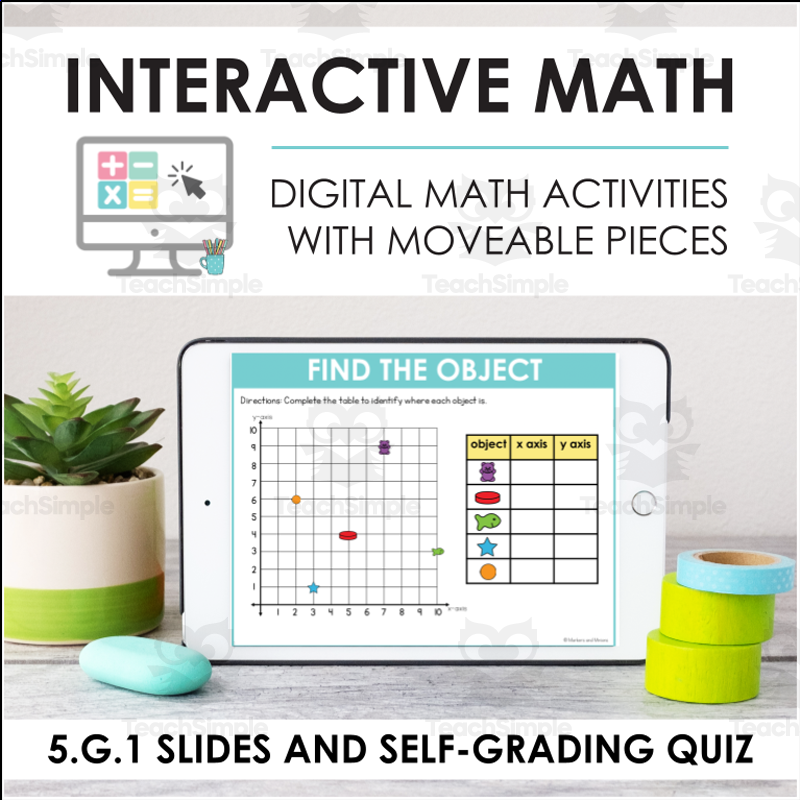
Digital Math for 2.OA.3 - Foundations for Multiplication (Slides + Self-Grading Quiz)
Math, Algebra, Grade 2, Quizzes, Quizzes and Tests, Teacher Tools
Digital Math for 2.OA.3 - Foundations for Multiplication (Slides + Self-Grading Quiz) An innovative teaching resource designed for second-grade teachers, simplifying the act of teaching foundational algebra and multiplication on a digital platform. Interactive Visual Principles These slides draw from interactive visual principles in math education to provide captivating representations of complex mathematics, making them easier to understand for young learners. The interactive features allow students to drag and drop objects, introducing them to numbers on a more tangible level. Multimedia Format This PowerPoint and Google Slides ready tool contains 20 interactive slides, each thoughtfully crafted to pique student curiosity while reinforcing understanding. Self Grading Google Forms Quiz A unique feature of this tool is the inclusion of a self-grading Google Forms quiz tailored to align with the 2.OA.3 standard. Teachers are spared grading hours as this efficient quiz handles instant evaluation of each student's grasp on multiplication foundations. Versatile Teaching Aid: This online tool adapts well for individual remote learning, group sessions in physical classrooms or as homework through any virtual classroom platform. Saves Time: The self-grading aspect streamlines workflow making it a time saver. All-in-One Package: A comprehensive package that combines engaging practices with effective learning—all centered around introducing multiplication basics.
Author Markers and Minions
Tags Digital Math, Multiplication Foundations, Interactive Slides, Self-grading Quiz, Second Grade
Verbs Sample - Grades 1-2 Grammar (Forms)
ELA, Language Development, ESL, Grammar, Common Core, Resources for Teachers, Grade 1, 2, Lesson Plans, Teacher Tools, Tests, Quizzes and Tests, Assessments, Centers, Activities
Verbs - 1 Sample Lesson ELA MCQS Overview: In this series of lessons, students will embark on an engaging exploration of the grammar skills that bring our language to life. These lessons are designed to help students identify, understand, and effectively use language arts skills in their writing and speech. Used with the free supplementary materials available for all topics, each lesson builds on the last, offering a mix of direct instruction, interactive group activities, and independent practice. Through fun and creative tasks, students will learn how to recognize grammar in sentences, understand their role in sentences and use them to enhance their own writing and speech. Verbs Overview: Includes: Identifying Verbs Intro to Verb Tenses Past Tense Irregulars Additional Practice Forms Version This is the Forms editable and self grading version. This download is available in GOOGLE Docs, GOOGLE Forms, GOOGLE Slides. PDF, PPT, WORD, check the links below for more details. FULL CATALOG OF DOWNLOAD LINKS HERE Grade 1/2 Links: Capitalization and Punctuation Google Docs Google Forms Google Slides PDF PPT Word Free Supplementary Materials Pack Adjectives Google Docs Google Forms Google Slides PDF PPT Word Free Supplementary Materials Pack Nouns Google Docs Google Forms Google Slides PDF PPT Word Free Supplementary Materials Pack Pronouns Google Docs Google Forms Google Slides PDF PPT Word Free Supplementary Materials Pack Verbs Google Docs Google Forms Google Slides PDF PPT Word Free Supplementary Materials Pack Prefixes & Suffixes Google Docs Google Forms Google Slides PDF PPT Word Free Supplementary Materials Pack Sentence Structure Google Docs Google Forms Google Slides PDF PPT Word Free Supplementary Materials Pack Subject-Verb Agreement Google Docs Google Forms Google Slides PDF PPT Word Free Supplementary Materials Pack ELA Review Questions Overview Questions have three answer choices. There are a handful of pictures on each test for aesthetic purposes, as well as a review sheet covering most of the topics covered in the product. Introduction or Example Sheet Each topic will include an introduction or example sheet to go through first with your students. Full Answer Keys Full answer keys and sample responses are provided so no matter how busy you are, you know you're covered! In the Supplementary Pack Interactive Ice Breakers: Fun, hands-on activities that get students thinking about adjectives right from the start. Guided Practice: Teacher-led exercises that reinforce the day’s lesson, ensuring students can confidently identify and use adjectives. Group and Partner Tasks: Collaborative activities that allow students to work together to solve problems, categorize adjectives, and create descriptive sentences. Independent Worksheets: Structured worksheets that provide individual practice and help solidify understanding of key concepts. Exit Tasks: Quick, reflective activities at the end of each lesson that assess understanding and encourage students to apply what they’ve learned. For similar downloads and other frees, do check out Cored Group on TeachSimple.
Author Cored Education
Tags Elementary, Reading, Comprehension, Vocabulary, Answers, Ccss, Common Core, Spelling, Writing, Digital Centers
I WONDER - Why Is Recycling Plastic Important | Animated Video Lesson
Environmental Science, Earth and Environmental Sciences, Science, Grade 6, 7, 8, 9, 10, 11, 12, Lesson Plans, Teacher Tools
Video Introduction An amazing video designed for the students to learn more about STEM. I WONDER - Why Is Recycling Plastic Important | Animated Video Lesson Do you like STEM subjects? what is your favorite one? Have you ever tried to plant a seed? If yes, tell us more about it. Or have you ever tried to invent something? If yes, tell us more about it. And how do you think it will help us? Have you ever seen a microorganism under a microscope? What was it? And how it looked like? Mathematics is a marvelous subject. Let' sharpen our brains and solve some equations. Do you like timetable tricks? What is your favorite one? Do you know how to code? Have you ever created an app or a game before? If yes, how was it like? I WONDER - Why Is Recycling Plastic Important | Animated Video Lesson The video is perfect for encouraging the researching skills for the students, while learning more about this fantastic topic. I WONDER - Why Is Recycling Plastic Important | Animated Video Lesson This friendly designed video is suitable for students at school, homeschooling, and as a group activity. Format Available in MP4 format.
Author Educational Voice
Tags Why Is Recycling Plastic Important, Why Is Recycling Plastic Important Video, Recycling Plastic, Recycling Plastic Facts, Recycling Plastic Facts For Kids, Recycling Plastic Video, Recycling Plastic Video For Kids
Guided Reading Level H - Clean Hands, Healthy Bodies
ELA, Resources for Teachers, Reading Comprehension, Reading, Health, P.E. & Health, Social Emotional Learning (SEL), Special Resources, Life Skills, Science, Kindergarten, Grade 1, 2, Worksheets & Printables, Worksheets, Teacher Tools, Centers, Activities, Literacy Readers, Quizzes, Quizzes and Tests, Assessments
This Guided Reading Book - Clean Hands, Healthy Bodies (Level H) includes: Guided Reading Color Label (front cover x1) This is a quick way to match the book’s demands to what students can generally handle.. The overall goal is to use the level/color to pick books for several smaller groups. To qualify for a certain level, a student is expected to read a book from that level with about 90–94% accuracy. If a student is consistently accurate and understands, move up a level. If the student is struggling at that level, drop down and add more support. Each student will improve at completely different rates, but it is generally one of the best ways to check progress across the class. DOWNLOAD THE CATALOG TO VIEW ALL GUIDED READING BOOKS AVAILABLE (SORTED LEVELS A-Z) Pre-Reading Question (x1) Teacher asks the prompt aloud, can be while showing the cover or first page. Students share what they already know, or make educated guesses from the cover. Prompt them to use the target vocabulary. Write some of their responses on the board to look back at during the reading. Vocabulary Words (x5) Introduce the five words, best doing it one at a time. Start by saying it, while students repeat and then see if anyone knows what it means before reading further. Read through the meaning and try to briefly connect each word to a picture or gesture so it’s meaningful. Ask students to flip through the book pages and point to where they see each of the vocabulary words. While reading the book pause upon coming across one of the vocab words or read the sentence twice to make sure students understand the word has appeared. Optional: Ask students to raise hands whenever they see/hear one of the new words. Guided Reading Pages (x10) Check the book snapshot (below) for: primary topic - do you need to prep extra reading or intro materials on this? what is taught best - decide on 1-2 bullets to focus on, use the prompt or words provided here for best results. learning goals - what you are checking for students to be able to do after the session, elicit answers using prompts or words provided. key vocabulary (see section above). questions overview - so you know what is coming up and if you need to prep extra materials to assist understanding. Run the lesson You may have already looked at a few of the pages together, but you can show them some of the pictures again first to set meaning. Depending on how much time you have and how familiar your students are with guided reading class, you may want to read the book aloud first with the group first. Students whisper or partner read, while you listen in. If time, do it as a group, one student reading a page each. Use the guided page’s prompts to coach: “Check the picture / does it make sense?” “Point under the words / try the first sound” “Reread the sentence smoothly”. Try to focus more on one student per session (rotating every time), so you can work out if they are ready to move up or need to move down a level. Comprehension Questions (back cover x3) This is your way to check that students didn’t just say the words, but actually understood the text. First, let students answer by pointing to the page/picture and saying a short sentence. After any answer, follow with: “Show me where you found that in the text.” In bigger groups, have partners answer first (10–20 seconds), then call on 2–3 students to share. Differentiation tips: Emerging speakers/struggling readers: oral + pointing On-level: oral in a full sentence Higher: one written sentence or draw + label Book Snapshot Title: Clean Hands, Healthy Bodies Genre: Nonfiction (informational) Subject: Health & Safety / Science Primary Topic: When and how to wash hands to stop germs Estimated Guided Reading Level (A–Z): H What This Book Teaches Best Why washing hands matters: it “keeps germs away” and helps prevent germs from spreading to other people. When to wash hands (before eating, after outdoor play, after using the toilet, after playing with a pet). How to wash hands step-by-step (wet with clean running water, use soap, scrub all areas, rinse, dry). A key procedure detail: scrubbing should last “twenty seconds” to remove germs. The idea of healthy habits: making handwashing a regular habit “protects everyone.” Learning Goals Students will explain one reason the book gives for washing hands, using a detail from the text. Students will identify at least two times the book says hands should be washed. Students will describe the steps for washing hands in order, based on the text. Students will state how long scrubbing should last, according to the book. Students will describe how handwashing helps other people, using the book’s words about spreading germs/protecting everyone. Key Vocabulary From the Text germs — tiny living things that can make you sick. contact — touching something. invisible — cannot be seen. scrub — rub hard to get something clean. protects — keeps safe from harm. Discussion Prompts Pre-reading question: When do you think it is most important to wash your hands? Comprehension questions: Name one time the book says you should wash your hands. How long should scrubbing last when you wash your hands? Why does washing your hands help other people? Printing Tips 1. Best Printing Method (Recommended) “Booklet” Printing (Best if Available) If your printer or PDF viewer supports Booklet Printing , use this. Settings to use: Print mode: Booklet Paper size: Letter or A4 (either works) Orientation: Landscape Print on both sides: Yes Flip on: Short edge Scaling: Fit to printable area Booklet subset: First test: Front sides only Then: Back sides only This will automatically: Pair pages correctly Put the cover on the outside Align everything for folding After printing, fold in half and staple along the spine . 2. If “Booklet” Printing Is NOT Available You can still print this correctly with manual duplex printing . Step-by-step: Open the PDF. Choose Print . Set: Orientation: Landscape Pages per sheet: 1 Print on both sides: Yes Flip on: Short edge Print all pages . Because each PDF page already contains two facing book pages, the result will still fold cleanly into a book. Thousands of Cored Education products are included with your TeachSimple membership. Download links and encyclopedia index available here.
Author Cored Education
Rating
Tags Vocabulary, Reading Comprehension, Reading Passages, Leveled Reading, Nonfiction, Reading, Guided Reading, Health, SEL, Life Skills
I WONDER - What Is Saturn Made From | Animated Video Lesson
Space, Earth and Environmental Sciences, Science, Grade 3, 4, 5, 6, 7, 8, 9, Lesson Plans, Teacher Tools
Video Introduction An amazing video designed for the students to learn more about space facts. I WONDER - How Heavy Is Saturn | Animated Video Lesson Have you ever thought about travelling to space?! Join us with this amazing video about Saturn. Do you think we can visit Saturn some day? How amazing is space! Let's discover some amazing facts about planets, asteroids, our solar system and the milky way! Do you know that we have two kinds of planets in our solar system? Can you name the planets based upon their core type? I WONDER - How Heavy Is Saturn | Animated Video Lesson The video is perfect for encouraging the researching skills for the students, while learning more about the fantastic space. I WONDER - How Heavy Is Saturn | Animated Video Lesson This friendly designed video is suitable for students at school, homeschooling, and as a group activity. Format Available in MP4 format.
Author Educational Voice
Rating
Tags What Is Saturn Made From, Saturn, Saturn Facts, Saturn Facts For Kids, Saturn Video, Saturn Video For Kids, Saturn Core, Space, Space Facts, Space Video
All About Vikings | Five Facts Video Lesson
Social Studies, History, History: World, Not Grade Specific, Lesson Plans, Teacher Tools
This animated video lesson will give you five facts all about Vikings. Students will love this engaging and interactive video. This video serves as a great introduction or review video for your learners. This is a 2-minute video lesson.
Author Educational Voice
Tags Vikings, Scandinavia , History Lesson, Social Studies, Army
Earthquake!: A Cross-Curricular Unit
Science, Earth and Environmental Sciences, Environmental Science, Grade 5, 6, Teacher Tools, Lesson Plans
Earthquake!: A Cross-Curricular Unit Introduction: As a comprehensive educational resource, Earthquake!: A Cross-Curricular Unit offers enriched pedagogical content for Grade 5 and Grade 6 educators looking to impart environmental science lessons. It boasts valuable insights on plate tectonics and earthquakes, ensuring students understand the vast geological operations happening within our planet. Main Content: The unit commences with an informative article that clarifies queries surrounding earthquakes - from their origin at fault zones to their measurement using the Richter scale. This deeply engaging content presents complex scientific data in a manner easily digestible for fifth and sixth graders. Cross-Curricular Worksheets: The unit expands past the main article, offering cross-curricular worksheets that test comprehension while encouraging critical thinking—a broader learning scope that combines aspects across academic fields. Worksheets also serve as perfect stimuli for class debates, reinforcing active learning processes further. Interactive Activities: Beyond theoretical knowledge, this packet suggests various activity ideas designed to enhance classroom interaction or at-home study (for homeschooling purposes). This hands-on conceptual practice strives to make education fun yet academically enriching. The unit can be utilized in larger interactive group sessions or smaller tutor-led teachings alike. It also proves ideal as a homework assignment—seamlessly extending classroom lessons into home-based review exercises the following day. All instructional materials included in this enlightening unit come compiled into one easy-to-use PDF composed of six ready-to-print pages; thus simplifying planning efforts for teachers everywhere. In Conclusion : "Earthquake!": A Cross-Curricular Unit leverages this all-in-one platform to offer theoretical knowledge through easily understandable articles, application practice via comprehensive worksheets, and interactive student engagement through thought-provoking activities—housed within a single, streamlined file. It's the ideal asset for any environmental science lesson plan portfolio.
Author Classroom Complete Press
Tags Lesson Plan, Science Lesson, Earthquakes, Vocabulary Builder, Tectonic Plates, Earthquakes Lesson Plans Middle School, Earthquake Lesson Plans Middle School