
Cookie Jar Creative Writing Activity
A simple class-book creative writing/drawing activity built around the "Who Stole the Cookies from the Cookie Jar?" rhyme/chant, letting each student contribute a page naming who stole the cookies.




2,127 resources
Explore sub-categories
7 sub-categories · 2,127 resources
A simple class-book creative writing/drawing activity built around the "Who Stole the Cookies from the Cookie Jar?" rhyme/chant, letting each student contribute a page naming who stole the cookies.
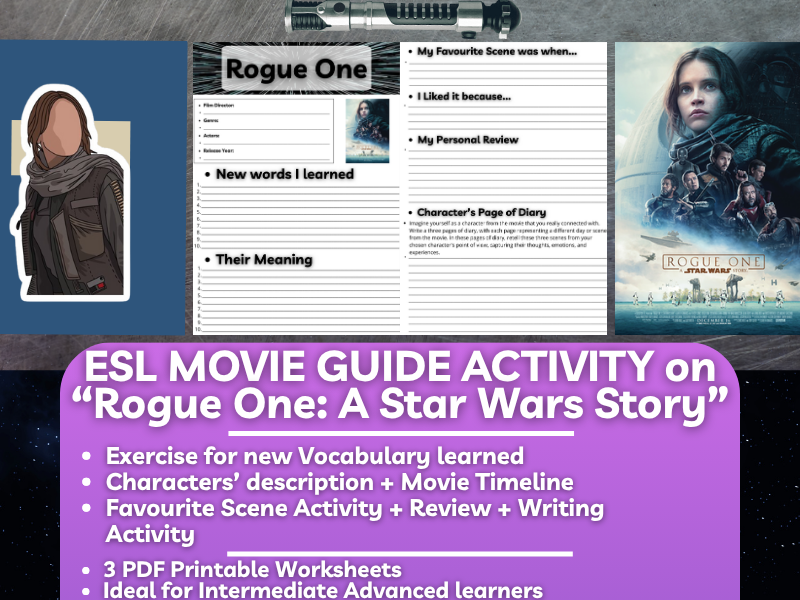
A post-viewing ESL/EFL worksheet built around the film "Rogue One - A Star Wars Story", combining film-info recall, vocabulary logging, and reflective/creative writing tasks.
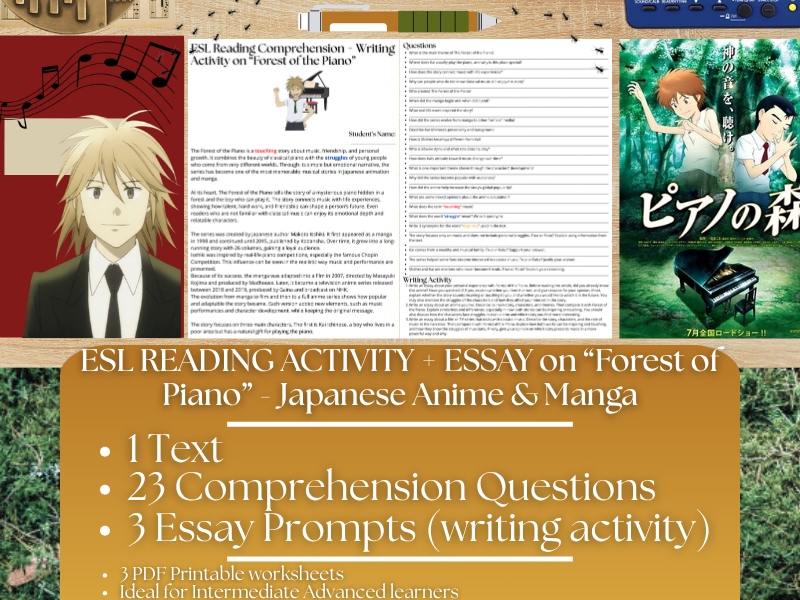
Give ESL/EFL students at middle and high school level a nonfiction reading passage about the Japanese anime/manga 'Forest of the Piano' (Forest of the Piano), its story and characters, paired with comprehension, vocabulary, and true/false argument questions and personal or comparative essay writing prompts.
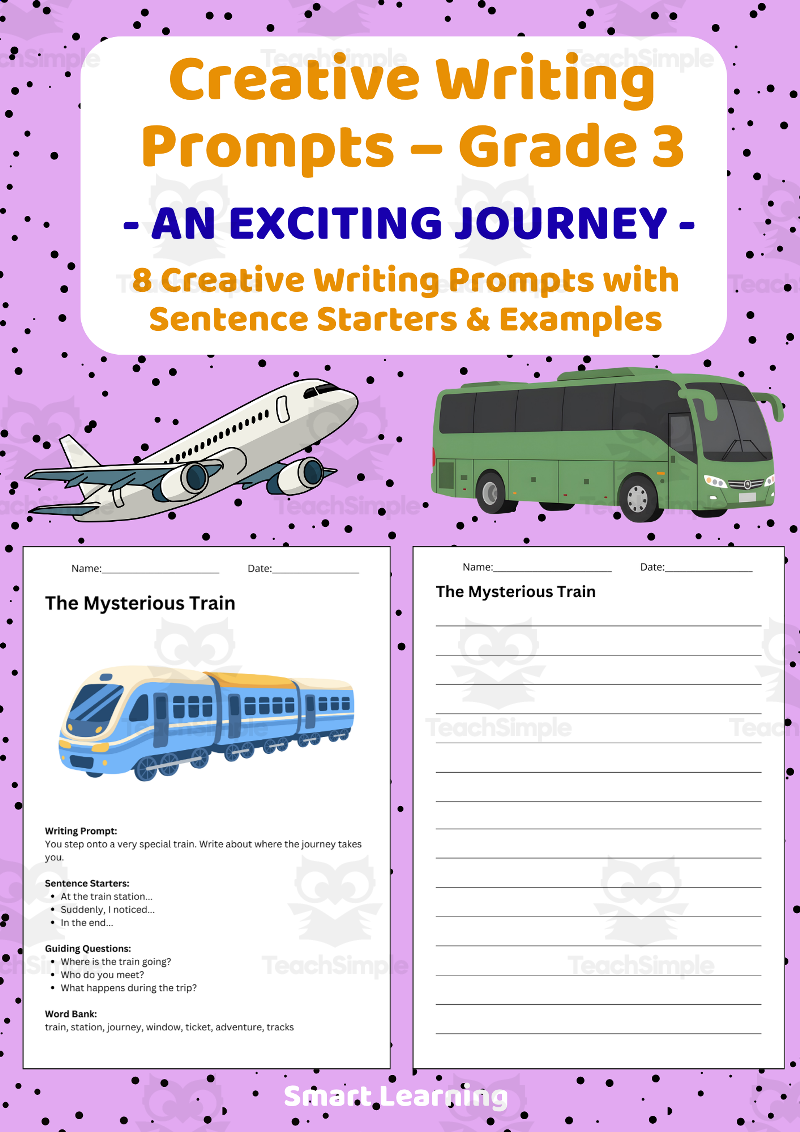
Gives 3rd-grade students eight themed creative-writing prompts (theme: An Exciting Journey) with sentence starters, guiding questions, and word banks so they can organize a story with a clear beginning, middle, and end, develop their own ideas, and build writing confidence.
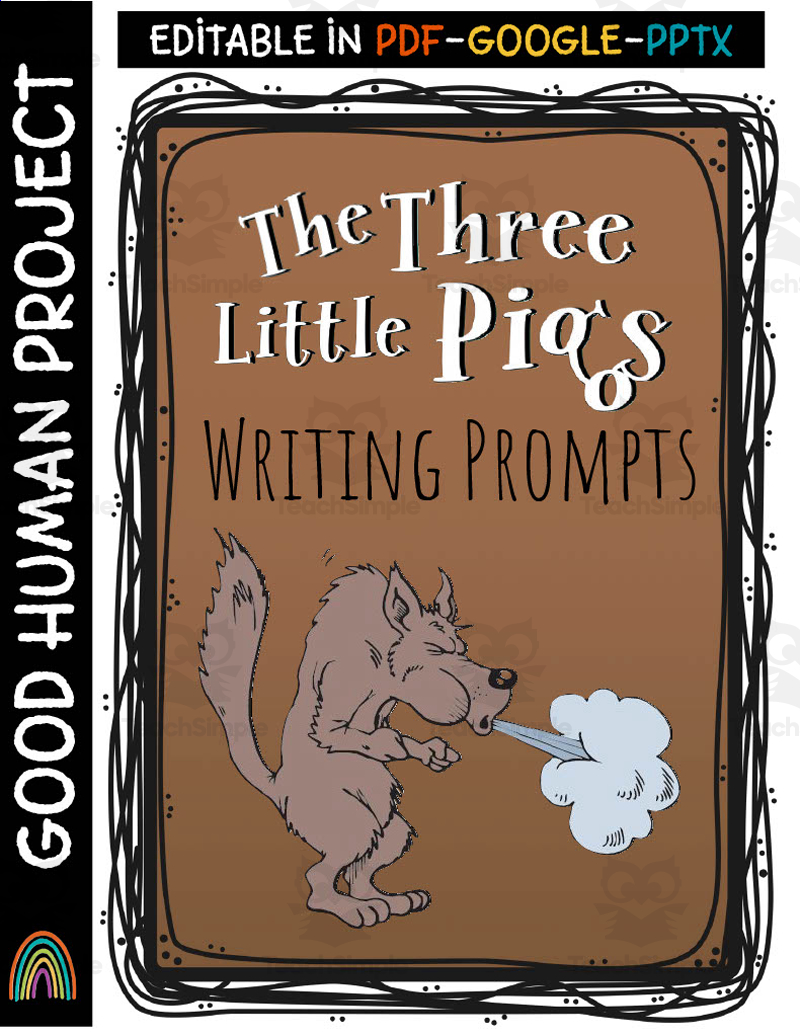
A set of writing-prompt templates based on 'The Three Little Pigs' folktale, encouraging perspective-taking and opinion/persuasive writing.
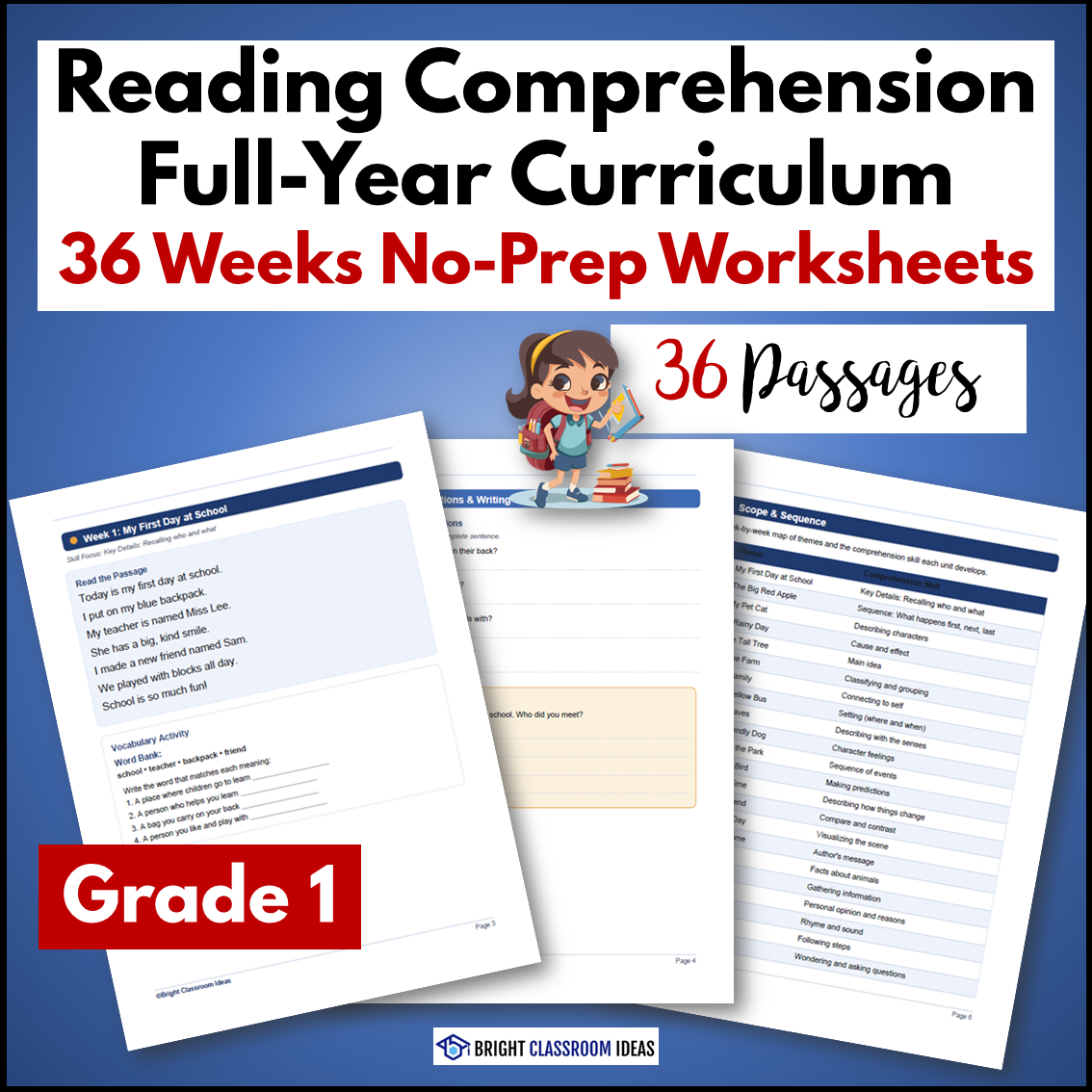
36-week yearlong Grade 1 reading comprehension curriculum with weekly passages, vocabulary, comprehension questions, and writing prompts.
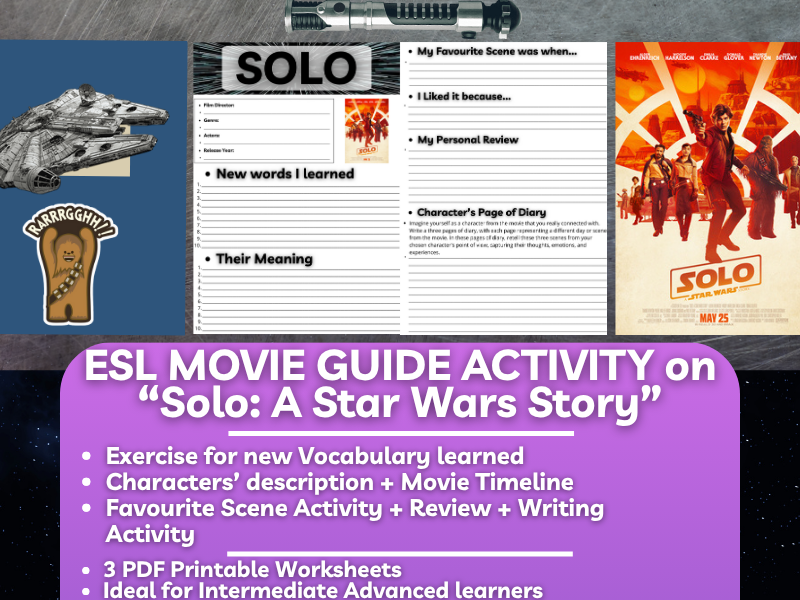
A post-viewing ESL/EFL worksheet built around the film "Solo: A Star Wars Story", combining film-info recall, vocabulary logging, and reflective/creative writing tasks.
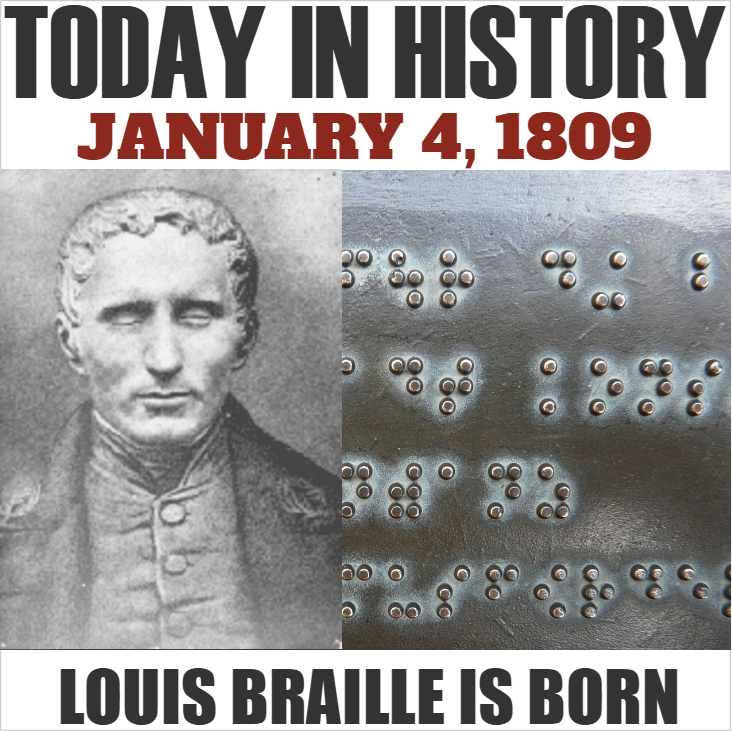
Reading/writing packet teaching the historical fact that Louis Braille, inventor of the braille reading/writing system, was born on January 4, 1809.

A double-entry journal worksheet for Shakespeare's Twelfth Night, Act 3 Scene 4, that has students use textual evidence to identify relationships, power dynamics, and dramatic irony, including an explicit definition of dramatic irony and verbal irony.
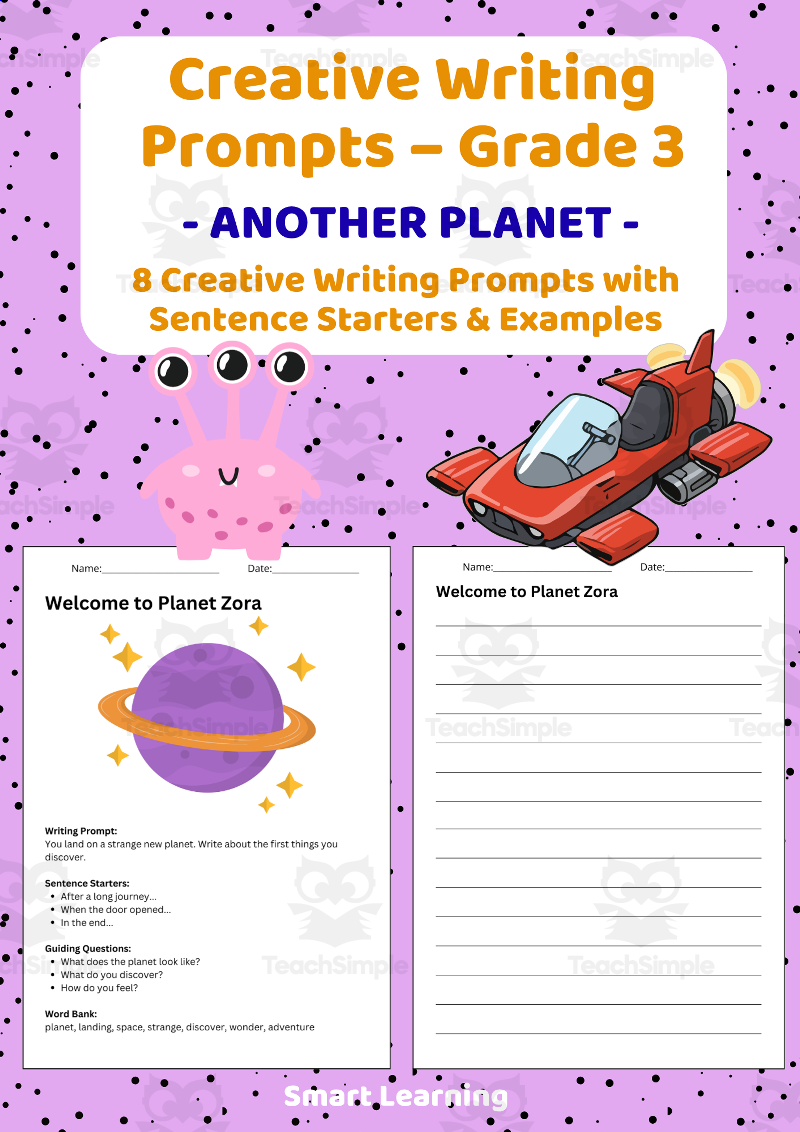
Gives 3rd-grade students eight themed creative-writing prompts (theme: A Day On Another Planet) with sentence starters, guiding questions, and word banks so they can organize a story with a clear beginning, middle, and end, develop their own ideas, and build writing confidence.

A mini-lesson/workshop teaching secondary students the 'show, don't tell' writing principle, using a slideshow contrasting telling sentences with showing paragraphs, then having students turn a randomly-drawn telling sentence into a descriptive showing paragraph.
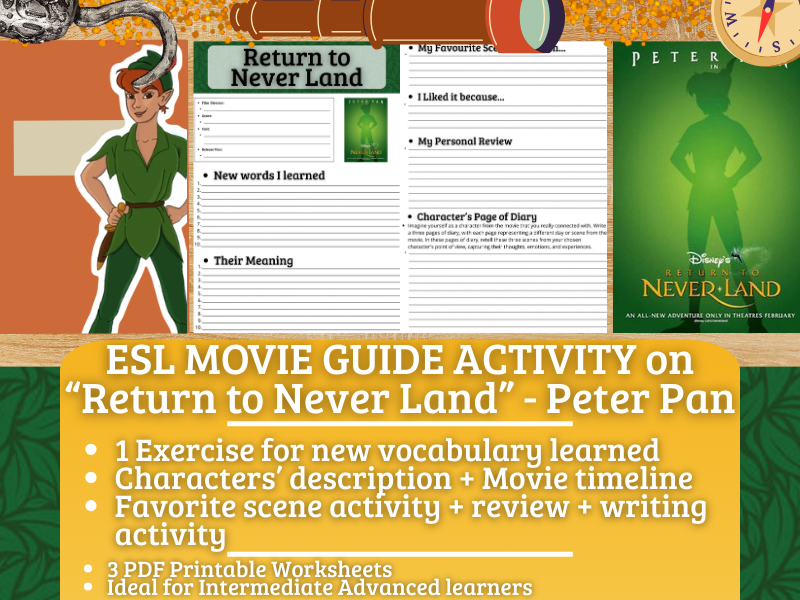
A post-viewing ESL/EFL worksheet built around the film "Return to Never Land (Peter Pan)", combining film-info recall, vocabulary logging, character description, and reflective/creative writing tasks.
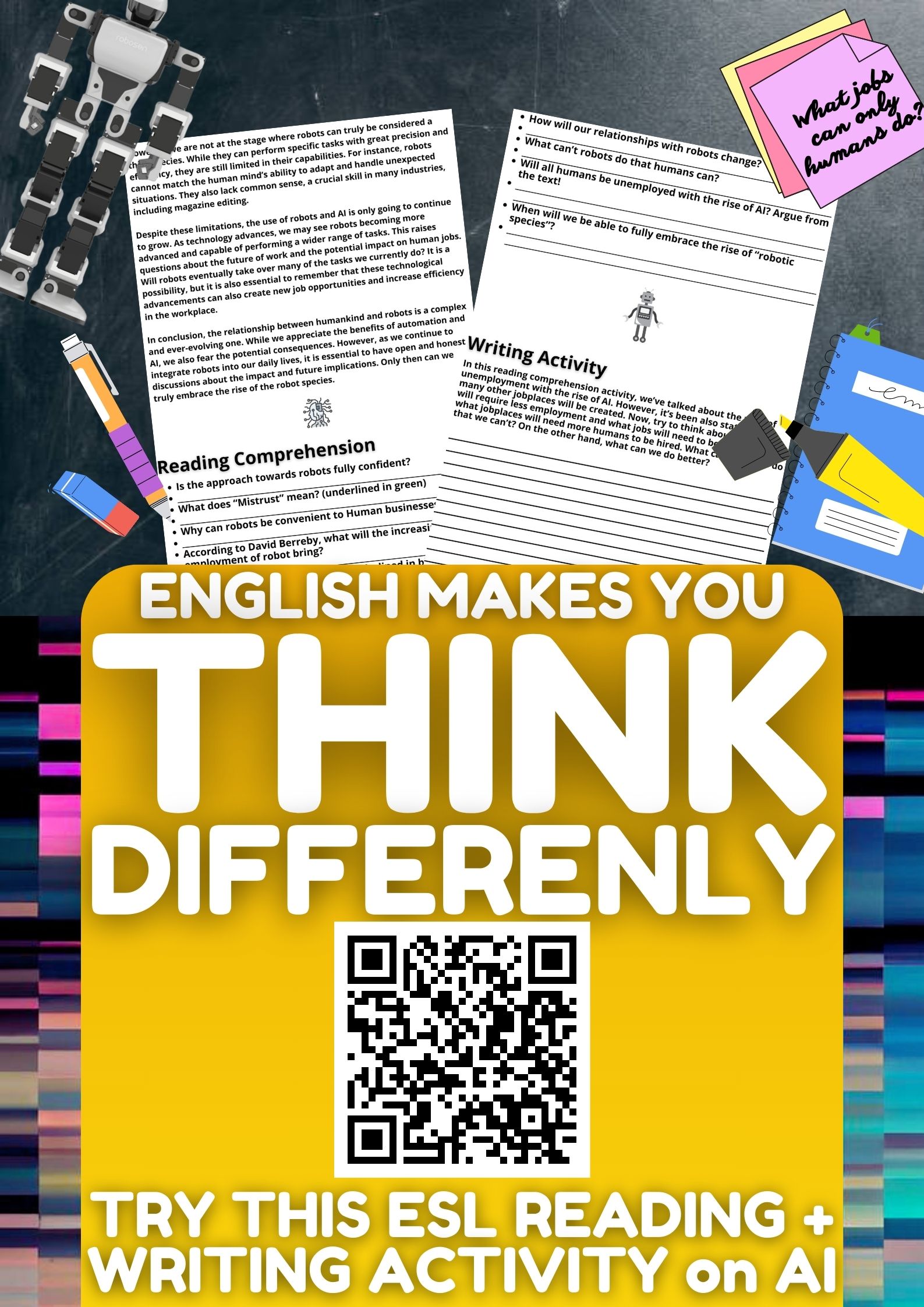
Give secondary-level ESL/EFL students reading-comprehension and writing practice using a short nonfiction passage about artificial intelligence and automation in daily life.
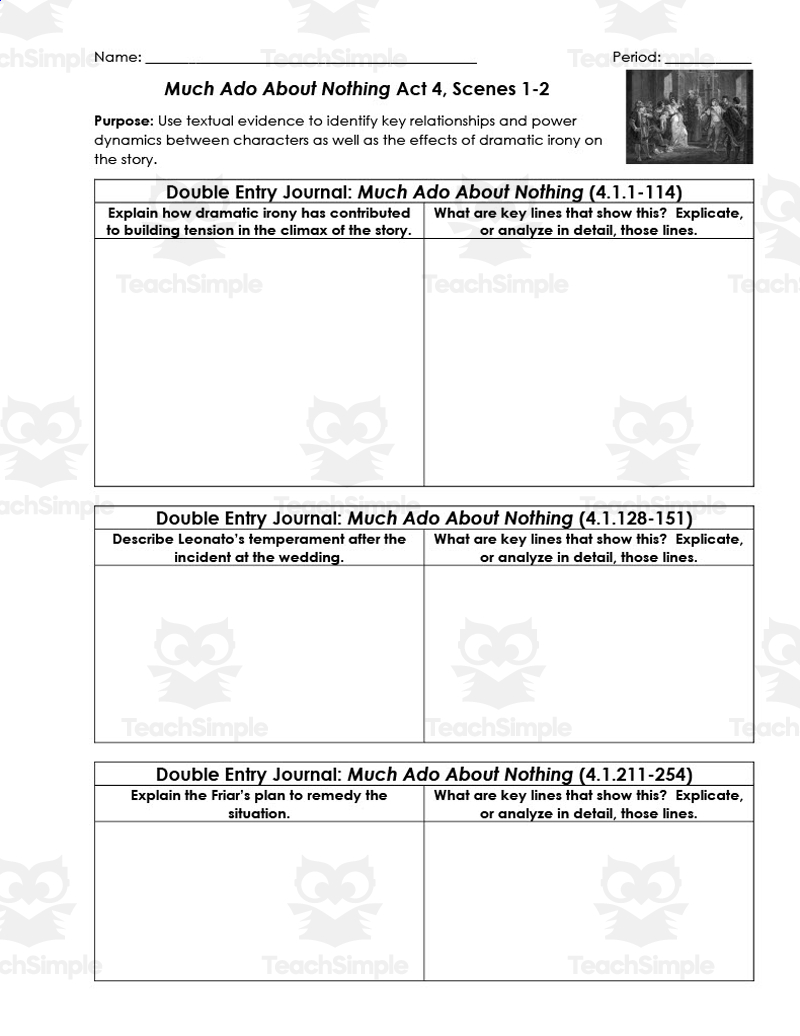
A double-entry journal worksheet for close reading of Act 4, Scenes 1-2 of Shakespeare's 'Much Ado About Nothing,' focused on using textual evidence to identify character relationships, power dynamics, and dramatic irony at the play's climax.
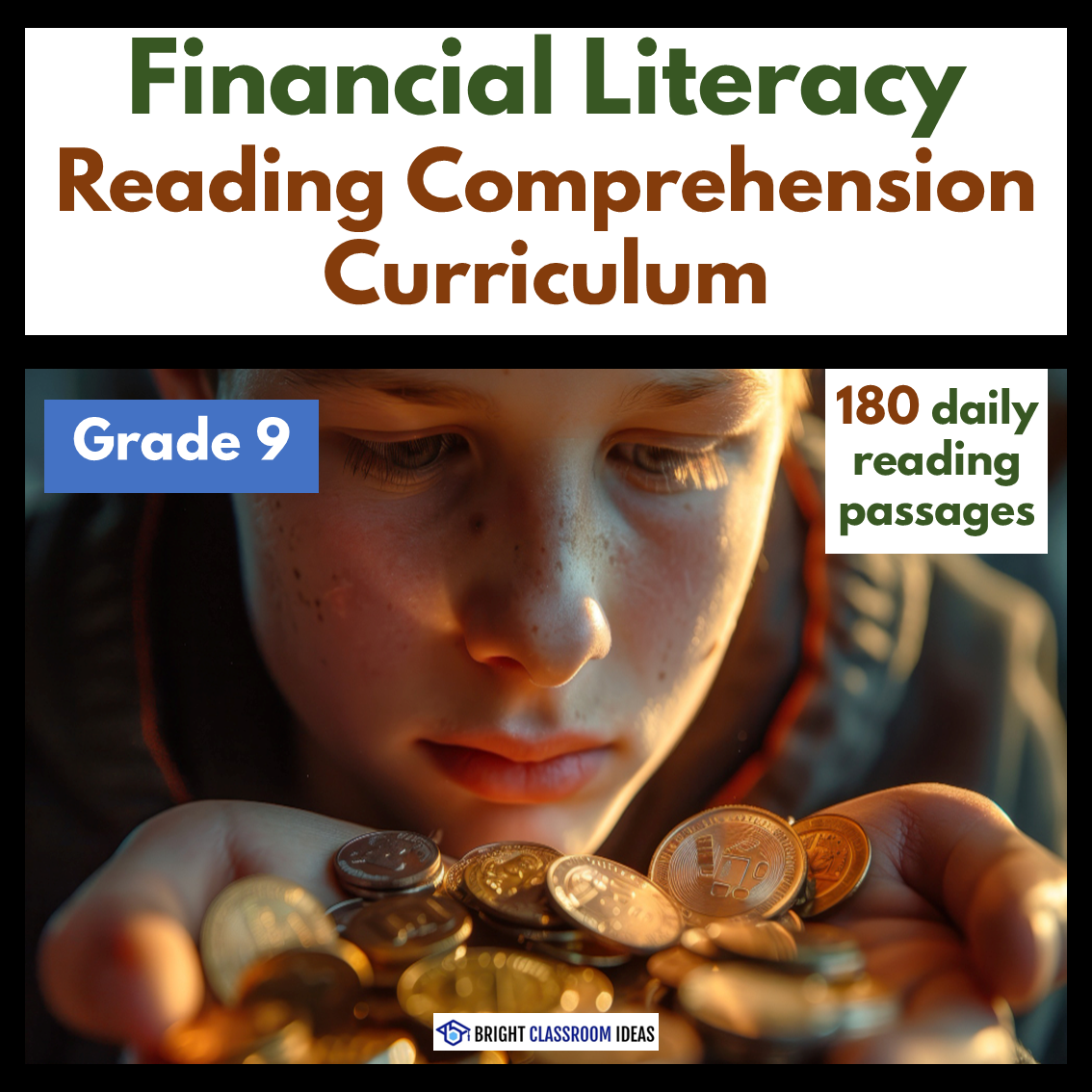
A year-long Grade 9 financial literacy curriculum combining daily nonfiction reading passages with personal-finance concepts to build reading comprehension, vocabulary, and analytical writing.
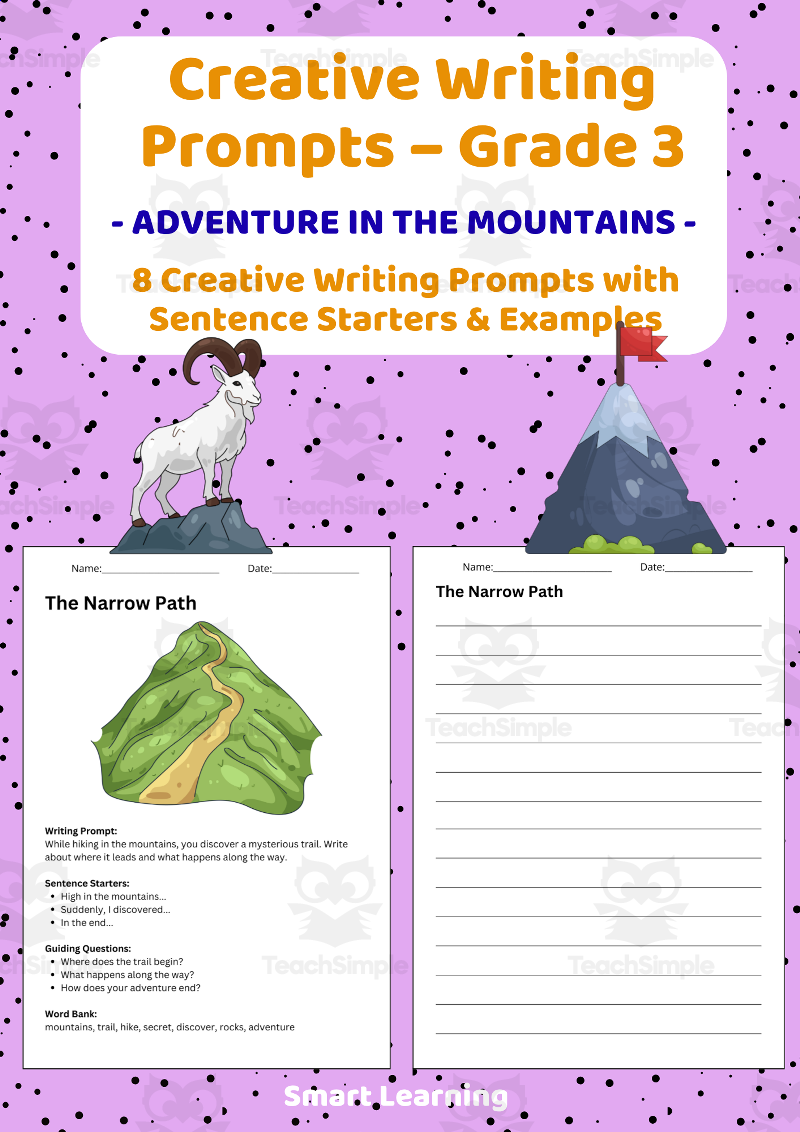
Gives 3rd-grade students eight themed creative-writing prompts (theme: Adventure in the Mountains) with sentence starters, guiding questions, and word banks so they can organize a story with a clear beginning, middle, and end, develop their own ideas, and build writing confidence.
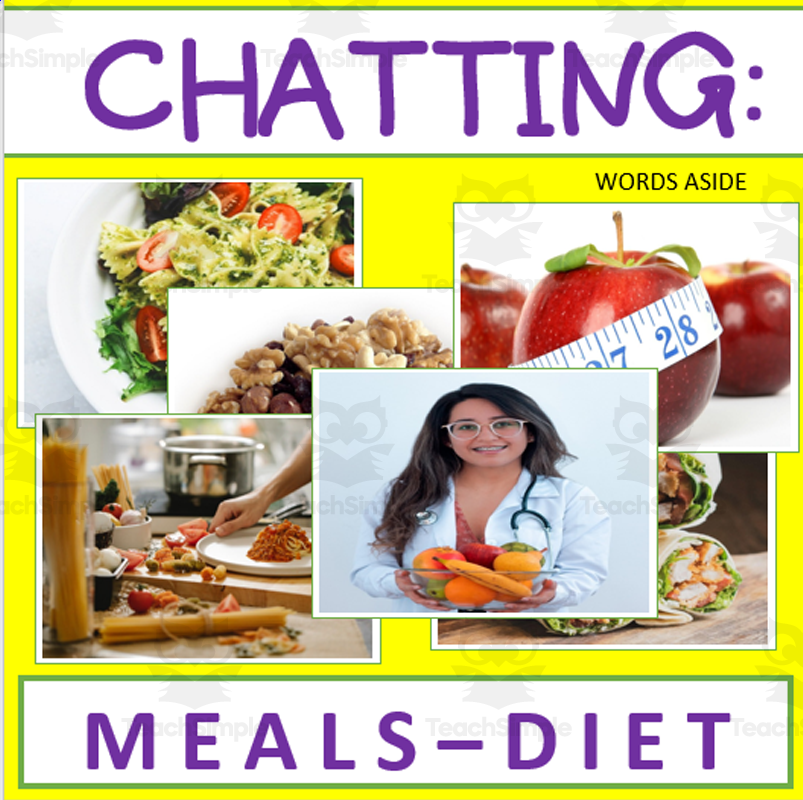
Writing Prompt + Discussion Flashcards : Meals/Diet Pack The Writing Prompt + Discussion Flashcards: Meals/Diet Pack equips educators with an engaging teaching resource designed to boost discussion abilities and writing skills. This tool can be adapted for all education stages, encompassing a range of pictures themed around diet and…
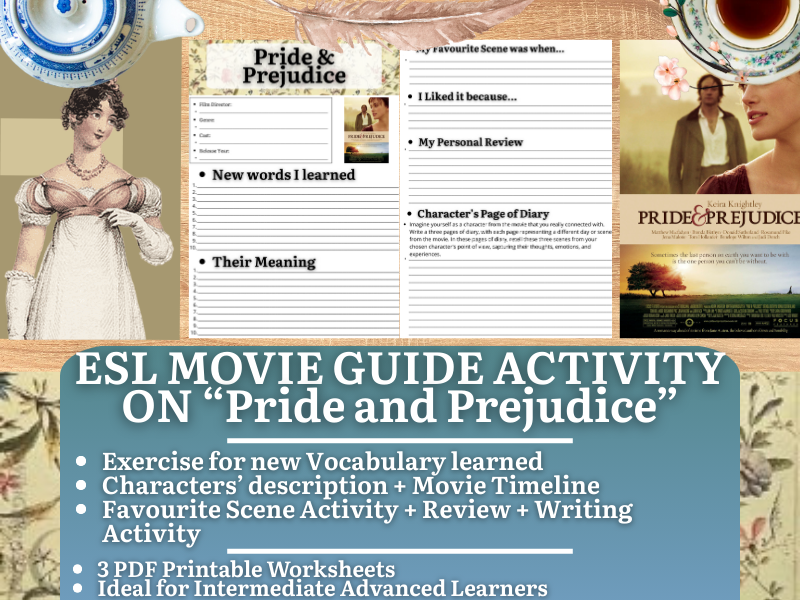
A post-viewing ESL/EFL worksheet built around the film "Pride and Prejudice", combining film-info recall, vocabulary logging, character description, and reflective/creative writing tasks.
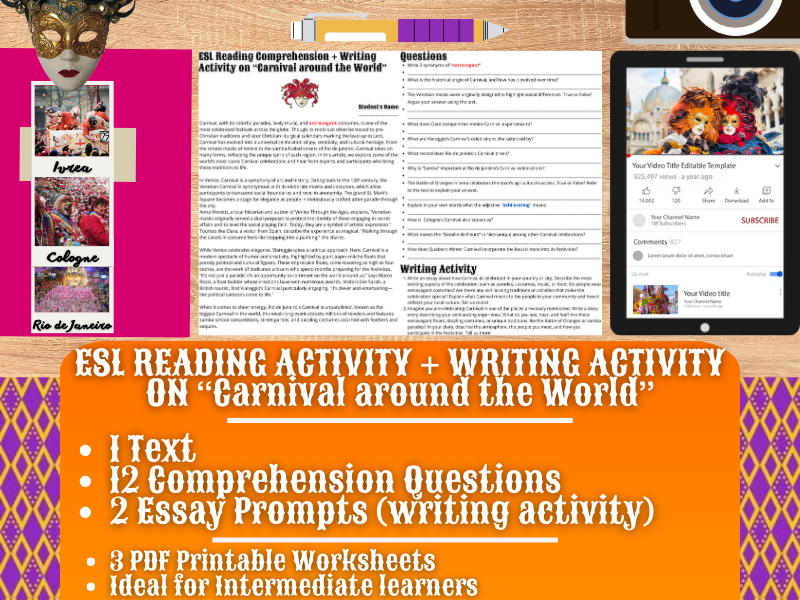
Give ESL/EFL students at middle and high school level a nonfiction reading passage about how Carnival is celebrated in different countries/cities (e.g. Cologne, Nice's Bataille de Fleurs, Quebec Winter Carnival), paired with comprehension, vocabulary, and true/false argument questions and personal or comparative essay writing prompts.
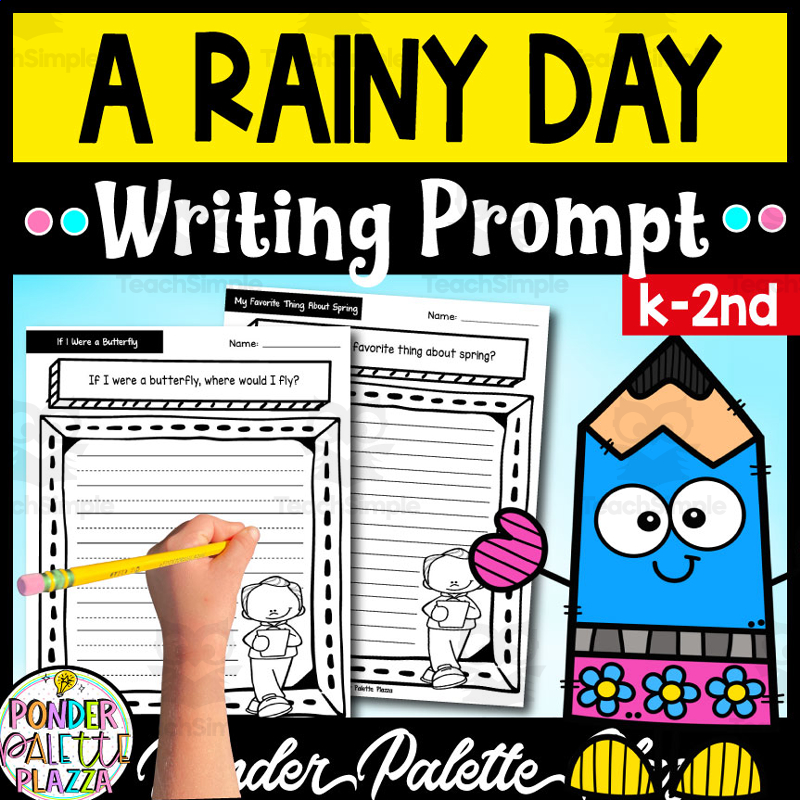
The rainy-spring-day question leaves the adventure open for students to invent. Discuss a setting and an action before writing, then use the companion drawing page to show the same scene. Students who need an idea can begin with a sketch and describe it orally before composing their response.

A double-entry journal worksheet for Shakespeare's Twelfth Night, Act 2 Scenes 4-5, that has students use textual evidence to identify relationships, power dynamics, and dramatic irony, including an explicit definition of dramatic irony and a staging/argumentative prompt about whether to cut a scene.
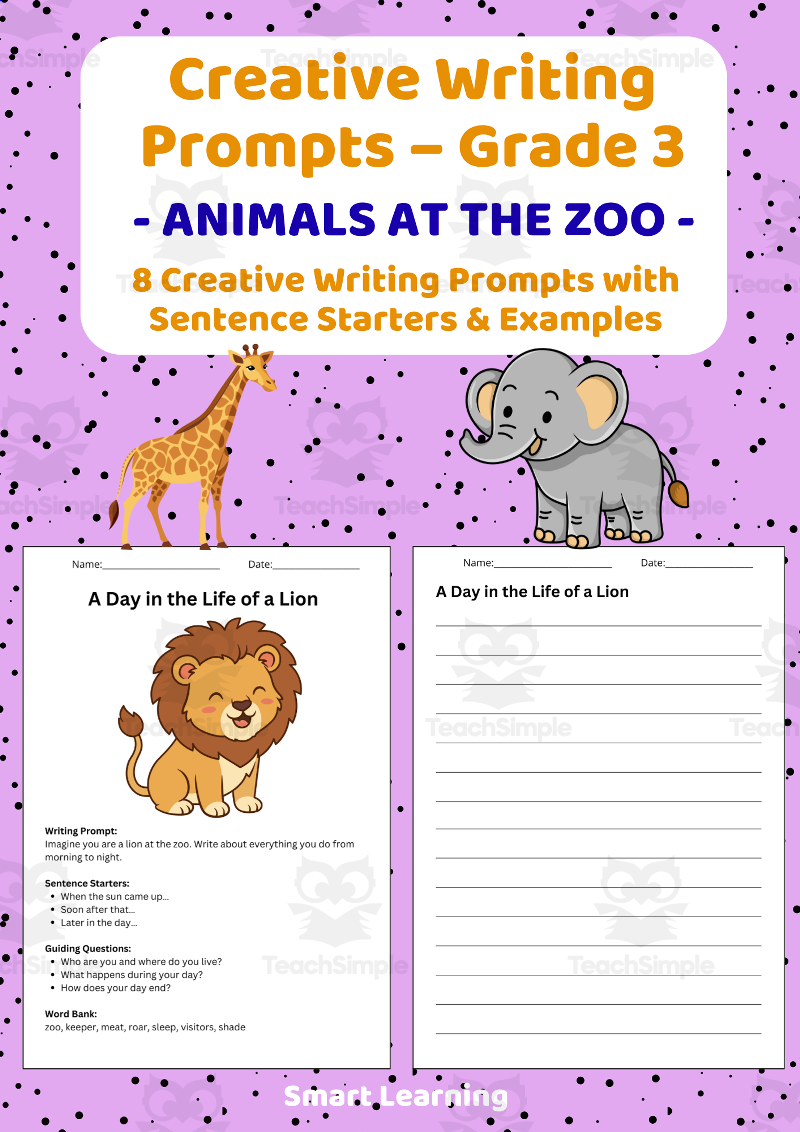
Gives 3rd-grade students eight themed creative-writing prompts (theme: Animals at the Zoo) with sentence starters, guiding questions, and word banks so they can organize a story with a clear beginning, middle, and end, develop their own ideas, and build writing confidence.
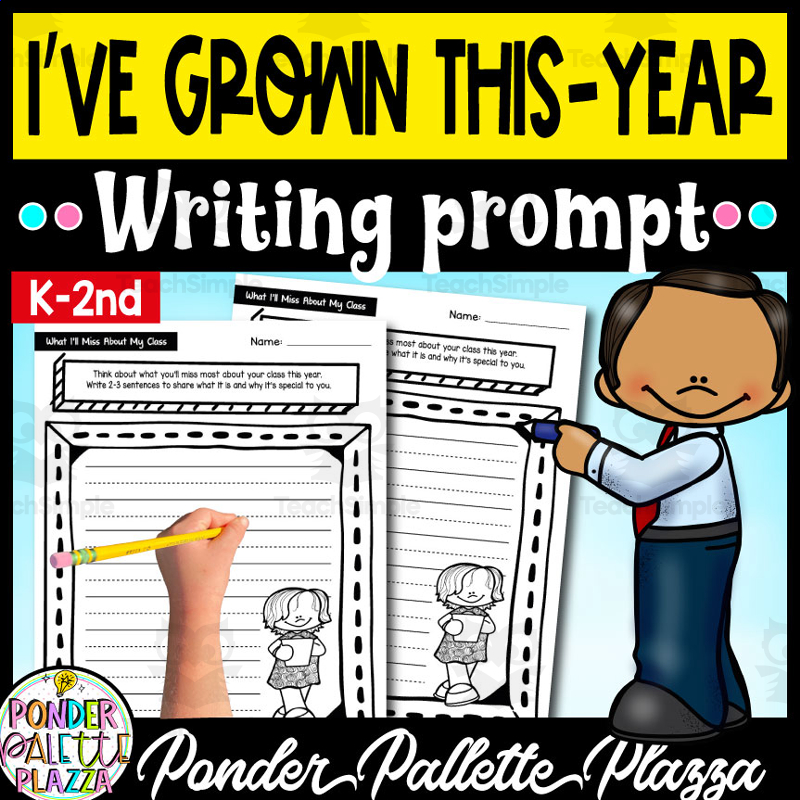
An end-of-year writing and drawing prompt for young students to reflect on personal growth over the school year.
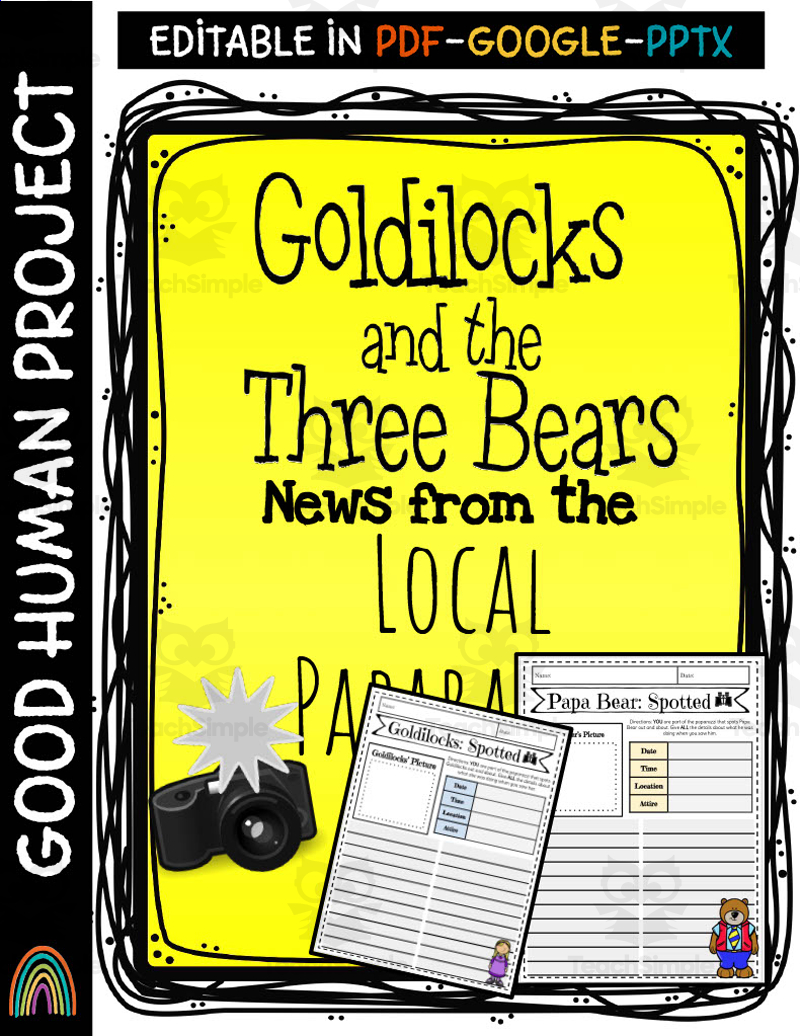
Creative-writing activity in which students role-play as paparazzi who 'spot' each Goldilocks character and report details about them.