3,890 products added recently
Page 49 - Worksheets & Printables
Discover a wealth of worksheets and printables to supplement your teaching. Covering multiple subjects and grade levels, these resources provide activities that reinforce learning objectives. Incorporate them into your lessons to offer hands-on practice and enrich your curriculum.
The Fur Debate: SAMPLE Social Studies Reading Comprehension Passage
ELA, Reading, Reading Comprehension, Strategies, Resources for Teachers, Social Studies, Sociology, Grade 6, 7, 8, 9, Writing Prompts, Worksheets & Printables, Centers, Activities, Teacher Tools, Assessments, Quizzes and Tests, Quizzes, Tests
This is a free passage sample from the complete resource. The full version includes everything needed for a complete reading comprehension activity: the passage, multiple-choice questions, short-answer questions, vocabulary matching, a summary-writing task, and a detailed answer key. Download the complete passage resource by clicking on the following links: PDF Fillable PDF Word Docs Google Docs The Fur Debate: Social Studies Reading Comprehension Passage (PDF) This resource introduces a unique Social Studies reading comprehension passage with questions about The Fur Debate. The passage is carefully designed to bridge the gap between social studies and literacy through strengthening reading comprehension and sparking knowledge curiosity in middle school students. Each passage blends English Language Arts skills with accurate social studies content . Ideal for interdisciplinary learning in ELA and Social Studies. Suitable for Grade 9 review, too! Student Tasks throughout the passage: 5 multiple-choice questions targeting the following skills: main idea, key details, inference, vocabulary in context, and use of evidence 5 vocabulary matching items with clear, student-friendly definitions 5 text-based questions that require citing specific lines or facts 1 summary prompt that asks students to condense central ideas accurately Full answer key for every section FULL CATALOG OF DOWNLOADING LINKS HERE Other Social Studies Reading Comprehension Collections You May Find in the Store: 1. Ancient Civilizations 2. Early Empires and Trade Networks 3. The Founding of the United States 4. Language, Culture, and Meaning 5. Psychology and Society 6. Global Festivals and Traditions 7. Extreme Environments and People 8. Food, Culture, and Preservation 9. Global Food Customs 10. Media, Communication, and Popular Culture 11. Human Impact on the Environment 12. Civic Action and Social Change 13. Fashion, Society, and Power 14. People, Places, and Unusual Histories Product Details: Length: 5 pages Grades: 6–8, also suitable for Grade 9 review Use cases: close reading, stations, homework, intervention, test prep, and sub plans Why Teachers Choose This Passage: Authentic social studies content paired with rigorous literacy practice Consistent task structure for easier planning and smoother student routines Clear, age-appropriate writing that builds confidence without oversimplifying Use this passage to reinforce ELA skills in social studies, to add literacy to your lessons, and to support independent work. The passage strengthens main idea, evidence use, vocabulary in context, inference, cause and effect, and summary writing. With ready-to-use assessments and complete answer keys, you can provide focused practice that is simple to run and fast to review.
Author Middle & High School - CORED Education
Rating
Tags Middle School, Reading Comprehension, Reading Strategies, ELA, Centers, Reading Passage, Assessments, Vocabulary, Social Studies, Sociology
Math with Decimals Task Cards
Math, Addition and Subtraction, Addition, Decimals, Place Value, Subtraction, Grade 5, Task Cards, Worksheets & Printables, Worksheets
Here is a fun way for your grade 5 learners to practice or review their skills with decimals. This set of 20 task cards is designed to give 5th graders the opportunity to identify place value to the right of a decimal, add and subtract decimals, identify decimals using base 10 blocks , and solve word problems involving decimals. Each concept is aligned with current mathematics standards and the word problems include real-world scenarios. This activity is a great way to round out your unit on decimals and give your learners the opportunity to get up and moving while working on essential math skills. Task cards can be used in a variety of ways and allow learning to take place in different settings. Use them as an engaging learning activity indoors or add them to your math learning center . Take advantage of warmer weather and use them outdoors, too. First time use requires a bit of prep, but if you laminate the cards, they can be used year after year. Task cards can also be used in a resource setting, giving learners the one-on-one attention needed to master necessary skills. This set of task cards includes a color version, as well as a black & white version. Both sets are identical. An answer key is also provided. Details of each card are listed below. PAGE 1: Cards 1-4: place value (tenths), base 10 blocks, adding decimals, word problem (money) PAGE 2: Cards 5-8: place value (thousandths), base 10 blocks, adding decimals, word problem (baking) PAGE 3: Cards 9-12: place value (hundredths), base 10 blocks, subtracting decimals, word problem (measurements) PAGE 4: Cards 13-16: place value (tenths), base 10 blocks, adding decimals, word problem (weight) PAGE 5: Cards 17-20: place value (ones), base 10 blocks, subtracting decimals, word problem (digital file size) PAGE 6: Answer Recording Page (2 sheets per page to reduce number of copies and/or amount of ink) ANSWER KEY
Author Quail Trail Products
Tags Grade 5 Math, Decimals, Task Cards, Place Value, Base 10 Blocks, Adding Decimals, Subtracting Decimals, Word Problems
Cats in Ancient Egypt: SAMPLE Social Studies Reading Passage (Word)
ELA, Reading, Reading Comprehension, Strategies, Resources for Teachers, Social Studies, History: Ancient, History, Grade 6, 7, 8, 9, Writing Prompts, Worksheets & Printables, Centers, Activities, Teacher Tools, Assessments, Quizzes and Tests, Quizzes, Tests
This is a ONE PASSAGE SAMPLE. The following is the description of the FULL resource and the downloading links: Ancient Civilizations: Social Studies Reading Passages (Word) This very engaging collection of Social Studies reading passages about Ancient Civilizations is designed to bridge the gap between social studies and literacy through strengthening reading comprehension and sparking knowledge curiosity in middle school students. Each passage blends English Language Arts skills with accurate social studies content. Ideal for interdisciplinary learning in ELA and Social Studies. Suitable for Grade 9 review, too! What Is Included? There are - (3) - informational passages: Sacred Whiskers: Cats in Ancient Egypt Mesopotamia: The First Urban World The Inca: Empire in the Clouds Student Tasks for Each Passage: 5 multiple-choice questions targeting main idea, key details, inference, vocabulary in context, and use of evidence 5 vocabulary matching items with clear, student-friendly definitions 5 text-based questions that require citing specific lines or facts 1 summary prompt that asks students to condense central ideas accurately Full answer key for every section Available Formats for this Resource PDF Fillable PDF Google Docs FULL CATALOG OF DOWNLOADING LINKS HERE Reading Passage Links: Ancient Civilizations PDF Fillable PDF Word Docs Google Docs Early Empires and Trade Networks PDF Fillable PDF Word Docs Google Docs The Founding of the United States PDF Fillable PDF Word Docs Google Docs Language, Culture, and Meaning PDF Fillable PDF Word Docs Google Docs Psychology and Society PDF Fillable PDF Word Docs Google Docs Global Festivals and Traditions PDF Fillable PDF Word Docs Google Docs Extreme Environments and People PDF Fillable PDF Word Docs Google Docs Food, Culture, and Preservation PDF Fillable PDF Word Docs Google Docs Global Food Customs PDF Fillable PDF Word Docs Google Docs Media, Communication, and Popular Culture PDF Fillable PDF Word Docs Google Docs Human Impact on the Environment PDF Fillable PDF Word Docs Google Docs Civic Action and Social Change PDF Fillable PDF Word Docs Google Docs Fashion, Society, and Power PDF Fillable PDF Word Docs Google Docs People, Places, and Unusual Histories PDF Fillable PDF Word Docs Google Docs Product Details Length: 15 pages total Grades: 6–8, also suitable for Grade 9 review Use cases: close reading, stations, homework, intervention, test prep, and sub plans Why Teachers Choose This Set Authentic social studies content paired with rigorous literacy practice Consistent task structure across all passages for easier planning and smoother student routines Clear, age-appropriate writing that builds confidence without oversimplifying Use this set to reinforce ELA skills in social studies, to add literacy to your lessons, and to support independent work. The passages strengthen main idea, evidence use, vocabulary in context, inference, cause and effect, and summary writing. With ready-to-use assessments and complete answer keys, you can provide focused practice that is simple to run and fast to review.
Author Middle & High School - CORED Education
Rating
Tags Middle School, Reading Comprehension, Reading Strategies, ELA, Centers, Reading Passage, Assessments, Vocabulary, Social Studies, Ancient Civilization
Research Organizer & Essay Assignment: Harper Lee
ELA, Literature, Writing, Grade 7, 8, 9, 10, 11, 12, Activities, Projects, Worksheets & Printables, Worksheets
This resource provides your students with the opportunity to independently research and write about the life of Harper Lee, the renowned author of To Kill a Mockingbird, with this engaging research planner and essay assignment. This carefully scaffolded and easy-to-assign-AND-assess resource has been designed to guide student learning from Lee fact-collection to the careful development of a five-paragraph research essay. Teaching this resource could not be easier! Start by handing out the background research and note-taking worksheet (you could also ONLY hand this out if you want a shorter lesson!). Once students have found their facts and sources, provide them with the essay outline activity, which guides them step-by-step through the requirements of a short research essay. From there, drafting their essay, using the provided peer review checklist, and submitting their final draft will be no problem at all. And then you can assess their work with the provided Common Core rubric! Use this entire resource as a complete research lesson or just part of it as a short research activity or sub plan! This TeachSimple download includes: - A Harper Lee essay writing assignment with directions, requirements, research essay writing tips, a peer review checklist, and Common Core-tied grading rubric - An editable rubric, provided as a link, that lets you make adjustments to the grade values and guidelines. This link is provided as as Google Sheet specifically built for integration into Google Classroom, although you can also modify it for use in other Learning Management Systems (LMSs) - A Harper Lee biography and note-taking worksheet that will guide your students through information gathering. This straightforward two-page handout includes instructions for background research, a fun drawing section, and an area to cite quality sources and organize conducted research - A research essay outlining worksheet, so students build on their Harper Lee notes in a clear and simple manner as they build their work towards a draft and final paper - All 6-pages of this lesson are provided in full-color and B&W versions Although this resource can be fitted for any secondary Language Arts classroom, it has been carefully designed to work best in grades 8 through 11. The included rubric is subtly but specifically tied to Common Core ELA Standards for Language (3) and Writing (2 and 7). This resource is provided as a print-ready, bookmarked, and adjustable PDF file. The rubric is also included as an editable Google Sheet. This resource contains 6 pages and 1 Google Sheet.
Author The Language of Educational Art, LLC
Tags Essay, Rubric, Research, Notetaking, Outlining
Elephants: Guided Reading Level Q with Lesson Plan
ELA, Resources for Teachers, Reading Comprehension, Reading, Science, Language Development, Life Sciences, Earth and Environmental Sciences, Geography, Social Studies, Grade 3, 4, 5, Worksheets & Printables, Worksheets, Teacher Tools, Centers, Activities, Literacy Readers, Quizzes, Quizzes and Tests, Assessments, Lesson Plans
This Elephants (level q) guided reading book with lesson plan includes: Guided Reading Color Label (front cover x1) This is a quick way to match the book’s demands to what students can generally handle.. The overall goal is to use the level/color to pick books for several smaller groups. To qualify for a certain level, a student is expected to read a book from that level with about 90–94% accuracy. If a student is consistently accurate and understands, move up a level. If the student is struggling at that level, drop down and add more support. Each student will improve at completely different rates, but it is generally one of the best ways to check progress across the class. DOWNLOAD THE CATALOG TO VIEW ALL GUIDED READING BOOKS AVAILABLE (SORTED LEVELS A-Z) Pre-Reading Question (x1) Teacher asks the prompt aloud, can be while showing the cover or first page. Students share what they already know, or make educated guesses from the cover. Prompt them to use the target vocabulary. Write some of their responses on the board to look back at during the reading. Vocabulary Words (x5) Introduce the five words, best doing it one at a time. Start by saying it, while students repeat and then see if anyone knows what it means before reading further. Read through the meaning and try to briefly connect each word to a picture or gesture so it’s meaningful. Ask students to flip through the book pages and point to where they see each of the vocabulary words. While reading the book pause upon coming across one of the vocab words or read the sentence twice to make sure students understand the word has appeared. Optional: Ask students to raise hands whenever they see/hear one of the new words. Guided Reading Pages (x10) Check the book snapshot (below) for: primary topic - do you need to prep extra reading or intro materials on this? what is taught best - decide on 1-2 bullets to focus on, use the prompt or words provided here for best results. learning goals - what you are checking for students to be able to do after the session, elicit answers using prompts or words provided. key vocabulary (see section above). questions overview - so you know what is coming up and if you need to prep extra materials to assist understanding. Run the lesson You may have already looked at a few of the pages together, but you can show them some of the pictures again first to set meaning. Depending on how much time you have and how familiar your students are with guided reading class, you may want to read the book aloud first with the group first. Students whisper or partner read, while you listen in. If time, do it as a group, one student reading a page each. Use the guided page’s prompts to coach: “Check the picture / does it make sense?” “Point under the words / try the first sound” “Reread the sentence smoothly”. Try to focus more on one student per session (rotating every time), so you can work out if they are ready to move up or need to move down a level. Comprehension Questions (back cover x3) This is your way to check that students didn’t just say the words, but actually understood the text. First, let students answer by pointing to the page/picture and saying a short sentence. After any answer, follow with: “Show me where you found that in the text.” In bigger groups, have partners answer first (10–20 seconds), then call on 2–3 students to share. Differentiation tips: Emerging speakers/struggling readers: oral + pointing On-level: oral in a full sentence Higher: one written sentence or draw + label Book Snapshot Title: Elephants Genre: Nonfiction (informational) Subject: Life Science Primary Topic: Elephant species, adaptations, behavior, and threats Estimated Guided Reading Level (A–Z): Q What This Book Teaches Best Explains that scientists recognize three distinct species of elephants and describes physical differences (like ear shape and head shape) that fit their environments. Describes key body structures and functions (trunk muscles and “fingers,” tusks as elongated incisor teeth, sensitive skin). Shows behavioral adaptations for survival , including how elephants protect themselves from heat and insects by using water or mud. Highlights social organization and communication , including matriarchal herds and vocalizations such as trumpets, rumbles, and infrasound. Connects elephants to their ecosystems and conservation by explaining seed dispersal (African Forest elephants) and current threats like habitat loss and poaching for ivory. Learning Goals Describe the three elephant species named in the text and one physical difference mentioned between African and Asian elephants. Explain how elephants use their skin and what they do to protect themselves from heat and insects. Identify how the text describes an elephant’s trunk and list at least three things elephants use it to do. Explain what tusks are and give examples from the text of how tusks help elephants survive. Describe how elephants live in groups and how a matriarch helps keep a herd safe. Explain how African Forest elephants help plant new trees in the forest, according to the text. Key Vocabulary From the Text distinct — clearly different from something else. characteristic — an important feature that helps describe something. matriarchal — led by a female (mother) in the group. vocalizations — animal sounds used to communicate. endangered — in danger of disappearing because there are not many left. Discussion Prompts Pre-reading question: What do you already know about how elephants live and survive in their habitats? Comprehension questions: What are the three species of elephants that scientists recognize in the text? Comprehension questions: What does the text say elephants do to protect themselves from heat and insects? Comprehension questions: How do African Forest elephants help plant the next generation of trees in the forest? Printing Tips 1. Best Printing Method (Recommended) “Booklet” Printing (Best if Available) If your printer or PDF viewer supports Booklet Printing , use this. Settings to use: Print mode: Booklet Paper size: Letter or A4 (either works) Orientation: Landscape Print on both sides: Yes Flip on: Short edge Scaling: Fit to printable area Booklet subset: First test: Front sides only Then: Back sides only This will automatically: Pair pages correctly Put the cover on the outside Align everything for folding After printing, fold in half and staple along the spine . 2. If “Booklet” Printing Is NOT Available You can still print this correctly with manual duplex printing . Step-by-step: Open the PDF. Choose Print . Set: Orientation: Landscape Pages per sheet: 1 Print on both sides: Yes Flip on: Short edge Print all pages . Because each PDF page already contains two facing book pages, the result will still fold cleanly into a book. Thousands of Cored Education products are included with your TeachSimple membership. Download links and encyclopedia index available here.
Author Cored Education
Rating
Tags Reading Comprehension, Reading Passages, Reading, Guided Reading, Guided Reading Lesson Plan, Guided Reading Activity, Pre-reading, Science Lesson Plans, Life Science, Geography
Reading Comprehension Fiction Set 4 Sample: Funny Photos (Docs)
ELA, Reading, Common Core, Spelling, Language Development, Reading Comprehension, ESL, Resources for Teachers, Children’s Literature, Literature, Grade 4, 5, Worksheets & Printables, Worksheets, Assessments, Teacher Tools, Tests, Quizzes and Tests, Centers, Activities
Reading Comprehension Passages Fiction Set 4 Sample Overview No prep reading comprehension lessons, with enjoyable stories and topics. Each lesson has a blend of post-reading activities. Mixed questions to check overall understanding. Vocabulary activities, plus a writing section. Lessons also contain a bonus extension exercise at the end. Some you may like, some you may not, either way they are there if you wish to use them. Full answer keys are provided. Passage Included 4.Funny Photos: Darlene and her class have a good idea for their funny photos. Docs Version This is the Docs editable and fillable version. This download is available in GOOGLE Docs, GOOGLE Forms, GOOGLE Slides. PDF, PPT, WORD. FULL CATALOG OF DOWNLOAD LINKS HERE Grade 4/5 Links Fiction Set 1 - Animals Google Docs Google Forms Google Slides PDF PPT Word Guided Reading Materials Fiction Set 2 - Family Google Docs Google Forms Google Slides PDF PPT Word Guided Reading Materials Fiction Set 3 - Friends Google Docs Google Forms Google Slides PDF PPT Word Guided Reading Materials Fiction Set 4 - School Google Docs Google Forms Google Slides PDF PPT Word Guided Reading Materials Fiction Set 5 - Sports Google Docs Google Forms Google Slides PDF PPT Word Guided Reading Materials Nonfiction Set 1 - Birds Google Docs Google Forms Google Slides PDF PPT Word Guided Reading Materials Nonfiction Set 2 - Insects Google Docs Google Forms Google Slides PDF PPT Word Guided Reading Materials Nonfiction Set 3 - Mammals Google Docs Google Forms Google Slides PDF PPT Word Guided Reading Materials Nonfiction Set 4 - Nature Google Docs Google Forms Google Slides PDF PPT Word Guided Reading Materials Nonfiction Set 5 - Sea Animals Google Docs Google Forms Google Slides PDF PPT Word Guided Reading Materials Reading Passages Overview Each passage is especially written for Grade 4-5 students, including key vocabulary required for this age group. Topics are varied and are accompanied by colorful graphics. Topics are meant to educate, yet entertain the modern student. These passages are perfect for the modern classroom. Whereas textbooks can become outdated in no time, any changes to technology or the world will result in updates to this product. Mixed Questions The mixed questions section of each lesson includes a variation of five comprehension, vocabulary and math questions. In addition, key reading strategies are frequently covered including cause & effect, summarizing, compare & contrast and making conclusions. Two or three of the questions will be MCQs and other questions will require a written response of some kind. Full answers and example responses appear at the end of the lesson. Spelling & Vocab Each reading passage contains a variety of words and phrases designed for Grade 4-5 students. Spelling and vocab activities provide the opportunity to build fluency with these words. As it can become quite mundane doing the same activities over and over, each lesson in a set will contain a different spelling and vocab activity . Activities include: spelling games, sentence match-ups, mixed-up text and decoding words from the lesson. Writing Prompts Writing prompts are designed to continue the theme or lessons learned in the story. Students are persuaded to write in a variety of ways and each prompt includes several cues to help. As with the spelling/vocab section, writing prompts will vary. This includes research pieces, reading responses, poetry and creative writing prompts. Full Answer Keys Full answer keys and sample responses are provided so no matter how busy you are, you know you're covered! Mixed question answers provide evidence from the text, math questions contain the relevant workings. Answers are designed for use by the teacher, but also suitable as a handout to the student. Just for Fun Each lesson will have a bonus extension exercise. This is something fun to extend the lesson with. You can find these at the end of each lesson, titled Just for Fun. Just for Funs are optional. Some you may like, some you may not. Either way, they are there to do with as you wish. For similar downloads and other frees, do check out Cored Group on TeachSimple.
Author Cored Education
Tags Elementary, Reading, Comprehension, Vocabulary, Answers, Ccss, Common Core, Spelling, Writing, Digital Centers
ABC ANIMAL MINIBOOK | Coloring Art Acitivty
Creative Arts, ELA, Writing, Early Learning, Elementary, Homeschool Resources, Not Grade Specific, Pre-K, Activities, Worksheets & Printables
ABC ANIMAL MINIBOOK | Coloring Art Acitivty INTRODUCTION OF THIS AUTHOR: Thank you for choosing EDITORIAL ARENAS EDUCATIVAS! Our mission is to deliver a variety of learning resources that make education enjoyable and effective for children. Don't forget to visit our store to explore products for reading, writing, math, and Spanish language skills. DESCRIPTION OF THIS PRODUCT: 1) What is the recommended printing method for this resource? I recommend printing this document in PDF format so you won't experience any errors when printing. 2) What educational standards were used as the basis for creating this material? This document was not developed based on any specific standard. 3) Who is the creator of this resource and how should it be cited? The creator of this document is EDITORIAL ARENAS EDUCATIVAS. 4) Is this resource available for free or does it require a purchase? Because we vocationally work for the education of thousands of students, we are offering this document for free. 5) This resource is for individual use only; what restrictions apply to its redistribution or sale? We ask that you share our link so more people can download our resource or recommend our store. It would help us greatly. SECONDARY AND COMPLEMENTARY INFORMATION: 1) Who is the ideal audience for this document? This document and/or teaching resource is primarily intended for young students, meaning those between the ages of 5 and 12, in other words, students in early childhood and/or primary education. However, it can also be used by the general public if required. 2) What recommendations are there for making the most of this resource? To make the most of this resource, I recommend first analyzing it, then looking at the specific topic your student needs to learn and assess whether my resource addresses it. I also ask you to consider how you will print it. 3) Is this material up to date with the latest educational changes? Yes, this material primarily addresses all learning theories about children, which tell us that children should learn in an educational and fun way. 4) What printing format guarantees the best results? I recommend printing this document in PDF format. I would also ask you to carefully check whether you have a color or black and white printer. FREE RESOURCES: https://teachsimple.com/product/spanish-fruits-12-free-flashcards (SPANISH FRUITS) https://teachsimple.com/product/animal-houses-in-spanish-3-free-worksheets (ANIMAL HOUSES)
Author EDITORIAL LAURA EDUCA
Rating
Tags ABC, ALPHABET, ART, ART ACTIVITY, FREE, FREE RESOURCES
Data Analysis & Probability - Task & Drill Sheets Gr. PK-2 - Canadian Content
Math, Statistics, Grade 1, 2, Worksheets & Printables, Worksheets
Data Analysis & Probability - Task & Drill Sheets Gr. PK-2 The Data Analysis & Probability - Task & Drill Sheets Gr. PK-2 is a distinct teaching resource designed to cater to the arithmetic needs of grades Pre-K to 2 students based on Canadian Provincial Standards. This content primarily focuses on data analysis and probability, simplifying complex concepts into an understandable format. Real-life experiences provide the context for these mathematical concepts, with task sheets that introduce them in a vivid manner. Alongside task sheets are drill sheets that offer warm-up exercises and timed practice sessions for reinforced learning. Core Skills Developed Data Collection Data Organization Data Analysis Data Interpretation Predicting Data Probabilities The resource also enables students to reflect and use pertinent technology effectively as part of their learning process. Versatile Teaching Aids Included: Review sheets for quick study reviewing, Preparatory tools for test readiness, Vibrant activity posters catering to visual learners, ; Bonus worksheets for more practice sessions.. " Care has been taken within this resource's creation process so that all content aligns not only with Provincial Standards but also with Bloom's Taxonomy standards (cognitive, affective, psychomotor), and STEM guidelines—thereby enhancing potential STEM career paths. Last Remarks: Suitable for various landscapes—including group study scenarios or homework assignments—this tool bridges the gap between theoretical math and its practical application effectively. It's an invaluable asset for educators teaching PK-2 grade.
Author Classroom Complete Press
Tags PDF
Darts Reading Comprehension Passage - Cored Ed Encyclopedia
ELA, Language Development, Reading Comprehension, Reading, Pre-Reading, History, Social Studies, Math, Sports, P.E. & Health, Grade 2, 3, 4, 5, Worksheets & Printables, Worksheets, Teacher Tools, Centers, Activities, Writing Prompts, Assessments, Quizzes and Tests, Quizzes, Lesson Plans
This darts reading comprehension with lesson plan includes: Visualization (on the front cover) Start your lesson by taking a minute to think and share something about the topic. Read the script aloud (slowly), perhaps prepare some music or sound effects. Student close their eyes and let their imaginations wander. Students open their eyes, read the question aloud and give them a few minutes to complete. Ask a few students to share or keep answers until the end to compare with what they learn in the passage. Quick pause—thousands of Cored Education products are included with your TeachSimple membership. Download links and encyclopedia index available here. Pre-Reading Trivia Students will write down one thing they already know about the subject and then read five more facts and discuss. These facts are fun, and the students will enjoy learning about the subject before reading more. Give 1 minute for students to write what they already know (no pressure—best guess is fine). Read the five facts together. After each fact, do ask a student for their opinion, was it surprising? Set a purpose by asking students to highlight/underline one fact they want to learn more about during the reading. Reading Passage The text is a high-interest reading passage with set paragraphs, roughly three to four paragraphs long. It contains a variety of themes about the topic, anywhere from history to technology. The passage is between 250 and 350 words in length. First, ask students to look at the headings and see what they’ll learn about today. What do they know about the topic/heading? First read options: Teacher read-aloud (best for support). Partner reading (paragraph by paragraph). While reading, students underline important details, and vocabulary words they think may come up in the questions section. Mixed Questions The first question page contains four multiple-choice questions, each with a choice of four answers, and three written response questions that require a sentence or two from the student. Students complete the mcqs first independently, then review quickly as a class. For the 3 written responses, try to get students giving the answer with some form of evidence: “I think ___ because the text says ___.” If students get stuck, send them back to check the passage. Vocabulary Questions Practice seven key words from the text in this section across two activities. First section is scrambled words where students will unscramble three words given a clue for each. The second section is a word to meaning matching activity. Before starting, have some students read out words they underlined in the passage. Ask students to say the word and read aloud the sentence(s) around each word. Ask students to do scrambled words and the matching exercise in pairs then go through answers as a class. For the scrambled spelling task, get four pairs to come up to the board and write the words for extra practice with the other student reading out the clue. For the matching task, prompt students to give full sentences: “I matched ___ with ___ because ___.” Creative Writing In this question, the student will be required to write a five to eight sentence paragraph on a question related to the topic. Before starting, ask students write down 3 key ideas they are going to include in their piece. Ask students for ideas to share around the class to help those struggling. Pro writing expectations: 5–8 sentences At least 2 facts or details from the passage At least 2 vocabulary words from the previous page Students read their paragraphs while classmates listen for facts and vocabulary words. Extension Activities This page is optional for fast finishers or to take home. There are several activities, each one requiring a different skill. Do some, do none, do all, completely optional - but you will feel reassured knowing every possibility is planned for. Includes summary writting question and additional facts. Answer Key There are answers for the multiple-choice questions, written response questions have sample answers, vocabulary answers and if there is a summary question then a sample summary will be provided as well. Lesson Plan Included Customized lesson plan for this lesson is included. Lesson Snapshot Title: Darts Genre: Nonfiction (informational text with headings) Subject: Reading (Informational Text) / Math (numbers & scoring context) Primary Topic: History, dartboard design, and how scoring works Estimated Guided Reading Level (A–Z): Q What This Lesson Teaches Best Explains how darts began as indoor throwing at targets in England and became a friendly challenge in taverns and homes. Teaches key dartboard features (20 pie-shaped sections, thin wires, double/triple rings, and a bull’s-eye that can be 50 points). Builds real-world math context by describing common game formats (301 or 501) where points are subtracted each turn. Uses a cause-and-claim structure to discuss uncertainties and evidence (a debated story about why numbers are scrambled; a court case about skill vs luck). Connects materials/technology to sports equipment (sisal fibers that close up; tungsten barrels for a slimmer grip) and modern leagues/championships. Learning Goals Students will summarize how the text describes darts’ early history and where people played. Students will identify key parts of a dartboard in the text and explain what they do for scoring. Students will explain how a 301 or 501 game works in the passage, including what happens each turn. Students will describe why the dartboard numbers might be scrambled and explain what the text says is uncertain about that story. Students will explain what happened in 1908 and how it relates to whether darts is luck or skill. Students will cite details about modern boards and darts (sisal fibers, tungsten barrels, leagues/championships). Key Vocabulary From the Text taverns — places where people gather for food and drink. oche — the throwing line you stand behind. subtracted — taken away from a total number. sisal — strong fibers used to make dartboards. tungsten — a dense metal used for slimmer dart barrels. Discussion Prompts FULL CATALOG OF DOWNLOAD LINKS AND ENCYCLOPEDIA INDEX HERE
Author Cored Education
Rating
Tags Vocabulary, Reading Comprehension, Reading Passages, Lesson Plans, Ela Lesson Plans, Reading Comprehension Lesson Plans, Pre-reading, Sports, History, Social Studies Lesson Plans
I Want to Go Home (Novel Study) Gr. 5-6
ELA, Literature, Grade 5, 6, Worksheets & Printables, Novel Studies
"I Want to Go Home (Novel Study) Gr. 5-6" - A Comprehensive Teaching Resource An indispensable tool for public school teachers and homeschoolers alike, focusing on the narrative of a boy's numerous escapes from Camp Algonkian. About the Story: This teaching supplement revolves around Rudy Miller, a fascinating character who is shipped off by his parents to Camp Algonkian at the misguided behest of his school guidance counselor. Rudy exhibits determination and individualism through varied actions such as making cynical remarks about camp founder's bow-legs, choosing intellectual ventures like chess over planned activities or whipping up a salad for his counselor. Every night he chooses to trade in singing around campfires for plotting multiple escape strategies. The Approach: A distinguishing aspect of this resource lies not only in grasping the plot but also digging deep into its inherent substance. Fosters critical thinking with eclectic activities suitable both for group discussions in classrooms and independent homework projects encouraging self-directed learning. Add-on Features: This educational aid comes equipped with well-rounded teacher & student sections encapsulating versatile exercises like: Analyzing Themes Dwelling on Plot Components Detailed Answer Keys Consequently simplifying lesson-planning while ensuring profound comprehension. Targeted especially at Grade 5 & Grade 6 students engaged in Language Arts or Literature Programmes; this novel study offers an enriched tutorial experience promoting vibrant literary inquiries. In effect, it triggers effective individual involvement while nurturing cooperative learning skills amongst learners allowing them to extend their understanding beyond textbooks making them lifelong knowledge seekers. Significance & Applications: Though centred around one narrative: I Want To Go Home; This product can be rearranged to fit different literary works conforming to yearly curriculum requirements thereby improving systematic comprehension skills among students.
Author Classroom Complete Press
Tags PDF
Research Organizer & Essay Assignment: Franz Kafka
ELA, Literature, Writing, Grade 9, 10, 11, 12, Activities, Projects, Worksheets & Printables, Worksheets
This resource provides your students with the opportunity to independently learn about and summarize about the life of the renowned novella-writer Franz Kafka with this engaging research planner and essay assignment. This carefully scaffolded and easy-to-assign-AND-assess resource has been designed to guide student learning from Kafka fact-collection to the careful development of a five-paragraph research essay. Teaching this resource could not be easier! Start by handing out the background research and note-taking worksheet (you could also ONLY hand this out if you want a shorter lesson!). Once students have found their facts and sources, provide them with the essay outline activity, which guides them step-by-step through the requirements of a short research essay. From there, drafting their essay, using the provided peer review checklist, and submitting their final draft will be no problem at all. And then you can assess their work with the provided Common Core rubric! Use this entire resource as a complete research lesson or just part of it as a short research activity or sub plan! This TeachSimple download includes: - A Franz Kafka essay writing assignment with directions, requirements, research essay writing tips, a peer review checklist, and Common Core-tied grading rubric - An editable rubric, provided as a link, that lets you make adjustments to the grade values and guidelines. This link is provided as as Google Sheet specifically built for integration into Google Classroom, although you can also modify it for use in other Learning Management Systems (LMSs) - A Franz Kafka biography and note-taking worksheet that will guide your students through information gathering. This straightforward two-page handout includes instructions for background research, a fun drawing section, and an area to cite quality sources and organize conducted research - A research essay outlining worksheet, so students build on their Franz Kafka notes in a clear and simple manner as they build their work towards a draft and final paper - All 6-pages of this lesson are provided in full-color and B&W versions Although this resource can be fitted for any secondary Language Arts classroom, it has been carefully designed to work best in grades 8 through 11. The included rubric is subtly but specifically tied to Common Core ELA Standards for Language (3) and Writing (2 and 7). This resource is provided as a print-ready, bookmarked, and adjustable PDF file. The rubric is also included as an editable Google Sheet. This resource contains 6 pages and 1 Google Sheet.
Author The Language of Educational Art, LLC
Tags Essay, Research, Rubric, Notetaking, Outlining
Banks Reading Comprehension Passage - Cored Ed Encyclopedia
ELA, Language Development, Resources for Teachers, Reading Comprehension, Reading, Pre-Reading, Creative Writing, Writing, Economics, Social Studies, Grade 2, 3, 4, 5, Worksheets & Printables, Worksheets, Teacher Tools, Centers, Activities, Writing Prompts, Assessments, Tests, Quizzes and Tests, Quizzes
This banks reading comprehension contains the following: Pre-Reading Trivia Students will write down one thing they already know about the subject and then read five more facts and discuss. These facts are fun, and the students will enjoy learning about the subject before reading more. COMPANION VIDEO NOW AVAILABLE (EMBEDDED AFTER PREVIEW PICTURES IN PRODUCT DESCRIPTION) Reading Passage The text is a high-interest reading passage with set paragraphs, roughly three to four paragraphs long. It contains a variety of themes about the topic, anywhere from history to technology. The passage is between 250 and 350 words in length. Mixed Questions The first question page contains four multiple-choice questions, each with a choice of four answers, and three written response questions that require a sentence or two from the student. Creative Writing In this question, the student will be required to write a five to eight sentence paragraph on a question related to the topic. Extension Activities This page is optional for fast finishers. If there are five to ten minutes left at the end of the lesson, the student can choose one of three activities, each one requiring a different skill. Answer Key There are answers for the multiple-choice questions and three written response questions have sample answers. FULL CATALOG OF DOWNLOAD LINKS AND ENCYCLOPEDIA INDEX HERE Cored Ed Encyclopedia Overview The Cored Ed Encyclopedia is a weekly series of lessons that you can pick up and use right away. These short readings fit into whatever time you have available. Each one includes a warm-up, a reading, and a set of questions, but it’s flexible — you can do just the reading, the full lesson, or skip the writing section if you need to. Each lesson focuses on a single topic so students don’t get lost. The writing is clear but never childish, making it perfect for grades two through five. Topics range from animals and science to history, inventions, and everyday things. No matter the level of the student, everyone should take away at least one new idea or fact from each lesson. The materials are easy to print, easy to explain, and require no setup. They work well for whole-class teaching, partner work, or independent study.
Author Cored Education
Rating
Tags Vocabulary, Spelling, Reading Comprehension, Reading Passages, Cored Encyclopedia, Facts, Reading, Banks, Economics, Creative Writing
Life Skills Word Searches (PDF)
ELA, Language Development, Vocabulary, Spelling, ESL, Resources for Teachers, Life Skills, Special Resources, Grade 2, 3, 4, 5, Worksheets & Printables, Worksheets, Teacher Tools, Centers, Activities, Word Searches
Wordsearch Series This wordsearch series is designed for students in grades 2–5. Each set of wordsearches is built around a clear vocabulary theme, helping students develop word recognition, improve spelling, and boost topic-related understanding through engaging visual puzzles. Every wordsearch also includes a fun hidden shape for students to guess—adding an interactive twist to traditional vocabulary practice. These wordsearches are student-friendly, classroom-ready, and perfect for integrating into literacy warmups, seasonal units, fast-finisher tasks, or home learning extensions. Each puzzle reinforces themed vocabulary in a playful, structured format that keeps learners motivated. Life Skills Word Search Word List 1. Being Responsible Chores, Listen, Help, Clean, Safe, Work, Try, Plan 2. Daily Routines Wake, Dress, Eat, Brush, Pack, Wash, Sleep, Rest 3. Social Skills Share, Wait, Ask, Say, Kind, Polite, Friend, Smile 4. Problem Solving Think, Fix, Try, Ask, Choice, Learn, Plan, Strong 5. Money and Shopping Money, Save, Spend, Shop, Price, Coin, Bill, Earn 6. Safety Skills Stop, Look, Listen, Helmet, Seatbelt, Cross, Hot, Help PDF Version Other versions will appear here when available. Follow the store for the lastest on new products. How to Use These Wordsearches These wordsearches are ideal for: Morning work or early finisher bins Vocabulary centers or anchor activities Holiday or seasonal review lessons Independent literacy stations or take-home enrichment Each puzzle includes a themed word list and a shaped grid for students to complete. Word directions may vary (horizontal, vertical, diagonal), and answer keys are included for easy checking. Optional vocabulary challenges or writing tasks can be added to extend the learning experience. Whether you're reviewing key vocabulary, exploring a seasonal topic, or offering fun literacy practice, these wordsearches provide a flexible and engaging tool to support vocabulary growth in grades 2–5. More Life Skills Themed Products CROSSWORDS FULL CATALOG OF DOWNLOAD LINKS HERE Themed Word Search Links Addition PDF Animals PDF Around the Home PDF Birthday PDF Candy PDF Christmas PDF Cinco de Mayo PDF Clothes PDF Colors PDF Days and Months PDF Division PDF Earth Day PDF Easter PDF Easy Word Searches PDF Fall PDF Father's Day PDF Food PDF Geography (Set 1) PDF Geography (Set 2) PDF Geography (Set 3) PDF Graduation PDF Health PDF History (Set 1) PDF History (Set 2) PDF History (Set 3) PDF Human Body PDF Kindness PDF Life Skills PDF Mother's Day PDF Multiplication PDF Science Word Searches (Set 1) PDF Science Word Searches (Set 2) PDF Science Word Searches (Set 3) PDF Shapes PDF Social Skills PDF Spring PDF Sports PDF St. Patrick's Day PDF Subtraction PDF Summer PDF Thanksgiving PDF Transport PDF Valentine's Day PDF Winter PDF Wordsearches in Depth Structure Each wordsearch is crafted around a focused sub-theme and includes a visual puzzle shaped like a related object (e.g., balloon, gift, snowman). Students complete each puzzle using the provided themed word list, strengthening both content knowledge and spelling skills in a highly engaging format. Each completed set includes: A shaped wordsearch puzzle with 10 vocabulary words A student instruction guide with search directions (horizontal, vertical, diagonal) An answer key for teacher support or student self-checking A Did You Know? fact connected to the theme for enrichment or discussion Themes Included The wordsearches cover a wide range of fun, age-appropriate themes, including: Seasons & Holidays (e.g., Halloween, Easter, Valentine’s Day) Math Concepts (e.g., Addition, Number Words) Everyday Topics (e.g., Animals, Weather, School) Special Units (e.g., Health, Earth Day, Sports, Kindness) Each topic is selected to reflect students’ real-life experiences and interests while reinforcing literacy skills and content understanding in a playful, visual way. For similar downloads and other frees, do check out Cored Group on TeachSimple.
Author Cored Education
Rating
Tags Vocabulary, Spelling, Life Skills, Daily Routines, Social Skills, Problem Solving, Safety Skills, Word Search, Life Skills Word Search, Word Searches
Fuchsias Are Beautiful: Practise Close Reading Comprehension Skills (6-9 years)
ELA, Reading, Grade 2, 3, Worksheets & Printables, Worksheets
Fuchsias Are Beautiful: Practise Close Reading Comprehension Skills (6-9 years) An impactful teaching resource for educators, this learning material is designed to polish the reading comprehension skills of students aged between 6-9 years. What does it include? A text on fuchsias with carefully crafted questions, stimulating active student participation. This versatile pack can be used in whole group discussions or one-on-one sessions and as a homework task. Aiming beyond merely Reading Students are challenged not only to read but also to: Comprehend and interpret the information Write their own non-fiction piece based on their understanding of fuchsias Promote creativity alongside critical thinking In addition, there are targeted exercises aimed at advancing specific linguistic abilities such as inserting capital letters, full stops and question marks accordingly. This feature extends its use beyond reading comprehension practice; making it useful for Language Arts lessons. Vocabulary Exploration The pack encourages vocabulary exploration by providing exercises that urge children to find synonyms or equivalent phrases within the given text—enhancing language development. Beyond Worksheets - Mini Projects Learners blend facts retrieval with developing unique ideas about what has been written—which pushes them onto deeper levels of intellectual engagement with any chosen subject matter. Efficient Grading Opportunity At the end of each page lies an answer key which helps educators provide immediate feedback thus making grading less time-consuming. Suitable for Grade 2 & Grade 3 pupils; This is an ideal resource for educators aspiring to cultivate strong readers ready to engage with the world.
Author Guinea Pig Education
Tags Close Reading, Reading Comprehension, Language Development, Non-fiction, Vocabulary
Envision Math 5 Topic 8: Numerical Patterns, Numbers, and Relationship
Math, Order Of Operations, Algebra, Grade 5, Worksheets & Printables, Worksheets, Workbooks, Word Problems
Envision Math Grade 5 Topic 8: Numerical Patterns, Numbers, and Relationships is designed to make teaching expressions, patterns, and operations smoother and more engaging. This resource includes student notes, teacher notes, a teacher-created quiz, and answer keys . Each lesson is designed with step-by-step explanations and examples. These materials are not part of the official Envision Math textbook, but they align with the concepts and standards. Even if you don’t use Envision, this packet works well as a stand-alone unit to teach expressions, order of operations, number relationships and patterns. Topic 8 Lessons include: Using variables to write expressions Order of operations Simplifying expressions Evaluating expressions Addition and subtraction expressions Multiplication and division expressions Patterns and extending tables Variables and expressions Ways to use this packet in your classroom: Guided math notes and examples during lessons Math journal or interactive notebook inserts Small group reteaching and intervention activities Catch-up notes and practice for absent students Reteaching and test corrections after assessments Extra practice before unit or state testing Sub plans with ready-to-go student work. As of 2025, all topics have been updated with refreshed formatting, the removal of page numbers (so they fit multiple editions of Envision Math), and improved readability for ADA compliance and screen readers . Please note: This packet does not include the problem-solving lessons for Topic 8, since our problem solving is taught through a separate curriculum. This product is aligned to, but not affiliated with, Envision Math Grade 5. It was originally created for use in my own classroom and has since been adapted to support teachers everywhere. Tags / SEO keywords: 5th grade math, Envision Math Topic 8, numerical patterns, order of operations, variables and expressions, simplifying expressions, 5th grade expressions and equations, math guided notes, teacher-created quiz, math review activities, small group math resources
Author Kel's Klass
Rating
Tags Envision Math, Grade 5 Math, Using Variables To Write Expressions, Order Of Operations, Simplifying Expressions, Evaluating Expressions, Addition Subtraction Multiplication Division, Patterns And Extending Tables, Variables And Expressions, Algebraic Expressions
Pumpkin Patch Phonics Flashcards
ELA, Language Development, Phonics, Preschool, Kindergarten, Grade 1, 2, Flashcards, Worksheets & Printables
Pumpkin patch phonics with two gameboards. Place the pumpkins on the blank board and ask children to 'pick a pumpkin that makes the .... ' sound to practice pronunciation. Use the pumpkins to allow your children to create and read their own words in the pumpkin patch or use the background with letters on to help your children match upper and lower case letters.
Author Fiddleticks Education
Tags Pumpkin, Phonics, Letters, Printables
Telling Time to the Hour and Half-Hour | Telling Time Worksheets
Time, Math, Kindergarten, Preschool, Grade 1, 2, Worksheets & Printables, Teacher Tools, Classroom Decor, Activities, Worksheets
This interactive and attractive set Telling Time Worksheets learners develop their original Telling Time Worksheets , this set contains 25 pages in this set, each in each, each in a different Telling Time Worksheets of dedicated Telling Time Worksheets to ensure a fun and structured approach to using a fun and structured approach can work to use a type of work that can work in i hope you find it useful; Each card is fun this edited set of the time worksheet is built in an elegant style that attracts attention this interactive and attractive set of Telling Time Worksheets is designed to help young learners develop their original Telling Time Worksheets skills through Telling Time Worksheets exercises This set contains 25 pages. these printable Worksheets offer useful courses, this provides a useful course-rich practice, it is designed to help using resource grade 2 easily to learn about activitiesTelling Time Worksheets a fun and interactive manner. A collaborative learning activity added students. PDF format-wasted and digital-friendly!
Author LAMO
Rating
Tags Centers, Worksheets, Homeschool, Games, Measurement, Math
First Week of School Grade 9 | No-Prep Worksheets
ELA, Math, Grade 9, Lesson Plans, Teacher Tools, Worksheets & Printables
First Week of School Grade 9 | No-Prep Worksheets Help students make a successful transition into high school with this First Week of School Activities for 9th Grade resource! This engaging, no-prep back-to-school packet combines Algebra 1 review, literacy, writing, collaboration, and critical-thinking activities to help students build confidence, establish routines, and develop the skills needed for high school success. Through five structured days of learning, students strengthen academic foundations while building a positive classroom community. What’s Included ✅ 30-page student workbook ✅ 5 ready-to-teach themed learning days ✅ Comprehensive Teacher Guide ✅ Complete Answer Key ✅ Student introduction activities ✅ Summer narrative writing ✅ SMART goal-setting activities ✅ Algebra warm-up activities ✅ Evaluating and simplifying expressions ✅ Slope and rate of change review ✅ Classroom community-building activities ✅ Multi-step equations and inequalities ✅ Systems of equations practice ✅ Graphing lines and systems ✅ Argument writing prompts ✅ Student interviews ✅ Collaboration and conflict-resolution activities ✅ Exponent rules and polynomial operations ✅ Factoring activities ✅ Quadratic equations practice ✅ Graphing parabolas ✅ Scatter plots and data analysis ✅ Sentence structure and editing practice ✅ Academic vocabulary activities ✅ Central idea and evidence analysis ✅ End-of-week certificate ✅ No-prep print-and-go format How It Works in the Classroom This 9th Grade First Week of School Packet is organized into five engaging instructional days designed to help students transition into high school while reviewing essential academic skills. Day 1: Welcome & Goals Student introductions Summer narrative writing SMART goals Evaluating expressions Simplifying algebraic expressions Finding slope between points Day 2: Classroom & Community Classroom expectations and values Solving equations and inequalities Systems of equations Graphing lines Interpreting solutions Day 3: Collaboration Argument writing Student interviews Team-building activities Conflict resolution Communication skills Day 4: Algebra Essentials Exponent rules Polynomial operations Factoring expressions Solving quadratic equations Graphing parabolas Scatter plots and correlation Day 5: Language & Literacy Sentence structure and editing Academic vocabulary Roots and word meaning Connotation and tone Central idea and evidence Reading comprehension Perfect for: Back-to-school lessons Freshman orientation activities Advisory periods Independent practice Whole-group instruction Small-group learning Skill review Informal assessments Early finisher activities The included teacher guide provides lesson plans, pacing suggestions, discussion prompts, differentiation strategies, and implementation support for every day of instruction. Standards & Learning Goals Students will practice: ⭐ Narrative writing ⭐ Argument writing ⭐ SMART goal setting ⭐ Evaluating algebraic expressions ⭐ Simplifying expressions ⭐ Slope and rate of change ⭐ Solving equations and inequalities ⭐ Systems of equations ⭐ Graphing linear relationships ⭐ Collaboration and teamwork ⭐ Conflict resolution ⭐ Exponent rules ⭐ Polynomial operations ⭐ Factoring expressions ⭐ Solving quadratic equations ⭐ Graphing parabolas ⭐ Scatter plots and correlation ⭐ Sentence structure and editing ⭐ Academic vocabulary development ⭐ Central idea and supporting evidence ⭐ Critical thinking and problem-solving skills This resource reviews important middle school concepts while preparing students for the rigor of Algebra 1, high school literacy expectations, and increased academic independence. Why Teachers Love It ❤️ No prep required ❤️ Designed specifically for high school freshmen ❤️ Covers the entire first week of school ❤️ Integrates math, literacy, writing, and SEL ❤️ Helps students transition successfully into high school ❤️ Builds classroom culture and positive relationships ❤️ Includes teacher guide and answer key ❤️ Reviews prerequisite skills before new content begins ❤️ Provides opportunities for informal assessment ❤️ Supports classroom routines and expectations ❤️ Includes built-in differentiation strategies ❤️ Encourages student ownership, responsibility, and goal setting Created specifically for ninth-grade students, this resource balances academic review with relationship-building activities to help teachers establish a positive classroom environment while preparing students for the challenges and opportunities of high school. Give your students a strong start to high school with this First Week of School Activities for 9th Grade packet! Build classroom community, reinforce essential academic skills, and help students develop the confidence and habits they need for a successful freshman year.
Author Bright Classroom Ideas Marketplace
Rating
Tags Back To School, First Week, Ela, Math, Worksheet, Lesson, Plan
Shapes and Sizes Printable Workbook
Math, Early Math, Kindergarten, Preschool, Grade 1, Workbooks, Worksheets & Printables
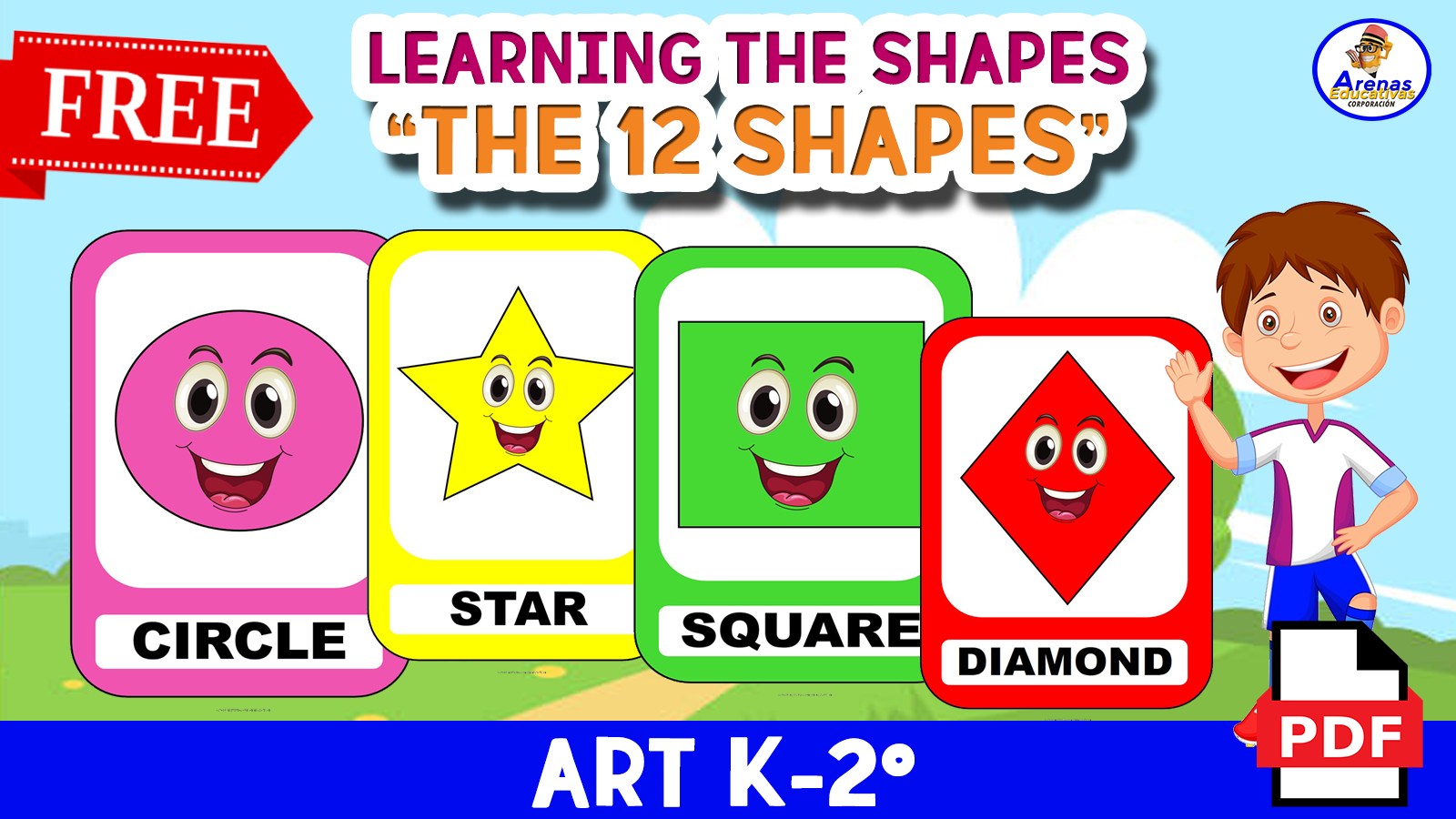
Reviewed, evaluated, edited, and creatively written by teaching professionals, this Get Ready For Preschool: Shapes and Sizes digital workbook implements current teaching strategies and aligns with grade-level standards to teach math concepts and applications. With the ability to print the pages over and over, your child can complete the activities again and again until the skills have been mastered. Includes: • Parent Tips: to provide valuable background information and other ideas for teaching • Hands-On Activities and Challenges: to make practicing new skills fun Teach your child about: • Recognizing Basic Shapes • Tracing and Drawing Basic Shapes • Understanding Longest and Shortest
Author Twin Sisters Digital Media
Tags Longest, Shortest, Shapes, Circle, Square
Life Science Reading Passage: Bioluminescence (Fillable PDF)
Science, ELA, Reading, Reading Comprehension, Strategies, Resources for Teachers, Life Sciences, Animals, Grade 6, 7, 8, 9, Writing Prompts, Worksheets & Printables, Centers, Activities, Teacher Tools, Assessments, Quizzes and Tests, Quizzes, Tests
Life Science Reading Comprehension Passage and Questions: Bioluminescence (Fillable PDF) This very engaging life science reading passage about Bioluminescence: how living things produce light through chemical reactions . It explains how glowing organisms use light for survival , including communication, defense, camouflage, attracting prey, and escaping predators. Examples include glowing plankton, anglerfish, squid, jellyfish, fireflies, glow-worms, fungi, microbes, and marine bacteria . It also explains the science behind firefly light, especially luciferin, oxygen, and luciferase , and shows how scientists use bioluminescence in labs and possible technology. This passage is designed to bridge the gap between science and literacy through strengthening reading comprehension and sparking scientific curiosity in middle school students. The passage blends English Language Arts skills with accurate science content that supports NGSS classroom practice. Ideal for interdisciplinary learning in ELA and Science. Suitable for Grade 9 review, too! These worksheets are designed as fillable PDFs , which means students can type their answers directly into the document on any computer or tablet . Each page includes highlighted text fields that show them exactly where to type! Student Tasks for The Passage: 5 multiple-choice questions targeting main idea, key details, inference, vocabulary in context, and use of evidence 5 vocabulary matching items with clear, student-friendly definitions 5 text-based questions that require citing specific lines or facts 1 summary prompt that asks students to condense central ideas accurately Full answer key for every section Available Formats for this Resource PDF Word Docs Google Docs FULL CATALOG OF DOWNLOADING LINKS HERE Product Details Length: 5 pages total Grades: 6–8, also suitable for Grade 9 review Use cases: close reading, stations, homework, intervention, test prep, and sub plans Standards support: reinforces informational-text skills and supports NGSS-style sense making through observation, modeling, and clear use of claim, evidence, and reasoning Why Teachers Choose This Set Authentic science content paired with rigorous literacy practice Consistent task structure across all passages for easier planning and smoother student routines Clear, age-appropriate writing that builds confidence without oversimplifying Other Science Reading Collections you May find in the store: 1. Astronomy & Space Science 2. Volcanoes, Rocks, & Mountains 3. Rock Cycle, Soil, & Sinkholes 4. Mars, Glaciers, & Antarctica 5. Water Cycle, Acid Rain, & Wastewater 6. Insects, Animals, & Ecosystems 7. Bioluminescence & Insects 8. Animal Skin, Cats, & T. Rex 9. Human Body and Senses 10. Health & Applied Bioscience 11. Waves, Light, & Imaging 12. Electricity & Energy 13. Motion & Materials 14. Chemistry and Materials Science Use this set to reinforce ELA skills in science, to add literacy to your lessons, and to support independent work. The passages strengthen main idea, evidence use, vocabulary in context, inference, cause and effect, and summary writing. With ready-to-use assessments and complete answer keys, you can provide focused practice that is simple to run and fast to review.
Author Middle & High School - CORED Education
Rating
Tags Middle School, Reading Comprehension, Reading Strategies, ELA, Centers, Reading Passage, Assessments, Vocabulary, Life Science, Bioluminescence
3rd Grade Science Diagnostic Assessment & Review System
Science, Grade 3, Assessments, Teacher Tools, Worksheets & Printables, Lesson Plans
Start the year with a clear picture of what your students know using this 3rd grade beginning of year science assessment and targeted review system. With a 47-question science diagnostic , teacher scoring and analysis tools, instructional grouping support, 12 targeted follow-up practice pages , and complete explained answer keys, this resource helps you move from assessment results to focused instruction without piecing together separate materials. Designed as a complete Assess → Analyze → Group → Review → Reteach system, this Grade 3 science resource checks readiness across Life Science, Earth Science, Physical Science, and Scientific Practices using visual, mixed-format questions instead of a plain test-only format. What’s Included This 3rd grade science assessment and review system includes: ✅ 47-question beginning-of-year science diagnostic ✅ 107 total assessment points ✅ 4 major science strands ✅ Life Science assessment questions ✅ Earth Science assessment questions ✅ Physical Science assessment questions ✅ Scientific Practices assessment questions ✅ Multiple-choice questions ✅ Short-answer questions ✅ Labeling activities ✅ Matching questions ✅ Data tables ✅ Graph reading ✅ Diagram interpretation ✅ Scientific scenarios ✅ Vocabulary-in-context questions ✅ Claim-Evidence-Reasoning (CER) tasks ✅ Answer recording sheet ✅ Quick-reference answer key ✅ Skill-by-skill scoring chart ✅ Strand analysis tool ✅ Secure, Developing, and Needs Support performance bands ✅ Individual Student Performance Profile ✅ Whole-class data tracker ✅ Suggested instructional groups ✅ Group planning sheet ✅ 12 targeted follow-up science practice pages ✅ “Remember” reteaching box on every follow-up page ✅ “Apply It” challenge on every follow-up page ✅ Fresh practice that does not repeat assessment questions ✅ Complete answer keys ✅ Suggested short-answer responses ✅ Worked visual and diagram answers ✅ Sample CER responses ✅ Short “why” explanations for assessment items ✅ CER scoring rubric Part 1 includes 47 mixed-format questions worth 107 total points across Life Science, Earth Science, Physical Science, and Scientific Practices. The Teacher Guide suggests using two 30–40 minute sessions or one longer block, and items may be read aloud because the goal is to assess science understanding rather than reading ability. Part 2 turns student responses into actionable data with answer recording tools, a quick key, skill-by-skill scoring, strand analysis, performance bands, student profiles, a class tracker, and suggested instructional groups. Part 3 includes 12 ready-to-assign targeted review pages , each with fresh practice, a short Remember reteach box, and an Apply It challenge. Part 4 provides complete answers for all 47 questions, explanations, suggested open-response answers, worked diagrams, sample CER responses, and a CER scoring rubric. How It Works in the Classroom Use this 3rd grade beginning of year science assessment during the first weeks of school to identify what students remember from earlier science learning and where instruction should begin. The resource follows a practical five-step system: 🔎 Assess — Students complete the 47-item mixed-format science review 📊 Analyze — Score by skill and strand to identify patterns 👥 Group — Place students into instructional groups based on shared needs 📝 Review — Assign targeted follow-up practice pages 🎯 Reteach — Use complete answer keys, explanations, and sample CER responses to support next steps This workflow is built directly into the four-part resource, creating a connected system from initial diagnostic assessment through targeted follow-up. Use this resource for: ⭐ Beginning-of-year science assessment ⭐ 3rd grade science diagnostic ⭐ Back-to-school science review ⭐ Science pre-assessment ⭐ Science readiness check ⭐ Formative assessment ⭐ Small-group planning ⭐ Science intervention ⭐ Targeted reteaching ⭐ Data-driven instruction ⭐ Skill-based grouping ⭐ Science centers ⭐ Independent follow-up practice ⭐ CER practice ⭐ Graph and data interpretation review The Scoring at a Glance chart on page 2 of Part 2 breaks the assessment into four strand totals: Life Science /35, Earth Science /26, Physical Science /22, and Scientific Practices /24 , for 107 total points . It also defines three performance bands: Secure (80%–100%) , Developing (50%–79%) , and Needs Support (below 50%) . The Class Data Tracker on page 15 of Part 2 gives teachers a whole-class view of Life, Earth, Physical, and Scientific Practices percentages, while the Suggested Instructional Groups chart on page 16 helps sort students by their lowest strand and connect groups to matching Part 3 practice. Standards & Learning Goals This third grade science diagnostic assessment reviews foundational science concepts and practices across four major strands: 🌱 Life Science — living and nonliving things, plant structures, plant needs, plant responses, animal needs, habitats, life cycles, food chains, producers and consumers, and interpreting biological data 🌦️ Earth Science — weather tools, weather data, graph reading, patterns, seasons, Earth materials, natural and human-made materials, and weather-based scientific reasoning 🧲 Physical Science — states of matter, changes of state, pushes and pulls, forces and motion, friction, light, shadows, sound, and evidence-based reasoning 🔬 Scientific Practices — science tools, observation versus measurement, measuring length, interpreting data, graph reading, fair tests, recording data, designing investigations, and drawing conclusions from evidence Students work with science content through multiple formats, including tables, graphs, diagrams, scenarios, and CER tasks. The assessment includes plant labeling, butterfly life-cycle sequencing, food-chain interpretation, rainfall and temperature graphs, states-of-matter particle models, force and friction scenarios, shadow diagrams, ruler measurement, pictographs, fair-test design, and data-based conclusions. The skill-by-skill scoring chart in Part 2 helps pinpoint specific gaps rather than relying only on one total score. Teachers can identify needs such as plant structures, life cycles, food chains, weather data, seasons, matter, forces, friction, light and shadows, science tools, measuring, graph reading, fair tests, and data conclusions. Why Teachers Love It ✨ Move beyond a single test score. Results can be analyzed by science strand and individual skill, helping teachers see exactly where students are secure and where review is needed. ✨ Turn assessment data into an instructional plan. The scoring and analysis tools connect results to grouping and follow-up practice instead of leaving teachers with a stack of completed tests. ✨ Use mixed-format questions to see student thinking. Students respond through multiple choice, matching, labeling, data tables, graph reading, diagrams, short answers, scenarios, vocabulary in context, and CER tasks. ✨ Support data-driven small groups. The suggested instructional groups organize students around shared needs in Life Science, Earth Science, Physical Science, or Scientific Practices. ✨ Differentiate with clear performance bands. Use Secure, Developing, and Needs Support ranges to guide enrichment, targeted practice, or foundational small-group reteaching. ✨ Assign only the review students need. The 12 targeted follow-up pages cover: Living vs. Nonliving Plant Parts & Needs Life Cycles Habitats Food Chains Weather & Seasons Earth Materials Properties of Matter Forces & Motion Light & Sound Science Tools & Measuring Science Data & Graphs The Practice Page Menu on page 2 of Part 3 directly matches student difficulties to specific follow-up pages, making targeted assignment faster. ✨ Reteach before students practice. Every targeted page includes a short Remember box that reviews the essential concept before students begin. ✨ Challenge students who are already secure. Every follow-up page includes an Apply It task that extends thinking beyond basic recall. ✨ Build Claim-Evidence-Reasoning skills. The diagnostic includes CER tasks connected to plant needs, weather, friction, and plant-growth data, while Part 4 includes sample CER responses and a scoring rubric. ✨ Make grading more manageable. Part 4 includes correct answers, suggested short-answer responses, completed visual items, explanations of why answers are correct, and guidance for partial credit. ✨ Support visual science learning. The assessment uses colorful layouts, diagrams, data tables, bar graphs, line graphs, particle models, food chains, rulers, and other visual formats to assess understanding in varied ways. ✨ Use student profiles for individualized planning. The Student Performance Profile on page 14 of Part 2 provides strand snapshots, strengths, focus areas, assigned practice pages, and group placement. ✨ Keep the instructional loop connected. Assessment, analysis, grouping, targeted review, reteaching, and answer support are designed as one coordinated system rather than separate activities. Start the year knowing what your students understand and what they need next with this 3rd grade beginning of year science assessment . Download this complete science diagnostic and review system to assess readiness, analyze results by strand and skill, create targeted instructional groups, assign focused follow-up practice, and support reteaching with complete explained answer keys. Perfect for teachers searching for a 3rd grade science diagnostic assessment , beginning-of-year science review, back-to-school science assessment, third grade science pre-assessment, Life Science review, Earth Science review, Physical Science review, Scientific Practices assessment, CER practice, science intervention, small-group science planning, data-driven instruction, or targeted science reteaching resource.
Author Bright Classroom Ideas Marketplace
Rating
Tags Back To School, Science, Assessment, Worksheet
Life Science Reading Passage: Muscular System (Fillable PDF)
Science, ELA, Reading, Reading Comprehension, Strategies, Resources for Teachers, Life Sciences, Biology, Human Body, Grade 6, 7, 8, 9, 10, Writing Prompts, Worksheets & Printables, Centers, Activities, Teacher Tools, Assessments, Quizzes and Tests, Quizzes, Tests
Life Science Reading Comprehension Passage and Questions: Muscular System (Fillable PDF) This very engaging science reading passage is about the muscular system and how different types of muscles help the body move and function . It explains how skeletal muscles move bones, how smooth muscles work automatically inside organs and blood vessels, and how cardiac muscle pumps blood through the body. Students also learn how muscles work in pairs, how the nervous system sends signals that control contraction, and why exercise, protein, and rest are important for muscle strength and recovery. This passage is designed to bridge the gap between science and literacy by strengthening reading comprehension while sparking scientific curiosity in middle school students. It blends English Language Arts skills with accurate science content, helping students build background knowledge, understand key concepts, use evidence from the text, and explain scientific ideas clearly. This resource supports science classroom practice while also reinforcing important literacy skills such as main idea, vocabulary, comprehension, and summarizing. Ideal for interdisciplinary learning in ELA and Science. Suitable for Grade 9 review, too! Student Tasks for The Passage: 10 multiple-choice questions targeting main idea, key details, science concepts, comparison, and real-world applications 10 True/False statements to check understanding and address common misconceptions 5 text-based short-answer questions that require students to explain important ideas from the passage 5 vocabulary matching items with clear, student-friendly definitions 1 summary prompt that asks students to condense the central ideas accurately Full answer key for every section This passage is designed as a fillable PDF , which means students can type their answers directly into the document on any computer or tablet . Each page includes highlighted text fields that show them exactly where to type! Available Formats for this Resource PDF Word Docs Google Docs FULL CATALOG OF DOWNLOADING LINKS HERE Product Details Length: 7 pages total Grades: 6–8, also suitable for Grade 9 review Use cases: close reading, stations, homework, intervention, test prep, and sub plans Standards support: Reinforces informational-text skills and supports NGSS-style sense-making by helping students read scientific explanations, connect evidence to key concepts, interpret real-world examples, and explain cause-and-effect relationships in science. Why Teachers Choose This Set Authentic science content paired with rigorous literacy practice Consistent task structure across all passages for easier planning and smoother student routines Clear, age-appropriate writing that builds confidence without oversimplifying Other Science Reading Collections and Topics You May Find in the Store: 1. Astronomy & Space Science 2. Volcanoes, Rocks, & Mountains 3. Rock Cycle, Soil, & Sinkholes 4. Mars, Glaciers, & Antarctica 5. Water Cycle, Acid Rain, & Wastewater 6. Insects, Animals, & Ecosystems 7. Bioluminescence & Insects 8. Animal Skin, Cats, & T. Rex 9. Human Body and Senses 10. Health & Applied Bioscience 11. Waves, Light, & Imaging 12. Electricity & Energy 13. Motion & Materials 14. Chemistry and Materials Science 15. Electromagnetism 16. Acids and Bases 17. Gas Laws 18. Biotechnology 19. Periodic Trends 20. Protists and Fungi 21. Microevolution 22. Blood 23. Chemical Bonding 24. Magnets 25. Muscles 26. Nuclear Chemistry 27. Electromagnetic Devices 28. Epigenetics 29. The Law of Conservation of Mass 30. Atomic Models 31. Isotopes and Ions 32. Light 33. Human-Environment Interaction 34. Theory of Evolution 35. Photosynthesis 36. Origins of Life and Early Earth 37. Gene Expression and Regulation 38. Thermochemistry 39. Allergies 40. Coevolution 41. Birth to Adulthood 42. Cells 43. Entropy and Free Energy 44. The Human Brain 45. Mixtures and Solutions 46. Invertebrates 47. Zoo Animals 48. Biochemistry 49. Animal Behavior 50. Population Ecology ...and many more engaging science reading passages that cover intriguing and important topics designed to spark curiosity and support student learning. Use this passage to reinforce ELA skills in science, to add literacy to your lessons, and to support independent work. The passages strengthen main idea, evidence use, vocabulary in context, inference, cause and effect, and summary writing. With ready-to-use assessments and complete answer keys, you can provide focused practice that is simple to run and fast to review.
Author Middle & High School - CORED Education
Rating
Tags Middle School, Reading Comprehension, Reading Strategies, ELA, Centers, Reading Passage, Assessments, Vocabulary, Muscular System, Life Science
Life Cycle of a Housefly Worksheet - Insect Science Unit Study
Montessori, Life Sciences, Science, Biology, Insects, Kindergarten, Preschool, Grade 1, 2, 3, Posters, Classroom Decor, Flashcards, Worksheets & Printables, Parts of and Anatomy of, Coloring Pages, Worksheets
Let’s take a closer look at one of the most common insects around us! This Life Cycle of a Housefly Worksheet helps students explore how a tiny fly grows and changes through its life. Perfect for science lessons insect studies and hands on activities this resource makes learning fun and easy for young learners What is Inside the Housefly Life Cycle Worksheet Housefly Overview A simple introduction to what houseflies are where they live and why they matter in nature Life Cycle Diagram A clear life cycle chart showing each stage of the housefly’s life egg larva pupa and adult Cut and Paste Activity A fun way for students to arrange the life cycle stages in the correct order Flashcards Visual tools to help kids remember each step of the fly’s life Bonus Coloring Page : You will get a housefly coloring page as bonus! Why This Worksheet is Great for Kids Easy to follow and made for young learners Supports science skills like sequencing and observation Perfect for classrooms homeschool or insect themed units What Will You Learn The four main stages of the housefly life cycle How a housefly changes at each stage Fun facts about flies and their role in the environment This simple and engaging worksheet makes science fun and helps kids better understand the world of insects Let’s learn all about the life of a housefly together
Author Perfect_Printables
Rating
Tags Housefly , Life Cycle, Worksheet, Insect Science Unit, Homeschool, Biology For Kids, Fly Activities, STEM Insect Study, Nature Study, Montessori
Word Families - Long Vowels: What's Different
ELA, Language Development, Phonics, Common Core, Preschool, Grade 1, Worksheets & Printables, Worksheets
Word Families - Long Vowels: What's Different An invaluable teaching resource designed specifically for Kindergarten and Grade 1 educators. This PDF-based tool optimally supports Language Arts and Phonics studies, facilitating vocabulary enrichment, increased sight word recognition, and improved comprehension among young learners. Key features: Use of real-world images: Assisting students in recognizing the correct pronunciation of long vowel phonograms within word families. Inclusion of a variety of activities: Comprises reproducible worksheets featuring rhyming exercises, writing tasks (including poetry), cloze sentence applications, riddle-solving initiatives, and chunking practices. Dolch high frequency words integration: Encouraging early identification to enhance the reading ability as early as possible. Aid in seamless language perception: : Enables perception of phrases as coherent language segments instead of just strings of individual letters or sounds - a key milestone on the literacy journey separately. The material comes already formatted in an easily print-ready 26 page PDF. It satisfies common core state standards to provide reliable instructional coverage. The components are designed with Bloom's taxonomy mind-set ensuring age appropriate intellectual rigor throughout the material. Thus it benefits teachers and students alike while providing ease-of-use at its finest .
Author Classroom Complete Press
Tags Word Families, Long Vowels, Riming Poem, Phonics, Song Composition