


13th Documentary Worksheet

- Grades
- Grades 9–12, High School
- Pages
- 4
- File type
- Answer key
- Included


- Subject
- Social Studies, History, History: USA
- Topic
- 13th documentary, Black History
- Resource types
- Worksheets & Printables, Worksheets
- Answer key
- Included
About this resource
What's inside this resource
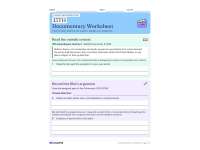
Students analyze an actual argument in Ava DuVernay's 2016 documentary 13TH by tracking one claim, recording evidence from the film and judging how well that evidence supports it. Page 1 opens with the text of Section 1 of the 13th Amendment (ratified December 6, 1865) from the National Archives, clearly labeled as outside context, and asks students to restate the ban and its exception in their own words.
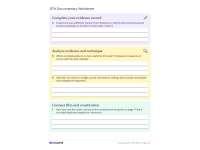
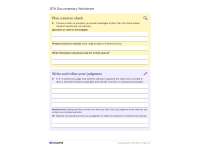
Ten tasks follow across three student pages. Students name the selection they viewed, state one claim the film makes about race, criminalization or imprisonment, and record two evidence moments with the speaker or visual, a time or scene locator, a paraphrase and a link to the claim. They then compare which evidence is more useful, explain how one choice in images, sound, interviews or editing shapes the argument, and connect a film claim to the amendment's exception. The last page of student work plans a primary-source check and asks for a 3–4 sentence judgment, followed by a one-sentence revision.
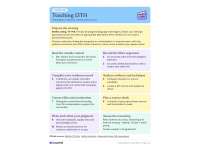
A teacher guide on page 4 covers viewing preparation for this TV-MA title, response criteria for every task and a 6-point scoring scale for evidence accuracy, reasoning and limits. Because answers depend on the part of the film you assign, the guide describes what a strong response includes rather than listing fixed scene answers.
- High school and adult learners: history, government or media literacy classes
- Four pages: three student pages and a one-page teacher guide with sources
- Print choices: one color file and one black and white file of all four pages
Related resources
More resources teachers may find useful
24 related resources were found using this product's title, contributor, categories and tags.



In the classroom
Teaching tips & learning objectives

Learning objectives
Paraphrase the ban and the exception in Section 1 of the 13th Amendment.
Identify a specific claim the documentary makes about race, criminalization or imprisonment.
Record attributed, locatable evidence from the film and explain how it supports the claim.

Teaching tips
Preview the assigned language and imagery before class; the guide notes the film's TV-MA rating and asks you to follow your setting's approval process.
Choose a selection that links the exception to criminalization or imprisonment and contains two evidence moments and a clear film choice, as the guide recommends.
Pause for notes during viewing; the guide allows scene descriptions in place of timestamps.

Skills covered
Close reading of a primary source: students restate the 13th Amendment's ban and its punishment-after-conviction exception.
Evidence tracking: each evidence record names a speaker or visual, gives a time or scene locator and paraphrases what was shown.
Evaluating sources: students decide which of their two evidence moments better supports the film's claim and explain why.
Good to know
Questions teachers ask about this resource
Does the teacher guide include answers to the film questions?
It gives a model meaning for the 13th Amendment task and clear criteria for every other task. Film answers depend on the selection you assign, so the guide describes what an accurate, well-supported response includes.
Do students need to watch the whole film?
No. Students record the selection they viewed at the top of the claim section, and the guide suggests what a good excerpt should contain.
What age group is it for?
Older high school and adult learners. The film is rated TV-MA, and the guide asks teachers to preview it and follow their setting's approval process.
How is the work scored?
The guide rates evidence accuracy, reasoning and limits from 0 to 2 each, for a total of 6 points.

No reviews yet
Downloaded this resource? Tell other teachers how it went.
Resource details
Concepts & topics
Core concepts
 Core concepts
13th Amendment
documentary analysis
evidence evaluation
mass incarceration
media literacy
primary sources
 Topics
Explore more
Categories this resource belongs to
Explore related searches
More to explore
You may also like


