AP Psychology FRQs and Rubrics
- Grades
- Grades 11–12
- Pages
- 32
- File type
- Multiple File Types
- Answer key
- Included


- Subject
- Social Studies, Psychology
- Topic
- AP Psychology, Free response
- Resource types
- Worksheets, Teacher Tools, Rubrics
- Answer key
- Included
Product description
From the author
This resource is a set of AP Psychology FRQs and Rubrics.
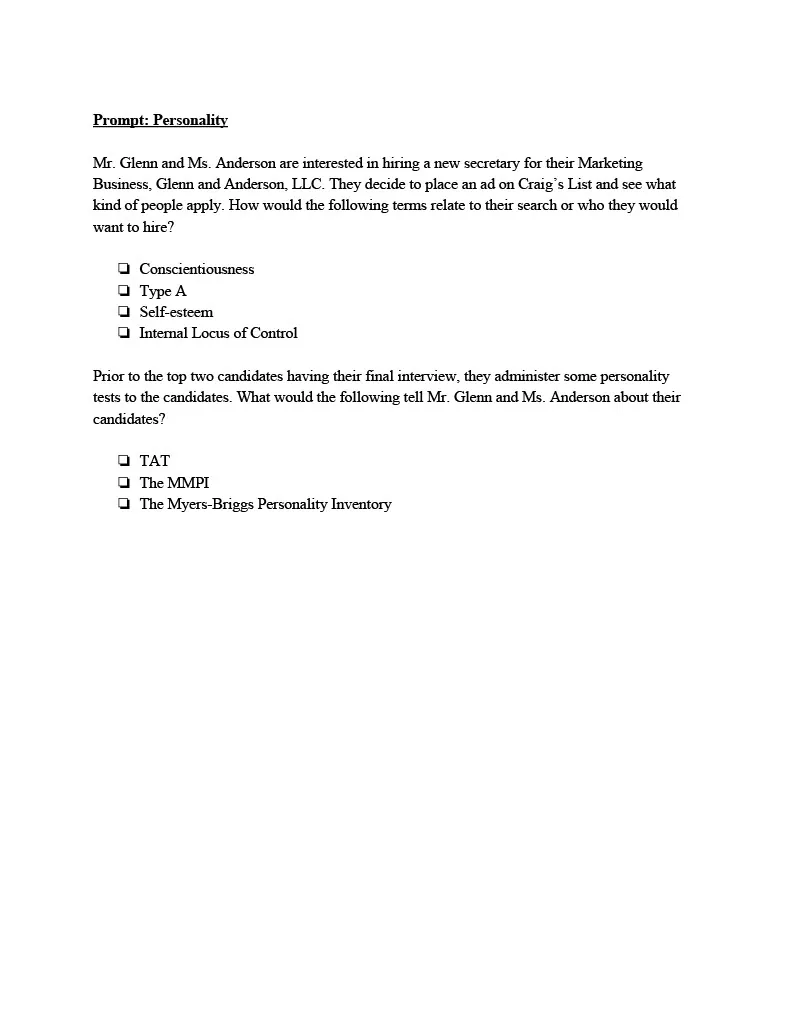
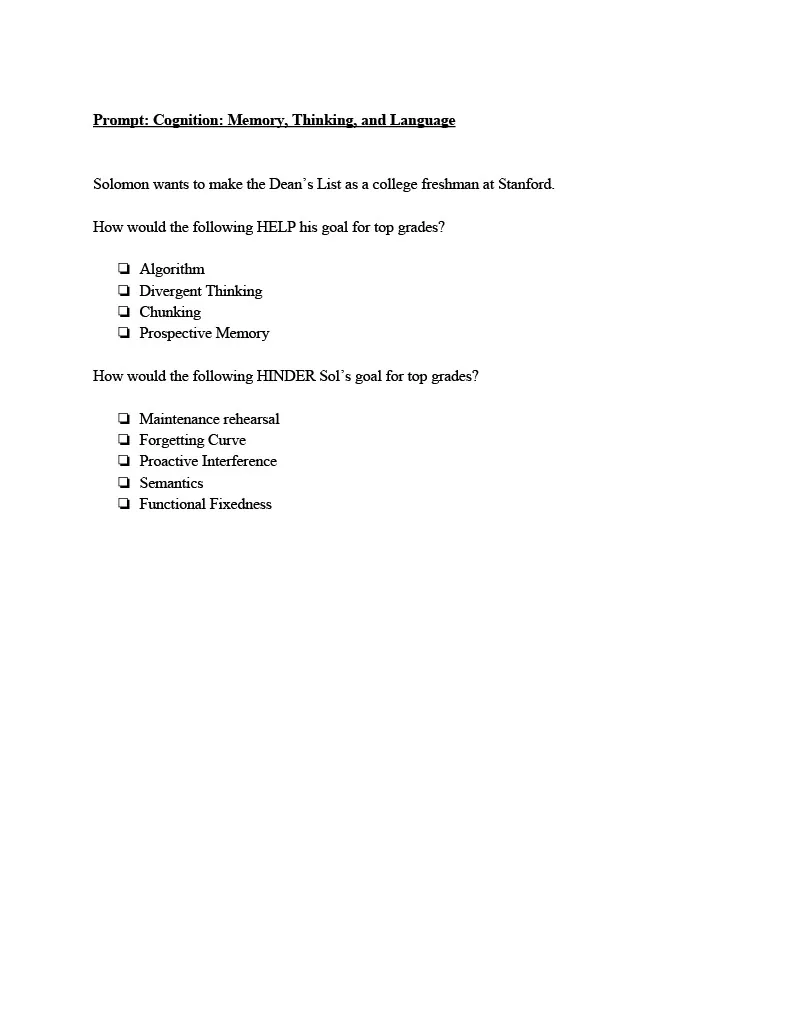
Students will analyze topics such as sensation and perception, history and careers, states of consciousness and so much more.
There are FRQs for each unit and a rubric is included for each.
Related resources
More resources teachers may find useful
24 related resources were found using this product's title, contributor, categories and tags.

In the classroom
Teaching tips & learning objectives

Learning objectives
Apply psychological terms to a specific scenario rather than defining them in isolation
Structure a free response to the order of the prompt, spacing ideas out and avoiding an essay format
Write to a scoring rubric under the author’s suggested 25-minute classroom time limit

Teaching tips
Use the author’s 25-minute classroom routine for selected prompts, adjusting it to your lesson.
Choose a prompt that matches the psychology topic being studied; the research-methods scenario uses AP Human Geography classes.
Teach the S.O.D.A.S. writing routine before the first response and have students check that they answered each part of the prompt.

Skills covered
Applying terms to a scenario — prompts ask students to apply concepts to situations or explain relationships between terms, and the standing rule is that a definition without an application does not score.
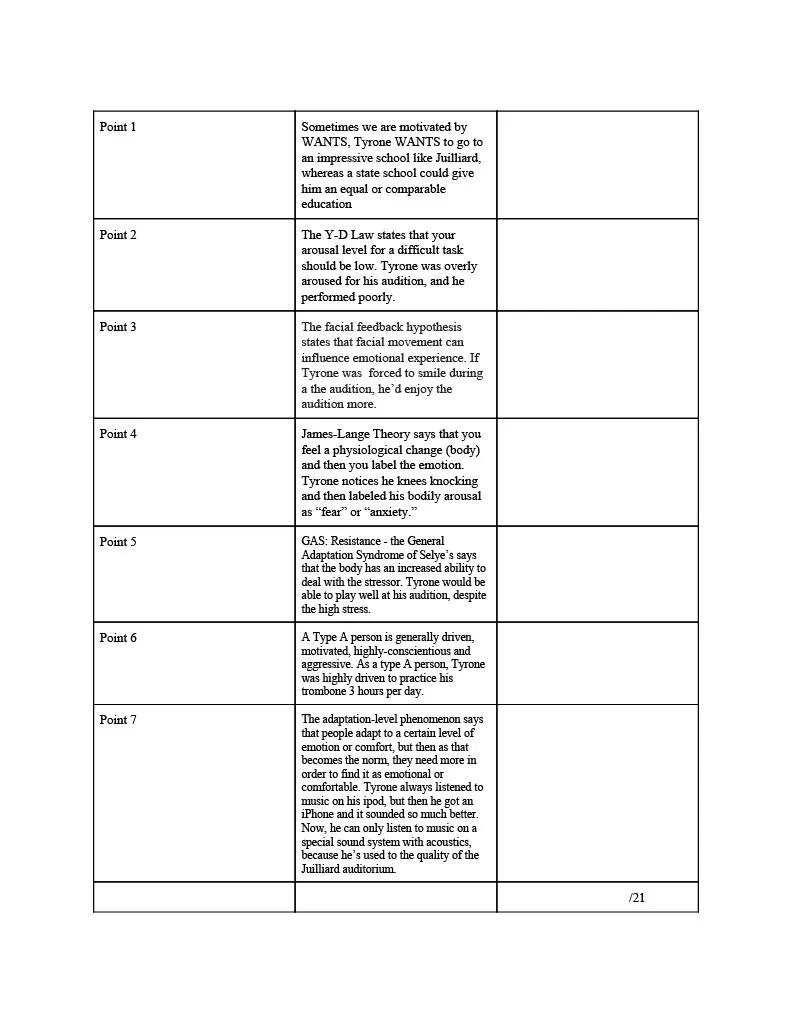
Writing to a rubric — students see the point structure they are marked against, including a model response for each point, and can check their own answer against it.
Timed writing — students can use the packet’s suggested 25-minute classroom routine.
Good to know
Questions teachers ask about this resource
How can students use the rubrics to improve a response?
Compare each required concept with the supplied model response, then identify where an answer needs a clearer application to the scenario. The rubric provides a place to mark each scoring point.
Is this a current official AP exam simulation?
The packet supplies teacher-created topic practice and a suggested classroom routine. It does not establish current exam-format alignment.

No reviews yet
Downloaded this resource? Tell other teachers how it went.
Resource details
Concepts & topics
Core concepts
 Core concepts
Free-response writing
Rubrics and scoring
AP Psychology units
Exam preparation
 Topics
Explore more
Categories this resource belongs to
Explore related searches
More to explore
You may also like