Big Feelings – Social Media, Online Identity & Digital Wellbeing


P.E. & Health, Health, Life Skills, Special Resources, Social Emotional Learning (SEL), Social Skills, Special Education Needs (SEN)
Presentations, Teacher Tools, Assessments, Quizzes and Tests, Rubrics, Workbooks, Worksheets & Printables, Worksheets


About This Product
Big Feelings – Social Media, Online Identity & Digital Wellbeing | Complete 4-Lesson Social Emotional Learning (SEL) Resource Pack
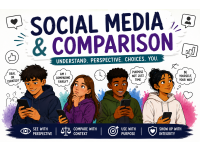
Help students navigate social media, understand online identity, recognise the effects of comparison and develop healthier digital habits with this complete four-lesson Social Emotional Learning (SEL) and digital wellbeing resource pack.
Part of the Big Feelings curriculum, Social Media & Comparison explores how online environments influence the way young people see themselves, interact with others and make everyday decisions.
Social media plays an important role in many students' lives, but understanding what they see online, how it affects their emotions and how to make healthy digital choices can be challenging.
Rather than presenting social media as simply good or bad, this unit encourages students to think critically, recognise the difference between online appearances and reality, and develop a balanced relationship with technology.
Through engaging classroom discussions, realistic scenarios, interactive activities and personal reflection, students explore online identity, social comparison, digital habits, authenticity and the importance of making intentional choices.
Designed for middle school, secondary school and other age-appropriate educational settings, this flexible resource supports digital citizenship, emotional literacy, personal development and mental wellbeing.
What's Included?
4 complete PowerPoint lessons (80 slides) featuring structured learning activities, discussion questions, scenarios and reflection opportunities.
Comprehensive student workbook with activities and exercises supporting all four lessons.
Teacher guidance and assessment materials outlining learning outcomes, teaching approaches and assessment opportunities.
Interactive decision-making activities encouraging students to explore online behaviour, social comparison and digital choices.
Realistic scenarios and fictional characters helping students examine online experiences without needing to disclose personal information.
Reflection activities and Big Feelings Challenges supporting critical thinking and practical application.
The Four Lessons
Lesson 1 – Is Social Media Showing Us Real Life?
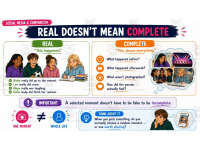
Students explore how social media presents selected moments rather than a complete picture of someone's life.
They investigate online identity, curation, authenticity and perception, considering how even genuine photographs and posts can create misleading impressions.
Activities encourage students to question assumptions, recognise missing context and understand why online content does not always tell the whole story.
Key message: What we see online may be real, but that doesn't mean it shows the complete picture.
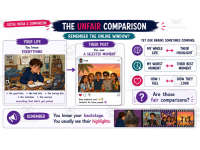
Lesson 2 – Is It Fair to Compare Your Life with Someone Else Online?
Students investigate how social comparison can influence confidence, emotions and self-perception.
They explore the difference between helpful inspiration and harmful comparison, recognising how selected online content can create unrealistic expectations.
Through realistic scenarios and discussion, students consider why comparisons are not always fair and how perspective and context can change the way we interpret online experiences.
Key message: Comparing your whole life with someone else's selected highlights rarely gives you the full picture.
Lesson 3 – Is Your Phone Working for You, or You for Your Phone?
Students explore digital wellbeing and how technology influences attention, mood, sleep and everyday choices.
They investigate the difference between intentional and automatic digital behaviour, considering how habits, notifications and fear of missing out (FOMO) can influence technology use.
Rather than focusing only on screen time, students learn to consider the purpose, context and effects of their digital activities.
Activities encourage students to develop realistic strategies for protecting their attention and making healthier digital choices.
Key message: Healthy technology use is not just about how long you spend online, but how and why you use it.
Lesson 4 – Being Yourself Online
Students investigate authenticity, privacy, social expectations and the pressure to fit in online.
They explore how people choose what to share, why online approval can influence behaviour and how personal values can guide digital decisions.
Students learn that being authentic does not mean sharing everything and that maintaining privacy is an important part of managing an online identity.
Through scenarios and reflection, students consider how to make choices that reflect their values while protecting their wellbeing.
Key message: Being authentic online means making choices that reflect your values, not sharing every part of your life.
Key Learning Outcomes
By completing this unit, students will develop their ability to:
Understand the difference between online identity and everyday reality.
Recognise how curated content influences perception.
Understand why online information may be genuine but incomplete.
Identify helpful and harmful forms of social comparison.
Recognise how online experiences can influence confidence and self-esteem.
Explore the relationship between digital habits, attention, mood and sleep.
Distinguish between intentional and automatic technology use.
Understand the influence of notifications, habits and FOMO.
Develop practical strategies for healthier digital choices.
Recognise the difference between authenticity, privacy and pretending.
Understand how online approval and social pressure can influence behaviour.
Reflect on personal values and digital decision-making.
Develop critical thinking, emotional awareness and digital citizenship skills.
Ideal For
Social Emotional Learning (SEL)
Digital Citizenship Education
PSHE and personal development education
Social media awareness lessons
Digital wellbeing and healthy screen habits
Online identity and internet safety education
Mental health and student wellbeing
Self-esteem and social comparison activities
Character education
Homeroom and advisory periods
Life skills programmes
Pastoral and student support
Special education and additional learning needs
Small-group wellbeing interventions
Why Choose This Resource?
Relevant to students' everyday lives
The unit explores familiar digital experiences, including social media posts, online comparisons, notifications, digital habits and pressure to fit in.
Balanced and realistic
Rather than suggesting that social media is inherently harmful or that less screen time is always better, students are encouraged to consider purpose, context, effects and personal choices.
Engaging and interactive
Lessons feature fictional Big Feelings characters, realistic scenarios, decision-making activities, classroom discussions and personal reflection.
Develops essential life skills
Students learn to question online appearances, manage comparison, recognise digital habits, protect their attention and make choices aligned with their values.
Structured learning journey
The four lessons progress from understanding online identity to exploring comparison, digital wellbeing and authenticity.
Inclusive and sensitive
Students can explore challenging digital experiences through fictional scenarios without being required to reveal personal accounts, messages, screen-time information or private experiences.
Ready to teach
Save valuable preparation time with complete PowerPoint presentations, a supporting student workbook, teacher guidance and assessment opportunities.
Assessment and Student Development
Assessment opportunities are integrated throughout the unit through classroom discussions, decision-making activities, scenario analysis, workbook exercises, reflection tasks and exit tickets.
The accompanying teacher guidance includes a developmental assessment framework focusing on students' understanding, reasoning and ability to apply learning.
Assessment encourages students to explain their thinking and consider different perspectives rather than simply memorising definitions or expressing a particular opinion about social media.
Part of the Big Feelings Curriculum
Social Media & Comparison is Unit 6 of the Big Feelings series, a collection of Social Emotional Learning resources designed to help students understand emotions, build confidence, develop resilience, strengthen relationships and make informed personal choices.
This unit builds upon earlier learning about identity, self-worth, emotional awareness and friendships while also functioning as a complete standalone teaching resource.
Help students look beyond the screen, think critically about online experiences and develop the confidence to make healthier, more intentional digital choices.
Created by MrSportandPE – Practical, engaging resources for real classrooms.
Resource Tags
0 Reviews
Check out these other great products