


Big Feelings – Complete 8-Lesson Social Emotional Learning


Special Resources, Life Skills, Social Emotional Learning (SEL), Social Skills, Special Education Needs (SEN), Speech Therapy
Presentations, Teacher Tools, Worksheets & Printables, Drawing Templates & Outlines, Flashcards, Task Cards, Workbooks, Worksheets


About This Product
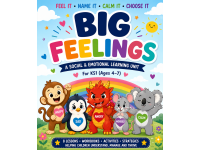
Big Feelings – Complete 8-Lesson Social Emotional Learning (SEL) Unit | Emotions, Self-Regulation, Friendship & Coping Skills
Introduction
Help young children understand their emotions, manage big feelings and develop positive relationships with this complete 8-lesson Social Emotional Learning (SEL) programme from MrSportandPE.
Big Feelings is an engaging, character-led teaching resource designed for children aged 4–7. Through colourful PowerPoint presentations, relatable characters, interactive activities and accompanying worksheets, children learn to recognise emotions, understand how feelings affect their bodies and develop practical strategies for managing challenging situations.
Rather than simply telling children to calm down or behave, this programme helps them understand what they are feeling, why they might feel that way and what they can do next.
The unit follows five memorable characters:
Happy Monkey – Helpful thoughts and optimism.
Sad Penguin – Sadness, loneliness and hope.
Angry Dragon – Anger and calming strategies.
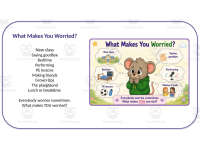
Nervous Mouse – Worry, bravery and asking for help.
Calm Koala – Mindfulness, self-regulation and kindness.
These recurring characters create a familiar and supportive environment for exploring emotions, friendships, behaviour and personal wellbeing.
Learning Objectives
By the end of the unit, children will be able to:
Recognise and name common emotions.
Identify feelings through facial expressions and body language.
Notice physical signs of strong emotions.
Understand that all feelings are normal and can change.
Practise simple calming and self-regulation strategies.
Recognise the connection between emotions and behaviour.
Make positive choices when experiencing difficult feelings.
Develop kindness, empathy and friendship skills.
Understand how to apologise and repair relationships.
Recognise worries and identify trusted adults who can help.
Develop confidence in asking for support.
Reflect on their emotional learning and personal progress.
Complete 8-Lesson Unit Overview
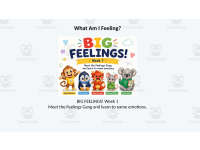
Lesson 1 – What Am I Feeling?
Children meet the Feelings Gang and begin recognising common emotions, including happiness, sadness, anger and worry.
Through interactive activities such as Emotion Corners, facial-expression challenges and class discussions, children learn to identify and describe different feelings.
Focus: Emotional awareness, recognising expressions and naming feelings.
Lesson 2 – What Happens Inside Me?
Children explore how emotions affect their bodies.
They learn to recognise physical clues such as a racing heart, tense muscles, butterflies in the stomach and changes in breathing.
Activities encourage children to notice where they experience different feelings and begin understanding how their bodies respond.
Focus: Body awareness, emotional signals and early self-regulation.
Lesson 3 – Everyone Gets Big Feelings
Children explore the idea that everyone experiences strong emotions.
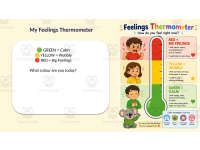
Using a simple Feelings Thermometer, they learn to recognise different emotional states:
Green – Calm.
Yellow – Wobbly.
Red – Big Feelings.
Children practise identifying when their emotions are becoming stronger and explore practical strategies for returning to a calmer state.
Focus: Recognising emotional intensity and developing calming strategies.
Lesson 4 – Feelings and Behaviour Choices
Children learn that all feelings are acceptable, but their actions and choices still matter.
Through Angry Dragon's experiences, they explore how strong emotions can influence behaviour and consider more helpful ways to respond.
Focus: Emotional regulation, responsibility and positive behaviour choices.
Lesson 5 – Friends Can Fix Things
Children explore common friendship difficulties and discover that disagreements do not have to mean the end of a friendship.
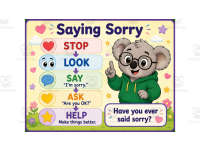
They practise using kind words, apologising, calming down and finding ways to repair relationships.
Focus: Friendship, empathy, communication and conflict resolution.
Lesson 6 – Nervous Mouse Learns to Be Brave
Children explore everyday worries, including starting a new class, making friends, performing, saying goodbye and trying unfamiliar activities.
Nervous Mouse helps children understand that being brave does not mean never feeling worried.
Children consider ways to manage worries and recognise when to ask trusted adults for help.
Focus: Worry, confidence, courage and help-seeking.
Lesson 7 – Sad Penguin Learns He Is Never Alone
Children explore sadness, loneliness and the importance of connection.
Through Sad Penguin's experiences, they learn that feeling sad is a normal part of life and that support, kindness and friendship can help.
Focus: Understanding sadness, recognising support and developing empathy.
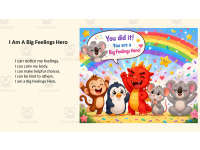
Lesson 8 – I Am a Big Feelings Hero
The final lesson celebrates everything children have learned throughout the programme.
Children revisit emotional awareness, calming strategies, positive behaviour choices, friendship skills and asking for help.
They reflect on their progress and recognise their growing ability to manage emotions.
Focus: Consolidation, confidence, reflection and celebrating progress.
What's Included?
1. Eight Interactive PowerPoint Presentations
The package includes 8 PowerPoint presentations containing 95 slides in total.
Each lesson uses accessible language, colourful visuals, recurring characters and practical discussion activities to make emotional learning engaging for young children.
The presentations can be displayed on classroom screens or interactive whiteboards.
2. Accompanying Student Workbook
A comprehensive editable Word document provides student activities and worksheets to support learning across the programme.
Activities encourage children to:
Identify and name emotions.
Recognise feelings in everyday situations.
Explore facial expressions and body clues.
Reflect on personal experiences.
Practise calming strategies.
Consider helpful behaviour choices.
Develop friendship and kindness skills.
Build confidence and emotional understanding.
Teachers can select and print the activities that best suit their class.
3. Emotions Character Resources
A separate Word document contains the Big Feelings character resources.
The characters provide visual support and familiar reference points throughout the lessons, helping children connect with the emotional learning themes.
4. Teacher Guidance and Assessment
A dedicated teacher guidance document supports the delivery of the complete programme.
It includes:
Unit overview and teaching approach.
Guidance for discussion-based learning.
Inclusive teaching considerations.
Support for sensitive emotional conversations.
Assessment and progress monitoring.
Strategies for adapting learning to different needs.
The programme uses a playful, inclusive and trauma-informed teaching approach.
Recommended Grades and Ages
Suitable for:
Preschool and kindergarten, with appropriate support.
Early elementary school.
Primary school.
Reception and early primary classes.
Approximately ages 4–7.
Social Emotional Learning lessons.
Personal development and wellbeing programmes.
Small-group emotional literacy interventions.
Additional learning support settings.
Activities can be adapted to suit children's developmental stages, communication abilities and individual learning needs.
Implementation and Teaching Format
The programme is designed to be delivered as an eight-lesson sequence, although individual lessons can also be used independently.
Teachers can introduce the lesson through the PowerPoint presentation, facilitate class discussions and interactive activities, and use the accompanying worksheets to reinforce learning.
The teaching approach encourages:
Whole-class discussion.
Partner and small-group activities.
Emotional vocabulary development.
Visual learning.
Role-play and practical scenarios.
Personal reflection.
Repetition and reinforcement of key strategies.
Children should never be required to disclose personal experiences or emotions in front of the class. Teachers can use fictional examples and character-based scenarios to create a supportive learning environment.
Differentiation and Inclusive Teaching
The programme can be adapted for children with different communication, emotional and learning needs.
Suggested approaches include:
Using visual emotion cards and character prompts.
Allowing children to point, draw or speak rather than write.
Modelling responses before independent activities.
Providing additional processing time.
Using small-group discussions.
Revisiting familiar characters and strategies.
Breaking activities into shorter sections.
Offering alternative ways to participate.
The emphasis is on developing emotional understanding and practical coping skills at each child's individual pace.
Assessment Opportunities
Assessment is designed to be supportive and development-focused rather than based on right or wrong emotional responses.
Teachers can observe whether children are increasingly able to:
Recognise and name emotions.
Identify body signals associated with feelings.
Suggest appropriate calming strategies.
Understand the relationship between feelings and actions.
Demonstrate kindness and empathy.
Identify trusted sources of support.
Reflect on their emotional learning.
The accompanying teacher guidance and assessment document supports ongoing observation and progress monitoring.
Curriculum and Educational Standards
This resource supports widely recognised Social Emotional Learning competencies, including:
Self-awareness.
Self-management.
Social awareness.
Relationship skills.
Responsible decision-making.
Emotional literacy.
Personal wellbeing.
Positive behaviour and communication.
The programme can be adapted to different national, state and school curricula, including early childhood education, elementary SEL, primary personal development and wellbeing programmes.
File Types and Contents
The downloadable ZIP package contains 12 files:
8 PowerPoint presentations (PPTX) – 95 slides covering the complete eight-lesson programme.
1 Student Workbook (DOCX) – Accompanying worksheets and learning activities.
1 Emotions Characters document (DOCX) – Visual character resources.
1 Teacher Guidance and Assessment document (DOCX) – Teaching advice and progress monitoring.
Total: 11 files.
The PowerPoint and Word formats allow teachers to adapt the resources to their classroom requirements.
Why Choose This Resource?
Young children often experience emotions that they do not yet have the vocabulary or strategies to understand.
Big Feelings helps bridge that gap through engaging characters, practical activities and accessible emotional learning.
By exploring feelings through familiar characters rather than relying entirely on personal disclosure, children can develop confidence in discussing emotions and recognising helpful responses.
The complete programme provides teachers with a structured approach to developing emotional literacy, self-regulation, kindness and positive relationships.
Big Feelings. Little Learners. Lifelong Skills.
Resource Tags
0 Reviews
Check out these other great products


