Chemistry Mole Conversion – 16-Problem Practice
- Grades
- Grades 8–11, Middle School, High School
- File type
- Microsoft Word


- Subject
- Science, Chemistry
- Topic
- chemistry, mole conversion practice
- Resource types
- Worksheets & Printables, Worksheets
About this resource
What's inside this resource
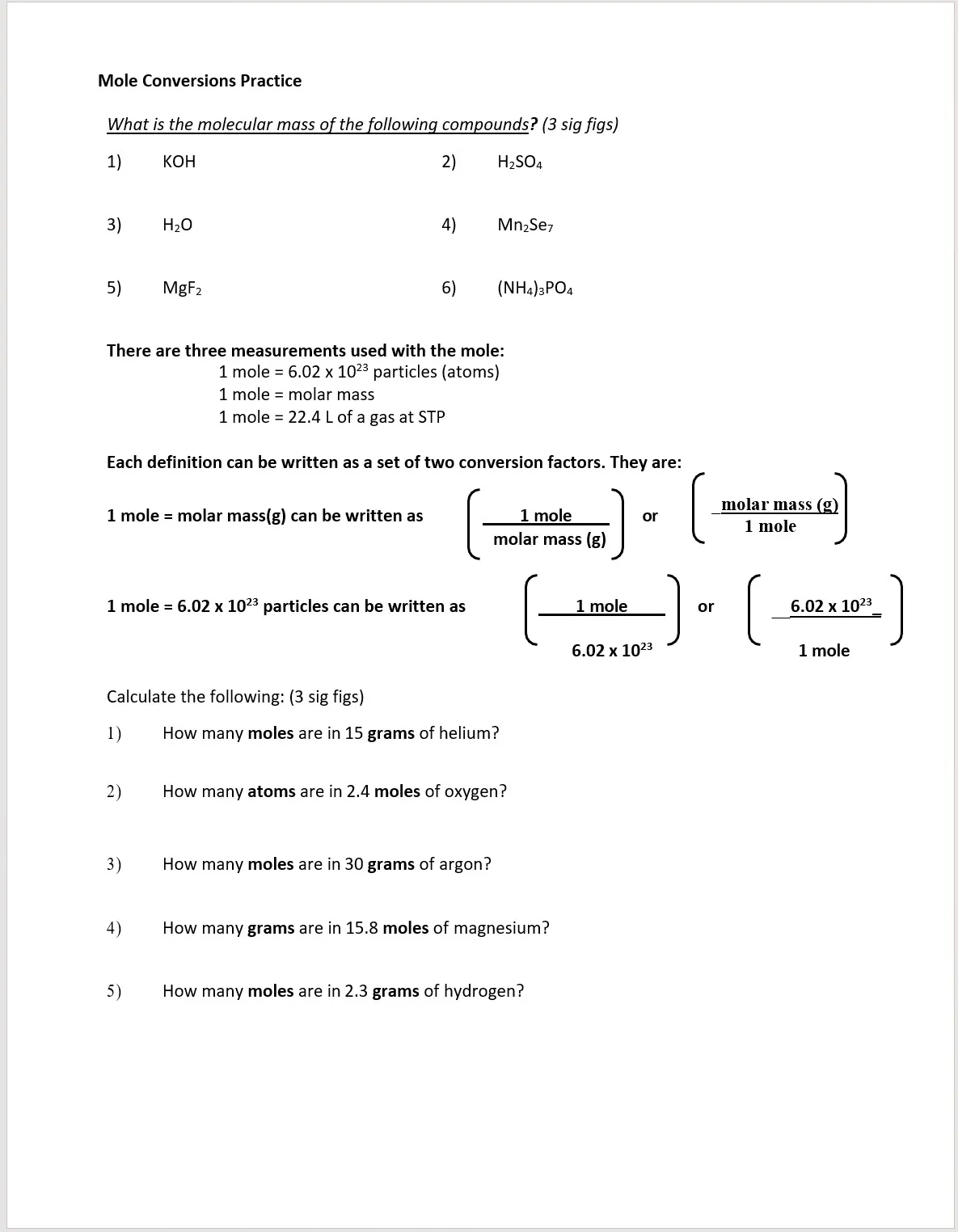
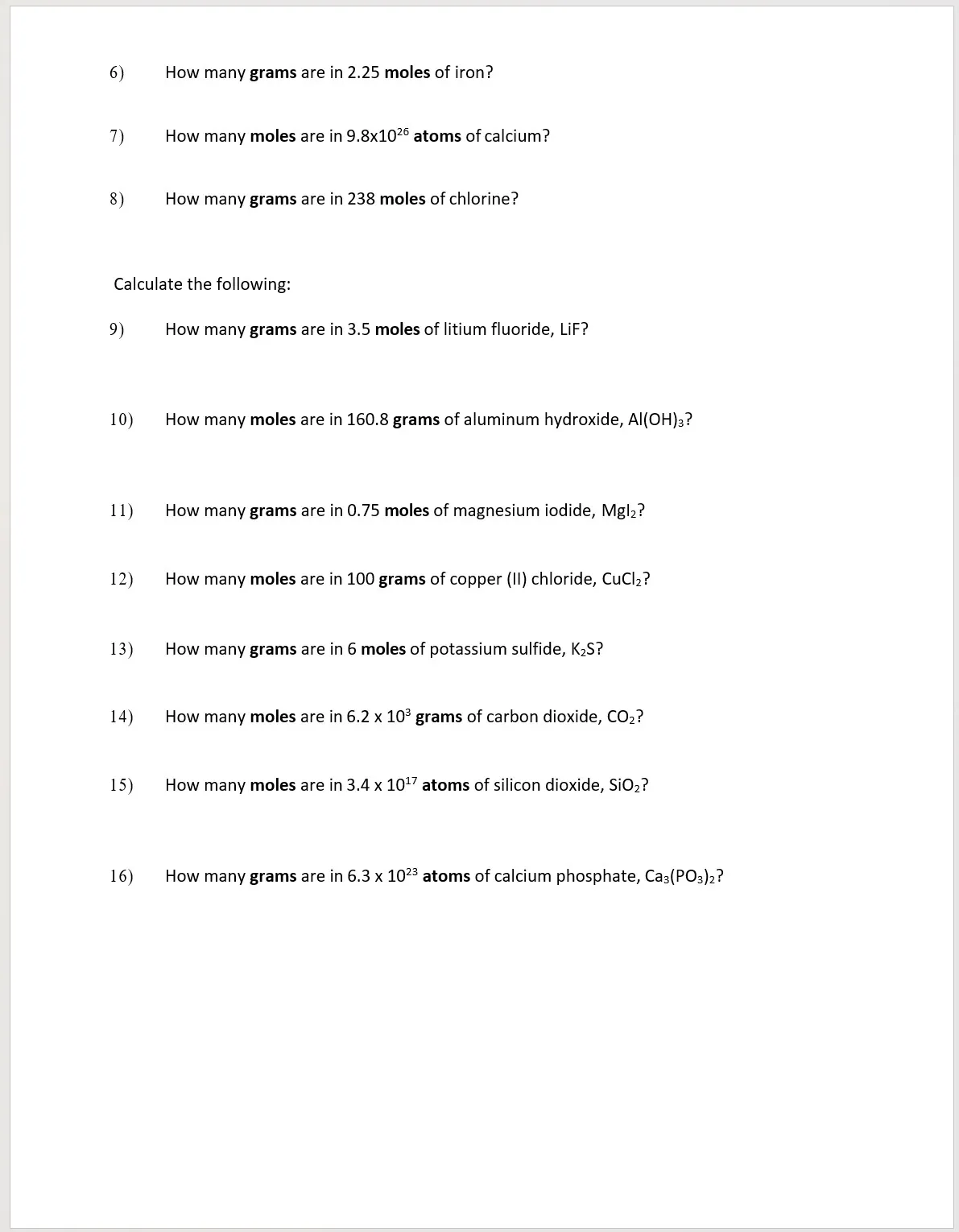
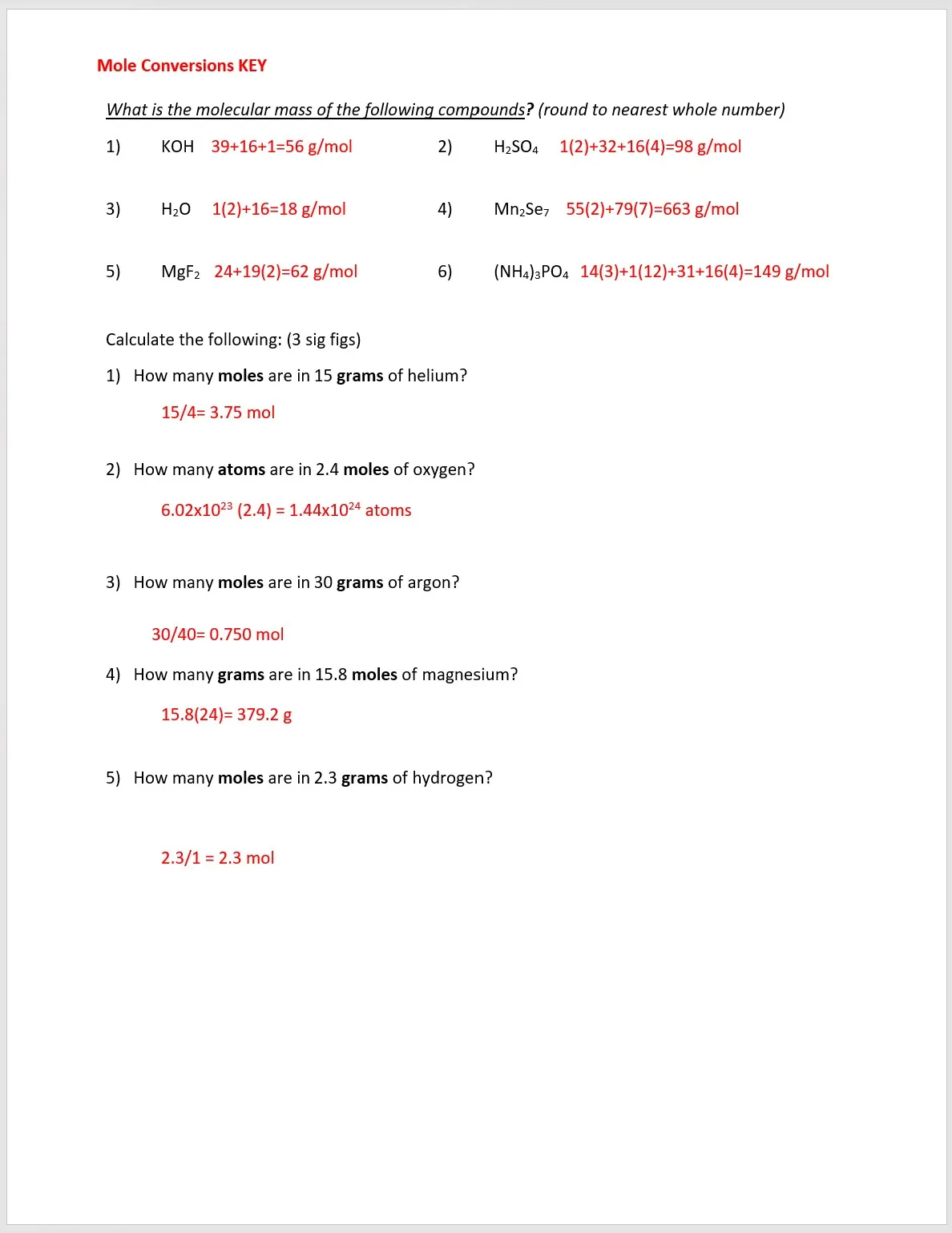
With this resource students will complete 16 practice problems doing conversion calculations between moles, atoms, and mass.
Answer key included and doc can be edited.
Related resources
More resources teachers may find useful
24 related resources were found using this product's title, contributor, categories and tags.


In the classroom
Teaching tips & learning objectives

Learning objectives
Student can calculate the molar mass of a compound from its chemical formula.
Student can convert between grams and moles using molar mass as a conversion factor.
Student can convert between moles and number of particles using Avogadro's number.

Teaching tips
Have students complete the six molar-mass calculations first, since those values are then reused as the conversion factor in the mole-to-gram problems that follow.
Model the two standard conversion-factor setups (1 mole = molar mass; 1 mole = 6.02x10^23 particles) shown at the top of the sheet before assigning the problems independently.
Use the worked answer key to spot-check whether students are showing dimensional-analysis setups, not just final numeric answers.

Skills covered
Molecular mass calculation — students sum atomic masses to find the molar mass of six compounds (e.g., KOH, H2SO4, Mn2Se7).
Mole-to-particle conversion — students use Avogadro's number (6.02x10^23) to convert between moles and atoms or molecules.
Mole-to-mass conversion — students convert between grams and moles using molar mass for substances such as magnesium, iron, and calcium phosphate.
Good to know
Questions teachers ask about this resource
Why does the worksheet start with molecular-mass calculations before the conversion problems?
Molar mass is one of the two conversion factors used throughout the mole problems, so working it out for six compounds first gives students the values they need before applying dimensional analysis to the grams-moles-particles conversion problems that follow.

No reviews yet
Downloaded this resource? Tell other teachers how it went.
Resource details
Concepts & topics
Core concepts
 Core concepts
mole concept
molar mass
Avogadro's number
stoichiometry
 Topics
Explore more
Categories this resource belongs to
Explore related searches
More to explore
You may also like