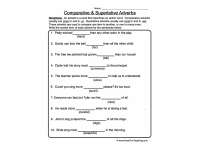
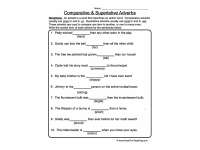
Comparative & Superlative Adverbs Worksheet


- Grades
- Grades 3–4, Elementary
- Pages
- 1
- File type
- Preparation
- Print ready


- Subject
- ELA, Grammar, Language Development
- Topic
- Comparative forms, Superlative forms
- Preparation
- Print ready
- Standards
- L.3.1
Product description
From the author
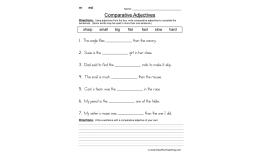
Students complete ten sentences with comparative or superlative forms using the supplied base words. The page includes a rule box and a mix of adjective and adverb contexts. Some prompts already supply more or most.
Read each sentence to identify what the comparison modifies before choosing the form. The single-page PDF does not include an answer key.
Related resources
More resources teachers may find useful
24 related resources were found using this product's title, contributor, categories and tags.

In the classroom
Teaching tips & learning objectives

Learning objectives
Use sentence context to distinguish comparison of two things from comparison within a group
Form comparative and superlative expressions using appropriate endings or more and most
Complete the missing form when more or most is already printed

Teaching tips
Identify which word the comparison modifies before choosing an adjective or adverb form.
Model how a word changes before combining it with more or most.
Discuss sentence context when choosing between a comparative and a superlative.

Skills covered
Sentence analysis — learners use comparison clues to decide how a missing expression relates two or more things.
Word formation — learners build a suitable comparison from a supplied base word.

No reviews yet
Downloaded this resource? Tell other teachers how it went.
Curriculum
Standards, concepts & topics
Standards
 Standards
- L.3.1
Core concepts
 Core concepts
Comparative and superlative forms
Adjectives and adverbs
Sentence context
 Topics
Explore more
Categories this resource belongs to
Explore related searches
More to explore
You may also like