Kindergarten Language Arts Practice Test – Skills

- Grades
- K
- Pages
- 9
- File type
- Preparation
- Print ready


- Subject
- ELA
- Topic
- Kindergarten ELA, Skills assessment
- Resource types
- Assessments, Worksheets
- Preparation
- Print ready
- Standards
- RF.K.1d
Product description
From the author
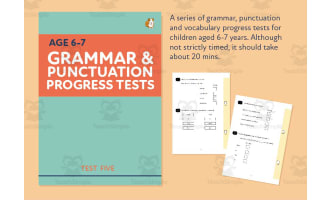
Easy, fun, at-home practice and preparation for standardized testing!
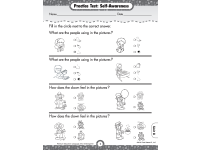
—Self-awareness & the senses
—Same or different?
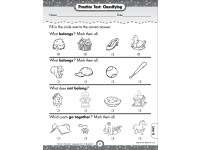
—Classifying objects & matching
—Tracing lines
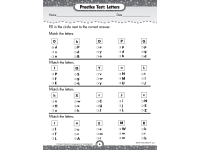
—Uppercase & lowercase letters
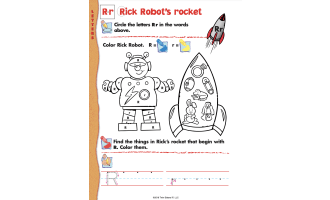
—Colors
—Beginning letter sounds
Related resources
More resources teachers may find useful
24 related resources were found using this product's title, contributor, categories and tags.


In the classroom
Teaching tips & learning objectives

Learning objectives
Discriminate between visually similar pictures by identifying which ones match or which one is different.
Classify objects into groups based on a shared category and identify the item that does not belong.
Match uppercase letters to their corresponding lowercase letters and match beginning sounds to letters.

Teaching tips
Administer each of the eight units as a separate short sitting rather than all nine pages at once, since each targets a distinct readiness skill.
Read question stems aloud as needed and demonstrate the response format before independent work.
Use the fine motor skills unit as a quick check of pencil control and color-coding recognition before moving into the letter-based units.

Skills covered
Visual discrimination — students identify matching or differing pictures across multiple items per question.
Letter-case matching — students match an uppercase letter to its correct lowercase counterpart among several choices.
Beginning-sound and rhyme recognition — students match a letter to its beginning sound and identify pictures that rhyme with a given word.
Good to know
Questions teachers ask about this resource
How can I use the pages with children who cannot read the directions yet?
Read the selected task’s directions aloud and demonstrate its response format. Many items use picture choices, while the fine-motor section requires tracing or coloring rather than selecting a circle.

No reviews yet
Downloaded this resource? Tell other teachers how it went.
Curriculum
Standards, concepts & topics
Standards
 Standards
- RF.K.1d
Core concepts
 Core concepts
Kindergarten readiness
Letter recognition
Classifying
Rhyming
 Topics
Explore related searches
More to explore
You may also like