Crash Course Psychology #31: Trauma and Addiction

- Grades
- Grades 9–12, High School
- Pages
- 2
- File type
- Zip


- Subject
- Social Studies, Psychology
- Topic
- ptsd, trauma
- Resource types
- Worksheets & Printables, Worksheets
About this resource
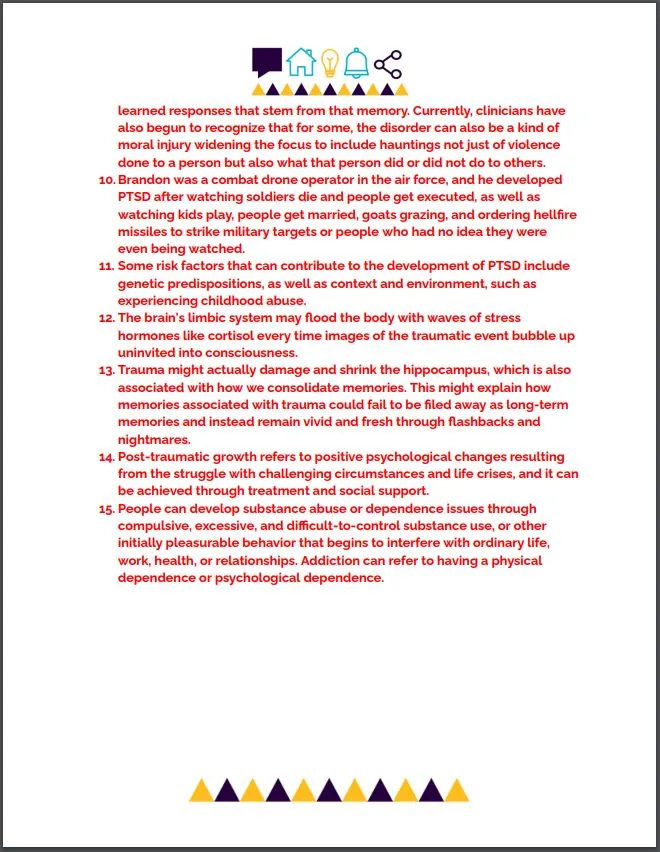
What's inside this resource
Related resources
More resources teachers may find useful
24 related resources were found using this product's title, contributor, categories and tags.


In the classroom
Teaching tips & learning objectives

Learning objectives
Identify the DSM-V symptom clusters used to diagnose post-traumatic stress disorder
Explain dissociation and its relationship to post-traumatic stress disorder
Describe how trauma affects brain structures such as the limbic system and hippocampus

Teaching tips
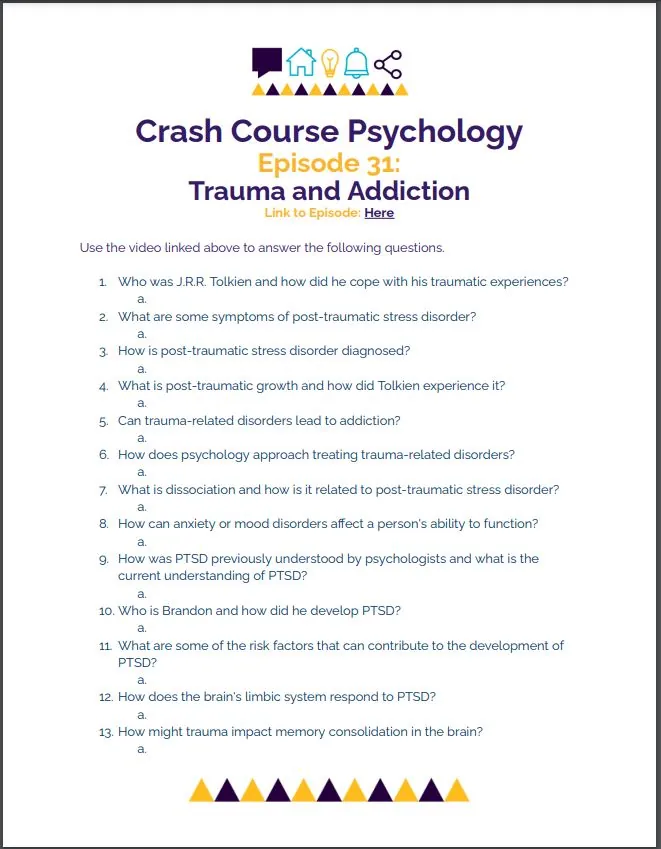
Play the video episode before assigning the worksheet, since every question directs students back to it for evidence ("Use the video linked above to answer the following questions")
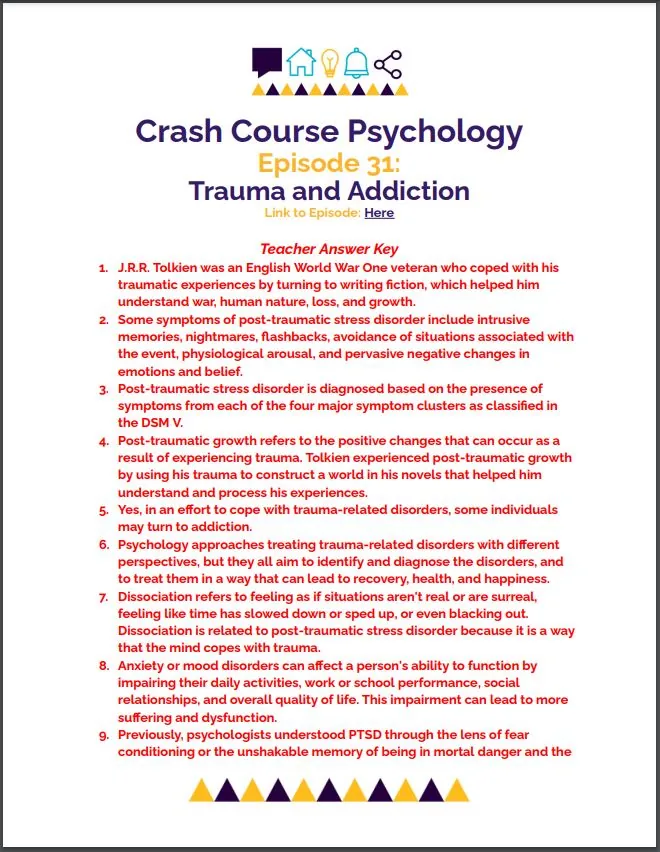
Use the teacher answer key to check for the specific facts and case details from the episode, such as the drone-operator case and Tolkien's WWI service, rather than general topic knowledge
Preview the episode's content before showing it to the class, since it covers PTSD, combat trauma, and addiction in some depth

Skills covered
Video-based note-taking and comprehension — students extract specific facts (diagnostic criteria, case details, neuroscience terms) from a psychology video and record them in writing.
Psychological-disorder vocabulary — students define and apply terms such as PTSD, dissociation, post-traumatic growth, and substance dependence.
Case-based application — students connect specific case examples in the video (Tolkien, the drone operator) to the general concepts of trauma and post-traumatic growth.
Good to know
Questions teachers ask about this resource
Does the packet include the video itself, or just questions about it?
Just the questions and a separate set of correct responses for the teacher — the worksheet links out to the Crash Course Psychology episode, and students watch that video to find their answers.

No reviews yet
Downloaded this resource? Tell other teachers how it went.
Resource details
Concepts & topics
Core concepts
 Core concepts
Post-traumatic stress disorder (PTSD)
Trauma and the brain
Addiction and substance dependence
Post-traumatic growth
Topics
 Topics
Explore more
Categories this resource belongs to
Explore related searches
More to explore
You may also like