Emergency Sub Plans for 5th-7th Grade Social Studies: On the Constitution
- Grades
- Grades 5–7
- Pages
- 55
- File type
- Answer key
- Included


- Subject
- Social Studies
- Topic
- United States Constitution, Branches of government
- Answer key
- Included
Product description
From the author
These are Emergency Sub Plans for 5th-7th Grade Social Studies: On the Constitution.
All you have to do is print and go. These can also be accessed digitally through Google Slides.
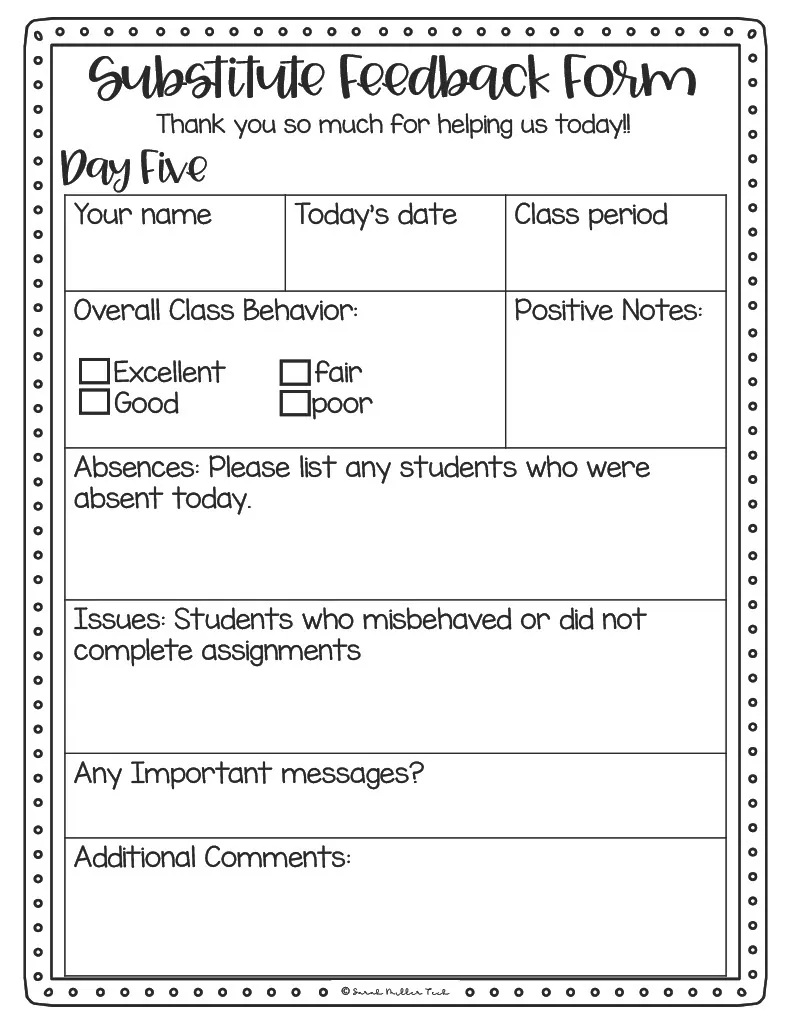
These no prep plans include directions, feedback forms and more.
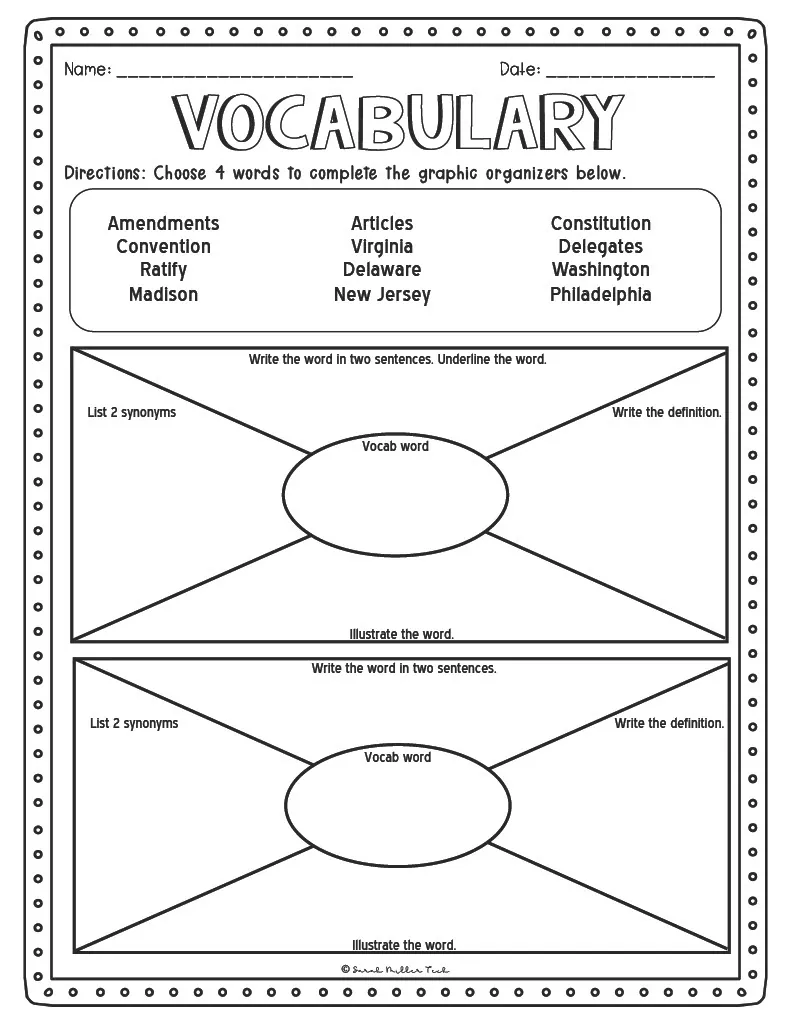
There are lessons with reading passages, coloring activities, comprehension questions and more.
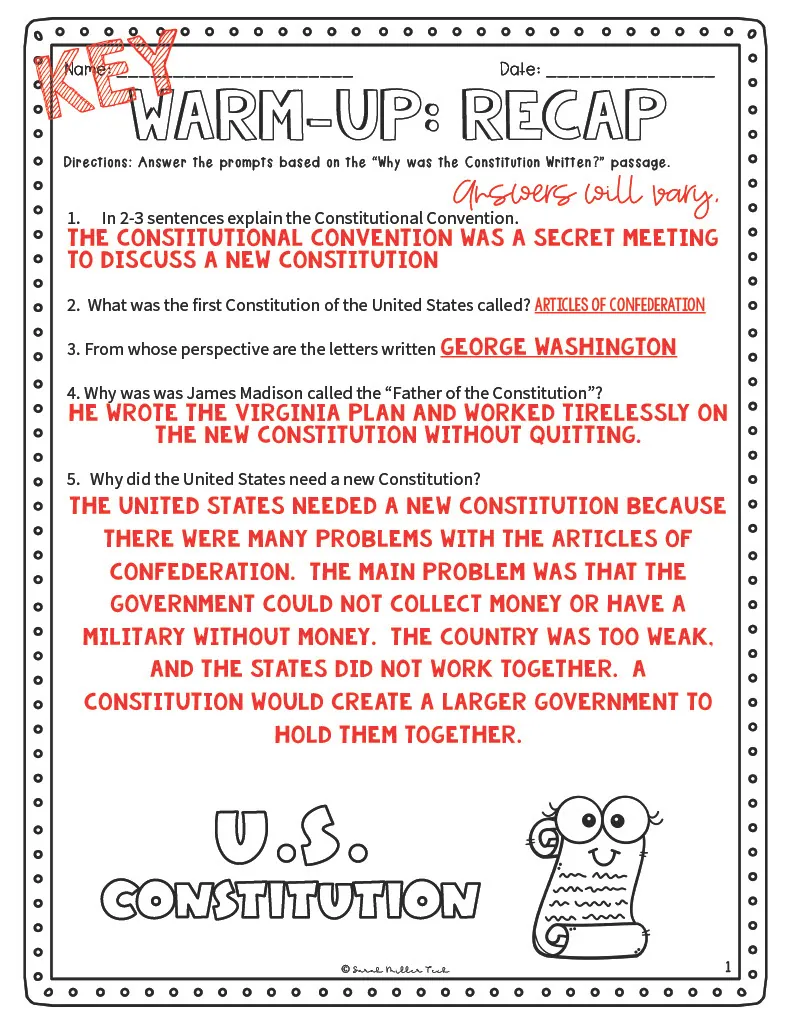
Answer keys are included.
Related resources
More resources teachers may find useful
24 related resources were found using this product's title, contributor, categories and tags.

In the classroom
Teaching tips & learning objectives

Learning objectives
Explain why the Articles of Confederation failed and why the Constitution was written to replace them.
Recall key facts of the Constitutional Convention, including James Madison's Virginia Plan, the Great Compromise, and the ratification requirement of 9 of 13 states.
Compare a nonfiction account and a fictional first-person account of the same events, noting point of view and details unique to each text.

Teaching tips
Prepare the listed copies, classroom information, schedule and procedures before leaving the packet.
Provide crayons or colored pencils for the day-three and day-five activities.
Use the dated feedback forms to follow up on each day’s work.

Skills covered
Active-reading annotation — students mark key details, vocabulary words, surprises, names, and dates using the packet's symbol guide while reading each passage.
Reading comprehension — students answer multiple-choice, true/false, and term-matching questions drawn directly from the two Constitution texts.
Comparing texts — students sort details into a graphic organizer contrasting the nonfiction passage's third-person account with George Washington's first-person letters.
Good to know
Questions teachers ask about this resource
How do the two readings fit the schedule?
Day one introduces nonfiction reading; day two adds fictional George Washington letters. Keep both available for the later comparison and review activities.
What preparation does the substitute packet need?
Make the listed copies, complete classroom-information forms and provide crayons or colored pencils for days three and five. Add classroom documents such as a roster and seating chart separately.

No reviews yet
Downloaded this resource? Tell other teachers how it went.
Resource details
Concepts & topics
Core concepts
 Core concepts
U.S. Constitution
Constitutional Convention
Articles of Confederation
Great Compromise
Fiction vs. nonfiction
 Topics
Explore more
Categories this resource belongs to
Explore related searches
More to explore
You may also like