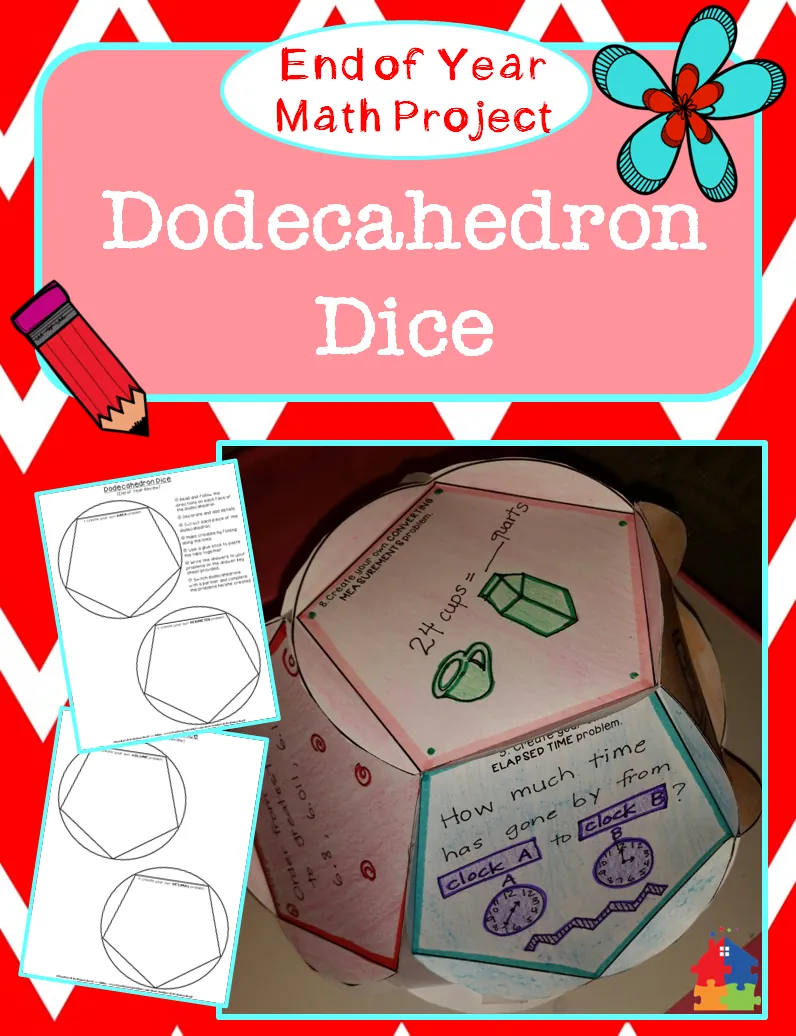
End of the Year Math Project - Dodecahedron Dice
- Grades
- Grades 3–5, Elementary
- Pages
- 18
- File type
- Preparation
- Print ready


- Subject
- Math, Fractions, Geometry
- Topic
- End of the year, Math project
- Resource types
- Projects, Activities
- Preparation
- Print ready
- Standards
- 4.NF.A.1
Product description
From the author
This resource is a Dodecahedron Dice End of the Year Math Project.
Students will love this end of the year math project that allows them to review things they have learned over the school year.
A visual guide and directions are included for assembling the dice.
Related resources
More resources teachers may find useful
24 related resources were found using this product's title, contributor, categories and tags.


In the classroom
Teaching tips & learning objectives

Learning objectives
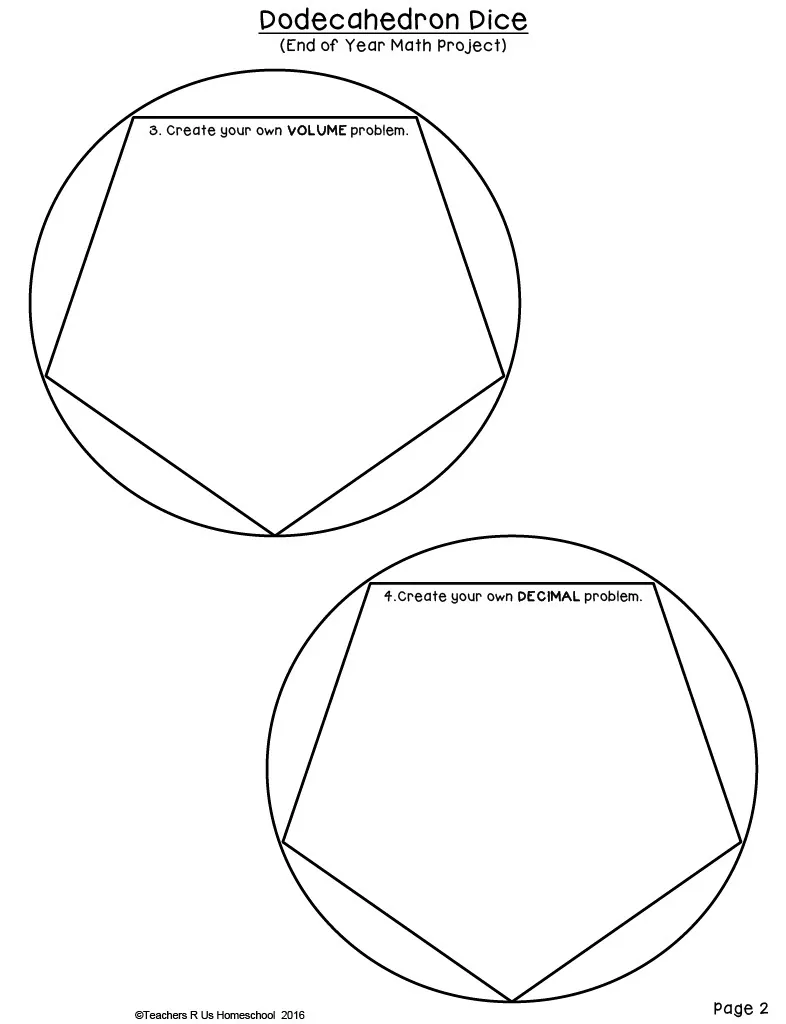
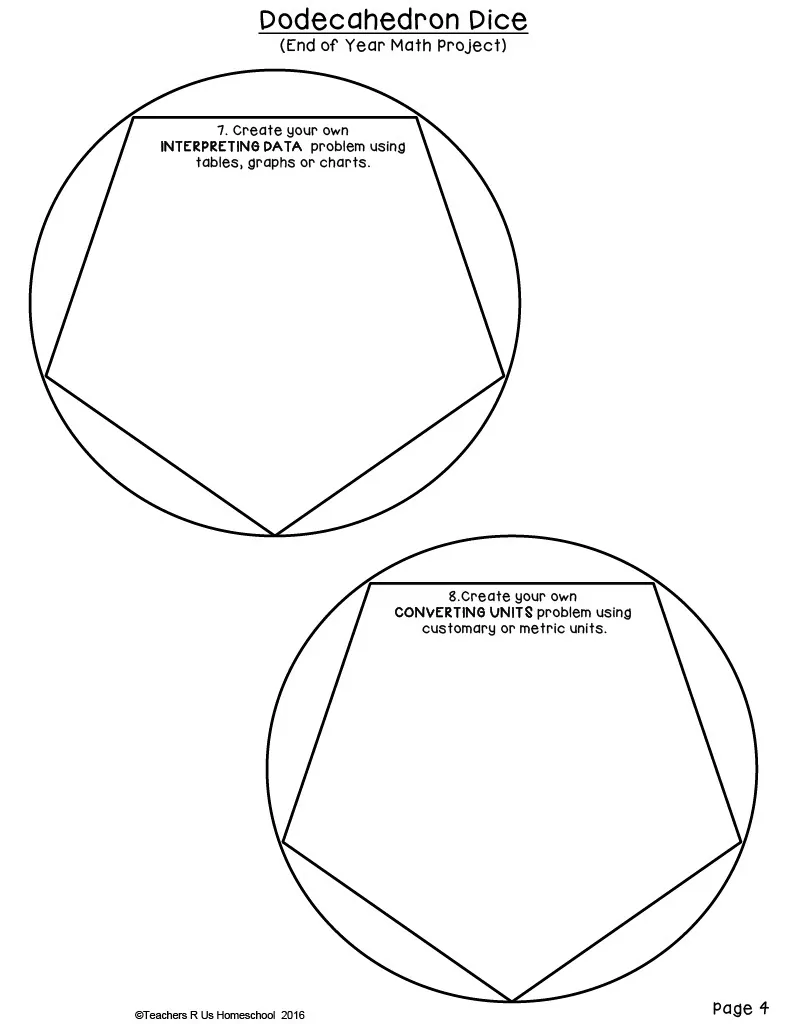
Write an original word problem for each of 12 math topics, including area, volume, fractions, and geometry.
Solve a peer-created problem for each of the 12 topics and record the work.
Assemble a set of twelve separate dodecahedron faces into a 3D shape by cutting, folding, and gluing.

Teaching tips
Have students use a glue stick or tape to assemble the dodecahedron one piece at a time; the file notes students found tape easier and less messy than glue.
Display finished dodecahedrons by hanging them from the classroom or hallway ceiling once grading is complete.
Score the project with the included 4-category rubric rather than a single overall grade, since appearance, accuracy, completeness, and creativity are scored separately.

Skills covered
Cross-topic math problem writing — students compose an original problem for each of 12 distinct math topics, from area and volume to fractions and place value.
Peer problem-solving — in the partner version, students solve problems a classmate wrote and check their work against an answer/record sheet.
3D shape construction — students cut, fold, and glue a set of twelve separate faces into a physical dodecahedron.
Good to know
Questions teachers ask about this resource
What is the difference between the two included versions of the dodecahedron?
The partner-exchange version has each student create problems only, then trade dice with a classmate and solve each other's problems using a shared answer/record sheet, while the solo version has each student both create and solve every problem on their own dodecahedron, showing their work directly on each face.

No reviews yet
Downloaded this resource? Tell other teachers how it went.
Curriculum
Standards, concepts & topics
Standards
 Standards
- 4.NF.A.1
Core concepts
 Core concepts
Area and perimeter
Volume
Fractions
Geometry
Place value and rounding
Multi-step word problems
 Topics
Explore more
Categories this resource belongs to
Explore related searches
More to explore
You may also like