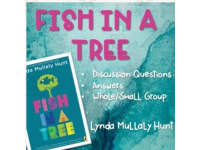
Fish in a Tree Discussion Questions

- Grades
- Grades 5–7
- Pages
- 4
- File type
- Microsoft Word
- Answer key
- Included


- Subject
- ELA, Reading
- Topic
- Fish in a Tree, Novel discussion
- Resource types
- Worksheets
- Answer key
- Included
- Standards
- RL.6.1
Product description
From the author
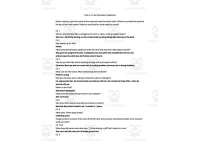
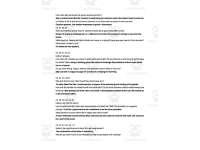
This resource is a Fish in a Tree Discussion Question Set.
There are questions organized by chapters and chapter groups. Suggested answers are included for most prompts.
Use the guide alongside the novel. Remove the inline suggested responses when preparing student handouts.
Related resources
More resources teachers may find useful
24 related resources were found using this product's title, contributor, categories and tags.


In the classroom
Teaching tips & learning objectives

Learning objectives
Students will make inferences about character motivation and relationships throughout the novel, such as Ally's connection to her grandfather and Albert's home life.
Students will discuss the novel's themes of belonging, self-worth, and living with an undiagnosed learning difference.
Students will form and support a personal opinion on open-ended questions, such as whether it is better to fit in or stay true to oneself.

Teaching tips
Use the opinion questions to discuss fitting in and personal identity. As the guide notes, these responses can support open discussion rather than one expected answer.
The Chapter 6 question about Travis's coin collecting suggests having students look up real coin values as a quick extension activity.
Use the novel’s details to support character inferences. Avoid treating a shirt name as proof of a family’s income, and replace the guide’s normal/not normal comparison with language about belonging and individual learning differences.

Skills covered
Character inference — students infer motivations and relationships, such as why Ally avoids reading the sign in the principal's office or what Albert's home life is like.
Theme discussion — students discuss belonging, self-worth, and the impact of an undiagnosed learning difference as the novel's plot develops.
Opinion formation and discussion — students respond to open-ended prompts with no single correct answer, supporting a personal position.
Good to know
Questions teachers ask about this resource
Does the guide include suggested responses, or only the discussion questions themselves?
Most questions are paired with a brief suggested response or discussion note — for example, noting that Ally's difficulty stems from dyslexia — while genuinely open-ended questions are marked as opinion questions for group discussion.

No reviews yet
Downloaded this resource? Tell other teachers how it went.
Curriculum
Standards, concepts & topics
Standards
 Standards
- RL.6.1
Core concepts
 Core concepts
Character analysis
Theme discussion
Novel study
Evidence-based response
 Topics
Explore more
Categories this resource belongs to
Explore related searches
More to explore
You may also like