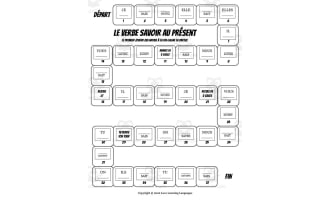
French Être Conjugation Board Game – Present Tense
- Grades
- Grades 9–12
- Pages
- 2
- File type
- Preparation
- Print ready


- Subject
- Foreign Languages, French
- Topic
- French Conjugation, Être
- Resource types
- Games
- Preparation
- Print ready
Product description
From the author
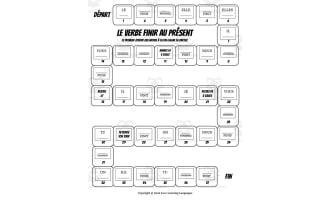
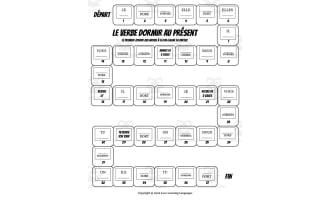
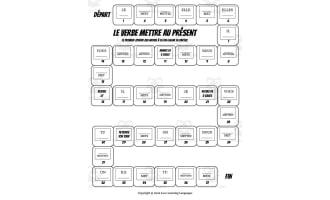
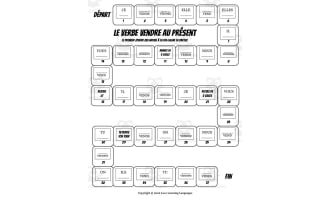
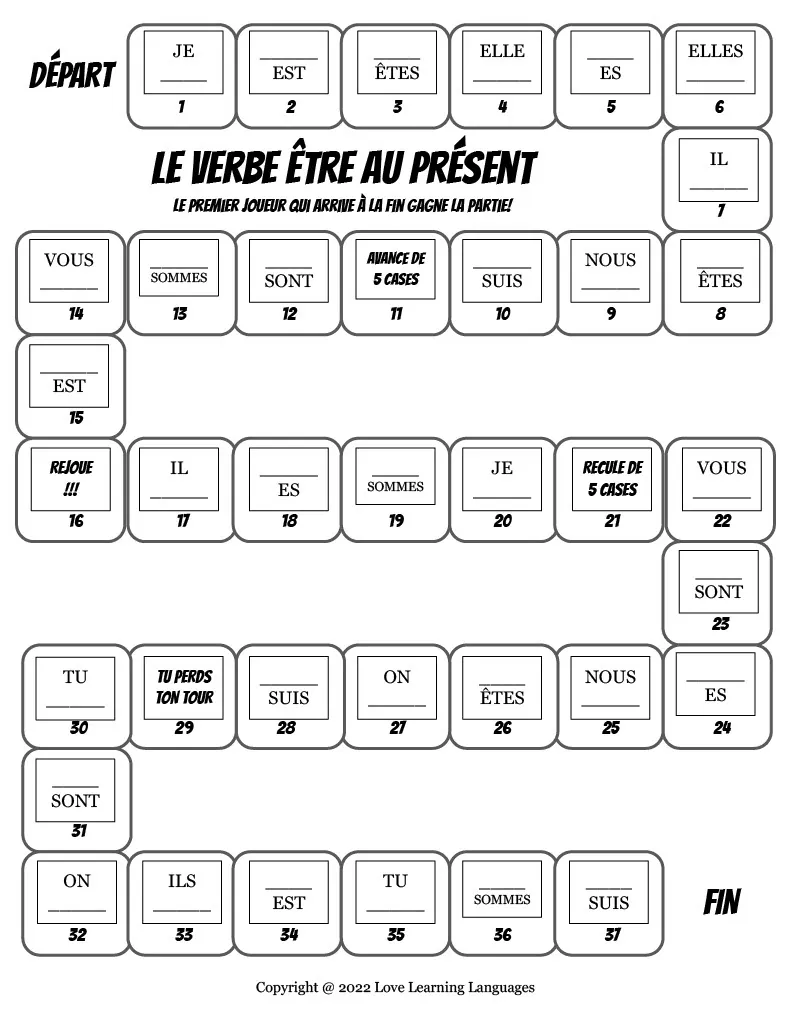
This French être board game practices present-tense verb forms in both directions: supply a verb for a subject pronoun or a matching pronoun for a verb. Players roll a die and follow the numbered route and French movement instructions.
The download contains a one-page board and a one-page how-to guide for two to four players. Supply a die and tokens, review the six verb forms and agree how to handle incorrect answers before play. The optional finish rule requires landing exactly on the final square and answering correctly.
Related resources
More resources teachers may find useful
24 related resources were found using this product's title, contributor, categories and tags.
In the classroom
Teaching tips & learning objectives

Learning objectives
Produce all six present-tense forms of être — suis, es, est, sommes, êtes, sont — on demand when given a subject pronoun
Work the pairing in reverse, naming a subject that agrees with a printed form such as SOMMES or ÊTES
Read and act on short French classroom instructions — Avance de 5 cases, Recule de 5 cases, Rejoue, Tu perds ton tour — without an English prompt on the board

Teaching tips
A die per group and one token per player are needed and are not part of the download; the how-to page lists both as "Not included"
The instruction squares are printed in French only on the board itself; the English glosses sit on the how-to page, which is worth showing once before the first round
Use the optional exact-landing rule from the how-to page to stretch a short game — players must land directly on the last square and answer it correctly to win

Skills covered
Present-tense conjugation of être — players supply suis, es, est, sommes, êtes or sont for the pronoun printed on the square they land on, such as JE at square 1 and NOUS at square 9.
Reading French classroom instructions — Avance de 5 cases, Recule de 5 cases, Rejoue and Tu perds ton tour appear on the board with no English, and players act on them during the turn.
Turn-taking game play — students in groups of two to four roll a die, track their position by the numbered squares, and manage forward and backward moves.
Good to know
Questions teachers ask about this resource
What has to be gathered before a group can play?
One die per group and one game token per player. The how-to page lists the printable board under "Game includes" and puts the die and tokens under "Not included", so those come from the classroom.

No reviews yet
Downloaded this resource? Tell other teachers how it went.
Resource details
Concepts & topics
Core concepts
 Core concepts
Verb conjugation
Present tense
Subject pronouns
Être
French grammar
Topics
 Topics
Explore more
Categories this resource belongs to
Explore related searches
More to explore
You may also like